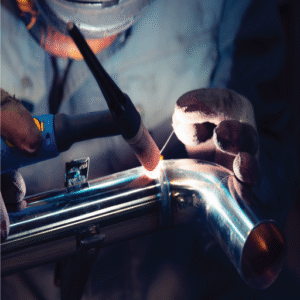
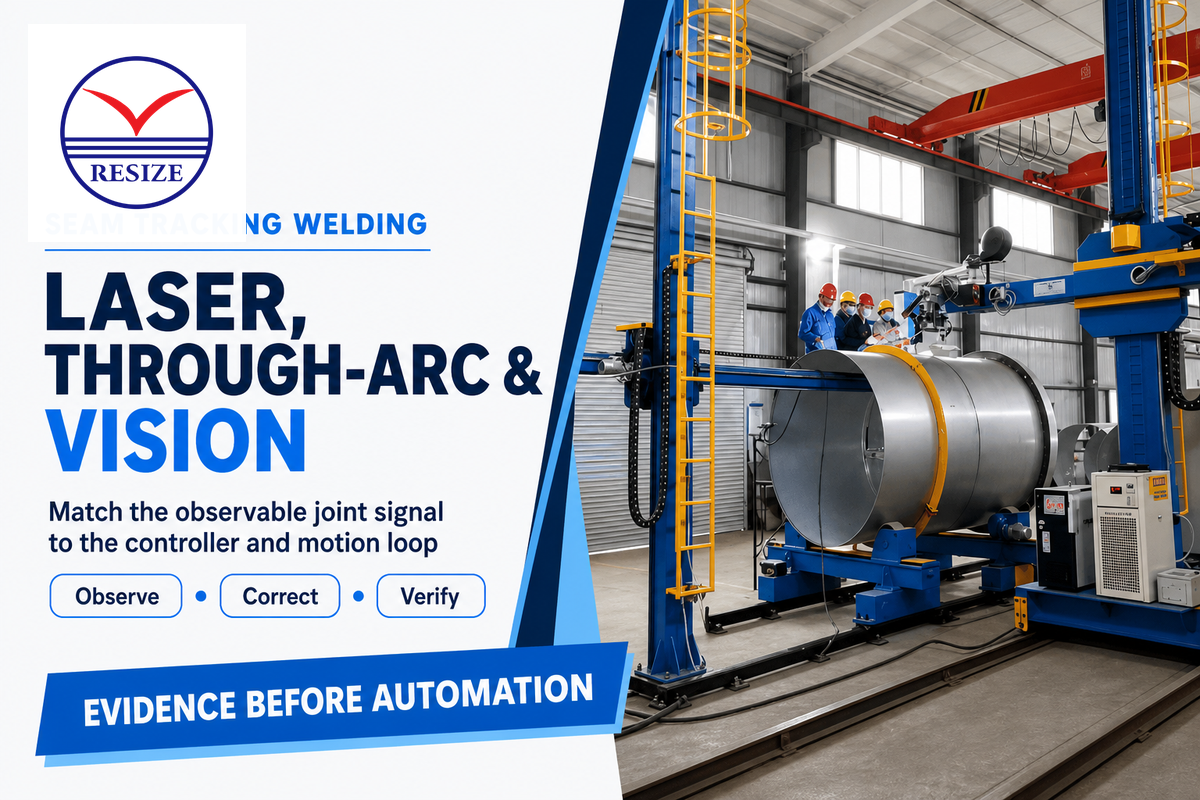
La saldatura laser ha completamente cambiato il processo di produzione fornendo precisione, velocità e versatilità senza pari a vari settori in tutto il mondo Il fattore principale di questa innovazione è il processo di saldatura a raggio laser, che è una tecnica avanzata che sta cambiando l'unione dei materiali Questo articolo discuterà in dettaglio il funzionamento e i vantaggi della saldatura a raggio laser, illustrando la sua capacità di fornire risultati impeccabili e di prim'ordine anche nelle applicazioni più impegnative Se il tuo obiettivo è aumentare l'efficienza produttiva, migliorare la qualità del prodotto o essere consapevole degli ultimi sviluppi tecnologici, questa guida ti fornirà informazioni importanti sulle moderne capacità della saldatura laser.
Introduction to Laser Beam Welding
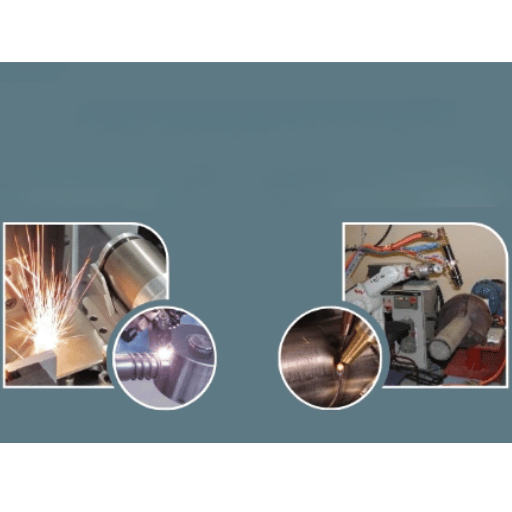
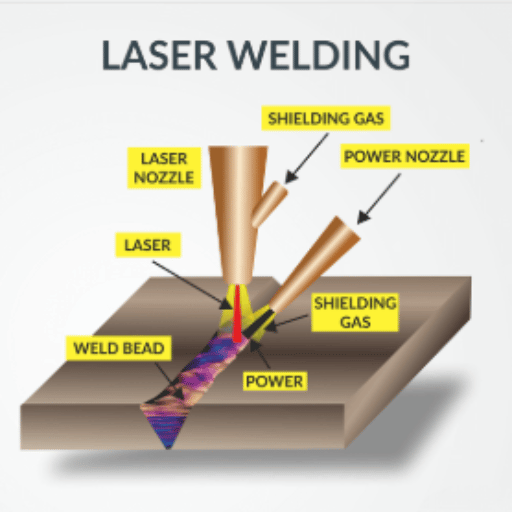
Laser beam welding (LBW) is a sophisticated welding process that applies a strong and accurate laser beam to unite the materials. By default, the laser beam is focusing hard on the joint area, which results in melting and fusion of the materials, thus creating a very solid and seamless bond. LBW is usually referred to as a very accurate process and is commonly used in the production of thin materials as well as in the making of complex designs. Therefore LBW becomes a suitable process in industries like aerospace, automotive, and electronics. Its main benefits are reported to be the least distortion, the highest processing speed, and the ability to consistently and qualitatively weld areas that are difficult to access.
What is Laser Beam Welding?
Laser Beam Welding (LBW) is a modern welding method employing a laser beam of very high intensity to join sturdy and weak materials together. The concentrated laser spot generates heat which melts the material edges and a very strong and precise weld is formed. The process is very exact, it is used for fine and complicated minimal applications and it is preferred in cutting-edge, aerospace, automotive, and electronics industries because of its fast speed, low material distortion, and ability to work in hard-to-reach spots.
Panoramica dei processi di saldatura
Welding processes include a variety of methods that are specifically designed for different materials, applications, and performance requirements. The most popular types are MIG (Metal Inert Gas) welding, which is extremely fast and easy to use, TIG (Tungsten Inert Gas) welding, which is the most accurate and controlled, and arc welding a capable option that can handle heavy-duty work. While laser welding is an advanced technique that provides unmatched precision and minimum distortion, there are other processes like friction welding that have specialized high-strength applications. The process selection is influenced by factors such as the material to be used, the design of the joint, and the quality of the weld required. Each method has its own set of benefits, allowing welding to be a versatile process used in different industries.
Importance of Modern Laser Technologies
The welding process has undergone a drastic change owing to the unrivaled precision, speed, and versatility of modern laser technologies. In fact, laser welding, through the application of highly focused energy, guarantees not only a very small heat effect but also an outstanding quality of the joint even for complicated or fragile materials. Hence, it is irreplaceable in the fields of aerospace, automotive, and electronics, where accuracy and efficiency are paramount. On top of that, laser technologies pave the way for the automation and scalability of operations which in turn allows manufacturers to produce more while offering the same quality. Thus, they are altering the manufacturing landscape and at the same time, meeting the requirements posed by the modern industrial challenges.
Tipi di laser utilizzati nella saldatura
1. CO2 Lasers
CO2 lasers are gas-based lasers that produce infrared light, which makes them the most powerful and suitable ones for thick material welding. Due to their power and effectiveness, they find wide usage in the industrial sector.
2. Fiber Lasers
Fiber lasers work by using glass fibers to boost the laser beam. Besides being highly energy-efficient, they produce very precise and fast welds, especially in the areas where fine work is required. Therefore, they are often found in the industry’s high-speed welding applications.
3. Nd:YAG Lasers
Neodymium-doped Yttrium Aluminum Garnet (Nd:YAG) lasers are solid-state lasers that can operate in both pulsed and continuous wave forms. They are very good at welding lapping materials, such as aluminum, reflecting their use in the micro-weld area.
4. Diode Lasers
Diode lasers are small, inexpensive, and produce lower power outputs than other types. They are suitable for applications that require light penetration, such as attaching or welding thin plastic or other materials.
Approfondimento chiave: The knowledge of different laser characteristics guides the manufacturers in picking the most appropriate one that leads to the best welding results.
Common Types of Lasers in Welding Applications
Lasers used in welding applications to a large extent consist of CO2, fiber, solid-state, and diode types. CO2 lasers are the best choice for non-metallic materials, whereas fiber lasers are the most powerful and efficient for metals such as steel. Solid-state lasers are preferable for delicate welding of highly reflective materials like aluminum, and diode lasers, due to their lower cost, are the best option for very shallow penetration jobs like welding plastic or connecting thin materials. The choice of laser will depend on the material and application requirements.
Comparison of Laser Types
Choosing the Right Laser for Specific Applications
💡 Selection Tips
In determining which laser is best for a particular application, consider the material type, the precision needed, and the depth of penetration. CO2 lasers are perfect for cutting and welding tough metals such as steel, whereas solid-state lasers are used for high-precision jobs and softer metals like aluminum. For economical working processes with plastics or very light materials, diode lasers are the most suitable. Make sure to always match the laser type with the application’s technical and economic requirements for the best efficiency and results.
Advantages of Laser Beam Welding

- 1. Precision and Accuracy
The laser beam welding process is a technique that possesses the advantage of precision, thus it allows the manufacturers to make even the most detailed and complicated welds with very little error. - 2. High Weld Quality
The heat that is concentrated forms the source of weld that is clean, strong, and consistent with very little distortion. - 3. Speed and Efficiency
The method operates at high-speed, thus cutting the welding time which eventually leads to an efficient operation throughout the process. - 4. Versatility
One of the many advantages of laser beam welding is its ability to work on a variety of materials and thicknesses ranging from the most delicate to heavy-duty. - 5. Automation Compatibility
The combination of the process with automated systems results in high-repeatability and a lower dependence on human labor. - 6. Reduced Heat-Affected Zone
The laser light that is focused creates a smaller heat-affected zone thus reducing the weakening or warping of the material. - 7. Non-Contact Process
The fact that it is a non-contact process means that there is lesser wear and tear of tools and maintenance which translates to a longer life for the equipment.
Precision and Control in Weld Quality
Laser welding’s cutting-edge technology that allows pinpoint energy delivery and very little material distortion is what gives the precision and control in the quality of the welds. The method produces uniform and first-rate welds no matter how complex the being welded design or what type of product the material is even difficult. Its ability to be programmed and to be integrated into automated systems adds to its precision thus making it the method that is most preferred by industries that need to have manufacturing processes that are highly accurate and repeatable.
Speed and Efficiency of the Welding Process
Laser welding is an advanced technique with processing speeds and minor setup times that allow it to be very fast and efficient. The concentrated energy enables the welding to be done quickly and with slight thermal distortion, thus making it appropriate for large volume production. Moreover, its collaboration with automation systems facilitates workflows, which in turn, increases the output to a great extent and decreases the need for maintenance in manufacturing processes.
Reduced Heat Affected Zone
Laser welding minimizes the heat affected zone (HAZ) by using a very concentrated energy source that provides rapid and precise heat application. This leads to a reduction of thermal distortion and material degradation, thereby maintaining the structural integrity and mechanical properties of the parts being welded. As a result, it is suitable for applications that demand high precision and little material alteration.
Applications of Laser Beam Welding Across Industries

Laser beam welding (LBW) is one of the processes that are used in various industries mainly because of its accuracy, speed, and versatility. The following are the main sectors where LBW has become a vital technology:
Industria automobilistica
Laser beam welding is an essential process for the production of car body parts, powertrains, and customized blanks, offering high-speed manufacturing and the same quality every time.
️ Industria aerospaziale
It is a major factor in the production of parts like turbine blades that require high accuracy and strength where the main characteristics are precision and quality.
🏥 Medical Device Manufacturing
Medical devices like surgical tools and implants are very delicate and need precise welding that is done under high hygiene standards, medical devices, and equipment certainly welding is the right process here.
💻 Electronics Industry
It can be utilized for the micro-welding of components such as sensors, circuit boards, and connectors, which is a demand of the small-scale and intricate nature of electronics.
Settore energetico
In the making of parts for renewable energy systems and nuclear reactors, it provides both durability and precision under extreme conditions.
Industry Impact: These usages highlight the different ways in which LBW can be applied and the different needs of the industries that strive for high-quality welds and productivity.
Aerospace and Automotive Industries
Laser Beam Welding (LBW) has a significant impact on the production of light, strong, and high-performance parts in the aerospace and automotive sectors. The use of LBW in the manufacture of precision turbine blades, fuel tanks, and structural components for the aerospace industry ensures that the welded joints are both strong and precise. In the same manner, LBW in the automotive industry facilitates the production of the body of cars, housings for batteries in electric cars, and parts made of high-strength alloys, thus securing dependability while also enabling laser cutting of production. This method keeps on being the source of improvements and also complying with the strictest safety and performance standards set by the industry over time.
Electronics and Microfabrication
Laser beam welding (LBW) is very important in the field of electronics and microfabrication when it comes to making tiny and complicated connections very accurately. It is predominantly used in the production of electronic parts such as circuit boards, sensors, microelectromechanical systems (MEMS), and semiconductor devices. The technique provides very accurate results with minimal thermal distortion, thus preserving the quality of fragile electronic components. This very feature has made LBW a vital instrument in the progress of miniaturized and high-performance devices in the electronics sector.
Medical Device Manufacturing
Laser beam welding is at the forefront of medical device manufacturing as it allows joining of very small and complex parts very accurately and reliably. Its property to make tough, clear welds and at the same time using very little heat ensures that delicate devices like surgical instruments, implants, and diagnostic equipment stay intact and work properly. This method is highly influential in the failure-free production of tiny, high-quality medical devices that are compliant with strict industry standards.
Fonti di riferimento
- Fortune Business Insights – Laser Welding Market Analysis
Describes the increasing use of laser welding in sectors such as electronics, jewelry, aerospace, and automotive. - ScienceDirect – Prospects of Laser Beam Welding and Friction Stir Welding
Investigates the utilization of laser beam welding in high-strength aluminum alloys particularly in the aerospace sector. - Wikipedia – Laser Beam Welding
Gives a summary of the laser beam welding process, its usage, and the industries that gain from it.
Domande frequenti (FAQ)
🎯 Summary
Laser beam welding represents a transformative advancement in modern manufacturing technology. With its unparalleled precision, speed, and versatility, LBW has become indispensable across industries ranging from aerospace and automotive to electronics and medical device manufacturing. By understanding the different types of lasers, their applications, and the numerous advantages they offer, manufacturers can leverage this cutting-edge technology to achieve superior weld quality, enhanced efficiency, and competitive advantage in today’s demanding industrial landscape.