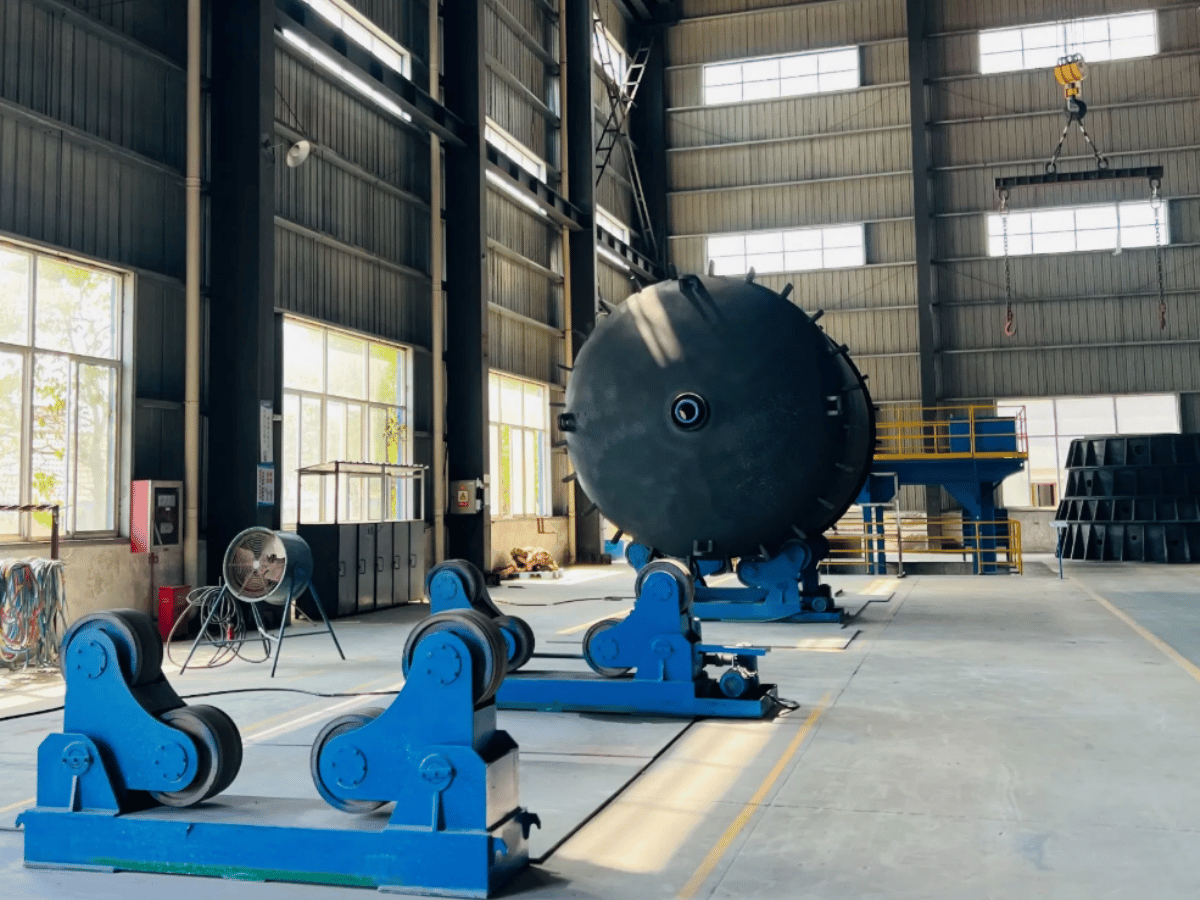
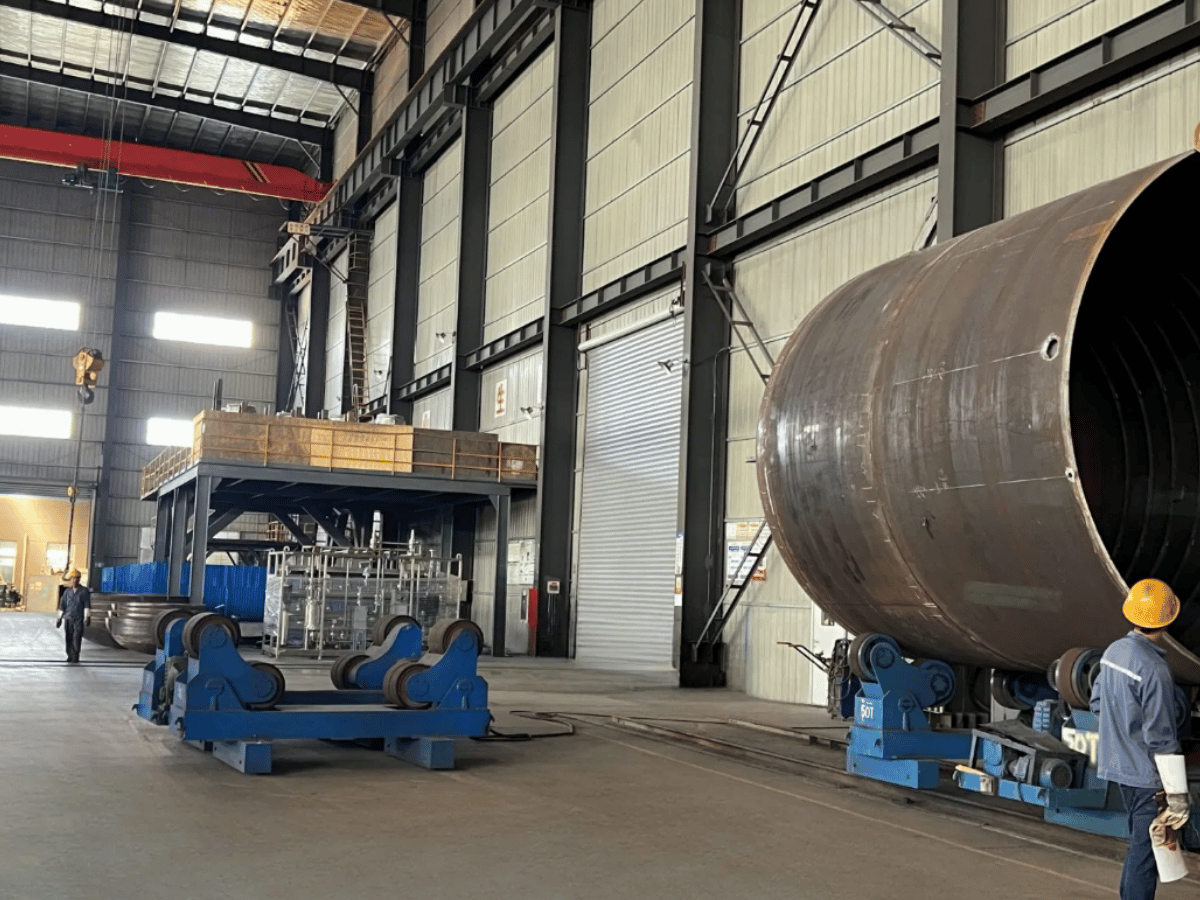
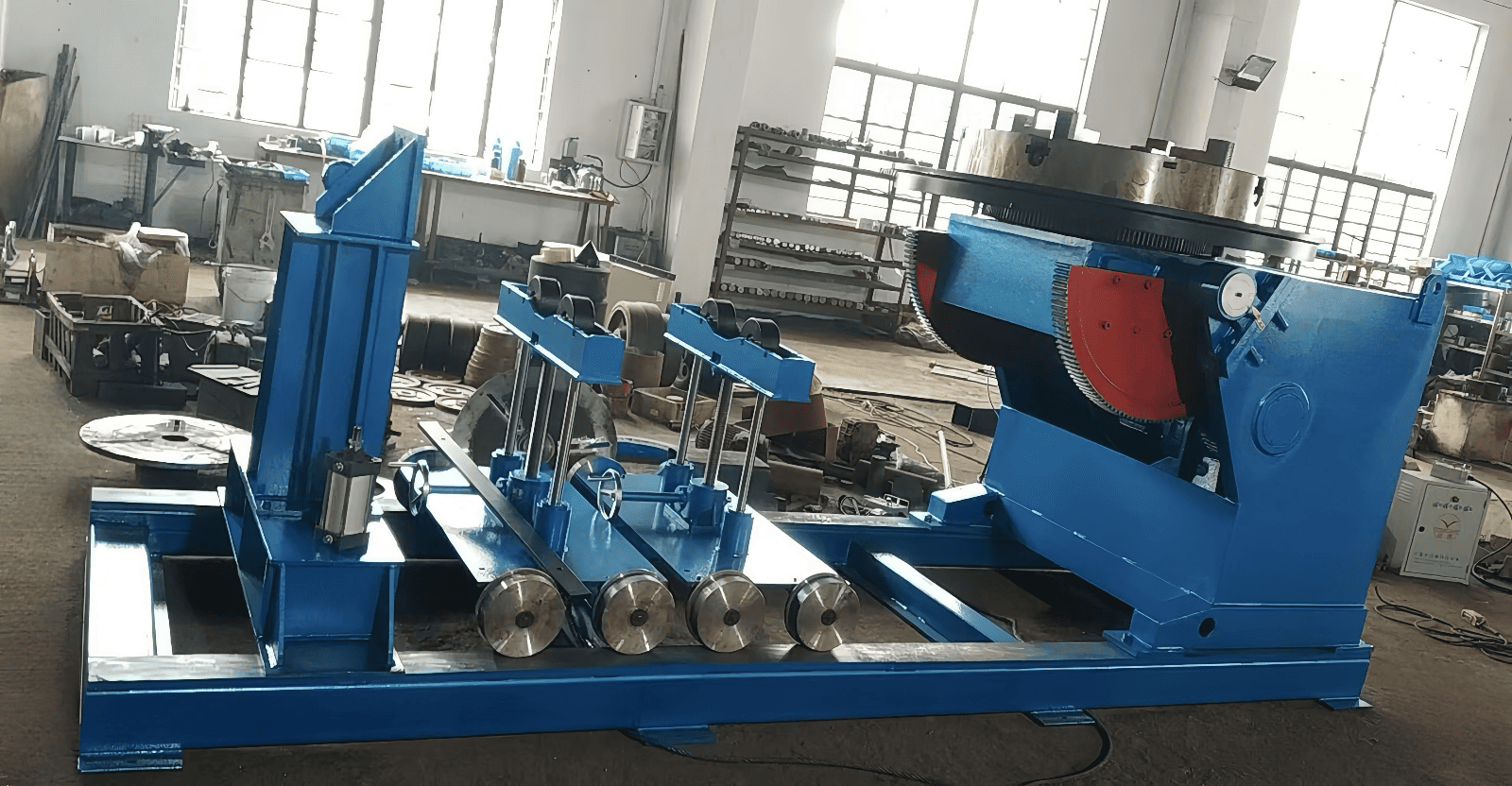
A soldagem é um processo fundamental de muitas indústrias, exigindo nele a máxima precisão, consistência e eficiência para produzir uma qualidade de produto satisfatória A experiência mostrou que surgem dificuldades em atender a esses padrões quando peças cilíndricas, como tubos ou tanques, compõem a peça de trabalho Isso significa que os rotadores de tubos chegaram a uma solução Esses dispositivos são projetados para segurar e girar tubos durante a soldagem, permitindo assim operações mais suaves, melhores soldas e trabalho manual reduzido Neste blog, vamos levá-lo através das vantagens significativas dos rotadores de tubos, explicando como eles aumentam a eficiência e precisão da soldagem, e por que eles se tornaram indispensáveis tanto para soldadores quanto para operadores industriais Se você é um especialista ou novato em soldagem, este guia irá orientá-lo através dos insights críticos para levar seus processos de soldagem para o próximo nível através do uso de rotadores de tubos.
Compreendendo os rotadores de tubos
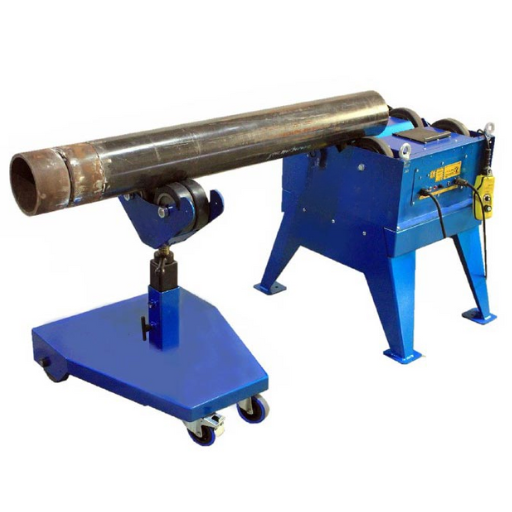
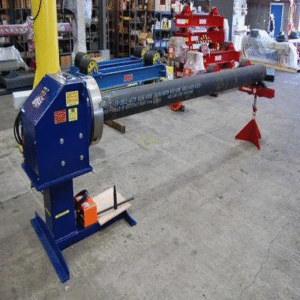
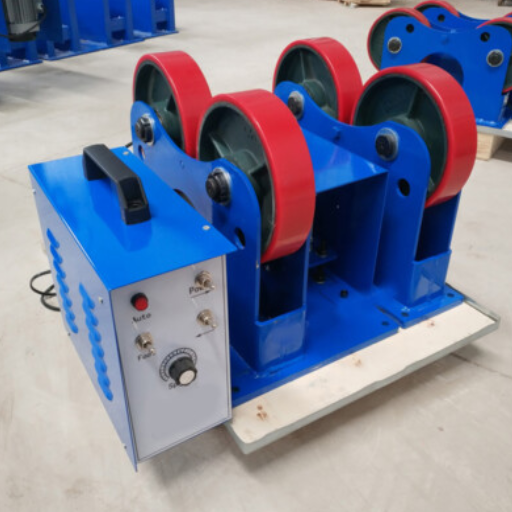
Os rotadores de tubos são equipamentos especializados projetados para girar peças cilíndricas, como tubos ou tanques, durante os estágios de soldagem ou fabricação Um conjunto de rolos ou rodas motorizados realiza essa rotação de forma suave e consistente, mantendo os soldadores em pé de forma constante e produzindo soldas uniformes ao longo de toda a peça Os rotadores de tubos eliminam a necessidade de rotação manual da peça de trabalho, melhorando assim a eficiência e a qualidade da solda Essas máquinas lidam com objetos grandes ou pesados quando necessário e podem ser encontradas espalhadas por várias indústrias, incluindo petróleo e gás, fabricação e construção naval.
O que é um Rotador de Tubos?
Os rotadores de tubos são equipamentos especializados projetados para facilitar a soldagem, corte ou montagem de objetos cilíndricos, transmitindo rotação controlada a eles Esses rotadores consistem em rolos motorizados ou rodas que podem agarrar e girar firmemente tubos, tanques ou outras peças de trabalho redondas Sob tal rotação, uma posição fixa pode ser mantida por soldadores que trabalham para garantir uma qualidade de solda consistente, reduzindo assim o esforço e o tempo necessários para a soldagem manual Hoje, os rotadores de tubos modernos estão equipados com recursos avançados, incluindo controles de velocidade variável e sincronização com equipamentos de soldagem automática, que representam um passo significativo em direção a maior eficiência e precisão Eles encontram aplicações e, portanto, têm suma importância em indústrias como a construção de oleodutos e gasodutos, a fabricação de vasos de pressão e construção naval, onde a rotação consistente de objetos pesados ou de grande diâmetro é necessária por razões de segurança, precisão e produtividade.
Como funcionam os rotadores de tubos na soldagem
Os rotadores de tubos operam agarrando e girando peças cilíndricas, como tubos ou tanques, em uma variedade de diâmetros durante a soldagem. Essas máquinas são normalmente projetadas com rolos ou rodas ajustáveis para acomodar uma variedade de diâmetros de tubos, garantindo a estabilização adequada. A velocidade do rotor é controlada por acionamentos de frequência variável (VFDs) e sincronizada pelos operadores, seja por meio de um sistema de soldagem automatizado ou por processos de soldagem manual. O controle preciso da velocidade melhora a qualidade da solda criando um cordão de solda uniforme e ajuda a prevenir defeitos causados por movimentos irregulares.
Os rotadores de tubos modernos e os rotadores de soldagem são equipados com sensores de carga, monitores de torque e guias de alinhamento para obter maior precisão e precisão operacional Isso é uma bênção para os soldadores porque elimina a necessidade de manuseio manual e reposicionamento de tubos muito pesados Assim, garantir a rotação exata reduz respingos e distorção da solda que, de outra forma, teriam sido uma questão de compromisso na adesão a padrões rigorosos de engenharia Ao automatizar o manuseio de tubos, os rotadores de tubos introduzem uma série de benefícios, incluindo maior segurança, maior velocidade e maior precisão, para um amplo espectro de aplicações de soldagem industrial.
Tipos de rotadores de tubos disponíveis
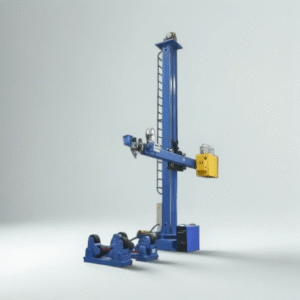
Os principais tipos de rotadores de tubos disponíveis incluem rotadores convencionais, rotadores autoalinhados, rotadores anti-deriva, rotadores ajustáveis e rolos giratórios.
Benefícios do uso de rotadores de soldagem

- Mais Precisão de Soldagem 100 rotadores estabilizam o movimento rotacional, produzindo a precisão desejada na soldagem, mantendo a peça na melhor posição durante as operações de soldagem.
- Capacidade Melhorada Ân rotar rotor giratório fio pesado trabalha, reduzindo significativamente o trabalho manual e aumentando a eficiência do fluxo de trabalho.
- Melhor Qualidade de Solda & Com o braço movendo-se firmemente no tandem com rotação, a soldadura é uniforme, e a probabilidade de linhas de solda irregulares ou de junções fracas é diminuída.
- Redução do Stress Físico para o Operador 0 rotador pesado faz a maior parte do trabalho de elevação e posicionamento, de modo que os operadores exercem menos esforço físico enquanto se concentram no controle essencial da qualidade da solda.
- Sendo Versátil para Várias Aplicações 1000, vários tipos de rotadores oferecem uma ampla variedade de tamanhos e formatos de peças, tornando-os adequados para qualquer fabricação, desde procedimentos gerais até procedimentos especializados, como soldagem de tubos.
Melhor eficiência na soldagem de tubos
O uso de rotadores de soldagem aumenta a eficiência dos processos de soldagem de tubos, proporcionando rotação suave e uniforme às peças cilíndricas, melhorando assim a qualidade geral da solda. Como resultado, a solda pode ser aplicada uniformemente; o número de oportunidades de erros é reduzido e o escopo de retrabalho é minimizado. A qualidade da solda é melhorada porque o alinhamento exato pode ser mantido durante a soldagem, reduzindo assim os tempos de fabricação. Rotadores automatizados ou semiautomáticos são usados como parte do processo de produção úmida para reduzir o manuseio manual, permitindo que o soldador se concentre no controle de qualidade, o que por sua vez aumenta a produtividade.
Precisão e qualidade aprimoradas de soldas
O uso de rotadores de soldagem aumenta a precisão operacional, aumentando assim a eficiência operacional e a qualidade da solda Os rotadores de soldagem giram o material, permitindo que os soldadores mantenham velocidades e ângulos consistentes durante o processo de soldagem A manutenção de tal consistência minimiza defeitos como porosidade, falta de fusão ou acúmulo irregular de metal de solda Estudos da indústria mostraram dados que sustentam que as instalações que usam rotadores de soldagem contemporâneos demonstram maior integridade da junta e acabamento superficial, o que se correlaciona diretamente com a confiabilidade e a vida útil do produto.
Outro passo à frente na eficácia dos rotadores de soldagem é alcançado quando eles são combinados com sistemas automatizados Como sensores e controladores programáveis visualizar velocidades de rotação em tempo real e ajustá-los em conformidade, erro humano é minimizado, e distribuição de calor ao longo da costura de solda é consistente O avanço contínuo de inovações em maior qualidade de soldagem é evidente nas tendências de fabricação de hoje.
Redução dos Custos do Trabalho
Dependendo do peso maciço ou da natureza pesada da peça de trabalho, as manipulações de soldagem aumentam as despesas de mão de obra Os trabalhadores são consideravelmente minimizados em conjunto com essas máquinas Assim, os operadores reduzem os quadros oficiais para cumprir o dever oficial pela metade dos rotadores Além disso, os rotadores aumentam a eficiência reduzindo o tempo de configuração e garantindo a consistência da velocidade de rotação, mantendo assim tempos de produção consistentes dentro de cada ciclo Isso, portanto, reduz os gastos em dólares de trabalho incorridos em relação à conclusão do produto.
Applications of Pipe Rotators in Various Industries

Oil and Gas Industry
Pipe rotators find wide applications in welding pipelines and structural elements crucial to exiting, refining, and transporting oil and gas. With its precision, it ensures the formation and quality of welds in high-pressure systems.
Construção naval
In the shipbuilding industry, pipe rotators work with significant cylindrical components, welding exhaust systems, and fuel pipelines while speeding up production times and providing durability in marine environments.
Geração de energia
Pipe rotators are used in welding boilers, turbines, and other cylindrical components with precision and uniformity, in fossil fuel power plants to renewable energy power generation.
Chemical and Petrochemical Plants
Pipe rotators enable the welding of storage tanks, pressure vessels, and piping systems used in the transportation and storage of hazardous chemicals, ensuring both safety and compliance with Industrial standards.
Automotive Manufacturing
The automotive industry normally uses pipe rotators in the manufacture and welding of exhaust systems, driveshafts, and other cylindrical components to speed up production and ensure product consistency.
Small-Scale Pipe Welding
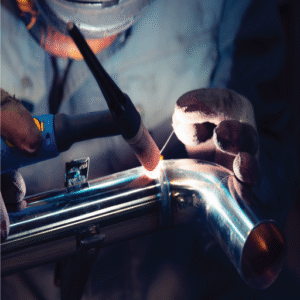
Small-scale pipe welding involves welding pipes with smaller diameters. Such activities find applications in general residential plumbing, HVAC systems, and other special industrial processes. Welding such small pipes requires the highest level of precision and flexibility, especially in cases where space constraints or material variability are present. The TIG method or the MIG method is preferred chiefly for welding these pipes as they offer the weld quality control one demands. With the help of small pipe rotators and advanced welding equipment, welders can maintain a uniform weld and minimize distortion, which is a common problem with small-diameter pipework. The automated, flexible welding systems further help increase weld quality and productivity, especially in the more demanding and space-constrained applications.
Large Industrial Projects
Pipe rotators become a necessity in large projects, as they increase productivity, precision, and safety. They are typically employed in the oil and gas, petrochemical, shipbuilding, and power plant industries, where heavy cylindrical components and large-diameter pipes require careful handling and precise welding. Pipe rotators rotate and support evenly during welding or coating applications to ensure a uniform coating while reducing manual intervention.
On a high level, pipe rotators have variable speed controls, load balancing systems, and automatic alignment mechanisms. All these become very important in projects where tons of heavy materials are involved, where there is always the possibility of materials being placed in the wrong spot or warped. The present pipe rotators can also be fully integrated with robotic welding systems to enhance throughput further or eliminate the chances of errors in performing monotonous tasks. As a result, pipe rotators have become a staple in the fast-paced world of industrial projects, where speed and precision are essential.
Use in Pipeline Construction
Pipe rotators play a crucial role during pipeline construction, where accuracy and efficiency are essential for project success. These devices enable the controlled rotation of pipes during welding and assembly, ensuring everything remains uniform and aligned. By holding the pipe firmly in position, welders can locate circumferential welds that are generally flawless. This enables the reduction of defects, such as misalignment and partial penetration, within the pipe itself. Modern pipe rotators feature variable speed settings and heavy-duty load-bearing capabilities, allowing operators to accommodate pipes of varying diameters and weights. In conjunction with automated welding systems, this enhances productivity by reducing tedious manual operations while ensuring precision at all times. Such combinations of assisted automation and mechanical capabilities are poised to save time and ensure quality in any pipeline construction job, particularly when laying long pipes across demanding terrains.
Selecionando o rotador de tubo direito

Several factors should be considered when selecting pipe rotators to ensure optimal performance and maximum compatibility with individual project requirements. Consider load capacity in terms of the particular diameter, weight, and material of the pipes. Next, consider the adjustability of the variable speed controls or other realigning mechanisms that can accommodate different pipe sizes and provide precise rotation. Additionally, allow for integration with automation welding systems to expedite welding operations and improve the repeatability of welds. Finally, high weightage should be assigned to durability and reliability; hence, models should be chosen from materials of the highest quality that can bear heavy-duty use and the rigors of difficult locations.
Key Considerations: Load Capacity and Adjustability
Choosing a pipe rotator revolves around what load it can carry and how much adjustability it offers to the user. Load capacity means the weight a rotator can have without compromising its working efficiency or the integrity of its structure. One of the primary accidental hazards that can arise from equipment being loaded beyond its rated capacity is the risk of mechanical failure, which can lead to work disruption. When evaluating load capacity, both static and dynamic load ratings need to be considered, as they describe an application’s performance under stationary and in-motion conditions, respectively.
Adjustability ensures that the equipment can accommodate a range of pipe sizes and diameters. The more modular or adjustable a component or roller is, the more flexible it can be, requiring fewer job changes or less downtime. Enacting a rotator with the right balance of huge load capacity and adjustability will ultimately help to streamline the workflow, reduce wear and tear, and improve the overall reliability of the operation.
Compatibility with Existing Welding Equipment
Selecting an appropriate rotator is likely the first step in ensuring compatibility with welding equipment. Power requirements to control system interface and ratings in respect of speed and capacity are factors of compatibility, and then it must support welding processes, whether manual, semi-automatic or fully-automatic. In addition, the rotator must accept coordinates from the exact standards recognized in the industry, so that installation can be as straightforward as possible, thereby avoiding many technical difficulties. Full compatibility means fewer breakdowns, efficient work flow, and a solid performance into the far future.
Features to Look For in a Pipe Rotator
- Capacidade de carga – The load capacity of any rotational pipe must be suitable for your particular operation. This would imply considering the weight of the pipes and any other equipment that may be used during the task.
- Adjustable Speed Rotation – A rotator with the ability to vary its rotational speed is necessary for differing welding or cutting requirements and with manual settings to enhance the precision of the operation and to accommodate a wide variety of applications.
- Durability and Material Build – The construction of the rotator should essentially consist of high-quality materials capable of standing longer use in harsh industrial environments. Investigate materials that resist wear, corrosion, and gouging in extreme temperature conditions.
- Automation and Control Features – State-of-the-art pipe rotators can feature an automated system or programmable control, including remote operation and other advanced capabilities. These systems enhance repeatability, reduce manual effort, and increase the overall operational efficiency.
- Versatility of Pipe Dimensions – Select a rotator that supports a broad range of pipe diameters and lengths. Such versatile equipment can accommodate the demands of various projects, removing the need for multiple devices.
Innovations in Pipe Rotator Technology

On the other hand, recent developments in pipe rotator technology have focused on accuracy, efficiency, and adaptability. Innovations such as automated synchronization systems ensure that rotational motion is optimally consistent, thereby reducing welding defects and material wastage. Now, with the integration of sensor technology, rotational parameters can be monitored in real-time, which improves quality control and operational reliability. Additionally, modular designs have proven more adaptable, as operators can adjust for various pipe sizes without lengthy downtimes. Hence, these advancements increase productivity while decreasing operating costs in industrial environments.
Advancements in Automation for Welding Rotators
Automation has almost doubled the efficiency and precision of industrial manipulations for welding processes. Innovations involved included programmable control systems that either maintained rotation speed and alignment or provided a better weld finish. Also, real-time monitors have established early detection to lessen the incidence of defects requiring reworks. There are adaptive features that adjust their responses to varying pipe sizes and materials, resulting in shorter setup times for the machine. That said, these advanced improvements streamline operations, thereby enhancing productivity, lowering costs, and maintaining quality standards.
The Role of Smart Technologies in Welding
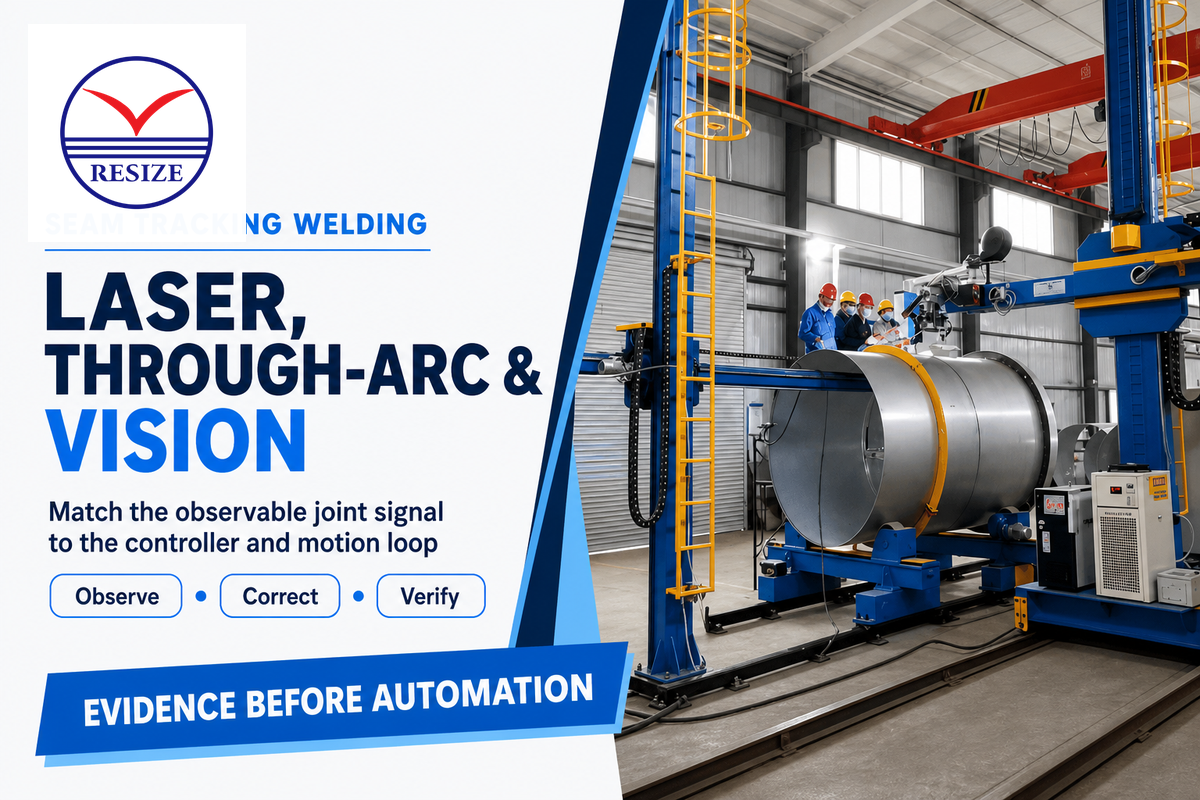
- Automated Seam Tracking: Utilizing imaginative vision and laser systems, welding tools are accurately aligned on the joint location and tracked in real-time with utmost precision.
- Predictive Maintenance: By utilizing integrated sensors and data analytics, equipment performance can be monitored, and maintenance needs can be accurately forecasted, thereby ensuring minimal downtime in operations and reducing unexpected failures.
- Advanced Programming Interface: Through a user-friendly interface and the Programmable Logic Controller (PLC), operators can easily modify welding parameters for a wide array of materials and applications.
- Internet of-Things Integration: Through connected devices, one can monitor and control changes in welding remotely, correlating with optimizing performance and ensuring uniform quality.
- AI for Weld Quality Assessment: Using AI, welding systems are analyzed in real-time, identifying faults and proposing corrective measures to minimize waste, ensuring an optimal level of weld quality.
Tendências Futuras em Equipamentos de Soldagem de Tubos
The pipe welding industry is poised for rapid transformation as it undergoes significant changes in response to emerging technologies and automation. Collaborative welding robots are trending nowadays; the cobots provide welding functions and safety while working alongside human operators. They increase productivity by combining advanced sensors and controls that adapt to real-time conditions.
AR-augmented realities are another development in training and operations to mention. Augmented reality systems can assist welders by projecting virtual guides or real-time feedback over the physical workspace, thereby minimizing weld errors, reducing learning time, and shortening project execution time. Likewise, the introduction of advanced materials into welding consumables offers longer-life consumables in harsher operating environments.
On the other hand, predictive analytics has completely changed the paradigm in the data-centric approach by monitoring welding systems, studying performance metrics, and predicting maintenance requirements. Such predictive maintenance ensures that downtime is minimized and maximizes efficiency. Using cloud computing, manufacturers can also standardize processes across several sites to guarantee consistency and quality control.
The above trends mark the emergence of the intelligent-integrated paradigm, which results in improving pipe welding in terms of efficiency, precision, and sustainability.
Fontes de referência
-
Westermans Blog: When to Use Pipe Rollers for the Best Welding Results – Discusses the advantages of pipe rotators, including increased safety, accuracy, and productivity.
-
Senlisweld: Applications of Welding Rotators – Explains how welding rotators improve consistency and reduce defects in welds.
-
Welding Rotator China: Pipe Rotators That Will Make Your Life Easier – Highlights the efficiency, quality improvement, and handling benefits of pipe rotators.
-
Westermans: Welding Rotators for Pipes & Tanks – Provides insights into the safety and industrial applications of welding rotators.
Perguntas frequentes (FAQs)
What is the use of pipe rotators in welding?
Pipe rotators provide precise control and stability during the welding of cylindrical vessels or large diameter pipes. They allow the workpiece to be rotated so that it can be better accessed and welded with improved quality. Their use is crucial in heat exchangers, wind towers, and other industrial structure applications.
How do welding positioners improve the welding process?
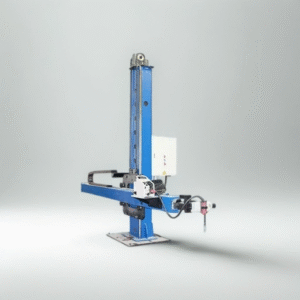
Welding positioners enhance the welding process by adjusting the position of the workpiece conveniently for the welder to achieve easy fit-up and minimal strain for the welder and hence more productivity. They can be adjusted as required to accommodate a variety of welding types, such as welding with MIG or TIG.
Can pipe rotators rotate heavy offset loads?
Indeed, pipe rotators can rotate heavy offset loads with efficiency. These are built for heavy-duty tasks, and stable rotation renders them suitable for large diameter pipe welding and other structures.
What is the purpose of a control box in pipe rotators?
The control box permits operators to set the speed, direction, and rotation position of the workpiece. Thus it offers a very precise level of control over the welding process and often allows footswitch operation for the welder, giving them their full focus on the welding activity.
What materials are pipe rotators usually made of?
Pipe rotators are frequently made with durable materials like polyurethane wheels and strong steel frames to ensure longevity and reliability. These materials help the rotators bear heavy loads and are resistant to the rigors of a welding environment.
What do I want to consider in a welding rotator?
Consider welding rotators that are fully adjustable, with variable speeds, large-diameter-pipe-handling capabilities, and self-alignment. Also, ensure the compatibility of the machine with different welding processes and that it is rugged enough to take the weight of cylindrical vessels that are heavy.