Welding is an essential skill that serves as the backbone of various sectors, including construction, automotive, art, and manufacturing. Nevertheless, the various welding processes differ in quality, and the right choice of process can significantly affect the outcome of a project. One of the frequently mentioned methods is Arc welding and TIG welding, each with its own specific advantages, areas of application, and restrictions. The goal of this article is to clarify the dissimilarities between these two procedures, thus allowing you to recognize the occasions and the reasons for selecting one over the other.
In any case, whether you are an experienced welder wanting to perfect your techniques or a novice considering your alternatives, this manual will arm you with the expertise that will enable your decision-making process to be backed by solid reasons.
Introduction to Welding Techniques
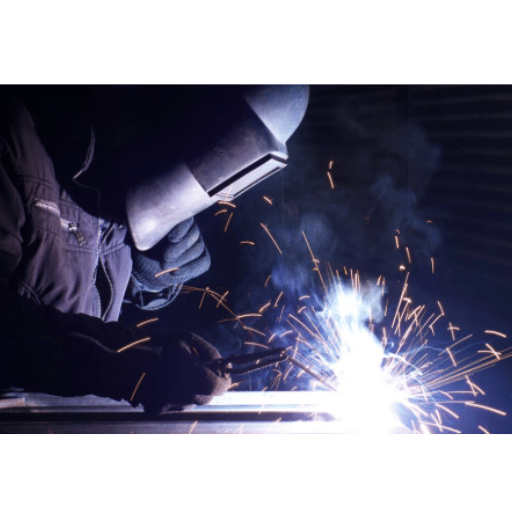
Welding techniques are the necessary processes of joining metals by heating and, sometimes, pressurizing them to create a strong bond. The most common methods are Arc welding and TIG welding with each method designed for certain types of application. Arc welding, known for its adaptability and simplicity of operation, is the best choice for large and heavy projects with thicknesses of material. In contrast, TIG welding offers precision as well as clean finishes which makes it the right choice for delicate tasks or thin materials. All these factors help to choose the right method; hence it depends on the material type, the strength that is needed and the finish that is wanted, thus guaranteeing effective and reliable results.
Understanding the Importance of Welding
In industries like construction, automotive, and manufacturing, welding is a vital process that produces durable and strong joints necessary for the structural integrity of the building. It gives rise to complex machines, infrastructures, and products, thus, it is a support of modern technological advancements. Welding is a great means to the reliability and precision that builds a safe and efficient world.
Overview of TIG and Arc Welding
TIG (Tungsten Inert Gas) welding and Arc welding are two common methods that among them have the strengths corresponding to the requirements of each particular application. Whereas TIG welding employs a tungsten electrode for the high precision and high-quality welds, its application scope is limited to the most demanding works and to the less easy to weld metals such as stainless steel or aluminum. The opposite situation is with Arc welding, which through the electric arc and consumable electrodes is able to provide a cheaper and more versatile solution for the heavy-duty welding in building and fabrication. Both techniques are indispensable in providing consistent quality across multiple sectors of the industry, depending on the specific needs of the project.
Who Should Read This? Hobbyists vs. Professionals
🛠️ Hobbyists
Those who like doing DIY projects or small-scale repairs can get a lot out of knowing these welding techniques as they will be able to improve their skills and work with different materials.
👷 Professionals
Those in construction, manufacturing, or automotive repair fields should adopt these methods in order to become more efficient, precise, and versatile in handling large or special projects.
Universal Application: No matter if you are just playing with a hobby or looking for an advanced industry application; these welding methods are suitable for the whole range of skill levels and project requirements.
TIG Welding Explained

TIG (Tungsten Inert Gas) welding, which is also referred to as Gas Tungsten Arc Welding (GTAW), uses a non-consumable tungsten electrode to make the weld. An inert shielding gas, which is usually argon or helium, acts to keep the molten weld pool from getting contaminated. This method gives very good control, resulting in extremely precise and clean welds, especially on the thin materials like aluminum and stainless steel. TIG welding is very versatile but still often needs more skill and time than other processes, hence, it is the favorite for detailed or visually critical projects.
Ce este TIG Welding?
📌 TIG Welding Definition
TIG welding, also known as Tungsten Inert Gas welding, is a very accurate welding method that uses an inert gas, either argon or helium, and a tungsten electrode for metal joining. The process gives high-quality, clean welds, which is why it has become the preferred choice for very thin sheets and delicate workpieces.
Process and Technique of TIG Welding
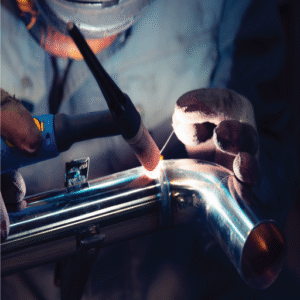
TIG welding is one of the welding processes, where an electric arc is generated between a non-consumable tungsten electrode and the metal part to be welded. The heat produced by the arc is very high, which melts the surface of the metals and a weld is created. A shielding gas, usually argon, is used to prevent the weld area from being contaminated by the atmosphere. In most cases, a filler rod is needed to supply material for the weld; however, direct welding is also possible. The welder has to precisely control the temperature, gas flow, and electrode position to create high-quality and accurate welds, which makes it a process requiring expertise and great care.
🔑 Key Process Elements:
- Electric Arc: Generated between tungsten electrode and workpiece
- Shielding Gas: Typically argon, prevents contamination
- Filler Rod: Optional, supplies additional material
- Precise Control: Temperature, gas flow, and positioning crucial
Equipment Used in TIG Welding
TIG welding process uses a specific set of tools and equipment for accurate and high-quality results. The main pieces of equipment are a TIG welding machine (power source), a tungsten electrode that does not get consumed, a supply of shielding gas (usually argon or a mix of argon and helium), and a torch for holding the electrode. The application of filler metal in the form of a rod may be done in case of welding thicker metals that need more metal than what is already there. Moreover, dominantly heat input is ruled through the use of accessories like foot pedals or hand controls, while welding helmets and gloves are the protective gear used to guarantee safety during the process.
Power Source
TIG welding machine
Electrode
Non-consumable tungsten
Gaz de protecție
Argon or argon-helium mix
Torch
Holds electrode
Filler Rod
For thicker metals
Safety Gear
Helmets and gloves
Required Skill Level for TIG Welding
⚠️ Skill Requirements:
The manual control required in the mainly sophisticated process makes TIG welding very demanding and skilled work. Besides, the welders must have full control over their hands, the heat and the filler material in order to complete the welds successfully as well as impressively strong and clean ones.
Training Necessity: High-class training and constant practice are inevitable, mainly for delicate and critical applications. This trend fetches TIG welding closer to skilled welders or those who are strongly devoted to broad learning and mastery of skills.
TIG Welding Classes and Resources
For those who wish to become experts in TIG welding, a variety of classes and resources are there to assist you in mastering the skills required. The locally available trade schools, community colleges, and vocational training centers usually have hands-on TIG welding programs designed for different levels of expertise. Furthermore, a number of online platforms also have a variety of instructional methods like detailed tutorials, video guides, and virtual courses for learning at one’s own pace. Also, the industry’s certifications from organizations such as the American Welding Society (AWS) can not only enhance your credentials but also be a proof of your expertise. These resources, whether face-to-face or online, are all aimed at very effective skill development in you.
📚 Learning Resources:
- Trade Schools & Community Colleges: Hands-on programs for different expertise levels
- Online Platforms: Tutorials, video guides, and virtual courses
- Industry Certifications: American Welding Society (AWS) credentials
- Vocational Training Centers: Specialized welding programs
Arc Welding Explained
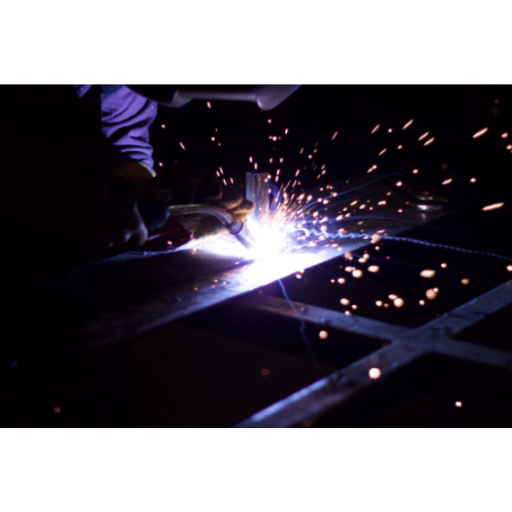
Arc welding is a technique where an electrical arc is used to produce heat that melts and fuses metals. The welding process involves the arc formation between an electrode and the metal workpiece, which generates the heat needed for welding. This process finds extensive application owing to its versatility and to its capability of dealing with different metals and thicknesses. Arc welding has become synonymous with a range of applications from construction to manufacturing, providing a sure way of linking strong and lasting connections. If proper training and tools are provided, it can be executed in a quick and efficient way over various projects.
What is Arc Welding?
📌 Arc Welding Definition
Arc welding is a process of electric welding where an arc is created and metals are melted and joined together. The arc produces very high temperature that melts the metal at the joint, thus it fuses and forms a strong bond when cooled. This technique is very adaptable and can be used for different kinds of metals, applications, and it is mostly employed in construction, manufacturing, and repair works.
Process and Technique of Arc Welding
Arc welding reality is to make an electric circuit through the welding machine, the electrode, and the workpiece. The start of the arc then gets passionately between the electrode and the metal surface, thereby producing the super-high heat which is enough to melt both the parts, and the material thus liquefied becomes a part of the weld pool, and when it cools down, it gets into a very strong unbreakable bond. This method of welding requires very skilled hand movements for keeping the arc length constant and as well controlling heat thus avoiding defects. Depending on the application, one can use different kinds of electrodes and also the shielding gases of his choice to improve the weld quality.
Equipment Used in Arc Welding
To implement arc welding and get the best results, there are a number of mandatory tools and components needed. The most important equipment are as follows:
Welding Machine (Power Source)
Provides the current needed for the welding arc, can be either AC, DC or a combination model.
Electrozi
Rods that are either consumable or non-consumable that carry current and make the weld joint, chosen based on material and welding technique.
Electrode Holder
Mechanism that keeps the electrode in place, stable and current is passed through it to initiate the arc.
Clemă de pământ
Connects the workpiece to the power source and achieves an electrical circuit.
Shielding Gas (if applicable)
Acts as a shield around the weld pool in specific welding processes such as MIG or TIG by protecting it from environment contamination.
Protective Gear
Equipment like helmets, gloves, and aprons that protect the welder from heat, sparks, and UV radiation.
Welding Cables
Wires that connect the power source to the electrode and the ground clamp, thus allowing the current to move.
System Integration: The components cooperate with each other to ensure the loop of strong and lasting welds to be used in diverse applications.
Required Skill Level for Arc Welding
📊 Skill Level Overview:
Arc welding is taking place only with a minimum level of understanding of welding principles and safety practices. The novices may gradually to the more advanced techniques along with the easier ones with stick welding (SMAW).
Advanced Requirements: However, the more complex processes like TIG or MIG welding require a lot of precision, skilled hands, and knowledge. Besides proper working conditions and practicing, reading blueprints or welding symbols is also a necessary skill for producing durable and high-quality welds.
Comparație între TIG și sudarea cu arc
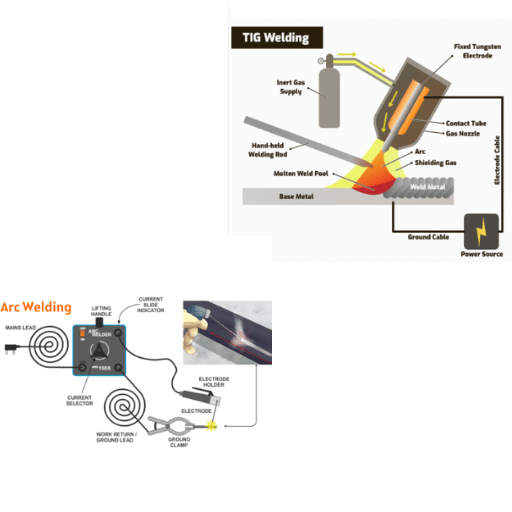
TIG (Tungsten Inert Gas) welding and Arc welding vary a lot in the aspects of precision, welding versatility, and application. The main reason why TIG welding is very highly rated is that it is very precise and produces very clean welds; thus, it would be the only suitable method for the previous mentioned conditions plus, it operates with arts, aerospace or even delicate pieces of an assembly. It uses a tungsten electrode and shielding gas for a controlled and high-quality weld but usually requires more skill and time.
Arc welding, in contrast, is the type that fits the heavy-duty and thick materials. It also is among the top methods in terms of applications for industrial and structural uses. It is faster than TIG and easier to learn, thus being the first choice in case of high-volume works or large-scale operations. Although Arc may cause more spatter and produce poorer detail than TIG, it still creates a very strong and durable joint.
Decision Factor: All in all, the decision regarding whether to go with TIG or Arc welding is conditional on the particular project requirements and involves the trade-off between precision and speed, aesthetic and durability.
Key Differences Between TIG and Arc Welding
1. Precision vs. Speed
TIG welding is precise and perfect for detailed projects whereas Arc welding is the quickest method and thus best for high-volume or large-scale applications.
2. Finish Quality
TIG welding gives very clean and detailed finishes with almost no spatter while Arc welding will give rougher surfaces with more spatter.
3. Ease of Use
Arc welding is quite easy to learn and operate, thus being accessible for beginners or quick tasks, while TIG welding calls for more skill and practice.
4. Material Compatibility
TIG welding is suitable for thin or delicate materials, whereas Arc welding is great for heavy-duty joints and thicker materials.
5. Application Focus
TIG welding is the choice for nice-looking projects while Arc welding gives priority to durability and strength in structural work.
Comparison Table of TIG vs Arc Welding
| Caracteristică | Sudare TIG | Sudarea arcului |
|---|---|---|
| Precizie | High precision for intricate work | Lower precision for large-scale projects |
| Appearance | Produces clean and attractive welds | Results in rougher welds requiring cleanup |
| Skill Level | Requires advanced skill and practice | Easier to learn and suitable for beginners |
| Material Thickness | Best for thin and delicate materials | Ideal for thicker and heavier materials |
| Applications | Focused on aesthetics, such as automotive or art | Prioritizes strength, used in construction |
| Equipment Cost | Higher cost due to complexity | More affordable and widely available |
| Viteză | Slower process for detailed work | Faster for heavy-duty welding |
Benefits and Drawbacks of Each Method
When assessing the two techniques, it is very important to weigh their pros and cons:
Surse de referință
- Universal Technical Institute – What Is TIG (Gas Tungsten Arc Welding/GTAW)?
The article goes into detail on the benefits of using TIG welding in the aforementioned applications and gives other instances as well. - First Mats – What is the Difference Between TIG, MIG, Arc, and Oxy-Acetylene Welders?
The welding methods are compared—TIG and ARC specifically—through evaluating their ease of use, accuracy, and price. - Zintilon – Arc vs TIG vs MIG: Which One is Better for You?
In the article, ARC, TIG, and MIG welding are analyzed with regard to their advantages and disadvantages in different applications. - TWI Global – MIG vs TIG Welding
The article emphasizes the precision and strength of TIG welding as a major advantage over other methods. - Automotive Training Center – TIG vs MIG Welding
The authors claim that TIG and MIG welding are different not only in speed and precision but also in quality.
Întrebări frecvente (FAQs)
What distinguishes TIG from ARC welding in the most significant aspect?
TIG welding or tungsten inert gas welding is known for its use of non-consumable tungsten electrode and is an excellent process for producing precision and high-quality welds, while on the other hand, ARC welding, a process that makes use of consumable electrodes, is mostly used for heavy-duty applications.
Which method of welding wins the versatility argument?
Welded using the ARC method gets considered to be the most versatile as it can work on many more types of materials, and in many different places, even outdoors.
Which of the techniques can be referred to as the stronger welding method for working with thin materials?
Due to the accuracy of its operation and its control over the heat input, TIG welding gets to be the first option for thin materials.
Which industries make a predominant use of TIG welding?
Among the industries where TIG welding is extensively practiced are aerospace, automotive, and art industries because they are areas where precision and aesthetics matter.
Which industries are the foremost users of ARC welding?
The applications where ARC welding finds its way through are mainly in construction, shipbuilding, and manufacturing of heavy equipment.
Concluzie finală
Understanding the differences between Arc and TIG welding is crucial for selecting the right technique for your specific project. TIG welding excels in precision, aesthetics, and delicate work, making it ideal for automotive, aerospace, and artistic applications. Arc welding, on the other hand, offers speed, durability, and versatility for heavy-duty construction and manufacturing tasks. By carefully considering factors such as material thickness, desired finish quality, skill level, and project requirements, you can make an informed decision that ensures optimal results. Whether you’re a hobbyist exploring new techniques or a professional seeking to enhance your capabilities, mastering both methods will significantly expand your welding expertise and project possibilities.