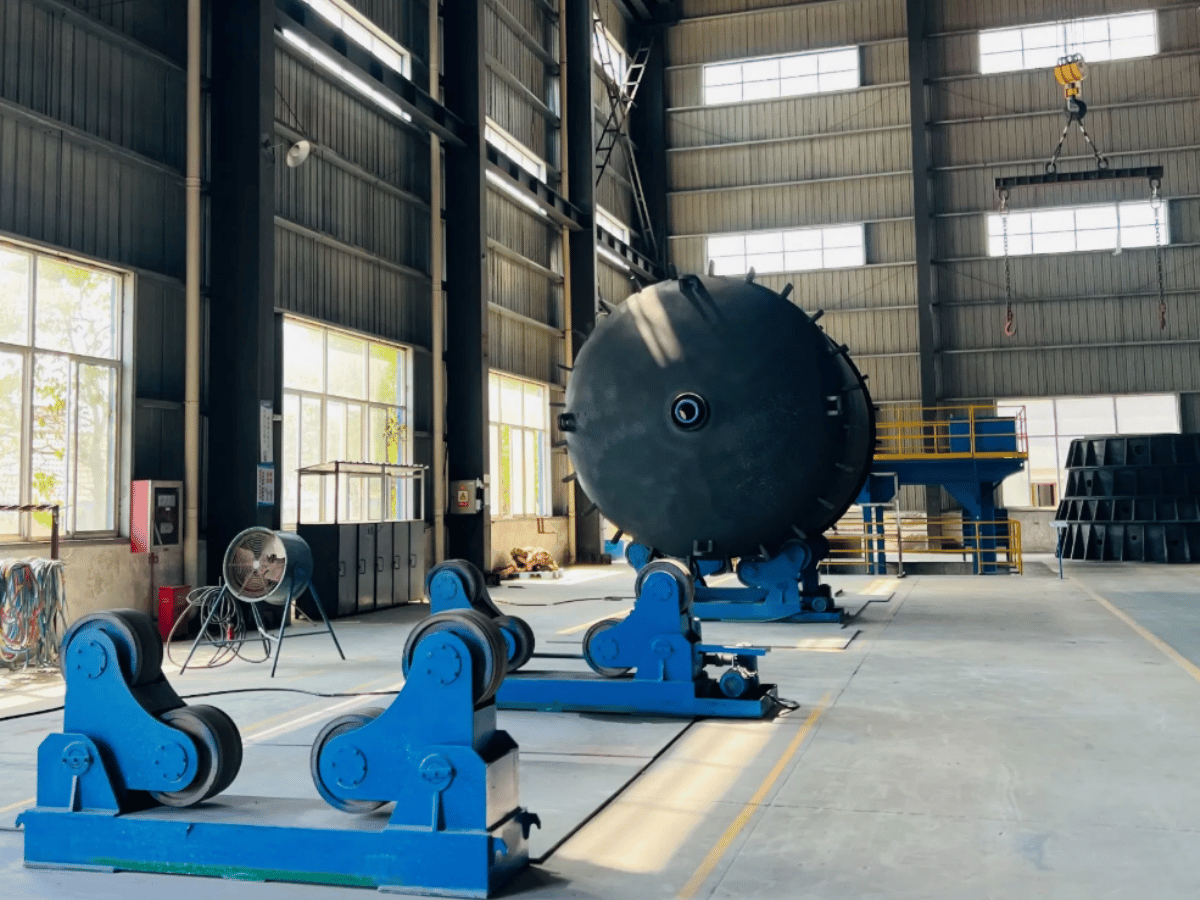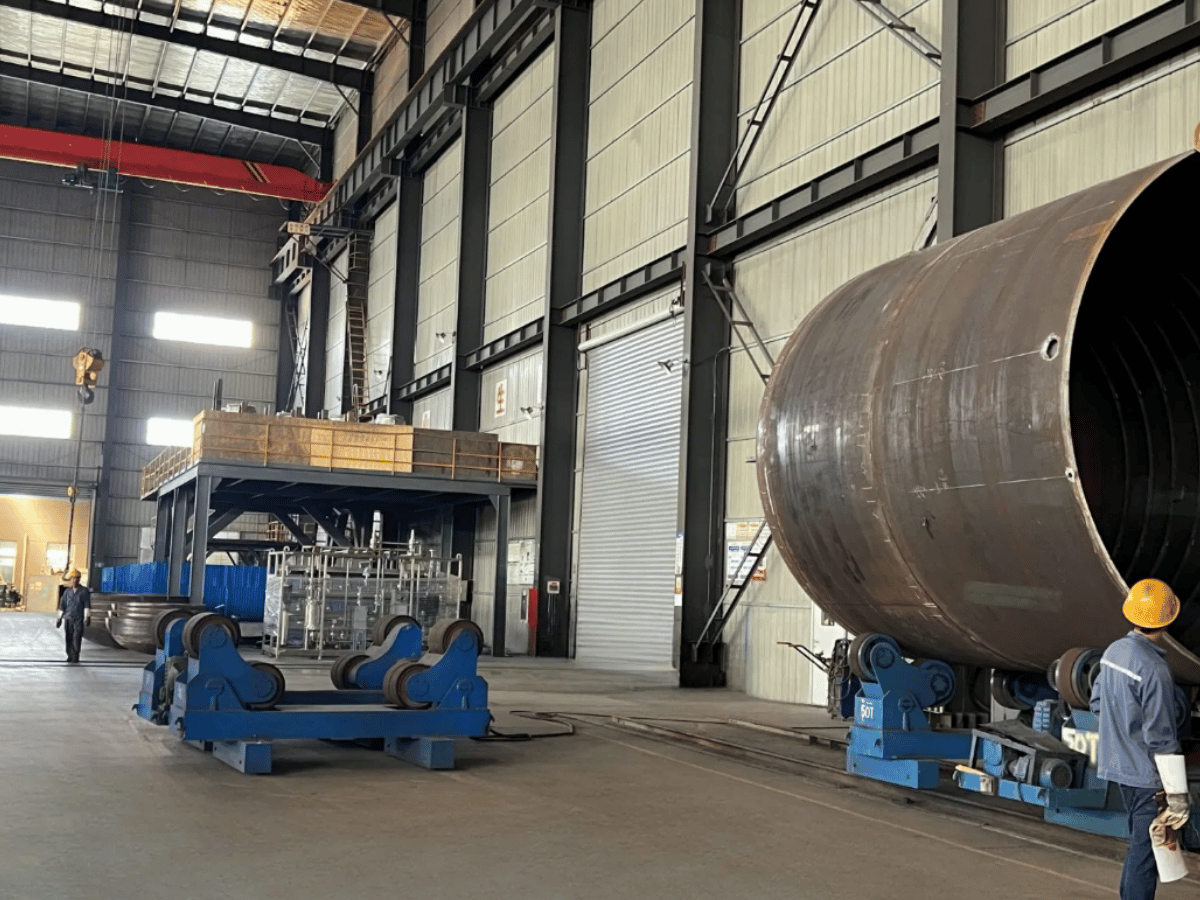
The welding industry is rapidly changing and ever-evolving. Therefore, manufacturers are continually seeking innovative solutions to maximize productivity, enhance efficiency, and achieve accuracy. Enter the weld manipulator: an automated welding positioner accompanied by a boom, heralding a new era in the performance of complex welding work. An indispensable tool that guarantees results every time, reducing manual handling and thereby improving safety in the workplace, ultimately increasing overall output. In this blog, we examine the properties, benefits, and applications of the weld manipulator, discussing how it has become a game-changer in various industries. This guide will be an informative look for welders and business owners engaged in any form of business endeavors aimed at increasing productivity through the use of automated welding.
Introduction to Weld Manipulators
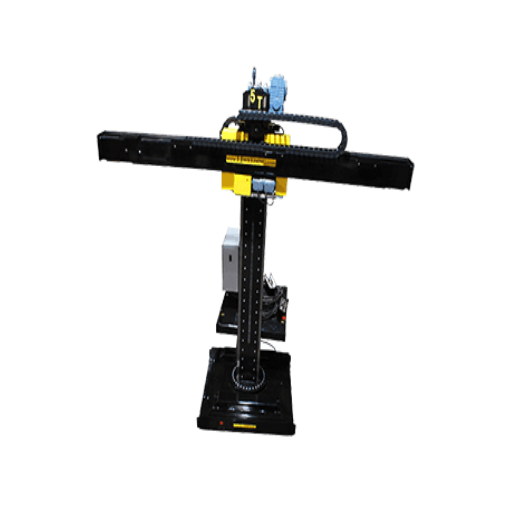
Weld manipulators are a type of precision equipment designed to hold and perform welding work. They aid in enhancing the efficacy and quality of welding by producing consistent welds and reducing manual intervention. Typically, weld manipulators are utilized in the construction, manufacturing, and aerospace industries. Weld manipulators enable improved productivity while ensuring safety and reducing production downtime. They are sufficiently versatile to be used in almost all welding applications, including the handling of significant and complex workpieces.
Weld Manipulatorとは?
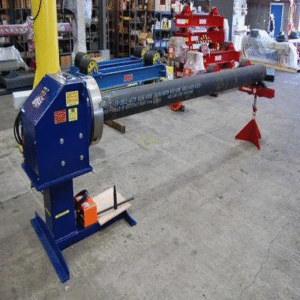
Weld manipulators, being special-purpose machines, have the role of holding, positioning, or moving the welding tool or workpiece accurately from the start of the welding process. The entire idea is about a machine helping enhance the consistency, accuracy, and efficiency of welding operations by positioning the welding torch or the material to be welded. Envisage using these machines within the gamut of construction, shipbuilding, automotive, and manufacturing industries; weld manipulators are all-purpose equipment used in welding processes, especially those involving big-sized or complex parts. The modern design of such weld manipulators incorporates features such as programmable controls, automated movement systems, and robot integration, thereby allowing welders to place welds with minimal manual effort, ensuring safety and mitigating fatigue.
溶接マニピュレータの用途
An indispensable tool in various industrial operations, weld manipulators enhance efficiency and precision in almost any welding process. Here are the applications considered most important for weld manipulators:
- Pipe and Tank Welding
Weld manipulators are often used to weld cylindrical structures such as pipes and tanks. The machines manipulate large and heavy components to ensure weld quality is maintained, sometimes even in awkward positions.
- Pressure Vessel Manufacturing
The weld manipulators are used in pressure vessel manufacture to weld seams and joints with precision, the maintenance of structural integrity under high pressure being key.
- Heavy Equipment Fabrication
Welding large and complex parts is typically involved in the fabrication of heavy equipment. Weld manipulators rotate or position parts, ensuring welding accuracy with minimal manual effort.
- Aerospace Component Assembly
Aerospace manufacturing requires utmost precision. Weld manipulators precisely weld intricate components to conform to stringent industry standards with maximum accuracy.
- Structural Steel Assembly
These weld manipulators make immense construction-grade steel structures more efficient by automating repetitive welding tasks, reducing labor costs, and ensuring uniform welds on beams, columns, and trusses.
Advantages of Using a Boom Welding Manipulator
- 精度と一貫性が向上しました
Machines welding by boom manipulators ensure process accuracy while minimizing welding errors, thereby improving weld quality. This is of utmost importance in industries where exact specifications are mandatory.
- Increased Productivity
With these machines automating the welding process, the manual effort needed to undertake projects gets reduced—with projects being completed in lesser time without compromising on quality.
- Improved Safety
Welding manipulators ensure a safe working environment by reducing the direct exposure of workers to hazardous welding arcs, fumes, and extreme temperatures.
- Cost Efficiency
Automation implies less manual labor and reduced material wastage; hence, these factors contribute significantly to lowering production costs over time.
- Versatility and Flexibility
These engine manipulators can perform almost all welding processes on pieces of various sizes and shapes, thus offering a universal solution to multiple industries.
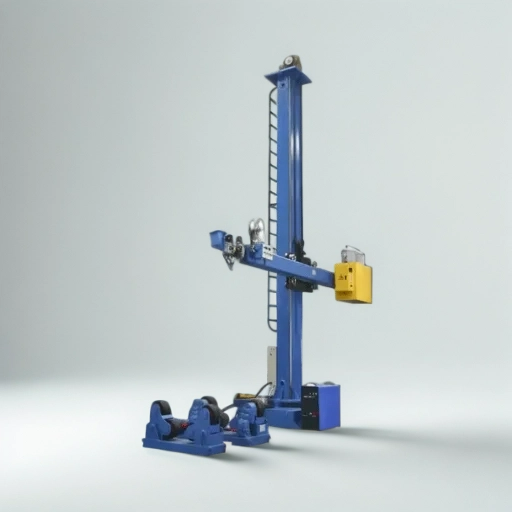
Components of a Weld Manipulator System

- Base
Stability and support are provided by the base to the entire manipulator system, ensuring durability and smooth functioning.
- Column and Boom
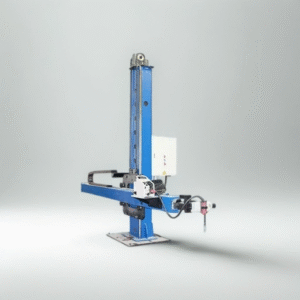
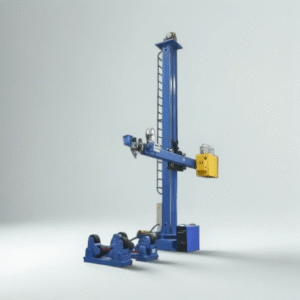
The column and boom provide vertical and horizontal motion to the welding head, enabling it to be precisely positioned during welding operations.
- Manipulator Arm
Ensuring movement and alignment are controlled to place the welding torch or equipment to the desired welding angle and position.
- Control Unit
Allows the operator to program and manipulate the manipulator’s function for accuracy and repeatability.
- Welding Head or Torch
The tool that must be mounted on the manipulator to perform welds on the workpiece.
- Power Source
A power source supplies energy to the welding head to create welds, ensuring steady and efficient performance.
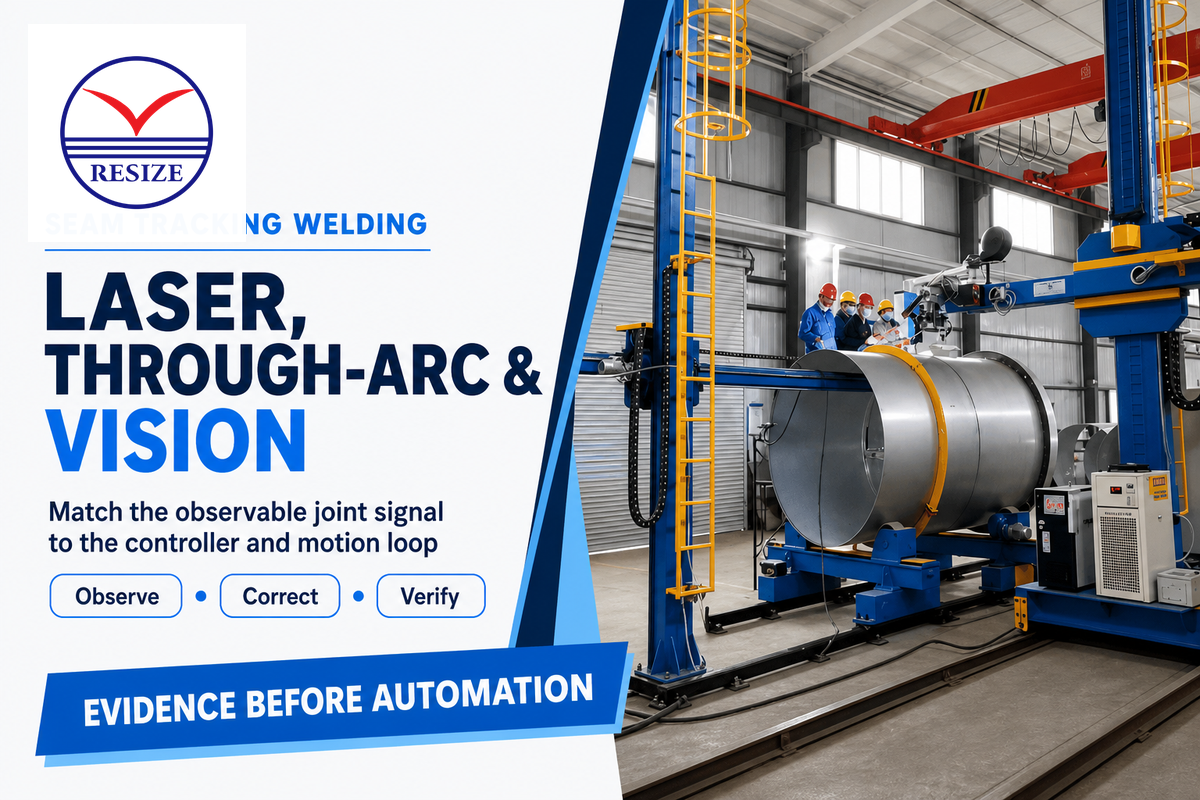
Understanding the Boom and Column Structure
The boom and column structure of a welding manipulator is specifically designed to maintain stability, precision, and versatility during the welding operation. The column is the vertical support that ensures the manipulator remains steady, even under heavy loads or during intricate welding tasks. It provides vertical movement for the manipulator: The boom needs to go up and down easily. The boom is set up horizontally to allow extensions in horizontal directions and the horizontal positioning of either a welding head or a torch. This structure enhances the manipulator’s ability to weld with pinpoint accuracy at various positions and angles, resulting in higher production efficiency.
In recent times, with the growing interest in smart sensors and AI-based control systems within the boom and column, such developments are realized per the latest trends in industrial automation and with input from Google’s search engine. These developments enable the real-time monitoring of activities, predictive maintenance, and automatic adjustments to achieve optimal welding conditions. By understanding and integrating these state-of-the-art technologies, industries can lean toward improved weld quality and reduced downtime.
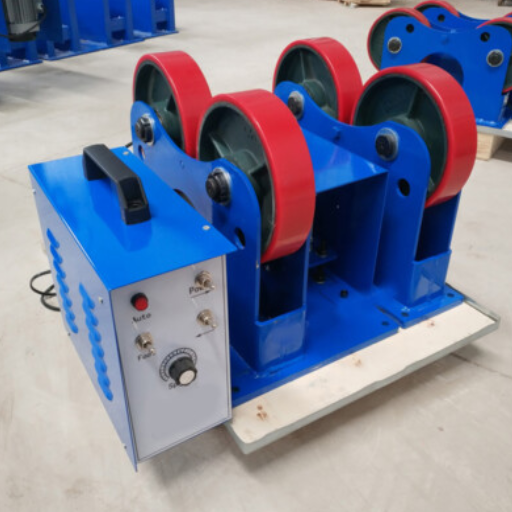
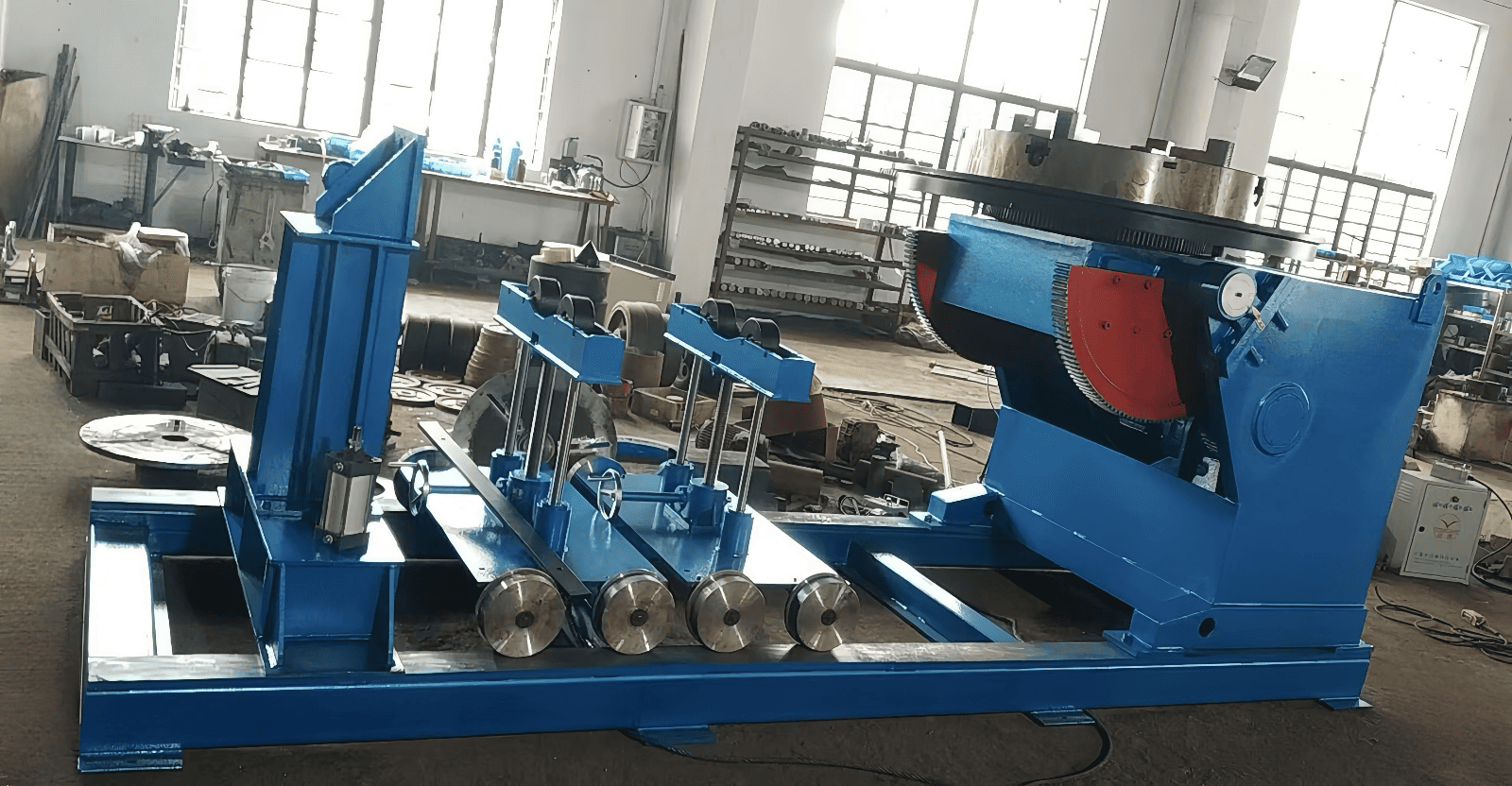
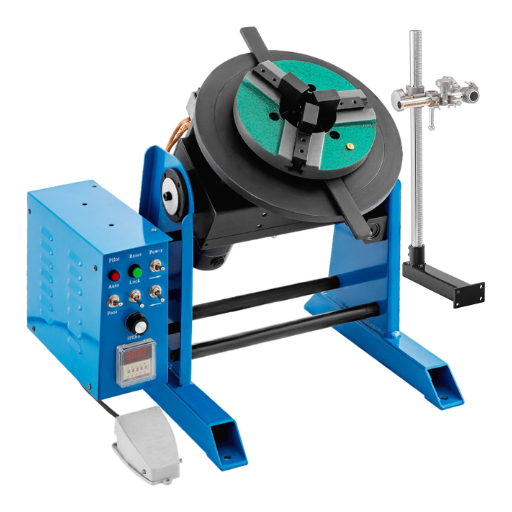
Welding Positioners and Their Role
Welding positioners significantly enhance modern welding by ensuring higher precision, increased productivity, and a smoother workflow. The devices crank, support, and rotate the workpiece so that the welder can work with minimal strain in the best position, ensuring a perfect weld. Using current data provided by Google’s search engine, it is clear that industries are seeking further advances in automation for welding positioners. AI-powered controls and Internet-of-Things (IoT)- enabled sensors can be integrated into welding positioners for real-time performance monitoring and seamless coordination of various operations. This ensures the reduction of human error and downtime to a minimum, creating an even greater tool to provide quality welds while increasing productivity.
Power Source and Flux Recovery Systems
Power sources and flux recovery systems are essential elements in modern welding processes, ensuring efficiency and high-quality output. The power source supplies the vital electrical energy for welding, with newer models featuring advanced features such as current, voltage, and waveform selectivity. These features, however, help optimize power consumption and weld consistency.
Flux recovery systems, meanwhile, help recover flux that is not used at the welding front, thereby minimizing waste and reducing costs. In some recent studies, flux recovery systems have been shown to increase material usage efficiency by up to 90%, thus enabling sustainable welding. Furthermore, modern flux recovery systems are designed to minimize the presence of impurities, resulting in improved weld integrity and lower defect rates. The energy-efficient power sources, combined with these systems, offer environmental and operational advantages, making them crucial to any welding operation seeking to streamline its processes.
Automation in Welding
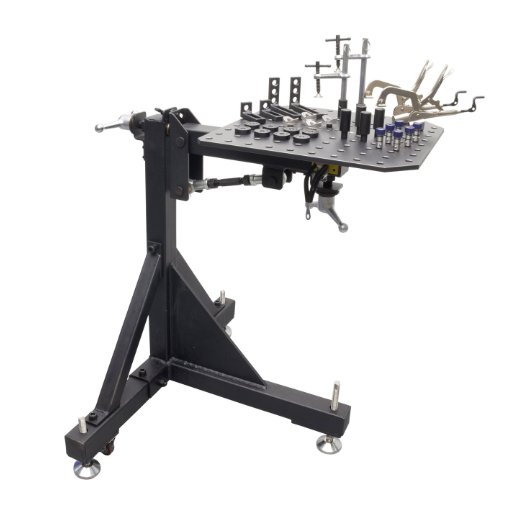
Through welding automation, efficiency is improved while precision and consistency are maintained in manufacturing processes. Automated systems, which comprise robotic arms and programmable machines, function at high speeds with minimal to zero human error. These systems work particularly well for tasks that require uniformity and repetition, thereby preventing waste. Additionally, automated welding establishes safety conditions for worker exposure; for instance, operating in a controlled environment with minimal heat and fumes proves ideal. Thus, such an arrangement of benefits highlights automation as a significant complement to enhancing both productivity and quality in the modern welding trend.
Benefits of Welding Automation
- Higher Productivity Level
By far, automation can achieve higher product speed levels compared to manual welding. Automated systems can continually perform tasks—that is, they do not require a break—so there is less downtime, and thus manufacturers can efficiently ramp up to meet demand.
- Greater Accuracy and Uniformity
Automation allows for few or no human errors, ensuring a uniformly high quality of welding across the entire range of products. A uniform weld means fewer defects, which reduces rework and saves time and cost.
- Improved Safety
Most welding processes pose hazards such as very high heat, toxic fumes, and dangerous equipment, and by automating the welding processes, workers would be exposed much less to these unsafe environments.
- Waste of Material Reduction
With accurate programming and controls, automated welding systems optimize resource utilization, thereby minimizing waste and reducing overall production costs.
- Cost-Effectiveness While in Operation
Although the capital cost of automated welding equipment is high, manufacturers with increased productivity, a reduced labor force, and consistent quality may have found it a cost-effective solution. In-service cost-effectiveness
CNC Technology in Weld Manipulators
The CNC technology has ushered in a revolution by endowing weld manipulators with superlative precision, repeatability, and efficiency. The welding tools are positioned automatically using CNC systems, allowing manufacturers to produce consistent weld quality in large manufacturing batches. When CNC is combined with weld manipulators, the potential for human error is reduced, which remains a concern, given that weld parameters must be strictly adhered to in industries with stringent quality standards, such as aerospace and automotive manufacturing.
Recent advances in Google data reveal that AI and Machine Learning are further boosting CNC technology. These innovations enable weld manipulators to react dynamically and adaptively to material variations or environmental conditions, ensuring the best results under less-than-ideal scenarios. Additionally, the application of IoT in CNC systems enables real-time monitoring and predictive maintenance, thereby reducing downtime and maximizing uptime. It is this union of CNC technology with next-generation technology that underscores the paramountcy of CNC technology in modern manufacturing workflows.
Variable Speed Controls for Precision
Variable speed control makes significant contributions to CNC technology in terms of precision enhancement. They enable the operator to adjust the speeds of machining processes during an operation, thereby facilitating the handling of different materials, minimizing tool wear, and saving time for improved surface finishes. The control system works by constantly adjusting either the spindle’s rotation speed or the feeding rate, as required by the task, ensuring real-time precision and repeatability. Supporting this dynamic mode of feed and speed control with intelligent algorithms and feedback systems means they can also be automated, reducing manual intervention and improving overall efficiency. Such functionality gains immense importance when fine design or delicate materials are being engineered, where utmost precision is demanded, thereby augmenting the reliability of modern CNC systems.
Different Welding Techniques with Manipulators
Welding is found in many industries. A variety of welding techniques can be applied to different materials, such as MIG, TIG, and submerged arc. Which is more efficient, safer, and promotes reliability than hand-held welding?
| パラメータ | MIG溶接 | TIG溶接 | Submerged Arc |
|---|---|---|---|
| 機能 | High-speed welds | 精密溶接 | Deep penetration |
| ベスト フォー | Large projects | Thin materials | Heavy-duty tasks |
| 制御 | Automated/manual | マニュアル | 自動化 |
| アプリケーション | 自動車 | エアロスペース | Pipelines |
| キーフィーチャー | High speed | Fine control | High efficiency |
MIG Welding with Boom Manipulators
MIG welding is an efficient and versatile welding process that finds application wherever the GMA welding method applies. When paired with a boom manipulator, this welding method gains even more practicality for large-scale and complex projects. Boom manipulators have the most extended reach and best control; hence, welders will perform operations on components of all shapes and sizes with accuracy and minimal fatigue.
The other benefits of using a boom manipulator in conjunction with MIG welding are high productivity and consistent welds, particularly in shipbuilding, aerospace, and heavy equipment manufacturing applications. According to industry reports, boom manipulators will reduce setup time up to 25% and improve welding efficiency by 30%, making it indispensable for production setups where demands are high.
When fitted with higher automation, boom manipulators can regulate welding parameters such as wire feed speed, voltage, and shielding gas flow, so they weld as consistently as possible every time; when combined with real-time monitoring sensors, they can even detect welding defects during the process, thereby improving welding quality and reducing costs for rework.
The combination of welding with manipulators represents a significant step forward in precision, efficiency, and scalability, all of which are targeted at meeting the demands of industrial applications.
TIG Welding Applications
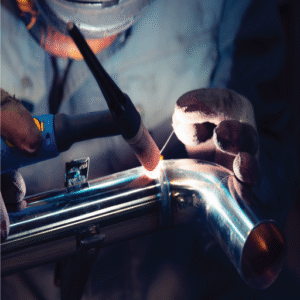
TIG welding is one of the lesser-known applications, as it offers great precision and versatility in its processing. Therefore, below are five critical fields of application of TIG welding:
- 航空宇宙産業
TIG welding in aerospace is used to fabricate lightweight, high-strength components from materials such as titanium and aluminum. It must be exact with few imperfections. The welds must hold together so that high-performance and safety standards are met.
- 自動車産業
TIG welding is preferred in automobile manufacturing for welding exhausts to body panels because the process produces clean welds that are visually appealing and durable. Of particular importance are welds on thinner materials, which must be consistently better.
- Food and Beverage
The food and beverage industry deploys stainless steel equipment that requires welds that are hygienic and corrosion-resistant. By adopting TIG welding techniques, smooth finishes that prevent contamination and maintain adherence to stringent regulatory standards can be ensured.
- Medical Equipment Manufacturing
Because of its precision and the cleanliness it preserves, TIG welding is applied to manufacture surgical tools, implants, and equipment made from stainless steel, titanium, or any other special metal.”
- Art and Sculpture
Artists and sculptors use TIG welding because it offers the precision and capability to work with a wide range of metals. It allows for unique designs with clean welds, addressing aesthetic concerns.
Sub-Arc and Plasma Welding Methods
- Submerged Arc Welding (SAW)
The method forms an arc between a continuously fed electrode and the workpiece, typically under a cover of granular flux. The process can weld thick materials, providing deep weld penetration with high rates of deposition.
- プラズマアーク溶接(PAW)
PAW resembles TIG welding, except that the constricted arc forms far greater temperatures. It produces very accurate welds and is used for complex jobs that require the utmost control and precision.
- Electrogas Welding (EGW)
EGW is a vertical welding process for thick materials. It utilizes a gas-shielded arc and an upwardly moving consumable electrode, making it the technique of choice for welding in shipbuilding and large structures.
- Electroslag Welding (ESW)
It is a type of vertical welding used for joining thick sections of steel. The process utilizes molten slag to conduct electricity and fuse metals, a method highly suitable for heavy-duty applications.
- Micro Plasma Welding
As a variant of Plasma Arc Welding, this process utilizes low-current plasma arcs to join thin materials with high precision. Industries such as electronics employ this for delicate and precise welds.
参照ソース
- Justification of the use of multifunctional assembly and welding manipulators at shipyards
- 著者: A. E. Burmistrova, O. A. Shchegoleva, Evenly G. Burmistrov, Tatiana A. Mikheeva
- Published in: Russian Journal of Water Transport
- Publication Date: March 14, 2023
- 概要:
- This article explores the potential for enhancing the mechanization of assembly and welding production in shipyards by introducing multifunctional assembly and welding manipulators. The authors argue that manipulators with initially limited functionality can be gradually upgraded, enhancing production flexibility and leading to full robotization.
- The study concludes that such equipment can significantly enhance the adaptability of shipyard operations, enabling continuous modernization and ultimately leading to the development of fully automated systems for specific assembly and welding tasks.
- Prospects for replacing production lines in the shipyards workshops with multifunctional assembly and welding manipulators
- 著者: E. G. Burmistrov, O. A. Shchegoleva, A. E. Burmistrova
- Published in: Vestnik Gosudarstvennogo universiteta morskogo i rechnogo flota imeni admirala S. O. Makarova
- Publication Date: July 27, 2023
- 概要:
- This paper explores the technical improvements and flexibility enhancements in assembly and welding production at domestic shipyards through the adoption of multifunctional assembly and welding manipulators. The authors highlight the inefficiencies of existing mechanized production lines, particularly in small-scale production settings.
- The research highlights the need for a flexible production module that can accommodate varying workloads and enhance the overall technical capabilities of shipbuilding enterprises. The study concludes that replacing inefficient production lines with multifunctional manipulators can significantly improve productivity and operational efficiency.
よくある質問 (FAQ)
小型溶接マニピュレータとは何ですか?また、どのように動作しますか?
小型溶接マニピュレータは、ワークピースを正確に配置することで溶接プロセスを支援するように設計された特殊なデバイスです。これらのマニピュレータは、多くの場合、溶接作業中に正確な動きと安定性を可能にするブームと柱の構造を備えています。 MIG、TIG、サブアークなどのさまざまな溶接ヘッドを装備することで、さまざまな溶接技術を可能にします。その主な機能は、特に限られた空間や複雑な形状における溶接作業の効率と品質を向上させることです。.
コラム溶接およびブーム溶接マニピュレータはどのように溶接精度を向上させるのですか?
コラムおよびブーム溶接マニピュレータは、溶接ヘッドの制御された動きを可能にする安定したプラットフォームを提供することで溶接精度を向上させます。可変速度調整や正確なオペレーター制御などの機能により、これらのシステムは溶接工が一貫した円弧の長さと速度を維持できるようにし、その結果、高品質の溶接が可能になります。ブームを上昇させて回転させる機能により、さまざまな位置に簡単にアクセスできるため、複雑なパイプ溶接やその他の複雑な用途に最適です。.
どのような種類の溶接システムが小型溶接マニピュレータを利用できますか?
小型溶接マニピュレータは、自動溶接セットアップ、半自動プロセス、さらには手動操作を含むさまざまな溶接システムに統合でき、MIG、TIG、プラズマ、サブアーク溶接などの複数の溶接技術と互換性があります。また、これらのマニピュレータは、特に円周溶接や縦溶接など、高精度が要求される状況において、旋削ロール、回転子、その他の機器と組み合わせて使用して、溶接プロセス全体を強化することができます。.
小型溶接マニピュレータにおけるブーム容量の意義とは?
Boom capacity is crucial in small welding manipulators as it determines the weight and type of materials that can be effectively handled during the welding process. A higher boom capacity allows the manipulator to support heavier welding heads and larger workpieces, enhancing its versatility. For instance, a boom with a capacity of 250 lbs enables the use of more robust welding machines and tools, thereby expanding the manipulator’s application in various industrial settings.
小型溶接マニピュレータは、自動パイプ溶接に使用できますか?
はい、小型の溶接マニピュレータは、自動パイプ溶接に非常に効果的です。特に困難な位置でパイプ上で一貫した溶接を実行するために必要な精度と安定性を提供します。自動パイプ溶接用に設計された溶接ヘッドと、スイベル機能や調整可能なブーム長などの機能を統合することで、さまざまな直径のパイプ上で効率的かつ高品質の円周方向および縦方向の溶接が可能になります。.
小型溶接マニピュレーターにはどのようなアクセサリとオプションが用意されていますか?
小型溶接マニピュレータには、機能を強化するためのさまざまなアクセサリとオプションが用意されています。標準アクセサリには、ワークピースを固定するためのクランプ、移動性のためのトラベルカー、さまざまなプロセス用の追加の溶接ヘッドが含まれます。オプション機能には、より優れた自動化のための高度なコントローラ、リーチを増やすためのサイドビーム、さまざまな溶接位置に対応するための直線的なサイド調整も含まれる場合があります。これらの機能強化により、ユーザーはマニピュレータを特定の溶接タスクに合わせて調整できるようになり、全体的な効率が向上します。.
溶接ヘッドの安定性は溶接プロセスにどのような影響を与えますか?
溶接ヘッドの安定性は、高品質の溶接を実現するために不可欠です 安定した溶接ヘッドは、多孔性や一貫性のないビードの外観などの欠陥につながる可能性がある溶接プロセス中の振動や偏差を最小限に抑える 小型溶接マニピュレータは、堅牢な構造と正確な制御メカニズムを通じて優れた溶接ヘッドの安定性を提供するように設計されており、溶接アークの焦点が絞られ、動作全体にわたって一貫性が保たれます。.
小型溶接マニピュレーターでは電源がどのような役割を果たしますか?
電源は、溶接プロセスの性能と効率に直接影響するため、小型溶接マニピュレータの重要なコンポーネントです。信頼性の高い電源は、溶接機が一貫して動作することを保証し、さまざまな材料や厚さに必要な溶接力を提供します。また、自動溶接機能や可変速度調整などの機能もサポートしており、より制御された効果的な溶接作業が可能になります。.