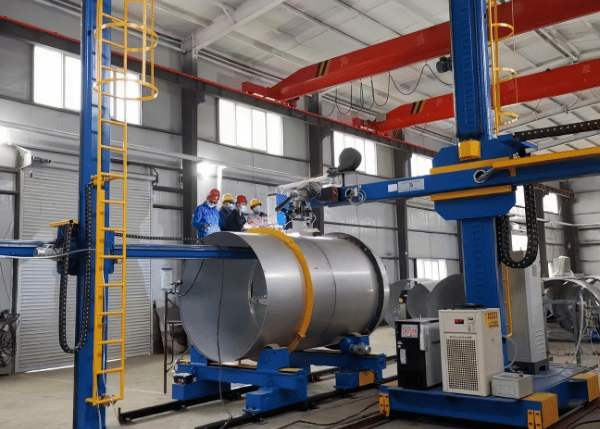
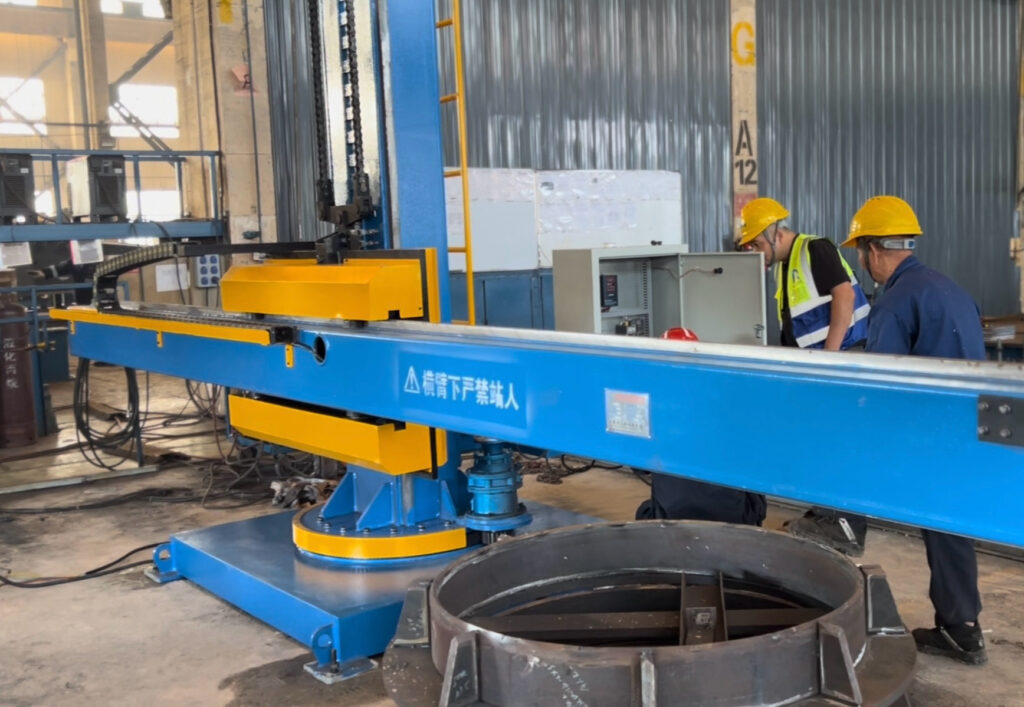
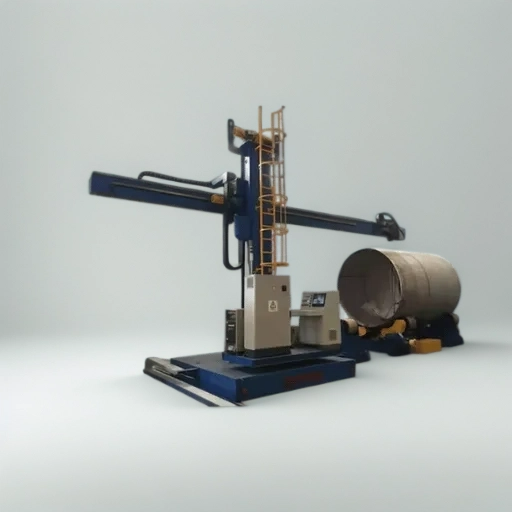
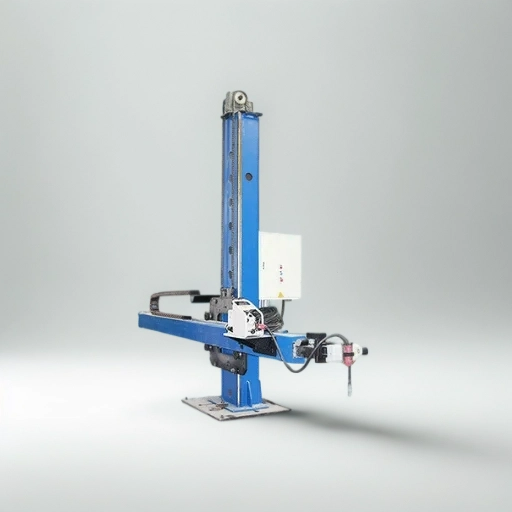
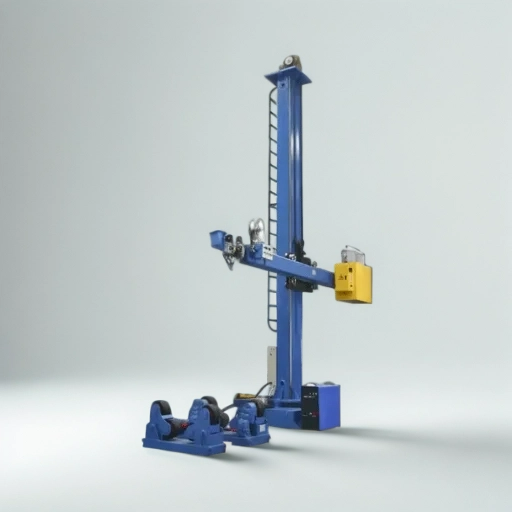
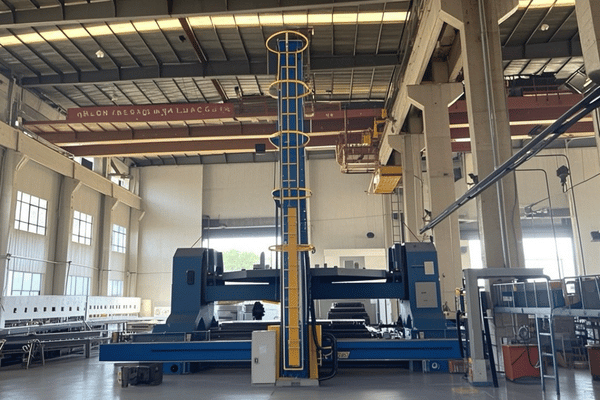
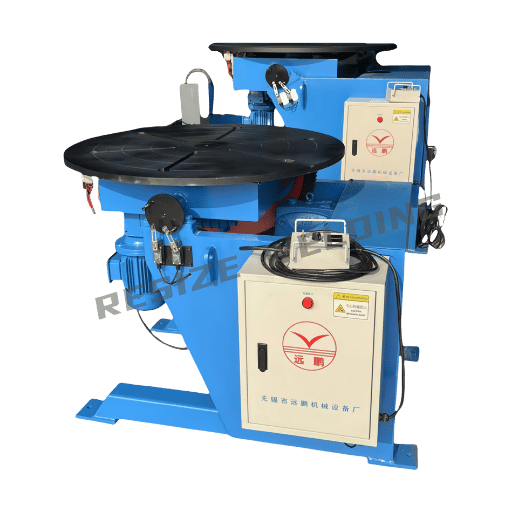
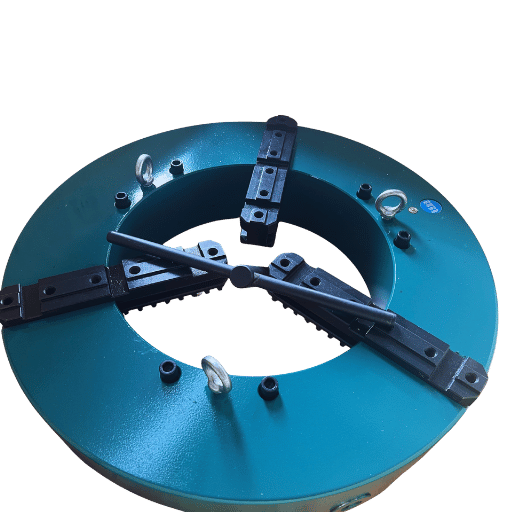
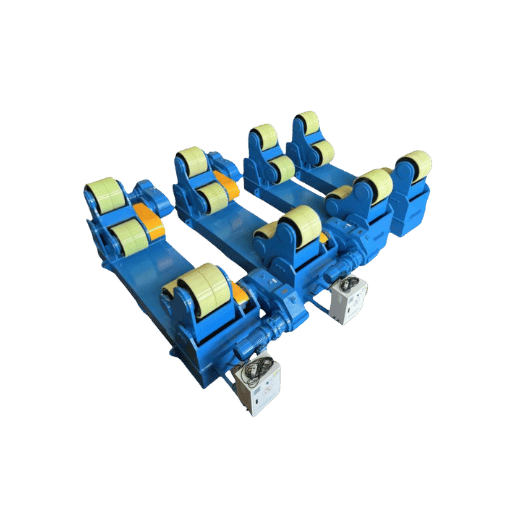
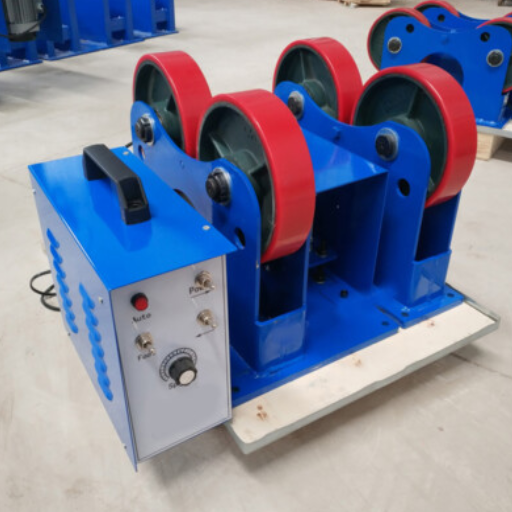
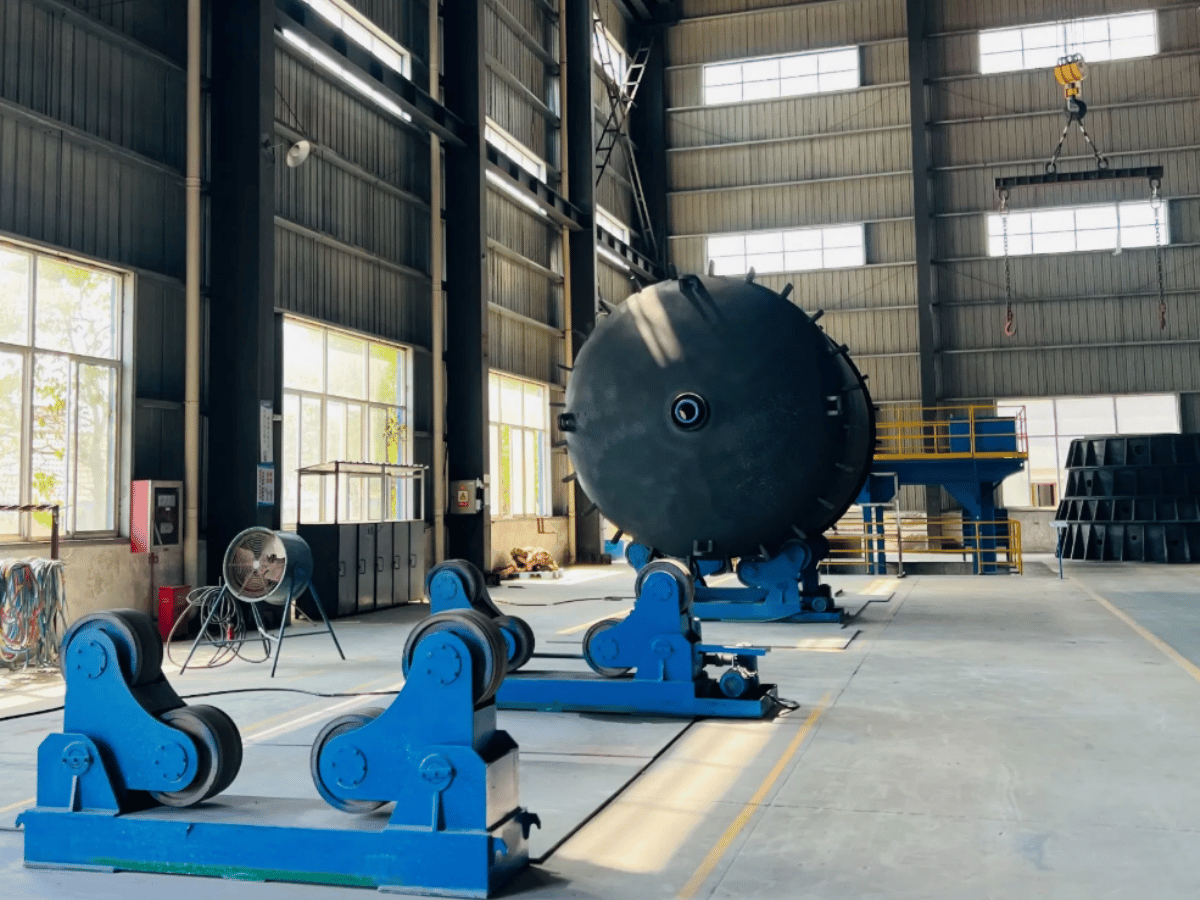
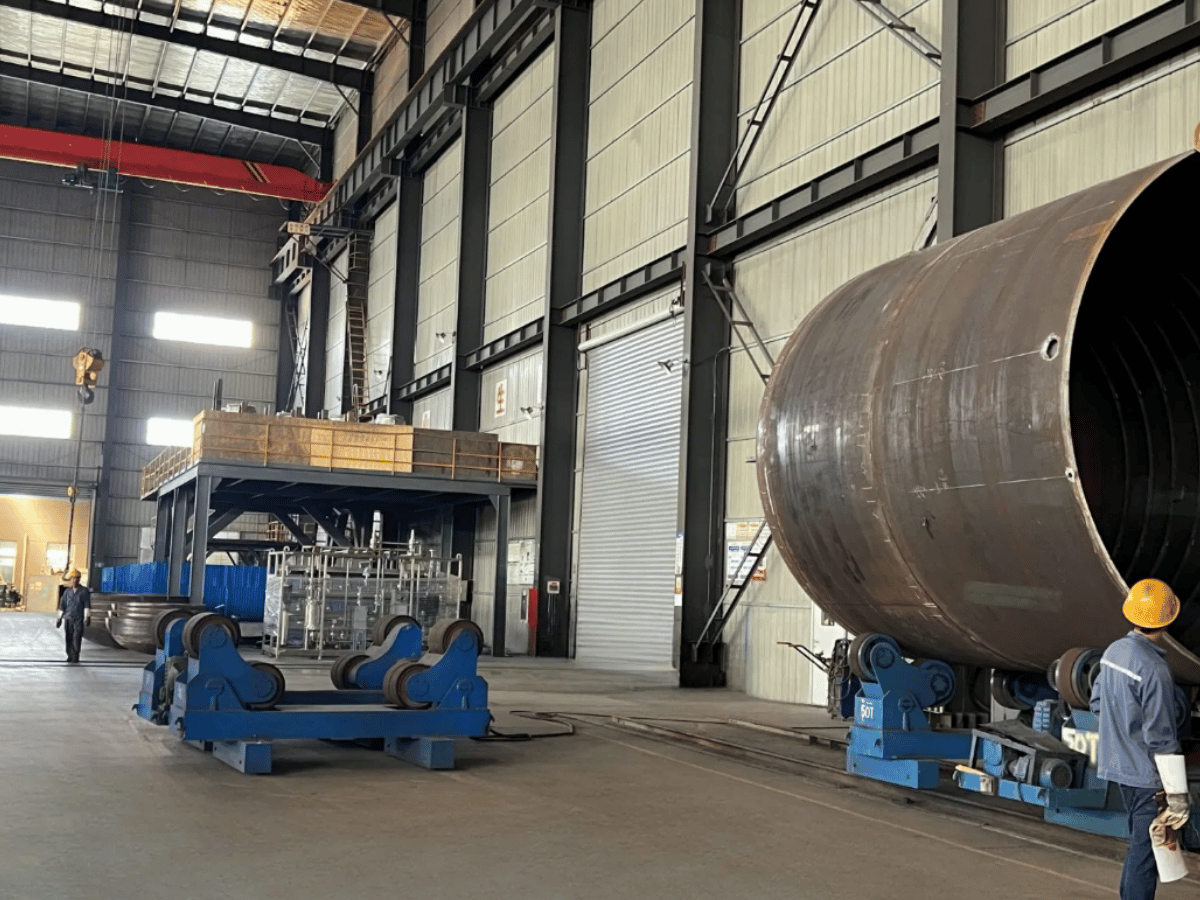
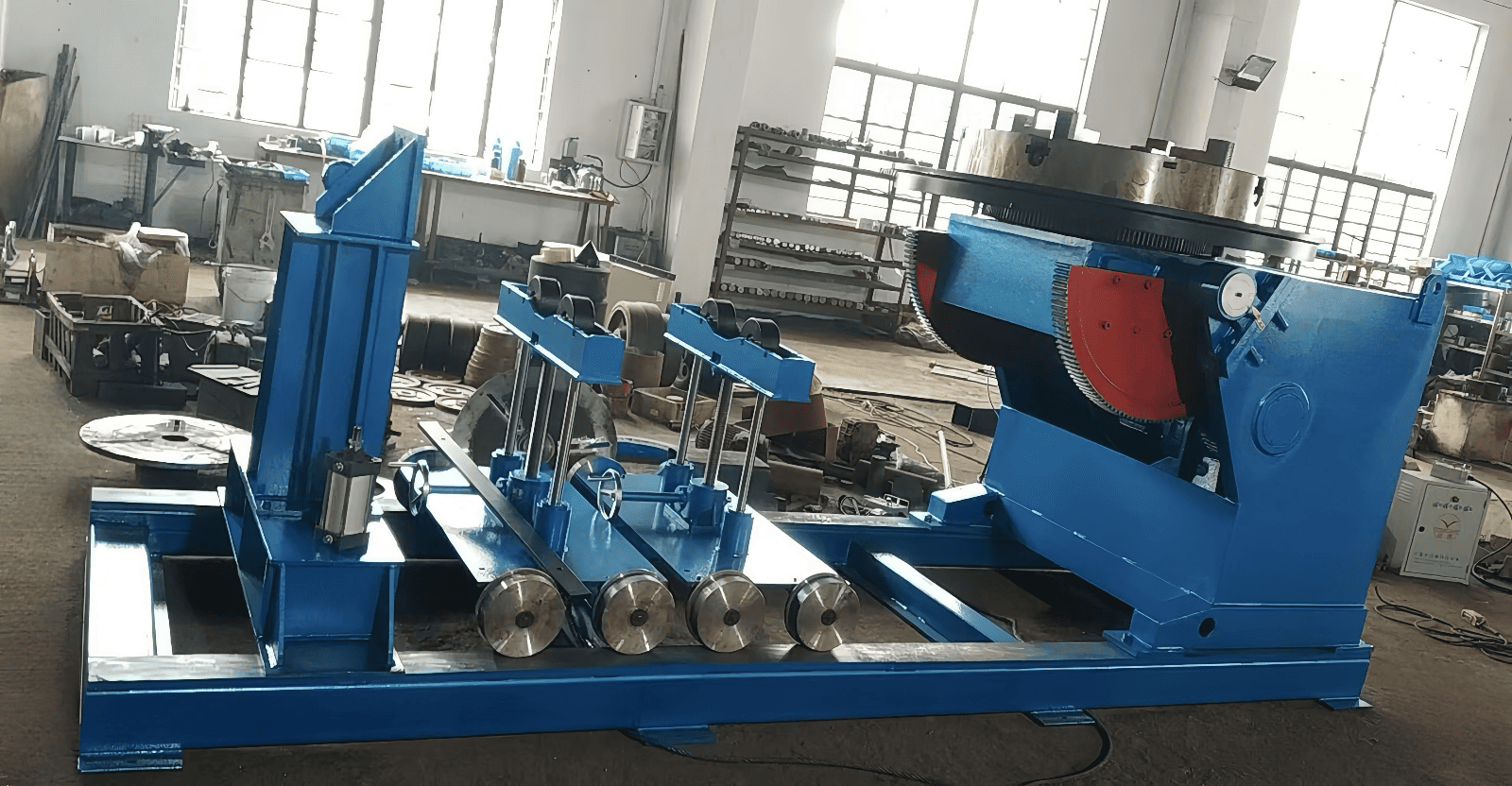
Enhance welding accuracy and throughput by integrating high-grade welding manipulators sourced from preeminent Chinese producers-RESIZE. Engineered for automated operations in rigorous environments, these robust systems incorporate sophisticated control interfaces, height and reach adjustability, and broad material compatibility. Ideal for heavy-duty sectors such as large-scale manufacturing, pipeline assembly, and ship construction.
Welding Manipulators Designed for Precision and Efficiency
- Superior Accuracy: Advanced systems deliver uniform, high-caliber welds across every joint.
- Wide-Ranging Uses: Suits aerospace, automotive, and numerous other sectors.
- Increased Throughput: Intuitive controls reduce learning time and limit production pauses.
- Adaptable Configurations: Optional modules let operators fit the machine to specific task requirements.
Key Features of Our Welding Manipulator
Explore the primary attributes of our welding manipulator, engineered to improve accuracy, productivity, and safety during welding tasks.
생산성 향상
The system automates recurring tasks and synchronizes stations, thereby accelerating overall throughput.
Operator Safety
Ergonomic controls lower physical strain and integrated sensors mitigate risk during high-energy operations.
Scalability
The solution scales effortlessly from prototype batches to continuous lines without architecture changes.
Improved Weld Quality
It produces uniform seams that meet stringent standards, even on intricate assemblies.
다양성
Settings and tooling can be tailored quickly to accommodate steel, aluminium, polymers, and hybrid joints.
비용 효율성
By cutting scrap, lowering labour rates, and extending asset life, it delivers measurable payback within two years.
Common Welding Problems and How Manipulators Solve Them
- Precision Challenges: Erratic motions often lead to uneven welds; robotic manipulators replace that inconsistency with repeatable, steady movement.
- Large-Scale Inefficiency: Because intricate joints require constant repositioning, automation streamlines rotation and alignment far faster than a human can.
- Operator Fatigue: Sustained manual torch work tires welders, eventually degrading seam quality; powered arms lighten the load and preserve focus.
- Complex Angles: Standard fixtures fail at off-axis surfaces, yet a highly articulated robot arm can reach those corners with ease and accuracy.
Step-by-Step Guide to Choosing the Right Welding Manipulator
- Understand Your Welding Needs: Begin by clarifying the materials you will join, their dimensions, and any unique joint designs or positional challenges.
- Evaluate Technical Specifications: Review key parameters-load capacity, vertical reach, speed, excursion radius, and steady-state repeatability- to ensure the manipulator delivers consistent performance.
- Consider Maintenance and Support: Confirm that the supplier provides timely technical assistance, readily stocked spare parts, and periodic calibration or preventive-service plans.
- Assess Cost-Effectiveness: Weigh the total ownership cost against productivity gains, downtime reduction, and long-term durability to derive a true measure of return on investment.
Welding Manipulator Component
Chassis Device
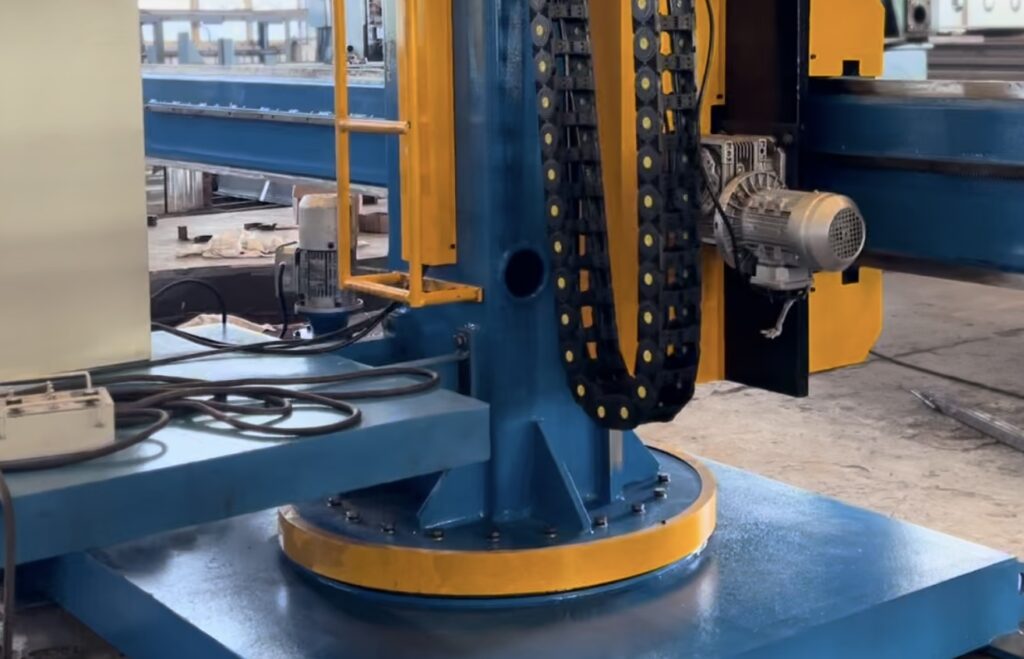
The chassis serves as the primary support structure for the entire manipulator. Mounted atop the chassis is a slewing assembly that enables rotation of the vertical column, and beneath the main frame, a bottom plate and accompanying latch mechanism are integrated.
Safety Standards and Regulations
- A rectangular guide rail mounted with a lifting motor moves the cross arm up and down through a chain drive.
- An integrated brake motor secures the arm in place, guaranteeing exact positioning and blocking any drift.
- Strategically placed holes and locking pins guard against mishaps in the unlikely event the chain fails.
- A slewing base allows the arm to swing horizontally, letting operators quickly line up with each welding point.
Turning component
The turning component is installed above the chassis. The upper body of the operator can be manually rotated ±180°. After reaching the required angle, it can be manually locked. A special large bearing is installed in the rotating component to realize the rotation process.
Lorem ipsum dolor sit amet, consectetur adipiscing elit. Ut elit tellus, luctus nec ullamcorper mattis, pulvinar dapibus leo.
Crossbeam
- Cross arm adjusts vertically and extends horizontally with frequency conversion for precision.
- Ensures accurate welding torch positioning with high mechanical accuracy.
- Cycloidal pinwheel and worm gear reducer with oil-immersed lubrication ensures maintenance-free, long service life.
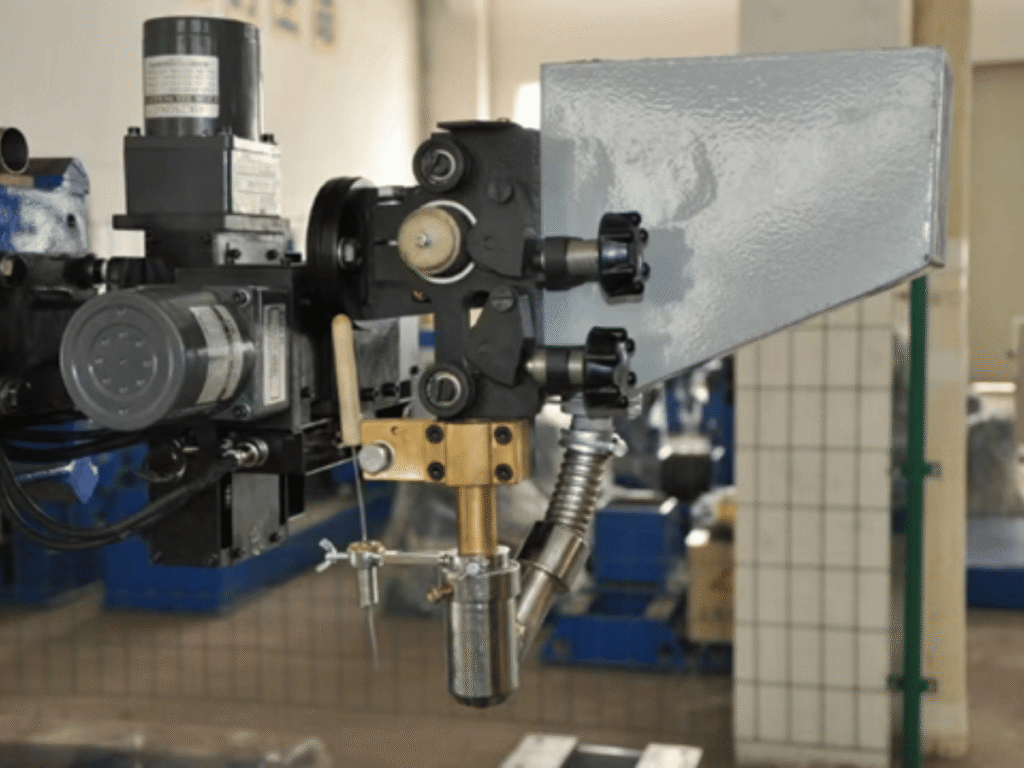
- Includes wire feeder, flux hopper, recycling system, and wire straightening for efficient welding.
Best Welding Manipulator for Sale
Searching for an advanced welding manipulator? Enhance both efficiency and accuracy with premium machinery.
Horizontal Travel: Up to 8000 mm
Vertical Travel: Up to 8000 mm
Rotation Angle: ±180°
Trolley Travel Speed: 3 m/min
Boom Elevating Speed: 1 m/min
Boom Forward Speed: 0.15-1.5 m/min
Table Diameter: 10 inches
Rotation Range: 360 degrees
Weight Capacity (Horizontal): 65 pounds
Weight Capacity (Vertical): 45 poundsBase Dimensions: 14" x 24"
Weight: 100 pounds
Load Capacity: Up to 500 lbs
Traverse Speed: 5–120 in/min
Power Requirements: 480 V, 3-phase
Equipment Mass: Approx. 4,400 lbs
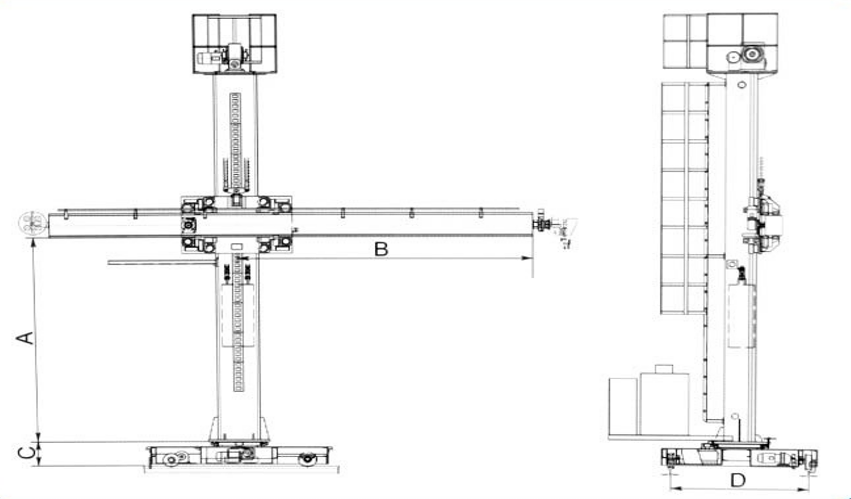
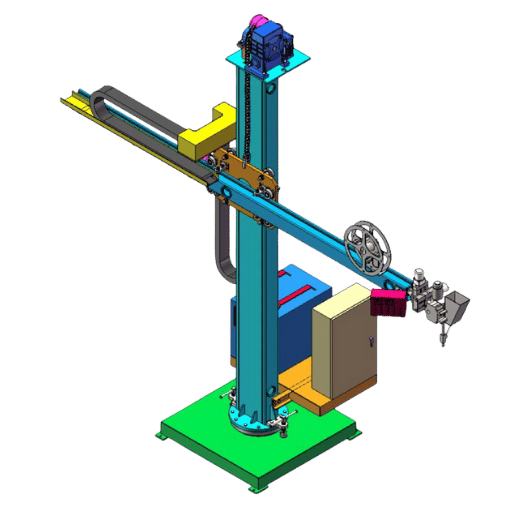
Diagram of the Welding Manipulator Structure
Column and Boom Welding Manipulator Technical Specifications
| Model and specification | LHQ(Light duty) | LHJ(Meidum duty) | NLH(Heavy duty) | LHW(Extra heavy duty) | |
|---|---|---|---|---|---|
| Series | LD series | MD series | HD series | EHD series | |
| Lifting stroke of boom/ Vertical reach (mm) | 1000-3000 | 2000-5000 | 2000-8000 | 2000-13000 | |
| Retracting stroke of boom/ Boom reach (mm) | 1000-3500 | 2000-5000 | 2000-8000 | 4000-12000 | |
| Lifting speed (mm) | 450 | 600 | 800 | 800 | |
| Min height under boom (mm) | 300 | 400 | 450 | 600 | |
| Min distance from column center to the front end of the boom (mm) | 500 | 1000 | 1000 | 1000 | |
| Retracting speed (mm/min) | 100-1500 | 100-1500 | 100-1500 | 100-1500 | |
| Rotating of vertical boom | Angle (°) | ±180 | ±180 | ±180 | ±180 |
| speed (rpm) | By manual | 0.11/ By manual | 0.11/ By manual | 0.11/ By manual | |
| Speed of the trolley (mm/min) | Traveling By manual | 2000 | 2000 | 2000 | |
| Height of trolley (mm) | 300 | 440 | 440 | 440 | |
| Span of trolley rail (mm) | 1200 | 1500 | 2000 | 2500 | |
| Optional auxiliary equipments | * rotators & turning rolls * positioners * turning tables & platforms | ||||
| Optional function | * Horizontal rail (manual/motor) *Column rotation (manual/motor) *Cross fine adjustment *weld tracking system *flux recovery system, etc. |
Common Applications for Weld Manipulators
Why Choose Our Automatic Welding Manipulator
- Proven Expertise: We have supplied welding manipulators that professionals depend on for consistency and safety.
- Custom Designs: Each project is guided by your workflow, so we develop custom equipment that fits your exact requirements.
- After-Sales Support: Our technical team stays on-site or online, helping with assembly, training, and quick fixes whenever they are needed.
- Global Reach: From Asia to Europe to the Americas, our network delivers spare parts, upgrades, and live support wherever you work.
고객이 말하는 것
Here’s what our customers say about our Welding Manipulators:
Expert Guides to Welding Manipulator
What does E7018 stand for?
E7018 designates a specific welding rod; the letter E means electrode, the number 70 refers to the rod’s 70,000-psi tensile strength, the 1 shows it can be used flat, horizontal, vertical, or overhead, and the 8 notes it has a low-hydrogen, iron-powder flux covering.
Welding Manipulator Design
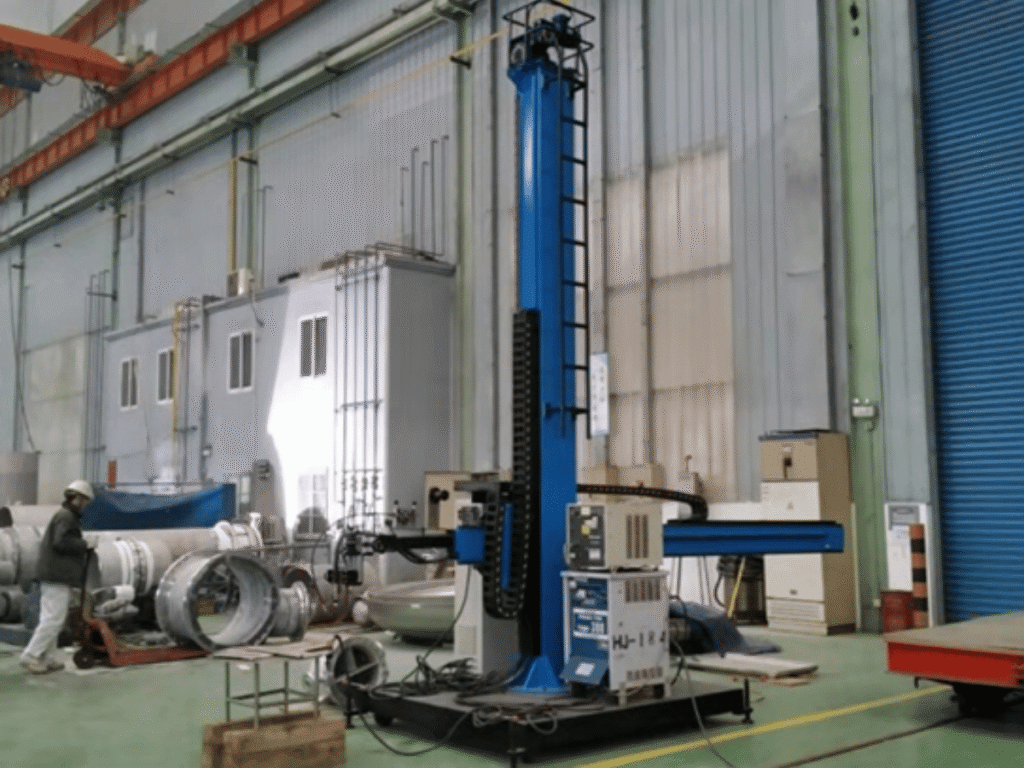
A welding manipulator is an engineering device created to improve the accuracy and speed of welding operations; it typically includes rotary positioners, rollers, or column-and-boom frames that steady either automated or hand-held welding equipment.
Welding Accessories
Welding accessories – such as welding machines, auto-darkening helmets, leather gloves, magnetic clamps, wire brushes, chipping hammers, and angle grinders – strengthen safety, improve accuracy, and boost productivity on every job site.
How Does Welding Manipulator Work
A welding manipulator positions and moves the torch or head toward the workpiece, and vice versa, so the process delivers precise, repeatable, and controlled welds across a wide range of jobs.
What is the Hardest Type of Welding to Learn?
Tungsten Inert Gas (TIG) welding is widely regarded as the most demanding welding process to master, because it calls for exceptional accuracy, steady hand coordination, and refined technique.
What is the Difference Between AC and DC Welding?
The chief distinction between AC and DC welding is the direction in which electrical current travels: alternating current in AC welding periodically reverses polarity, allowing operators to join thicker plates and reduce arc blow, whereas the steady flow of direct current in DC welding produces a steadier arc, easier control, and cleaner seams.
Welding Positions: Techniques, Defects, and Safety Consideration
Welders must adjust their techniques for each position-flat, horizontal, vertical, or overhead-and failure to do so often leads to defects such as porosity and cracks; therefore, securing workpieces, preventing overhead strain, and consistently wearing protective equipment are essential safety practices.
What is the Best Welding Process?
The appropriate welding method usually depends on the specific job at hand: MIG welding excels when speed and user-friendliness are priorities, TIG welding provides the accuracy needed for detailed or delicate pieces, and Stick welding remains a rugged, budget-friendly choice that performs well in almost any setting.
What is 1G, 2G, 3G, 4G, 5G, 6G welding
The 1G through 6G welding position system classifies joints according to their spatial orientation: 1G is flat, 2G is horizontal, 3G is vertical, 4G is overhead, 5G applies to a stationary horizontal pipe, and 6G, the most advanced, has a pipe held at 45° so the welder must control the bead in every angle.
How can we control distortion in welding?
Welding distortion can be minimized by adopting balanced welding patterns, limiting the amount of weld metal deposited, preheating or uniformly warming components, using water-cooled fixtures, and shortening the interval between successive passes.
What does z mean in welding?
In welding terminology, the letter “z” commonly designates the leg length of a fillet weld; this measurement extends from the weld’s root to its toe.
RESIZE Company 에서 제공하는 관련 장비
Latest Blog Posts about Welding Manipulators
Explore recent findings and practical advice about welding manipulators, noting their main features, advantages, and the ways they boost overall welding productivity.
Welding is often described as a blend of science and art, complete with its own set of complications, the development of one’s professional skills, and the need for the...
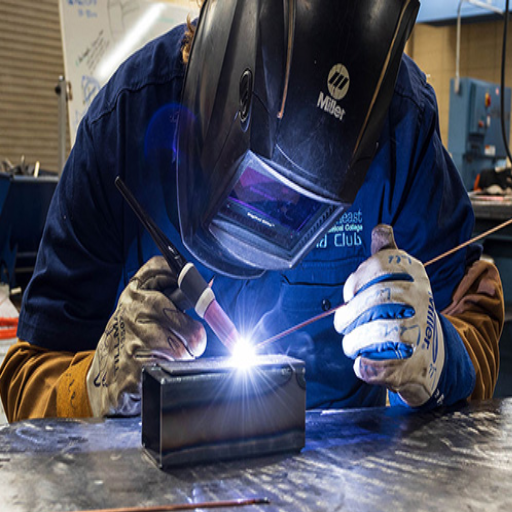
Looking at the time, some welding processes are the mainstay of construction, manufacturing, and repair, involving, in one way or another, the joining of metals so that they can...
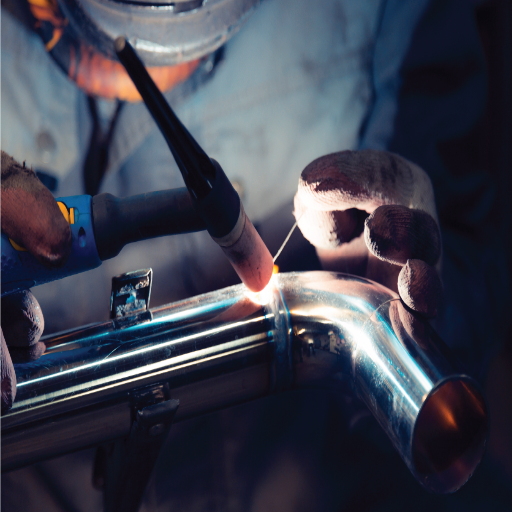
TIG welding, synonymous with precision and versatility, holds universal respect as the welding method of choice across various industries. Yet, the path toward perfect welds is not smooth. Several...
The welding industry is rapidly changing and ever-evolving. Therefore, manufacturers are continually seeking innovative solutions to maximize productivity, enhance efficiency, and achieve accuracy. Enter the weld manipulator: an automated...

Getting a quote for Welding Manipulator
Request a tailored quote for a welding manipulator engineered to enhance efficiency, accuracy, and output on projects large and small.
자주 묻는 질문
Q: What is a welding manipulator and how does it work?
A: A welding manipulator is an industrial tool that automates the movement of the welding torch or head, substantially improving speed and accuracy during long seam welds. Normally arranged as a vertical column with a horizontally telescoping boom, the unit carries the welding equipment along a predetermined path above the component.
Q: How do welding positioners enhance pipe welding?
A: Welding positioners are indispensable for pipe work because they tilt, turn, and spin the cylinder into the most comfortable angle for the operator or machine torch. By reorienting the part instead of the electrode, the weld pool remains stationary, minimizing defects caused by gravity and travel speed variations.
Q: What advantages do welding manipulators offer?
A: Manipulators stand out for their heavy-gauge frames and precision drive systems, traits that lend stability even under sustained use at maximum load. Their operator panel includes teach-and-repeat functionality, so customers can quickly copy proven weld paths whenever the job changes.
Q: Can RESIZE manipulators reduce welding cycle times?
A: Yes, RESIZE manipulators are engineered to shorten welding cycle times across a variety of production settings. By incorporating variable speed controls and fully programmable motion profiles, these units fine-tune weld-head travel, eliminating unnecessary pauses and jerks. The net effect is a discernible drop in weld time, which translates directly into higher throughput for shops that rely on automated joining.
Q: What role does a rack-and-pinion drive play in a welding manipulator?
A: The rack-and-pinion drive is the backbone of precise positioning in any welding manipulator. By converting rotary motor motion into linear movement, the system moves the boom and column with remarkable smoothness and repeatability. Such accuracy not only conforms to tight tolerances but also minimizes defects, allowing operators to lay consistent beads and avoid costly rework on finished assemblies.
Q: How do column and boom manipulators support heavy-duty welding tasks?
A: Column-and-boom manipulators offer a rigid framework that absorbs the weight and inertia of large parts, letting weld operators focus on quality rather than rig stability. By positioning the torch far above or beside the heat zone, these rigs limit thermal distortion, a must in industries that stress high-tensile joints.
Q: What are the benefits of using automated welding processes with manipulators?
A: Robot-guided welding cuts labour costs, trims rework time, and raises shop-floor safety. Once programmed, a manipulator executes the same bead week after week, all but eliminating human error tied to fatigue or inexperience. Moving dangerous tasks behind shields gives skilled welders a chance to monitor rather than expose themselves.
Q: How does seam tracking enhance the quality of welds in manipulators?
A: Seam-tracking sensors follow the contour of each joint, nudging the torch in real time so heat enters the right spot. Steady penetration means fewer undercuts, cracks, or blow-holes, raising yield and lowering scrap. This advantage becomes obvious on curved, V-shaped, or uneven edges where a fixed path would fail.