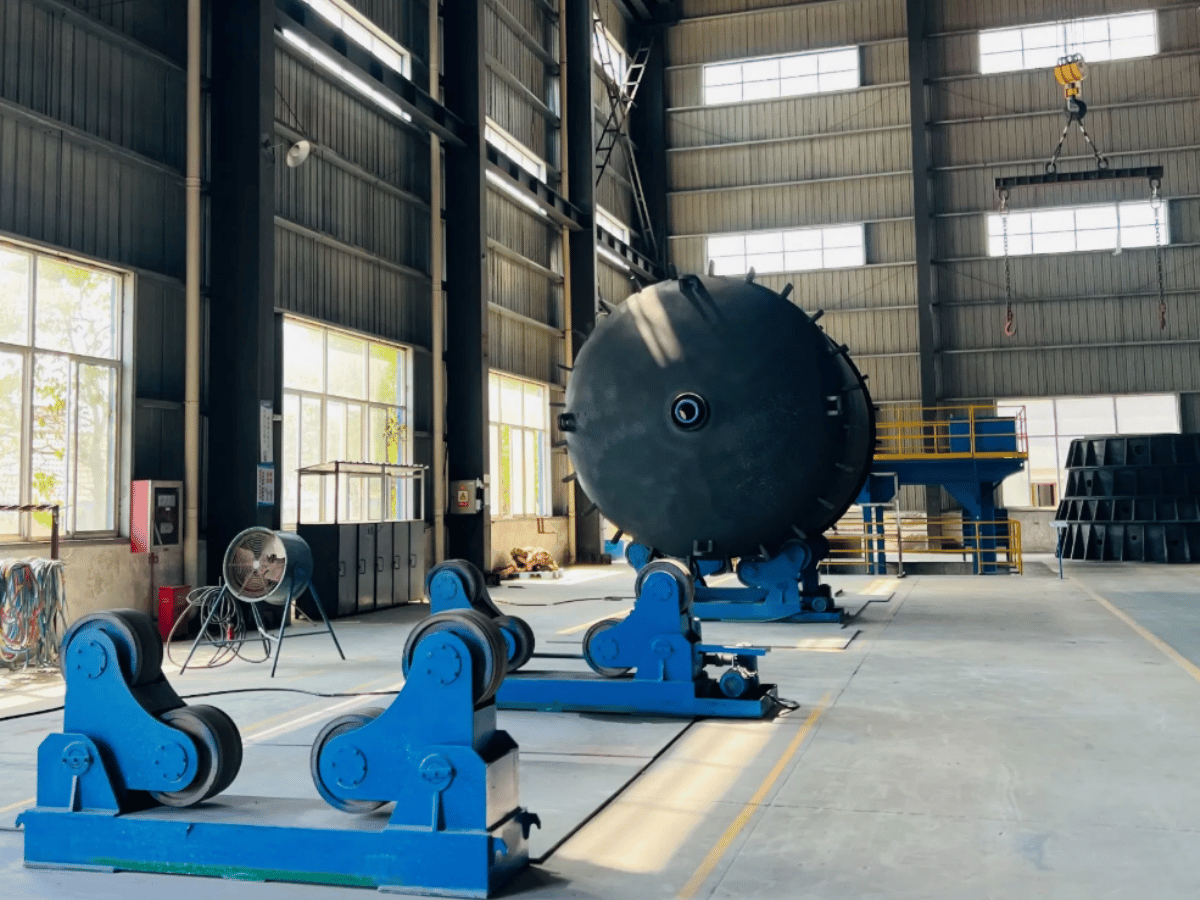
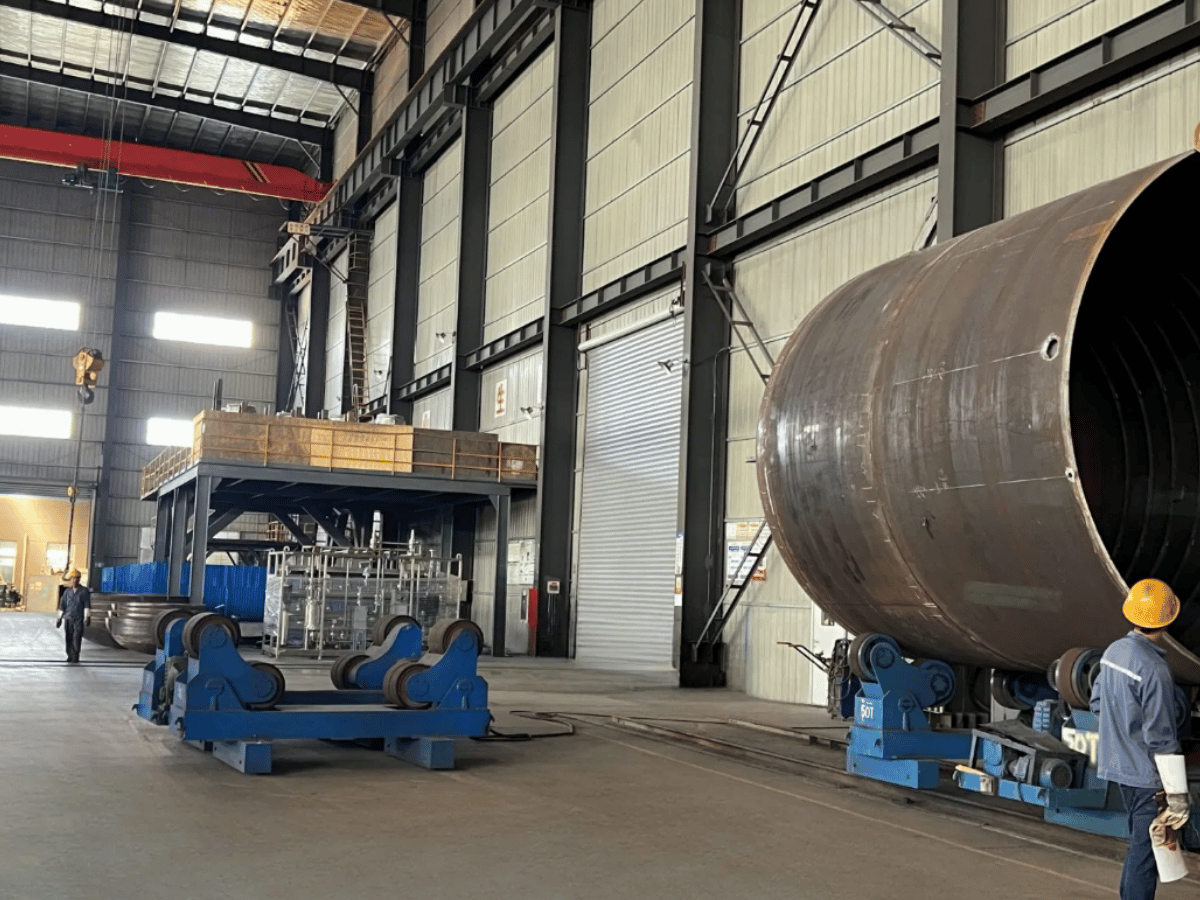
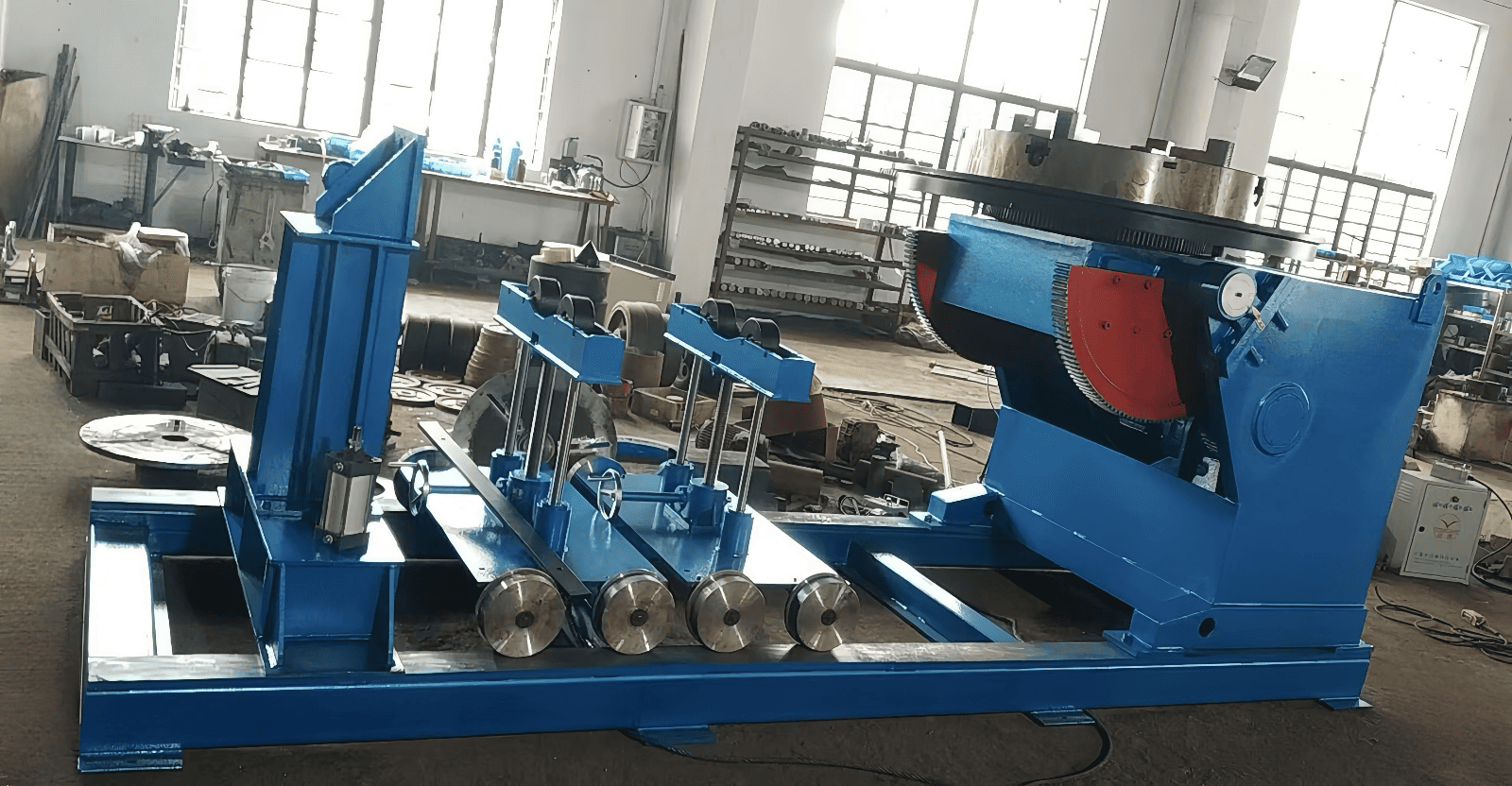
Acquiring knowledge about the complexities involved in welding operations and fabricating heavy, accurate components requires specialized equipment to facilitate all such work. In this regard, turning rolls, also commonly known as self-aligning welding rotators, hold a preeminent position in technology within the industrial sector. Such technology simplifies the handling of cylindrical/rounded workpieces and enables welding to take place with high efficiency, while also reducing the need for manual intervention, thereby ensuring the safety of workers. This tutorial aims to provide knowledge about self-aligning welding rotators, their operational use, and benefits, as well as how they help increase productivity in various industries. It is also suitable for both individuals with extensive welding experience and those seeking to integrate automation into their projects, as it provides all the necessary knowledge regarding these essential tools.
焊接旋轉器簡介
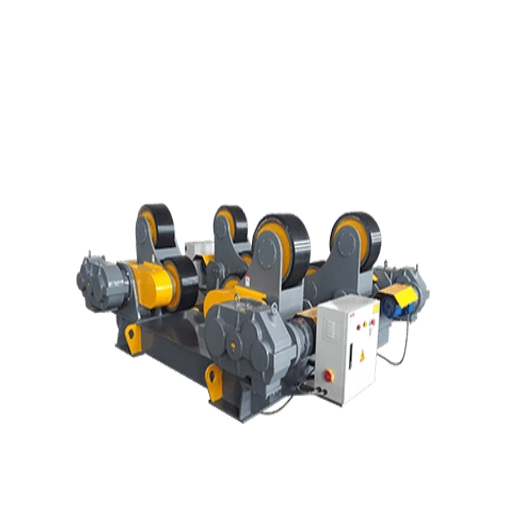
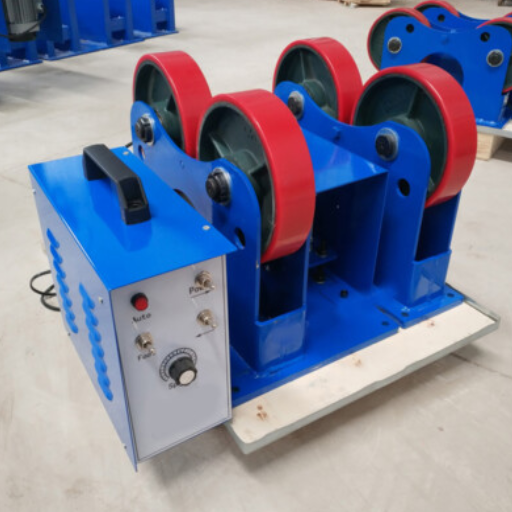
A 焊接旋轉器 refers to a piece of equipment used in the welding process to rotate cylindrical or round workpieces. It is used to rotate and weld the surface of the material at a steady pace, ensuring that the weld material is applied evenly and preventing distortions in the job. Given the numerous objectives tailored for diverse applications, welding rotators can be divided into two main categories: self-aligning rotators and generic rotators. Serving as more sophisticated fixtures to enable welding output with even more precision without using excessive energy, welding rotators are becoming popular,r especially among construction, factory, and shipbuilding companies.
What is a Welding Rotator?
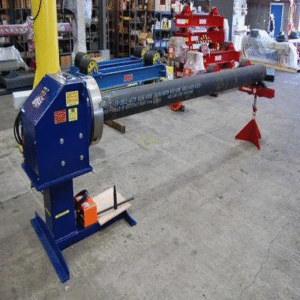
Welding rotators are typically used during welding and fabrication of cylindrical and conical structures. Some of the most common applications for such special designs are found in the shipbuilding and heavy machinery industries. When rotation is required, these are also called turning rolls or pipes, often used in oil and gas pipelines, as well as in high-rise buildings. They are also sometimes used in long seam welding of vessels. These rotators utilize a series of wheels to support the workpieces and are our most popular design. A number of them can be used in simultaneous operation to handle up to 650000 kgs each. Such welding rotators are essential for work involving small to large parts that need to be welded onto or between themselves.
Importance of Welding Rotators in the Welding Process
According to a large number of welders, the welding rollers play a key role in the contemporary method of industrial welding, as jobs are well balanced, all safety regulations are adhered to, and efficiency is maintained. For one, manual burdening, which involves lifting extensive materials, is eliminated accordingly, reducing the possibility of injuries while improving the quality and strength of welded joints. It is interesting to note that today, many companies have converted their search to engine queries while seeking materials for rent in bulk at a crucial time for improving work plans for the spectrobe, especially in terms of quantity and quality of welding seams. These results demonstrate that the use of welding rotators facilitates smooth, uninterrupted rotating motion, which is particularly beneficial when creating annular welds or longitudinal joints. Introducing the use of rotators showcases an aspect of the Internet of Things in welding, where they provide the highest level of accuracy and consistency in manufacturing process management, thereby assisting in achieving and maintaining a high level of competitiveness on the market.
Overview of Self-Aligning Welding Rotators
These machines are excellent for most round objects due to the innovation that enables the welding equipment to adjust and work with various pipe sizes without human assistance. This mode of operation streamlines tasks, reduces delays, and boosts output, as every frame ends with the welding alignment. Recent statistics indicate that searches for “self-aligning welding machines” are primarily concentrated in the economic and industrial sectors, including shipbuilding, oil and gas drilling, and casting metal. With this type of equipment, people tend to work more efficiently, as it is not cumbersome and reduces off-center or unwanted heat projections. They have also become more effective in recent years, as radiographic welding has become the norm, due to their ease of adoption and integration, facilitated by automation.
焊接旋轉器的類型
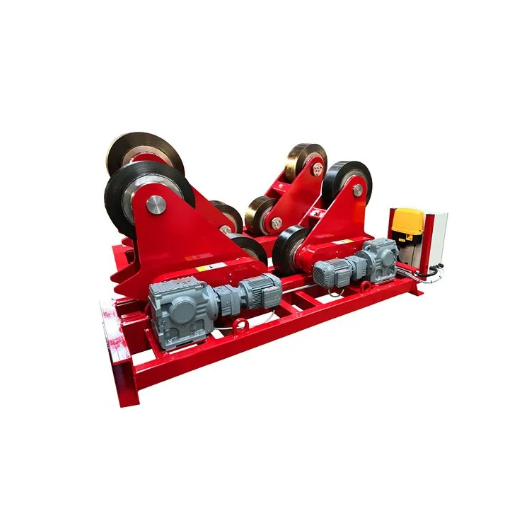
- Typical Positrons
They are standard welding rotators with adjustable rolls, designed to accommodate different material sizes. These can be adjusted manually and are therefore frequently used in the course of simple welding operations.
- Automatic Positrons
This arrangement refers to a welding machine with rolls that are operational once the diameter of a pipe has been reached. It is well-suited for round materials of different sizes and ensures that there is no shaking during welding operations.
- Pivoting brackets
These right-angle spreader assemblies are designed for use in pipe welding/ fabrication. It is used in highly accurate and repeatable applications, especially within the oil and gas industry.
- Storage tank rollers
This refers to a geared Elphinstone tower, which is adapted for heavier-duty operations and is ideally suited for larger bulk storage tanks. Their robust construction makes them suitable for use in industries such as shipbuilding, as well as in the construction of large storage containers.
- Customized Solutions
These are specialized rotators designed to suit a particular industry application that may not have a standard solution. They are designed to work with unique welding processes.
Self-Aligning Welding Rotators
When welding pieces with tubular types of construction, self-aligning welding rollers are indispensable for convenience and precision. Welding rollers are commonly used in workshops to hold and manipulate cylindrical pieces and other objects. These rollers possess the ability to sense the diameter of the object being reflected, allowing them to correct their position and achieve a proper fit. Or to put it another way, the roller aligns itself with.
Within a readjustment, self-aligning rollers in the responses have been sought after more and more for their productivity improvements, elimination of downtime, and reduction of unreasonable calibration changes, as well as the need for fewer workforce skills. This increased change in crop use has made them a perfect choice, for instance, in sectors such as oil and gas and pressure vessel industries, and especially in electric power and heat production, where the discipline of technical problem resolution is a priority.
Conventional Welding Rotators
When there are fixed shapes and sizes of weldment work, the traditional welding roller is commonly chosen. For these rollers, usually configured to specific settings, one will need to manually switch parts when the size changes. This design does not allow for structural flexibility, which is a disadvantage when compared with self-aligning rollers; however, it can be suitable for tasks such as fabricating cylindrical hoppers and gravity pipelines, where simplicity and strength are the key features.
According to Google’s latest search data, an increasing number of readers are seeking articles about traditional and self-aligning rollers, as they believe these solutions are suitable for their business needs. Which of the two requires more attention is dependent on the part design and service condition, as both factors are combined. Costing far less, the standard welding rotators have their challenges, as they work beautifully in certain dimensions and for specific durations. However, since aligning welders can be adjusted in several ways, they make a pretty good option in industries that are geared toward efficiency and have an adaptable working environment.
Comparing Self-Aligning and Conventional Rotators
While manual adjustments are standard for conventional rotators, self-aligning ones can automatically detect the workpiece diameter and adjust accordingly. This makes them less problematic in everyday use.
| 參數 | Self-Aligning | 常規的 |
|---|---|---|
| 調整 | 自動的 | 手動 |
| 效率 | 高 | 中等 |
| 設定時間 | 快點 | Longer |
| 靈活性 | Adapts to sizes | Fixed settings |
| 控制 | 自動化 | 手動 |
| Best Use | Variable sizes | Fixed sizes |
自對準焊接旋轉器的組件
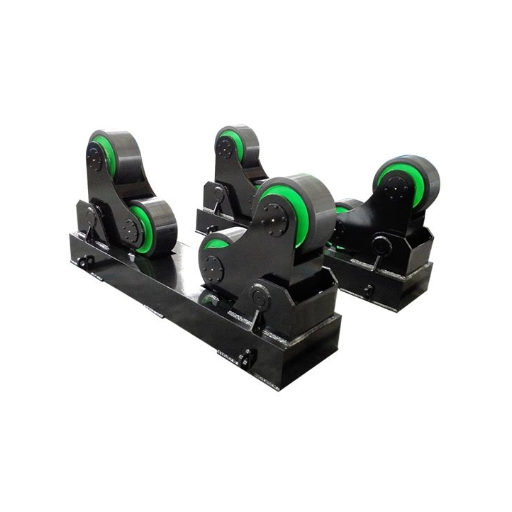
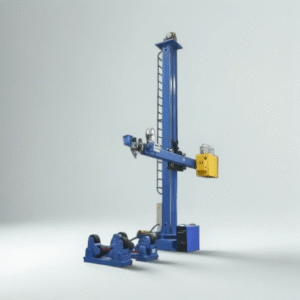
- Base Rack
This is a robust stand that upholds the structure and provides it with a commendable level of safety in operation.
- Drive Kit
The one that enables the workpiece to be turned while delivering interactive and regulated motion.
- Idler Kit
This part is not endowed with power, but it’s equally essential, as it complements the operations of a drive kit by ensuring the continuous bearing and alignment of the workpiece.
- 滾筒
They are smooth wheels or pads that allow the workpiece to sit comfortably in them and adjust accordingly, irrespective of the size or shape of the material to be accommodated.
- 控制系統
It is an interface suitable for use that aids operators in adjusting velocity, angle, and other settings.
- 電機
A machine that is used to transmit motions through spinning and is mainly used exactly.
All the above-mentioned joints and actuators are applied as needed for seam welding, especially when the workpiece is cylindrical.
Welding Rollers and Their Function
Welding rollers are essential for professional welding processes, such as welding round or sharp/unusual workpieces. These machines are unable to help change or twist heavy loads during the welding process, which prevents the object from being held in the correct position and orientation. Using welding rollers, companies can perform perfect welding much more easily.
Since Google’s search engine became operational, with regular modifications, it has been designed to operate more effectively in today’s business landscape. Technologies such as self-compensating bars, higher strength loads, and robots welding each pick-up allow the industry to work through causes such as shipbuilding, aerospace, and Oil and Gas. This approach is not only cost-effective but also reduces errors and downtime, which ultimately yields high returns on investment.
Welding rollers are the next generation; they are becoming more sophisticated tools and are very important as one seeks to reduce the time taken during the manufacturing processes, as well as create the exact finished product.
Turning Roll Mechanisms
The hillside system is an essential supportive element in turning the drum during welding, coating application, loading, and other mechanical operations. In the 21st century, turning rolls have undergone considerable changes and have adopted innovative technologies, including automation and control systems. Such devices are equipped with automatic regulation of translation velocity, remote alignment, and high precision in real-world conditions, making them fully functional systems. Stakeholders are always curious about the versatility of these turning rolls, and solutions have been discovered, provided that the load-bearing facilities are… How… is it possible to satisfy widespread needs in this conundrum? The introduction of new turning rolls ensures that the workpiece is subjected to rotary movement equally in all dimensions, while also improving the overall accuracy and quality of the completed work, in line with the trends of universal industry development.
Adjustable Features in Self-Aligning Rotators
Rotating machines are made with such unique features that enhance productivity and field adaptability. These five main features for adjustment are the highlights of such an arrangement:
- Wheels Alignment Mechanism
In other words, in the arrangement of the above devices, as they were designed to cover workpieces of different diameters, the rotators adjust the position of their wheels to enable both work and rotation of the piece without the need for a person to stand next to the device.
- Adjusting the Rotational Speed
The operator can adjust the machine’s rotational speed to any limit necessary for executing a welding process or any other fabrication process, thereby offering the level of control required for quality improvement.
- Changes in the Bearing Capacity
The application enables the adjustment of the load capacity, allowing for the ease of use or increased application of properties across both light- and heavy-duty equipment.
The system even enables aimless linking from a specified distance, thereby enhancing the security and productivity of use through the extension of ‘No Touch’ technology.
Finally, the workpiece support can be easily moved so that the top of the workpiece is level with the desired cutting and can be effected without the assistance of an additional support.
Applications of Self-Aligning Welding Rotators

Rotation centers are often used in the manufacture of equipment for various sectors or areas to enhance the quality and speed of welding. The key activities that are carried out using this equipment include:
- Fabrication of Pipes and Cylinders: This machine is ideal for welding pipes and cylindrical components, ensuring even welding through continuous rotation.
- Production of Wind Turbines: Without it, welding together large parts of wind turbines, in particular, where the equipment lacks support due to size.
- Construction of Pressure Tanks: It serves to support and turn pressure tanks so as to facilitate welding in proper positions or at the stages of ultrasound examination.
- Also used in shipbuilding, where large panels are brought closer together and tacked up before welding. Each complete surface is prefabricated and also hauled horizontally.
- WHERE USED IN THE AEROSPACE AND AUTOMOTIVE ENTERPRISE, IT MEANS THAT ALREADY TO THE FACTORY ALL COMPONENTS, INCLUDING FUEL TANKS AND STRUCTURES, IN THE COMPANY SHOULD BE WITH PRECISE SHAPES.
Pipe Welding with Self-Aligning Rotators
A self-aligning rotator that automatically adjusts to the pipe size for the user’s convenience. There are advanced automatic positioning self-aligning rotators that work by focusing welding devices on pipes, eliminating the need for manual handling and adjustments, and making the process faster. Because their design actively controls the foot rate on the job, it also helps prevent unnecessary movement, which is a cause of errors and throwaway costs. Welding constriction devices present a promising development compared to traditional welding methods, according to the spokesperson, who looked very promising. These were manipulators that decrease the inclusiveness of the manual welders’ involvement and thus limit the welfare of welding. Within the last decade, other developments have led to the incorporation of computers in the applications, enabling precision control and monitoring of welding processes. This factor has contributed to their importance in welding applications, particularly where precision welding is required.
Use of Welding Rotators in Automatic Welding
Welding rotators, also known as horizontal balancers for enhanced performance, are particularly helpful in welding, but even more so in automatic welding, and extend to the automation sought by the large welding community. The welding rotators are designed to meet this need as much as possible in activities involving welding and welding machine enablement, since human presence is minimal, and technician operation and technician contact with the unit being designed are also minimized. Again, all their innovations brought in rigorous, customized, and timely systems: they are entirely automated and enable repairs to be done in record time. The historical use of such devices, combined with the implementation of advanced methods, allows the maximized utilization of welding pipes that connect the plates of the reactors into a single block.
Manual Welding and the Role of Rotators
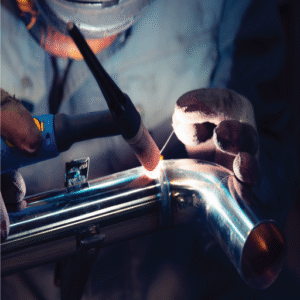
Many different manufacturing sectors utilize welding, whether manual, automatic, or a combination of both. Nevertheless, manual welding is the most challenging skill; it requires precision, and more often than not, several pieces with specific thickness and shape must be put together. Manual welding is a combination of arc technology and human control. This unfortunate development is, however, exacerbated by factors such as welder’s fatigue, the quality of welds affected by welding processes, and the loss of time for every failed attempt. Overcoming these challenges is what welding rotators do, meaning they perform movements and create steadiness during welding. This enables welders to fabricate even complex components and shapes without compromising quality. In line with the observations made in the above paragraph, analysis reveals that the use of welding rotators with semi-automated systems is becoming increasingly popular in a large number of cases involving manual welding workers. The need for integrated solutions that have trained the man’s hand and the machine’s dynamics is also increasing, to guarantee the functionality and effectiveness of the work. Such interpolated models of welding are currently changing the mindset of the welder, making them more dependable and functional for relatively large jobs.
參考來源
-
-
- 主要發現:
- This paper investigates a human-robot collaboration energy-efficient distributed mixed fuzzy welding shop scheduling problem (EDMFWSP-HRC), and designs a self-learning memetic algorithm (SLMA) to minimize both makespan and total energy consumption (TEC).
- The SLMA includes a hybrid initialization, a genetic operator, a self-learning variable neighborhood search (SLVNS), and a resource adjustment strategy to optimize the scheduling.
- 方法論:
- The authors formulate the EDMFWSP-HRC problem and propose the SLMA as a solution.
- The SLMA employs a hybrid initialization to generate a high-quality initial population, a genetic operator to enhance exploration, the SLVNS to improve exploitation, and a resource adjustment strategy to optimize TEC further.
- Extensive experimental comparisons with five other optimization algorithms are conducted to validate the effectiveness of the proposed SLMA.
- 主要發現:
-
2. Welding electrode arrangement with self-aligning features
-
-
- 主要發現:
- This paper presents a welding electrode arrangement with self-aligning features.
- 方法論:
- The authors do not provide detailed information about the methodology in the given context. The paper seems to focus on the design of a welding electrode arrangement with self-aligning features.
- 主要發現:
-
常見問題(常見問題)
焊接旋轉器有哪些不同種類?
不同種類的焊接旋轉器包括自對準旋轉器、傳統焊接旋轉器和可調式焊接旋轉器。每種類型均針對特定應用而設計,並提供適合各種焊接工作的獨特功能,例如管道焊接和大型焊接項目。.
自對準焊接旋轉器如何使焊接過程受益?
自對準焊接旋轉器具有多種有益功能,例如在焊接過程中自動對準工件,從而提高精度並降低缺陷風險。此功能對於大型和重型工件特別有利,使焊接過程更有效率。.
自對準焊接旋轉器包含哪些安全元件?
自對準焊接旋轉器中的安全元件通常包括堅固的結構、保護蓋和緊急停止控制裝置。這些元件可確保焊接作業期間的安全操作,並最大限度地減少事故或受傷的風險。.
如何選擇適合我需求的焊接旋轉器?
選擇合適的焊接旋轉器取決於特定的焊接需求和您將焊接的材料。考慮自對準焊接旋轉器的尺寸、工件的重量以及您是否需要可調節的焊接能力或適合您的應用的專用功能等因素。.
自對準焊接旋轉器需要哪些維護?
自對準焊接旋轉器的維護包括定期檢查、潤滑軸承和檢查車輪是否磨損。適當的維護可確保焊接旋轉器的使用壽命和效率,最大限度地減少焊接工作期間的停機時間。.
焊接定位器與焊接旋轉器有何不同?
The difference between a 焊接定位器 and a welding rotator lies in their primary functions. Welding positioners are designed to hold and adjust the position of the workpiece, while welding rotators are used to turn the workpiece during the welding process, enhancing accessibility and efficiency.
自對準焊接旋轉器可以用於管道焊接嗎?
是的,自對準焊接旋轉器對於管道焊接特別有效,因為它們能夠適應各種管道尺寸和重量。它們的可調式功能可實現精確定位,確保管道製造應用中的高品質焊接。.
自對準焊接旋轉器有哪些特點?
自對準焊接旋轉器的特點包括四點懸吊系統、可調速度控制裝置和允許工件平穩旋轉的惰輪單元。與傳統旋轉器相比,這些功能有助於在焊接過程中實現更好的控制和穩定性。.
為什麼我應該考慮在我的專案中使用焊接旋轉器?
Utilizing welding rotators can significantly enhance productivity and quality in your welding projects. They allow for improved access to the weld area, reduce manual effort compared to manual welding, and can handle larger workpieces more efficiently than conventional methods.