Being the backbone of many industries, from automotive to construction, art making, and repairs, welding is one of those important processes. For professionals and amateurs alike, the welding technique that is suitable to a particular application means productivity, quality, and outcome. At the top, stick welding and MIG welding are two of the most versatile and widely used welding processes, each with its own advantages and disadvantages. Which one then should I choose for my welding needs? This blog delves into the fundamental differences between stick welding and MIG welding to understand their uses, associated costs, and required skill levels, among other factors. Whether you are a professional welder or someone who has just joined in this field, the comparison will surely lead to an informed choice for your project.
Understanding the Basics of MIG and Stick Welding
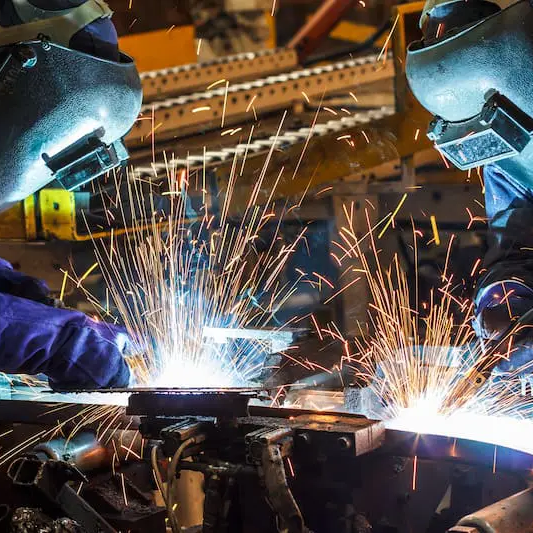
MIG welding, or Metal Inert Gas welding, involves welding with a continuous wire electrode and a shielding gas, promising a beautiful clean weld on thin materials from simple setups. This method is friendly for amateurs and supports very high welding speeds.
Stick welding, better known as Shielded Metal Arc Welding, relies on a consumable electrode coated with flux, which generates a shielding gas of its own. The method is widely considered versatile, suitable for use outdoors or in imperfect fair weather conditions, and is well-suited for thicker materials.
Each welding method has its advantages, with MIG welding being more efficient and aesthetically pleasing, whereas stick welding may offer longer durability and better performance in harsher situations.
什麼是 MIG 焊接?
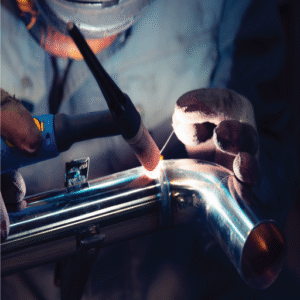
米格 Welding or Metal Inert Gas Welding is a type of arc welding process that gives efficient and clean welds through a continuous solid wire electrode. The wire travels through a welding gun and receives protection from an inert or semi-inert gas, such as argon or argon mixed with CO2, preventing contamination by the atmosphere. This process is also known as Gas Metal Arc Welding (GMAW) and is one of the fastest and most versatile welding processes used in the automotive, manufacturing, and construction industries.
Some advantages of MIG welding include its ability to provide high-quality welds quickly and its compatibility with various metals, such as steel, aluminum, and stainless steel, making it accessible to almost anyone. Nevertheless, it is best when conducted indoors, wherein wind or draft cannot interfere with the shielding gas.
什麼是棒焊?
Stick welding, or Shielded Metal Arc Welding (SMAW), is a manual welding procedure in which a consumable electrode coated in flux lays the weld. An electric arc is formed between the electrode and the workpiece, melting both the electrode and the base material, which then solidifies into a joint upon cooling. The flux coating produces gases and slags that help shield the weld area from atmospheric contamination, assuring a cleaner and stronger weld.
Stick welding is highly versatile, as it can be performed on a wide range of metals, including steel, stainless steel, and cast iron. It is especially suitable for outdoor work and less controlled environments, wherein the wind might easily disrupt an external shield gas. Thanks to its portability and cheapness, this process finds widespread application in construction, repair, and industrial activities. However, to reap consistent benefits from it, the operator must be pretty skilled, as technique is crucial.
Key Differences Between MIG and Stick Welding
MIG welding utilizes a continuous wire feed and shielding gas to produce clean, precise welds. In contrast, stick welding employs a consumable electrode with a flux coating, making it suitable for outdoor or dirty surfaces but requiring more skill.
Advantages and Disadvantages of MIG and Stick Welding
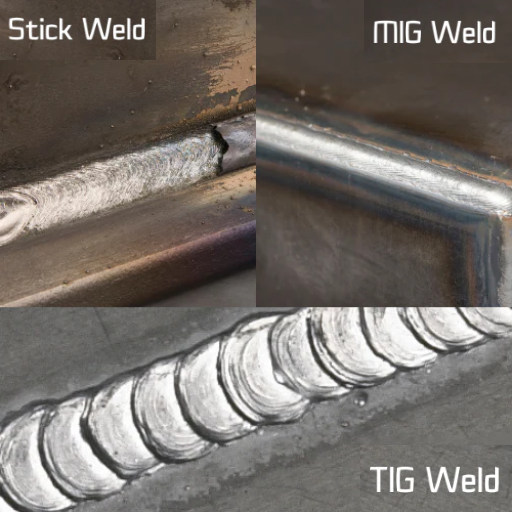
Pros and Cons of MIG Welding
✓ Pros:
- Produces neat and clean welds with much less spatter.
- Suitable for welding thin materials.
- Easier to learn and use, making it ideal for beginners.
- High welding speed to increase productivity.
- Reasonable control for detailed welding work.
✗ Cons:
- Restrictive in effectiveness in outdoor environments or windy conditions.
- The surface must be clean for the best results.
- Less portable equipment because of the gas cylinder and power source.
- Higher cost initially for equipment compared to other methods.
Pros and Cons of Stick Welding
✓ Pros:
- Works outdoors or in windy conditions.
- The equipment is sufficient for household projects because it is inexpensive and very portable.
- Works well on rusty, dirty, or less well-prepared surfaces.
- Able to handle thin and thick materials of many kinds.
✗ Cons:
- More spatter is created, requiring more cleanup.
- Lower welding speed compared to other methods.
- Steeper learning curve for consistent results.
- Electrodes are replaced frequently while working.
Comparing Strength and Penetration: MIG vs Stick
When considering factors such as strength and penetration, it is essential to remember that MIG (Metal Inert Gas) welding provides clean, precise welds with minimal spatter, making it ideal for thinner metals or applications requiring finishing. The controlled arc in MIG welding ensures consistent penetration, which is crucial when the project requires uniform strength.
Stick welding (Shielded Metal Arc Welding) produces a deeper penetration when welding thick or rusted materials, and hence, is more suited for use in construction, repair, and outdoor settings, where surface preparation may often be inconsistent. Stick welding is strong in strength but also needs a lot of skill and technique to produce a clean uniform bead.
MIG vs. Stick thus often boils down to what one is welding, where the welding is taking place, and how strong and good-looking the weld must be. Each method has its particular aspects in which it excels, but its applications vary markedly in these areas.
Typical Applications in Various Industries
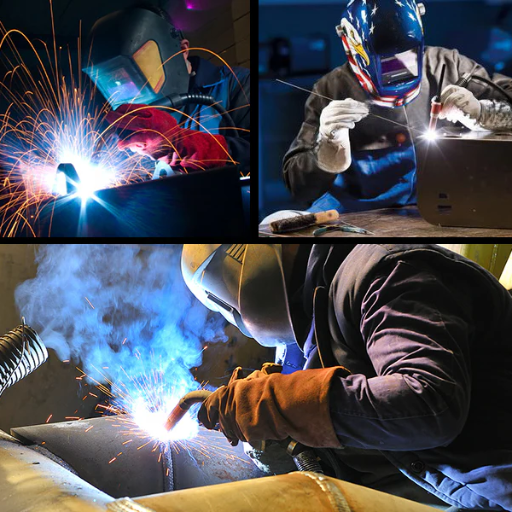
Common Uses of MIG Welding
- Automobile Industry: The automotive sector primarily utilizes MIG welding for repairs and the manufacturing of car bodies, as it creates clean and precise welds on thin sheets of metal.
- Fabrication of Metal Structures: Due to its speed and versatility, it is used for constructing metal frames, bridges, and various structural members.
- 造船業: MIG welding welds are, on various lonely metal surfaces exposed to arduous marine environments, strong and durable during the assembly and repair of ships.
- 航空航天: As a welding process requiring precision and weight considerations, it demands MIG welding on materials such as aluminum and titanium.
- Manufacturing of Consumer Goods: MIG welding is a practical choice for joining appliances and furniture, resulting in very smooth finishes.
Common Uses of Stick Welding
- 施工: For structural welding in construction, stick welding is widely used; the process is suitable for thick materials such as steel in an open atmosphere and under various weather conditions.
- Pipeline Welding: Welding pipelines using this process is common because it provides strong, long-lasting welds, even in deep, distant, and challenging environments.
- Shipbuilding and Repairs: This method is used in the shipbuilding and repair trades for welding applications, especially for repairing large, heavy structures exposed to marine conditions.
- Maintenance and Repairs: Stick welding is widely used for repairs, ranging from agricultural equipment to heavy machinery, due to its versatility and portability.
- Outdoor and Field Welding: Stick welding is ideal for welding structures in outdoor applications, such as fencing or repairs, as it does not require shielding gas and can withstand windy or dirty conditions.
Choosing the Right Method for Your Project
In choosing the welding method that best fits your project, here are some essential factors to note:
- Material Type and Thickness: For thin materials, such as sheet metal, MIG welding is typically preferred due to its precision and lower heat input. Heavier materials, on the other hand, require stick welding to give a strong and durable bond.
- Work Environment: Welding outdoors or in a windy environment is better suited for stick welding, as it does not require the use of shielding gas. For MIG 和 TIG 焊接, it is best to ensure weld quality in controlled environments.
- Skill Level: Beginners, not unlike that sense with MIG welding, because it is easy to learn; TIG, on the other hand, demands far more skill and experience for precise control.
- Project Requirements: TIG welding becomes an option where attractive welds are required, while MIG welding will do where speed welding for structural or automotive work is needed.
By considering these factors, you will be able to weigh any choice against your project requirements and skill set.
Equipment Needed for MIG and Stick Welding
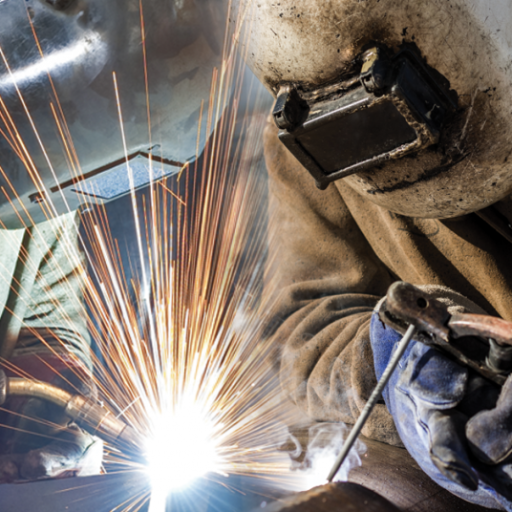
MIG Welding Equipment Overview
To perform MIG welding successfully, many critical equipment is required. Below, an essentials list is dissected:
- MIG Welder: The principal welder feeds the wire continuously to produce strong, consistent welds.
- Welding Wire: Typically, this is a spool of filler wire specifically designed to match the base material being welded, such as mild steel wire, stainless steel wire, or aluminum wire.
- 屏蔽氣體: It is a vital component that protects the weld from contamination. Argon, carbon dioxide, or a mixture of the two gases are commonly selected according to the materials and applications involved.
- Welding Gun: The device is handheld and is connected to the welder to control the wire feed and gas flow during welding operations.
- Ground Clamp: Provides electrical interconnections between the ground terminal of the welder and the workpiece, enabling effective development of weld circuits.
- Personal Protective Equipment: A welding helmet, gloves, and flame-resistant clothing are essential pieces of equipment that provide protection from sparks, heat, and UV radiation.
- 電源: Stable power supply of 110V or 220V must be delivered, depending on the specifications of the MIG welder.
Prepared with these components, one can ensure smoother and efficient functioning of the MIG welding process to accommodate divergent demands of various projects.
Stick Welding Equipment Overview
Stick welding is the common practice of welding and has many variations. It is one of the operations that requires specialized equipment to be carried out safely and efficiently. Some of the stick welding equipment includes:
- Welding Machine for Stick: At the center of the operation, this machine supplies the required current and voltage for maintaining the arc and welding process.
- Electrodes (Welding Rods): Consumable rods with a flux coating that ought to shield the weld pool from contaminants and stabilize the arc. Different electrodes are selected depending on the metal that has to be welded.
- Electrode Holders: This is an insulated, heavy-duty clamp that guides and securely holds the electrode, allowing electricity to be conducted from the welding machine and enabling the arc to be struck between the electrode and the workpiece.
- Ground Clamp: A ground clamp is used, without which the reconciliation of the complete welding circuit does not take place.
- Cables: Connect the machine to the holder and ground clamps with very high current.
- 防護裝備: A welding helmet with the correct shade lens, flame-retardant gloves, garments, and boots must be used to protect against sparks, heat, and intense light.
- 電源: Normally this will be a good power source, whether DC or AC, depending on the choice of machine or particular project.
With the equipment provided above and by strictly adhering to safety precautions, stick welding can be performed effectively for good adhesion in applications involving construction, repair, and industrial fabrication.
Essential Accessories for Both Techniques
Needless to say, accessory items must be safety-conscious, precision-oriented, and efficiency-driven. They include the following:
- 焊接頭盔 – It needs to stop sparks, intense light, and UV rays. Visibility for welding would be a high feature with auto-darkening.
- 防護服 – Heat-resistant gloves, jackets, and aprons prevent burns from sparks and heat.
- Welding Clamps – Welding clamps are used to join two workpieces together during welding to achieve secure and precise results.
- 鋼絲刷和碎錘 – These two tools are used to clean and powder metal surfaces during cleanup after welding.
- Welding Shield or Curtain – Protects the surrounding area and anyone else from sparks and light.
- Electrodes or Welding Wire – This refers to the material used for welding. The electrodes can be stick electrodes or spools of wire, depending on the technique.
- 角磨機 – It can be used for preparing materials, cleaning welds, or smoothing any surfaces required.
It’s these accessories that make the difference between an average weld and a uniform weld in terms of consistency and safety.
Cost-Effectiveness of MIG vs Stick Welding
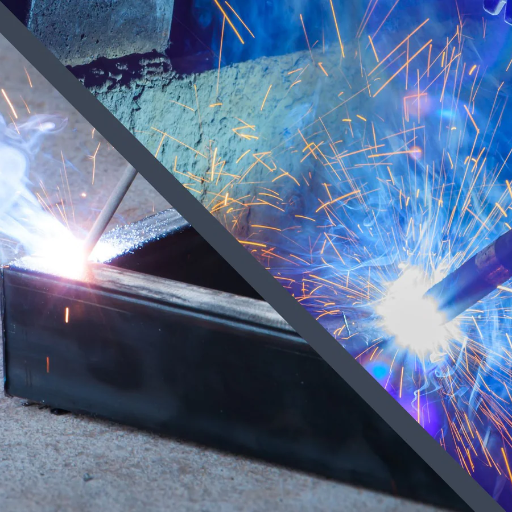
MIG welding is generally more cost-effective for continuous, high-volume work, while Stick welding is better suited for lower initial investment and outdoor environments.
Initial Investment in Equipment
In traditional. Initially, the setup cost is generally much higher for a MIG welding setup compared to stick welding. This is due to the price of the machine, shielding gas cylinders, and welding accessories. Typically, these MIG setups are considered too sophisticated, with additional components such as a wire feed mechanism, which makes them very expensive.
Stick welding is excellent if we want to keep the early expenses low. The equipment is simpler – and sometimes it consists only of a power source and electrodes, making it relatively inexpensive. This is why amateurs primarily choose Stick welding, or those wanting to opt for a more affordable option.
Operational Costs and Material Expenses
Generally, it will be comparatively cheaper by Stick welding then MIG welding for operation costs. The consumables, which are shielding gas and wire spools, are always required and increase operation expenses. Additionally, maintaining MIG welding equipment is crucial to prevent issues in wire feed systems and gas delivery components, which significantly contribute to operational costs.
The Stick-welding process consumes mainly electrodes, which are cheaper and easier to store. It actually does not require shielding gas, which makes it more economical in terms of consumable costs. Maintenance-wise, Stick welding equipment usually has fewer maintenance requirements, so they can keep operational costs low. On the downside, Stick welding creates material waste due to slag formation, which could slightly offset some of its cost benefits depending on the project specifications.
Long-term Value of Each Welding Method
When considering the long-term benefits of MIG and Stick Welding, several key factors should be taken into account, including durability, maintenance requirements, and adaptability. Where precision and strength are required, MIG welds are cleaner and have fewer defects; hence these projects will have better long-term durability. It is further a reliable choice if a given industry requires consistent high-grade output. However, keeping its equipment up can be far more expensive in the long run plus the execution works best in a controlled environment.
Stick welding will offer better durability in outdoor or harsher environments where flexibility and ease of use are the primary concerns. Its equipment is simple, keeping maintenance costs low. Variations in the weather will not deter it. Although it may produce welds with less finesse than MIG welds, its adaptability to hostile working conditions provides significant value in the long run for specific domains, especially in construction and repair.
參考來源
-
MIG Welding vs. Stick Welding – American Torch Tip
This article discusses the cost differences, applications, and consumables involved in MIG and Stick welding. -
What is the Difference Between Stick Welding and MIG? – TWI
A detailed FAQ-style explanation of the differences, including ease of learning and outdoor usability. -
Mig VS Tig VS Stick – The Differences May Surprise You! (YouTube)
A video breakdown of the key differences between MIG, TIG, and Stick welding, covering characteristics and applications.
常見問題(常見問題)
【摘要】:與中焊相比,焊條具有什麼光澤?
棒焊和混合焊是兩種最常用的焊接類型。棒焊,也稱為屏蔽金屬電弧焊 (SMAW),涉及使用消耗性棒焊條進行焊接。 MIG 焊接的工作方式是另一種:MIG 機器自動將焊絲送入焊工。雖然棒焊被認為更適合戶外工作和焊接較厚的材料,但 mig 焊接更容易學習,對初學者更具吸引力。.
【摘要】:棒焊比米格焊強嗎?
由於焊接過程中產生的電弧較大,因此可以在較厚的材料上建造更大的穿透力和更強的棒焊。然而,MIG 焊接同樣有效,您可以在正確的 MIG 電線上焊接各種應用。通常,焊工取決於其特定用途,例如焊接或焊接材料時。.
“我什麼時候應該使用混合焊接與棒焊”?
當使用薄材料或需要快速有效的焊接過程時,您應該使用 MIG 焊接。它易於學習,且 mig 焊接廣泛應用於工業環境中。對於棒焊,它是戶外焊接任務和焊接較厚金屬的首選,因為它可以確保穿透並且不易受到風的干擾。.
【摘要】:目的 米格焊和棒焊有什麼優缺點?
MIG焊接易於使用、快速,可用於各種工作,易於學習,非常適合初學者。相反,棒焊具有更好的穿透力,並且可以在戶外進行,從而在大多數地方都可以進行。儘管由於爐渣的生產,需要更長、更多的清理時間。焊工都知道一種技術與另一種技術適合不同的目的,因此將根據要進行的焊接類型來選擇一種技術。.
【什麼焊接任務最適合棒焊】
Heavy-duty welding jobs, such as welding thick metal sections or repairing heavy machinery, are well-suited for stick welding. It is beneficial to weld outdoors after wind and other environmental factors have had an adverse effect on the weld shape. The versatility of stick welding allows for welding in various positions and under diverse conditions. Therefore, the method remains a trusted choice for many welders.
❓ Which form of welding is easier for a beginner to learn?
MIG welding is considered easier to learn for beginners because the continuous feed of the wire enables smoother and quicker welds. The process is forgiving compared to stick welding and requires less skill to perform; stick welding, on the other hand, requires considerable technique and practice to achieve good results.