Welding lies at the heart of metal fabrication. However, selecting the proper welding process for a specific application can often be a challenge. And yet, two of the more common methods—Gas Metal Arc Welding (GMAW), better known as MIG welding, and Gas Tungsten Arc Welding (GTAW), also called TIG welding—can sometimes reveal their respective advantages and disadvantages. Between these two options could lie a choice based on factors such as material type, project complexity, precision, and overall efficiency. We are about to highlight the significant differences between MIG and TIG welding, thereby enabling you to make the most appropriate choice for your project. In terms of speed, strength, or quality, the first step is understanding how each one works to improve your welding results.
了解焊接工藝
MIG welding is a standard process used in various industries. There is a difference between the processes and their application.
The wire electrode serves as both filler material and current conductor in MIG welding. Wire feeding makes the process faster and more suitable for large projects and thick materials. This welding is typically performed in instances where speed takes precedence over all other considerations. In contrast, TIG welding uses a non-consumable tungsten electrode and, if required, a filler rod, which allows for greater precision and makes it suitable for intricate/quality work settings, such as those involving thin metals or detailed designs. Getting to know these fundamentals will help one understand which one will better fit specific needs.
什麼是 MIG 焊接 (GMAW)?
MIG welding, also known as Gas Metal Arc Welding (GMAW), is a vital welding method that involves the continuous feeding of a consumable wire electrode into the welding arc and the use of a shielding gas to protect the weld. The shielding gas in this case keeps the weld area free from atmospheric contaminants, providing a clean and strong weld. MIG welding is mainly preferred for its ease of operation; thus, new welders are sometimes taught this welding process. This process can be applied to steel, aluminum, stainless steel, and other non-ferrous metals. This process is usually opted for in industrial and automotive applications, basically because of the factor of speed, cleaning welds efficiently (thick materials). However, it requires a power supply alongside an appropriate wire feed system and a gas supply, meaning it is best suited to indoor welding setups or welding where environmental control is possible.
什麼是 TIG 焊接 (GTAW)?
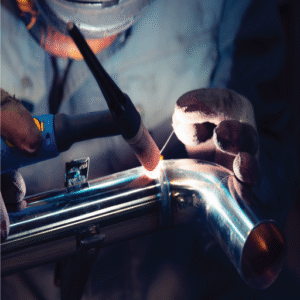
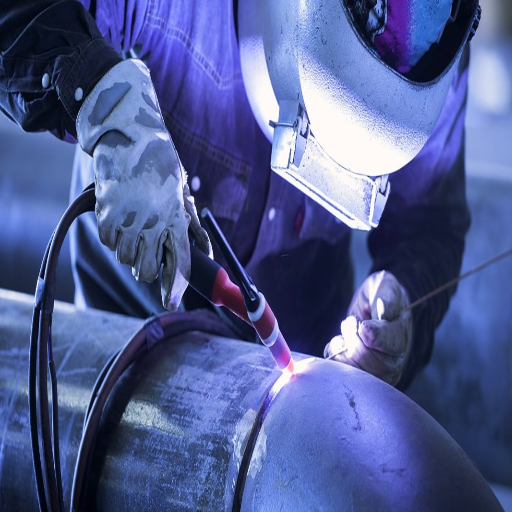
With TIG, a TIG welder is a tungsten-inert-gas welder, also known as a GTAW in welding parlance. With this technique, a non-consumable tungsten electrode is used to create the weld. This type of welding is renowned for its precision, and due to its ability to produce high-quality, clean welds, it is typically chosen when the job requires fine craftsmanship. In TIG welding, the use of shielding gas is usually necessary as a shield against contamination and oxidation in the weld area; the type of shielding gas, such as argon or helium, may suffice.
The process is highly regarded for working with thin sections of stainless steel, aluminum, magnesium, and other non-ferrous metals, offering greater control, and is utilized by industries such as aerospace, automotive, and art fabrication. TIG welding, meanwhile, can take much longer and requires operator-level skill than other welding methods. However, thanks to its versatility and ability to outshine other finishes, TIG is an absolute necessity in areas where appearance, strength, and precision are paramount.
Comparison of MIG and TIG Welding Processes
MIG welding is faster and easier, but TIG welding is slower, more precise, and best suited for applications that require thin walls or aesthetic finishes.
| 參數 | 米格 | TIG |
|---|---|---|
| 速度 | 快 | 慢 |
| 易於使用 | 簡單的 | 困難 |
| 材質 | 厚的 | 薄 |
| 精密 | 中等 | 高 |
| 美學 | 中等 | 非常好 |
| 成本 | 較低 | 更高 |
| Learning | 簡單的 | 陡峭 |
| Spatter | Some | 沒有 |
| Fumes | 高 | 低 |
| 設定 | 簡單 | 複雜的 |
MIG 和 TIG 焊接之間的主要區別
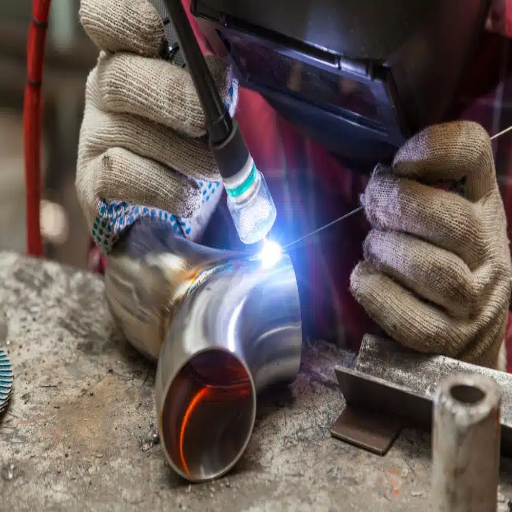
- Process: MIG welding uses a wire fed continuously as both the electrode and filler, whereas TIG welding uses an inert tungsten electrode, with a separate filler rod if needed.
- Ease of Use: MIG welding is simpler and faster to learn, making it suitable for beginners and large projects. TIG welding requires greater skill and precision due to its specialized technique.
- Material Compatibility: MIG welding is well-suited for thick materials, such as steel and aluminum, while TIG welding excels in joining thin sections and non-ferrous metals, including magnesium and stainless steel.
- Finish Quality: TIG welding is the cleanest and most aesthetically pleasing method, producing near-perfect welds with minimal spatter, making it ideal for applications where appearance is a premium. Although it is fast, MIG welding may still require additional finishing.
- Applications: MIG welding is more often used for large-scale fabrication work by industries such as construction and automotive. TIG is preferred for exact work, such as aerospace and art metalworking.
Weld Quality and Appearance
Considering weld quality and appearance, TIG or MIG welding is chosen depending on which one better meets the needs of a particular application. TIG welding offers the advantage of producing immaculate welds with a distinctive appearance. This is particularly important in industries that require precision and a weld-finished look, such as aerospace and artistic metalworking. According to a recent surge in search trends and behind-industry discussions highlighted by Google, users usually seek TIG welds where welding purity, or welding with no spatter at all, is paramount.
On the contrary, MIG welding is quick and efficient in producing reliable and strong welds, but it may not afford the high degree of visual refinement achieved by TIG. This makes it a preferred process when speed and volume take preeminence, such as in construction and automotive applications. There is also considerable interest in MIG welding, as evidenced by Google search queries, as a less expensive means of creating less conspicuous welds in large-scale fabrication. Knowing precisely what the project needs would help one choose the welding method that yields the best results and appearance.
材料相容性
MIG welding is very versatile in terms of material compatibility, as it can be applied to a wide range of materials, including carbon steel, stainless steel, and aluminum. Recently, search trends on Google indicate that users frequently ask about best practices for welding specific alloys/materials. These data suggest that there is considerable consumer interest in MIG welding applications for lightweight materials, such as aluminum, in the aerospace and automotive industries. The variables considered to produce strong and clean welds for various metals may include the thickness of the base materials, the selection of shielding gases, and the proper use of filler wire. Recognizing these technical factors enables welders to make adjustments in MIG techniques to be applied optimally under any given circumstance.
Speed and Efficiency of Welding
MIG welding is truly the fastest process, hence preferred among many industries. Trends of information and insights from the Google search engine reveal that there are several queries concerning how MIG welding prevents downtime and fast-tracks production cycles. This is due to the continuous wire feed, which ensures that welds are made consistently while occasionally keeping welders busy with interruptions. MIG welding also provides faster travel speeds than, say, TIG welding, especially for thicker materials. Thus, without compromising on productivity and quality, it allows smooth workflow, thereby being crucial in industries where heavy demand exists, such as construction, automotive, and aerospace.
MIG 和 TIG 焊接的應用
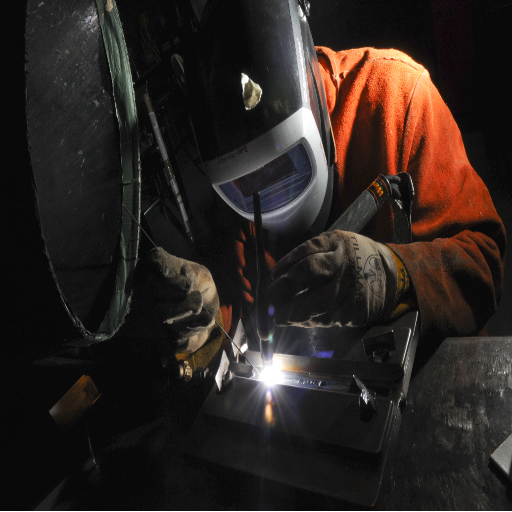
Due to their unique facilities and strengths, we see the application of MIG and TIG welding in a multitude of industries.
- Construction: MIG welding is provided for steel frameworks, pipe laying, and heavy machinery works, operating at high speed and capable of welding thick metals. Thin TIG welds are placed in structural members, requiring intricate joints and finishes.
- Automobile: MIG welding is faster and reliable in vehicle frame building and body panel repairing. TIG welds are required for exhaust systems and other applications that demand precision and clean finishes.
- Aerospace: TIG welding is used for fabrication and repair in the aerospace industry; welds must be flawless for safety and durability. MIG welding is used for ground support equipment and non-critical parts.
- Manufacturing: Both methods are integral to manufacturing equipment, tools, and consumer products, where TIG welding is used for detailed work and MIG welding is used for bulk production.
- Artistic Fabrication: TIG welding is preferred for arts and sculptures because it enables the creation of delicate and aesthetically pleasing welds.
Common Uses of MIG Welding
Due to various industries in which it finds use for efficiency and adaptability, there arises the use of MIG welding. Among the most typical uses of MIG welding are:
- Automotive Repair and Manufacturing: It is considered a go-to procedure for automotive repairs, welding of frames in the construction of frames, and the making of body panels due to its speed and versatility in working with different metals, such as steel and aluminum.
- Construction: For the erection of structures such as bridges, skyscrapers, and pipelines, this can be particularly useful. The importance is in being able to weld thick materials quickly with minimal cleanup for significant construction works.
- Shipbuilding: It is one of the welding processes to build ship hulls and other components, wherein strength and durability are required for at-sea structures.
- Aerospace Applications: In contrast, where the TIG weld is often used for intricate parts, the MIG weld is frequently employed for structural assembly, with efficiency and strength being prioritized.
- Manufacturing and Production Lines: The creation of heavy machinery, consumer products, and furniture continues to place high stakes. High-volume production competes with fast MIG welding processes due to their speed and automation capabilities.
MIG Welding Technology would hence maintain an advantage in industries, both large and small, with the competing factors of efficiency and versatility being periodically considered. Modern construction and manufacturing processes demand such operational proficiency.
Common Uses of TIG Welding
TIG welding, renowned for its precision and high quality, is a vital application in numerous industries. TIG welding usually finds applications in:
- Aerospace Industry: TIG welding is utilized in the aerospace industry for critical components, as it forms strong joints free of defects, which works well with lightweight metals such as aluminum and titanium.
- Automotive Repairs and Customization: This technique tends to be preferred in repairing and fabricating mechanical parts of a vehicle, dealing with thin materials or designs requiring in-depth detail.
- Fine Metalwork and Jewelry: Due to its ability to create precise and aesthetic welds, TIG welding is popular among fine metalwork artists and jewelers.
- Food and Pharmaceutical Equipment: TIG welding is used in the construction of stainless steel equipment by industries where cleanliness and corrosion resistance of materials are paramount.
- Pipe and Tube Welding: Thin-walled and small-diameter piping is often TIG welded, as it is suitable for a washout type of seam that is the most challenging in field operations in industries such as energy and water distribution.
With constant advances in the TIG welding field and the concurrent demand for versatility in welding techniques, this type is poised to remain dominant in both industrial and specialty applications.
Choosing the Right Process for Your Project
The various welding processes must be chosen carefully, considering several key factors, to achieve the best result for your project. First and foremost lies the matter of the material type, as each metal has its requirements when it comes to welding. In general, TIG welding is best suited for fragile metals or very high-precision work, while MIG welding is more suitable for working with thicker materials. Another factor to consider is the scope and complexity of the weld, where a particular technique would be preferred for an intricate design or a high-strength application. Furthermore, consider the location where welding will be done: if it is an outdoor project, then stick welding is a suitable choice due to its good performance in uncontrolled conditions. These further enhance their considerations, which include welding costs and efficiencies; one may need to balance economy with project needs when deciding whether manual or automated processes are a better choice. After considering these factors, many good decisions can be made, and deserving welding processes can be assigned to achieve excellent yields.
Advantages and Disadvantages of Each Process
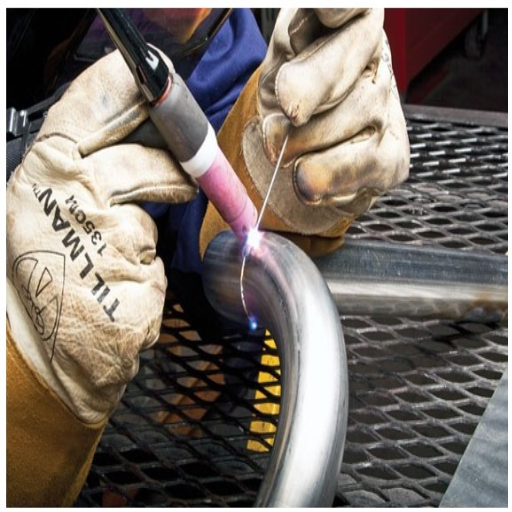
MIG welding is a process that is fast, easy to learn, and suitable for working with thick materials. TIG, on the other hand, accommodates precision and looks good, making it suitable for thin materials.
| 方面 | 米格 | TIG |
|---|---|---|
| 速度 | 快 | 慢 |
| 易於使用 | 簡單的 | 困難 |
| 材質 | 厚的 | 薄 |
| 精密 | 中等 | 高 |
| 美學 | 中等 | 非常好 |
| 成本 | 較低 | 更高 |
| 學習曲線 | 簡單的 | 陡峭 |
| Spatter | Some | 沒有 |
| Fumes | 高 | 低 |
| 設定 | 簡單 | 複雜的 |
MIG焊接的優點
- Ease of Use: This welding method is considered one of the simplest techniques to learn and is suitable for both beginners and professionals to install welds.
- High Efficiency: It allows continuous welding without interruptions, considerably enhancing productivity during projects.
- Versatility: This process can weld an extensive range of metals and thicknesses, including steel, aluminum, and stainless steel, making it highly versatile according to application requirements.
- Clean Welds: Since this process uses minimal slag, clean welds are achieved, requiring minimal cleanup and finishing after the weld.
- Time Saving: High speed results in saving the time of welders compared to other processes, which is essential for large-scale projects.
TIG焊接的優點
- Precision and Control: TIG welding boasts higher precision and control, and is therefore chosen over others for highly intricate and detailed work. This process enables welders to control heat and filler material with great precision.
- High-Quality Welds: This welding technique produces top-quality aesthetic welds, consisting of clean welds free from defects, making them suitable for critical applications.
- Versatility: In the vast array of metals, TIG welding can be performed over metals such as aluminum, magnesium, titanium, and stainless steel, thereby proving to be comparatively versatile.
- No Spatter or Slag: Unlike other welding methods, TIG welding does not produce any spatter or slag, thereby almost eliminating the need for post-welding cleaning.
- Durability of Welds: Welds achieved through TIG welding are robust and durable. These qualities are of prime importance to industries such as aerospace and automotive manufacturing.
Potential Drawbacks of Each Welding Method
When evaluating different welding methods, we must weigh the limitations to determine the right choice for a particular project or industry. Based on the current data and views we have:
- TIG 焊接
Slow Process: Although it is called welding, it is slower than other methods, such as MIG or stick welding, which therefore increases the total time required, especially in large-scale projects.
Skill Requirement: TIG welding requires so much skill and precision that it is not something to be learned by the casual welder, fast, under any normal circumstance.
Expensive: The equipment used and inert shielding gases, such as argon, make TIG welding one of the most costly procedures.
- 米格焊接
Thin Materials: MIG welding is not suitable for overly thick metals due to its penetration limitation, and therefore, it is not well-suited for heavy industrial operations.
Wind Factor: Being susceptible to wind or drafts, this shielding gas in MIG welding presents varying conditions of weld quality outside.
Setup Problems: Setting up MIG welding equipment can be more elaborate compared to simpler processes, such as stick welding.
- 棒焊
More Cleaning Once Done: A significant amount of spatter and slag is produced by stick welds, each of which requires its post-weld cleanup.
Not Great on Thin Sheet Metal: Thin sheets are not advisable for welding using this process due to a greater tendency toward burn-through.
Less Precision: Stick welding is suitable for many straight structural weld applications; however, for finer or more intricate weld needs, this process is not as precise as TIG or MIG welding.
- FCAW
Smoke and Fumes: The amount of smoke and fumes generated by FCAW is more compared to that by other methods, necessitating proper ventilation and safety measures.
Limited Compatibility of Materials: It is used less on aluminum materials and broadly used for some steel and alloys.
Internal Defects Potential: If not well done, FCAW may create porosities and other internal weld defects.
The choice of an appropriate welding method, therefore, is directly tied to the project’s requirements and also depends on the type of material, location, budget, and the precision needed. The trade-offs of each method are distinctive, so a precise understanding of this goes a long way in making a decision.
參考來源
- Comparative study between TIG-MIG hybrid and MIG welding of 1.4462 duplex steel joints
- 作者: S. Weis et al.
- 已發表: November 27, 2023
- 主要發現: This study demonstrates that the TIG-MIG hybrid welding process improves welding speed and quality for duplex steel. The interaction between the two arcs enhances penetration and reduces defects, showcasing TIG’s superior control over weld quality.
- 方法論: The research involved high-speed recordings and synchronized current/voltage measurements to analyze the welding process. A welding procedure test was conducted in accordance with ISO standards, which included tensile and hardness testing, as well as microscopic examinations of the welds.
- Effect of TIG and activated flux TIG welding processes on weld bead geometry, microstructure, and hardness of SAF 2507 grade super duplex stainless steel joints
- 作者: Himanshu Dagur et al.
- 已發表: July 11, 2023
- 主要發現: The study found that activated flux TIG (A-TIG) welding achieves greater penetration and a narrower weld bead compared to standard TIG welding. A-TIG welding using SiO2 flux resulted in a finer grain structure and higher hardness values.
- 方法論: The authors performed bead-on-plate welding on 6 mm thick super duplex stainless steel using both TIG and A-TIG processes. They analyzed the macrostructure, microstructure, and mechanical properties of the welds.
- Effect of Welding Process Parameters on the Mechanical Properties of TIG and MIG Welds in HSS X65 Pipe-A Review
- 作者: S. L. Lawal, S. A. Afolalu
- 已發表: March 1, 2024
- 主要發現: This review highlights the advantages of TIG welding in terms of weld quality and mechanical properties compared to MIG welding. It emphasizes the importance of parameter optimization for achieving high-quality welds.
- 方法論: The study reviewed various research findings on the mechanical properties of High Strength Steel (HSS) X65 pipes welded using both TIG and MIG processes, focusing on the effects of welding parameters.
- 中國頂級焊接定位器製造商和供應商
常見問題(常見問題)
TIG 和 MIG 焊接的主要區別是什麼?
TIG(氣體鎢極電弧焊接,GTAW)和 MIG(氣體金屬電弧焊接,GMAW)之間的主要區別包括各自的焊接工藝和易用性。 TIG 焊接利用非消耗性鎢電極進行焊接,提供更好的控制和更高品質的焊接。相較之下,MIG 焊接採用透過焊槍供給的消耗性填充金屬,通常更容易學習且更快地獲得較厚的材料。.
為什麼特定焊接項目首選 TIG 焊接?
對於需要高品質和精確焊接的項目,TIG 焊接通常是首選。該製程可產生更清潔、更美觀的焊接,非常適合航空航太和汽車等行業的應用。使用非消耗性鎢電極可以更好地控制熱量和焊接池,這對於焊接較薄的材料至關重要。.
是什麼讓 TIG 焊接比 MIG 焊接更困難?
TIG 焊接被認為更困難,因為它需要更高水準的技能和協調性。焊工必須使用 TIG 焊炬手動將填充金屬送入焊池,同時與鎢電極保持一致的電弧。與通常更容易學習的 MIG 製程相比,這種水平的手動控制以及用惰性氣體保護焊接的需要使得 TIG 製程更具挑戰性。.
TIG 製程如何產生優質焊接?
TIG 製程透過使用非消耗性鎢電極產生穩定的電弧,同時用惰性氣體屏蔽焊接區域,從而產生優質焊接。這種防止污染的保護可確保焊接中的雜質更少,從而形成更堅固、更耐用的接頭。此外,焊工可以控制熱輸入和填充金屬的添加,以實現精確焊接,特別是在較薄的材料中。.
為什麼 TIG 焊接設備被認為比 MIG 焊接更昂貴?
由於 TIG 製程所需的複雜性和精度,TIG 焊接設備通常比 MIG 焊接設備更昂貴。專門的 TIG 焊炬、更高品質的鎢電極以及對更複雜的氣體輸送系統的需求增加了整體成本。然而,對於需要卓越焊接品質的應用來說,這項投資是合理的。.
In what scenarios is MIG welding faster than TIG welding?
MIG welding is generally faster than TIG welding when working on thicker materials or when speed is a priority. The MIG process enables continuous feeding of filler metal through the MIG gun, making it efficient for large-scale production and less complex welding tasks. For projects that do not require the same level of detail as TIG welding, MIG can significantly reduce the time needed to complete the welding operation.
Can you explain the advantages of using a TIG torch in the welding process?
Using a TIG torch in the welding process offers several advantages, including the ability to produce precise and high-quality welds. The TIG torch offers better control over the heat input, allowing for the use of a non-consumable tungsten electrode, which minimizes the risk of contamination. This makes it particularly valuable for welding applications that require meticulous attention to detail and clean welds.
What are the typical applications for TIG welding?
TIG 焊接很常見 used in applications that demand high-strength, high-quality welds, such as in the aerospace, automotive, and manufacturing industries. It is particularly effective for welding thin materials and for projects that require clean, aesthetically pleasing joints. Its versatility also allows it to be used on a wide variety of metals, including aluminum and stainless steel.