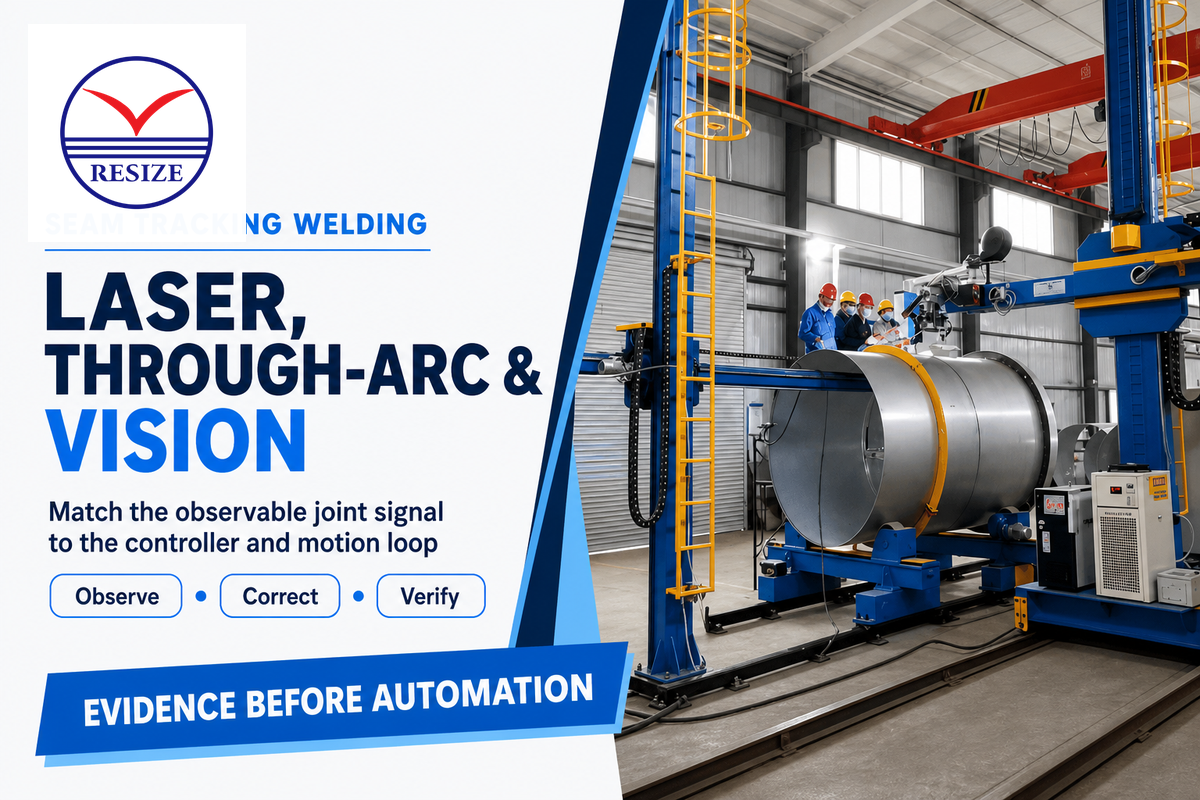
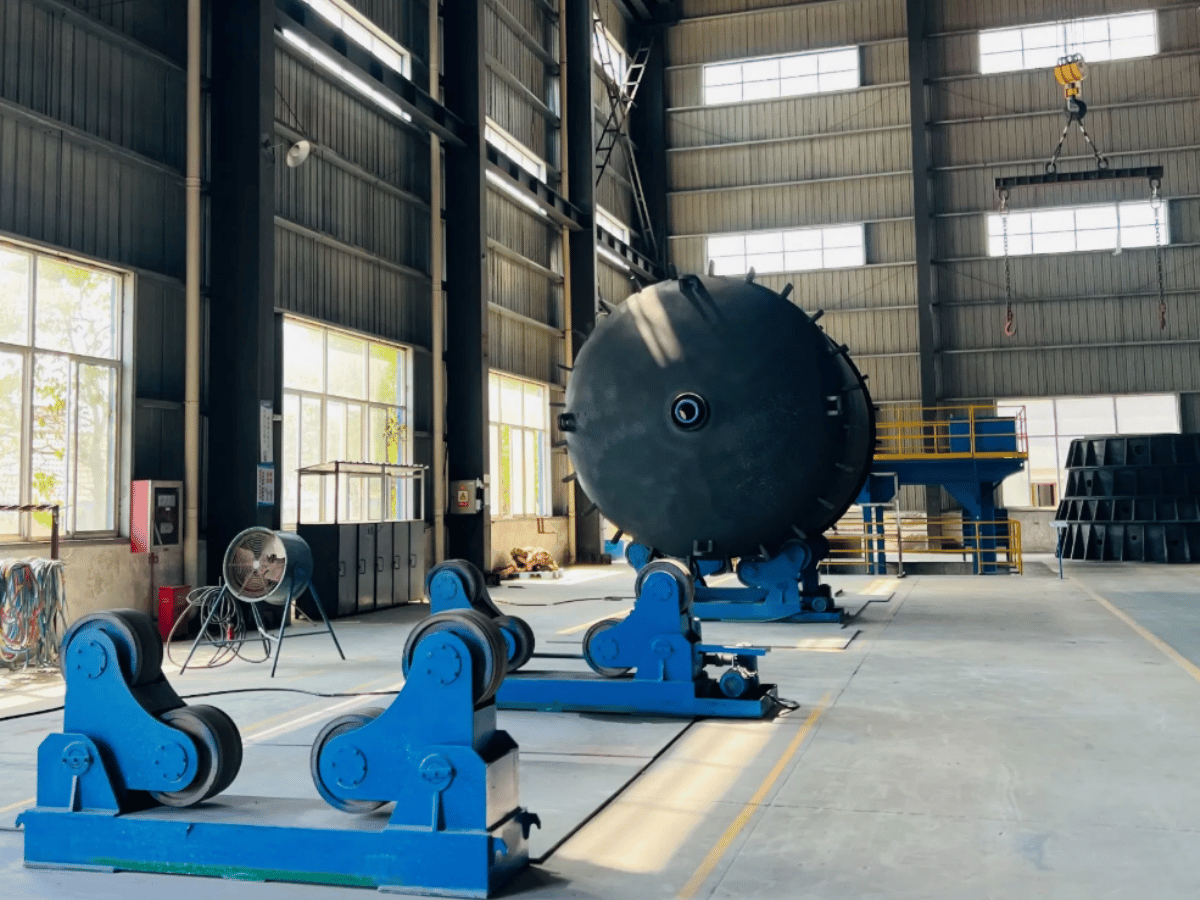
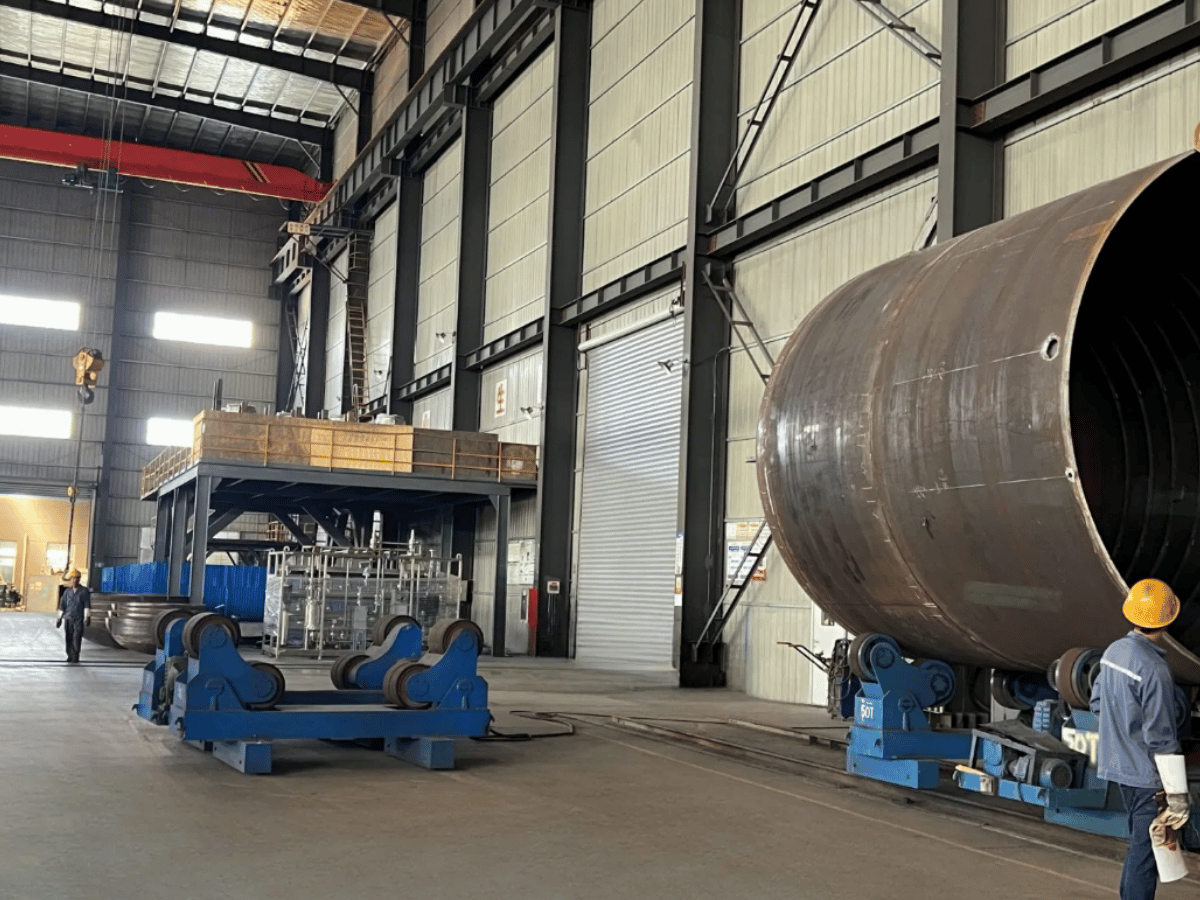
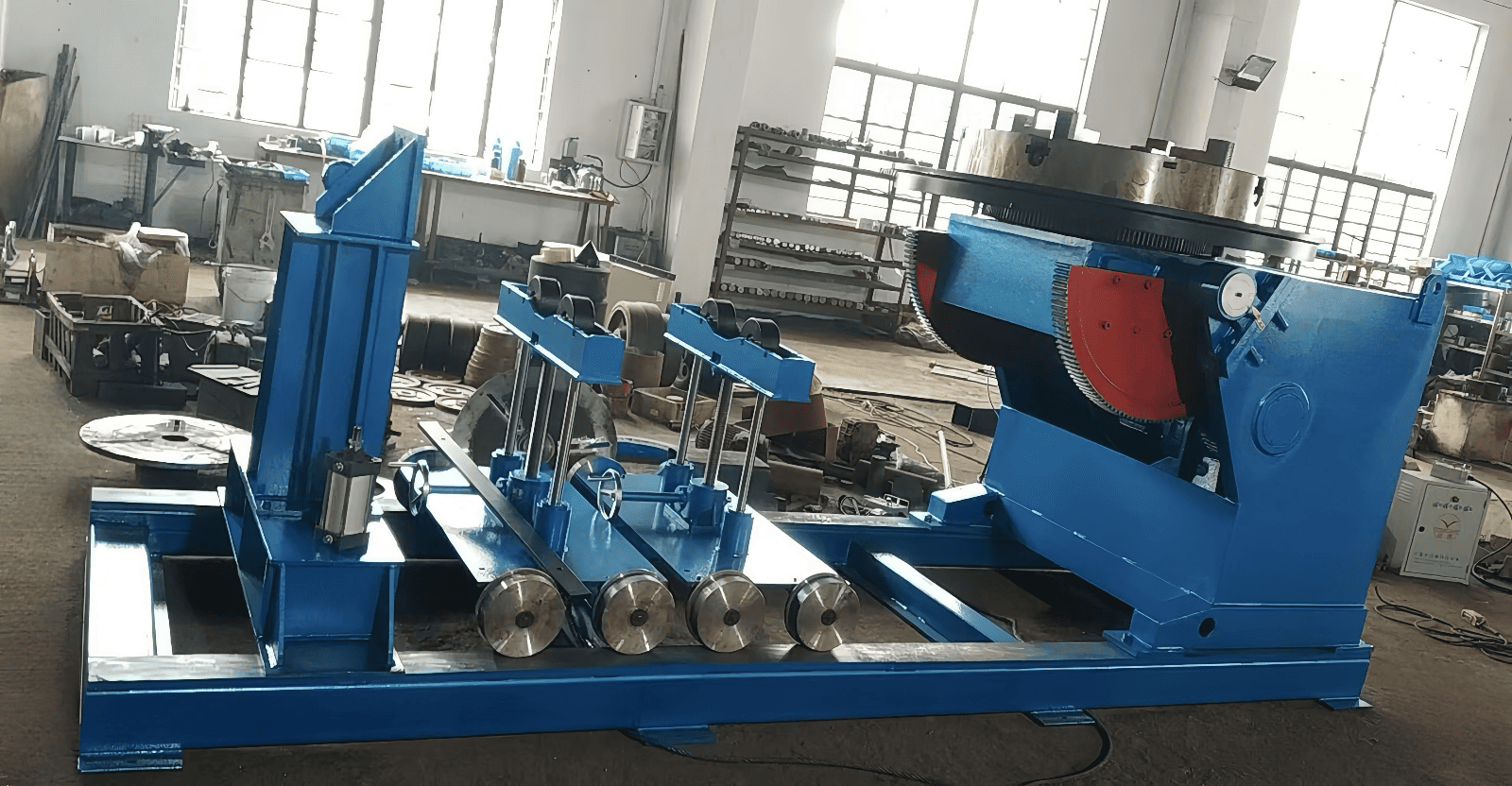
The welding field is characterized by precision, efficiency, and innovation, with weld rotators and welding manipulators at its core. From fabricating giant cylindrical articles to heavy-duty pipes and complex metal structures, having the right equipment is quintessential for obtaining the finest results. This guide explores the vast world of welding rotators and turning rolls, shedding some light on what they do, their advantages, and their applications. Learn how these tools can change the working procedures of welding in terms of weld quality, safety, and productivity. This article will guide both experts and novice welders in selecting suitable welding options with which to work.
Understanding Weld Rotators
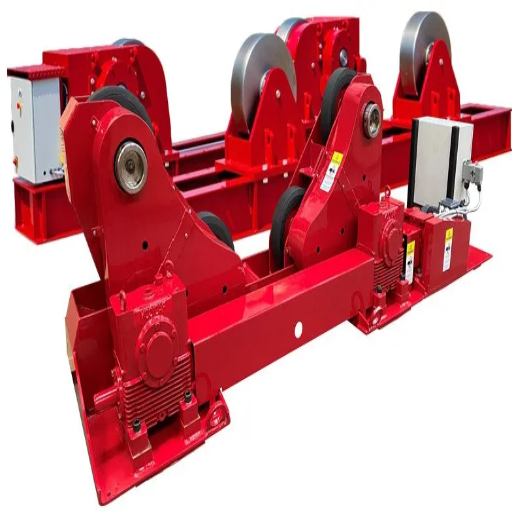
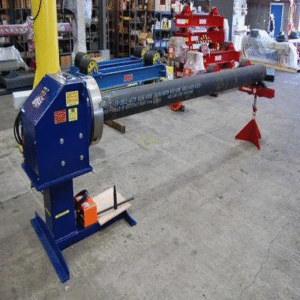
Weld rotators are designed to support and rotate cylindrical or rounded workpieces during welding operations. They consistently position and rotate the workpiece for even and precise welding. These tools are key to enhancing welding quality, minimizing operator fatigue, and increasing productivity. Several types of weld rotators are available, including self-aligning and conventional types, to suit different projects and sizes. By automating the process of turning, they help create smoother and firmer welds and assist in eliminating welding errors.
What are Weld Rotators?
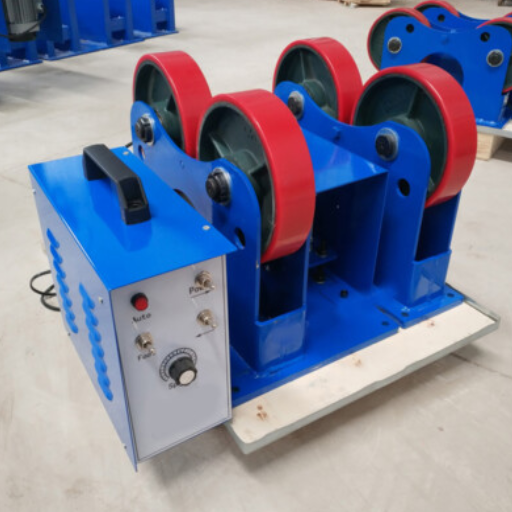
Weld rotators, also known as welding turning rolls, are sophisticated tools used during welding or fabrication to rotate cylindrical or rounded workpieces. They rotate the workpiece because high precision and good-quality welding is demanded in industries like oil and gas, shipbuilding, and manufacturing. Modern weld rotators feature variable speed controls, remote operation, and advanced self-aligning capabilities for task efficiency. By automating the rotation of pipes or tanks, weld rotators boost productivity, maintain excellent weld quality, and lessen operator exertion. Moreover, their ability to accommodate varying load capacities makes them tools that can be used on any scale project.
焊接旋轉器的類型
Welding rotators can be classified into numerous types, such as conventional, self-aligning, variable speed, fit-up, pipe, tank/vessel, anti-drift, tilting, and portable rotators.
| 類型 | 關鍵特徵 | 應用 | 調整 | 容量 |
|---|---|---|---|---|
| 常規的 | Fixed/Adjustable | 一般焊接 | 手動 | 高 |
| 自對準 | Auto-adjust | Varying sizes | 自動的 | 高 |
| 變速 | Speed control | Precision welds | 可調 | 中等 |
| Fit-Up | Alignment aid | Pre-welding fit | Independent | 中等 |
| 管道 | Pipe-specific | Pipeline work | 可調 | 中等 |
| Tank/Vessel | 重型 | Large tanks | 可調 | 非常高 |
| Anti-Drift | Alignment lock | 精準任務 | 可調 | 高 |
| Tilting | Angled access | Complex joints | Tiltable | 中等 |
| 便攜式 | 輕量級 | On-site welding | 手動 | 低 |
Advantages of Using Welding Rotators
- Improved Productivity
Welding rotators automate the rotation of cylindrical joints, thereby limiting manpower and saving time. Maintaining a constant speed and alignment during the welding operation helps improve the overall efficiency of the project.
- Better Welding Quality
Since rotators provide uniform and uninterrupted rotation, this guarantees even heat distribution and soldering operations, preventing processes that can create distortion or irregularity and ensuring the structural integrity of the workpiece, as well as better weld finishing.
- Flexibility In Terms Of Handling Different Loads
Welding rotators come in various sizes and configurations, adapted to accommodate different load capacities, ranging from smaller pipes on one hand to larger tanks and vessels on the other. Therefore, their suitability for numerous applications in diverse industries, such as shipbuilding, oil and gas, and construction.
- Less Operator Fatigue
A welding rotator reduces the physical stress on the operator because they do not need to rotate the component during the welding process manually. This ensures that operators are safe and can focus their attention on welding activities.
- 具有成本效益
Welding rotators ensure quality production in less time, reducing welding errors and saving both time and material costs for the company. Their implementation will yield a fast return on investment, thanks to their durability and efficiency.
焊接旋轉器的應用
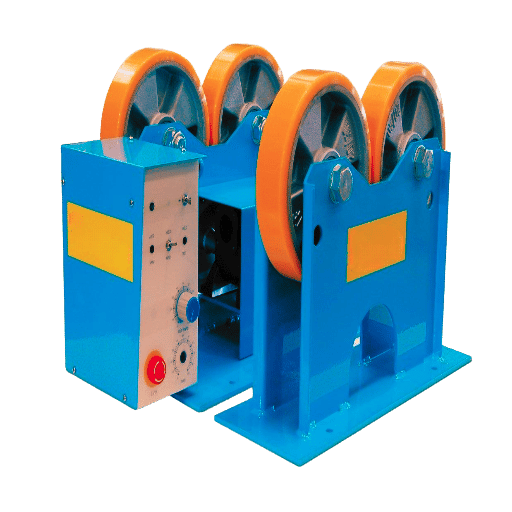
Welding rotators are utilized in various sectors to enhance welding processes. Some typical applications are:
- 管焊
The rotation welding works on pipelines or significant cylindrical components, so welds need to be uniform and precise.
- 建築業
Welding rotators are used in welding beams, columns, and other large structures, as well as in various applications.
- 石油和天然氣
Store tanks, pressure vessels, and other major capital equipment are manufactured with welding rotators for the oil and gas industries.
- 造船
Welding rotators facilitate the welding assembly of significant ship components, producing smooth welds on curved or cylindrical surfaces.
- Heavy Industries
Used for manufacturing heavy equipment components such as excavators and cranes, where precision and strength are mandatory.
Cylindrical Fabrication
Every industry requires safe and robust designs; therefore, cylindrical fabrication plays a crucial role in this. As part of cylindrical fabrication, components such as tanks, piping, and pressure vessels are fabricated for various applications. Inquiring about the processes involved in cylindrical fabrication is one question often posed in the latest search results from Google’s search engine. The advanced welding techniques, automated rotators, and CNC machinery must all come together in this process to ensure that the pieces meet with perfect alignment, very high tolerances, and consistent repeatability. This method reduces material waste and time, adhering strictly to all quality standards.
管道焊接應用
In industries such as oil and gas, construction, and manufacturing, pipe welding finds various applications. According to the latest data from Google’s search engine, a frequently asked question is, “How is pipe welding used in different industries?” The answer is the pipeline construction process, which is considered to be of paramount importance for the safe and efficient transportation of oil, gas, and other associated fluids. Additionally, it is used in the construction of infrastructure, such as bridges and water systems, where the joints need to withstand severe high-pressure environments. Advanced welding techniques, such as TIG and MIG welding, are generally employed in conjunction with automated systems to meet industries’ requirements for durability and precision.
Tank Welding Processes
Tank welding processes are critical for constructing and maintaining industrial storage tanks used in oil and gas, chemical production, and water treatment sectors. Standard welding practices in this trade include a range of methods, including Submerged Arc Welding (SAW), Flux-Cored Arc Welding (FCAW), and Gas Tungsten Arc Welding (GTAW). Submerged Arc Welding enjoys widespread use because of the long seams it welds with deep penetration, providing strong and durable joints. Flux-cored arc welding offers versatility in welding various materials in different positions, particularly for thick materials. Gas Tungsten Arc Welding would be utilized for critical welds that require stringent quality control due to its excellent quality assurance.
Recent developments in the welding field, based on new inputs, indicate a shift towards productivity enhancement and consistent quality through automation and robotics. These smartly designed automated setups are being integrated with real-time monitoring systems to detect flaws during the welding process, thereby minimizing errors and significantly reducing waste in terms of time and money. This stands as evidence of the evolution toward newer, more advanced methods that can match the increased demand paired with higher safety standards.
選擇正確的焊接旋轉器
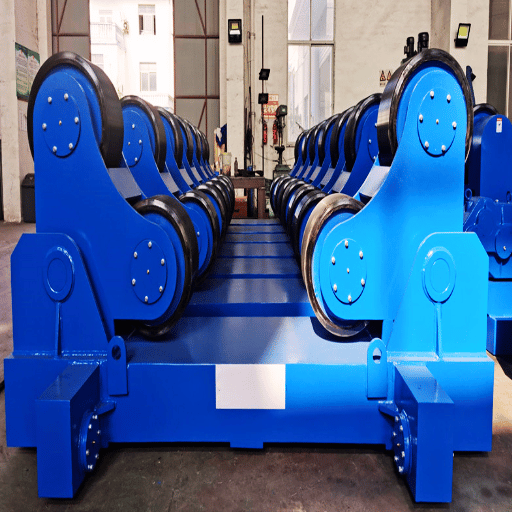
The welding rotator design selection process must evaluate load capacity, adjustability, and compatibility with the components to be welded. The rotator should be able to withstand the weight of the workpiece and provide flexibility for different diameters and shapes. Speed control features should be present to rotate the workpiece stably during welding operations. Finally, the welding rotator should be chosen depending on the application at hand (pipe, tank, or other components) so that it performs well and the equipment is safe.
需要考慮的因素
When choosing the welding rotator, there are a few essential factors to be considered for the best output and safety:
- 負載能力
Ensure that the rotator can safely handle the heaviest workpiece you wish to weld. Its overloading can cause mechanical failure and put safety at risk. Check the load ratings stated in the manufacturer’s specifications.
- Adjustability
There should, ideally, be adjustments available in the rollers or the configuration of the rotator to cater for the diameters and shapes of materials. This feature enhances versatility in preparing for several welding applications.
- 速度控制
Precise speed adjustment is required for consistent and accurate welding. The speed changes with welding or during rotation, and also, depending on the material being used, make speed adjustment highly useful for the operator.
- 耐用性和建造品質
Choose one that is manufactured out of high-quality materials and is able to stand up to heavy-duty use during prolonged use in harsh environments. The cost of maintenance would be higher with less sturdy construction, which would also reduce the machine’s lifespan.
- Compatibility with Applications
Select a welding rotator whose application-specific requirements match the pipe, tanks, pressure vessels, and other components. This will smoothen the operation and help in improving the efficiency of welding.
Right Welding Rotator for Your Needs
Considering the advancements and insights from recent years in the industry, one must feel them upon purchasing welding rotators. Trends from respectable sources (such as Google search trends) suggest that most users looked for load capacity, automation compatibility, and ease of operation in the last couple of years. It is crucial for safety and performance that the rotator can carry the size and weight of the particular workpieces on which one is working. Another sought-after feature is the compatibility of these rotators with automated systems, which enables the automation of another step in the process to ensure efficiency and consistency in welding tasks. Companies increasingly want customizable options that allow them to tailor the equipment to their exact operational needs.
Precision in Welding with Rotators
Welding rotators ensure that welds are done with precision and production is bettered. Google trends towards searching highlight an increased interest in welding automation solutions, indicating the need for improved precision and reliability in industrial applications. Welding rotators, compounded by automation, ensure that the workpiece is rotated at a consistent speed and with high accuracy, leaving no room for human error, which would otherwise cause varying weld seams. Frequently asked questions within this scope pertain to the diameters and materials that the rotators can support. The answer lies within the adjustability and customizability of these modern rotators, which ensure their adaptability in a variety of projects. This kind of precision reduces wastage and significantly cuts production time and cost, thus making costly welders an essential tool in the construction of the shipbuilding and pipeline manufacturing industries.
Welding Turning Rolls Explained
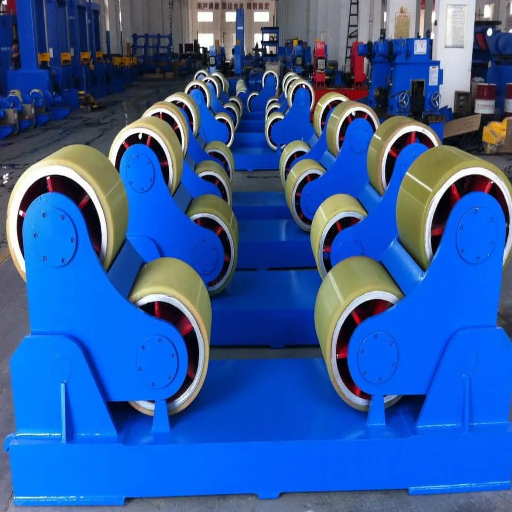
Firstly, welding turning rolls serve as a support and winding tool used during welding for cylindrical objects, such as pipes or tanks. They employ a motor-driven roller to provide smooth and steady rotation of the material, allowing welders to perform their work efficiently and accurately. Weld turning rolls enable more accurate welding, reducing manual handling and enhancing safety through the steady positioning of the workpiece. Due to the variety of types, sizes, and load capacities, these welding turning rolls are widely applied in various industries for the fabrication of large-sized round objects.
What are Welding Turning Rolls?
Welding turning rolls are mechanical devices designed specifically to support and rotate cylindrical objects, such as tanks, pipes, or pressure vessels, for various welding or fabrication purposes. They are crucial in industrial setups to expedite and precisely rotate workpieces smoothly and uniformly, while significantly enhancing the quality and consistency of welds. Modern welding turning rolls are often manufactured to feature variable speed controls, motorized or manual speed adjustments, and are compatible with automation systems, making their implementation in production systems very smooth. Besides improving productivity, they alleviate operator fatigue and increase safety by stabilizing heavy objects during handling. Available in various capacities, ranging from light-duty to heavy-duty models capable of handling several hundred tons, welding turning rolls are a crucial aspect and a key component in industries such as shipbuilding, oil and gas, and manufacturing.
Applications of Welding Turning Rolls
Due to their capability to manage and rotate cylindrical objects with precision and efficiency, welding turning rolls find wide avenues across many industrial sectors. Here are five essential uses of welding turning rolls:
- 管道建設
Welding turning rolls are the jacks of all trades in pipeline construction. They help in the proper positioning of pipe sections during rotation and welding so that joints form seamlessly, lessening the manual lifting effort.
- Pressure Vessel Fabrication
Welding turning rolls hold and rotate these massive, heavy, cylindrical bodies during the welding of pressure vessels. This enables uniform weld lines and minimizes welding errors.
- Shipbuilding Industry
The shipbuilding industry utilizes welding turning rolls to handle large cylindrical objects, such as gas tanks and other shipborne components, thereby speeding up construction.
- 風塔製造
The manufacturing of wind towers requires the precise handling of large steel plates and cylindrical bodies. Welding turning rolls assure smooth rotation and proper alignment during welding.
- Oil and Gas Industry
From refining equipment to storage tanks, welding turning rolls are used in assembling and maintaining critical equipment used in oil extraction and gas processing, where precision and durability are paramount.
Comparison with Welding Rotators
Welding rotators are compared based on various features, types, applications, adjustment mechanisms, load capacities, and other factors.
| 類型 | 特色 | 應用 | 調整 | 容量 |
|---|---|---|---|---|
| 常規的 | Fixed/Adjustable | 一般焊接 | 手動 | 高 |
| 自對準 | Auto-adjust | Varying sizes | 自動的 | 高 |
| 變速 | Speed control | Precision welds | 可調 | 中等 |
| Fit-Up | Alignment aid | Pre-welding fit | Independent | 中等 |
| 管道 | Pipe-specific | Pipeline work | 可調 | 中等 |
| Tank/Vessel | 重型 | Large tanks | 可調 | 非常高 |
| Anti-Drift | Alignment lock | 精準任務 | 可調 | 高 |
| Tilting | Angled access | Complex joints | Tiltable | 中等 |
| 便攜式 | 輕量級 | On-site welding | 手動 | 低 |
參考來源
- Friction Stir Welding of Dissimilar Al–Mg Alloys for Aerospace Applications: Prospects and Future Potential
- 作者: S. Nagaraja et al.
- 出版日期: January 1, 2024
- 總結: This paper discusses the use of Friction Stir Welding (FSW) for joining dissimilar Al–Mg alloys, which are crucial in aerospace applications. The study highlights the advantages of FSW over traditional fusion welding methods, such as reduced formation of brittle intermetallic compounds and improved mechanical properties. Key parameters like rotational speed and tool design are emphasized for optimizing the welding process.
- 方法論: The authors conducted a comprehensive review of the existing literature, focusing on the mechanical properties of welded joints and the challenges faced in the aerospace sector (Nagaraja et al., 2024).
- A Review of Recent Improvements, Developments, Influential Parameters and Challenges in the Friction Stir Welding Process
- 作者: S. A. Hussein et al.
- 出版日期: June 24, 2024
- 總結: This review paper provides an overview of advancements in the Friction Stir Welding (FSW) process, including its applications in various industries. It discusses the influence of design parameters on weld quality and joint efficiency, as well as the challenges of applying FSW in large structures.
- 方法論: The authors reviewed recent studies and advancements in FSW, analyzing the impact of various parameters on the quality of welds and identifying areas for future research(Hussein et al., 2024).
- Friction Stir Welding of Non-Heat Treatable Al Alloys: Challenges and Improvements Opportunities
- 作者: B. Abnar et al.
- 出版日期: March 28, 2023
- 總結: This paper reviews the challenges associated with FSW of non-heat treatable aluminum alloys, focusing on the effects of heat input and mechanical properties. It discusses strategies for improving weld quality, such as optimizing welding parameters and incorporating reinforcement particles.
- 方法論: The authors conducted a comprehensive review of the existing literature, discussing various approaches to enhance the quality of FSW joints and expand their industrial applications (Abnar et al., 2023).
- Top Welding Rotator Manufacturers and Suppliers in China
常見問題(常見問題)
What are the applications of welding rotators?
Welding rotators are versatile tools used in a wide range of welding applications. They are particularly effective for cylindrical objects, such as pipes and tanks, allowing welders to maintain the correct welding position throughout the welding process. These rotators are essential in industrial welding environments where high-quality welding is required for large vessels or complicated structures.
How do I choose the right welding rotator for my project?
Choosing the right welding rotator depends on your specific welding needs and the type of welding project you are undertaking. Consider factors such as the size and weight of the workpieces, the welding positions required, and whether you need features like self-aligning capabilities. Evaluating these aspects will help you select from the diverse range of welding rotators available on the market.
有哪些類型的焊接旋轉器可供選擇?
There are several models of welding rotators available, including conventional rotators, self-aligning welding rotators, and fixed rotators. Each type is designed to handle different welding jobs and requirements. For instance, conventional rotators are often used for straightforward applications, while self-aligning rotators provide greater adaptability for irregular shapes.
How do welding rotators improve efficiency in welding?
Welding rotators enhance efficiency and precision by allowing for automatic welding processes. They reduce the time welders spend repositioning workpieces, enabling faster welding operations. This not only helps in minimizing welding defects but also ensures a more consistent quality of welds across various projects.
Can welding rotators handle different types of welding?
Yes, welding rotators can handle different types of welding, including TIG, MIG, and robotic welding systems. The adaptability of these rotators makes them suitable for a wide range of welding environments and procedures, enabling welders to achieve optimal results regardless of the welding technique used.
What are the advantages of using welding rollers?
Welding rollers provide several advantages, including better control over the welding process and improved access to welding positions. They are handy for large and heavy components, as they allow for seamless rotation and manipulation during the welding process. This results in higher quality welds and reduced labor costs on welding projects.
What is the role of pipe rotators in welding?
Pipe rotators play a crucial role in pipe welding by ensuring that the pipes are held securely and rotated smoothly during the welding procedure. This capability enables welders to maintain the correct welding position and achieve even welds, which is crucial for the integrity and durability of welded joints.
How can I ensure the correct welding position during my project?
To ensure the correct welding position, it’s crucial to utilize welding positioners or rotators that can accommodate the specific requirements of your project. These tools help maintain the workpiece in an optimal position for welding, reducing the risk of welding defects and improving overall weld quality.
What should I consider when purchasing a welding rotator?
When purchasing a welding rotator, consider factors such as the load capacity, size, and features that meet your specific welding requirements. Look for rotators that offer versatility in handling different welding jobs and that can be integrated with your existing welding equipment. Additionally, evaluate the quality and reliability of the manufacturer to ensure you invest in a high-quality welding solution.