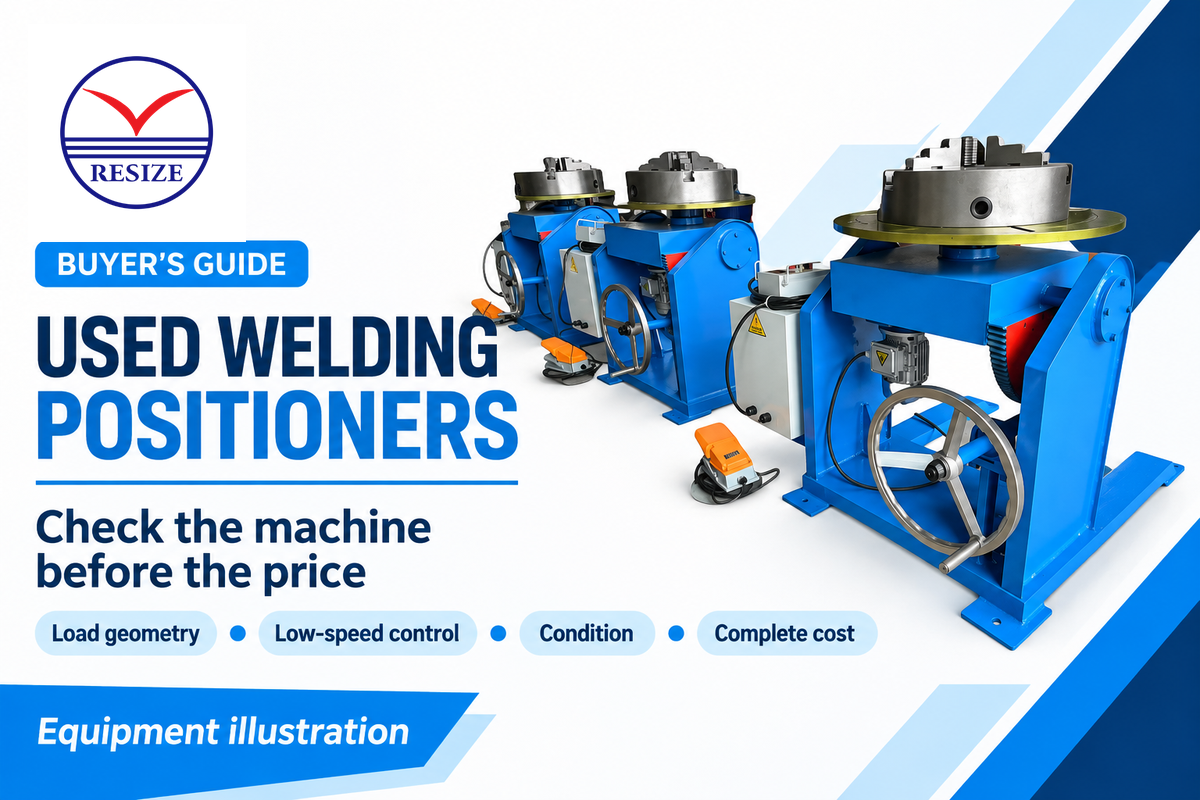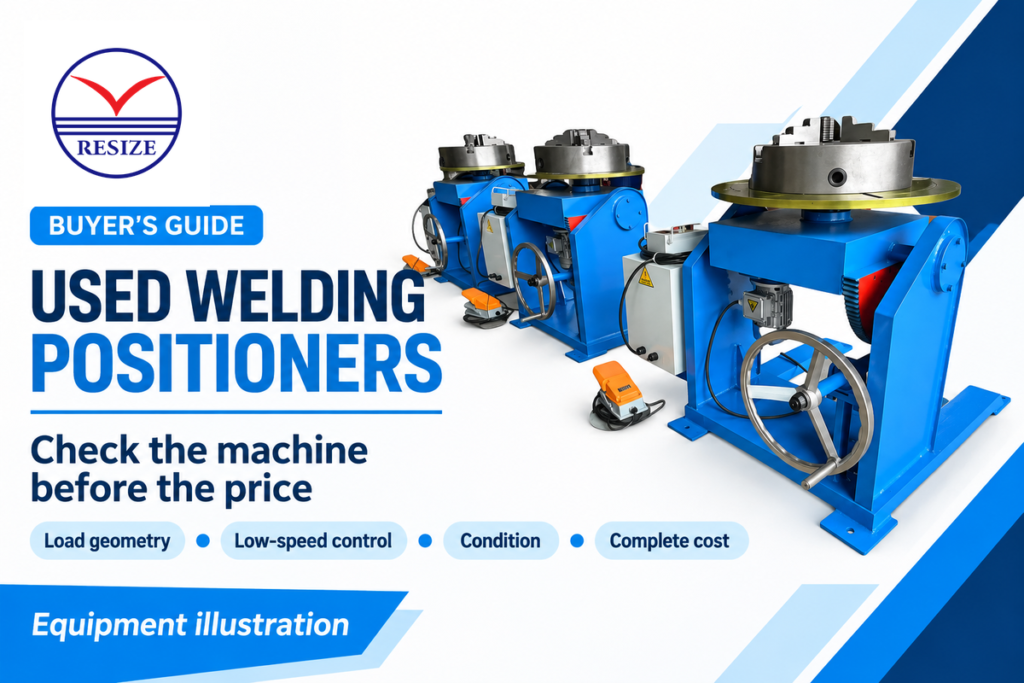
There are certain criteria you must consider when looking at a used welding positioner. First, you must see if the load geometry and working speed and condition of the machine fit your components, and if the delivered cost allows for tooling and repairs. Check the actual machine and nameplate against your assembly drawing first. Large capacity nameplates can’t compensate for an incorrect chuck, excessive overhang, or an unsuitable drive.
Updated October 2026
- Size the combined workpiece and fixture, including center-of-gravity offsets.
- Match the lowest stable rotation speed to the joint diameter and welding travel speed.
- Compare the machine, chuck, controls, delivery and agreed repairs on the same quotation.
- Separate a qualified pre-purchase inspection from installation acceptance.
You must also look at your loaded fixture and speed range, in addition to your electrical supply, when considering a used welding positioner. Compare the ready-to-weld cost of the equipment to the cost of alternative new or rental equipment. Make your purchase against the identified machine and written terms of acceptance.
- A foot pedal may control direction and start/stop without controlling speed.
- Horizontal and vertical load ratings can differ on the same machine.
- A seller’s reconditioning label needs a defined repair and test scope.
- A successful shop demonstration doesn’t replace checks after transport and installation.
Where to find used welding positioners for sale
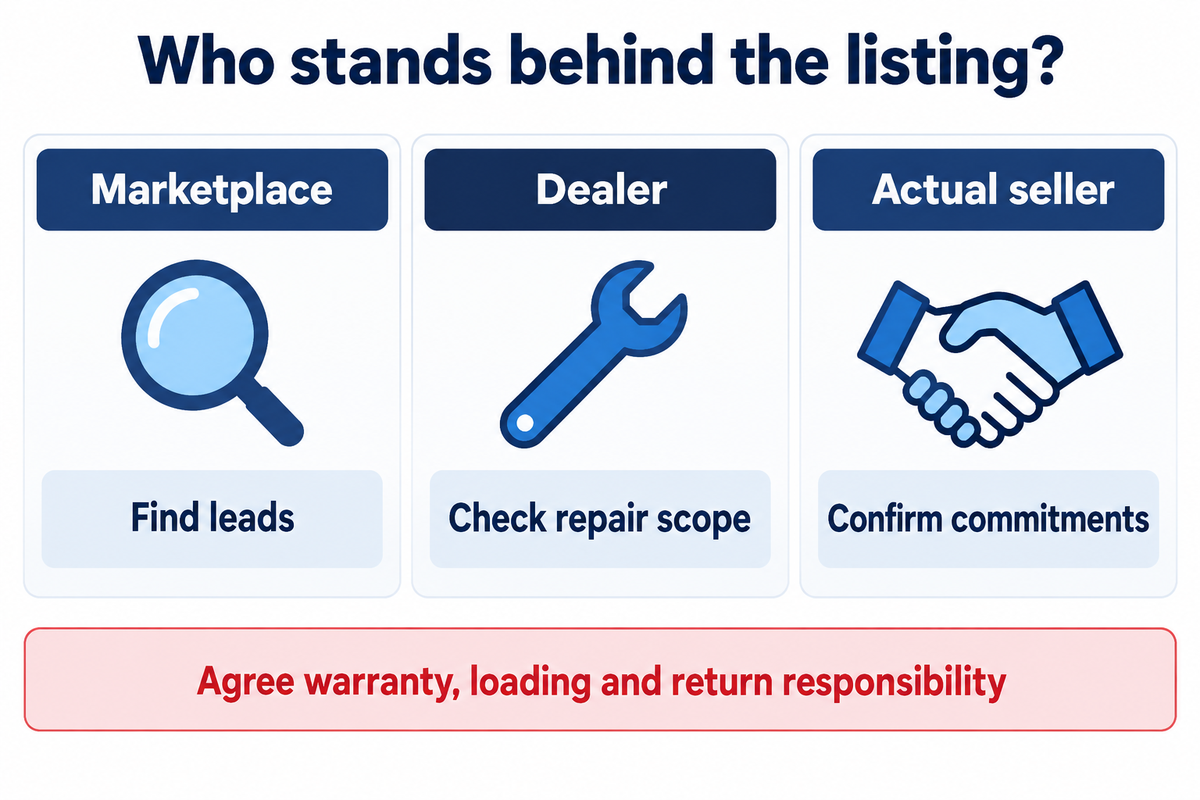
Look for dealer listings and industrial machinery marketplaces for welding equipment. Ask who owns and services the machine listed behind each deal. A dealer can describe his equipment and repair history; a marketplace may bring you to an unrelated seller. Review the condition and included equipment prior to evaluating price.
In the machine tool market, Weld Plus separates its rebuilt equipment from new and used welding positioners. Meanwhile, General Equipment and Supply lists reconditioned machines. Machine Hub and Surplus Record are beneficial for locating equipment from multiple sellers. These channels serve different roles: the platform displaying a machine may not be responsible for its warranty, loading or return.
Brand names help focus a selection of used machinery, but on their own don’t sufficiently define the equipment. Pandjiris, Ransome and Aronson equipment is shown with other makes in dealer directories. A used Pandjiris or used Aronson machine requires its own load chart, electrical information and condition assessment. Controllers can change from one generation to the next and be concealed by repainted machine housings. Determine the exact Pandjiris model before you ask for parts information. A large selection can provide alternatives, while an extensive inventory is helpful only in cases where the seller can prove that a unit is available that meets the requirements.
Include photographs of the nameplate, table, controls, underside and tooling in your assessment of the machine. The Profax positioner guide covers Profax products.
Ownership and brokerage arrangements govern who can authorize a demonstration and provide technical answers and agree to perform corrective work before collection. Determine whether the seller owns or brokers the equipment and state its current availability in the offer.
The application should be reflected in the short list; The Fabricator’s five positioning considerations, by Koike product manager Jason Ladd, discusses how load placement and fixtures affect selection.
Work out the ready-to-weld cost
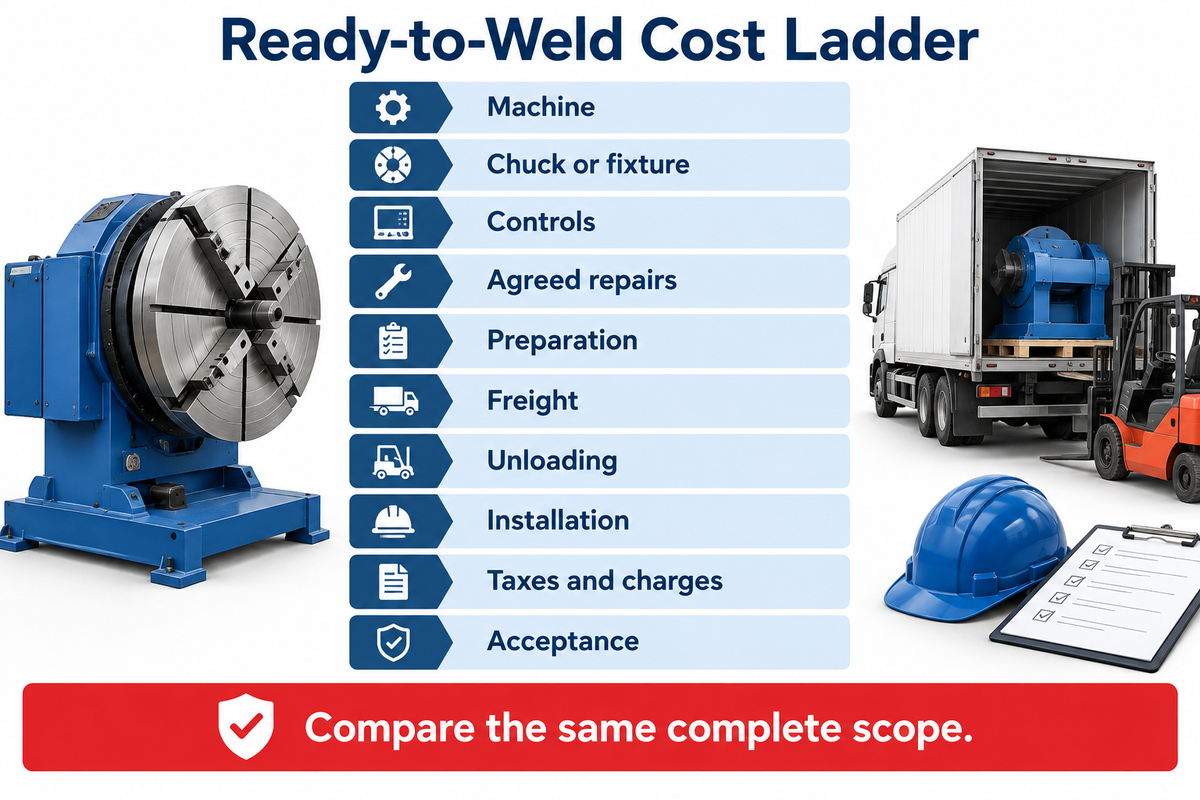
Estimate the true cost of putting the machine into service. Keep unknown costs in one category and known costs in another. The lowest advertised price can lose its advantage when a missing chuck, incompatible control or difficult unloading arrangement becomes the buyer’s responsibility.
Ready-to-Weld Cost Ladder
The Ready-to-Weld Cost Ladder contains each cost to move the identified machine from the seller’s floor to an accepted production setup.
| Cost line | What the quotation should contain | Decision owner |
|---|---|---|
| Machine | Actual model, serial number, condition and purchase price | Purchasing |
| Chuck or fixture | Included tooling, adapter plate and any missing workholding | Manufacturing engineer |
| Controls | Pedal, pendant and required control functions | Operator and engineer |
| Agreed repairs | Named defects, replacement parts and test scope | Maintenance |
| Preparation | Disconnection, packing and protection for transport | Seller and purchasing |
| Freight | Collection point, destination and transport responsibility | Logistics |
| Unloading | Lifting equipment, site access and inside placement | Plant manager |
| Installation | Electrical connection, anchoring and required assessment | Qualified installer |
| Taxes and charges | Applicable tax, import or transaction charges | Purchasing and finance |
| Acceptance | Inspection, agreed demonstration and correction of recorded defects | Engineer and operator |
An example of an asking price would be the reconditioned Profax WP-500 listed by General Equipment & Supply at US$5,250, checked on October 21, 2026. It’s equipped with a CFS-404 foot control. Add any excluded tooling, delivery and installation costs to the asking price. The asking price and terms come from that seller.
Consider an illustrative buyer whose approved purchase-and-installation budget is US$6,300. Against the US$5,250 asking price, the remaining allowance is US$6,300 − US$5,250 = US$1,050. That allowance must cover every cost excluded from the offer; it isn’t an estimate of those costs. The plant manager needs the machine working on arrival, while finance needs the total commitment. If the fixture and freight quotations use up the allowance before electrical work is priced, the buyer hasn’t established an affordable purchase. The next decision is to revise the budget or compare another suitable offer. Treating unquoted work as free would hide the very cost that decides the purchase.
For a similar time horizon, add expected maintenance, energy and downtime costs and account for residual value in your cost-benefit comparison. Factors similar to these are described in Federal Acquisition Regulation 7.401 for federal government equipment purchases. Its comparison framework is useful here; it doesn’t prescribe the terms of a private sale.
Which positioner suits your workpiece?
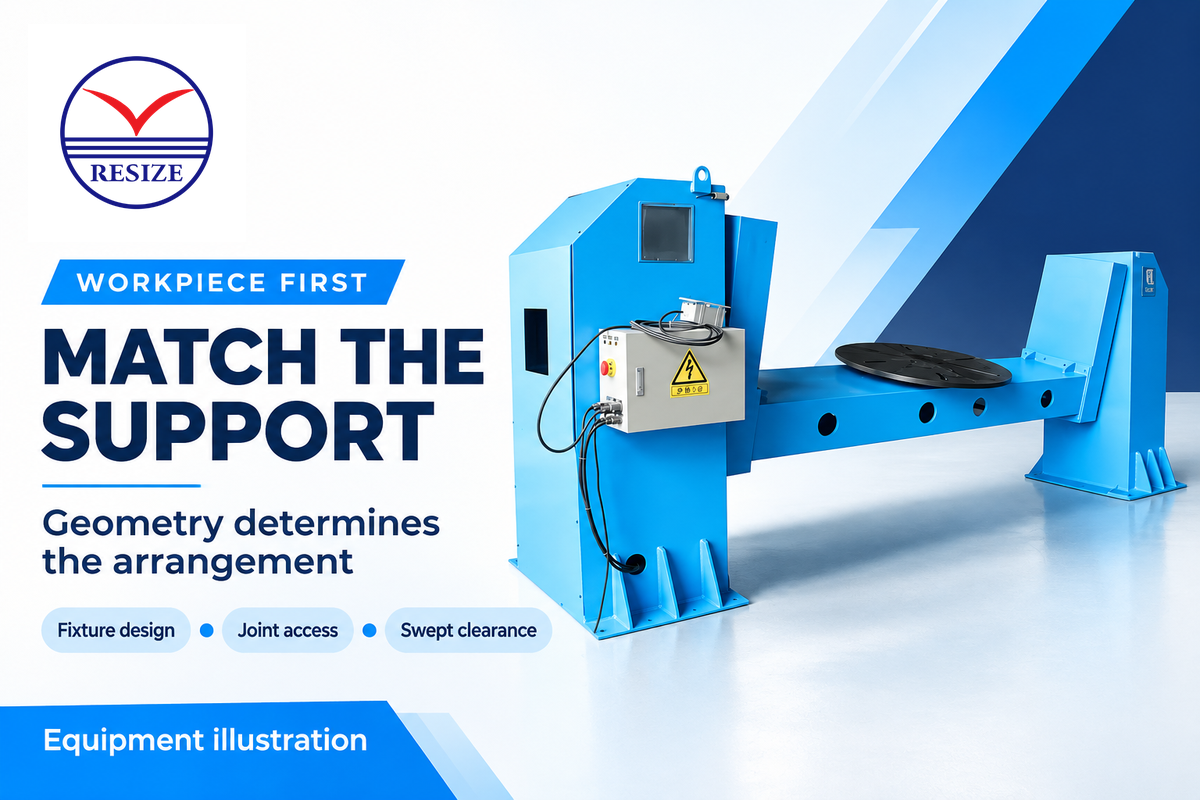
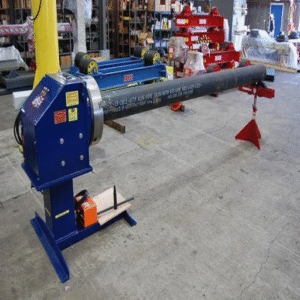
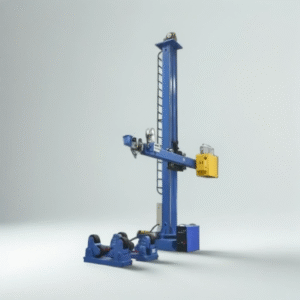
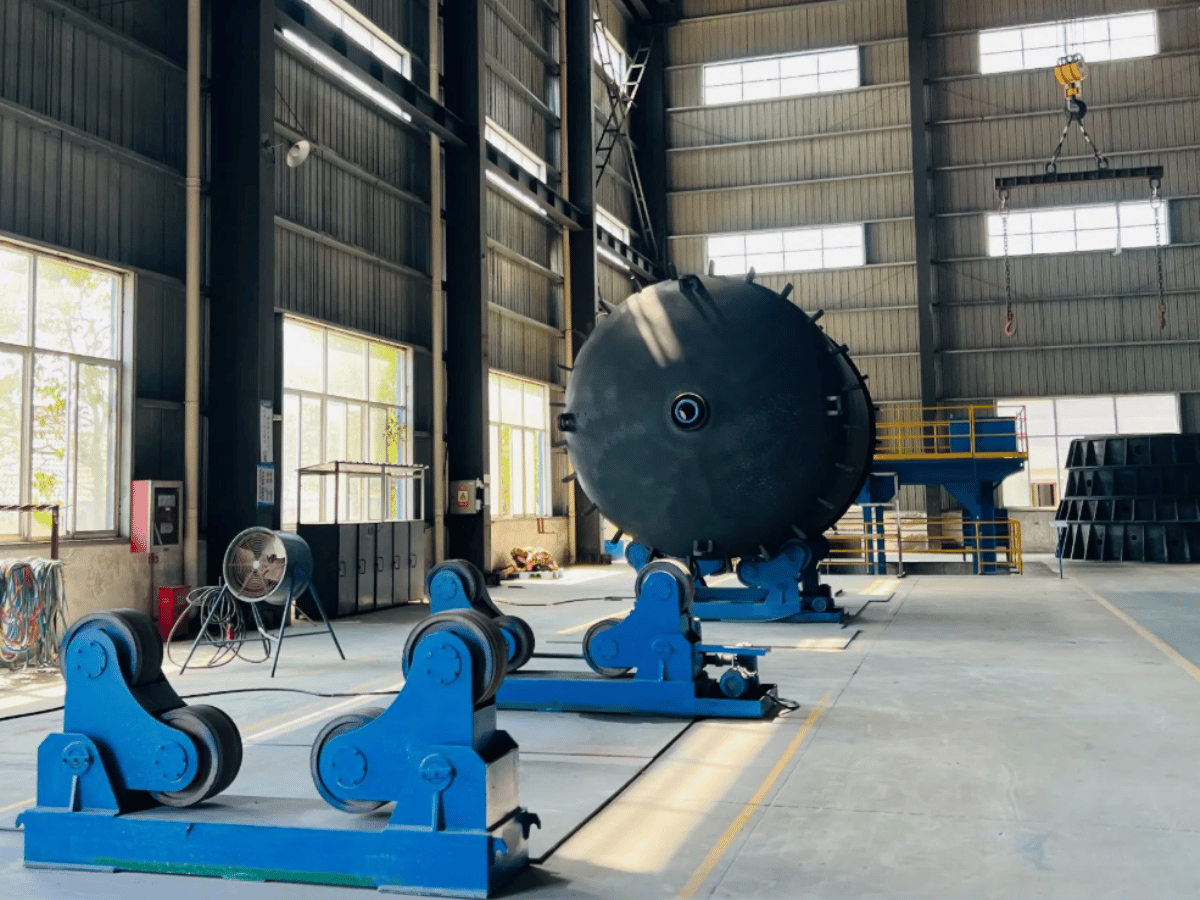
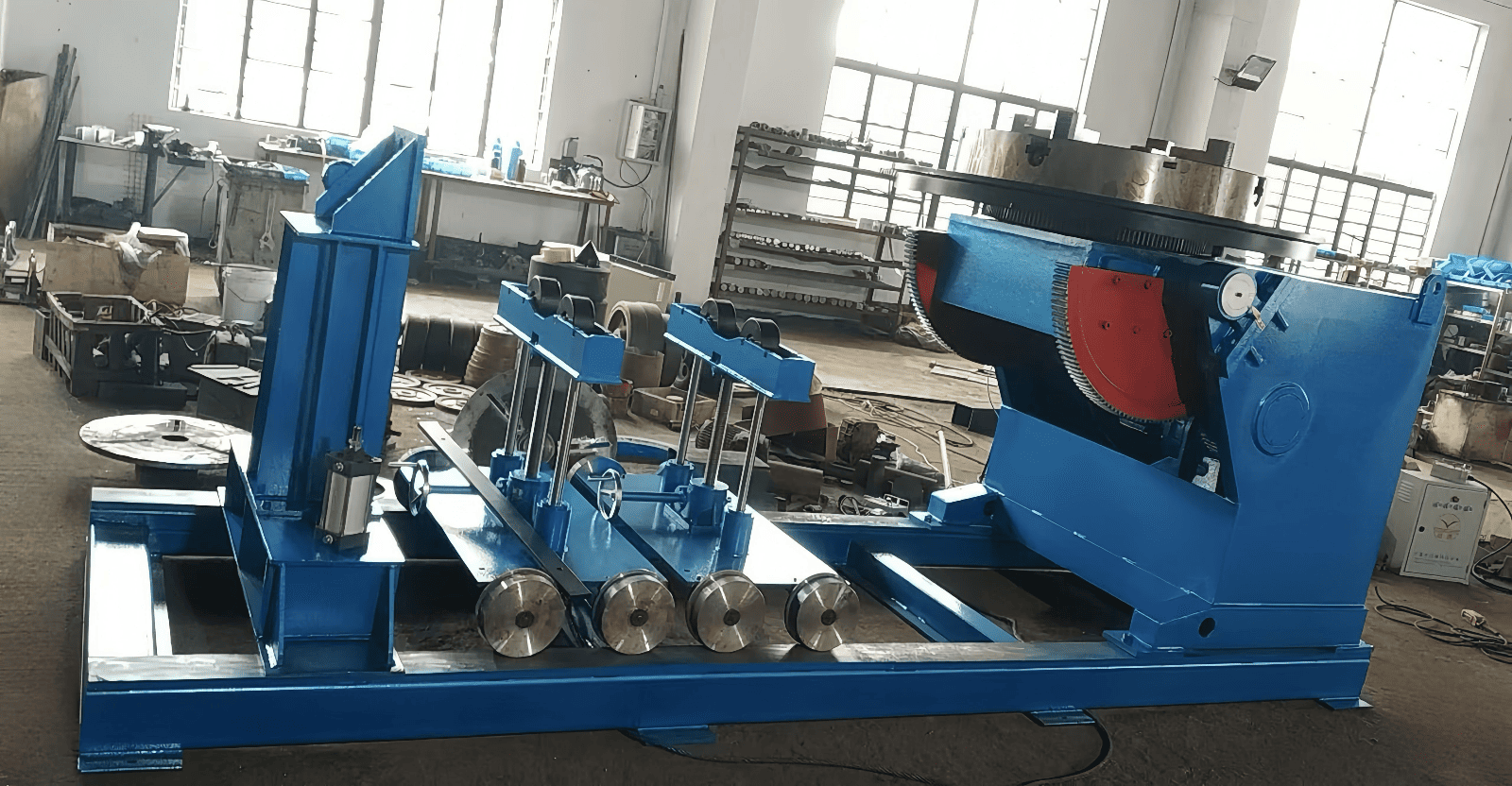
Use a positioner for a securely clamped assembly, a turning roll for a suitable cylindrical shell, or a headstock and tailstock for an assembly supported at its ends. Table models rotate the workpiece. Machines that rotate and tilt have to have clearance throughout both motions. The support arrangement determines the fixture design and joint access.
How does a welding positioner work?
A welding positioner positions a workpiece on a table or fixture in a useful welding orientation. A powered rotary table then turns the joint past the welder. A tilting model also changes the table angle. The fixture transfers the load to the machine. The drive and control systems set the movement.
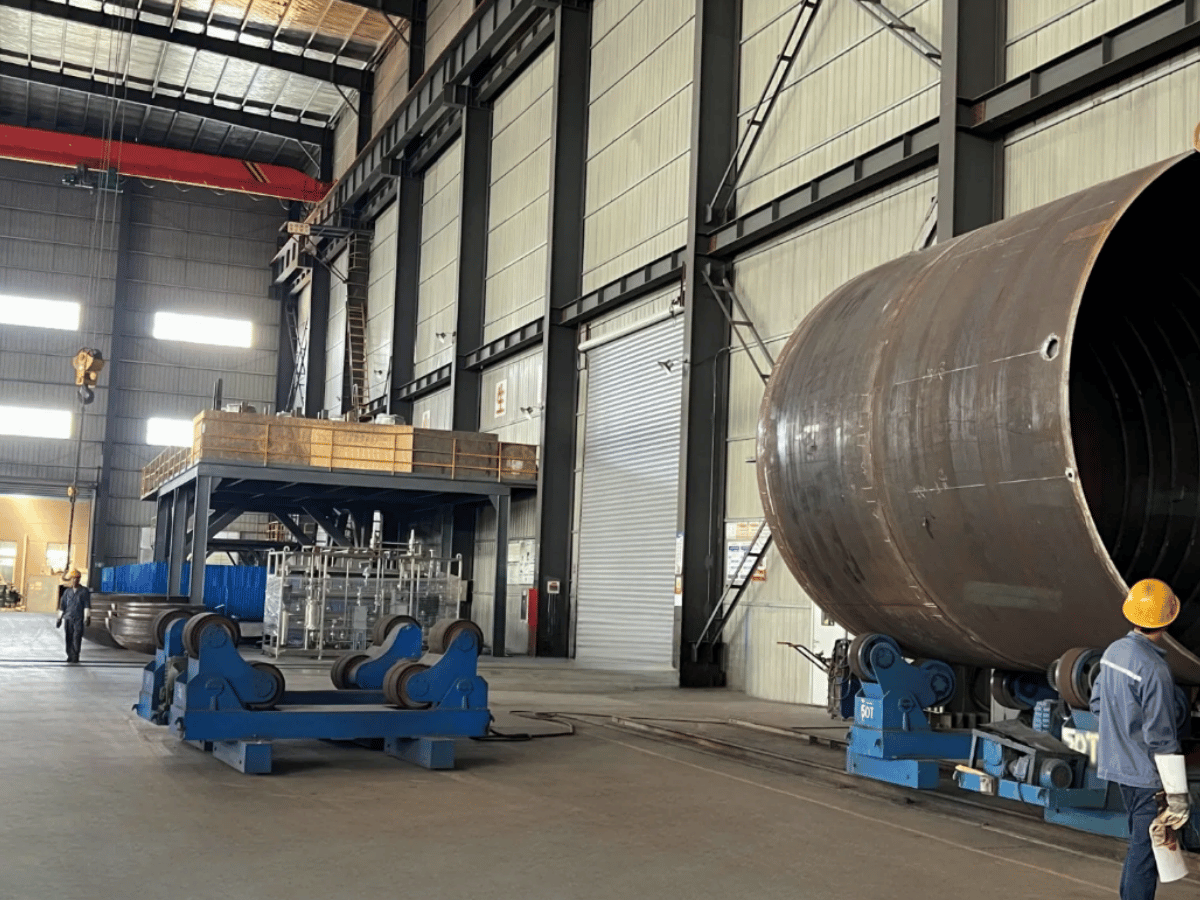
For rotary welding, the obvious advantage is having the joint accessible while going at the right speed. For weld quality, a suitable procedure and an operator who can control the arc are still necessary. Positioning can reduce operator reaching when the joint is within comfortable access. A benchtop positioner can suit compact assemblies, but the bench, anchoring and swept envelope are still part of the installation. Larger workpieces may need support beyond the faceplate. The arrangement of supports for positioners and turning rolls is compared. Decide between them based on the part’s shape and the method of its attachment instead of assuming welding turntables can handle a long pipe assembly.
| Assembly | Arrangement to consider | Condition that changes the choice |
|---|---|---|
| Compact flange or small fabrication | Benchtop or floor-mounted table | Fixture mass, clearance and stable low speed |
| Cylindrical vessel shell | Turning rolls | Outside diameter, shell stiffness and roller contact |
| Long framed assembly | Headstock-tailstock system | End support, alignment and torsional loading |
| Irregular weldment needing several orientations | Tilt-and-rotate positioner | Combined center of gravity throughout movement |
Match the motion of positioning to the job. A heavy-duty machine with a bigger table area can still make access awkward if the fixture places the joint too far from the operator. In The Fabricator’s positioneering guide, Koike Aronson product manager Don Burgart describes different positioning arrangements.
What limits load capacity beyond the nameplate?
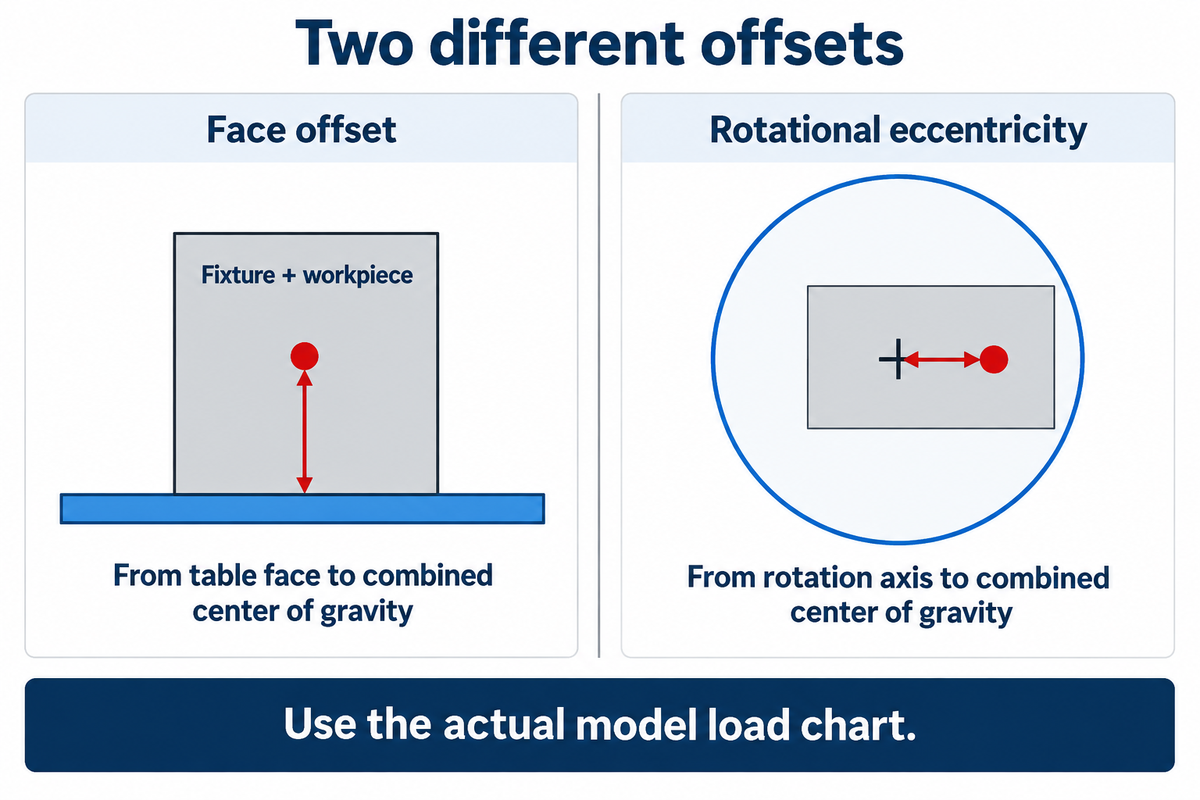
Total moving weight, center-of-gravity location and the manufacturer’s load limits should be checked together. A fixture adds weight and may move the assembly further from the table. Tilt torque, rotation torque and swing clearance impose different limits, so a machine that supports the mass horizontally may be unsuitable for the required tilted orientation.
The Profax catalogue describes the WP-500 as a 500 lb positioner and lists its capacities at 500 lb vertically and 900 lb horizontally, with center-of-gravity limits of 6 inches from the table center and face. Its specified rotation speed is 0.4–4 rpm. Those specifications are given as catalogue conditions for that model and are not guarantees for a used machine. The same catalogue gives 0–115 degrees of tilt, while the reviewed GES listing states 135 degrees. Resolve that discrepancy against the serial-specific manual and actual unit before selecting a machine for a required angle.
Load, offset and clearance checks
Moving up to a larger model in the Profax catalogue changes more than capacity. The following examples show how the rated load and available rotation speed change together. The center-of-gravity limits also apply from both the table center and face and aren’t permission to combine the limits independently.
| Model | Vertical load | Horizontal load | Center-of-gravity limit | Rotation range | Table diameter |
|---|---|---|---|---|---|
| WP-250 | 250 lb | 440 lb | 4 in | 0.5–5.5 rpm | 13.75 in |
| WP-500 | 500 lb | 900 lb | 6 in | 0.4–4 rpm | 19.625 in |
| WP-1000 | 1,000 lb | 1,750 lb | 6 in | 0.2–2 rpm | 24.5 in |
| Constraint category | What to measure | What the result changes |
|---|---|---|
| Total load | Workpiece plus chuck, fixture and moving accessories | Required load-rating envelope |
| Face offset | Combined center of gravity away from the table face | Tilt moment, including the machine’s inherent overhang |
| Eccentricity | Combined center of gravity away from the rotation axis | Rotation torque and speed-control demand |
| Swing clearance | Full swept envelope, including clamps | Table height, layout and collision clearance |
| Travel speed | Joint diameter and specified welding speed | Required stable rpm range |
| Holding condition | Required position during loading, welding and stopping | Fixture retention and manufacturer-rated holding arrangements |
| Workholding interface | Chuck mounting, jaw grip and adapter thickness | Fixture choice and added overhang |
| Electrical configuration | Nameplate, installed controls and modification record | Supply compatibility and qualified assessment |
| Operator controls | Pedal and pendant functions during the intended task | Whether speed can be adjusted as required |
Consider a vessel shop assessing a 60-inch circular seam at a travel speed of 12 inches per minute, the dimensions used in Koike’s sizing example. The circumference is π × 60 in = 188.5 in, so the required speed is 12 in/min ÷ 188.5 in = 0.064 rpm, rounded. A drive whose minimum is 0.4 rpm can’t provide that continuous travel speed directly. Increasing the machine’s weight capacity doesn’t solve this mismatch. The engineer must choose a suitable low-speed drive and verify its loaded behavior. The operator also needs smooth movement at that setting, checked against actual table speed during welding.
Sizing is done in Koike-Aronson’s method by considering tilt loads as weight multiplied by distance including inherent overhang. Rotation sizing considers the load’s offset from the rotational axis. Don’t interchange one distance with another and don’t use your own derating. Refer to the load capacity and workpiece geometry for additional selection details and the actual model load chart for final selection.
Jason Ladd’s explanation of fixture weight and load placement makes a similar point, stating that the further the load is placed from the table, the more demand is placed on the positioner.
Test rotation, tilt and controls before buying
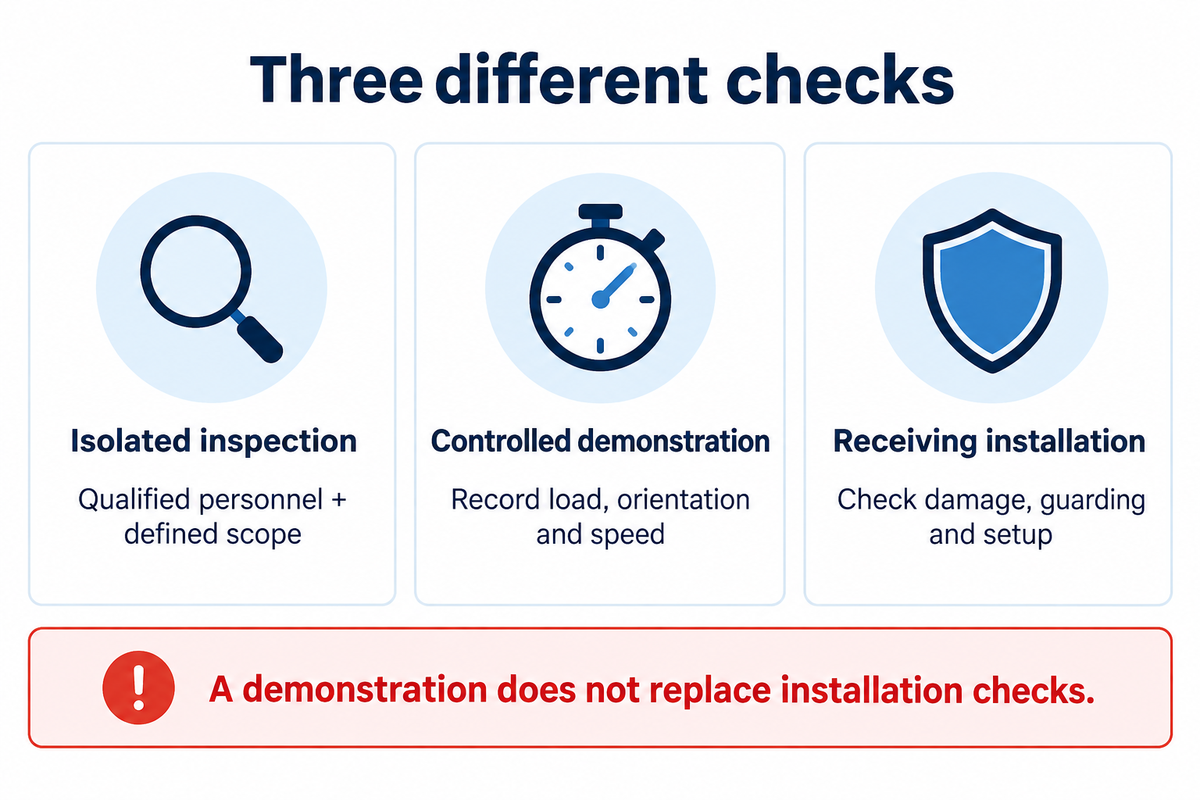
Isolate the machine and have qualified personnel inspect it; then, have them stage a controlled demo against a test plan. Before the test, inspect the frame, table, gears, wiring and controls. Use the required positions and a securely engineered load; don’t assume the machine is performing to spec by watching it operate with no load.
During isolated inspection, look for cracks, repair welds, damaged table slots, loose components, oil leakages and signs of impacts. Excessive play or backlash means there’s a problem that requires diagnosis. Keep personnel clear of pinch points and swept loads. OSHA 1910.212 addresses guarding and anchoring of machines designed for fixed locations.
The test should assess smooth starting, required rotation speed, both directions of operation, tilt movement, stopping and the manufacturer’s holding functions. Check the actual movement against the readout using a suitable independent measurement. An emergency stop must not be used as a power isolation device: OSHA 1910.147 differentiates operating controls from energy isolation and defines limitations on temporary re-energization during test procedures.
Evaluate the positioner’s behavior against the intended welding process and identify controls. A published user discussion states that one user’s machine behaved differently during welding than when it was rotating alone; its installed control boards were different from the board initially suspected.
Background information on speed-control arrangements can assist with assessing the installed controls, and if necessary, with assessing the controls in the operator’s station.
- Use qualified personnel and a defined inspection scope.
- Record the load, orientation and speed demonstrated.
- Resolve defects before acceptance.
- Open energized cabinets to investigate a fault.
- Bypass guards or protective devices.
- Infer loaded performance from an empty-table video.
For more complete preparation, combine information from the positioner safety considerations with the machine manual and your employer’s work procedures. AWS provides the ANSI Z49.1:2021 welding-safety resource. AWS provides the ANSI Z49.1:2021 welding-safety resource ; it is not a substitute for model-specific load limits.
Used, rebuilt, new or rental: which option fits?
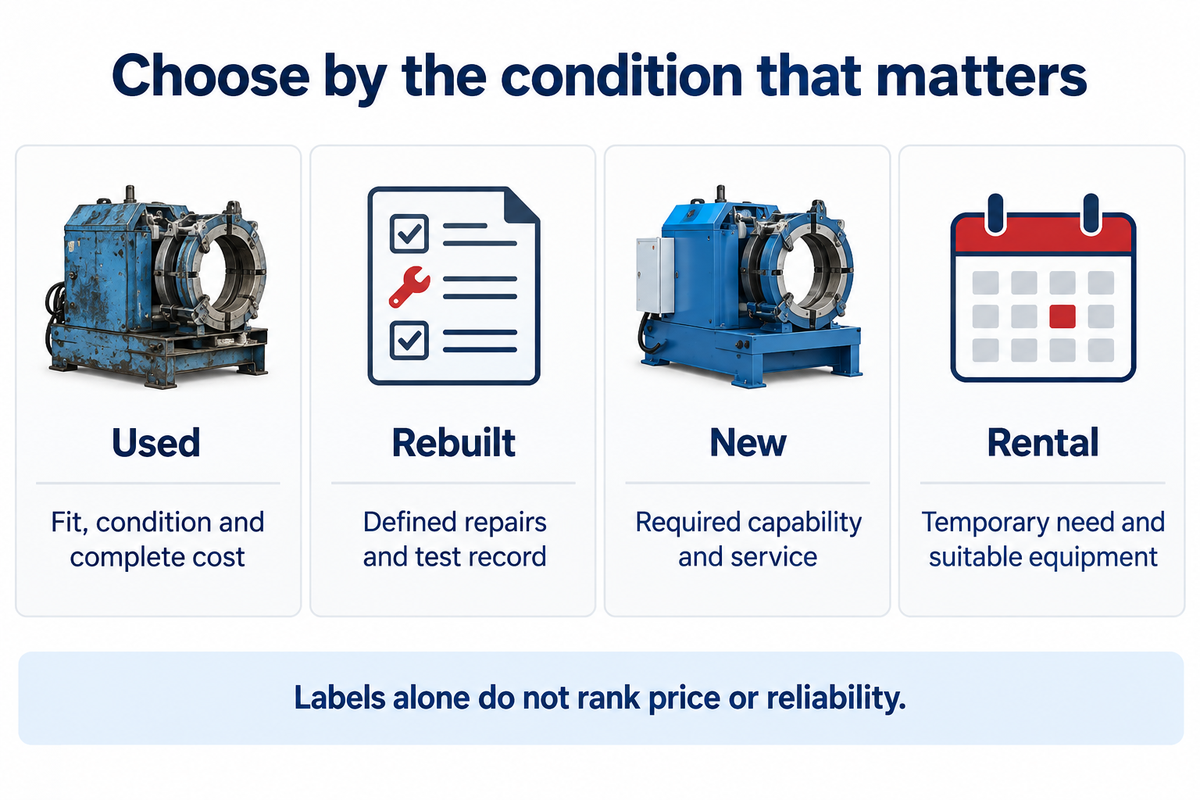
When condition checks and complete cost fit the work, used equipment is a suitable choice. For repaired equipment, review the repair scope and test results to ensure the defects of concern are resolved. New equipment is an option to support an additional capability or service requirement. Rental equipment is suitable for temporary use if compatible equipment is available and terms and conditions are acceptable.
Equipment labels alone don’t provide price or reliability rankings. The Remanufacturing Industries Council describes controlled remanufacturing and distinguishes it from reconditioning or refurbishing. Evaluate a rebuilt positioner’s actual repair process against those distinctions.
The reviewed GES WP-500 offer includes a 90-day operational warranty and a 15-day acceptance period from delivery, under that seller’s terms. Compare the warranty, the process that fixes the equipment and responsibility for transport of defective equipment. Replacement-control lead time also matters: a long warranty may still leave production waiting for an unacceptable period.
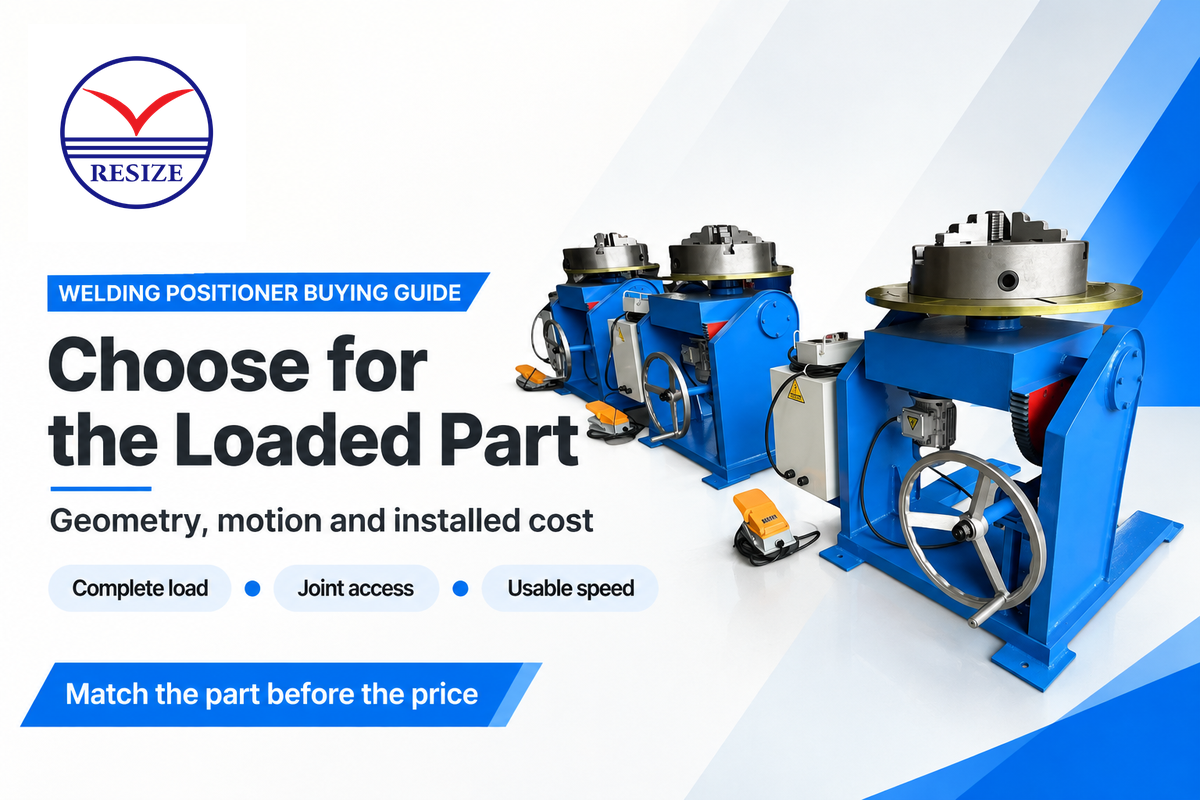
When comparing new equipment, make sure you consider the same load envelope, speed range and controls. You can compare RESIZE welding positioners against that requirement.
Can I rent or lease a pipe welding positioner?
Renting or leasing can be an option for a temporary pipe-welding job when equipment supplied by the rental provider meets the requirements, and the full rental period, transport, tooling and damage terms are acceptable. Check the rental equipment for the same capabilities as a purchased unit.
Compare the full rental agreement, including transport and setup time, when analyzing costs. Welders Supply’s reviewed equipment rental terms address partial rental periods, return documentation and responsibility for shipment separately. Give the supplier the entire project duration, pipe assemblies, and any fixtures and supports. Ask for clarification regarding when charging starts and stops, and whether an extension changes the rate.
Which chuck, power supply and spare parts fit the machine?
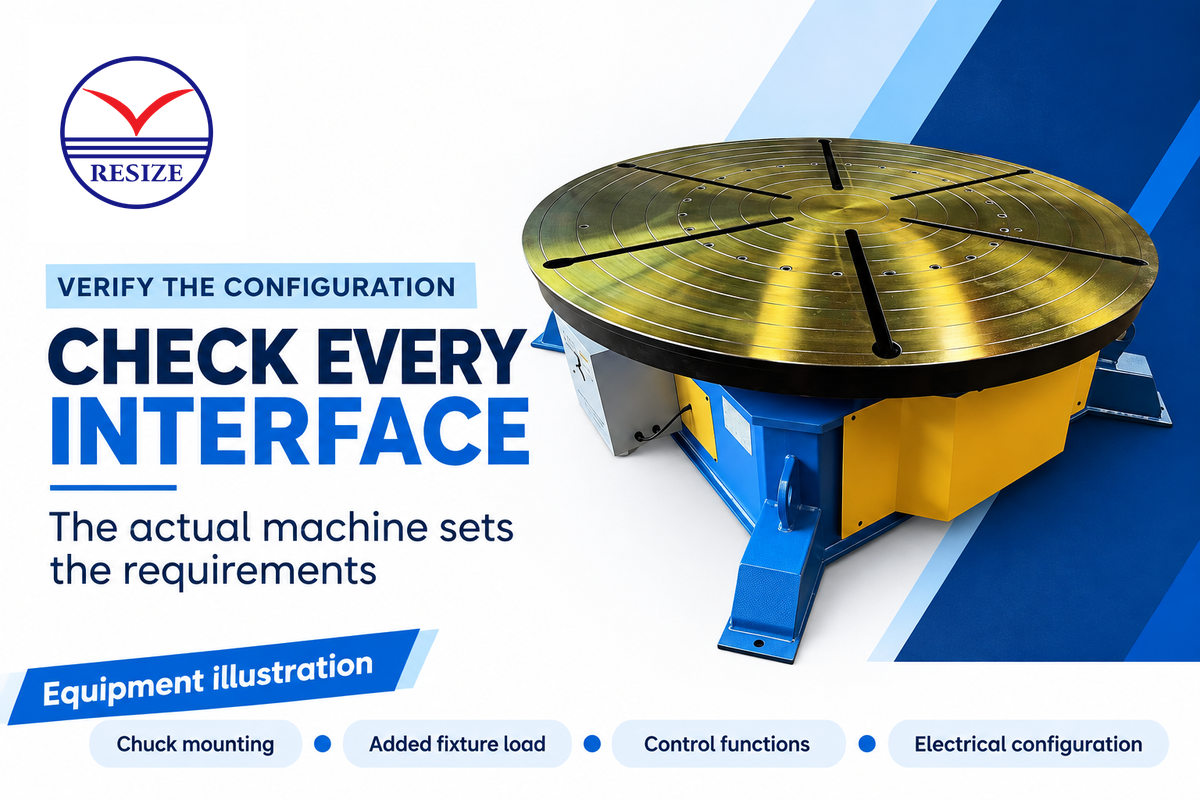
Match the controls, workholding and electrical requirements to the actual configuration of the machine. The welding positioner chuck must fit the mounting interface and securely hold the assembly without exceeding the machine limits. Confirm the function of the pedal and pendant. Electrical compatibility includes approval and installation, not simply matching a plug or voltage.
A self centering chuck or appropriate gripper can hold suitable round parts, and irregular weldments may require a dedicated fixture. A 3-jaw chuck requires appropriate jaws, grip and mounting; bench top models require a stable supporting surface and specified anchoring. Assess how the added chuck and adapter affect the moving load and whether they shift the center of gravity outside the load limits. The fixture design guide provides insight for why attachment geometry is as important as nominal table area.
ProFax identifies the CFS-404 directional on/off foot control as distinct from the VFC-250 variable-speed option, which requires modification. Its catalog lists the WP-500 at 115 V and an optional 230 V version. Verify the volt rating together with the rest of the nameplate information. A seller’s shorthand description should be cross-checked against the actual nameplate, wiring information, and control package.
Imagine a maintenance buyer selects a bench top machine for small pipe fittings. The listing includes a foot pedal, and the buyer expects the operator to adjust speed while keeping both hands on the torch. The pedal starts, stops, and reverses the table, and speed control is on the panel. The machine can rotate the part, but doesn’t have the required method of operation. Controlling the speed of the table may require a controller modification and evaluation of the altered electrical configuration. Before ordering, the buyer and operator should agree on functions and have the seller demonstrate them, to prevent buying an accessory twice or relying on an improvised modification.
OSHA 1910.303 covers approval, equipment suitability and installation according to listing or labeling instructions. Have qualified personnel evaluate the actual configuration and modifications. A machine running on the available supply isn’t, by itself, that evaluation.
Keep the protective grounding arrangement distinct from the return path for welding current. Confirm the designated return connection and the manufacturer’s instructions; don’t improvise a return through lifting equipment.
“Chains, wire ropes, cranes, hoists, and elevators shall not be used to carry welding current.”
Use a parts list corresponding to the version installed to validate support for the motor, gearbox, controller, switches and wear parts. Identify the machine by model and serial number. Repairs should be performed by qualified personnel.
For compact workstations, refer to the bench-versus-floor positioner guide for installation considerations prior to allocating space and support equipment.
What delivery and acceptance terms belong in the order?
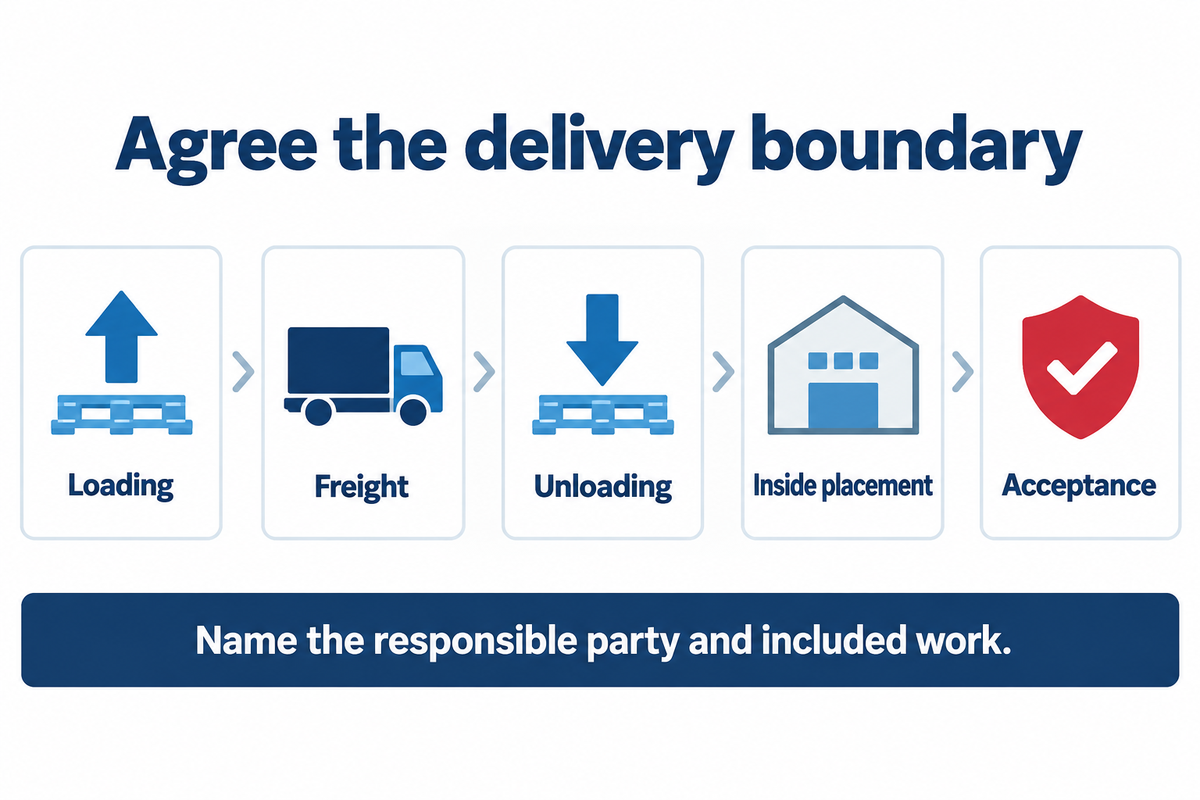
Identify the actual equipment included in the delivery, clarify responsibilities, and define the conditions under which acceptance of the delivery and equipment shall be determined prior to payment or collection. Describe the conditions being accepted and any repairs the seller must perform. After the equipment has been transported and installed, confirm the equipment is in the same condition and operating as accepted prior to releasing it for production.
Send the seller a drawing with the combined moving weight, center-of-gravity distances, full swing envelope and required orientations. Include the joint diameter, required travel speed, type of electrical supply and control. State whether the job involves occasional fabrication, repeated batches or a temporary project; these will affect the value of repair support and rental alternatives.
The commercial schedule should specify loading, freight, unloading and the inside placement of the equipment separately. The schedule should indicate the included manuals, chuck, jaws, adapters, pedals and pendants. Be specific and tie acceptance to a clearly defined event. Indicate the length of the acceptance period to allow time for the inspections. Identify who’s responsible for a defect and who will bear the cost of transportation of the defective item.
At the receiving site, qualified personnel should check for transport damage, confirm the installation and guarding, and perform operating checks as agreed under the actual installation conditions. Record the load and settings used. Transport damage or a changed installation may occur after the demonstrated test at the seller’s site.
For fixed-location machinery, include the anchoring required by OSHA 1910.212(b) in the installation scope. Record who completes that work before acceptance.
Proceed once the engineering fit, condition record, and complete cost are agreed. Settle any open issues (missing load chart, unknown control modification, unverified required speed, etc.) before committing the production schedule.
Frequently asked questions
Can I buy a used welding positioner on eBay or Craigslist?
Yes; treat each listing as a lead and assess the actual seller and machine.
Buy against the actual seller’s commitments and the machine’s inspected condition. Obtain the owner’s identity, model, serial number and current photographs before committing. Arrange a qualified inspection and agree on service, collection, payment and return terms with the seller. Compare included tooling and controls as well as the advertised price.
Can I buy a used welding positioner from Canada?
Yes, provided the machine and the agreed cross-border delivery arrangements fit your purchase.
Compare delivered offers from Canada in one currency, including transport and applicable import charges, alongside machine condition and warranty coverage. Verify the actual electrical configuration and support available at your destination. Have the seller identify the equipment and responsibilities in writing, including loading and the records that travel with the machine.
Why does welding position matter when choosing a positioner?
Welding position affects joint access and weld-pool behavior, so the required orientation should guide machine selection.
The positioner moves the workpiece into a suitable orientation and can help maintain the intended travel speed. It doesn’t replace a qualified welding procedure or operator skill. A useful machine must hold the actual assembly through the required movement while leaving room for the torch, clamps and operator. Evaluate that complete setup rather than an empty table.
Does a used positioner include a welding power source?
A positioner and welding power source are separate equipment items unless the offer explicitly bundles them.
The positioner moves the workpiece; the power source supplies welding current. Check that the quotation names both if you’re buying a complete welding system.
What should I send a seller before requesting a quote?
Send the assembly drawing, combined moving load, required motions, speed, electrical supply and delivery location.
Include the fixture and chuck in the load information, with the center-of-gravity offsets shown on the drawing. Mark the joint and the full swept envelope so the seller can assess clearance. Describe the control functions the operator needs, including whether the pedal must vary speed or only start and stop rotation. Ask for identification of the actual machine and a list of included accessories. For a rebuilt offer, request the repair scope and test record. Explain the intended production schedule and acceptable service arrangements. Finally, ask for a delivered quotation that separates tooling, transport, preparation and agreed repairs.
To find the right machine, use the same part drawing, fixture load and operating requirements for every offer. Compare suitable used equipment with a new-machine configuration before committing funds or a production date.
Scope: This buyer’s guide uses publicly available technical information and supplier content checked in October 2026. Model specifications and seller terms are identified where used. The budget illustration is for teaching purposes only and shouldn’t be construed as a quote. No used/second-hand inventory, transaction price, or offers to sell are presented by RESIZE in this article.
References & Sources
- Five things welders need to know about weld positioners The Fabricator; Jason Ladd, Koike product manager
- Federal Acquisition Regulation 7.401: Acquisition considerations U.S. General Services Administration
- Welcome to the world of positioneering The Fabricator; Don Burgart, Koike-Aronson product manager
- 29 CFR 1910.212: Machine guarding Occupational Safety and Health Administration
- 29 CFR 1910.147: Control of hazardous energy Occupational Safety and Health Administration
- ANSI Z49.1:2021 public resource American Welding Society
- Reman 101 and RIC001.2-2021 definition Remanufacturing Industries Council
- 29 CFR 1910.303: Electrical equipment Occupational Safety and Health Administration
- 29 CFR 1910.254: Arc welding and cutting Occupational Safety and Health Administration