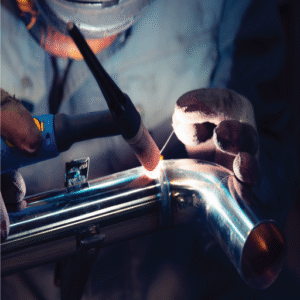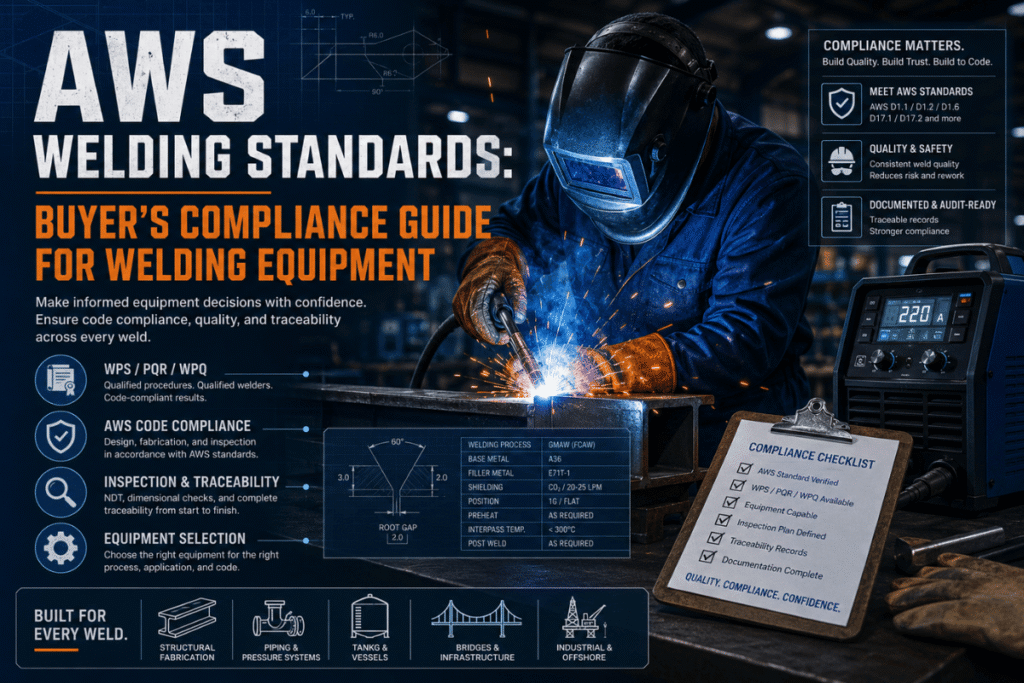
Elk jaar verspillen structurele staalfabrikanten tijd en geld aan kwalificatiefouten die nooit hoefden te gebeuren. Velen worden veroorzaakt door een over het hoofd gezien document. AWS D1.1, de structurele lascode. Dit wordt gepubliceerd door de Americanelding Society en wordt afgedwongen via de International Building Code. Het controleert het lassen van staalconstructies in de VS. Om meer te weten te komen over de AWS-organisatie, zie: waar staat AWS voor bij het lassen.
AWS D1.1 in één oogopslag
| Standaard | AWS D1.1/D1.1M:2025 |
|---|---|
| Uitgevende instantie | American Welding Society (AWS) |
| Scope | Koolstof- en laaggelegeerde staalconstructies (1/8″-8″ plaat en structurele vormen) |
| Huidige editie | 2025 (23e editie, voor het eerst gepubliceerd in 1928) |
| Revisiecyclus | Elke 5 jaar (volgende herziening: ~2030) |
| Belangrijkste secties | Ontwerp, fabricage, inspectie, kwalificatie, rapportage |
| Geprekwalificeerde WPS | Ja, 5 |
| Kwalificatie lasser | Vereist 6. |
| Inspection | Vereist 7-8 |
| Waar aangenomen | Amerikaanse gebouwen en bruggen onder AISC + International Building Code |
Wat AWS.1 Omvat D1.1 en wat het doet'
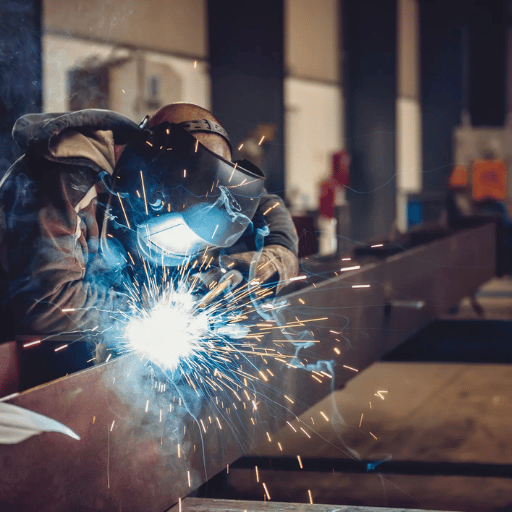
De meeste fabricators geloven dat een “structural” aanduiding ook dragend betekent Als iemand je dit verteld heeft, zijn ze onjuist, zoals we laten zien in een definitie van een van de misvattingen.
Wat is de structurele lascode van AWS D1.1?
AWS D1.1 is een code die speciaal is geschreven voor het lassen van koolstof en laaggelegeerde staalconstructies die zijn verankerd aan de grond. 1. bruggen en soortgelijke permanente installaties. De huidige editie D1.1/D1M:2025 heeft betrekking op staalplaat en structurele vormen van 1/8″ tot 8″ in dikte Het is geen lasstandaard voor algemene doeleinden.
De toepassing van D1.1 vereist referenties door de op de grond verankerde structuur: een project dat verwijst naar AISC 360 (de specificatie voor structurele stalen gebouwen) vereist AISC-certificering, AISC-certificering vereist D1.1-referenties en elke keer dat u de internationale bouwcode ziet waarop de projectspecificaties een beroep doen, wordt AWS D1.1 een vereiste voor structureel lassen.
Duane Miller, voormalig manager technische diensten en adviseur lasontwerp bij Lincoln Electric, bracht dit punt duidelijk naar voren in een interview met de AWS D1 Committee on Structural Welding:
“Velen hebben mij verteld dat wanneer ze het woord ‘structureel’ zien ze denken dat het dragende is We definiëren structureel als een item dat iets is dat verankerd is aan de grond, zoals een gebouw of een brug.”
1. Lassenontwerpconsulent, The Lincoln Electric Co.
Projecten en situaties die niet onder D1.1 vallen:ANSI ASME Sectie IX is van toepassing op drukvaten en ketels Olie - en gaspijpleidingen: API 1104. HVAC-kanalen met behulp van plaatwerk: AWS D9.1. Lassen van landbouwmachines met AWS D14.3. Aluminium constructiedelen: AWS D1.2. als uw project geen grondverankerde constructie is, dan is D1.1 niet de code die u moet raadplegen.
Een voorbeeld uit de echte wereld: “Meet AWS D1.1” een fabrikant die trailers op de markt brengt op zijn website: “Alle van de trailers van de fabrikant die in dit artikel worden besproken, voldoen aan AWS D1.1.” Toch registreren ze zich niet voor die code. AWS D14.3 is de toepasselijke code voor lassen van aanhangwagens.
Geprekwalificeerde WPS versus procedure Kwalificatie 1.000. Het reële kostenverschil
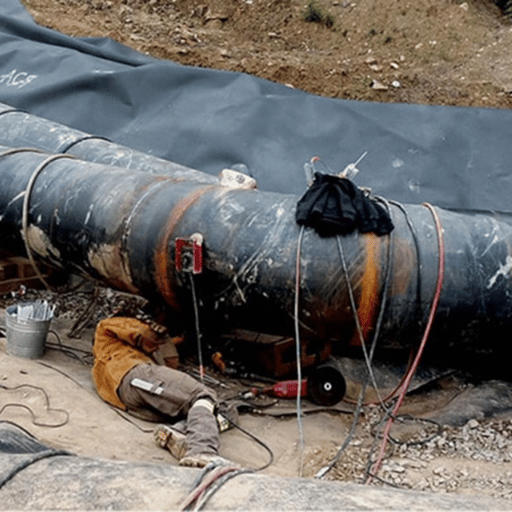
Een lasprocedurespecificatie (WPS) is het document waarin precies wordt beschreven hoe uw lasser een codeconforme las zal produceren: welk proces, welk basismetaal, welke vulstof, welke voorverwarming, welke parameters D1.1 vereist een WPS voor elke productielas, de vraag is hoe die WPS wordt goedgekeurd, aangezien er twee zeer verschillende paden zijn.
Wat is een geprekwalificeerde WPS onder D1.1?
Pathway 1 (e.g. Voorgekwalificeerde WPS (clausule 5): Als elke lasvariabele binnen de bereiken ligt die D1.1 vooraf goedkeurt, kunt u de WPS schrijven en gebruiken zonder fysieke testlassen of laboratoriumtests Geen kortingsbonnen Geen testlaboratoria van derden De code heeft deze combinaties van variabelen al gevalideerd door tientallen jaren aan structurele lasgegevens. Het is uw taak om de procedure te documenteren en ervoor te zorgen dat elke variabele binnen de vooraf gekwalificeerde grenzen blijft.
Pathway 2 ‘Full Qualification with PQR’ (Clausule 6): Als een variabele buiten de geprekwalificeerde bereiken valt, of als u een proces gebruikt dat niet geprekwalificeerd kan worden, moet u een fysieke procedurekwalificatietest uitvoeren De testplaten worden gelast, naar een geaccrediteerd laboratorium gestuurd voor destructieve tests (trek, geleide bocht, soms Charpy V-notch), en vervolgens veranderen de resultaten in uw Procedure Qualification Record (PQR). Op basis van de geteste variabelen schrijft u vervolgens de WPS.
Kostenverschil is aanzienlijk Volledige WPS-kwalificatie via een geaccrediteerd testlaboratorium kost over het algemeen enkele duizenden dollars tot meer dan $15.000 per procedure, afhankelijk van het aantal benodigde testmonsters, procestype en NDT. Een fabriekswinkel die vijf of meer lasprocedures per jaar uitvoert, kan aanzienlijke besparingen realiseren door procedures binnen vooraf gekwalificeerde parameters te houden wanneer het gezamenlijke ontwerp dit toelaat.
Als prekwalificatie NIET beschikbaar is: GTAW (TIG-lassen), elektroslaklassen (ESW), elektrogaslassen (EGW) en kortsluit-GMAW-overdracht zijn niet geprekwalificeerd onder D1.1. Deze processen vereisen volledige PQR-testen. GMAW met behulp van spray of gepulseerde overdracht kan vooraf worden gekwalificeerd, maar kortsluit-GMAW kan dat niet, omdat de lage spanning en stroom het risico op koude lappen (gebrek aan fusie) met zich meebrengen.
Als uw WPS momenteel AWS A5.36 erop zegt, moet u zich ervan bewust zijn dat de editie van 2025 A5.36 uit de geprekwalificeerde aanvaardbaarheid heeft verwijderd. Update alstublieft naar de juiste AWS A5. x-basisspecificatie voordat u nieuwe WPS-documentatie uitgeeft.
De Prequalified WPS Qualification Checklist
Voordat u begint met het afgeven van geprekwalificeerde WPS-papieren, moet u controleren of alle 12 voorwaarden aanwezig zijn Als u “no” beantwoordt aan een van deze voorwaarden, bent u onmiddellijk op weg naar volledige PQR-testen.
- Onedel metaal staat op de vooraf gekwalificeerde goedgekeurde lijst D1.1 (Tabel 5.3)
- Het lasproces is SMAW, SAW, GMAW (alleen spray- of gepulseerde overdracht) of FCAW
- Het gezamenlijke ontwerp (groeflas of filetlas) is een vooraf gekwalificeerd verbindingsdetail in artikel 5
- De voorverwarmingstemperatuur voldoet aan of overschrijdt de minimumeisen van Tabel 5.8 voor het basismetaal en de dikte
- De interpasstemperatuur overschrijdt het maximum van tabel 5.8 voor de basismetaalgroep niet
- Filler metal is classified to an AWS A5.x specification (A5.36 not acceptable in 2025 edition)
- Electrode diameter is within the Table 5.5 limits for the process and welding position
- GMAW is not using short-circuit metal transfer mode
- Root opening and bevel angle fall within prequalified tolerance ranges
- Post-weld heat treatment meets Clause 5.14 requirements (where applicable)
- The welding position is listed as prequalified for the selected process
- All essential variables are documented in the written WPS before welding begins
Print this checklist and post it in your WPS review station.Any variable outside these boundaries means your shop needs a PQR – no exceptions.
The Prequalified vs. PQR Decision
AND process ∈ {SMAW, SAW, GMAW spray/pulse, FCAW}
AND joint design ∈ prequalified joint details (Clause 5)
AND preheat ≥ Table 5.8 minimum
AND filler metal classified to AWS A5.x (not A5.36)
Prequalified WPS acceptable (Clause 5) – no physical testing required
ELSE
→ Full PQR qualification required (Clause 6)
Also see: GMAW welding process guide for details on transfer modes relevant to prequalification eligibility.
Welder Qualification vs. AWS Certification — What Your Hiring Manager Gets Wrong
This is the most expensive misunderstanding in structural fabrication. AWS Certified Welder and D1.1-qualified welder sound interchangeable. They are not. A single HR decision based on this confusion can shut down a project.
D1.1 Clause 6 requirement: Welders, welding operators, and tack welders all must be qualified by test before performing production work on D1.1 projects. The responsibility for qualification falls on the employer – not AWS, not a union, not a certification body.
What the qualification covers: Each D1.1 welder qualification is specific to a welding process and a position. A welder who passes a 3G (vertical) plate test is qualified for flat (1G), horizontal (2G), and vertical (3G) plate welding with that process. Passing both 3G and 4G (overhead) in a single session qualifies that welder for all plate positions under D1.1 — the most efficient path to full position coverage. A 1G (flat) qualification alone covers only flat position work, limiting the welder’s project utility. Internal reference: 1G, 2G, 3G, 4G, 5G, 6G welding positions — what they mean en 4 main types of welding positions.
The AWS Certified Welder program is a separate credential, tested at accredited test facilities. It indicates general welding skill. It is not a D1.1 Clause 6 qualification, does not replace employer-issued qualification records, and does not satisfy the D1.1 continuity requirement. Many shops accept it as evidence of skill during hiring — but the employer must still maintain D1.1 qualification records independently.
Tom Schlafly, technical representative at the American Institute of Steel Construction, stated in a committee interview:
“maybe the most expensive misunderstanding in structural steel fabrication is that AWS Certified Welder and D1.1-qualified welder sound like interchangeable terms. They are not. And an unqualified HR decision on this matter puts you out of business.” (personal communication, 2017)
— Tom Schlafly, Technical Representative, American Institute of Steel Construction (AISC)
D1.1 Clause 6 requirement: Welders, welding operators and tack welders shall be qualified prior to performing production welding. Qualification shall be by test. The responsibility for welder qualification shall be on the employer, not on AWS, a union, or a certification body.
Zegbrk_0016.
D1.1 Inspection Requirements — the Misconception That Puts Projects at Risk
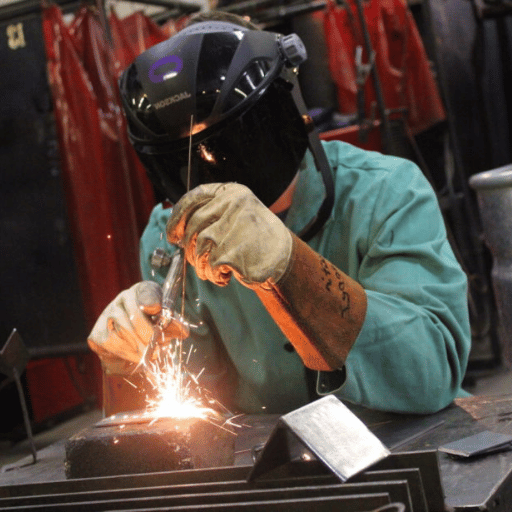
Most general fabrication errors traced to inspection failures aren’t third-party NDT failures — they are complacency: the belief that subcontracting to an independent NDT company means the bases are covered. Wrong.
Basic Definitions of QC vs QA: With D1.1 QC is the fabricators own inspection program necessary and shall not be delegated to others. QA is the owner’s third party verification step. You can not designate a third party inspector and say the QC is done.
Clauses 7 and 8 and especially AISC 360 Chap N obligate The fabricator and erector to carry out their own field visual during the welding process.
Mike Gase, corporate quality director at Midwest Steel, said this is the ‘most commonly occurring situation when I am asked to review for compliance:
What I see that is fundamentally lacking is that companies do not believe that they have to do inspections. They think that only third parties have to do them, which is not true.
— Mike Gase, Corporate Quality Director, Midwest Steel
Review WPS at the workstation. Record everything.
In-Process: Watch welding settings for each pass. All welding parameters: amperage, voltage, and travel speed must be within limits indicated on welding procedure specification (WPS). Interpass temperature should be recorded and kept below maximum value indicated on WPS.
Clean slag fully.
Post-Weld—100% visual inspection in accordance with Clause 8.9 acceptance criteria prior to any nondestructive testing. Inspector should verify weld size, profile, undercut (1/32″ max in both MCSl and Static conditions, ½ in. max in SLS, SLL), and surface cracks. Nondestructive testing, which includes ultrasonic testing (UT), phased array UT (PAUT), radiographic (RT), magnetic particle (MT), and penetrant testing (PT), is intended as a complement to, and not a substitute for, visual inspection.
Density checks of groove welds in fracture-critical members often require supplemental volumetric NDT.
D1.1:2025 inspection change: the 2025 edition introduced further MT and PT coverage in a new normative annex. If your shop employs either method as a form of NDT, then be sure to check these expansions prior to your next qualifying audit. You may be surprised to see that PJP groove welds are required to go through the three-phase inspection process like their CJ Postgres counterpart! (which is easily overlooked pre-fabrication).
In what situations is IS third-party NDT obligatory?
The D1.1 regulation specifies it in cases of fracture-critical components, during high-rated cyclically loaded joints, and whenever stipulated in the contract. The 2025 edition accommodated the figure H that formalized the PAUT- phased array ultrasonic technique- a more recent method now officially recognized side by side the traditional UT.
Also refer to: welding fit-up guide en welding positioner safety guidelines for pre-weld quality setup practices.
What is the difference between quality control and quality assurance in D1.1?
Quality control (QC) is the fabricator’s own inspection system – welders, operators, QC people: watching work as it occurs. Quality assurance (QA) involves an owner/engineer – appointed outsider who confirms QC is active. D1.1 calls for both, but fabricator owns QC.
An outside audit does not meet QC.
AWS D1.1 vs. Other Welding Codes — Which Standard Applies to Your Project?
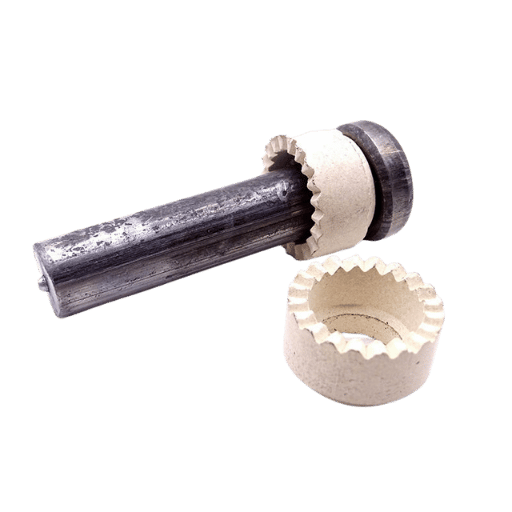
Not every steel weld is covered by D1.1. Code selection is application/material/authority driven – not based on what the fabricator happens to be used to. Non-compliance using the wrong code occurs regardless of weld quality.
| Code | Application | Materiaal | Governing Body | When Required |
|---|---|---|---|---|
| AWS D1.1 | Structural steel buildings, bridges | Carbon/low-alloy steel, 1/8″–8″ | AWS / AISC | IBC + AISC projects |
| AWS D1.2 | Structural aluminum structures | Aluminum alloys | AWS | Aluminum structure fabrication |
| AWS D1.3 | Structural sheet steel | Sheet steel <3/16″ | AWS | Light-gauge steel framing |
| AWS D1.5 | Highway bridges | Carbon/HSLA steel | AASHTO / AWS | DOT-funded bridge projects |
| AWS D1.8 | Seismic structural connections (AISC 341) | Structural steel | AWS / AISC | High seismic zone buildings |
| ASME Section IX | Pressure vessels, boilers, process piping | Multiple (per material code) | ASME | ASME-stamped equipment |
| API 1104 | Oil and gas pipeline welding | Carbon steel pipe | API | Transmission pipeline projects |
| AWS D9.1 | Sheet metal (HVAC, ductwork) | Sheet metal | AWS | Non-structural sheet metal work |
Also see: types of welding compared en TIG vs. MIG welding: is GTAW better than GMAW?
What is the difference between AWS D1.1 and ASME Section IX?
Key structural difference: AWS D1.1 has prequalified welding procedures — parameter combinations pre-approved by committee for structural steel joints. ASME Section IX does not offer prequalified procedures; every procedure must be qualified by test. In practice, D1.1 governs ground-anchored steel structures (buildings, bridges), while ASME IX governs pressure-containing systems (boilers, pressure vessels, process piping). When pipe carries a product under pressure, the applicable code is ASME IX or API 1104. When pipe is used structurally as a support — welded into a building frame, for example — AWS D1.1 applies.
What is the difference between AWS D1.1 and D1.3?
Any structural sheet steel, equipment thinner than 3/16″, is governed by D1.3, not D1.1. Cold-formed steel framing (structural steel in commercial construction, for example) is the domain of D1.3. Any structural shapes and plate thicker than 3/16″, governed by D1.1. Thinner structural sheet? D1.3. D1.1 and D1.3 each have their own prequalified joint details and qualification standards.
What is the difference between D1.1 and D1.8?
AWS D1.8 is an addendum to D1.1, not an alternative to it. D1.8 governs seismic provisions on various structural connections in buildings within high seismic design categories, in conjunction with AISC 341. Seismic detailing inclusion in your project requires both D1.1 and D1.8. D1.8 stiffens parameters for filler metal, joint size, and inspection at moment and other critical seismic joints.
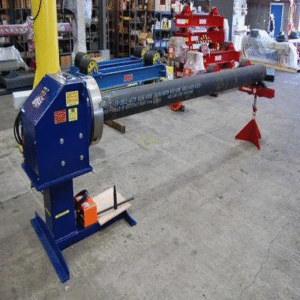
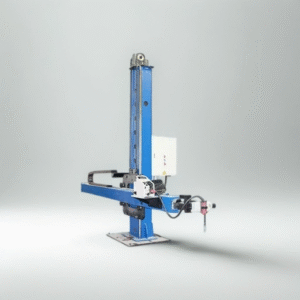
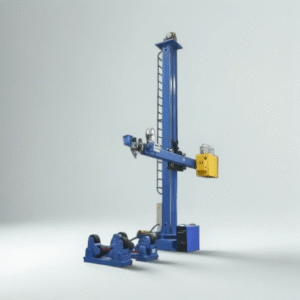
How Welding Positioners Help Structural Fabricators Achieve D1.1 Compliance
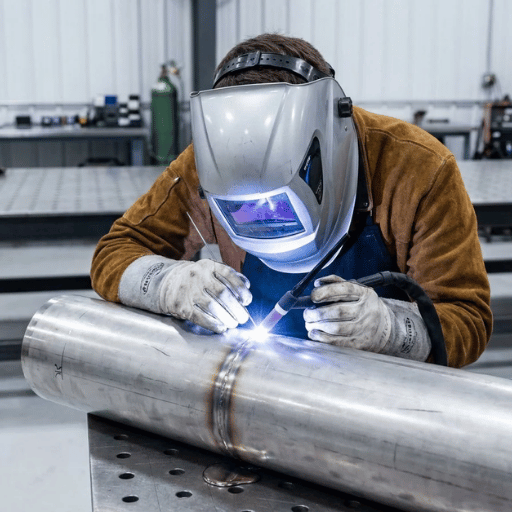
Essential variables for D1.1 prequalified WPS come in the form of precise ranges for travel speed, amperage, voltage, preheat, and interpass temperature. Change any one of these outside the limits, and the result is a WPS probably not valid, initiating a full PQR requalification sequence.
Heavy structural assemblies that are manually repositioned are simply more prone to this sort of issue. Welders reposition their bodies around whomever they are working on trying to access overhead and vertical joints, travel speed suffers, the welder struggles to maintain consistent preheat. Eventually, the parameters move outside WPS limits, and requalification is required.
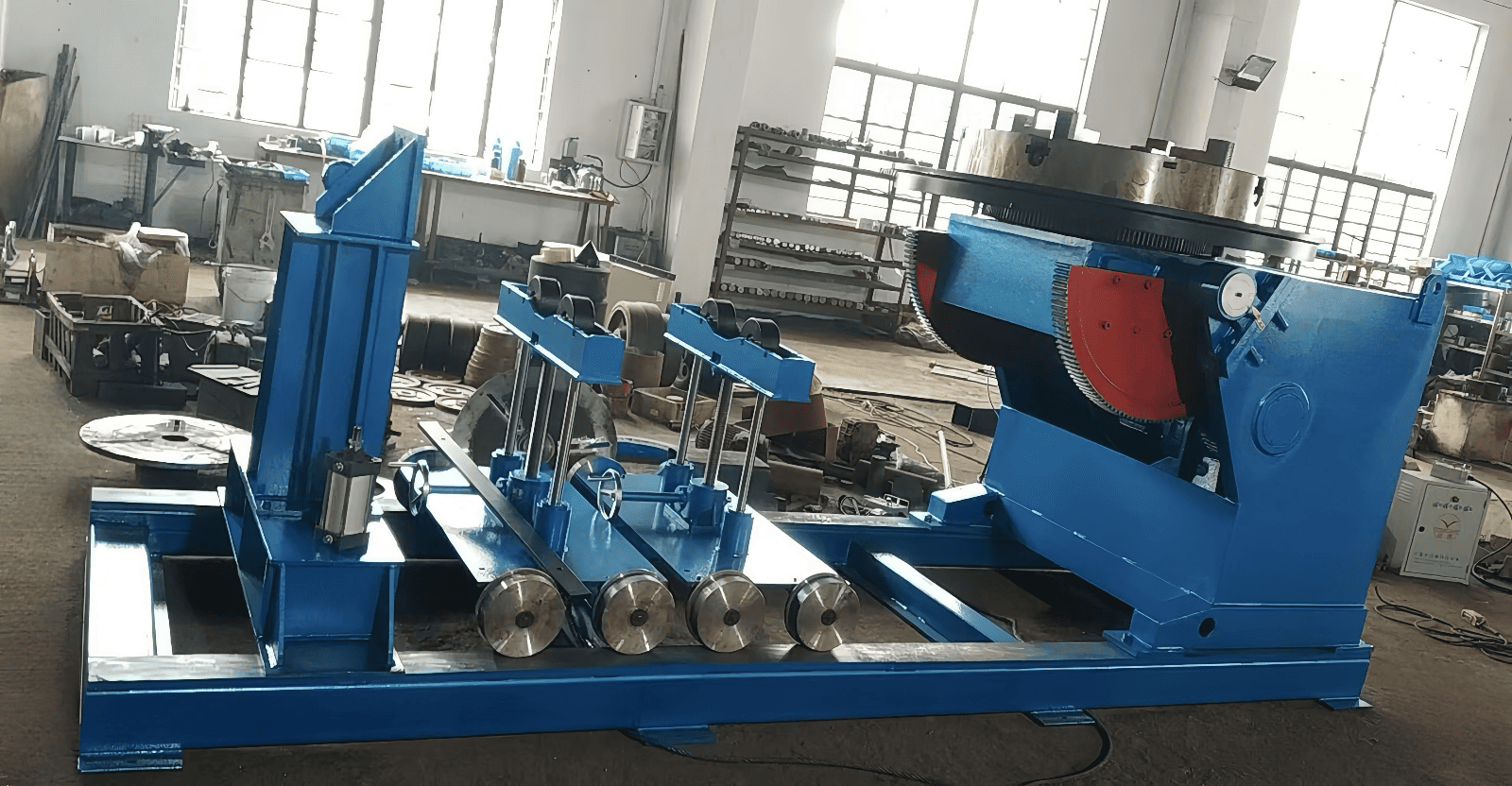
Positioners neutralize this issue: With a positioner, the work moves to the welder, instead of the other way around. The positioner firmly holds the work and rotate/tilts whatever workpiece into the typical (flat 1G, or horizontal 2G) positions that are most conducive to prequalified WPS welding. Weld travel speed is unaffected, and preheat is simple to acquire. Flat-position welding produces the most consistent weld penetration/profile, resulting in few visual inspection failures.
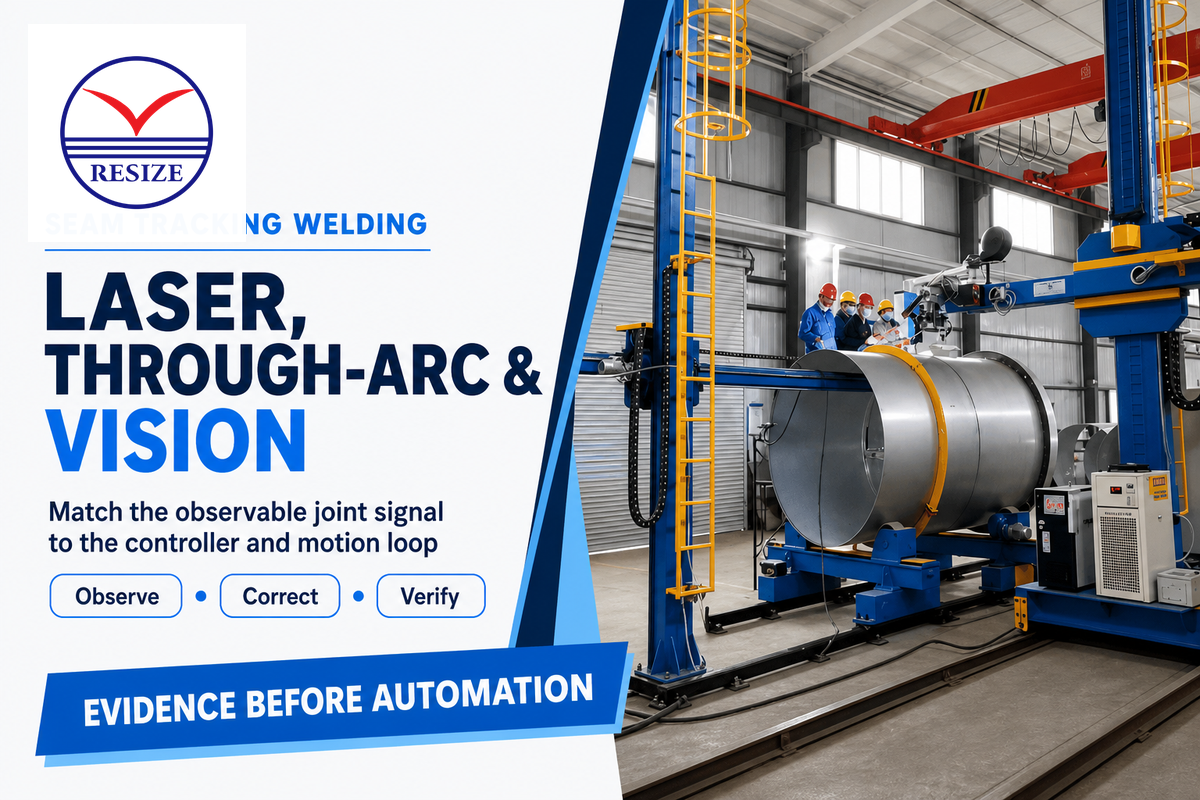
RESIZE welding positioners offer variable-speed rotation, from 0.02 to 15 RPM, thanks to their variable-speed drive. Maintain travel speed at within 5% of the WPS measurement at the joint surface with RESIZE positioners, and you avoid the WPS-essential variable “drift,” allowing you to run a whole production batch without requalification, as atstructural fabricator doing GMAW at 14-18 IPM on a 1/4″ A36 fillet.
D1.1 Positioner-to-Position Matching Chart
| Welding Position | D1.1 Designation | Positioner Enables? | RESIZE Model |
|---|---|---|---|
| Flat | 1G / 1F | ✅ Always | Any tilting positioner |
| Horizontal | 2G / 2F | ✅ With tilt | 2-axis, 3-axis positioner |
| Overhead (inverted) | 4G / 4F | ✅ Inverted setup | Skyhook positioner |
| Pipe fixed (rotary) | 1G pipe / 6G-equivalent | ✅ Pipe rotation | Pipe welding positioner |
The savings in PQRtesting to cover additional qualification tests in 2G or 3G: is.
RESIZE welding positioners are produced to quality management standards of ISO 9001 and of ANSI safety requirement and CE directive. For structural fabricators working to D1.1, that means your compliance program is supported by equipment manufactured to the same quality disciplines your code demands.
Structural fabricators rely on RESIZE positioners to maintain welding parameters within WPS ranges—warm session after warm session.
Explore RESIZE Welding Positioners for Structural Fabrication →
AWS D1.1:2025 — What Changed and What Fabricators Need to Do
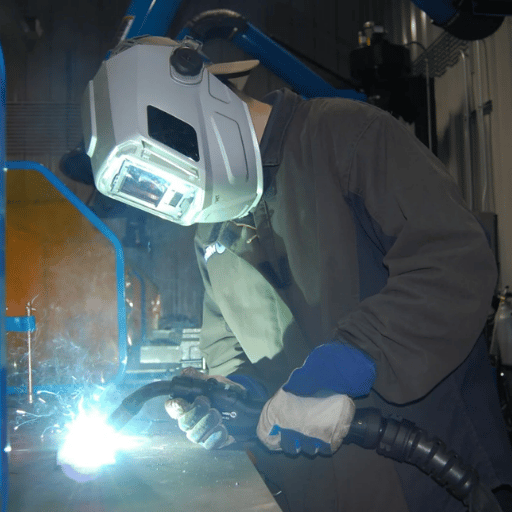
D1.1 adopts a five-year revision cycle. The 2025 edition- the 23rdbased on the original 1928 publication – contain modifications based on the new AISC 360-22 design provisions and improvements in the field of NDT. Just because there are some changes does not mean that prompt action is needed.
Below is the list of most significant changes ordered from the most to the least urgent, hours indicating the level of urgency.
🔴 ACTION REQUIRED
A5.36 filler metal classifications eliminated. Any of your prequalified WPS’s that cite A5.36 filler metal classifications will not be prequalified with the 2025 edition. Each affected WPS must be revised to cite the proper AWS A5.x base specification(A5.18 for GMAW carbon steel, A5.20 for FCAW, etc.) prior to using on a D1.1 project.
New LRFD Table 4.3— available strength of welded joints. The 2025 now includes a new LRFD design table for welded joint strength. If Load & Resistance Factor Design (LRFD) is part of your designs, and your design basis references the D1.1 Tables you need to check your design calculations against the new table before you go out to stamp drawings.
🟡 REVIEW RECOMMENDED
Additional MT and PT requirements. A new normative annex contains new requirements for magnetic particle testing (MT) and liquid penetrant testing (PT). If your shop’s NDT program tests welds using MT or PT, check the new requirements and incorporate any needed changes into your NDT procedures prior to the next scheduled audit.
Fillet weld maximum size clarification (new Figure 4.7). New figure clarifies fillet weld size at edges of plates—frequently sources of interpretation confusion. Assess edge fillet welds in your current WPS library utilizing new diagram.
Matching filler metal provisions included. Clarifies the procedure for selecting matching filler metals. Make sure that your procedure for filler metal selection is in accordance with these updates, particularly for welds on higher strength structural steels.
⚪ INFORMATIONAL
New Annex S was added to include base materials for additional steel grades. Type D stud welding provisions were inserted. Clause 4 saw the addition of new definitions/terminologies.
The Normative references were revised all through.
Search trend note: queries for “aws d1.1 latest version” increased substantially in the months following the 2025 publication date — structural fabricators are actively updating their understanding of the new requirements. The next scheduled D1.1 revision is approximately 2030.
Gerelateerde artikelen
Frequently Asked Questions About AWS D1.1
What is the difference between AWS D1.1 and D1.3?
AWS D1.3 applies to structural sheet thinner than 3/16″ (4.76mm). AWS D1.1 applies to structural steel plate and shapes from 1/8″(3.175mm) to 8″ (203.2mm). Structural cold-formed steel framing components (studs, track) generally fall under D1.3. Heavier structural plate work components like beams, columns, connection plates generally fall under D1.1. The two codes have different prequalified joint details, and different welder qualification tests requirements.
What is the difference between D1.1 and D1.8?
AWS D1.8 is a seismic supplement that must be used in conjunction with D1.1 – it is not a substitute for D1.1. High seismic design categories (per AISC 341) require use of both D1.1 and D1.8. D1.8 contains more stringent requirements for filler metal toughness, connection geometry, and inspection at moment frames and other seismic-critical joints. If your project does not invoke the AISC 341 seismic provisions, only D1.1 is necessary.
Can a company be AWS D1.1 certified?
AWS D1.1 does not itself provide for company certification; it governs welding procedure and welder qualification. AISC Certification for fabricators is the country’s primary method for company-level compliance with D1.1. AWS’s set of the Certified Welding Fabricator program addresses quality management of the welding process. Both are separate from individual welder qualification on D1.1 as specified in Clause 6.
How often does AWS D1.1 get updated?
AWS D1.1 is revised on a five-year cycle. The 2025 edition (23rd edition) is the current version. The prior edition was 2020. The next edition is anticipated by around 2030. When a new edition is issued, existent WPS that reference the prior edition are still valid unless the contract requires use of the new edition – although any A5.36 filler references are no longer prequalified.
Do I need a CWI to perform D1.1 inspection?
Visual inspection in D1.1 is required to be carried out by a qualified welding inspector. D1.1 does not require AWS Certified Welding Inspector (CWI) credentials for all verifications, but most AISC certification and contractual requirements do. For fracture-critical welds, CWI participation is common. At a minimum, your QC inspector shall have documented familiarity with D1.1 acceptance standards and training/qualification documentation.
What is the 6-month continuity rule for welders under D1.1?
Under D1.1 Clause 6.2.2, a welder’s qualification in a welding process is lost when no welding in that process has been performed by them on production work within six months. Lapsed qualification requires a requalification process. The six-month clock is process-specific – a welder qualified in SMAW and GMAW has a 6/6 timeframe for each process.
Where can I purchase AWS D1.1:2025?
The current AWS D1.1:2025 is available directly from the American Welding Society at pubs.aws.org or through ANSI at webstore.ansi.org as an approved ANSI standard. The IHS Markit technical standards service is another distribution pathway. Cost varies per medium (print, PDF download, subscription login). AWS offers a discount to members, and the full suite of D1 codes is available through the AWS Technical Standards Subscription.
About This Article
This document was reviewed by the RESIZE Engineering Team – suppliers of welding positioners and related fabrication machinery certified to ISO ISO 9001 management standards, ANSI compliant safety design specs, and CE directives. RESIZE serves the structural steel, pressure vessel, and pipeline industry in over 40 countries.
RESIZE provides structural fabricators working under the guideline of AWS D1.1 with welding positioners. For this guide, we have referenced AWS D1.1:2025 code provisions, external interviews by The Fabricator with the AWS D1 Committee on Structural Welding, ANSI code documentation, and validated industry sources. In the few areas in which we reference the application of a positioner, we specify technical data points from our product line.Cost information denoted as approximations is a range of industry data points with no single primary source.
- AWS D1.1/D1.1M:2025, Structural Welding Code – Steel. American Welding Society. pubs.aws.org 2e tarief]
- AISC 360-22. Specification of Structural Steel Buildings. American Institute of Steel Construction. aisc.org Tier 2
- International Building Code (IBC) Chapter 17 – Structural Tests and Special Inspections. International Code Council. iccsafe.org Tier 1
- AWS Welding Digest, July 2023 – The significance of AISC and AWS Codes. AWS welding digest; American welding society—aws.org Tier 1
- Temablogg), “AWS D1.1:2025 Structural Welding Code – Steel.” blog.ansi.org Andre lag
- The Fabricator. what Welders and Other Metal Fabricators Need to Know about AWS D1.1. Interview with the AWS D1 Committee on Structural Welding, the fabricator.com Tier 2