Laser beam welding is revolutionizing the modern manufacturing industry by providing precision and efficiency that can’t be matched by any of the conventional welding methods. In the case of the automotive, aerospace, or electronics industries, if you are out of the loop regarding this cutting-edge method, you are likely to face serious competition in the current market, which is very fast-moving.
The article addresses the core benefits and possible downsides of laser beam welding, thereby equipping you with the information necessary to make proper choices for your undertakings. It covers the entire range from the technique’s capability to form extremely precise joints to the factors of cost and complexity of the equipment involved. Thus, a viewpoint characterized by caution is offered as to whether or not laser beam welding is a suitable option for your requirements.
Understanding Laser Welding
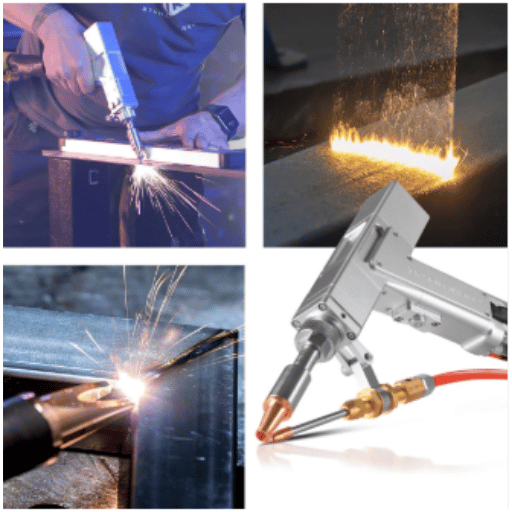
Laser welding stands as a meticulous joining procedure that employs a concentrated ray from a laser to melt and join materials, usually metals or thermoplastics. The laser energy acting on the joint liquefies the material which, after cooling down, forms a weld of very high strength. This technique provides outstanding accuracy through being able to concentrate the energy in small areas thus it is very suitable for intricate or delicate applications. Laser welding is highly employed in the automotive, aerospace, and electronics sectors, where precision and durability are major factors. Its fast and efficient process along with the capability to create welds on complex shapes make it a more often chosen option than traditional welding methods.
What is Laser Beam Welding?
⚡ Laser Beam Welding (LBW) Definition
Laser Beam Welding (LBW) is one of the fusion welding processes that employ the power of a laser beam to heat and join the materials accurately and very often the materials are metals or thermoplastics. The energy density of the laser is so high that it results in deep penetration and quick welding, which, in turn, makes the process very effective for the production of strong and accurate welds in the situations where precision and minimal thermal distortion are required.
Common Applications of Laser Welding
Laser welding is a process that is greatly favored by many industries mainly because of its precision and efficiency. In the automotive industry, laser welding is used for the production of car body parts, components for gear assemblies, and battery packs of electric cars. The aerospace industry resorts to laser welding for the production of turbine blades, fuel tanks, and structural parts that are supposed to be strong yet light weight. Furthermore, in addition to the above, laser welding is also being used in the medical area in the production of surgical instruments and implantable devices. Electronics and micromechanics, on the other hand, take advantage of the laser welding process for the production of very small, complex assemblies such as sensors and microcircuitry. The combination of versatility and accuracy makes laser welding the most desirable process for high-precision manufacturing.
Automotive Industry
Car body parts, gear assemblies, electric vehicle battery packs
Aerospace Industry
Turbine blades, fuel tanks, lightweight structural parts
Medical Applications
Surgical instruments, implantable medical devices
Electronics & Micromechanics
Sensors, microcircuitry, complex small assemblies
Overview of Electron Beam Welding
Electron Beam Welding (EBW) is a process that joins materials with the application of a concentrated beam of high-speed electrons. When electrons hit the surface of the material, their kinetic energy gets transformed into heat, resulting in a weld that is narrow and deep with very little thermal distortion. To allow the electrons to work at their best and to get the cleanest, highest quality welds, the process is done inside a vacuum. EBW is highly accepted in the aerospace, automotive, and electronics sectors due to its ability to produce not only strong but also precise robotic welds. Among its advantages are the complex shape welds and different materials joining, which make it a very important tool in the advanced manufacturing process.
Disadvantages of Laser Welding
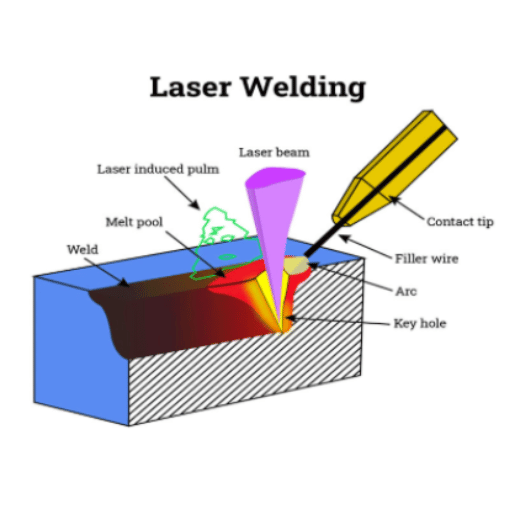
While laser beam welding offers numerous advantages, it’s important to understand its limitations and challenges to make informed decisions for your projects.
High Initial Costs
The installation and purchase of laser welding machinery can cost a lot of money; thus, it will be a big outlay when compared to the old methods of welding.
Material Limitations
Laser welding is very effective with a lot of metals but it may not work as well with some highly reflective materials or extra prep work may be required to obtain best results.
Precision Requirements
Each part of the process must be aligned exactly, making it impossible to do without great preparation and precision equipment.
Skill and Expertise
The laser welding equipment needs qualified personnel who are specially trained for the welding process and safety requirements, which is reflected in higher wage costs.
Limited Gap Bridging
In cases where there are wide gaps between the materials, laser welding will be ineffective, and that’s why it is important to have tight tolerances during the assembly process.
Technical Limitations of Laser Beam Welding
Although laser beam welding is very accurate and efficient, it still has some limitations that are primarily technical. First of all, it cannot be used to join materials that are more than a few millimeters apart, thus assembly must be done with tight tolerances. Furthermore, the process has a problem with highly reflective surfaces that can either lower the efficiency of the process or greatly impact the quality of the weld. The demand for accurate setup and alignment adds to the complexity of operations and often results in longer setup times. Lastly, the case with copper and other similar materials that have high thermal conductivity is particularly difficult because they can quickly lose heat and thus affect weld quality.
⚠️ Key Technical Challenges:
- Gap Tolerance: Cannot join materials more than a few millimeters apart
- Reflective Surfaces: Highly reflective materials lower efficiency and weld quality
- Setup Complexity: Accurate alignment requires longer setup times
- Thermal Conductivity: Materials like copper quickly lose heat, affecting weld quality
Joint Accessibility and Alignment Challenges
The accessibility and alignment of joints are the most important factors in the process of welding. If the welding area is not easily accessible, particularly in complicated assemblies or small places, it can greatly affect the accuracy and output of the work. Besides, misaligning parts adds to the difficulty of the operation and may cause an imperfect weld or even a reduction in its strength. However, through proper positioning, careful preparation, and adoption of high-tech fixturing systems, it is possible to counteract these hurdles and thus increase both efficiency and quality of welds.
Material Compatibility Issues
Material compatibility is very important to get good quality welds. Different materials demand particular welding methods, filler metals, and temperatures in order to get a strong bond. If the materials are not compatible, it might lead to weak joints, cracking, or even corrosion with time. It is very important to know the metallurgical characteristics of the materials to be joined and to choose the proper processes and consumables to solve such problems in a good way. Testing for compatibility and sticking to the welding codes can also significantly reduce the risk and increase the performance in the long run.
🔍 Compatibility Considerations:
- Understand metallurgical characteristics of materials to be joined
- Select appropriate welding methods and filler metals
- Ensure proper temperature control for strong bonds
- Conduct compatibility testing before production
- Adhere to established welding codes and standards
Safety Concerns in Laser Beam Welding
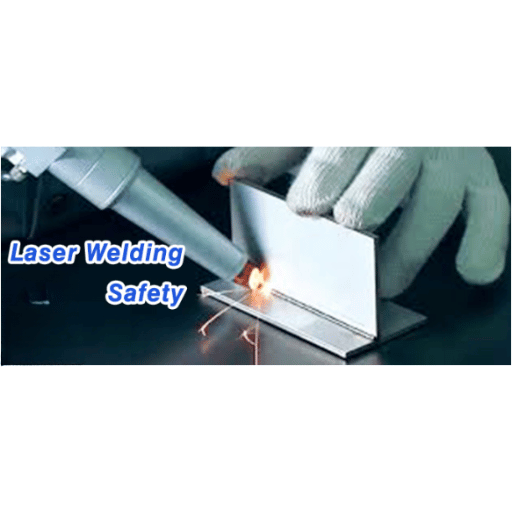
Although laser beam welding provides precision and efficiency, it still brings a number of safety concerns that need to be taken care of in order to create a safe working environment. Among the main risks are:
| Safety Hazard | Risk Description | Prevention Measures |
|---|---|---|
| Eye and Skin Exposure | Powerful laser beam can inflict great harm on eyes and skin | Wear laser safety glasses and protective clothing |
| Fume and Gas Emissions | Harmful fumes and gases produced during welding | Install ventilation or fume extraction systems |
| Fire Hazards | High laser power can ignite flammable materials | Proper area management and non-combustible surfaces |
| Electrical Safety | High voltage equipment increases risk of electric shock | Proper maintenance and trained operation |
| Laser Reflections | Beam reflection can cause equipment damage or injury | Eliminate reflective surfaces in surrounding areas |
Safety Priority: The above mentioned risks can be reduced by following the safety standards that have been put in place, wearing the right protective gear, and making sure that operators are well trained in safety protocols.
Exposure to High-Intensity Laser Radiation
The application of high-intensity laser radiation can result in a number of serious health issues, such as eye damage, skin burns, and even the development of diseases after some time. However, the risks can be well managed through the implementation of proper safety protocols like the use of certified laser goggles, laser treatment enclosures, and strict compliance with the operator’s instructions. Having trained staff and controlling the environment can increasingly guarantee the safe use of laser machines.
Generation of Hazardous Fumes
Processes involving lasers like cutting or welding can lead to the production of dangerous fumes containing harmful materials such as heavy metals, gases, and fine particles. If these fumes are inhaled, they can cause severe health problems and the respiratory system might get affected along with others in the long run. To avoid these threats, it is necessary to use appropriate ventilation systems, fume extraction equipment, and personal protective equipment. Continuous air quality monitoring and compliance with safety regulations are also vital for the creation of a safe working environment.
Precautions and Safety Measures
To reduce the risks tied to toxic vapors, take the following steps:
🛡️ Essential Safety Measures:
1. Ventilation
Be certain that sufficient ventilation systems are in position so that fumes can be dispersed effectively.
2. Fume Extraction
Utilize localized fume extraction equipment to take away the pollutants from the source.
3. Protective Gear
Provide the workers with the necessary personal protective equipment (PPE) like masks and respirators.
4. Air Quality Monitoring
Continuously monitor the air quality to be able to recognize and tackle any potential hazards in time.
5. Training and Compliance
Offer comprehensive safety training and strictly monitor the compliance with the safety standards.
Result: By means of these all-embracing precautions, the exposure will be markedly reduced and a safer working environment will be established.
Mitigating the Disadvantages of Laser Beam Welding
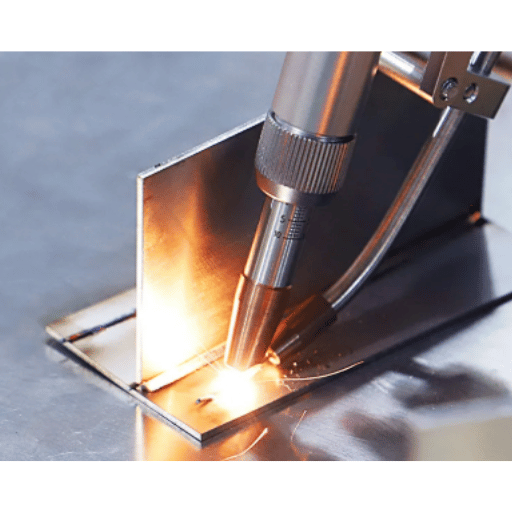
In order to mitigate the complexities that come along with laser beam welding, the following measures can be applied:
Ensuring Proper Training
Operators should be provided with full training on laser operation, safety measures, and maintenance in order to reduce mistakes and make the process more effective.
Using Protective Equipment
Workers should be provided with necessary safety equipment, as laser safety goggles and ventilation systems, in order to prevent exposure to high-energy radiation and toxic fumes.
Regular Maintenance
Laser equipment should undergo periodic maintenance and calibration to provide consistent performance, minimize downtime, and avoid expensive repairs.
Optimizing Work Environment
Reflective surfaces should be eliminated in the vicinity of the welding area to stop accidental beam redirection and to maintain a controlled workspace.
Material Suitability
Proper material selection and surface preparation should be done in order to gain the maximum compatibility and the minimum weld defects.
Impact: The above actions will ensure that the disadvantages of laser beam welding are reduced to a great extent, thus making the welding process safer, more efficient, and of higher quality.
Best Practices for Improved Joint Accessibility
🔧 Best Practice Guidelines:
1. Optimize Design
Redesign the parts incorporating aspects that will eliminate the hindrance to welding joints or, if possible, provide them with enclosing geometries.
2. Use Specialized Tools
The use of extension arms, lead torches, or flexible fixturing will allow the efficient welding of problematic joints located in hard-to-reach areas.
3. Strategic Positioning
Change the angles and locations of the workpieces to provide better visibility and access for welding and equipment.
4. Pre-Welding Layout
Schedule the assembly sequence so that all the joints are easily accessible, thus avoiding the need to carry out complex maneuvers during welding.
5. Perform Regular Inspections
Keep the hard-to-reach areas properly aligned and clean to avoid defects and ensure the welding quality is consistently good.
Practicing these methods will not only enhance joint access but also make the welding process more efficient and reliable.
Choosing Compatible Materials
Choosing the right materials that work together is really important for the weld to last, be strong, and be good quality. Look at things like their metal properties, heat characteristics and resistance to rust to avoid problems. Always use the same filler materials as the base metals and follow the specifications and standards that are needed. Do the material tests if needed to verify compatibility and to make sure that the welded structure will have long-term performance.
✓ Compatibility Factors
- Metal properties
- Heat characteristics
- Resistance to rust/corrosion
- Metallurgical characteristics
✓ Implementation Steps
- Match filler with base metals
- Follow required specifications
- Conduct material testing
- Verify long-term performance
Cost-Effective Solutions for Small Scale Projects
In order to cost-effective small scale projects, the main areas of consideration should be optimization of resources and waste minimization. Through such optimization of resources where possible, the selection of materials should be on the basis of quality versus cost balance. Furthermore, existing resources can be reused or recycled where possible. Project designs can be simplified to reduce complexity and labor costs. Moreover, the use of multi-functional tools and renting equipment instead of buying can lower expenses. Overall, proper planning, efficient material usage, and smart budgeting are the main contributors to maintaining project costs within limits without losing quality.
💰 Cost-Saving Strategies:
- Resource Optimization: Balance quality versus cost in material selection
- Reuse & Recycle: Utilize existing resources where possible
- Simplified Designs: Reduce complexity to lower labor costs
- Equipment Rental: Rent multi-functional tools instead of purchasing
- Smart Planning: Efficient material usage and budgeting
Reference Sources
- Xometry – 6 Disadvantages of Laser Welding
Discusses main downsides including expensive process, shallow penetration, sensitivity to the material used, and issues related to safety, etc. - Gentec-EO – Advantages and Disadvantages of Laser Welding
Points out the steep cost of the equipment and opens up the discussion on how to increase the return on investment by employing precise measurement techniques. - Suntoplaser – What Are The Advantages And Disadvantages of Laser Welding
Points out issues such as high initial cost for the equipment and other difficulties that laser welding technology faces.
Frequently Asked Questions (FAQs)
What makes laser beam welding a costly process?
The laser beam welding process is expensive mainly because of the sophisticated machines and technology that are utilized, such as lasers and very precise control systems.
What is the maximum laser penetration depth limitation?
Laser welding has a disadvantage over other welding methods on thick materials due to its limited penetration depth.
Is it necessary to choose materials with caution in laser beam welding?
Indeed, it is a matter of materials; it has limited compatibility with certain metals, such as reflective or heat-sensitive ones.
What dangers are posed by laser welding?
The powerful laser beam is a source of danger, particularly to the eyes; thus, strict safety practices must be in place, including the use of protective clothing and creating the right atmosphere.
Is laser welding applicable in any surrounding?
No, it is not applicable; it would be less effective in outdoor or dusty environments where accuracy and cleanliness are hard to maintain.
🎯 Final Conclusion
Laser beam welding represents a significant advancement in modern manufacturing technology, offering unparalleled precision, efficiency, and quality in joining materials. While it comes with notable disadvantages such as high initial costs, material limitations, strict precision requirements, and safety concerns, these challenges can be effectively mitigated through proper training, equipment maintenance, strategic material selection, and adherence to safety protocols. For industries where precision and minimal thermal distortion are paramount—such as automotive, aerospace, electronics, and medical device manufacturing—the benefits of laser beam welding often outweigh its limitations. By understanding both the advantages and disadvantages outlined in this guide, manufacturers and engineers can make informed decisions about whether laser beam welding is the right choice for their specific applications, ultimately achieving optimal results while maintaining safety and cost-effectiveness.