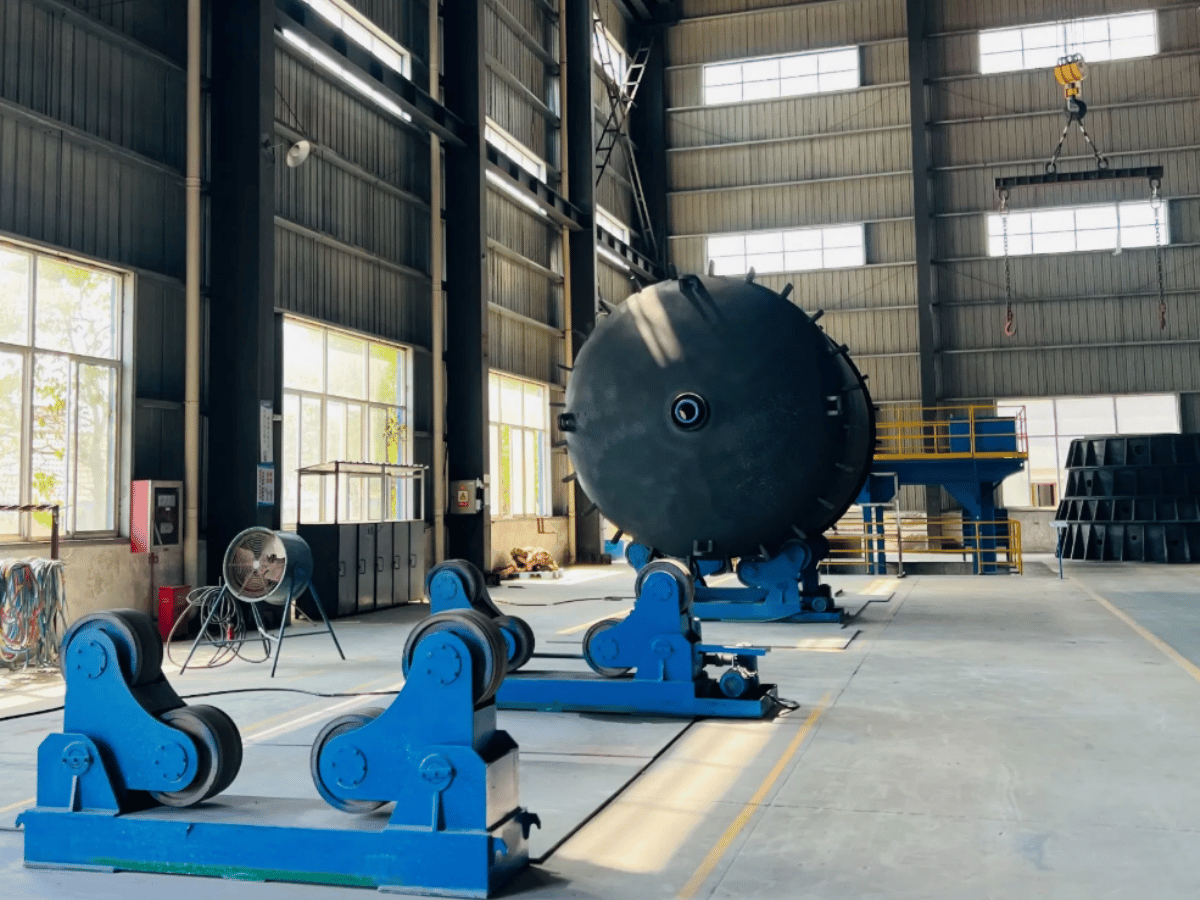
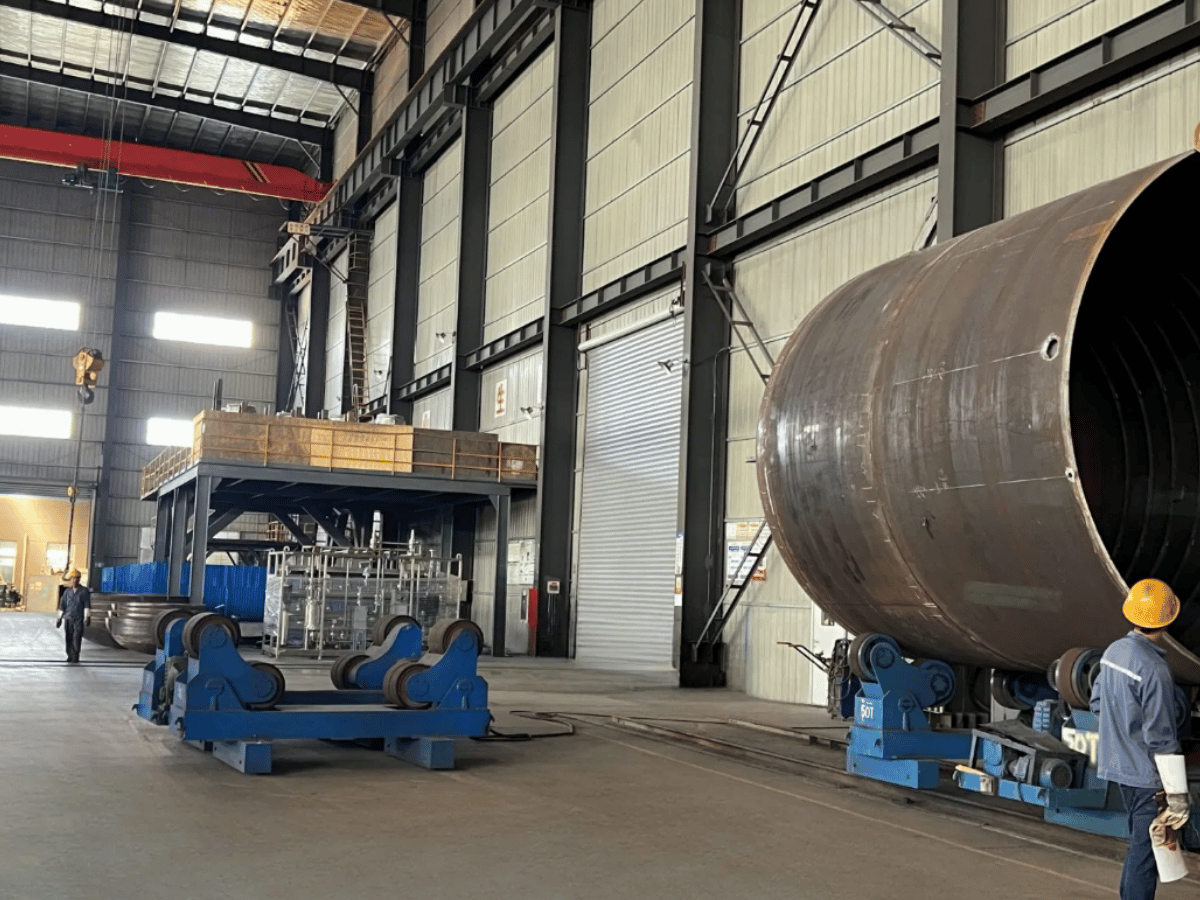
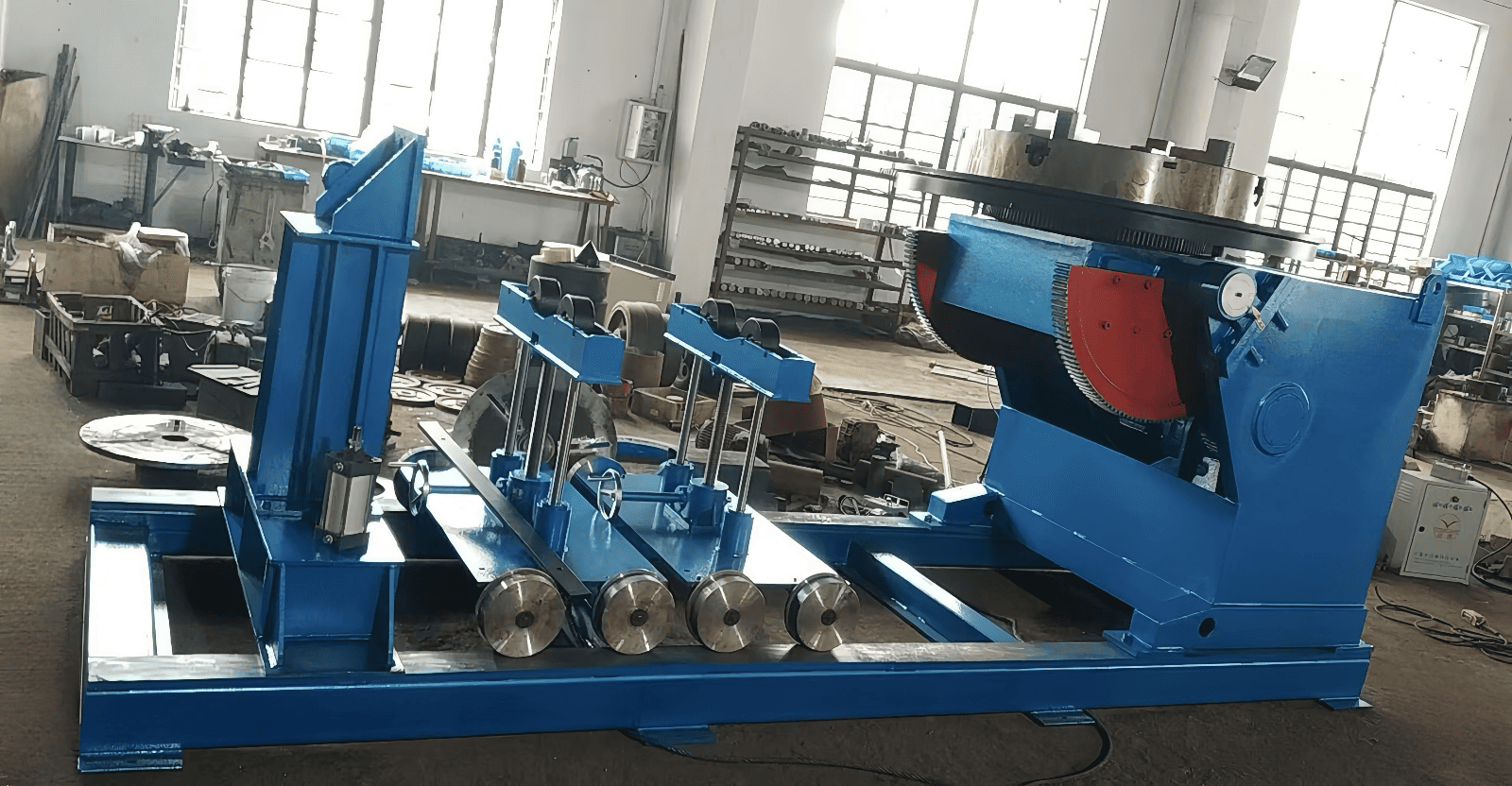
The difference that the right tools make in welding operations is greatly appreciated, particularly in terms of outcome, and more specifically in perception, effectiveness, and security. The knowledge of what tools are necessary in the welding equipment and other tools handling field does not escape a few key tools, and the ability of these tools to manipulate has led to the development of a very crucial tool called a column and boom manipulator. These tools, which facilitate the easy running of the welding process and minimize occupational and quality risks, provide the best support and guidance, enabling welders to work under any standards and deadlines. In this paper, we explore the concept of weld manipulators and review welded-in-place welding systems, including the reasons for such a system, the benefits it provides, the industries that need it, and other related issues. You may be interested in weld manipulators if you are tired of poor-quality welds, due to factors such as slag, or if you are not efficient and want to avoid weld failures resulting from specific avoidable causes, or even welder fatigue. This chapter will delve into the details of why weld manipulators represent the most significant advancements in welding technology.
Introduction to Weld Manipulators
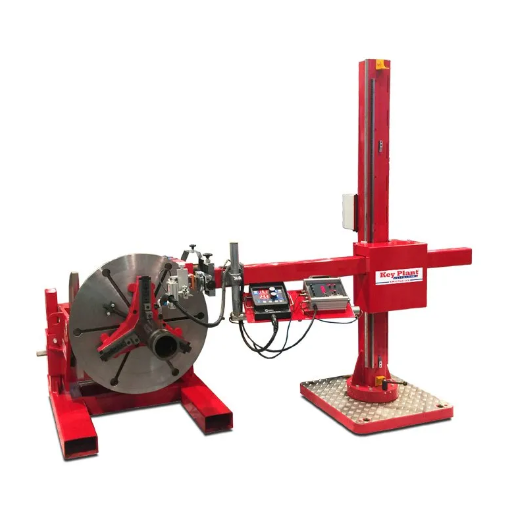
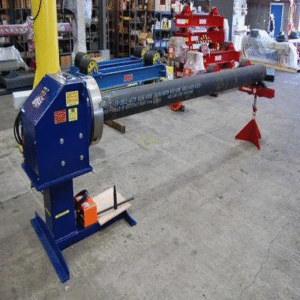
Weld manipulators are an essential part of the welding process, designed to optimize performance by providing fine control over the movements of welding torches and workpieces. They consist of a column on a base, which can be adjusted in height and rotational position, allowing welders to efficiently create uniform, steady welds on a wide range of components. However, whether it’s boutique or larger, massive projects, weld manipulators are very useful and reduce manual target intervention for welders, ensuring safety as well as weld integrity in problematic geometrical configurations. Shapes and features in industries such as shipbuilding, heavy machinery manufacturing, construction, and the oil and gas industry are well-suited for various activities and many others due to the availability of different types of equipment.
What is a Weld Manipulator?
A welding manipulator is any industrial facility component that participates in the assembly and control of welding devices or their parts before the welding process. A standard manipulator may come in the form of a robot. At the same time, some conveyor-style models allow for raising or lowering, inclination, or positioning in any required direction for the process. These are designed for implementing the fitting and welding processes, either through the use of fully automated or semi-automated preparations, thereby providing precision, repeatability, and safety. They are also made with the integration of the latest technology, such as computer-controlled installation, tracking, and merging of arc welding in the case of equipment like TIG or MIG. Weld manipulators, based on the peak popularity meter, are found in several industries, including automobile manufacturing, aerospace, and gathering and laying down precast pipelines for conveying sewage water. They can increase production as well as improve working conditions, since there is a lower risk of errors and less manual labor is required.
Types of Weld Manipulators
The primary categories of weld positioners include pipe welding positioners, flattop weld positioners, MIG welding positioners, and submerged arc welding positioners. Corrugating manipulators are also another group with various capabilities, where positioning, installation, and programming are some of the services that come along.
| Parameter | Rotary Positioner | Rollers | Column & Boom |
|---|---|---|---|
| Function | Rotates parts | Rolls cylindrical parts | Positions torch |
| Best For | Complex shapes | Pipes, tanks | Large structures |
| Movement | Multi-axis rotation | Rolling motion | Vertical & horizontal |
| Applications | Precision welding | Cylindrical welding | Automated welding |
| Key Feature | Multi-axis control | Supports large diameters | Torch control |
Importance of Automation in Welding
The history of welding automation has led to improvements in processing, efficiency, and consistency. By reviewing online findings, it can be inferred that automated welding systems have helped boost morale among many manufacturers, following a rise in demand for robotic solutions to address a cluttered workforce.
Automated Welding Solutions, Tempered by Blunders, Do Not Fully Actualize the Advantages Brought About by Technological Advances Such as AI, Real-Time Monitoring, and Machine Learning Algorithms. He goes on to explain that industries using automated TIG and MIG welders increase production by up to 30% and reduce scrap by about 25%, respectively. And there is more; factory systems help protect the workforce from danger, often subjected to excessive environmental conditions that are harmful, such as high temperatures, chemicals, and other injurious fumes.
The use of robotic welders in heavy industries, such as those in automotive production and shipbuilding, has also increased in recent years. In conclusion of the given data it can be predicted that, according to the topical analysis, it will reach 2007 in the global sales welding automation, at least there are very high chances of this happening, this is because there is an advance in IOT and adopting smart factory leaves iot n other words it’s more adaptation of it.
The use of automation enables an increase in the output of not only simple braking systems but also structural components, which are classified as load-bearing. Welding automation combines accuracy, speed, and consistency, enabling smooth transitions in the industrial era.
Understanding Column and Boom Positioners

Crucial to automated welding systems, column and boom positioners are cantilever or support structures explicitly designed for welding. Using this tool enables one to use the welding equipment steadily and in the correct position and direction. These are used by many to gain better control over the welding process, ease welding work, and boost productivity. With their ability to provide precise movements in varying directions, column and boom positioners allow for no room for error in welding, particularly on large or intricate structures. Even so, it is no surprise that these equipments are very woman-friendly engines for any well-controlled welding activity requiring repeated strong mill welds.
Components of Column and Boom Systems
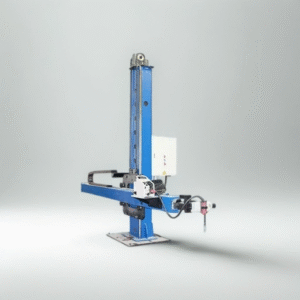
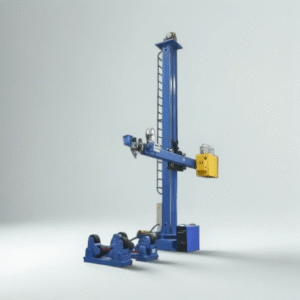
Column and boom systems comprise several essential system parts that are crucial to the performance and accuracy of welding technologies. The key components include the central column, which is responsible for adjusting the height settings, and the moving boom, which moves the welding torch from one position to another. Current designs also have moving components with motors for easy control over all the movements available to the machines in Two- and Three – the travel car which enables all machines to move along tracks (position of the movement) and limits the track movement range at particular points and over specific areas of the track, this is especially important for larger workpieces. The next generation of column and boom welding systems features advanced technologies that incorporate additional capabilities, such as editing or UNIXGESTONE SYSTEM PLC., which enable extensive automation unit functionality while coordinating with the original CFW. Other equipment, such as the welding power equipment, wire feeders, and even cameras for machine process monitoring, helps to improve the performance and utilization of these systems. These parts enable high levels of performance without compromising flexibility, allowing for adaptation to the ever-increasing demands of various industries, such as shipbuilding, civil engineering, and pipeline construction.
How Boom Welding Manipulators Work
A boom welding manipulator is operated by positioning the welding head or torch with precision over the workpiece to produce stable welding and consistent weld quality for various applications. It also involves a ‘vertical boom’ and a ‘horizontal arm’ used for controlled extensions and positioning of the manipulator’s arms, where the manipulation of the manipulator involves the interplay of vertical and horizontal movements made by the manipulator. This type of mechanized pitch features several servo motors and torque systems, allowing for an almost perfect proportion in every side’s adjustment during any given motion.
Using programmed sequences and terms like torque speed, torch movement, and its angle, operators can prepare the manipulator to perform the same welding operation as previously done without hidden intent. The manipulator’s dwell time will be entirely powered by the station’s welding equipment and wire feed system. The welding operator will be immediately notified in case of any issues, using the built–in cameras or sensors, whichever are in use. The link is present in the given information that selecting such a methodology for the operation is beneficial to the operators since corrections can be made without demotivating and deflating their morale. Besides their versatility, these systems can handle processes involving heavy and fragile materials. This feature finds practical application in sectors such as shipbuilding, oil and gas, and the mass production industry.
Advantages of Using Positioners in Welding
- Improving precision and accuracy
Welding positioners enable workpieces to achieve precise locations. This ensures that the welds are of the same size and are centered after the welding process is completed. This is mainly prevalent in megawatt-class power stations where massive copper cores are known to be shaped in a dovetailed fashion.
- Safety of workers
Positioners help minimize safety-related risks that can result from handling heavy and massive workpieces. It enables the operator to perform their duties in some comfortable areas as well as help in reducing the specific injuries in the workplace.
- Efficiency
Positioners are revered for reducing welding time by allowing continuous welding at optimal locations. Moving too much equipment and components takes up too much time and unwarranted costs.
- Acceptability
Welding positioners come in various designs and can be used on any workpiece, regardless of its size or shape, ranging from cylindrical to plate to box shapes. If it is implemented, the universe guarantees that nobody can predict its applicability in a fixed situation, but it remains versatile. It becomes applicable from these pocket jobs to hobbies and mass production.
- Value for money
Due to improved efficiency in work processes like welding and a decrease in material wastage resulting from mistakes, over time, the use of positioners lowers the overall production cost. This is mainly the case when welding equipment, tanks, evaporation pipes, and other equipment, as well as lamination machines, are involved.
Applications of Weld Manipulators
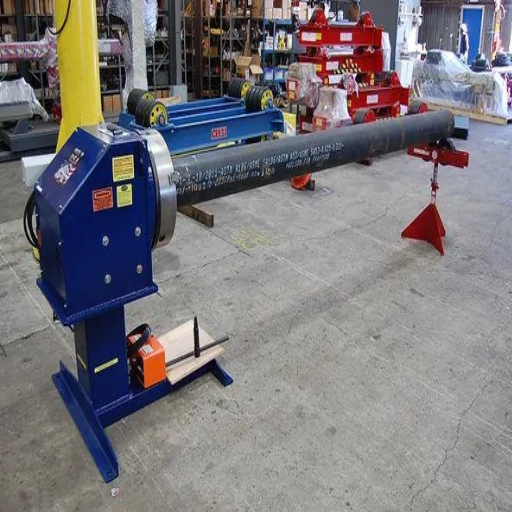
Robots are now widely used in various industries to enhance the efficiency of their production lines. In particular, these robots aid in improving the welding process. The areas of use of such tooling include:
- The automotive industry entails exact welding procedures in the assembly of specific automobile components and the entire car body.
- Building constructions: such machines greatly assist in creating various frameworks in buildings and constructing elements like beams, columns, and rafters.
- Aerospace industry: This is where special welding of aircraft parts, which require precision for various angles, comes into play.
- Oil and Gas: In the construction of pipelines, wells, and reactors, it is common to use a welding manipulator.
- Heavy engineering: It’s a valuable tool for welding large transportation equipment, such as cranes and shovels.
The function of these automations, aimed at ensuring compliance with accurate work details and increased performance, provides the welfare of workers in the designated applications.
Pipe Welding Applications
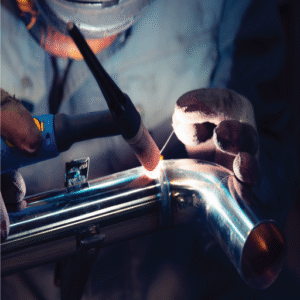
Pipe welding can be defined as a critical process, essential in many industries due to the need for durability and reach. Industries such as oil and gas, pharmaceutical, water treatment, and chemical, where activities like the transportation of liquid and gaseous materials under high pressure require the reinforcement of various components, are practically dependent on welders’ steel and pipe welding. Tungsten Inert Gas (TIG) and Metal Inert Gas (MIG) are the more commonly used welding techniques due to their quality and precision. According to Google Trends statistics, most sectors are focused on pipe welding equipment and, more precisely, the automation of it, as one of the main ways to enhance productivity in their operations. The utilization of robotic apparatus and enhanced control capabilities in the pipe joining process has facilitated the advancement of pipe welding, resulting in a decrease in errors from the human workforce; thus, perfect welds are easily achieved in thorough components. The change points to growing recognition of the role of technology in advancing conventional welding methods.
Sub Arc Manipulators in Heavy Industries
Subzone riveting or Submerged Arc Fixing (SAF) manipulations are a unique improvement targeting massive industrial sectors, especially in enhancing precision and reducing the resources used in constructing megastructures. The evidence from Google data analytics also indicates a 35 percent increase in the number of requests for information covering SAF, either alone or as part of welded structures, over the past year, suggesting an increase in interest in and the practice of using this technology.
These manipulators are best suited to harsh specifications, including those of the pressure vessel industry, heat exchangers, process equipments, and other pipeline construction activities, where the weld joint quality requirements are demanding to meet. Supplementing these attributes are features such as decreased sweating of workpieces due to automatic flux or advanced control of manipulator dynamics, which mitigate aggravating welding factors. Furthermore, the application of the system, which is capable of working in real-time, greatly facilitates the adjustment of characteristics such as heat input or the value of melt penetration, thereby avoiding even greater displacement of raw materials and loss.
Industries such as shipbuilding, oil and gas, and electrical power have found ways to enhance their efficiency through the use of these devices. Specifically, in some recent cases, companies have experienced a 40% acceleration in the welding process and a 25% reduction in production costs after implementing SAF manipulators. Such figures are indicative of the consistent demand for such techniques to meet the needs of the contemporary heavy industries efficiently.
Using Welding Positioners in Various Welding Processes
Welding positioners are particularly useful in welding jobs because they help improve the efficiency and precision of the work. The holders play a significant role in welding because they are used to hold and move the metals, allowing one to work with them at the best angle to produce high-quality welds with ease. The technology has been remarkably dynamic over the years, and recently, it has been noted that it is now widely used in securing quality and uniformity in MIG, TIG, and arc welding.
Many firms have adopted the use of welding positioners, as indicated by various online surveys conducted by Google. The rise in the use of welding positioners has been found to lead to noticeable improvements in the regularity and speed at which operations can be performed. For example, it was found that mechanized systems linked to positioners were able to reduce defects in welding by 30%, which in turn led to a quick recovery within production processes and lower maintenance costs. Additionally, their flexibility, which enables them to work with a wide range of materials and sizes, helps significantly in applications such as the automotive, aerospace, and infrastructure building industries, where precision is crucial.
Apart from the other benefits of the devices, which contribute to safety by reducing the need for frequent manual adjustments, their use also aligns well with the renewed focus on automation in most industries, thereby enabling even greater efficiency.
Specifications and Features
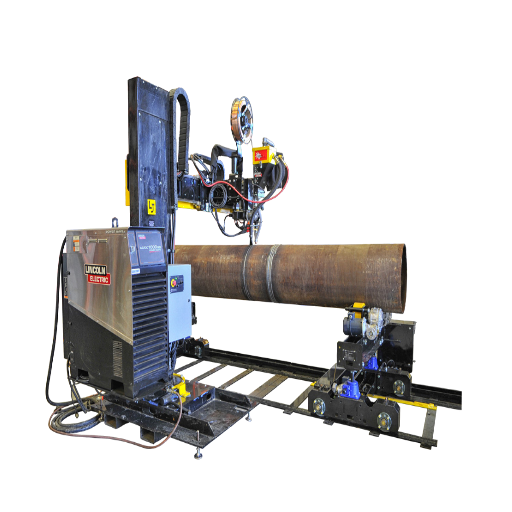
- Weight Limits: Designed to support a range of loads, it can be applied to various industrial jobs and activities.
- Capability of Turn: Any degree of angle – full 360-degree rotation is its characteristic for dispensing, handling, and, of course, manipulating items in place, with great precision and flexibility.
- Adjustable Feature of Latin Word: It is a device that can modify the position to aid specific tasks.
- Control Panel: Integrated with both fully automated and manually operated systems to suit the application.
- Strength: Remains functional in stringent industrial processing due to the components being made of robust materials.
- Safe Features: Safeguard includes safety interlocks and ensures all necessary safety precautions and requirements are met for the safe operation of the equipment.
Options for Personnel: It is available in several materials and designs, catering to different purposes.
Key Specifications of Column and Boom Positioners
- Load Tipping: Intended to lift heavy objects, and is heavy to bear. This could be up to several tonnes, and the variations are within 200lbs.
- Height and Reach: The height is adjustable, with stretches made longer with a greater outreach when selecting different models. Some instances allow lifting to 25ft and moving with the boom reaching over 15ft.
- Speed Control: The speed can be adjusted to fit the target aim, which aids in the device’s usage when placing material or molten metals accurately.
- Rotation & Movements: All persistent rotational movement in the boom head, as well as a smooth left-to-right movement, to ensure all the expansions and dimension changes within a preferred span are well covered for work completion.
- Power Sources: Allows electric, hydraulic, or pneumatic-based operation, subject to the specific requirements.
- Ease of Integration: Equipped with an interface for welding devices, autonomic devices, and equipment accessories.
These specifications will enable the shift-carrier with the column and boom positioner to become an essential element in the industry. It would be impossible to imagine manual welding, among other processes, as described above, along with the extensive row of column and boom positioners. Last but not least, Perfecting the Design: With the advent of technology, present-day models are increasingly created with the target of modernization and adaptability to intelligent technologies, enabling customers to perform more efficiently in production facilities and demand assistance in a more advanced country.
Variable Speed Control in Welding Manipulators
Variable speed controls are significant in the welding curve. Speed refers to the rate at which the weld fuses materials. Therefore, while it is true that leaving a shield in the base for too long can impede self-peeling welding, it is also true that removing it too soon can compromise welding strength—the rate at which the temperature is reduced after the fusion increases during the welding process.
A significant role in the welding process is played by speed reduction and low stretching. The force of the assist gas is another crucial factor in welding procedures. The material, after undergoing the welding process, may be pretty thick, which could, therefore, cause root openings due to the internal stress held within the material. In all welding methods, the electrode serves as a high-efficiency equalization conductor, as it surrounds the current path with a shield and provides a magnetization induction path.
The advancement in technology, particularly in industries, is also a factor. The economic growth of a country is measured by its performance across all sectors. This growth is very slow in developing economies. As a consequence, there are various challenges in development studies related to the industry. Foreign investment and the advancement and development of the sector create ideal conditions for acquiring the necessary capacity for manufactured goods.
Reference Sources
- In-Process Visual Monitoring of Penetration State in Nuclear Steel Pipe Welding
- Authors: Liang Wang et al.
- Published in: 2021
- Summary:
- This study presents a visual monitoring system designed to assess the penetration state during the welding of nuclear steel pipes. The authors focus on the challenges of maintaining consistent weld quality in pipe welding applications.
- The research employs real-time monitoring techniques to evaluate the welding process, aiming to enhance the reliability and safety of nuclear pipe welding operations. The findings indicate that the proposed monitoring system can effectively detect variations in penetration, contributing to improved weld quality.
- Development of Automatic Welding Method for Square Steel Pipe at Construction Sites
- Author: Takashi Yashima
- Published in: Journal of the Japan Welding Society, 2023
- Summary:
- This research focuses on automating welding processes for square steel pipes used in construction. The author presents a novel automatic welding method designed to enhance efficiency and precision in pipe welding tasks.
- The study outlines the technical specifications of the automated system and discusses its implementation in real-world construction scenarios. The results demonstrate significant improvements in welding speed and quality, showcasing the potential of automation in the welding industry.
-
Top Welding Manipulators Manufacturers and Supplier in China
Frequently Asked Questions (FAQs)
What is a pipe welding manipulator?
A pipe welding manipulator is a specialized welding system designed to automate the welding process of pipes. It typically incorporates a boom and column design that allows for precise positioning of the weld head, ensuring accurate seam alignment whether performing circumferential or longitudinal welds.
How does a column and boom welding manipulator work?
The column and boom welding manipulator operates by using a vertical column that supports a horizontal boom, allowing the weld head to move along various axes. This setup provides flexibility in positioning the welding torch for both automatic and semi-automatic welding processes, significantly increasing efficiency in pipe fabrication.
What are the benefits of using a boom welding manipulator?
Using a boom welding manipulator offers several benefits, including improved weld quality, increased productivity, and reduced labor costs. Maintaining a consistent weld speed and position helps minimize defects. It ensures a more uniform weld bead, making it a cost-effective solution for heavy-duty welding applications.
Can a welding station be integrated with a pipe welding manipulator?
Yes, a welding station can be effectively integrated with a pipe welding manipulator. This enables a seamless workflow, where the manipulator can position the pipe accurately while operators monitor and control the welding parameters. Such integration enhances the overall efficiency of the welding process.
What types of welding processes can a manipulator system accommodate?
A manipulator system can accommodate various welding processes, including MIG, TIG, and GMAW. Depending on the specific welding requirements, the manipulator can be equipped with different weld heads and settings to perform specific welding techniques, ensuring versatility in applications.
What specifications should I consider when choosing a pipe welding manipulator?
When choosing a pipe welding manipulator, consider specifications such as load capacity, boom capacity, and range of motion. Additionally, evaluate the type of welding processes it supports, the ease of operation, and whether it can be integrated with other equipment, such as turning rolls or rotators, for enhanced functionality.
How does a sub-arc manipulator differ from a traditional pipe welding manipulator?
A sub-arc manipulator is designed explicitly for submerged arc welding, which utilizes a granular flux to protect the weld. Unlike traditional pipe welding manipulators that may support various welding processes, sub-arc manipulators are optimized for deeper weld penetration. They can handle thicker materials, making them ideal for heavy-duty applications.
What is the role of positioning equipment in pipe welding?
Positioning equipment plays a crucial role in pipe welding by ensuring that the pipe is held securely in the correct orientation for welding to occur. This equipment, which may include turning rolls, rotators, and swivel mounts, enables precise adjustments, allowing welders to achieve optimal weld quality and efficiency.
What advantages do wireless controls offer in a welding manipulator?
Wireless controls in a welding manipulator provide operators with enhanced flexibility and mobility. This allows for easier adjustments and monitoring of the welding process without being tethered to a control panel. Wireless systems can improve workflow efficiency and operator comfort, especially in large fabrication environments.