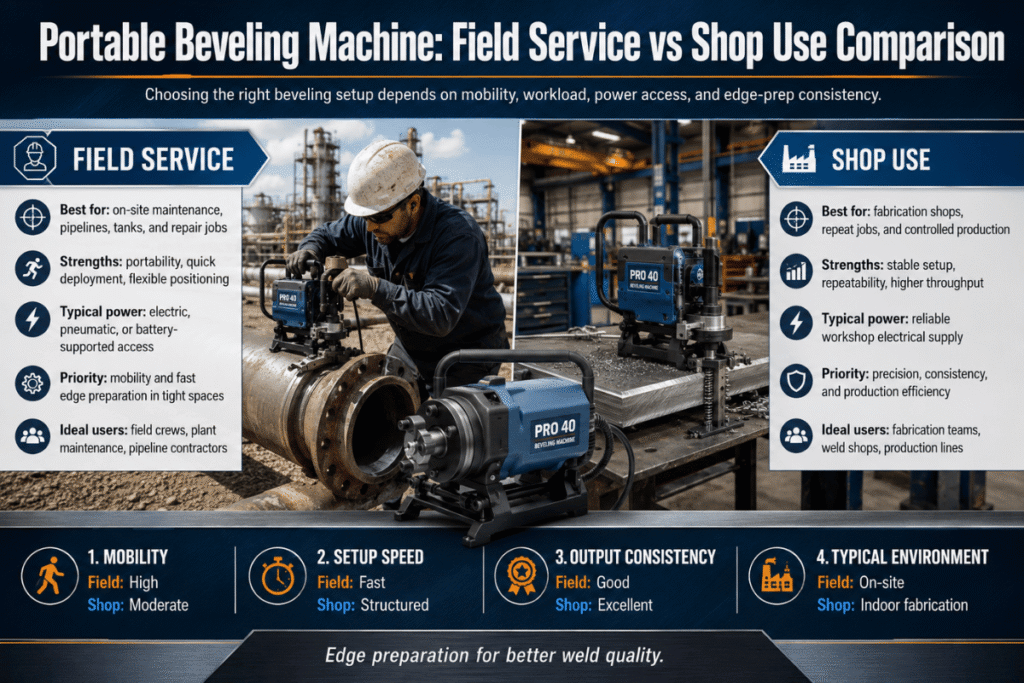
Portable Beveling Machines: What to Know Before You Invest Portable Beveling Machines A portable beveling machine is a cold-milling powered tool that creates the same, consistent beveled edge on pipe, plate and structural steel – every time – with no heat, no sparks and no post-weld grinding. If you’re getting your pipe ends ready for a pipeline spool, beveling a piece of plate to get ready to fabricate a pressure vessel or just need a new tool to ditch the unreliable angle grinder work you do today, the type of portable beveling machine for the job is a product of five things: machine type, power type, machine specs, price and how the technology is developing. Here’s your roadmap to all five things to consider.
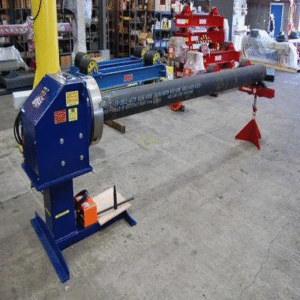
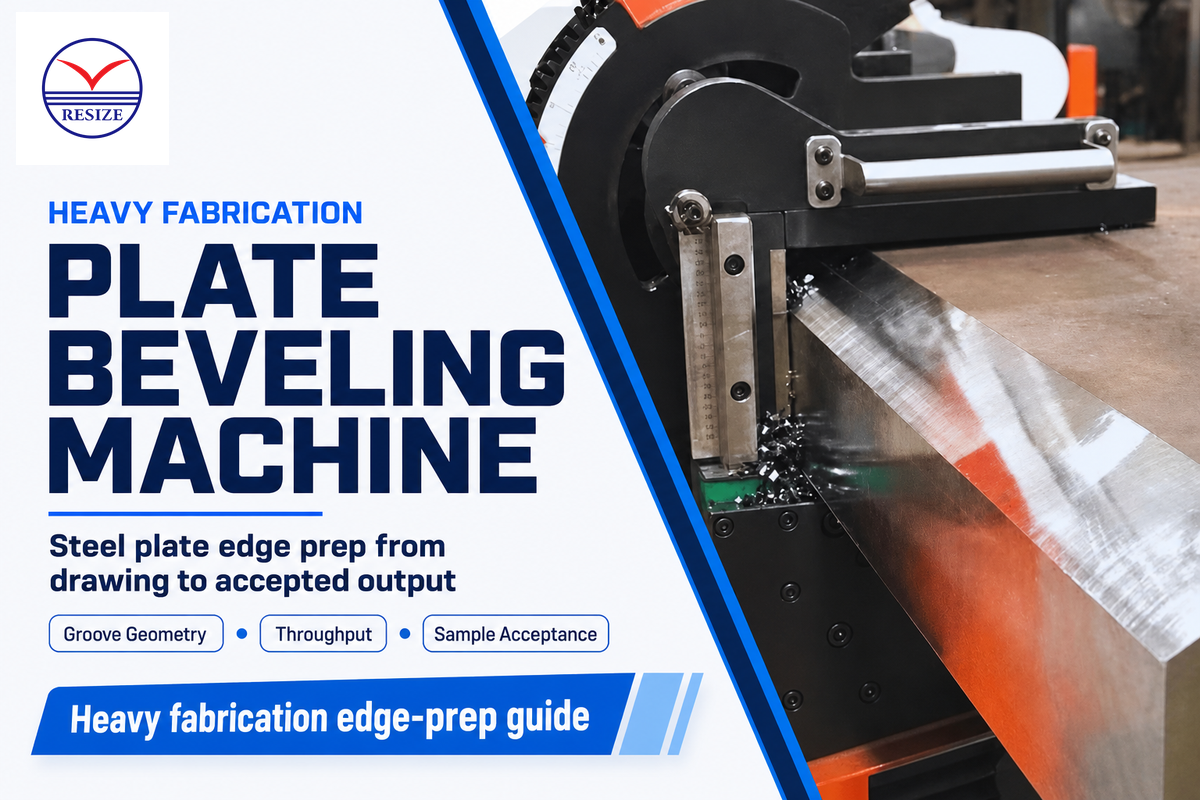
The RESIZE product family will handle pipe, structural steel, and plates with one system.
What Is a Portable Beveling Machine? (and Why Grinding Isn’t Enough)
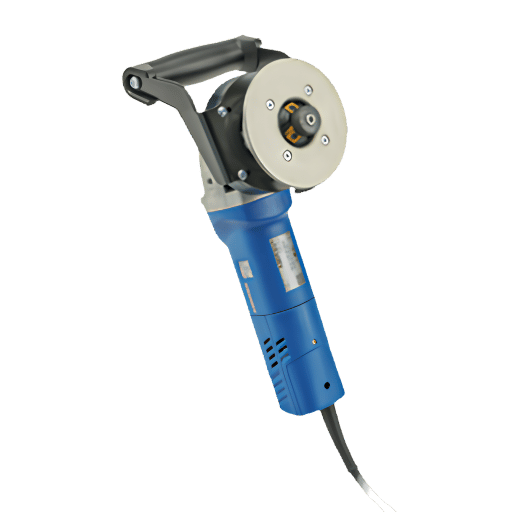
How does it work?
The beveling tool employs carbide milling heads that spin to remove the edge of the metal, carving out a measured bevel at a set angle and not heating up the base metal. It is the cool process that defines it from thermal or grinding. Tool geometry sets the cut; your hand angle does not set the angle, and your hand speed does not set the travel speed.
Difference between Beveling vs. Chamfering There is also a difference between beveling and chamfering in which chamfering tools chip a corner for safety or for the purpose of coating, while beveling machines creates specific weld prep groove angles per the specified Welding Procedure Specification (WPS).
What tool makes beveled edges?
Beveled edges for weld prep are commonly created with three kinds of tooling: Angle grinders (but they rely on manual operator skills that are inherently variable and subjective for accuracy); heat processes like plasma and oxy-fuel (fast cutting and groove-forming but leave a heat-affected zone (HAZ) which requires secondary mechanical preparation; and cold-milling bevelers (a one-time, one-pass cold-milling process that yields very accurate, repeatable bevels that are ready to weld).
Portable Beveling Machine Key Details – At a glance
| Parameter | Typical Range | Notes |
|---|---|---|
| Machine weight | 10–32 kg | Plate models are lightweight (10–15 kg); pipe ID-mount heavier |
| Bevel angle range | 15°–75° | Interchangeable milling heads for each angle |
| Pipe ID range | 0.5″–24″ (12–610 mm) | ID-mount models; self-centering expandable mandrel |
| Power options | Electric / Pneumatic / Battery | Site conditions determine choice — see Section 3 |
| Max bevel width | 18–35 mm per pass | Plate thickness determines pass count needed |
| Heat-affected zone (HAZ) | 0 mm | Cold process — no thermal change to base metal |
| Method | Angle Accuracy | Heat-Affected Zone | Post-processing | Best for |
|---|---|---|---|---|
| Angle grinding | Variable — operator-dependent | Minimal | Often required (angle inconsistency) | Low-volume, non-code work |
| Thermal (plasma / oxy-fuel) | Good (plasma) / Moderate (oxy) | 1–3 mm (plasma); 2–3 mm (oxy-fuel) | Always required — ASME B31.3 §328.4.2 mandates mechanical prep after thermal cutting | Rough cut to near-net shape only |
| Cold milling (beveling machine) | ±2.5° — machine-controlled | 0 mm | None — weld-ready in one pass | Code-compliant, production, all materials |
Machining is generally the preferred method of surface edge preparation for both material edges being joined because it does not cause thermal deformation of the material being welded.
What tool operates like a portable beveling machine?
Chamfering machines, pipe facing machines and orbital cold cutting saws share the same cold-milling principles as a handheld beveling machine. What separates them comes down to calibration. Chamfering machines focus on breaking edges and deburring — they are not specifically designed to create the groove for weld joint preparation (unless the specified groove is a simple “V”, for example).
Beveling machines are calibrated to 22.5°, 37.5°, 45° for the fit with the WPS. Orbital applications call for a cold saw with a simultaneous beveling head. Plate edges are best handled with either a self-feeding orbital plate beveler or a manual handheld beveling tool, depending on output volume.
Pipe Beveling Machine vs Plate Beveling Machine: Which Do You Need?
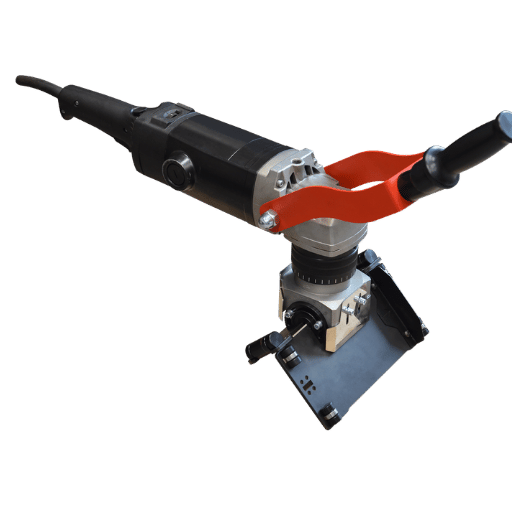
The basic design is separated according to workpiece. Pipe beveling machines grab pipe ID or OD and rotate on the pipe end to create circumferential bevel with a single setup pass. Plate beveling machines travel along edge of flat or formed plates, operated by hand or on a track,self-powered.
Each can perform the others operation with adapters – but the real criterion is production volume – how much it costs to compromise on function versus investing in purpose-built machine tool.
| Feature | Pipe Beveling Machine | Plate Beveling Machine |
|---|---|---|
| Mounting method | ID mandrel or OD clamp; self-centering | Plate edge guide; magnetic base (optional); manual push or track-mounted |
| Working range | 0.5″–24″ pipe ID (12–610 mm) | Plate 1.5–60 mm thick; edge length unlimited (self-propelled) |
| Typical weight | 8–75 kg (portable ID-mount: 8–30 kg) | 10–32 kg (hand-held); 60–200 kg (auto-feed) |
| Bevel angle range | 15°–60° standard; J-prep available | 22.5°–60° (interchangeable milling heads) |
| Can it do both? | Yes — via optional plate attachment | Yes — via optional pipe OD attachment |
| Best for | Pipeline spool, process piping, tube fabrication, structural pipe | Steel fabrication, structural, pressure vessel plate |
💡 3-Question Machine Type Selection
- FOR primary work being done at pipe ends, an id-mount pipe beveling machine should be an optimum choice.
- DO NOT select self-propelled plate beveler for primary work flat plate runs > 3 m
- If work is mixed (both pipe and plate, neither > 80% of volume) select a combo plate/pipe model with optional pipe attachment
📋 Scenario: Pipeline Welder, Gulf Coast
This fit-up Foreman, Carlos, is working on a 12 inch process piping system in a Texas refinery and is tracking 200+ joints per week. His system is pipe-only and the operation is in ATEX Zone 1. His equipment requirement is for a pneumatic, ID-mount, pipe beveler machine which can machine all sizes from 4 to 18 inches diameter.
The beveling tool is equipped with expandable mandrels and can service Schedule 80, as well as, Schedule 160 wall thickness in the same machine. Power option of pneumatic power is not just a preference in this case, but is absolutely mandatory. This is a result of electric motors being ignition sources within the explosive atmosphere.
An electric-only, plate style or electric handheld machine replacement simply is not permissible in this facility.
Electric vs Pneumatic vs Battery-Powered: Choosing Your Power Source
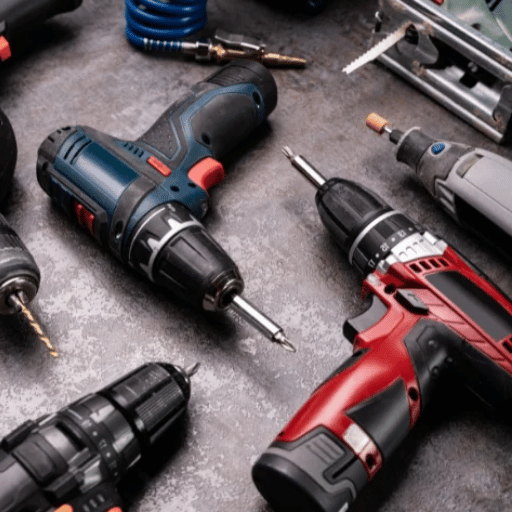
Power Source Not just an amenity: Depending on your industry’s regulations, equipment power source choice dictates if a machine even has legal permission to come on-site – the #1 specification equipment buyers don’t think about – and the priciest mistake once equipment is on site.
| Criterion | Electric | Pneumatic | Battery / Cordless |
|---|---|---|---|
| Cost premium over base | Baseline | +10–20% (requires compressed air supply) | +15–25% (battery packs additional) |
| Torque consistency | High — variable speed electric motor | High — powerful pneumatic motor at rated CFM | Good — may taper near end of charge on heavy-duty cuts |
| Maintenance demand | Low — brush inspection every 6 months | Medium — moisture trap, lubrication schedule | Low — battery cell monitoring, charge cycles |
| Remote / confined-space use | Limited by cable run length | Good — air hose extends further than power cable | Excellent — fully cable-free |
| Ideal use case | Fabrication shop / site with 110–240V grid access | Offshore platforms, refineries, chemical plants (ATEX) | Remote field work, elevated access, confined spaces |
ATEX Zone Warning If you operate in an ATEX Zone 1 or ATEX Zone 2 location – such as a refinery or on an offshore rig – air powered rather than electric powered equipment is not a preferred option; it’s often a mandatory safety measure. Since electric motors spark creating an ignition hazard within an explosive environment, opting for an all-electric beveling machine would mean the equipment is not allowed to run on site. Confirm ATEX zone before ordering.
Key Specifications Decoded: What to Look for on the Data Sheet
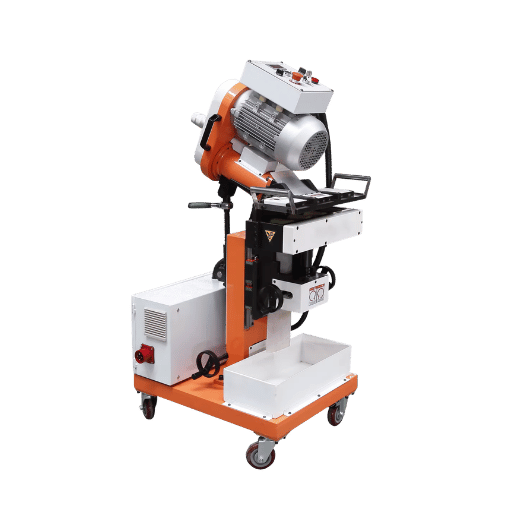
A typical spec sheet from an equipment manufacturer includes between eight and 12 beveling machine spec parameters. In most cases, only six of them decide whether or not to apply a beveling machine to the job in question. The meaning of each (and what it’s not telling you):
| Specification | Typical Values | What It Means for Your Job |
|---|---|---|
| Inner diameter (ID) range | 0.5″–24″ (12–610 mm) | Defines which pipe schedules the mandrel fits; check wall thickness too — ID shrinks with heavier schedule |
| Bevel angle range | 15°–75° (interchangeable milling heads) | Must cover 37.5° standard V-groove AND 22.5° minimum for double-bevel configuration per AWS D1.1 |
| Motor power | 1.0–3.0 kW (electric); 730–1,100 W (pneumatic) | Higher power needed for stainless steel and wall thickness >20 mm; underpowered motor is the #1 cause of insert failure on hard alloys |
| Max material thickness | Up to 60 mm (heavy-duty models) | For plate: maximum edge thickness in a single pass. For pipe: maximum wall thickness the machine traverses cleanly |
| Carbide insert type | HC uncoated (carbon steel); TiAlN-coated (stainless / aluminum) | Wrong insert grade is the most common cause of premature failure — ask what grades are included at purchase |
| Machine weight | 10–32 kg | Single-person hand-carry limit is roughly 22 kg without a lifting aid; above that, a two-person setup or dedicated stand is required |
📐 Engineering Note — AWS D1.1 / ASME B31.3 Bevel Angle Standards
According to AWS D1.1 Table 3.3, the prequalified weld joint groove angle shall be 45° for a single-bevel groove weld at a T-joint and shall be a minimum of 22.5° for each face for a double-bevel (V) groove configuration. AWS D1.1:2025 Clause 5.22 states allowable tolerance shall be ±5°. However, a widely used field angle is 37.5° per side for V-groove pipe and plate butt welds, resulting in a total included angle of 75°.
ASME B31.3 §328.4.2 also states that all pipe ends oxy-fuel or plasma cut will require mechanical preparation (grinding, machine prep, or chipping) before being welded. Using a beveling machine that delivers a cold-mill finish removes that step — an operational saving of 2–3 hours per P91 joint (where HAZ removal is mandatory) in practice.
RESIZE portable beveling machines cover 15°–75° and handle every common AWS/ASME groove profile in a single machine. We’ve also compiled the complete standard chart for AWS bevel angles and the requirements for ASME B31.3-compliant bevels.
💡 Pro Tip — Carbide Insert Grade Selection:
Carbon steel & low alloys (A36, A106, A572): uncoated tungsten carbide HC-grade insert. For 304/316 stainless, duplex, or aluminium: TiAlN-coated insert — apply shallow depth of cut to preserve cold strain-hardening effect. Expect ~600 ft run life in mild steel, ~200 ft in stainless A36, and ~50 ft in 304/316 SS. Ensure mill-scale, rust, and paint are removed at least 25 mm behind the cutting edge.
Portable Beveling Machine vs Angle Grinder: ROI Breakdown
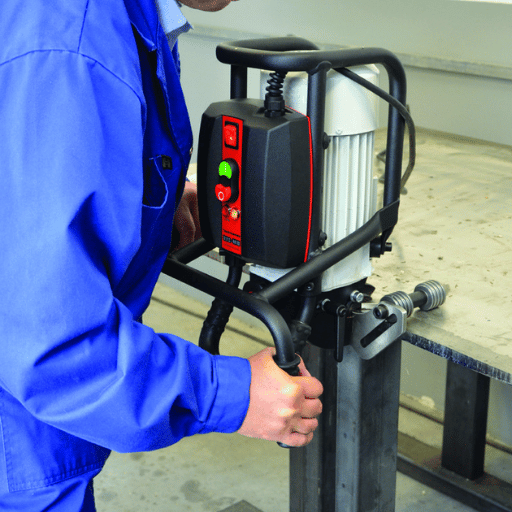
The justification to replace angle grinders with a dedicated beveling machine hinges on two numbers: your weekly grind cost and how quickly the beveling machine pays itself off. This applies whether you are looking at weld preparation, weld removal for repair work, or high-volume production — let alone the impact of code compliance on operational cost.
✔ Beveling Machine Advantages
- 0 mm heat affected area – cold process
- Bevel angle accurate to ±2.5° consistently
- (5-10 faster than a manual grinder per joint)
- No hazardous grinding dust — improved work environment
- Weld-ready surface in one pass — no secondary cleanup
- J-bevel and compound groove profiles achievable
- Eliminates ASME B31.3 §328.4.2 secondary grinding requirement
⚠️ Limitations
- Higher upfront cost vs angle grinder
- Carbide inserts require periodic replacement
- Mandrel alignment setup: 3–5 min per pipe end
- Not cost-effective for <20 joints/month at entry pricing
Heat Affected Zone Comparisons – S355J2N Steel (plate from 8-20 mm).
| Method | HAZ Thickness | Edge Hardness | ASME B31.3 Status |
|---|---|---|---|
| Oxy-fuel cutting | 2–3 mm | 250–450 HV1 localized hardening | After mandatory mechanical prep only |
| Plasma cutting | 1–3 mm | >450 HV (S355 edge hardening) | After mandatory mechanical prep only |
| Cold milling (beveling machine) | 0 mm | No change from base metal | Immediately compliant |
Sourced from Kawiak & Sajek 2025. Advances in Materials Science 25(2) (pp17-35).44, DOI 10.2478/adms-2025-0007.2013, peer reviewed, West Pomeranian University of Technology at Szczecin.
🔢 The 3-Variable ROI Test
(Weekly prep hours saved × Hourly labor rate × 50 weeks) ÷ Machine cost = Months to payback
Sample: In a 12-person fabrication shop, a beveling machine saves 8 grinding hours a week. Labor rate: $45/hr.
8 hrs × $45 × 50 = $18,000/year direct labor savings on a $6,000 machine = 4-month payback.
If your average is above 8 hours per week on weld prep then the payback on a quality portable beveler is less than 6 months at most fabrication lab rates.
📋 Scenario: Fabrication Shop Manager, Midwest
Dave runs 15-person shop which cuts 300-400 plate bevels per week on A36 material from 1- inch to 4- inch [6-25mm] and was spending 12 hours per week just grinding weld prep. With the new $7,500 portable plate beveling machine they have been able to reduce grinding time to less than two hours per week to simply set up and clean up the bevels. With the labor cost at $42 an hour 10 hours x 50 weeks per year = $21,000 / year savings in lost productive time, for payback in just 4.3 months!
Add to that 15% fewer rejected welds due to inconsistency in bevel angles, and this is where the real return on this machine continues to accumulate, year after year.
5 Common Mistakes When Using a Portable Beveling Machine
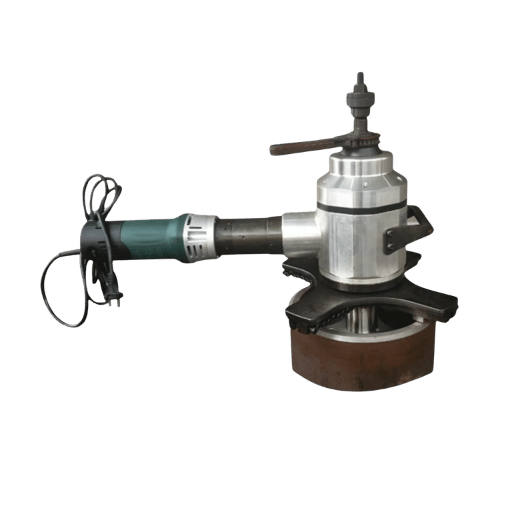
What are common mistakes when beveling?
Common beveling mistakes often lead to costly problems:
1. Taking off too much material: this eliminates root land necessary for the root pass in many welding procedures.
2. Machine drifts because it’s loosely clamped or secured: if the tool isn’t anchored, the bevel angle can be compromised, or the machine itself can be damaged.
3. Incorrect grade of carbide insert: this is critical for material being cut. Using a grade that’s too hard will cause premature wear, while too soft won’t cut effectively and can chip.
4. Skipping pre-job confirmation of the bevel angle to WPS: before starting the run, ensure the machine is set up exactly as per the work procedure specification (WPS).
5. Running electric bevel machines continuously beyond their duty cycle: this can overheat the motor and lead to costly repairs or damage.
Any one of these errors can result in work needing to be re-done, welds being rejected, or damage to the equipment that’s expensive to fix.
| Mistake | Consequence | Prevention Step |
|---|---|---|
| 1. Wrong carbide insert grade for the material | Chatter, scoring, premature insert failure — especially on stainless | HC inserts for carbon steel; TiAlN-coated for stainless and aluminum. Verify grade before every material change |
| 2. Insufficient clamping / loose mandrel | Variable bevel angle along the pipe or plate run; cutter head damage on punch-type machines | Confirm self-centering mandrel is fully expanded and locked before every cut; check for out-of-round pipe before clamping |
| 3. Skipping root face (land) setup | Knife-edge bevel → burn-through at root pass; incomplete penetration on the underside | Set depth fence to preserve 1/16″–3/32″ (1.5–2.4 mm) land per WPS drawing before the first cut |
| 4. Overrunning electric motor duty cycle | Motor overheating; winding damage; premature failure in the middle of a production run | Read the duty cycle on the data sheet; build in 15-minute rest intervals every 45 minutes of continuous use on high-load material |
| 5. No bevel angle check after the first cut | Progressive angular deviation — error compounds across the full run before anyone notices | Verify bevel angle with a digital protractor after the first cut. On plate: spot-check every 3 m. On pipe: measure at 3, 6, 9, and 12 o’clock positions before accepting the joint |
💡 Pre-Run Checklist
- ✔ Insert grade confirmed for material being cut
- Ensure plates or pipe edges are cleaned, and all paint, rust, and scale removed back at least 25 mm from the cut line.
- ✔ Mandrel or clamp device fully locked and seated
- Verify depth setting according to WPS specification to maintain sufficient root land.
- Confirm and adjust the target bevel angle against the WPS drawing before initiating operation.
- Measure the angle of the initial cut with a digital protractor to confirm accuracy before completing the entire bevel.
How Much Does a Portable Beveling Machine Cost? [2025 Price Guide]
![How Much Does a Portable Beveling Machine Cost? [2025 Price Guide]](https://resizeweld.com/wp-content/uploads/2026/05/7-16.png)
Entry-level portable beveling machines start at around $1,500–$3,000. Professional-grade pipe or plate bevelers for fabrication shops run $3,500–$10,000. Industrial heavy-duty systems for pipeline construction and offshore work start from $8,000 upwards. Rental services typically range from $150–$400 per day for shops that need equipment for short-term projects.
| Tier | Price Range | Typical Specs | Best For | Key Limitation |
|---|---|---|---|---|
| Entry — Handheld | $1,500–$3,000 | ~10 kg, 30°–45°, basic insert set, 1.1 kW motor, plate only | Maintenance shops, low-volume plate <12 mm, field repair, non-code work | No J-prep capability; limited angle range; pipe requires add-on attachment |
| Professional — ID/OD Mount | $3,500–$10,000 | 20–32 kg, 15°–75°, electric or pneumatic, 2.2 kW, full insert set (carbon steel + stainless) | Fabrication shops, pipe spool, pressure vessel, 50–300 pieces/month | May require extension sets for large-diameter pipe beyond rated range |
| Industrial — Heavy-Duty / Split Frame | $8,000–$31,000+ | 30–75 kg, full angle range, compound J-prep, pneumatic / hydraulic, heavy-duty mandrel sets | Pipeline construction, offshore, petrochemical, large-bore pipe (>10″ OD), thick-wall | Requires trained operators; not cost-effective for occasional use |
📋 Scenario: Purchasing Manager, Mid-Size Fabrication Shop
Rachel is responsible for procurement for a structural fabrication firm of 40 employees that processes about 150-200 plate bevels weekly, primarily on A36 and A572 carbon steel (8-25 mm), with occasional orders for 316 stainless. Her budget is approximately $8,000. A professional-grade portable plate beveling machine equipped with an electric motor and a full insert set rated for both carbon and stainless steel would be the right choice. The entry-level handheld machine wouldn’t offer enough precision for depth control on 25 mm plates, and a split-frame industrial unit would be overkill, remaining idle approximately 70% of the time given her volume. With 175 joints per week, a $7,500 machine would have a payback period of just 3.7 months.
If your shop typically bevels fewer than 20 plates or pipes per month, renting equipment at $150–$400 per day could be more cost-effective than purchasing. Rentals also allow you to test the suitability of the machine for your specific plate thicknesses and pipe sizes. Most major equipment suppliers have rent-to-own programs that credit part of your rental costs toward the purchase of the machine.
What Is Changing in Portable Beveling Technology (2025–2026)
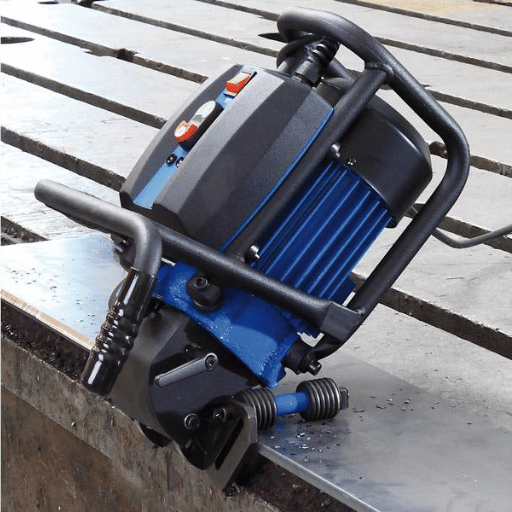
Monthly searches for portable beveling machines have increased by 12 fold between May and October 2025, from 40 to 480-reflecting Q4 industrial purchasing trends and a string of new product releases by top manufacturers. According to Cognitive Market Research, the global straight beveling machine market was valued at $1.44 billion in 2025 and is projected to experience a CAGR of 6.5% through 2033. Here are three innovations shaping buyer expectations for portable beveling devices today.
- Self-Propelled Plate Bevelers (2019 → now standard): Automatic feed/return mechanisms that drive the machine along the plate edge at a consistent rate — eliminating the operator fatigue and angle drift that comes with hand-push operation on plates longer than 3 m. Self-propelled plate beveling is now a standard expectation in the industrial and professional tiers, not a premium add-on. For high-volume structural fabrication, these units produce the same bevel quality on meter 1 as on meter 30.
- Battery-Powered Portability (2024–2025, now available): Major portable tool manufacturers launched cordless beveling machines as 18V platform batteries reached sufficient capacity for industrial duty cycles. Promotech’s BM-6 Battery (launched June 2025) operates on an 18V CAS battery system compatible with over 300 power tool brands — fully cable-free, suitable for offshore confined spaces, height access, and any on-site location where neither grid power nor compressed air is available. Battery-powered beveling eliminates the last logistical barrier to truly mobile weld preparation.
- AI / CNC Smart Controls (2025–2026, early adoption): Real-time bevel angle monitoring, automatic compensation for material hardness variation, and predictive maintenance alerts are beginning to appear in the industrial tier. RESIZE’s current product line includes CNC integration with digital angle feedback, reducing the operator-dependent verification step that is currently the most common source of out-of-tolerance joints. For industrial-grade precision applications — nuclear, chemical processing, high-purity piping — smart controls mean the machine confirms code compliance in real time rather than relying entirely on post-cut measurement.
Buy Timing: Battery-powered models are available today with real field capability so no reason to hold. CNC smart-control integration is still focused on industrial tier by 2025 pricing. If your application is workshop or light pipeline work, existing professional-tier models are programmed with ideal parameters. If you are buying for nuclear or high-purity chemical use where digital bevel gauge verification is a QA requirement, 2026 models from multiple brands should provide superior CNC programming capability at a lower price point.
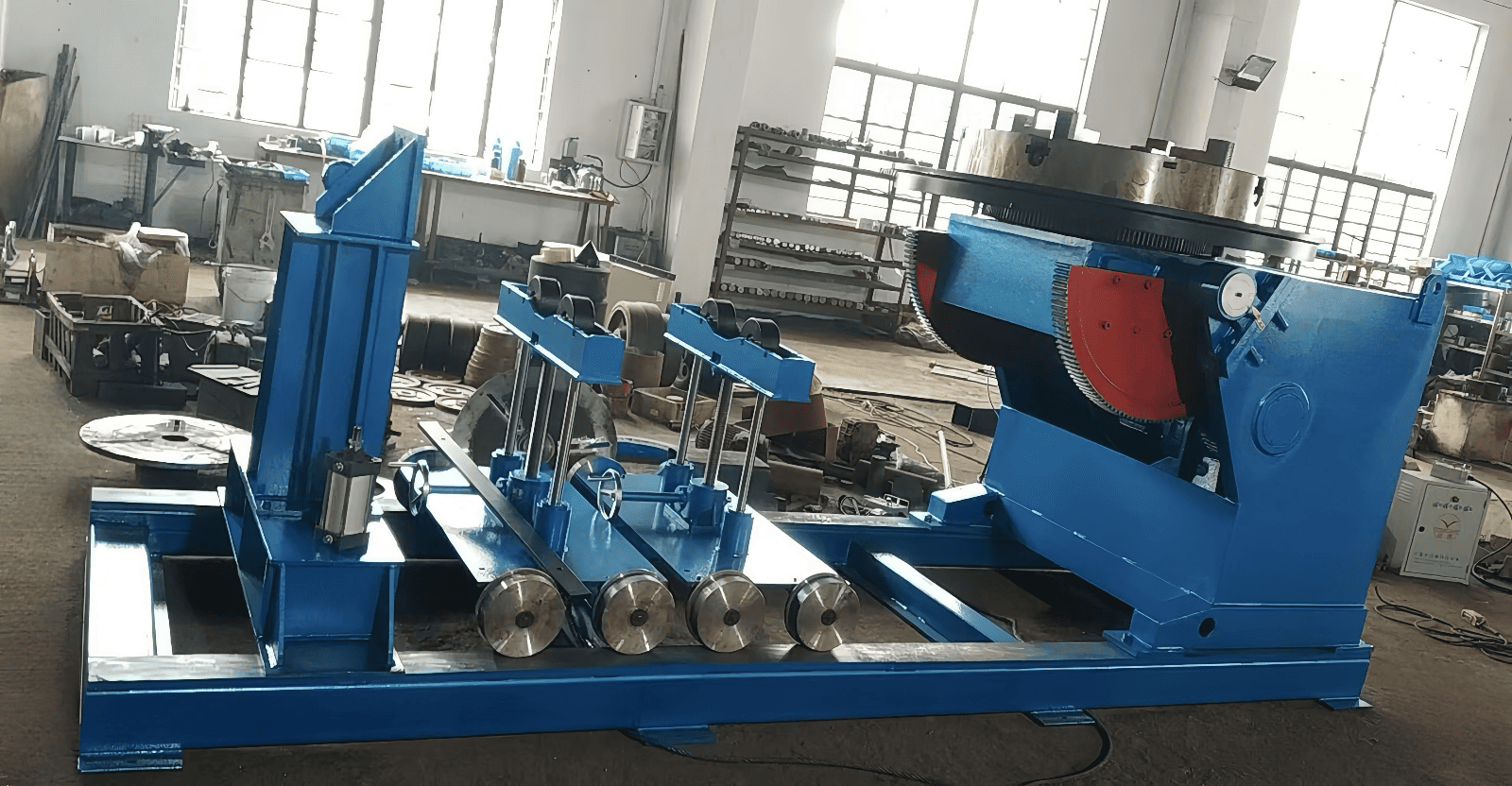
To explore the RESIZE portable beveling machine family and compare models for your pipe OD, plate thickness, and production volume: View the full RESIZE milling and beveling machine line. To view accompanying welding positioner equipment designed to work with pipe fit-up and weld rotation after beveling, see our positioner range.
FAQ — Portable Beveling Machine Questions Answered
1. What tool operates like a portable beveling machine?
See answer
Chamfering machines, pipe facing machines, and cold-cutting orbital saws work on the same cold-milling principle as a portable beveling machine. The practical distinction is design: chamfering tools are offset for deburring and edge breaking, not weld-preparatory groove angles, while beveling machines provide set-pre-programmed WPS angles (22.5, 37.5, 45). For pipe work an orbital cold saw with equivalent bevel capability combined with a corporate bevel attachment presents the closest operational match. For plate edge beveling, auto-feed plate bevelers and handheld beveling tools fulfill similar roles based on volume.
2. Can a portable beveling machine handle both pipe and plate?
See answer
You can, if properly equipped. Most portable plate beveling machines also be used to bevel pipe ODs by means of a pipe beveling attachment. ID-mount pipe beveling machines are able to process plate using an accessory work table. Cross-over attachment compromise is a consideration: for facilities processing significant volumes of each, dedicated machines speed throughput and improve results over dual application hybrid machine. For facilities processing small quantities of both pipe and plate, two dedicated machines offer better results than a hybrid compound.
3. What wall thicknesses can a portable beveling machine handle?
See answer
Most entry level handheld plate bevelers can produce a complete edge bevel to maximum plate thickness of approximately 20 mm in a single pass. Professional ID-mount pipe beveling machines cover wall thicknesses from Schedule 5S (thin wall) through Schedule 160 and XXH on standard diameter pipe. Industrial heavy-duty models – including gear-driven split-frame clamshells – cut through 60 mm non-stop on large-bore pipeline diameter pipe. Read the rated maximum width (18-35 mm per pass) against the required groove depth your WPS calls for.
4. What bevel angle does AWS D1.1 require for groove welds?
See answer
AWS D1.1 Table 3.3 specifies 45° for single-bevel groove welds at T-joints and 22.5° minimum for each face of a double-bevel V-groove joint. The most common manufacturing angle is 37.5° per side for pipe and plate butt welds, resulting in a 75° included angle. AWS D1.1:2025 Clause 5.22 allows ±5° tolerance on groove angles after fit-up. See our standards briefing for a complete analysis of AWS D1.1 and ASME B31.3 bevel angle requirements.
5. How do I choose between electric and pneumatic beveling machines?
See answer
Electric works well in any fabric shop or job site where you have 110-240V access to the grid; it’s easier to use, has fewer maintenance requirements, and a lower purchase price. Pneumatic machines should be used at any job site that falls into ATEX Zones 1 & 2: where the potential for flammable or explosive environments exist (refineries, chemical plants, offshore) that make the use of electric motors unsafe or illegal; it’s mandatory in such zones. Battery power machines are best for any situation that requires no access to the power grid or compressed air, such as remotely located sites, confined spaces or working at a height.
6. How long does it take to bevel a pipe end with a portable machine?
See answer
Depending on the amount of preparation required a portable ID- mount pipe bevelling machine will take roughly 3-5 minutes of setup to insert the mandrel, centre the unit and engage the clamps of the pipe end and then take a further 2-4 minutes to perform the actual cut. This means a total cycle time of around 7-10 minutes for a standard 6” diameter Schedule 40 pipe. To carry out the same bevelling cut to a standard acceptable specification with an angle check with an angle grinder will normally take 15-30 minutes depending on skill. for mass productions of standard pipe size we estimate a cycle time to be below 2 minutes of actual setup time for with pre-set fixtures.
7. Can portable beveling machines work on aluminum and stainless steel?
See answer
Yes if the correct carbide insert grades is used For both 304 & 316 stainless, TiAlN coated inserts is key, these type of material is strain hardened if it is worked at low feed pressures or an incorrect speed of cut and without the correct grade inserts it will accelerate failure. For working on Aluminium use aluminium specific inserts and anti abrasive plates to prevent build up on the insert. Most higher spec portable bevel machines such as those in the $3,500+ range can be used with carbon steel and stainless steel with the swap of an insert. Check the product description of the material specification for any entry-level portable pipe bevelling machine, as many are restricted to only carbon steel.
Related Guides
About this guide: Edited and produced by the RESIZE team of technical editors and engineers. RESIZE manufactures all portable milling and beveling equipment for pipe, plates and structures around the world. Visit the full range of RESIZE machinery here.