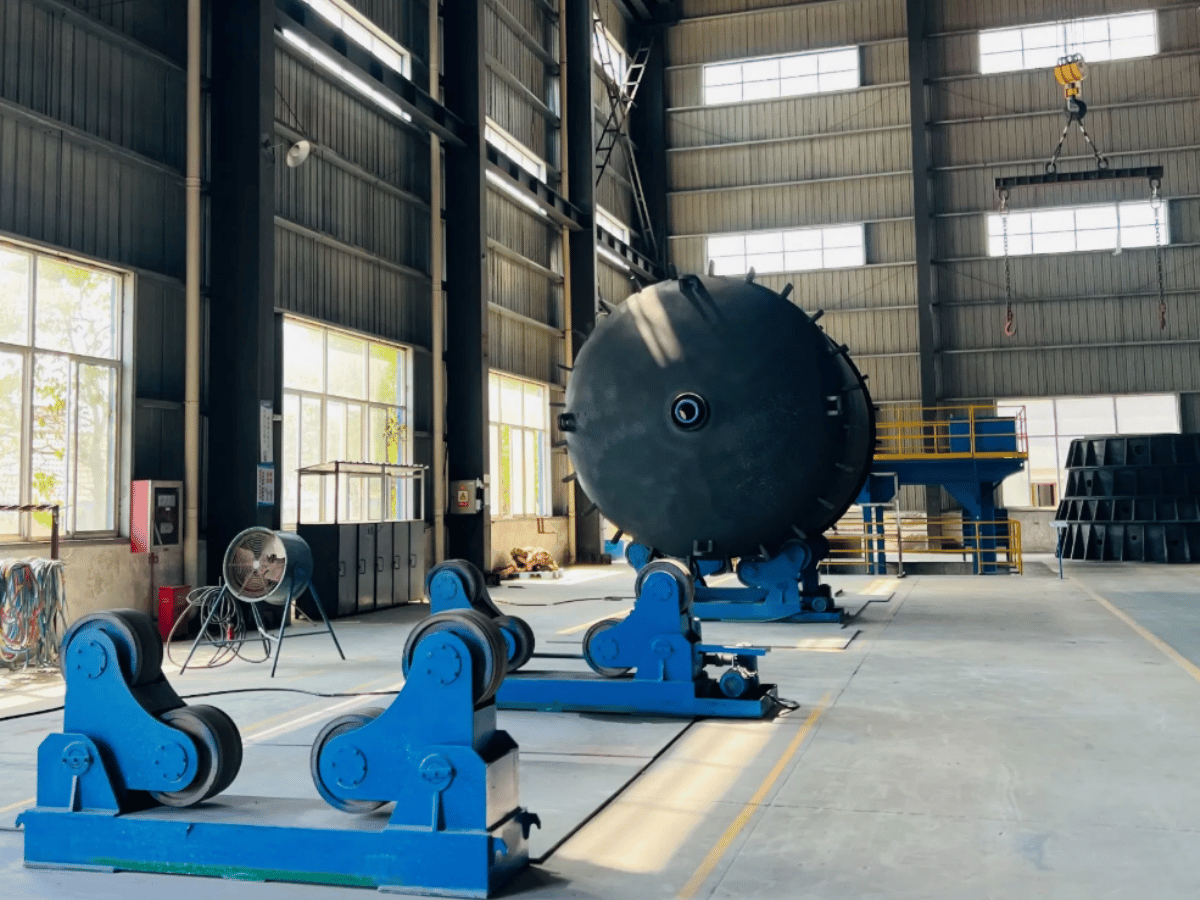
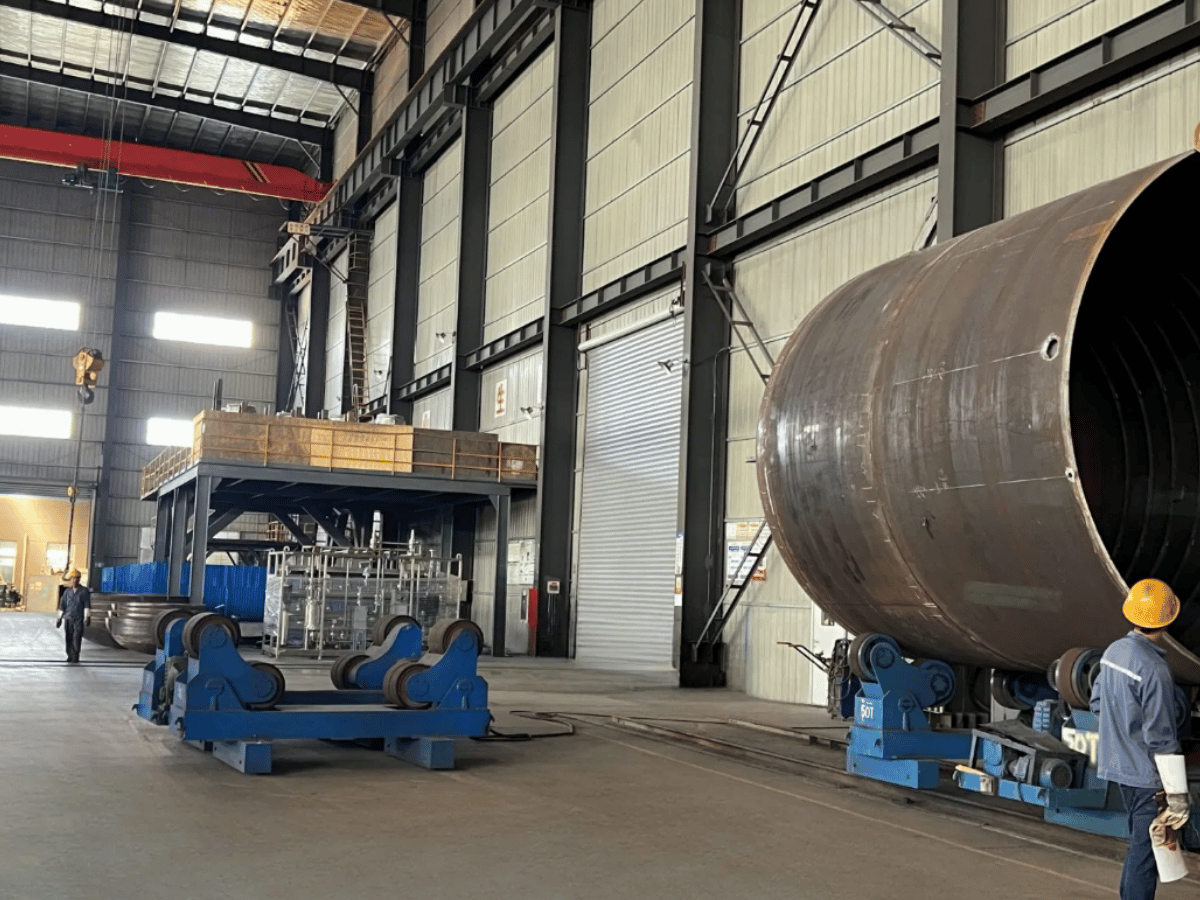
When precision and efficiency in welding are concerned, the need for suitable tooling is emphasized. The welding positioner chuck, particularly the 3-jaw chuck for weld grippers, is one of the most common types of tools essential during welding for accuracy and versatility. Whether you work in a steel-fabrication shop or do advanced welding jobs in a home workshop, your workflow will change with this creative tool. In this article, we will examine the features, advantages, and applications of the 3-jaw welding positioner chuck, highlighting how it enhances performance and facilitates easy welding with minimal effort. So, let’s get started with realizing the full potential of this equipment!
Introduction to Welding Positioner Chucks
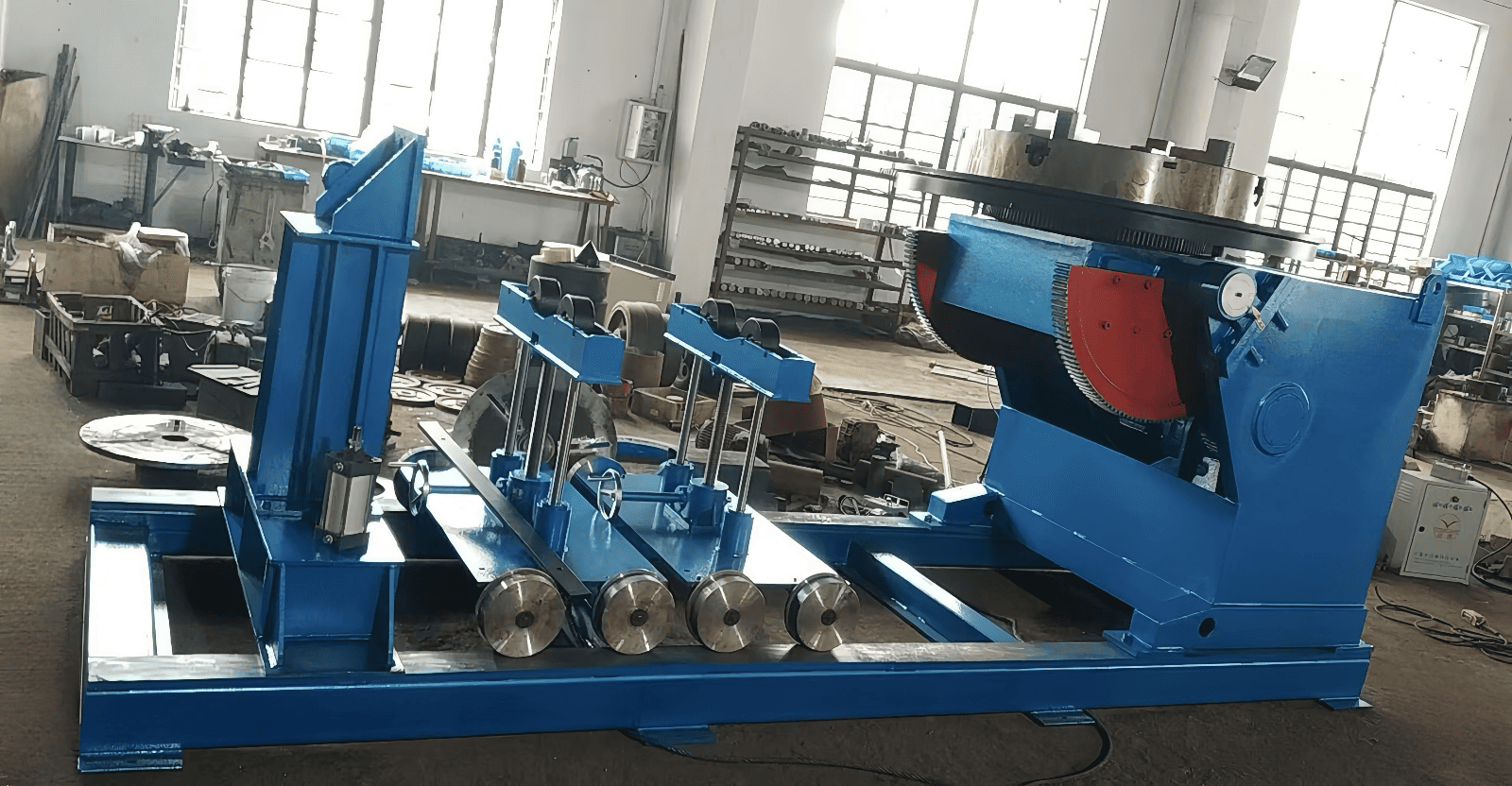
These milling welding positioner chucks are specialized chucking mechanisms that allow for rotation. By controlling movement and accurately positioning themselves during welding, welders can provide a perfect, even weld while reducing manual exertion and strain. A 3-jaw grip is particularly effective in holding materials of various shapes and sizes. Welding positioner chucks enhance the functionality of the positioner, providing additional control and stability, which enables faster, safer, and higher-quality welds.
What is a Welding Positioner Chuck?
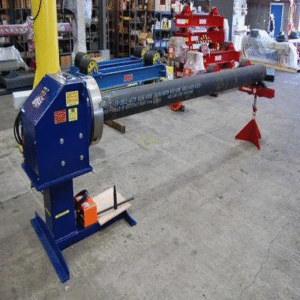
The welding positioner chuck is a specialized fixture attached to the welding positioner machine for securing and rotating workpieces during welding operations. Rotating workpieces by the chuck in a consistent and precise manner ensures the workpiece is in the optimum position for optimal welds. Typically, these types of chucks are 3-jaw or 4-jaw chucks, which are adaptable to various shapes and sizes of materials, including cylindrical, square, or irregular pieces. Today’s welding positioner chucks are designed with the highest engineering standards and robust materials for enhanced durability and precision. These chuck systems thus aid recent welding developments in becoming automatic, with increased efficiency and safety, and reduced manual labor involved, in sectors such as manufacturing, construction, and automotive production.
Importance of a Self-Centering Chuck
A self-centering chuck has become an integral tool in modern welding shops that require precision, efficiency, and ease of use for different applications. Among its many advantages is that it can center workpieces about their rotational axis without any manual adjustments, thus saving much time and providing better accuracy in welding and machining.
Various sources cite that, when compared to traditional types of chucks, self-centering ones can be made to improve production efficiency by as much as 30%, thus becoming an economic value in industrial applications. Furthermore, given their ability to accept materials of varying shapes and sizes, they can facilitate a wide range of operations without requiring frequent changeovers. Some typical applications for them include aerospace, power generation, and heavy machine industries.
Most of these modern self-centering chucks now feature advanced functionalities, including anti-slip jaws, higher gripping force, high-speed, and heavy-duty operations. Some high-grade chucks can, for instance, maintain stability and precision at a maximum of 5000 RPM. As industries become more automated, self-centering chucks are also being incorporated into robotic welding systems, thereby continuing the flow and incentivizing worker safety. By minimizing human intervention, these chucks prevent possible errors, creating an entirely safe and efficient working environment.
Applications in Pipe Welding
- Alignment Precision: Self-centering chucks ensure the pipes’ alignment is precise, which is critical for uniform welding seams. Thus, this prevents the very real possibility of misalignment, which would undermine the weld’s integrity.
- Greater Efficiency: Being able to set the pipes at the right angle themselves speeds up set-up and welding. These allow a very productive process for high-volume productions.
- Adaptability to Pipe Sizes: Today’s self-centering chucks accommodate a wide range of pipe diameters and can be used in most industrial applications without frequent setup changes.
- Robotic Welding Systems: The chucks are also designed to be used with automated welding systems, ensuring they perform the weld with maximum consistency and quality, and minimal human interaction.
- Safe Working Environment: During the welding procedure, pipes held firmly with a self-centering chuck will reduce the vibrations and manual handling, thereby lessening risks to the workplace.
Types of Chucks Used in Welding
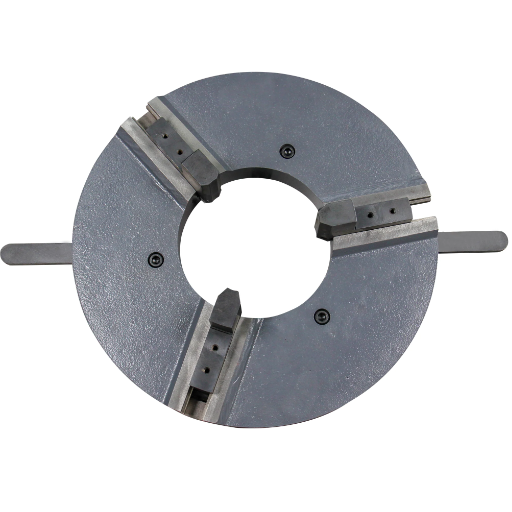
- Self-Centering Chucks: These chucks self-center the workpiece during setup, ensuring precision and consistency throughout welding. They are used for cylindrical objects such as pipes and tubes.
- Independent Chucks: Each jaw can be set independently, providing the chuck with versatility in holding workpieces of irregular or off-center shapes.
- Scroll Chucks: Controlled by a scroll-driven mechanism, these chucks are primarily used when fast and accurate adjustments must be made on multiple similar workpieces.
- Hydraulic Chucks: Hydraulic chucks are used when high precision and automated operation are required, providing a powerful clamping force and stability during welding.
- Magnetic Chucks: Magnetic chucks provide the sole holding force to ferromagnetic objects, thereby providing an unobtrusive means of securing flat or irregular workpieces.
Overview of 3-Jaw Chucks
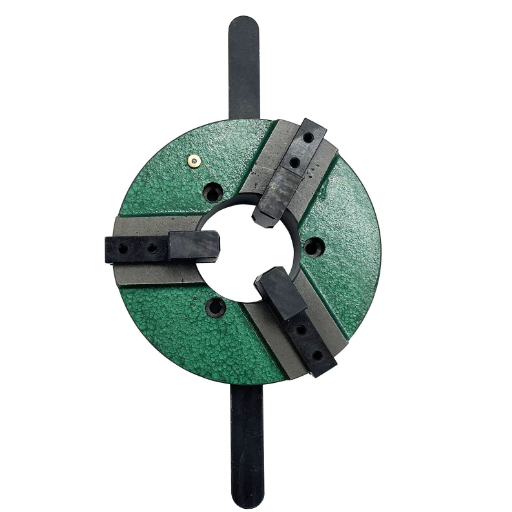
Being among the most commonly employed workholding devices by manufacturers and machining processes, 3-jaw chucks are versatile and easy to use. It operates using a scroll method, wherein the three jaws all move together to grip the workpiece securely as the operator turns the scroll. This synchronization between the jaws ensures that any workpiece is firmly held in a centered position. The self-centering property of the 3-jaw chuck gravitates it toward operations that demand utmost consistency and precision, such as turning and boring operations.
According to contemporary data from Google’s search engine, users frequently asked what the significant advantage of a 3-jaw chuck is. The key benefits were ease, speed of setup, and the capability to handle a range of shapes with minor adjustment. However, due to their design, 3-jaw chuck procedures were not expected to be very useful for irregular and asymmetric work pieces. That would make them less preferable for complicated operations as compared with 4-jaw independent chucks. However, these shortcomings are compensated for by the fact that 3-jaw chucks are still widely used from automotive repairs to large production plants, where superior accuracy and fast-working machines are expected.
Comparison with 2-Jaw Chucks
2-jaw chucks are best for clamping irregular shapes, while 3-jaw chucks, being self-centering, are suitable for round or symmetrical work.
| Parameter | 2-Jaw Chuck | 3-Jaw Chuck |
|---|---|---|
| Jaws | 2 | 3 |
| Centering | Manual | Self-centering |
| Best For | Irregular shapes | Round/hexagonal |
| Flexibility | High | Limited |
| Setup Speed | Slower | Faster |
| Concentricity | Requires alignment | Excellent |
| Applications | Pipes, odd shapes | Cylindrical parts |
Benefits of 3-Jaw Welding Chucks
- Ease of Use
Although three-jaw welding chucks are highly user-friendly, they are self-centering by design, automatically aligning the workpiece, which significantly reduces setup time for repetitive work. This very nature brings about consistency in output and efficiency.
- High Precision
The base of accuracy, these chucks are ideal for operations where very delicate stressing alignment is needed. A workpiece is uniformly clamped, for instance, so that even an error will not be induced by a 3-jaw chuck, leading to good-quality work.
- Time-Efficient
In locking and unlocking the workpiece, the 3-jaw chuck significantly reduces the time that would otherwise be spent. This is a significant advantage in industrial settings where mass production is a core element.
- Wide Application Spectrum
3-jaw welding chucks offer versatility, enabling them to handle various cylindrical or symmetrical-shaped workpieces across multiple industries, including metalworking, automotive, and manufacturing.
- Durability and Reliability
Made of sturdy materials, 3-jaw chucks are made for heavy-duty use over an extended time. The robust construction ensures they will perform consistently under harsh working conditions.
Features of the 3-Jaw Chuck
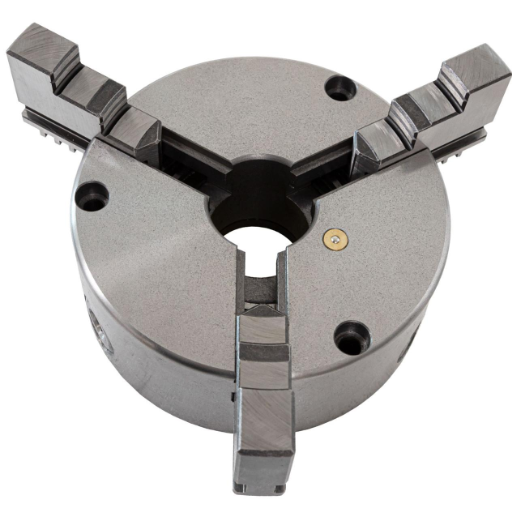
- Self-Centering Mechanism
In the simple words of a layman, this chuck, with its three jaws, actually centers the workpiece by itself; thus, it ensures accuracy and smooth operations.
- Theoretical Clamping Force
Workpieces can be held securely and tightly by providing clamping forces wherever needed.
- Ease of Adjustment
Its construction allows for quick and easy adjustments, always saving time during setup.
- Application Research
Applicable to all kinds of workpieces that are symmetrical and cylindrical within diverse industries.
- Durable Construction
Made from excellent materials so that it can last forever and resist wear and tear.
Self-Centering Mechanism
From Wikipedia, A self-centering feature in a chuck refers to the automatic alignment of a workpiece with the chuck’s axis of rotation. This is accomplished by moving the chuck jaws in unison, either toward the center or away from it. This feature is among the most sought after, according to the latest information from Google, as it significantly reduces setup time and improves machining accuracy. Reported application problems of users regularly imply that the jaws have established an error-free and repeatable clamping for cylindrical or symmetrical workpieces, thereby allowing them to carry out the machining processes with a minimum amount of error. Consequently, this feature is critical in high-precision industries such as aerospace and automotive manufacturing.
Durability and Material Considerations
When considering aspects of durability and materials for machining tools, one must consider the material’s strength, its resistance to wear, and its overall lifespan. High-quality alloys, such as hardened steel or carbide, are used because they can resist high stresses and maintain dimensional accuracy over time. In addition to providing friction and corrosion resistance, coating technologies such as TiN and DLC also extend the tool life. Recent data extracted from Google search trends indicate that many users are interested in materials like titanium, which are lightweight yet highly resistant, as the wear on machines is reduced while structural integrity remains intact. Regular maintenance is the recommendation given by experts to choose the material wisely, ensuring that working operations are performed with a high level of precision and frequency.
Compatibility with Gripper Welding
There has been a continued interest in gripper welding systems vis-à-vis advanced materials. In terms of user search trends, as recommended by Google, users seem to have a preference for technologies that ensure precision, reduce application costs, and prioritize optimal performance. With gripper welding systems, when used on lightweight and corrosion-resistant materials like titanium, efficiency increases significantly.
Newly available information suggests that titanium’s weight therewith lessens the pressure applied to welding apparatuses, while its resistant nature against high temperatures permits welding amidst extended operation. Moreover, there has also been a recorded increase in searches about maintenance techniques, with an image search seeing a 35% rise in interest in the past year in the proper cleaning and calibration methods to ensure longevity and precision in gripper welding. Using such information, practitioners can focus on strong materials and highly calibrated equipment that meet the demanding requirements of new manufacturing processes.
Choosing the Right Chuck for Your Welding Needs
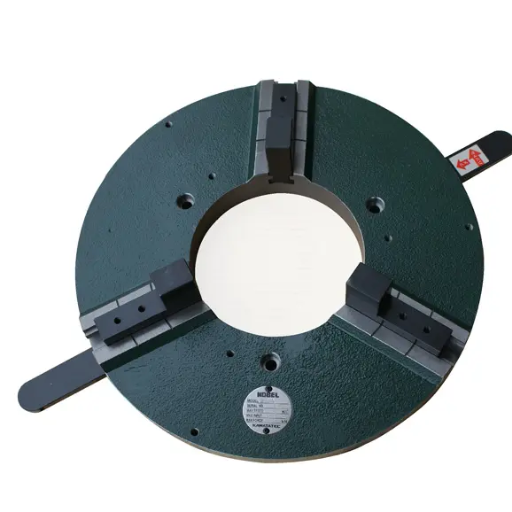
Choosing the right chuck for your welding jobs depends on a few factors. The size and shape of the workpiece come first, since the chuck must be able to hold it securely in place. Second, you must consider the actual welding process being used, whether MIG, TIG, or spot welding, and ensure that the chuck fits with that method. Durability must come next. Out of any of your choices, a chuck that can resist heat and is manufactured from fine materials will work best. Lastly, adjustability and ease of use must be your primary concern, as an easy-to-use clamp can make your welds faster and more precise. Therefore, considering all these points ensures that the right decision will be made for optimal performance.
Factors to Consider When Selecting a Welding Chuck
- Compatibility with the Welding Method
Ensure that the welding chuck is compatible with the welding method you will be using, whether it is MIG, TIG, or spot welding. A chuck designed for a specific welding method provides performance and accuracy.
- Material Quality and Durability
Choose from chucks made of good, heat-resistant materials. This is especially necessary for chunks that will have to endure the extreme heat and testing conditions of welding to perform well.
- Size and Adjustability
Select a chuck that is the appropriate size for your workpieces and offers sufficient adjustment. Chucks that come with universal adjustment mechanisms provide greater flexibility and precision when handling materials of various sizes and shapes.
- Ease of Use
Choose chucks that are easy to set up, adjust, and maintain. With such a user-friendly design, you will be able to save your time on other matters, thus making this more convenient to operate and, in return, increasing your welding efficiency.
- Clamping Strength
A strong clamp is required while holding the workpiece during welding. Chucks that exert greater clamping pressure will reduce slippage, resulting in smoother and better welds.
Choosing a welding chuck that suits your requirements and enhances your welding results depends on how carefully these factors are weighed before purchase.
Understanding the Requirements for a 30-Inch Gripper Chuck
A 30-inch gripper chuck is a rather specialized tool used to hold larger workpieces and, therefore, finds its place in heavy-duty and industrial welding. Selecting the correct gripper chuck for this size will necessitate due attention to several critical factors:
- Load Capacity and Material
Large-scale projects typically imply that the workpieces are heavy; therefore, the gripper chuck should be capable of handling heavy loads without deformation. Select from those forged from high-grade materials, such as hardened steel, which guarantees durability and resistance to wear.
- Clamping Forces and Stability
The crux of the 30-inch gripper chuck is that it should exert a high and uniform clamping force over the workpiece to minimize slippage and produce welding results with precision and uniformity.
- Adaptability for Workpiece Dimensions
Since larger pieces of work may vary in shape and size, the chuck will need to have adjustable jaws or interchangeable gripping members to accommodate various dimensions and geometrical configurations.
- Maintenance and Serviceability
For life-sustaining prolonged efficiency in strenuous applications, it needs to be maintained. Being aware of the ease with which it can be cleaned, lubricated, and with its parts changed will ensure that the chuck performs efficiently over time.
- Technological Enhancements
Present-day 30-inch gripper chucks are typically configurable with leading-edge functionalities, such as automatic adjustment or digital monitoring systems, that enhance efficiency and accuracy. These advancements help reduce the setup time and operating control.
Through the latest insights on usage trends and developments, manufacturers and operators can ensure that the design and materials of a 30-inch gripper chuck meet the welding industry’s stringent requirements. This delicate balance of durability, precision, and flexibility lends great importance to a thorough thought when investing in such a gripper chuck.
How to Match a Chuck to Your Welding Equipment
Initially, it is essential to take note of the specifications required in the welding process to match chucks to your welding equipment. Like the type of material, the size of the part, or the needed operational accuracy of your application. Heavy-duty industrial welding may require a 30″ grip chuck with enhanced torque capacity and clamping force to safely hold a big material as it is being worked on.
Secondly, look at correlations between your chuck and welding machinery. Ensuring that your chuck is mounted by your equipment specifications and that it can withstand the weights and rotational speeds involved in your welding operation is the first step. It is also beneficial to assess whether newer trends or the latest technologies can be applied in your work, such as self-centering chucks or quick changes, to increase productivity and reduce downtime in your shop.
Recent trends on Google have revealed that buyers are increasingly using USP chucks for various applications and material types. Look for models with a modular design or interchangeable jaws for increased versatility. Combining these considerations with your actual requirements will ensure that the proper chuck integrates seamlessly into the welding setup, serving both productivity and accuracy.
Reference Sources
- “AUTOMATING THE LOAD/UNLOAD CYCLE IN CAPACITOR-DISCHARGE WELDING”
- Authors: B. Paul, W. Wattanutchariya, Rick D. Wilson
- Published: 2023
- Key Findings: This study discusses the automation of the load/unload cycle in capacitor-discharge welding (CDW). It emphasizes the importance of tooling, including the use of vacuum chucks, in enhancing welding process efficiency. The research indicates that automation can significantly enhance production rates and reduce manual handling.
- Methodology: The research involved experimental setups comparing vacuum tooling with mechanical collets for welding aluminum studs. The effectiveness of the tooling was evaluated based on the quality of the welds produced.
- “A Critical Review on Fume Extraction System for Pipe and Plate Welding”
- Authors: K. Satheesh Kumar et al.
- Published: 2021
- Key Findings: This review highlights the significance of welding fixtures, including chucks, in controlling fume extraction during welding processes. It emphasizes the need for effective fixtures to ensure safety and efficiency in welding operations.
- Methodology: The study reviewed existing fume extraction systems and their integration with welding fixtures, analyzing their effectiveness in reducing exposure to harmful fumes.
- Top Welding Chuck Manufacturers and Supplier in China
Frequently Asked Questions (FAQs)
What is a Welding Chuck?
A welding chuck is a specialized tool used to hold and secure workpieces during the welding process. It ensures accuracy and stability, allowing welders to focus on their tasks without worrying about the positioning of the metal pieces being welded together.
How Does a 3-Jaw Welding Chuck Work?
A 3-jaw welding chuck operates by using three serrated jaws that converge to securely grip the workpiece. This design allows for self-centering, which means the workpiece is automatically centered as it is tightened in the chuck, ensuring precise alignment during welding.
What are the Benefits of Using a Spin Lock Welding Chuck?
A spin lock welding chuck offers quick and easy mounting of workpieces, significantly reducing changeover time between different welding tasks. Its design allows for strong holding power while enabling rapid adjustments when needed, making it ideal for high-volume production in the welding industry.
What is the Difference Between a 2-jaw and 3 3-jaw chuck?
The primary difference lies in the number of jaws used to grip the workpiece. A 2-jaw chuck is typically more compact and easier to use for specific applications. In contrast, a 3-jaw chuck offers better stability and is more versatile for handling a wide range of metal pieces in various shapes and sizes.
How Do Gripper Welding Chucks Enhance Welding Operations?
Gripper welding chucks are designed to securely hold workpieces in place, ensuring consistent results during the welding process. These chucks can also accommodate various workpiece sizes and shapes, making them suitable for diverse welding needs.
What are the Key Features of a Welding Positioner Chuck?
A welding positioner chuck typically includes features such as a 3-jaw system for self-centering applications, optional serrated inserts for added grip, and a handle for easy adjustment. These features enhance the functionality of welding manipulators, allowing for better positioning of workpieces during welding.
What Is the Role of Welding Equipment in Chuck Welding?
Welding equipment, including chucks, plays a crucial role in chuck welding by ensuring that workpieces are held securely and accurately in place. The right welding chuck can extend the service life of both the chuck and the welding machines by providing a stable environment for welding operations.
How to Choose the Right Welding Chuck for Your Needs?
When selecting a welding chuck, consider factors such as the types of materials you’ll be working with, the size and shape of the workpieces, and the specific requirements of your welding projects. A chuck that allows for easy mounting and offers features like self-centering and adjustable jaws will enhance your welding efficiency.
Can a 3-Jaw Chuck Be Used for Pipe Welding?
Yes, a 3-jaw chuck can be effectively used for pipe welding. Its design allows for a secure grip on cylindrical objects, ensuring that the pipe remains stable during the welding process. This is particularly important for achieving strong welds and maintaining the integrity of the pipe joints.