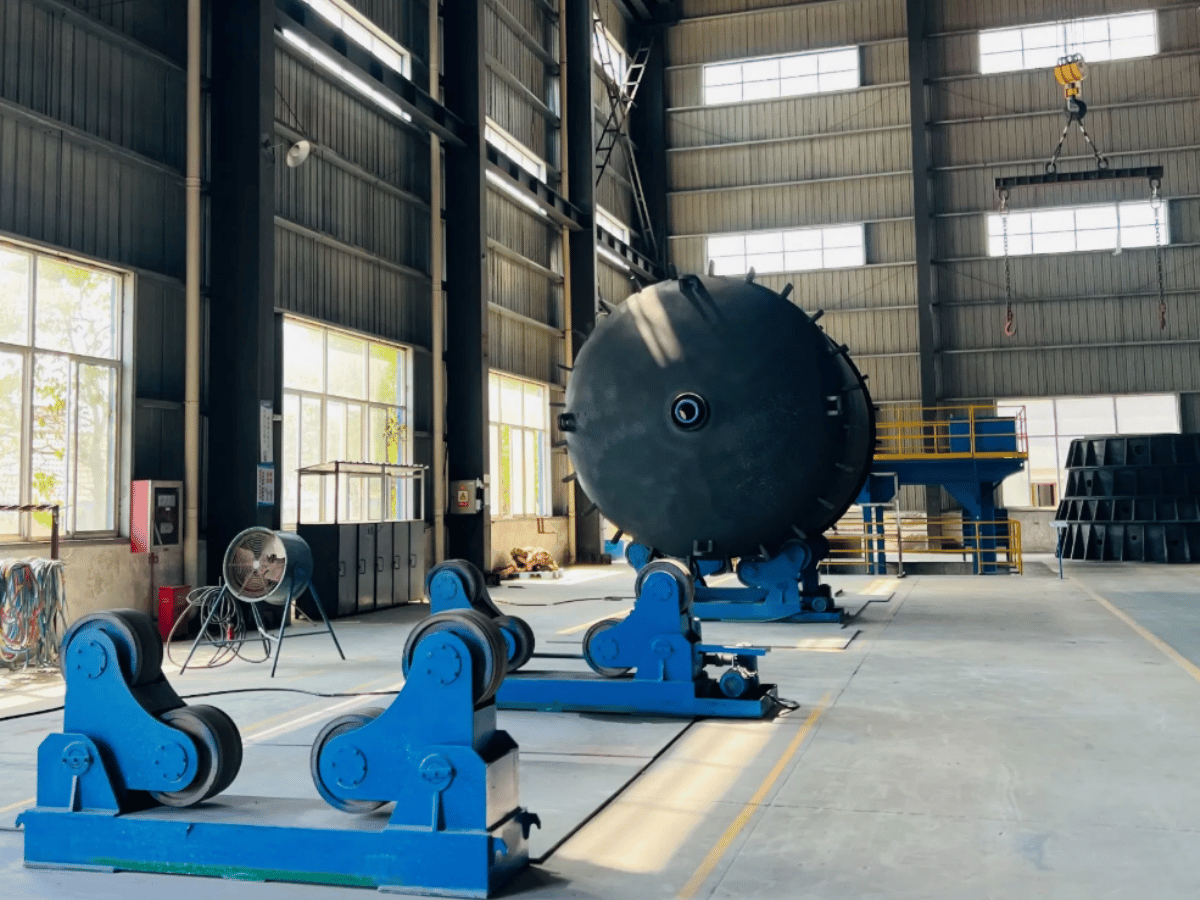
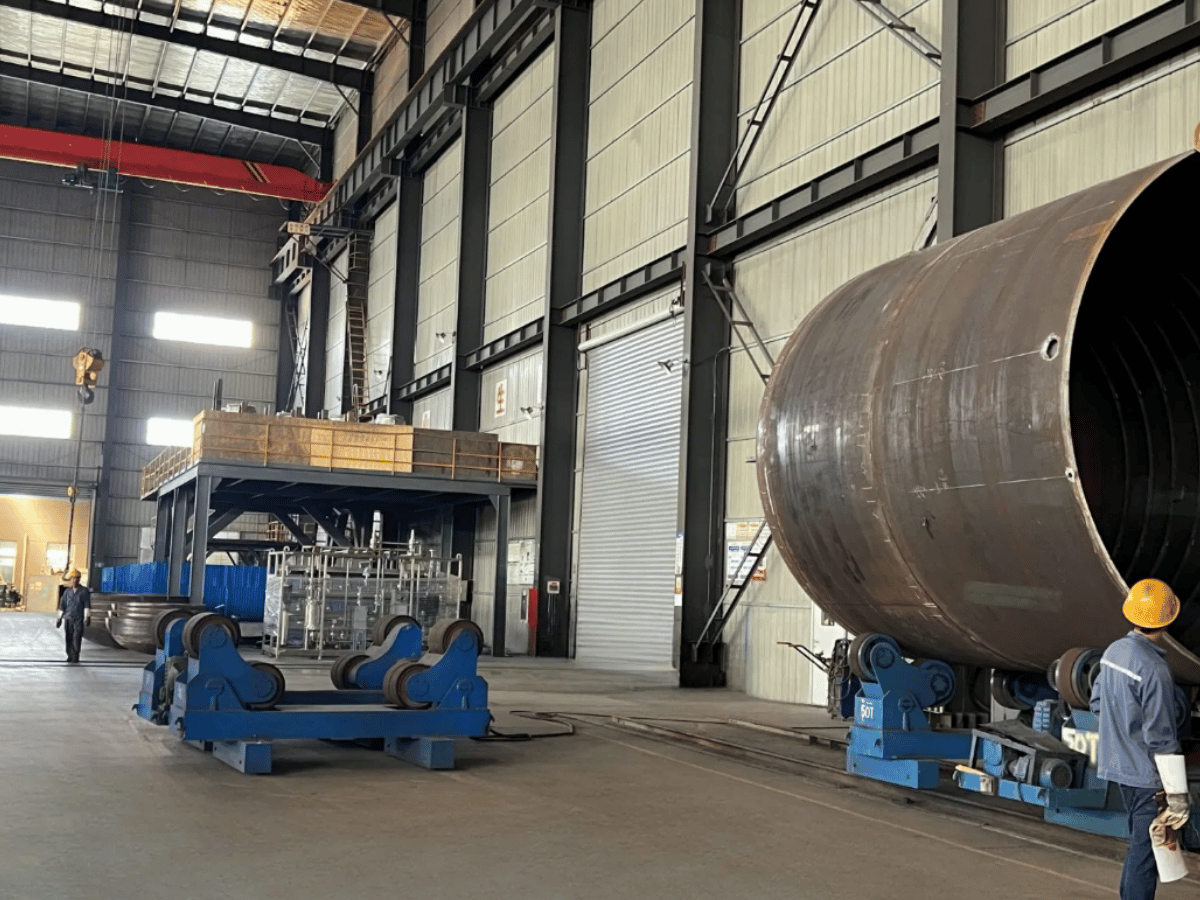
When it comes to welding, precision and efficiency are key to achieving high-quality results. This is where weld positioners shine—these versatile tools are designed to simplify welding processes, enhance accuracy, and improve productivity. Whether you’re a seasoned professional or just starting in the welding industry, understanding the role and benefits of weld positioners can significantly impact your work. In this guide, we’ll break down everything you need to know about weld positioners, from their functionality to their applications and advantages. Get ready to discover how this essential equipment can elevate your welding projects to the next level.
Introduction to Weld Positioners
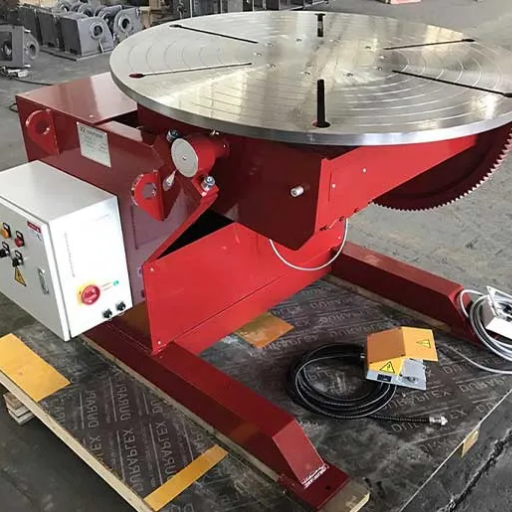
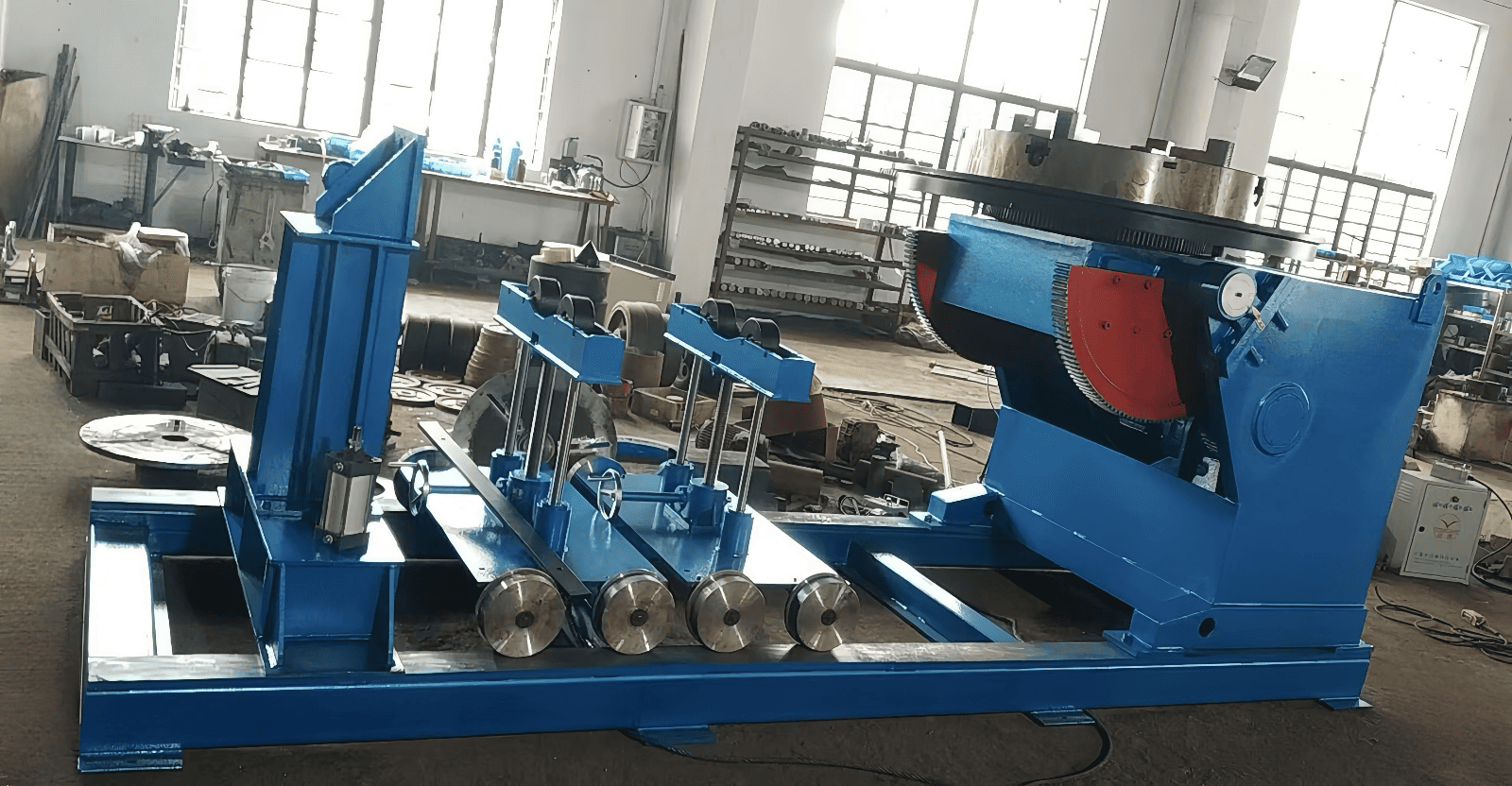
Welders help to hold and rotate workpieces during welding processes. Their primary purpose is to enhance weld precision, reduce operator fatigue, and increase weld efficiency by positioning the weld optimally. This type of equipment finds use across industries, such as automotive, aerospace, and manufacturing, where welds have to be highly consistent and of good quality. Weld positioners hold the workpiece in stable and controlled positioning through smooth operating actions for better results.
What is a Weld Positioner?
Positioners for welding come in different types, each according to specific requirements and the general applications. Common types are:
- Rotary Table Positioners: They have a rotary table that holds and rotates the workpiece. The smooth, continuous rotation is conducive to producing circular or cylindrical welds of uniform quality.
- Tilt-Rotate Positioners: Having tilting and rotating functions, these positioners provide flexible adjustment of their angles and orientation of the workpieces. Thus, they are suited for complex welds in multiple positions.
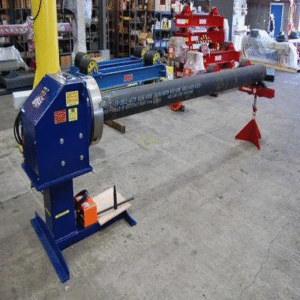
- Headstock and Tailstock Positioners: Usually for long and heavy workpieces, these consist of a headstock fixed in one place and a tailstock adjustable to hold and rotate the object.
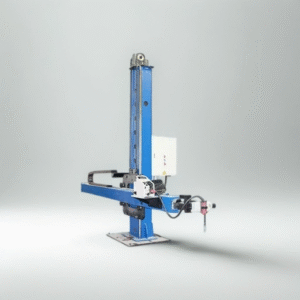
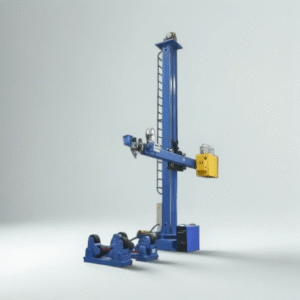
- Manipulator Positioners: Instead of lifting and manipulating the workpiece, these elevate and hold the welding torch for intricate manipulations.
- Turntables: Small and simple, turntables are well suited for less demanding operations and smaller workpieces with a reasonable price-performance ratio.
Key Features and Benefits
With a variable speed control, digital display for precise adjustments, and the ability to be operated remotely, modern-day weld positioners have plenty of high-tech features. Such enhancements undoubtedly make these tools a must-have for any industry that demands constant weld quality and efficiency. Through the engineering use of positioner devices, it is possible to eliminate weld defects, reduce weld time, optimize skilled-labor strain, increase productivity, and save costs.
Importance of Weld Positioning in Welding Operations
Proper weld positioning is an important factor for enhanced weld quality, especially in aerospace, automotive, and construction industries. Studies suggested that production efficiency can be increased by 25% as better positioning equipment facilitates access to weld joints and helps reduce the efforts involved in manual repositioning. For example, a rotary positioner, when placed along with welding, guarantees uniform weld bead placement, which is very important when welding cylindrical or irregularly shaped components. Weld positioning is so ergonomic that it takes away operator physical strain and decreases on-site injury by nearly 20% according to industry reports. Therefore, while ensuring better angles, reducing missed weld,s and raising exactness, the scenario improves weld quality immensely, which will obviously help producers save materials from wastage and defect rates. This emphasizes the importance of advanced welding positioners designed for particular project needs to ensure uniform and consistent results in any modern welding project.
Key Features of Welding Positioners
- Enhanced Rotation Capabilities
The latest positional welding machines have systems enabling them to rotate 360°, for the welds which are complex. Thus, it provides correct placement of the workpiece so that the errors are minimized while efficiency is increased.
- High Load Capacity
Today’s welding positioners will handle a wide array of loads, depending on which model. Some are able to support several tons of material. This feature makes them favorable for industries such as shipbuilding, construction, and aerospace, where heavy-duty applications are more common.
- Variable Speed Controls
Speed controls can be adjusted for an operator to be able to change the rotation and tilt speeds to fit his or her welding needs. This enhances the consistency of the welding, and at the same time, makes it easier to work with different material types and welding methods.
- Integrated Safety Features
Many a positioner comes equipped with safety devices such as overload protection, an emergency stop function, and a locking system. These features help to protect the operator and eliminate or reduce potential accident risks in the work environment.
- Improved Ergonomics
Positioners allow one to work at comfortable angles and comfortable heights, thus lessening operator fatigue and being productive. Ergonomics gain more importance in high-volume production areas.
- Automation Capabilities
Welding positioners and automation rarely work in isolation, offering full integration into the robotic welding system and allowing full automation of processes and minimal manual intervention. Automation also ensures that welding turnaround times are short and consistent.
- Durability and Versatility
With heavy-duty materials, these welding positioners are conventional and designed to withstand punishing environments under operational circumstances. Moreover, they are designed to be versatile and fulfill welding applications, ranging from pipes to flanges to complex assemblies.
- Data and Performance Monitoring
Advanced models come with real-time data tracking so that welding operators can monitor welding metrics such as angle alignment, load distribution, and cycle times. Such an approach greatly enhances quality control and operational efficiency.
Through its features, welding positioners play a pivotal role in optimizing manufacturing processes, reducing lead times, and enhancing weld quality.
Types of Welding Positioners

- Rotary Table Positioners
These positioners mount and manipulate the workpieces using a rotary table so that welding can be done at different angles with precision.
- Tilt-Rotate Positioners
The tilt-rotate types allow tilting as well as rotating movements, thereby enabling the placement of a workpiece in the best possible orientation for welding.
- Headstock and Tailstock Positioners
These allow for the support and rotation of workpieces between two fixed points in the case of long or heavy workpieces.
- Benchtop Positioners
Benchtop positioners are smaller and more compact and offer an excellent solution for lightweight and delicate welding operations.
- Pipe Welding Positioners
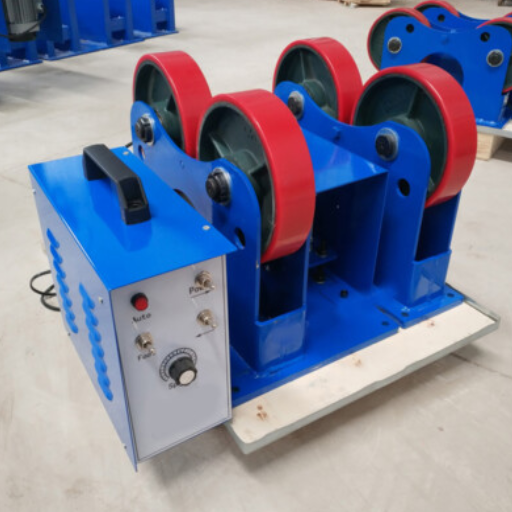
Pipe welding positioners are special positioners for circular or tubular workpieces like pipes that allow for smooth rotation so that the weld is laid continuously and uniformly.
Each one is sufficient for certain jobs and is thereby capable of performing all the movements necessary for joint work, or it posi- tions either the sensor or the electrode with respect to the work with much greater accuracy than could be obtained by manual adjustment.
Manual Welding Positioners
Manual positioners offer the operator the opportunity to maximize precision and control in welding operations by tilting and rotating the workpieces manually. These design units usually come with a smaller price tag than their automated counterparts, thus making them very cost-effective for small to medium production operations. Recent insights indicate that these manual welding positioners can handle payload capacities ranging from a couple of hundred pounds up to a thousand, depending on the model. They very often have an adjustable tilt mechanism allowing welders to easily reach places that would otherwise be hard to get to, typically within a 0°-90° range but sometimes beyond. On the other hand, these are used in applications like automotive repairs, metal fabrications, and artistic welding projects. Improved work ergonomics that reduce operator fatigue imply better weld quality and good working conditions with the assistance of a manual welding positioner.
Rotary Weld Positioners
The rotary weld positioner acts as an extremely important tool with which I revolve and position workpieces for welding, making my job easier. The rotation speed and angle can be manipulated with the utmost accuracy, providing for exact welds with less strain on the operator. These positioners also come in handy while performing uniform welds on cylindrical or unusual-shaped workpieces, thus becoming an indispensable presence in working towards increasing productivity and weld quality.
Multi-Axis Welding Positioners
Based on distinction along multiple axes, the fine multiaxis positioner provides flexibility and precision to the manipulator working on the piece. Such elaborate positioning affords welders the ability to produce acceptable angles and positioning for complex welding, so they will need plenty of efficiency and weld quality. Usually, modern multi-axis positioners are equipped with programmable controls that may also automate some repetitive welding operations and thus improve consistency in mass production work.
In fact, many machines can carry loads from several hundred pounds to thousands of pounds, thus allowing for applications ranging from light assembly to those for heavy industrial use. Some of them have tilt-and-rotate mechanisms allowing them to provide an unrestricted 360 rotation on the main axis, along with a tilt of 135 degrees or more, so that any challenging weld can be performed with ease.
Multi-axis welding positioners lay emphasis on safety concerning operators, cutting all manual operations, operator fatigue, and keeping the working environment steady. These are used in industries where automotive, aerospace, shipbuilding, and renewable energy need precision and timely delivery of efficiency. The integration of multi-axis welding positioners within the workflow turns out to cut cycle time apart from enhancing productivity in the workplace.
Components of Welding Positioners
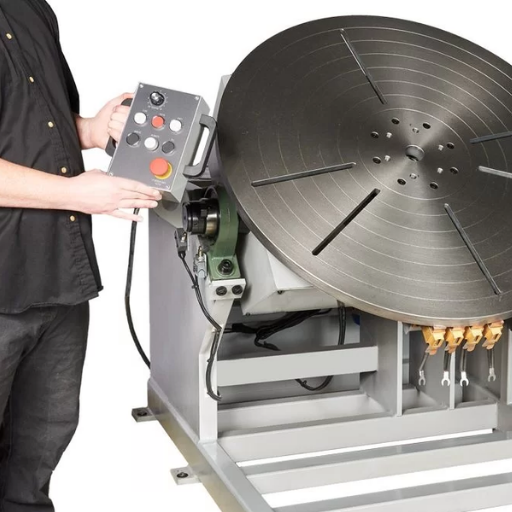
Some of the main components of the welding positioners work together to better welding efficiency and accuracy:
- Rotating Table – Allows a smooth and controlled movement of the workpiece for optimal welding angles.
- Tilt Mechanism – Permits the workpiece to be positioned at varying angles to satisfy different welding requirements.
- Control System – Gives the operator the ability to govern rotation speed and tilt precisely.
- Fixture or Clamp – Holds the workpiece very tightly to withstand any force throughout the welding.
- Base or Stand – Gives a sturdy, steady base to support the whole positioner and maintain balance during operation.
The key ingredients are welders and flux. They are necessary for producing a consistent weld and smooth workflow.
Essential Parts of a Rotary Weld Positioner
1. Turntable:
The turntable is the heart of a rotary weld positioner for controlled rotation of the workpiece. The modern turntables come with adjustable speed controls; usually, a servo motor is used for the same, whose speed may vary between 0.1 RPM to 10 RPM or more, depending upon the welding application.
2. Tilt Mechanism:
This mechanism provides the ability to tilt the turntable to weld at different angles. The tilt range may vary from model to model, many industrial positioners being able to tilt up to 135 degrees. Hydraulic or electric actuators are mostly used for accomplishing quick and smooth tilting.
3. Control System:
The control system is fitted with advanced PLCs and/or remote controls for finer adjustment of the speed, tilt, and rotation direction of the positioners. Newer models now include digital displays, touchscreen interfaces, and even pre-set programming functionality.
4. Fixture or Clamp:
Fixtures or clamps hold a variety of workpiece sizes and types. They are critical in preventing the movement or vibration of the workpiece during welding, which would affect precision. Some positioners are fitted with quick-change systems or pneumatic clamps to reduce setup time in a high-production environment.
5. Base or Stand:
The base is designed to provide structural stability and to absorb vibrations during welding to ensure smooth operation. Heavy-duty models may have a reinforced base capable of carrying weight capacities of 10,000 lbs. or more for accommodating large-scale industrial projects.
Rotary weld positioners operate by using the above components to lend industrial… Thus, their intervention maximizes the operation, minimizes manual intervention, and enhances the writhing under welding-lism quality. This beauty-shaped pair constitutes a must in making civil works industries like automotive, aerospace, and heavy fabrication.
Understanding the Mechanics of Positioning
Strategically engineered to streamline the welding process, rotary weld positioners work on the principle of a precise synergy of mechanical and electronic systems. Primary among these systems is a variable speed motor that allows controlled rotation for consistent weld bead application. Positioners usually come with tilt and rotation that will enable the operator to place the workpiece at the optimal angle and orientation for welding. Higher-level systems implement PLC (Programmable Logic Controller) systems for automated control of speed and positioning, thereby increasing accuracy and repeatability.
The key figures embody the importance of these machines in the industrial field. For example, research conducted showed that working with rotary weld positioners reduces welding cycle time by 25%-30%, substantially increasing productivity. Diameter possibilities run up to 20 feet, with weight capacities of more than 100,000 pounds, suitable for large and more complex projects. This translates into lesser fatigue for the operators, fewer errors, and, in return, excellent welds. Thanks to advances in automation, now most of them can integrate into robotic welding cells for more efficient and future-proof manufacturing.
Safety Features in Welding Positioners
Today, welding positioners are equipped with various safety features intended to protect the operators and increase efficiency in the workplace. Emergency stop controls give operators the ability to immediately stop the operation of the positioner should an issue arise, greatly preventing accident occurrences. Moreover, the design of many positioners rests on torque limiting and load sensing devices so as not to allow the equipment to operate beyond safe capacity limits; the biggest gain for both the machinery and the persons operating it.
Interlocks and fail-safe brakes have become more popular in the recent past, working to ensure stability of the positioner throughout its operation, power loss notwithstanding. Some manufacturers install advanced monitoring that relays real-time data related to load distribution and equipment performance so that if firefighting is needed, measures can be put in place before problems arise. Enhanced user interfaces with touch screens and programmable controls also simplify operation customization without compromising safety standards.
For particular situations involving very heavy loads or hazardous materials, other safety features such as heat shields, spark guards, and remote operation keep potential risks low. These innovations not only facilitate safer working environments, but also enable manufacturers to comply with industry regulations without adversely affecting productivity.
Applications of Welding Positioners
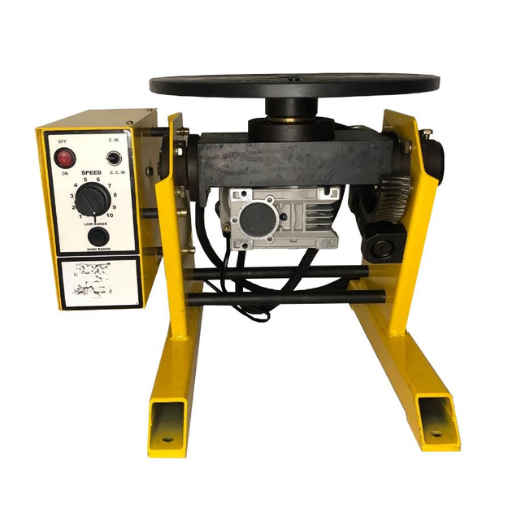
Two welding positioners are intended for customer applications. Picture credit: AMERICAN STIHOportunities include:
- Automotive Industry: Used to weld car frames, exhaust systems, or other components with consistent quality.
- Aerospace Industry: For the welding of aircraft parts with precision and structural integrity.
- Construction and Infrastructure: For the production of bridges, pipelines, and steel structures, where an extremely high degree of precision is required.
- Oil and Gas Sector: Welding of pipes, valves, and tanks under meticulously controlled conditions.
- Shipbuilding: For the welding of hulls, bulkheads, and internal ship structures.
Such use cases demonstrate the importance of welding positioners in the firm production of welding operations.
Industries Utilizing Weld Positioners
An essential working equipment in multiple industries, weld positioners enhance precision, safety, and efficiency. The following are some key industries where welded positioners are extensively applied:
- Aerospace Industry: Welding positioners are used in manufacturing processes to supportthe welding of aircraft components, engine parts, structural assemblies, and fuel systems. The aerospace industry demands high-level precision, and positioners ensure such rigorous specification are maintained.
- Automotive Manufacturing: Positioners genuinely help welding operations to maintain higher rates of production in the auto industry. In this stage, they weld frames, exhaust systems, and chassis components while maintaining strict quality standards.
- Renewable Energy: The growing renewable energy industry uses welding positioners for the fabrication of wind turbine towers, solar panel mounts, and hydroelectric systems. For example, positioners help weld components for wind farms evenly, thereby enhancing their durability and performance.
- Heavy Equipment and Machinery: For fabricating large and heavy components of construction and agricultural machinery, the positioners are very crucial. With the help of positioners, welders can either manipulate these huge parts safely with better control or allow for errors to be minimized and output to be increased.
- Railway and Transportation: Weld positioners are utilized by the rail industry in providing fabrication and repair services to railcars, tracks, and other infrastructures. Positioners bring efficiency and accuracy to the welding procedures in this rather difficult environment.
- Medical Equipment Manufacturing: Positioners are used for welding stainless steel parts used in manufacturing medical implants and instrumentations with required precision while maintaining hygienic standards.
Here is a display of weld positioners used in various industries to evidence the versatility of weld positioners for various applications, which favors the development of automation and high-level manufacturing processes. Some reports have claimed that the global welding positioner market has had steady growth in recent years and shall continue along this path due to the growth of industrial automation, combined with increases in the demand for highly precise components.
Practical Uses in Pipe Welding
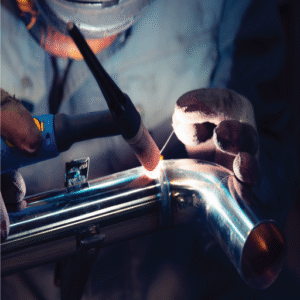
Pipe welding is often considered to be a high-precision job requiring the utmost memory about the task, which weld positioners can facilitate. The weld positioners secure the pipe in place and allow some rotation for welding access. This secures the accurate alignment, presents fewer chances of errors, and therefore raises the weld quality. Especially when joining big pipes in industries such as oil and gas, construction, and shipbuilding, weld positioners are very important since these industries require high precision and efficiency. Another gain for weld positioners is that they also strengthen safety by minimizing the amount of manual lifting required during welding.
Enhancing Efficiency in Automatic Welding
Several innovations have helped automatic welding undergo tremendous improvement in recent years with improvements in precision and productivity. Very important has also been the development of intelligent welding machines integrated with sensors and AI algorithms. These systems monitor welding parameters such as temperature, speed, and seam alignment in real-time, adjusting settings automatically to ensure consistent quality.
The industry reports state that production efficiency was increased by as much as 40% through the widespread application of robotic welding systems by various manufacturing sectors. Next, welding software advancements have paved the way for predictive maintenance, reducing downtime by as much as 25%. On the other hand, high-speed laser welding acts as another revolutionary technology, reducing processing times and thus greatly benefiting industries such as automotive and aerospace, where throughput capacity is very high.
Large and complex components are further taken care of with automated welding positioners and manipulators. They allow precise movement that reduces errors in welding and hazards in working. Continuous developments in automation and data-based technologies promise an even more efficient and reliable future for automatic welding in varied applications.
Choosing the Right Welding Positioner
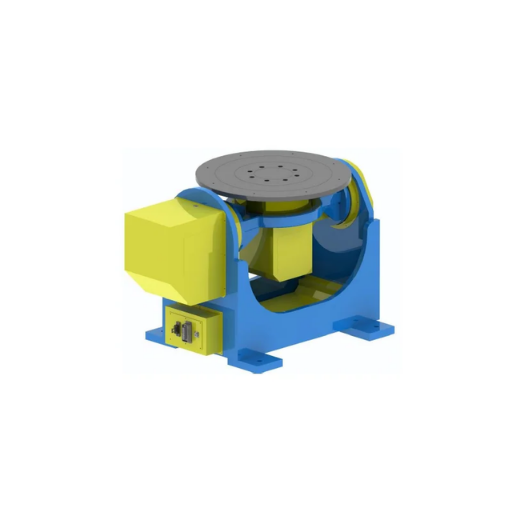
The parameters below must be kept in mind while selecting the welding positioner:
- Load Capacity: Ensure that the position covers the entire weight of components that you would like to weld, so safety and performance are not compromised.
- Rotation and Tilt Capabilities: The positioner should rotate smoothly with variable tilt angles to achieve perfect welding positions.
- Component Size and Shape: The selected positioner should monitor the dimensions and shapes of components for more accessibility and accuracy.
- Speed and Control: he positioner should accommodate variable speeds and have an intuitive control system that meets your welding needs.
- Durability and Quality: The long-term working environment in abrasive welding requires a reliable product created from high-quality materials.
Assuming these factors, you can bring out the best welding positioner for your needs, which will better provide for efficient work and welding quality.
Best Practices for Using a Welding Positioner
- Ensure Proper Alignment
Correct alignment of the welding positioner with the workpiece is paramount in achieving a quality weld. Any form of misalignment will lead to defects and uneven welds, ultimately leading to a decrease in operational efficiency. Always check the settings of your positioner to ensure it remains calibrated.
- Select the Right Type of Positioner
Types of welding positioners include tilt-rotate positioners, headstock-tailstock positioners, and turntables. Depending on your workpiece’s size, shape, and weight, you choose the right one. In contrast, tilt rotates are used for cylindrical objects, providing better control over the angles.
- Optimize Rotational Speed
Correct speed control of rotation leads to good weld quality. Most have the speed variable, so the operator sets the speed depending on the welding process, material, and requirement. Studies have also shown that weld integrity increases with rotation control at a steady speed.
- Adhere to Load Capacity Limits
Exceeding the maximum load capacity given by a welding positioner is detrimental to the equipment and can cause serious safety hazards. Therefore, always be sure that the positioner load capacity supports the weight of your piece of work, clamps, and fixtures. Overloading the positioner shortens its life span and will border on instability during operation.
- Implement Safety Measures
Ensuring strong clamping of the workpieces onto the positioner avoids accidents while in operation. Operators must wear their protective gear and maintain a safe distance from moving parts. Additionally, one must continuously carry out inspections to quickly detect any developing faults.
- Utilize Advanced Controls
Today’s welding positioners use advanced controls that feature programmable settings and automation capabilities designed to give more efficiency and accuracy to the job. Studies show that the automated positioners could increase welding productivity by up to 30%, helping minimize human errors and improving repeatability.
- Conduct Routine Maintenance
Having regular inspections will keep the positioner running correctly. While performing maintenance, pay attention to the gears, motors, and bearings to avoid abrupt breakdowns. Cleaner and greased components perform better and last longer as a whole.
Above are a few best welders and manufacturers that should be considered in order to raise productivity, have better weld quality, and secure a safe work environment. If welders opt to work with the best welding positioners available in the market, maintenance starts second later; therefore, advanced technology and proper maintenance of the welding positioner are key attributes to ensure optimal performance.
Tips for Optimizing Manual and Automatic Welding
- Maintain Proper Joint Preparation
Preserving the right quality joint preparation is the very primary requirement for manual and automatic welding. The surfaces should be cleaned thoroughly, ensuring the eradication of rust, paint, moisture, or oil deposits that can harm weld integrity. Correct joint design shall consider bevel angles and root openings as appropriate for the type of welding application to accommodate strength and avoid defects.
- Select the Right Welding Parameters
Maintaining accurate settings of voltage, current, and travel speed is imperative to form quality weld consistently. The choice of suitable voltage and wire feed speed in GMAW, for example, will increase deposition rates and reduce spatter, thus reducing post-weld cleaning time. Welding machines nowadays have pre-programmed parameters for different materials, making the selection of the welding parameters an easy task.
- Utilize Advanced Welding Technology
Procedures involving adaptive control and real-time monitoring systems greatly improve the precision and repeatability of an automatic welding setup. Automatic welding equipment equipped with sensors can make adjustments for changing conditions and ensure less human error and higher efficiency. Industry reports tell us that advanced technological welding processes can increase productivity by as much as 30% and minimize wastage.
- Ensure Regular Maintenance of Equipment
Regular maintenance shall always prevent unscheduled downtime. Replace consumables like contact tips, nozzles, and liners when worn out, as these directly affect the weld quality. When maintained well, a welding machine can perform to its highest capacity, save energy consumption, and increase operational life.
- Invest in Operator Training
For manual welding, an operator can be trained to become a good professional if welders have to work at high standards. Refresher courses on the latest techniques and safety issues can improve weld quality and general safety in the workplace. The certification also guarantees that the welders are able to work on more sophisticated welding equipment, thereby enhancing efficiency and satisfaction with the job.
- Monitor and Analyze Performance Data
Keep track of performance metrics such as deposition rates, cycle times, and defect rates to locate areas of improvement. When applied properly, the performance analytics enable the manufacturer to make decisions based on the data, tweak processes, and bring about the best results in manual or automated welding.
Such a framework empowers manufacturers to achieve the best welding results in the most timely manner, ensuring the best quality of the welding works with a minimum of costs and resource wastage.
Reference Sources
-
Design & Development of Short Benchtop Welding Positioner
MIT DSpace – Discusses the design and productivity benefits of welding positioners in industrial environments. -
Automated Welding Conceptual Study
University of Tennessee TRACE – Explores the role of positioners in automated welding systems and their stability requirements. -
Welding in Engineering Curricula
Oklahoma State University Open Research – Highlights the importance of understanding welding processes and equipment in engineering education. - Top Tube Welding Positioner Manufacturers and Suppliers in China
Frequently Asked Questions (FAQs)
What is a welding positioner?
A welding positioner is a mechanical device designed to hold and manipulate workpieces during welding operations. It allows for precise positioning of the workpiece, enhancing the quality of your welding operations and ensuring better accessibility for the welder.
What are the different types of welding positioners?
There are several different types of welding positioners, including rotary positioners, multi-axis welding positioners, and manual welding positioners. Each type serves a specific purpose and is suited for different welding jobs, such as TIG welding or pipe welding.
How does a rotary weld positioner work?
A rotary weld positioner works by rotating the workpiece on a horizontal or vertical axis, allowing for optimal positioning during the welding process. This movement ensures that the welder can access all areas of the weld joint efficiently.
What should I look for when choosing a welding positioner?
When choosing a welding positioner, consider factors such as the type of weld you will be performing, the size and weight of your workpieces, and the level of automation required. Look for features that enhance welding accuracy, such as adjustable speed and tilt capabilities.
What is the role of a welding table in conjunction with a welding positioner?
A welding table provides a stable and flat surface for the welding positioner, ensuring that the workpieces are held firmly in place. This combination improves control of the welding process and enhances the overall quality of the weld.
Can welding positioners be used in robotic welding operations?
Yes, welding positioners can also be integrated into robotic welding operations. This setup allows for greater automation, improved efficiency, and consistent quality in welding jobs, as robotic arms can work more effectively when the workpiece is optimally positioned.
What are the components of welding positioners?
The components of welding positioners typically include the base, rotating mechanism, control system, and clamping devices. Each part plays a crucial role in ensuring the positioner functions effectively, allowing for different types of welding operations.
What is the importance of welding accuracy?
Welding accuracy is critical because it directly impacts the strength and durability of the weld. Using a welding positioner enhances welding accuracy by ensuring the workpiece is held in the right position throughout the welding process, minimizing the risk of defects.
How can I improve my welding jobs with a welding positioner?
A welding positioner allows welders to achieve better posture and accessibility, reducing fatigue and improving focus. By using a positioner, you can enhance the quality of your welds and increase productivity, making it an essential tool for many welding applications.