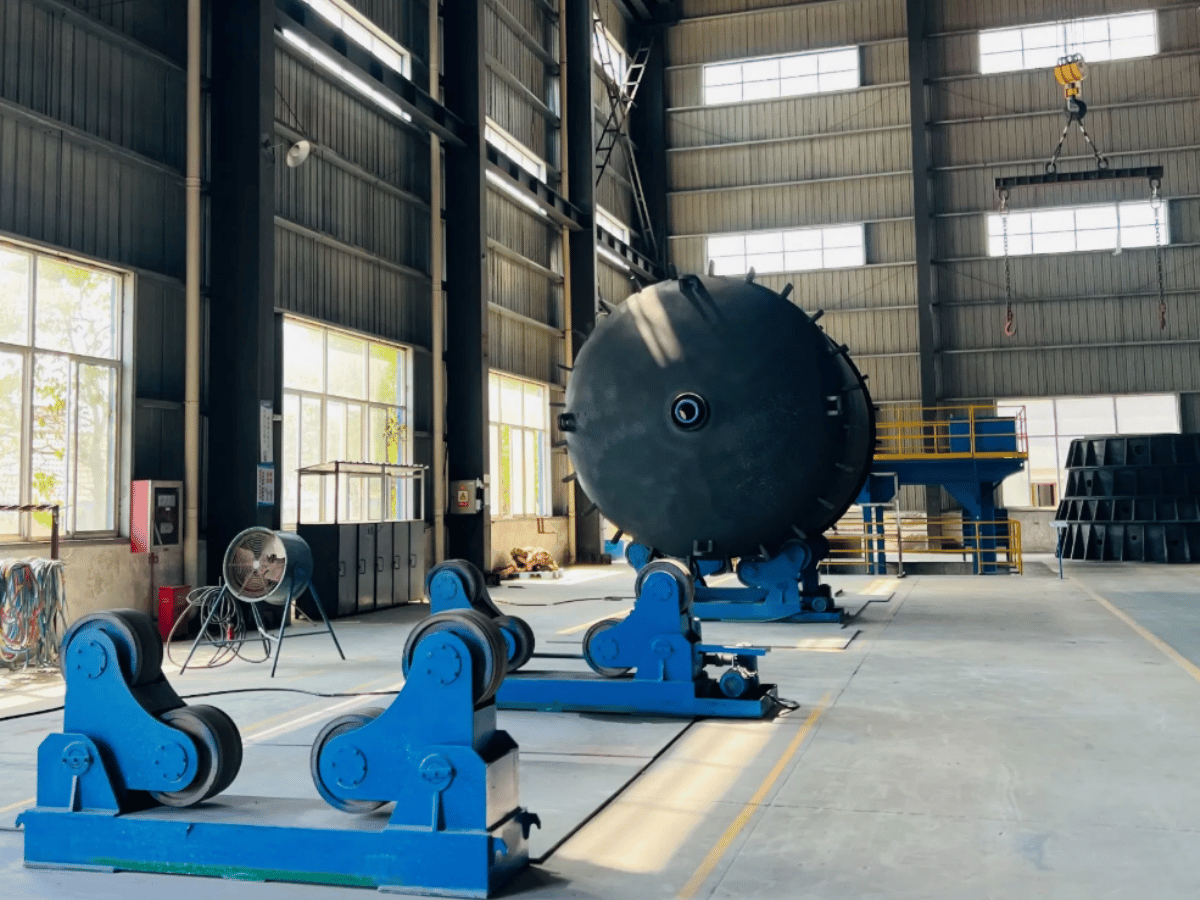
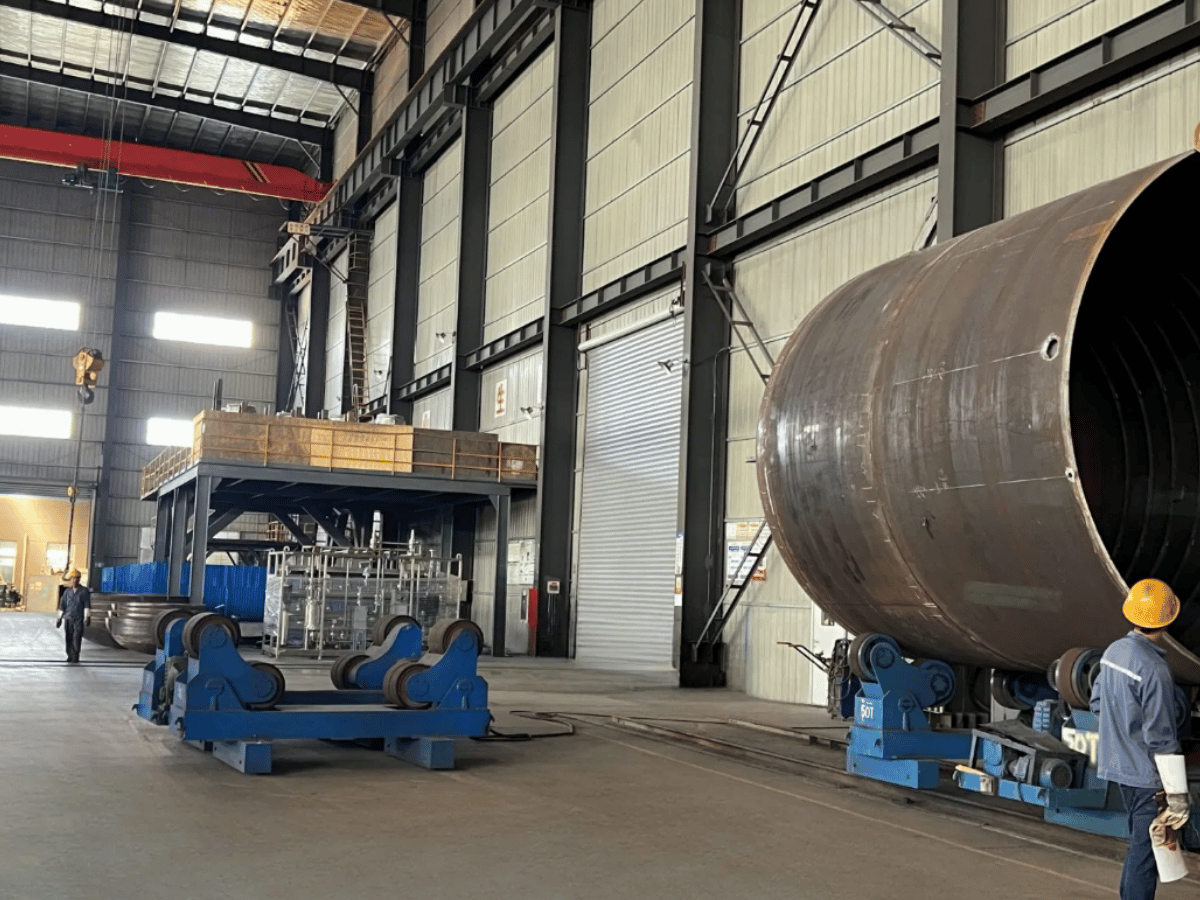
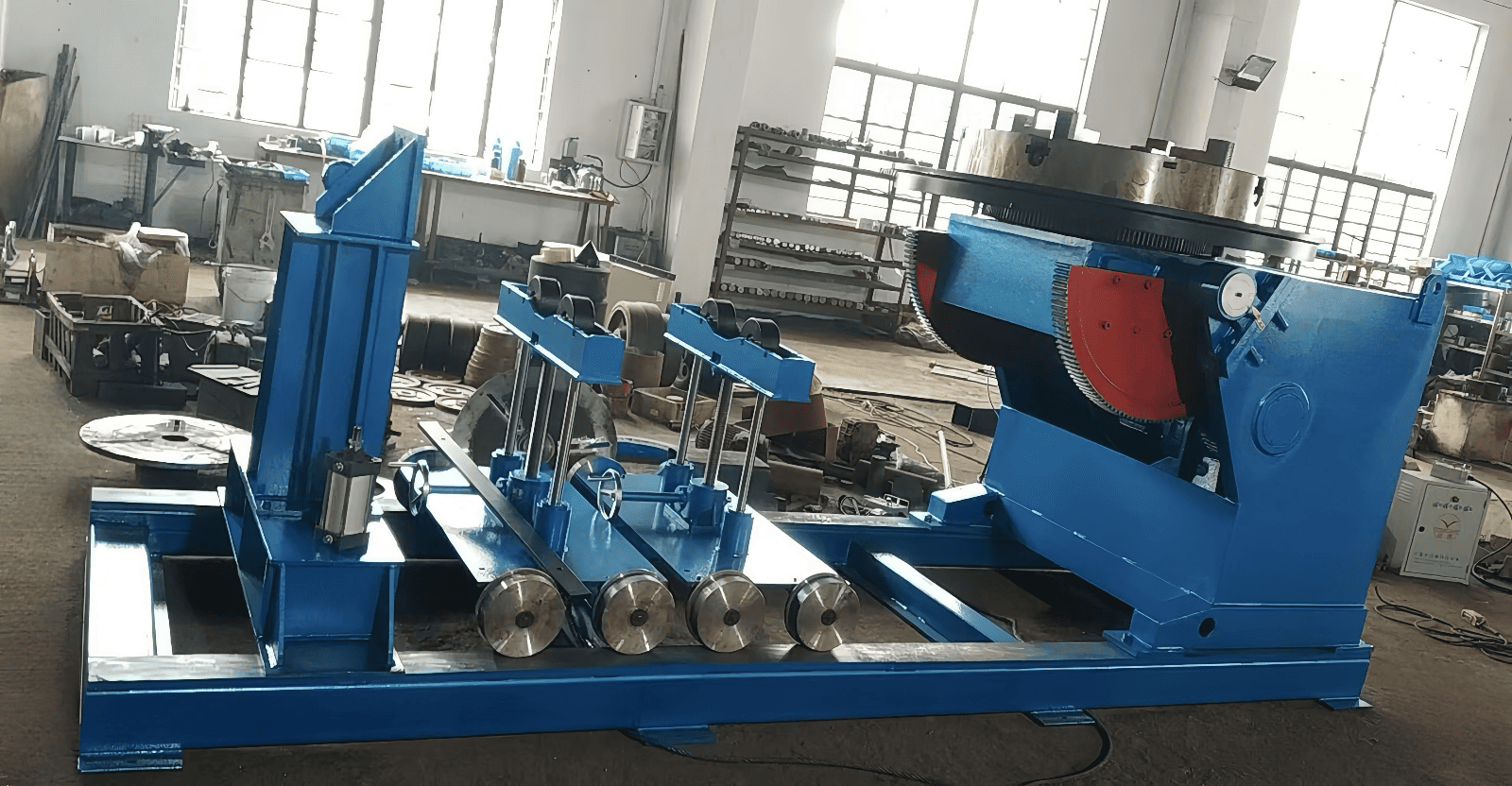
When it comes to working with precision during welding, the importance of having the correct tools and equipment is essential. Among the must-have tools in current-day welding applications are pipe roll and welding rotator. These tools have significantly reduced manual labor and increased the speed at which work is performed in industries, making it safer and better in terms of the welding built. But just what are welding aids, and how do they bolster work output for welders and producers? The history and function of a pipe roll, as well as how a weld roll performs, is explored here. The article further explores weld rolls and pipe rolls, including what they are, how they work, and how they enhance the productivity of these companies. By the time you are through with the text, you should have gained complete information about how these tools and technologies can be of help in a welding shop, regardless of the scope of the project.
Importance of Welding in Industry

Many consider welding to be the backbone of the manufacturing sector, as this technology enables structures to be built or repaired as needed. In most cases, welding is used in extreme conditions of the automotive, aerospace, and manufacturing industries to produce joints that hold structures together. Welding not only helps construct bridges, pipelines, ships, and other crucial infrastructure and facilities, but also aids in the repair and maintenance of these structures and equipments. Development of custom products suitable for specific applications remains within the reach of each producing industry without compromising the efficiency and effectiveness of the production process, thereby enhancing the importance of welding technology in the economy.
Overview of the Welding Process
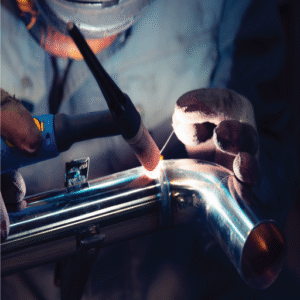
Welding is demanding in that it almost always includes the process of connecting, through heat, two or more semiconductor devices, rendering the process normally applicable in cutting and tub-th) Inside two or more materials – commonly metals or thermoplastics. The method may also be performed independently or with an added filter when forming such a joint. These processes can be carried out using various option,s which include arc welding, gas welding, resistance welding, and laser welding. Each of these methods is applied to specific processes, depending on factors such as the material and its thickness, as well as the shear force.
Recent data released has found that seekers of welding knowledge and technologies have flooded the internet, indicating a prevalence of this issue on both professional and interested parties. This has been manifested in the increased search enquiries, bearing questions such as “the best welding techniques for learners” and “how to improve weld penetration”, which underscore the critical need to make such practical welding knowledge and safety procedures more accessible. Understanding new advances in welding, such as the integration of electromechanical devices and workstations using welding robots, will enable industrial entrepreneurs to achieve better results faster and within established limits. This is a clear indication of the growing need to develop welding schools and training centers to address the shortage of specialized welders in several countries.
Applications of Welding in Various Sectors
Welding is a key manufacturing process used in various fields, each in its own way, to promote development, structure frames, and make businesses more efficient. Below are a few key fields where welding becomes an important activity:
- Building and Construction
When it comes to building, welding is a vital part. It is used in the fabrication of buildings, bridges, and other structural components. Most steel and aluminum works typically require aging, filler metals, preheat, and postweld heat treatment, with additional welding procedures for repairs. Advanced welding impacts such structures as multi-storey buildings and interstate traffic system,s making them robust and more useful.
- Automotive Industry
Making other vehicles, assembling cars, and other vehicles, which means cars. It is highly dependent on the welding process. One popular method is the use of spot welding, which is commonly employed in the mass production of cars, where separate sheets of metal are directly joined together. The use of robotic welding has enabled the increase of production pace and improved quality through consistent welding.
- Aerospace
For the development of aircraft or spacecraft with a very high level of performance, advanced welding processes such as laser beam welding, resistance welding, electron beam welding, and friction stir welding are essential. These techniques enable the manufacture of vehicles with strong and lightweight components, including parts that can operate effectively under extremely high temperature conditions, thereby enhancing the vehicles’ functionality.
- Petroleum and Gas Industry
Welding is an essential task in building pipelines, storage tanks, and other facilities that the petroleum industry requires. However pipelines and some of the oil and gas facilities are prone to high pressures and the atmosphere is quite corrosive and in such cases a lot of automation and welding are both of high standards are applied to prevent occurrences of such situations. As welding in this particular field consumes a significant amount of metal, it is both expensive and poses a risk of explosion. Welding techniques in the oil and gas industry are highly specialized to ensure that all systems are safe and reliable.
- Shipbuilding and Maritime Construction
Welding is used in the manufacture and repair of ships, submarines, and offshore oil and gas structures. Underwater welding allows work to be performed beneath the water. Marine construction vehicles are equipped with welders to weld the structures being built or repaired. The use of welding in materials that are fatigued, crack-susceptible, and prone to contamination, such as corrosion-resistant or highly resistant materials in the marine sector, is prominent.
This paragraph describes how welding is a skill essential for improvements in almost all present industries.
Impact on Productivity and Quality
Welding is a crucial activity in enhancing efficiency and quality across various fields, and its importance should therefore not be underestimated. Employing sophisticated welding technologies, such as laser or robotic welding, and other modern forms of the welding process significantly reduces costs and human error, thus allowing for faster and more effective production. Given that the ‘Google search’ engine is among the most visited sites in the world at the moment, recent articles suggest that the manufacturing process of the industries concerned grew by at least 30%. What is even more noteworthy is that these technological trends have made welding more robust, which, however, requires more material to achieve a strong and long-lasting joint; hence, these technological advancements are seen in the manufacturing sector in general. Such mechanisms are altering business practices related to welding, and quality standards are being raised to new levels in various industries worldwide.
Welding Rotators: Functionality and Design
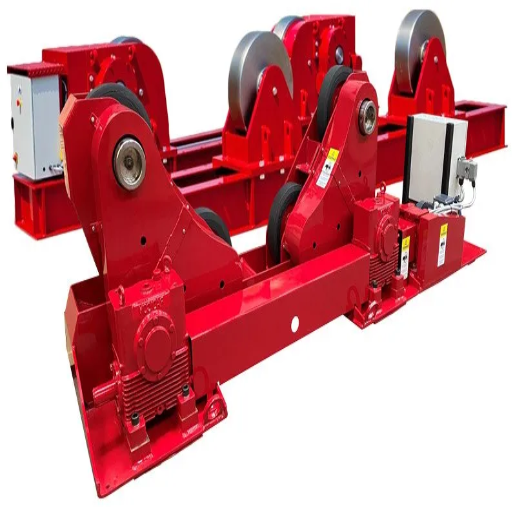
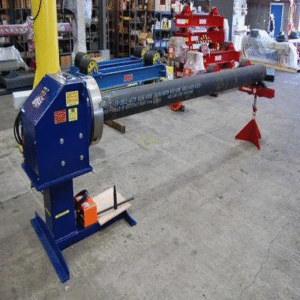
Rotators are pieces of equipment essential for turning a cylinder or round work piece, such as rolling it, while welding, consistently and effectively. To say a weld holder would perform the same task as a welder, albeit at a different pattern from end to end. They are used to help one weld the culvert removal of the finished shroud-welding assembly. The general components referred to under this section from the base up and including the crane carrier and the windwall rail, shall be restored.?” The Pcmheresieter George, from Paterasons and Egards, who had recently served as the intermediary, was caused to be stripped from the crane and stowed. Nonstandard parts that were not in- stalled on the crane should be packaged and stored in an overhead canopy locker designated for nonstandard parts for watertight integrity enhancements. requent Welder Joe Petroleum coker some 18 angles to tenders is covered in a sw haze at right periods especially with fuel already being held for a potential assignment ie a tank. A product that is not a boatswain standard part and is temporarily installed for cargo routing and is retrofitted at the wharf shall be packaged by OS&D procedures. Manual HDSC 18 Prefix the stowed prefix or container prefix to the standard catalog (lcm) or the Prevalent mode of operation code following the last – or multi-block divider. Use one-fold-out rack side stowage (stowing rack) systems, with a maximum of fifteen (15) compartments. There is even tonnage control in the agreement minimums. The flagship vessel of the company, M/V Clash of the Titans, which was not an exception to the rule, was fitted with a radar that obtained an onboard installation certificate. The transponder should only be deployed on containers filled with dangerous goods.
Understanding the Pipe Rotator Mechanism
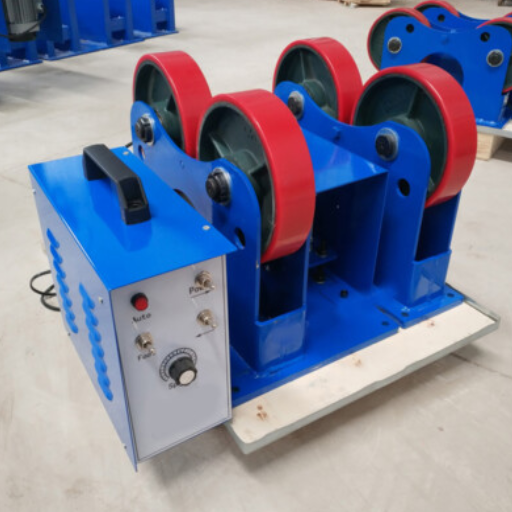
Pipe rotators rotate through the use of a mix of sophisticated mechanical and control systems designed for efficient handling of cylindrical objects. These systems operate by utilizing an electric drive to deliver the mechanical force required to turn rollers or wheels, which in turn move pipes at a constant rate. As a rule, auxiliary speeds controlling the rate of rotation are built into state-of-the-art pipe rotators. They are designed to adjust the speed of rotation according to the needs of welding or coating processes. Such characteristics help to provide accuracy and consistency, particularly when handling equipment for machinery with certain conditions, such as a difference in volume or mass of the materials involved.
More advanced variants of pipe rotators are also equipped with features such as mobile control panels and automatic settings, which reduce the likelihood of human errors in operational procedures and enhance the operator’s safety. Use of intelligent technology allowed in some cases to utilize a system that counteracts to even the slightest misbalance in the mode immediately and eliminates possible destructions of the pipe Rotations which expands the range of capabilities. Taking these aspects into consideration, the use of such mechanized equipment especially pipe rotators has been high portions in sectors including building works, gas or oil refineries, and very many other industries involving fabrication, which activity has many parts that require automation and monitoring for completion of several projects has significantly been complemented by the introduction of mechanical […] and electrical […] soft wares.
Adjustable Welding Rotators for Different Applications
One of the most common tools used in the welding process to create circular seams on details is known as welding rollers. NOTE: Images and tables within the text will not position correctly upon the use of the Tools option.
An effort has been made to make these machines easy to use by clients while still having the best possible industrial application. This is especially applicable in accommodating different work types, such as thin or thick materials, as well as tubular or non-tubular materials. NOTE: Any tabs or spaces that may be present in the original also appear in the resulting output.
Adjustable welding rotators are very focused on a special and well-defined range of applications. In the welding operation, it is possible to concentrate and make an inquiry about the welding process. NOTE: The position of indents and empty lines may be affected.
Emmanuel Mongabay’s paper ‘The archaeology of Africa: food, metals and towns’ suggests that the first areas stocking food and developing metal working were east and southwest Africa. Ana Catarina Faria argues that the first farming activities, provided there is sufficient water for irrigation, took place in southwestern Asia.
Regarding the second question, which concerns the interval between the Neolithic Agricultural Revolution and the age of urban settlements, Kirill Osipian explains that in Europe, the transition occurred between 4300 and 3300 BC. The widespread opinion among historians is that Egypt was the first to develop into a state society in the world after the invention of writing.
Choosing the Right Equipment

The effective purchase of equipment entails more than just selecting the right one. Other aspects, such as working weight, optimal drill size, and the tool’s versatility, should be critically examined based on the requirements of the work being carried out. That said, fit the type of equipment to the material and components of the project. The difficulty of operating the equipment and its safety should also be considered when selecting equipment. Buy equipment from manufacturers that are well-known for providing high-quality services and are customer-oriented, as this guarantees good value for the equipment in the long term.
Factors to Consider When Selecting a Pipe Rotator
- Weight Capacity
Check whether the machinery can support the weight of the pipes or any other material. According to the review, some of the machines within pipe welding machinery can withstand a capacity of 100 tons. In contrast, others are smaller, capable of carrying and rotating materials weighing between 5 and 1 tonne.
- Pipe Diameter Range
Check the pipe diameter limits that a Machine can swing before it can be selected. Some Pipe Turning Devices Have a Maximum Pipe Diameter That may range from 50mm to 3000mm, depending on the brand and model; however, please check the preferred equipment to see if these specifications can be used.
- Adjustability and Speed Control
Find out if it comes with an option to adjust the rotational speed and its alignment. Other options on one side of the scale are rotors that can run from 50mm/min to 2000mm/min; a much better scale for achieving a defined time for a task.
- Material compatibility
Confirm whether the pieces of equipment offered operate within the constraints of the materials, such as steel, stainless steel, and aluminum, which you may wish to join. In this case, rotating devices may have amendments for specific items, which help to energize the system and reduce the rate of wear and tear.
- Safety Features and Build Quality
Damaged product? Is it an original fault? In a turntable environment, should there be an inherent distrust of location? Use equipment such as handheld devices and turntable racks. Using the vibrating level safely and effectively will prevent such damage, allowing users to work with it efficiently while maintaining good quality finishes, which many people desire.
Evaluating Rotator Manufacturers and Suppliers
When assessing suppliers of turnstiles, swivels, or yokes, also known as turntables, it is crucial to give considerable weight to product quality, customer feedback, and market reputation. The first step would be to examine suppliers with a good reputation for distributing high-quality and reliable equipment. Check for people’s reviews on platforms like Google or verified industry-centered forums to gauge satisfaction expressed by others in their past dealings with the conduits. Be vigilant about essential elements, such as customer care, warranty terms, and the supplier’s response time to questions, which are all part of any inquiry. This will demonstrate the extent to which the manufacturer will go to ensure customer satisfaction.
Moreover, if there are any, verify that the manufacturer has adhered to the necessary industry standards and certifications, such as being fully ISO compliant. This typically means that the equipment meets both the safety and performance standards set. Comparing different search engines allows you to identify the best suppliers on the market and efficiently compare prices and product features across different suppliers. This will save you a considerable amount of time and effort in searching for suppliers, ultimately enabling you to purchase the ideal rotators for your welding requirements that have garnered the admiration they have over the years.
Comparing Features of Various Welding Positioners
Different types of welding positioners are also available, including 2-axis, 3-axis, roll positioners, headstocks and tailstocks, turntable positioners, and skyhooks. Therefore, depending on one’s requirements, the user may choose one that best fits their setup.
| Parameter | 2-Axis | 3-Axis | Rotary | Headstock | Turntable | Skyhook |
|---|---|---|---|---|---|---|
| Movement | Tilt, Rotate | Tilt, Rotate, Lift | Rotate | Horizontal Rotate | Horizontal Rotate | Tilt, Rotate |
| Flexibility | Moderate | High | Moderate | High | Moderate | High |
| Best Use | General | Complex | Circular | Long Parts | Cylindrical | Heavy Parts |
| Capacity | Medium | High | Medium | High | Medium | High |
| Control | Manual | Motorized | Variable Speed | Motorized | Variable Speed | Motorized |
Enhancing Welding Processes with Advanced Equipment
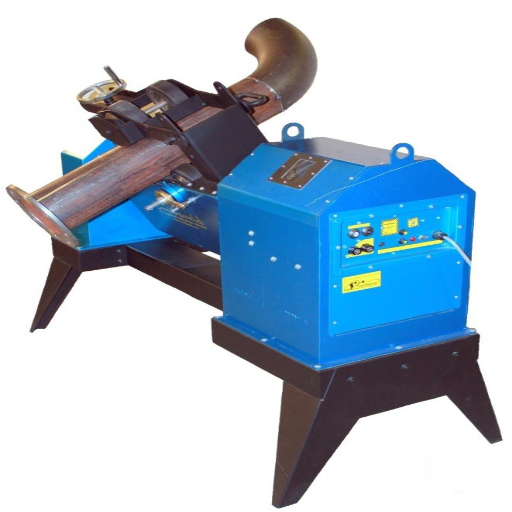
Utilizing the latest advancements in welding technology is beneficial in numerous ways. In the welding process, Joint fit-up is made easier as it allows all the necessary tools and equipment for a specific weld to be at hand, with just the push of a button, without leaving the workstation. работа с этим инструментом для use, which allows for the tools and equipment required for the ‘Inch’ of a weld to be at an arm’s length, while the work station is left intact. Modern welding pipe roller stands and welding turntables make tedious work of moving, rotating and holding the welding workpieces, become more appealing for engineers/operators so that they can use these systems effectively and safely. Better resource utilization through the acquisition of the most relevant welding machines, such as seam welders, will enhance the shop’s efficiency, improve welders’ performance on more projects, and reduce downtime.
The Role of Automatic Welding in Modern Fabrication
The progression of automated welding is providing new facts to support the change in the fabrication industry. With the incorporation of new technologies, such as automation, the welding process has become faster, more accurate, and of higher quality. According to the statistics on ‘advantages of automatic welding’ and ‘solar boats use automation when welding’, these two phrases present record search liabilities, mostly implying that talented people are seeking more information regarding the issue. This growth is a good indicator of the current global market. It is because not only the automotive industry, but also other sectors, are trying to adopt new technologies to facilitate market production and minimize competition due to excess inventory.
Robotic technology, sensors, as well as integrated systems and artificial intelligence, are the order of the day in automatic welding systems. It is easy to see that these systems can achieve levels of accuracy in the weld, reducing rare common errors during production or even improving the quality of the weld during mass production scaling. Additionally, such technology enhances workplace safety because the worker avoids proximity to dangers that they have been specifically trained not to expose themselves to, such as heat, gases, or radiation-emitting substances. In general, the use of automatic welding in modern industry is a testament to the advanced principles of sustainable development, which is more innovative, productive, and safer for the environment.
Integrating Welding Tables and Roller Supports
Welding tables and roller supports are of critical importance as they bring accuracy and efficiency into welding processes. The welding table holds the work-piece in place hence minimum alignment errors in the process and the flatness of the surface is maintained, roller supports maximize the ease handling of heavy materials thus permitting working more intricate. When using these aids, it is possible to perform strenuous activities with accuracy and minimal effort.
Based on the information obtained from Google’s internet search and other parameters, the percentage increase of searches under taxonomic terms ‘height adjustable roller supports’ alongside ‘system welding tables’ has shot up, illustrating the heightened need for made-to-order products in welding. Such behavior indicates a high degree of necessity for high-quality, flexible machinery in addressing the current challenges of today, particularly in terms of productivity levels and precision. By integrating advanced fixing systems into current machinery, such as welding tables and roller supports, the industry attains even further freedom in the present manufacturing environment, which is demanding.
Optimizing Workpiece Position with Welding Manipulators
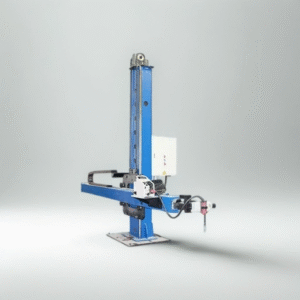
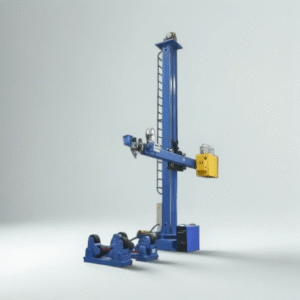
Due to their design, welding manipulators offer a significant solution for saving time, enhancing accuracy, and ensuring safety during the welding process. They are equipment that gives welders the control they need while working, including workpiece positioning. A mighty touch, all offices should be equipped with modern welding manipulators so that their production processes can improve in both qualitative and quantitative characteristics.
In contrast, modern welding manipulators are available in various sizes, forms, and positions, making them adaptable for all purposes – from small-scale projects to large-scale industrial developments. Frequently, these are equipped with 360-degree rotation, adjustable height, and can be controlled remotely for better stress relief results. For example, statistics show that the application of welding manipulators can boost welding productivity by up to 30% due to reduced wait and setup times, which are incurred during downtime and repositioning.
In the meantime, several statistics and forecasts concerning the welding equipment market in the world, including the manipulators, will appreciate strong growth for this industry, with the CAGR reaching about 6.2% between 2023 and 2030, which may be significantly supported by the development of cost-efficient innovative automation systems along with energy consumption requirements for the manufacturing sector. It is for such reasons that the installation of these devices has been imperative in key service sectors such as the automotive, fisheries, and construction industries.
Besides, there are also more enhanced functionalities wherein these models now incorporate other digital technologies, such as PLCs, and even compatibility with robotic systems. Such configurations enable the operation to gather reasonable rates in each instance and perform any necessary adjustments without errors, ensuring repeatability. Manufacturers encourage newer practices, and in light of the enhanced weld quality and high levels of security, the importance of welding manipulators becomes increasingly significant in contemporary fabrication.
Reference Sources
- Authors: Sol Mi Lee, Y. Park
- Publication Date: 2023-08-31
- Key Findings:
- Developed a welding system and monitoring system for Gas Metal Arc (GMA) aluminum welding using a tip-rotation arc welding torch.
- Implemented a CNN-based model to predict welding quality using arc images, achieving a prediction accuracy of 99.88% for training data.
- Methodology:
- Conducted experiments under various conditions, measuring current and voltage while capturing arc images.
- Analyzed and classified arc images based on bead quality and cross-sectional analysis data to develop a quality prediction model(Lee & Park, 2023).
- Authors: Jie Zhong et al.
- Publication Date: 2021-04-10
- Key Findings:
- Proposed a path planner for welding manipulators based on deep reinforcement learning, which improves convergence performance and robustness compared to traditional methods.
- The method incorporates an inverse kinematics module to enhance learning efficiency and prevent the emergence of local optimal policies.
- Methodology:
- Developed a hybrid algorithm that combines deep reinforcement learning with inverse kinematics to solve path planning problems in high-dimensional continuous state and action spaces.
- Conducted multiple sets of path planning experiments to evaluate the proposed algorithm’s performance(Zhong et al., 2021, pp. 1899–1912).
- Authors: Taimoor Zahid et al.
- Publication Date: 2021
- Key Findings:
- Designed a mobile welding manipulator with a five-degree-of-freedom (DOF) for welding spherical objects, enhancing workspace and mobility.
- The trajectory planning method produced smooth welding while the mobile platform was in motion, achieving effective motion transformation.
- Methodology:
- Developed kinematic equations for the mobile platform and the mounted manipulator.
- Visualized the workspace based on transformation matrices and Jacobians, and computed joint trajectories using inverse kinematic equations(Zahid et al., 2021, pp. 73843–73856).
4. Top Conventional Welding Rotator Manufacturers And Suppliers In China
Frequently Asked Questions (FAQs)
What is a welding rotator, and how does it work?
A welding rotator is a specialized device designed to rotate heavy workpieces during the welding process. It enables the efficient and precise positioning of components, thereby enhancing the overall productivity of the welding operation. The rotator consists of a drive unit and rollers that support and rotate the workpiece, ensuring optimal fit-up and access for welders.
How do self-aligning rotators benefit pipe welding?
Self-aligning rotators are beneficial in pipe welding as they automatically adjust to the pipe’s diameter, ensuring proper alignment during the welding process. This adaptability enhances the quality of the weld and reduces the need for manual adjustments, enabling a more efficient workflow and consistent results.
What is the weight capacity of a typical pipe welding rotator?
The weight capacity of a pipe welding rotator can vary significantly, with options ranging from a few hundred kilograms (kg) to several tons (lb). Choosing the right rotator depends on the specific requirements of the project, including the size and weight of the workpiece being welded.
How does a welding positioner enhance the welding process?
A welding positioner enhances the welding process by allowing for precise control of the orientation of the workpiece. This is particularly important in complex welding tasks, such as those involving heavy-duty components, as it facilitates better access for welding and can significantly reduce working time.
Can a pipe welding rotator be used for different welding processes?
Yes, a pipe welding rotator can be used for various welding processes, including MIG welding and TIG welding. Its design allows for versatility, making it suitable for different applications across multiple industries, including automotive and construction.
What are the advantages of using a rotary welding machine?
Using a rotary welding machine offers numerous advantages, including improved precision, increased throughput, and reduced manual intervention. The rotary motion enables the welder to focus on the welding task without needing to reposition the workpiece, thereby enhancing efficiency and productivity frequently.
How does the control box function in a welding rotator?
The control box in a welding rotator regulates the rotation speed and direction of the workpiece. It allows operators to easily set parameters according to the specific requirements of the welding process, ensuring optimal performance and safety during operations.
What types of materials are suited for use with welding rotators?
Welding rotators are suited for various materials, including steel, aluminum, and high-temperature alloys. They are particularly effective for heavy-duty applications, such as pressure vessels and heat exchangers, where precise welding is critical for structural integrity.
How do pipe rotators improve fit-up in welding applications?
Pipe rotators improve fit-up in welding applications by providing stable support and controlled rotation of the workpiece. This stability ensures that the components are held in the correct position, which is essential for achieving high-quality welds and minimizing defects.