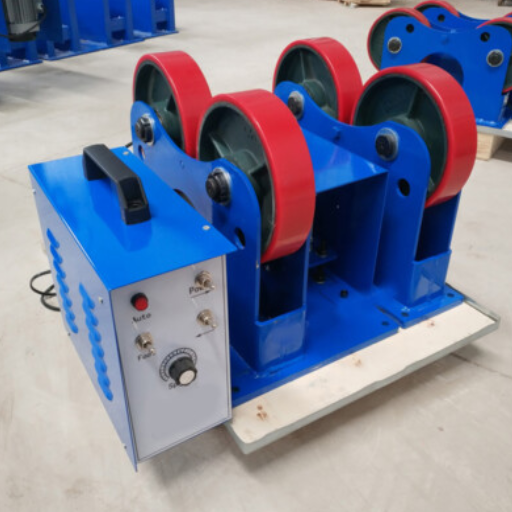
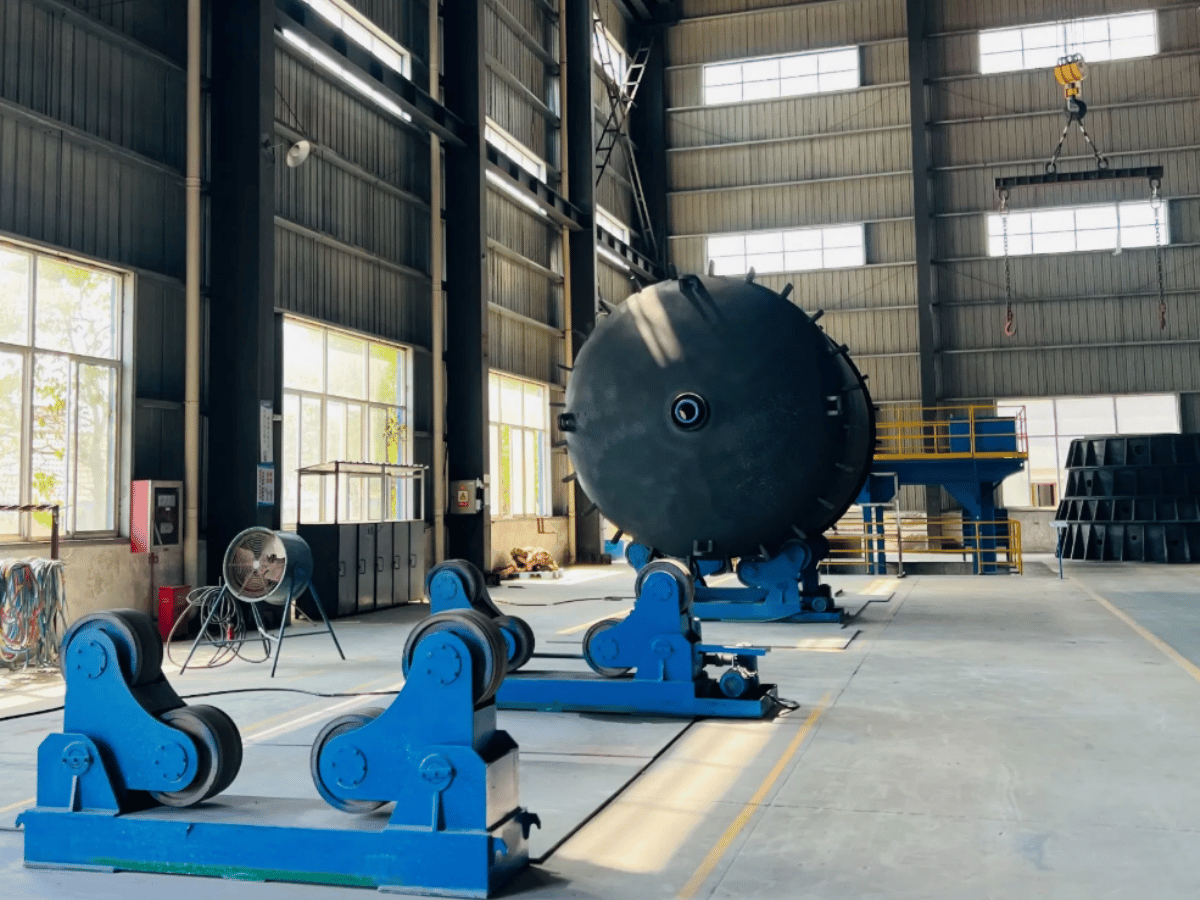
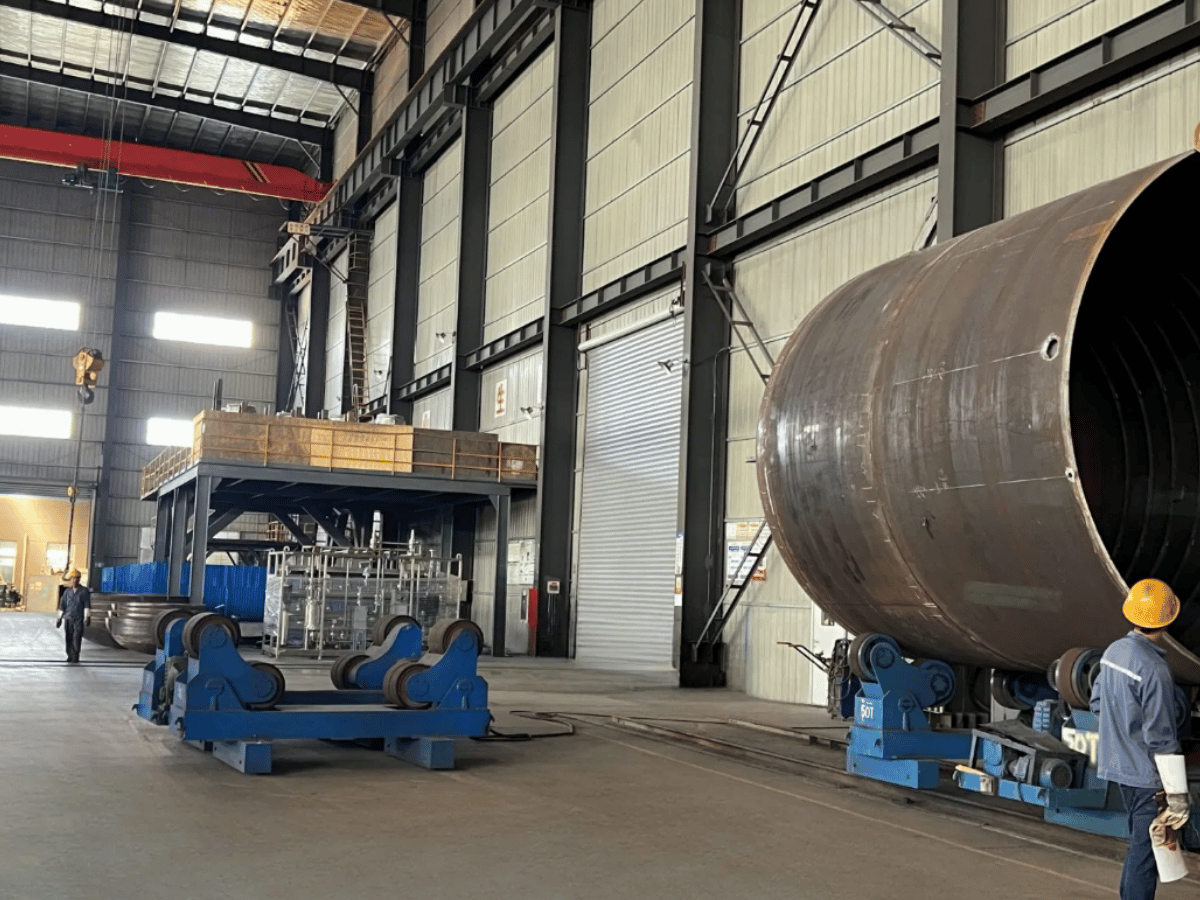
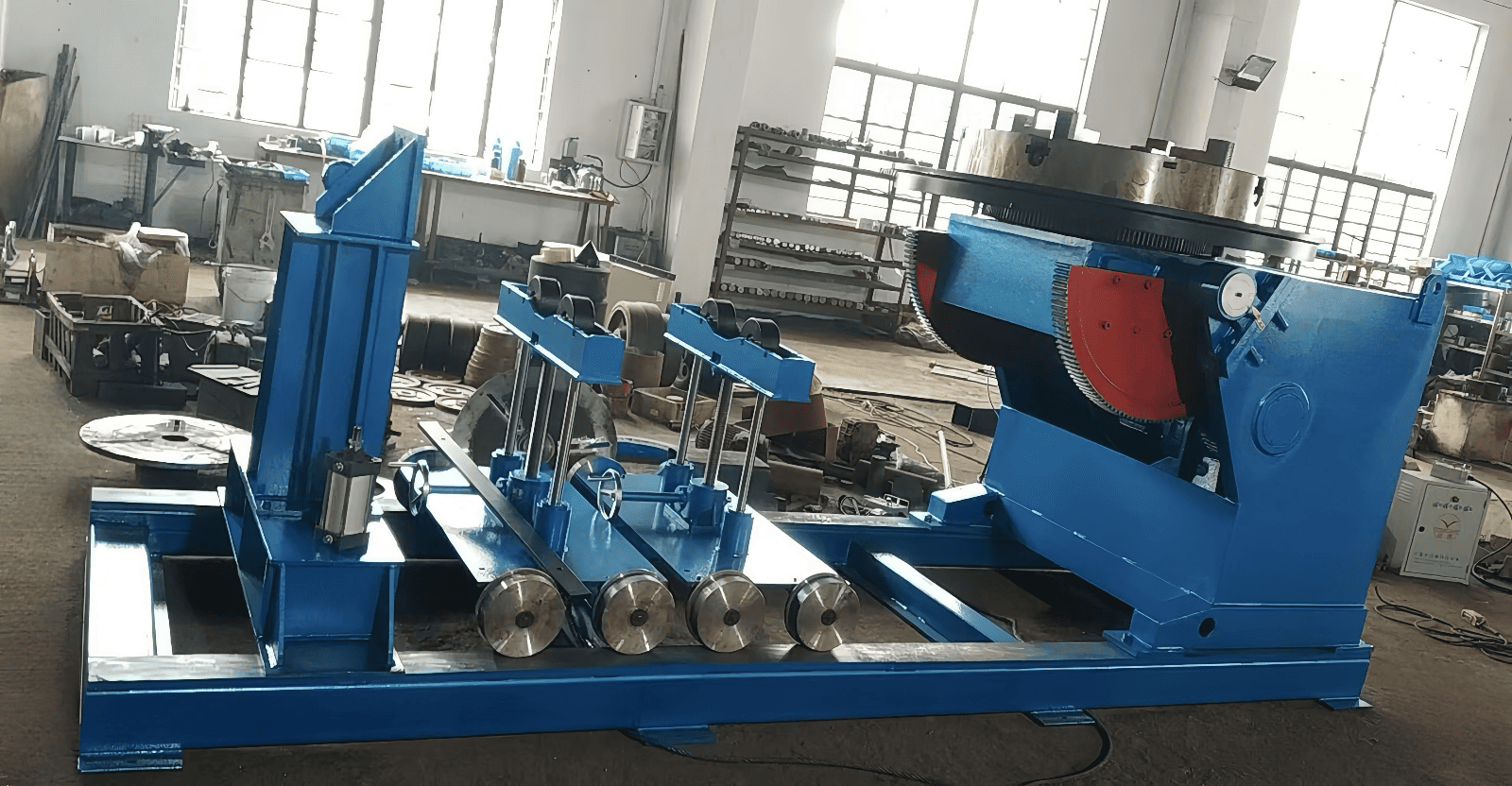
Welding is an art that requires precision, composure, and efficiency to make successful welds. For those in the manufacturing world, where user expectations for weld quality and production rates are exceptionally high, rotary weld positioners have evolved to meet this demand. This type of equipment has been designed for rotating workpieces, thereby making the work of welders easier and substantially reducing the need for human intervention, making these machines applicable even to very complex projects.
This document serves, to some extent, as a Rotary Weld Positioner Manual, as it covers the essential aspects of directional welding turntables, including their advantages, operating principles, and various classes and criteria for selection. Once again, welder, we have the apparatus to assist you. Whether you’re fed up with the same welding procedures or would like to know how a beginner can quickly improve their skills, the whitepaper is here to guide you through what matters. Before that, see how you can adjust the welding process and pay super attention to the details.
Introduction to Weld Positioners

Welding positioners – a welding tool for clamping and rotation of the work pieces, providing conditions for precise and rapid welding work. They enable welders to perform an excellent job to the attainable level, and all this is achieved with very minimal physical activity. It helps to achieve quality welding by positioning the workpiece at the optimal angle. Therefore, there is no need for constant adjustments when working with these devices. They provide more comfort, especially to the operator, reduce workload, which is very tiring, and lower the throughput time. Welding positioners are utilized in various industries, including automotive, aerospace, and manufacturing, and can facilitate both micro and macro welding.
What is a Rotary Welding Positioner?
A welding positioner provides both the welding and the workpiece a moment of parity, while the motorized articulation enables angular displacement. The welding positioner is compartmentalized as illustrated above, featuring a headstock clutch (lathe chuck) with a motor for indexing, along with process control that enables automation. For the bumper, light bar, and clamp used in assembly and automation, welding can be performed using torches without any external manipulation or personnel intervention. This configuration of both volumes and tooling jigs takes a very short time to install, making it quicker to weld your materials compared to the rotary welding table, which requires longer machining times or even longer setup times since mounts must be fixed in place.
The Role of Weld Positioners in the Welding Process
The role that weld positioners play in welding services cannot be overstated, as they enable the targeting of areas that were previously unreachable. New research suggests that welding positioners not only enhance welding accuracy but are also essential elements in reducing project completion time, a crucial factor. A company involved in manufacturing has to use a Positioner. The rollers help hold and rotate the plates together, enabling a welder to conduct skilled and smooth welding, resulting in high-quality work. Additionally, these devices help operators maintain appropriate ergonomic positions, leading to a decrease in workplace accidents and a reduction in fatigue levels. And Sixth, operatives who operate the positioners now have the smile of quality on their faces thanks to developments in automation. Present-day positioners are interfaced and linked to robotic welding equipment, further improving production efficiencies and reducing operational costs.
Importance of Understanding Welding Positioners
Currently, knowledge of welding positioners is vital to current production and fabrication activities, as they contribute to increased productivity and safety in the workplace, while also enhancing the quality of the work. Much attention has been paid to how welding positioners can improve functionality, but the focus has primarily been directed towards automation and precision welding. As the world economy trends towards Industry 4.0, utilising welding positioners with advanced robotic systems has now come to the fore. Such knowledge enables companies to optimize their processes, minimize the frequency of plant shutdowns for maintenance purposes, and remain profitable while meeting consumers’ evolving needs for high-quality, cost-effective products. Keeping up to date with this changing state and these tools within it, as well as their respective uses, helps service providers and managers efficiently solve issues related to productivity and security in their working environment.
Features and Benefits of Rotary Weld Positioners

- Enhanced Precision
Position rotators increase the chance of the fabric locating. This prevents the incorrect calibration of the fabric during the welding process.
- Improved Efficiency
These enhance the effective alignment of the fabric, significantly reducing the need for adjustments.
- Versatility
The capacity of rotary positioners to accommodate different designs and the weight of raw materials contribute significantly to the engineering alloy welding process when operating such machines.
- Operator Safety
The application of rotatory welding hoses within industries offers ergonomic benefits, where the hardware has been carefully designed to minimize strains on the operator. This is because of the elimination of the need to handle primaries of the given dimensions.
- Cost Savings
Precision improvement, as well as minimizing the significant pace of work, leads to resource conservation, especially human resources, resulting in lower operational costs over time.
Therefore, these attributes are more readily usable by businesses, as increasing outputs saves time and resources. Moreover, the technology in question ensures that products comply with stage control, regardless of the speed at which they were produced.
Improving Welding Precision
Enhancing welds and other fabrication processes is a blend between cutting-edge solutions, skilled craftsmen, and standard procedures. With the use of welding rotators, the workpiece is controlled, thereby minimizing the inaccuracy of manual adjustments. Again, there are certain practices, especially modern ones such as the use of laser welding, as well as machines that incorporate computer-aided design, which are effective in improving the precision of technological processes. The present is marked by other disciplines as well—new tools, such as AI-powered welding and flexible automation, have become a concentration area for employers lately, showcasing the capabilities of technical advancements in terms of precision welding and efficiency. Through these advancements, they can achieve high-quality and uniform finishing with minimal defect correction, thus increasing productivity and reducing operational costs.
Enhancing Efficiency in Welding Operations
With the emergence of concepts such as “the use of artificial intelligence for welding” and “the automatic welding technology,” we realize that producers are seeking higher levels of production effectiveness in welding. The question is, what does it mean to bear fruit?
Artificial intelligence, when combined with robotics, can significantly enhance the welding process by increasing precision and accuracy, reducing human error, and accelerating the overall process. For example, AI-based programs are capable of monitoring and understanding how two parts are positioned about one another or how they move in real-world 3D space, allowing welding parameters to be adjusted automatically without human intervention. This eliminates arithmetic errors associated with traditional PID or other automated systems. This results in the elimination of reworks and enables the fabrication of welds with proper proportions in all attempts. Moreover, automated welding enables manufacturing to address more complex assemblies with rapid and straightforward diagnosis, thereby preventing machinery breakdown. In this way, the corporation can reduce working hours by fully integrating predictive maintenance, fault detection, and condition monitoring. Such developments serve to enhance the efficiency of business operations while also addressing manpower deficiencies by reallocating skilled labor to high-level activities that do not require excessive mental demands. The introduction of AI and automation in welding makes the process more efficient and cost-effective.
Safety Considerations with Welding Positioners
When working with welding positioners, safety is of the utmost importance, as it ensures both the health of the user and the desired operational output. The following are the five essential precautions:
- Load Capacity Limits
It is strict that the weight indicated as the load capacity of the welding positioner is never under or more than that. For instance, if the welding positioner is rated for 1,000 lbs, there should never be more than 1,000 lbs worth of material on it.
- Proper Workpiece Securing
Ensure the workpiece is securely fastened or clamped in position before switching on the positioner head. Insecurely fixed parts often wear away during rotation, necessitating the replacement of the defective part, which poses a risk to both the user and the machine itself.
- Routine Maintenance and Inspections
Chevlon’s correction of the positioner can help the positioner last longer without causing an accident. In addition to increasing the service life, well-maintained equipment significantly decreases the occurrence of accidents.
- Operator Training and Competence
Every person operating the welding positioner must be trained and tested for competency. This training also covers sections related to understanding, using, and improvising all controls. In the case of subsequent steps, working with work pieces shall also be included in this training.
- Emergency Stop and Safety Features
Activation and Use of the Emergency Stop-In Case Of Unintentional Hazards. Mandar Stop. Adjacent to the loads being used is very dangerous and implies the necessity for additional protection in the form of extra complementary emergency features.
Types of Rotary Welding Positioners

- Tilt-Table Positioners
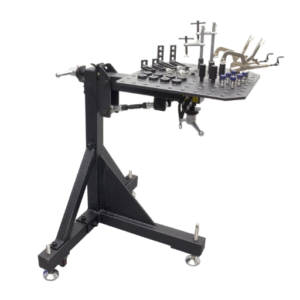
Tilt-table positioners enable the tilting of the welding area to various angles while also facilitating access to previously inaccessible zones.
- Turntables
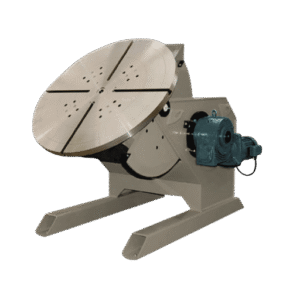
Rotary tables are round table structures that can be used for producing circular welds or for gauging items that require a constant torque equilibrium.
- Headstock and Tailstock Positioners
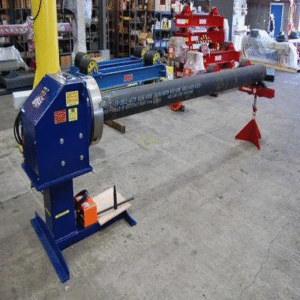
Head And Tailstock positioners are primarily used for longer workpieces, as they can be placed at both ends of the workpiece with the capability for rotation.
- Gear-Driven Positioners
These are very accurate in use, as the movement and control in welding are achieved through the use of a precision gear.
Each type of these positions is used for specific purposes, depending on the weldment’s size, shape, and the welding requirements.
Overview of Different Types of Welding Positioners
Welding positioners are crucial for achieving practical and precise welding. The recent statistics continue to show the following as the commonly used ones:
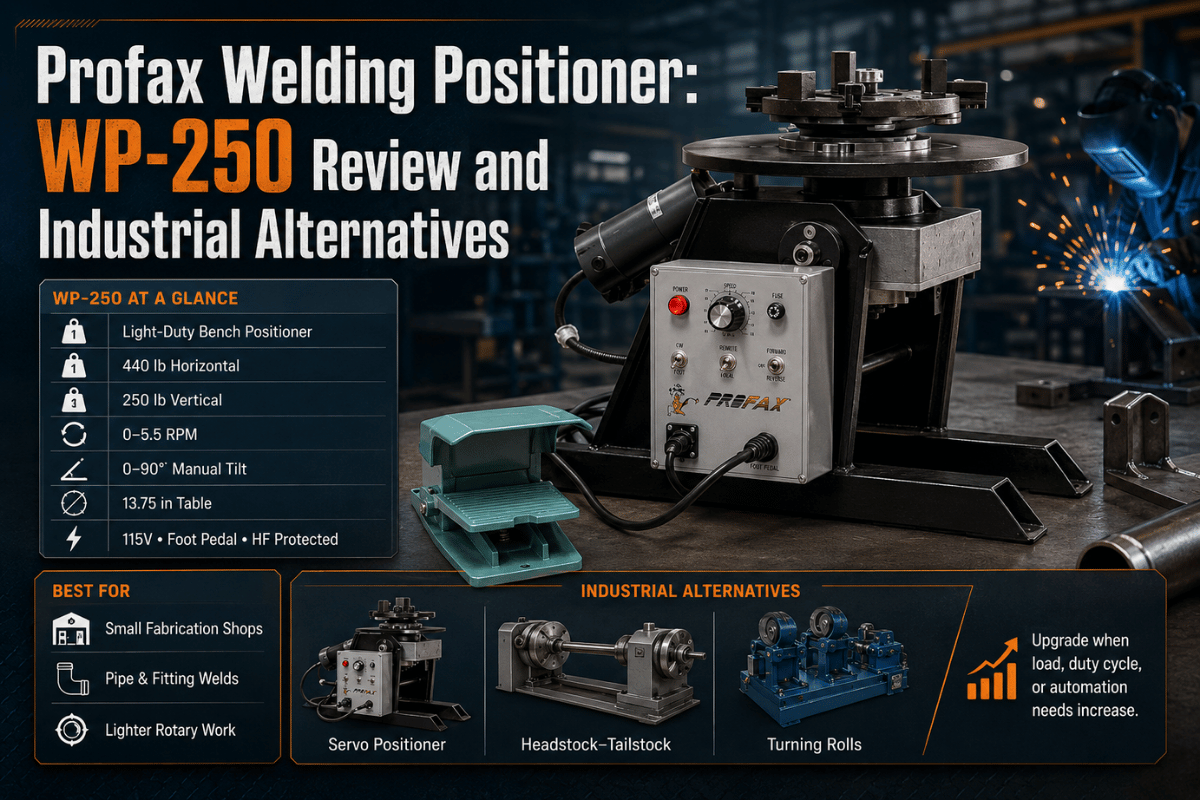
1. Benchtop Positioners
They are small and flexible fixtures used mainly for smaller sizes. They are typically used in jobs that require meticulous detail in welding, as well as when it is essential to use the positioner with minimal effort.
2. Tilt-Rotate Positioners
With this device, both tilt and rotation motions are permitted, as two axes allow for relative movements. It suits the work where it is necessary to access workpieces from different angles or orientations, and is suitable for industries such as the automotive and aerospace sectors.
3. Turntables
Turntable positioners are designed for rotating metal horizontal-axis workpieces in a circular motion. This is, for the most part, valuable for circular welds, such as pipe welding and welding of cylindrical parts.
4. Robotic Positioners
Robotic positioners are devices that enable precise positioning of materials or workpieces. Robotic positioners can be integrated seamlessly with robotic welders, taking advantage of their high accuracy and quick motion, which makes them crucial in all industrial machining processes.
The fabrication process largely determines which weld positioner will be selected, considering the complexity of the compound layer of welding and the typical modifications required in the welding process. Current trends indicate a growing application of robotic positioners, as such devices can enhance effectiveness and quality in compliance with the requirements of Industry 4.0.
Turntable Models and Their Applications
- Standard Rotating Turntable
-
- Description: Designed for small and medium-sized components, this model is particularly advantageous in applications that require welding in a circular pattern.
- Capacity: Up to 500 lbs.
- Applications: Welding of pipes, assembly of valves and flanges, and assembling small motor parts.
- Heavy-Duty Turntable
-
- Description: These are high-capacity models, starting with the heavy-duty model, ensuring that welding operations, which demand high stability and precision, can be performed entirely.
- Capacity: Up to 10,000 lbs.
- Applications: Earthmoving equipments, manufacturing of large metallic structures, fabrication of steel structures, among others.
- Tilt-and-Rotate Turntable
-
- Description: Projecting the possibility of an extensive tilting surface in addition to rotation lends more possibility to the already conceivable areas of welding.
- Capacity: Up to 3,000 lbs.
- Applications: Flange swivel, bent structures, angular welds.
- Programmable Turntable
-
- Description: Featuring Numerous operations that can be set to repeat automatically will sensibly be preferred for Batch Manufacturing.
- Capacity: Up to 2,000 lbs.
- Applications: These include those commonly found in mobile welding-type industrial companies and production lines, as well as subspecialties such as precision welding.
- Compact Bench Turntable
-
- Description: A low-cost option, although it has a somewhat limited functionality due to the size, for small, tight spaces or home machining setups.
- Capacity: Up to 200 lbs.
- Applications: Craftworks, home repairs, video recording in shooting clubs, and other portable on-the-go items.
Headstock-Tailstock Positioners Explained
Welding booths and fabrication areas are equipped with a chuck that secures work and can be spun for greater ease during welding or other operations. The positioners have a chuck that rotates the workpiece and a tail, which is an assembly containing a bed for the work shell that also allows the shaft to rotate on one side.
By allowing a controlled turn of the workpiece, off-cuts are also reduced, and their movements and position are maintained. This contributes to productivity and reduces the strain on the operator.
These include discussions regarding the specific applications. These are commonly used in industries such as the automotive, aerospace, and construction machinery sectors. They are required for tasks in which the structure of the chassis is to be fixed back together, welding of complicated frames, or other calculations related to movement, but in a level manner. Companies also appreciate how these positioners reduce disputes and improve the quality of the weld by controlling the slant and eliminating human intervention.
Applications of Rotary Welding Positioners in Various Industries

Automotive Industry
Rotary welding positioners facilitate the manufacturing of under-body, fuel, and frame overhead welding applications. This ensures consistent and accurate welds, interlinked with higher productivity within the assembly line.
Aerospace Industry
These devices allow aircraft subsections welding, including rotational and orientation setups, which are essential for accurate welding.
Heavy Equipment Manufacturing
When there is a need for fabrication of parts like girders, peripheral apparatus, advanced welding machines receive a new impetus from roll welding positioners to ensure adequate welding of huge and scattered structural elements.
Oil and Gas Sector
Additionally, rotary welding positioners play a crucial role in the construction of pipelines, gas and oil tanks, and pressure vessels. The rotation distraction created in welding components is also essential for the quality of work in these large constructions.
Automotive Industry Use Cases
Rotary welding positioners will always hold a unique place in the automotive industry, particularly in terms of precision requirements. They are most appreciated in the manufacture of parts such as exhaust systems, cardan shafts, and chassis. In the welding process, attention to welding quality is crucial, which can be particularly challenging in high-volume production or electronic systems that require minimal human intervention. There have been shifts towards using conventional techniques of robotized welding. The use of rotary welding tables, which are integrated into industrial robots, facilitates smooth work by simplifying the process and increasing the overall yield of the plant. Their ability to adapt to different designs remains the primary reason why they are adopted in the current form of the automotive industry.
Aerospace Applications
Rotary welding turntables are a crucial aspect of the aerospace industry. This is because it is a sector that strives for perfection and reliability in the face of intricate and delicate components. The fact that they can meet the most demanding standards of aerospace means that there has to be a high-quality welding class. Below are five specific areas where rotary welding turntables are necessary in the manufacturing of systems for aerospace applications:
- Jet Engine Assembly
The concept of rotary welding positioners is essential for conducting precise welding of jet engine components. This includes welding the steam turbines’ blades and supporting the welded workpiece with a smooth finish operation on the engine casing.
- Fuselage Fabrication
Rotary positioners are also used in aircraft bodywork, particularly when working on the fuselage. The use of positioning devices poses a challenge for welding larger panels, but it can also potentially introduce a more uniform tension in the transverse direction, which can be utilized to enhance weld quality and reduce the need for scrapped welded parts.
- Rocket Propulsion Systems
The assembly of rocket engines requires the use of rotary welding positioners to enable proper alignment and welding of the propulsion systems, which are crucial for accommodating the forces generated during liftoff.
- Landing Gear Production
The problem of welding landing gears, including their equipment and elements, is undoubtedly solved with the help of positioners. Here, the problem of simultaneously treating bulky but differently weighted landing gear parts is solved competently.
- Satellite Manufacturing
Rotary positioners enable satellite manufacturers to produce reliable satellite components with fragile shells in their desired shape without distortion.
These suggestions exemplify how rotary welding turntables enable space-age construction despite technological and business barriers in the aerospace industry.
Construction and Manufacturing Scenarios
Rotary welding positioners are essential in construction work, as well as in manufacturing settings where precise accuracy and efficient time management are crucial. They are critical to fabricating large steel structures, piping, and heavy machine components, which must have uniform, high-quality welds applied over complex structures. These positioners eliminate the inconvenience of manual labor and the inconsistency of welds by precisely holding workpieces in place, thereby enhancing welding quality and reducing the likelihood of defects.
On the other hand, companies in this industry are seeking ways to enhance their automation devices in transportation, driving demand for machines such as turntable welding positioners. There are significant issues that need to be addressed in manufacturing, including flexibility, precision, detail, and new safety standards. These processes not only expedite manufacturing deadlines but also align with the industry’s sustainability preferences by preventing resource and energy wastage.
Choosing the Right Welding Positioner for Your Needs

When purchasing a welding rotator, consider the requirements of another project, including the weight and size of workpieces, the type of welding, and the rigging method. Check the weight the positioner can handle to ensure it is compatible with your pieces. Consider the positioners’ movements and rotation irons to find out whether welding angles and tight tolerances can be met. Also, pay attention to long-term potential: use materials and mechanisms that will not need to be replaced or scrapped too frequently. One must seek this balance of functionality in their sought-after positioner for more effective, precise, and safe results.
Factors to Consider: Load Capacity and Rotation Speed
When selecting a positioner, it is crucial to consider both the maximum load capacity and rotational speed to achieve optimal results and ensure safety. The following are five checkpoints that can be used to evaluate the presence of the above factors:
- Maximum Load Capacity
Determine the heaviest load that the positioner is rated for, which includes the weight of the workpiece and any applicable fixtures. This is important because exceeding weight limits can cause equipment deformation and lead to accidents.
- Rotational Speed Range
When choosing a box, the rotational speed range must be evaluated. Lower speeds are suitable for some welding applications, for example, whereas in some other applications, higher speeds are almost mandatory for increased productivity.
- Positioner Stability Under Load
The other crucial factor worthy of consideration is the maintenance of the positioner in conditions of load close to its maximum, where it should consistently and uniformly balance; this allows for acceptable precision and safety.
- Control Over Rotation Speed
Also, check the relationship between a preset speed and the actual speed achieved with the specific technique and material during the weldment or for any other purpose. In this case, the positioner must have the capacity to adjust the speed to match if the prerequisite is so.
- Impact on Weld Quality
Material strength is taken into consideration so that one can follow the specified technique without any issues. That is, excessive load capacity and rotation faults can deteriorate the welding effect. Such faults risk maintenance of the weld without alignment or any defects in the weld, nevertheless.
Compatibility with Welding Processes
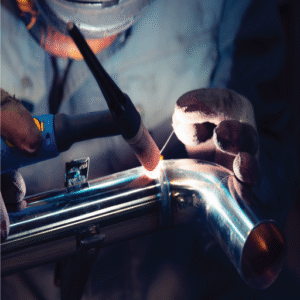
When assessing the adaptability of welding procedures with the machine, it is necessary to analyze the compatibility of the positioner with various welding methods, including MIG, TIG, and stick welding. Additionally, one should verify if the given positioner is equipped with the required degree of freedom, such as inclination, speed, and load, to service my welding applications. Such features facilitate welding excellence both economically and in addressing issues of poor quality welds.
Tips for Selecting the Best Welding Positioner
- Determine Load Capacity Requirements
Ensure that the positioner you use allows for the weight of the workpiece to be lifted, including any attached structures or clamps that may be present. For example, in medium-sized applications, 500 lbs calibrated propellers are sufficient for the task, but larger industrial ones would require anywhere between 1000 lbs and above.
- Evaluate Rotation and Tilt Capabilities
When searching for a welding positioner, ensure that its features provide easy and precise motion in terms of rotation and tilt. This is crucial in achieving perfect welds in the specified positions. A welding positioner with 360-degree rotation and 135-degree tilting capability is ideal for complex welding work.
- Check Speed Adjustability
Rotational speed is also one of the speed controls used in conjunction with the diameter of a spinning torch, the type of equipment used, and, of course, the material thickness. Welders will need to use a slower welding motion when working with smaller and lighter materials, and a faster welding motion when welding thicker materials. Positioners equipped with variable speed controls from 0,5 to 5 RPM are suitable for most applications.
- Consider Size and Workspace Compatibility
For example, the size of the positioner should allow it to fit into the working station without jeopardizing safety or obstructing ease of use. More miniature benchtop-type welding positioners are suitable for fixed welding requirements in a set location, such as an office. At the same time, larger, heavy-duty industrial models are best suited for use on the floor.
- Assess Power Supply Options
Depending on how your workspace is wired, pick the positioner type with the right power requirement. The power input, such as 110V or 220V, should be compatible with your existing power supply. Some high-grade models will come with battery-powered systems for enhanced convenience in using the positioner.
Reference Sources
-
Motion Index Drives: Guide to Weld Positioners – Explains configurations and applications of weld positioners.
-
Capitol Iron Works: Essential Guide to Welding Positioners – Covers types, features, and uses of rotary welding positioners.
-
Cyclotron Automation: Welding Positioners: A Complete Guide – Details the role of welding positioners in optimizing welding angles and efficiency.
-
Bancroft Engineering: Welding Positioners 101 – Discusses automated options and improvements in welding operations.
- Top Rotary Welding Positioner Suppliers in China
Frequently Asked Questions (FAQs)
Q: What is a rotary welding positioner?
A: A rotary welding positioner is a specialized piece of welding equipment designed to hold and rotate workpieces during welding operations. It enables welders to position the workpiece at the optimal angle for welding, thereby improving accessibility and efficiency. The positioner can be used for various welding processes, including manual, semi-automatic, and automatic welding.
Q: How do I choose the proper rotary welding positioner for my needs?
A: When selecting a rotary welding positioner, consider factors such as the size and weight of your workpieces, the types of welding you will be performing, and the desired welding speed and productivity. You should also evaluate the positioner’s specifications, including its load capacity, axis of rotation, and repeatability, to ensure it meets your welding requirements.
Q: What are the different types of welding positioners?
A: There are several types of welding positioners, including headstock tailstock positioners, rotary tables, and multi-axis welding positioners. Each type serves a specific purpose in the welding process, enabling the optimal positioning and rotation of workpieces according to the requirements of the welding operation.
Q: What are the applications of rotary welding positioners?
A: Rotary welding positioners are used in various applications within the welding industry, such as fabricating large structures, performing seam welding, and aiding in robotic welding operations. They enhance precision and control, making them ideal for complex welding tasks and improving overall welding productivity.
Q: How does a rotary welding positioner improve welding productivity?
A: By allowing for efficient positioning and rotation of workpieces, rotary welding positioners can significantly reduce the time spent on setup and adjustments. This increased efficiency leads to faster welding speeds and higher throughput, ultimately enhancing productivity in welding operations.
Q: What is the difference between manual welding and automatic welding with positioners?
A: Manual welding requires the welder to control the welding gun and adjust the position of the workpiece manually. In contrast, automatic welding utilizes advanced equipment and systems to control the welding process. Rotary welding positioners can facilitate both methods by providing stable and accurate positioning for optimal results.
Q: How does the axis of rotation impact the welding process?
A: The axis of rotation determines the angle and orientation of the workpiece during welding. A properly aligned axis is crucial for achieving high-quality welds in various positions, including both horizontal and vertical orientations. It affects the accessibility of the welding area and can influence the effectiveness of the welding process.
Q: Can rotary welding positioners be used for different types of welding processes?
A: Yes, rotary welding positioners are versatile and can be used for various welding processes, including MIG, TIG, and seam welding. They are compatible with multiple welding machines and can accommodate a wide range of workpiece shapes and sizes, making them a vital tool in many fabrication environments.
Q: What are the benefits of using a rotary welding positioner turntable?
A: A rotary welding positioner turntable provides a stable platform for holding workpieces while allowing for smooth and controlled rotation. This stability is crucial for maintaining a consistent welding speed and quality, particularly in complex or intricate welding tasks. The turntable design also facilitates easy access to all areas of the workpiece, improving efficiency.
Q: What should I know about welding positioners and their specifications?
A: When considering welding positioners, it’s essential to understand their specifications, including weight capacity, speed settings, and the types of movements they can perform. Knowing these details will help you select a positioner that meets your specific welding needs and ensures successful outcomes in your projects.


![Benchtop Welding Positioner Guide: Specs, Types & How to Choose [2026]](https://resizeweld.com/wp-content/uploads/2026/05/0-8.webp)