Deciding on the right welding technique can greatly improve the level of quality, efficiency, and cost-effectiveness of your project. Tungsten Inert Gas (TIG) welding, also known as Gas Tungsten Arc Welding (GTAW), and Metal Inert Gas (MIG) welding, or Gas Metal Arc Welding (GMAW), are two of the most commonly used welding processes in numerous sectors.
Every method provides quintessential benefits that will suit particular applications based on factors such as material, design of joint, or production volume. In this work, the intricacies of TIG and MIG welding practices will be compared alongside their inherent capabilities and against which situations might make one method more appropriate than the other. Whether you’re a seasoned welder or a newbie regarding any kind of welder at all, this guide empowers you with the knowledge in making a more informed choice within your welding pursuits.
Key Takeaway
Choose TIG for precision, aesthetics, and thin materials; choose MIG for speed, ease of use, and high-volume industrial production.
Understanding the Welding Processes
TIG Welding
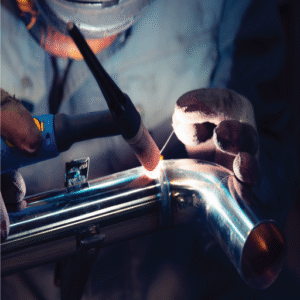
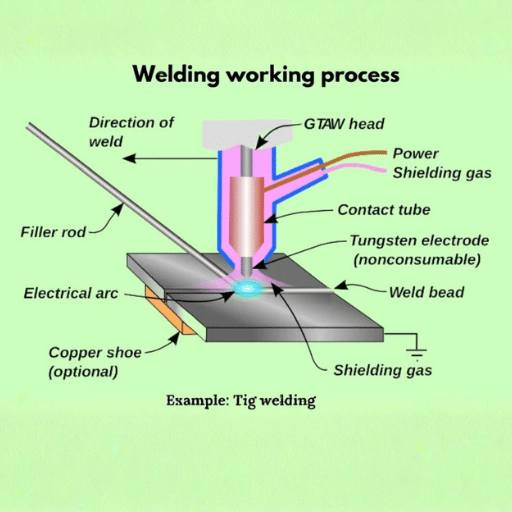
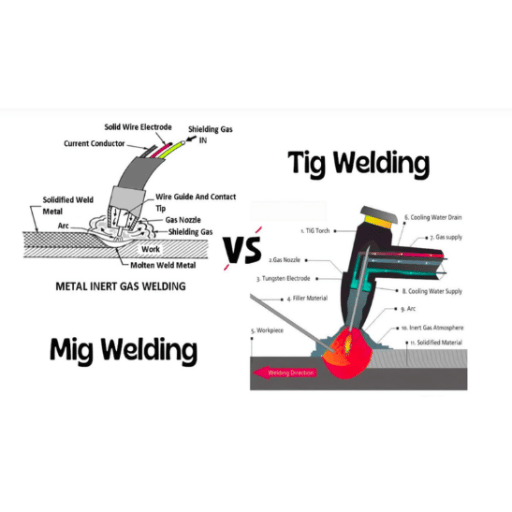
The Tungsten Inert Gas (TIG) welding is a special welding technique that brings about the weld through the use of a tungsten electrode, which does not exist in the beginning (non-consumable). This procedure involves an inert gas, which could be argon generally, to keep the weld area out of atmospheric background, thus ensuring that a clean and highly qualitative weld can be set up.
This method is essentially meant for thinner materials and applications that require critical or good-looking welding. It has been found at all times within the aerospace, automotive, and piping industries, where one has to pay much attention to precision.
MIG Welding
Gas Metal Arc Welding is widely known as Metal Inert Gas (MIG) welding. With the aid of Gas Metal Arc Welding, a malleable-wire electrode feeds continually into the weld pool feed, offering a function for welding that is fast and easily maintainable. Protection from the effects of contaminants is often provided by a shielding gas, most often a mixture of argon and carbon dioxide.
Especially in manufacturing environments, construction tasks, or any other heavy-duty welding, MIG welding is commonly used for thicker metal; thus, most preferred. Another great point for the learners would be its simplicity of use.
What is TIG Welding (GTAW)?
GTAW, also known as TIG welding, is a very intricate welding technique that employs an electric arc to join the metals. Here the tungsten electrode does not dissolve, as it functions both as an electrode and as a filler metal. A shielding gas under an inert atmosphere (mostly argon: sometimes in a mixed combination with helium) is used to shield the weld area from atmospheric contamination or oxidation.
TIG welding is not like MIG welding because, without filler metal, TIG welding is an option, but if filler metal is required, it must be fed in by hand. TIG welding is an excellent process for intricate and high-quality welding jobs on thin materials like aluminum, stainless steel, and titanium. Even though the TIG process is slow and requires a high level of skill, the material control and exceptionally clean results make this welding process extremely desirable for industries like aerospace, automotive, and artistic welding.
What is MIG Welding (GMAW)?
MIG welding, also popularly called Gas Metal Arc Welding (GMAW), is an aesthetically open welding method that uses a continuous feeding consumable electrode together with a shielding gas. The electrode feeding automatically allows for relatively high-yielding productivity, which, therefore, can be found useful in welding a wide range of materials, for example, steel, stainless steel, and aluminum.
Industries have come to favor MIG welding due to its high speed, ease of operation, and ability to deliver consistent, superior-quality welds with less post-weld clean-up. It is less precise than TIG, but the advantage of using MIG welding for most industrial applications is its reliability and user-friendliness.
Key Differences Between MIG and TIG Welding
In their techniques, applications, and adaptability to various tasks the arena of welding comprehensively demarcates between MIG (Metal Inert Gas) and TIG (Tungsten Inert Gas) welding. The MIG welding process employs a continuously fed wire electrode to be melted and transferred to workpieces, making it ideal for high-speed, large-scale undertakings. TIG welding, conversely, uses a non-consumable tungsten electrode and sometimes a filling metal stick and allows for greater control and even pressure.
It is preferred for welding in refined applications like for the servicing of thinner materials where surface aspects are under aesthetic scrutiny. MIG welding is generally held to be faster and more amenable for learning than TIG welding since it requires lesser technical skills than a TIG process would need. Thus, distinction marks them in industrial-commercial uses, including that MIG welding is good for high-volume manufacturing while TIG would be the better choice for fine, high-end craftsmanship.
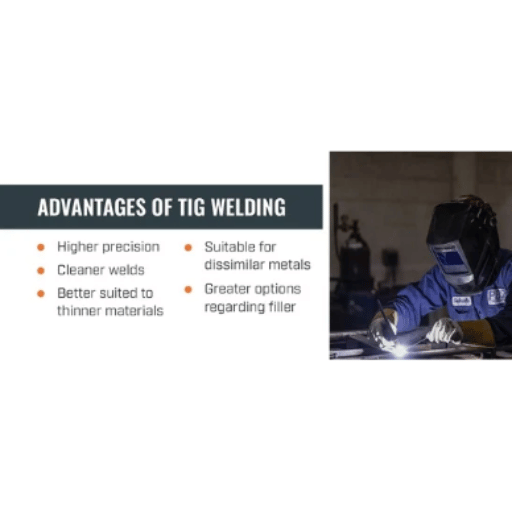
Advantages of TIG Welding
- ✓
Precise Welds: TIG welding is essentially for precision welding with intricacies and details. - ✓
Cleaner Finish: There is hardly any spatter generated by fusion welding, hence reducing the need for excessive post-weld cleanup. - ✓
Versatile: TIG welding is done over a wide range of metals such as aluminum, stainless steel, and the other non-ferrous materials. - ✓
Strong and Durable Joints: It makes powerfully welded joints that give higher wear and erosion resistance. - ✓
Non-Consumable Electrode: The tungsten electrode in TIG welding does not melt, lessening material waste.
Precision and Control in TIG Welding
The TIG process offers a sublime agility and control for applications demanding thorough or perfect standards. It precisely places heat input and filler material as demanded by the operator rendering clean and precise welds with very little distortion. Control can be further improved by fine adjustment of amperage as the welder operates on intricate, thin, or delicate materials. It is vital to maintain consistency and stability using non-consumable tungsten electrodes, both in standards and income for such critical metiers as aerospace, the automotive industry, and architecture.
Quality of TIG Welds
Determinants of a TIG weld’s quality are precision, strength, and finish. TIG welds are metallurgically clean with no slag, spatter, or scale, thanks to the controlled arc and the shield gas. Location on these two factors makes joints-with-no-defect-stiffly strong and almost distortion-free, that thereby attains tight specifications in high performance. An important role in this is the ability to provide consistency by precisely controlling heat and filler material—even on thin or mixed configurations. Therefore, a practically unsurpassed welding method provider for high-quality, dependable results in challenging processes.
Applications of TIG Welding
TIG welding finds wide usage in sectors where precision and strength in welding are called into question. It spans an entire world of existence with the aviation industry in the manufacturing of critical components/frame engine blades, automotive manufacturing in the making of lightweight, high-strength assemblies, and manufacturing of chemical processing equipment due to its compatibility with stainless steel and exotic alloy.
Further to all of that, it will prove to be equally indispensable in the production of medical devices, where it needs to place nice ‘n sanitary welds, and in the arts and jewelry sectors for delicate, high-detailed works. This TIG weld is thus very important in any service that concerns enhanced weld quality and premium precision.
Advantages of MIG Welding

- ✓
Ease of Use: As compared with other weld processes, MIG welding is a lot simpler to learn and practice, rendering it ideal for newbies and professionals alike. - ✓
High Welding Speed: A continuous wire feed feature means fast welds are possible, and therefore, productivity will rapidly increase! - ✓
Versatility: It suits welding on a broad range of metals and alloys, including carbon steel, stainless steel, and aluminum. - ✓
Consistent Weld Quality: With a low level of splatter, the weld has a very uniform appearance, thereby reducing the need for extensive post-weld cleaning. - ✓
Efficiency: The automated working of the MIG welding process minimizes downtime and increases the efficiency of production environments.
Speed and Efficiency in MIG Welding
MIG welding is famous for its rapid welding speed and efficiency, backed by the continuous wire feed system and its ease of automation. The whole process was realized with little human intervention, enabling the operator to focus on precision and consistency in welding operations. Furthermore, rapid deposition rates during MIG welding mean production times are also cut short with no compromise to welding quality. This means that MIG welding is a stronger option for most of the large manufacturing communities where unfavorable production times and productivity are major factors.
Best Use Cases for MIG Welding
For processes needing repetition, an extreme arc rate to weld may be crucial, making MIG welding the ultimate solution. MIG welding sees its best applications in assembling car bodies in the automobile sector, in cases of heavy equipment construction, and in construction due to the fact that it is used in producing steelwork. Processes found a very good application in industries where alloying of aluminum and aluminum-based materials became inevitable. Smaller steel plate having high degrees of hardness could be welded successfully. Because of its capability for clean welding, spatter is least probable. Essentially, MIG is good in the hands when there is a long continuous weld since the mechanical art put into it will ensure good results; also, it reduces the labor cost and at the same time fosters consistent results.
⚠️ Limitations of MIG Welding
MIG welding machines require constant energy supply and a shield gas, making the technique impractical for use in an open environment where resources might not be readily available. Very thick materials and highly contaminated surfaces are badly dealt with; improper cleaning can reduce weld penetration. Additionally, shielding gas can be easily disturbed by drafts or wind.
Comparative Analysis: TIG vs MIG Welding
| Feature | TIG (GTAW) | MIG (GMAW) |
|---|---|---|
| Precision | Extremely high; best for thin materials. | Moderate; best for thicker materials. |
| Ease of Use | Difficult; requires high manual skill. | Easy; beginner-friendly. |
| Speed | Slow; focused on quality over quantity. | Fast; ideal for high-volume production. |
| Cost | Higher (equipment & labor). | Lower (equipment & efficiency). |
- 1
Precision and Control
The controls in TIG are much finer than that in MIG making TIG somewhat advantageous in complex, quality-conscious welding of comparatively light materials. On the other hand, MIG is handy for fast and efficient welding on thicker materials. - 2
Ease of Use
The ease of learning MIG welding has made it appealing to beginners as well as to high speed production. TIG welding requires highly precise manual control over the filler material and torch. - 3
Material Applicability
TIG welding can be performed on different materials such as aluminum and stainless steel; it would be more suited for all exotic alloys. MIG welding is highly efficient on carbon steel, stainless steel, and aluminum, but its efficiency becomes questionable when done on exotic alloys. - 4
Speed and Efficiency
MIG is, by far, faster than TIG. MIG welding is perfect for heavy construction and industrial construction because TIG mostly precedes the most crucial factor of a stainless finish without any need for further treatment in post-processing. - 5
Cost Considerations
Because the MIG welding equipment yields higher maintenance ease and reduces cost to a new extent, it could well be the most cost-effective for high-speed output operations. TIG welding equipment costs may go higher toward a very complex machine justified for only the better-quality-weld projects.
The choice here depends ultimately on the governing project requirements on material type, precision, speed in production time, and financial constraints: TIG or MIG.
When to Choose TIG Welding
TIG welding is the best choice when precision and weld quality are specified. It stands out for applications such as thin materials, exotic alloy work, or any project that requires polished welds without any contaminating material. A lot in the aerospace, automobile, and art fabrication industries is gained from TIG welding exclusively to render durable joints that are relatively clean and aesthetically pleasing. It would prefer the requirement for more adjustable and specialty joinery using superior levels of control and aesthetic quality; on condition that it is required to invest more time and acquire more skill.
When to Choose MIG Welding
MIG welding stands out in efficiency, speed, and good usability for its fully automatic operational process, being most effective on thicker materials such as steel and aluminium. It finds frequent application in constructions, manufacturers, and heavy equipment repairs. Technically superior weld qualities can come from an invariably accelerated production cycle, as with MIG processes. The MIG process is difficult to beat in terms of its balance between ease of application and top-notch weld performance. It is the top choice for a long-lasting solution that combines widespread availability of consumables with relatively high operating skills.
Cost Considerations for TIG and MIG
When cost questions are concerned from TIG and MIG processes, it includes equipment, consumables, and operating efficiency in a variety of significant factors to be taken into account. TIG welding generates generally the largest demands and adds cost on the front end because of equipment as well as high-purity shielding gases. It has proper backup options, unlike MIG welding, which is good for big jobs and yet does not need the shielding gas.
The slow operating speed for TIG tightens your labor budget, furthering its unsuitability for large production at an affordable price. In contradistinction, MIG welding is a relatively cheaper alternative in a bigger operation due to the medium necessity of cost-effective equipment and faster process. It should be noted, however, that the consumable costs of MIG might become preponderant, if not exorbitant, in the heavy usage of fillers during one’s processes. Choose your welding type wisely depending upon how precise the project needs to be, and according to the project budget, how much production needs to be carved out of the deal.
💡
Pro Tip
Always clean your base metals thoroughly before starting. While MIG is more forgiving of contaminants, TIG requires absolute purity for a successful weld.
Reference Sources
- ESAB University: Describes the precision and control characteristics of TIG welds.
- Impact Fab: Mentioned strength and penetration comparison.
- Baker’s Gas: Discusses the non-consumable tungsten electrode process.
Frequently Asked Questions (FAQs)
What are the principal differences between TIG and MIG welding?The process of TIG welding utilizes a tungsten electrode practically non-consumable and calls for more precision, whereas MIG welding makes use of a consumable electrode wire with less accuracy and works relatively faster.
Why would one opt for a TIG welding process for precision jobs?TIG welding, through its precise heat and filler wire control, lends itself beautifully to the welding of intricate and fine work.
Which process produces a much greater strength in a weld?Generally, a further removed TIG weld is stronger and more durable because of its control over precipitates and deeper materials.
Does TIG welding offer more in the aesthetic department?Yes, indeed TIG welding does yield cleaner, more visually pleasing welds, sought after for applications also dependent on the appearance factor.
What kind of materials are optimal for TIG welding?The best materials for TIG welding are stainless steel, aluminum, and other nonferrous metals for which strong welds are required.