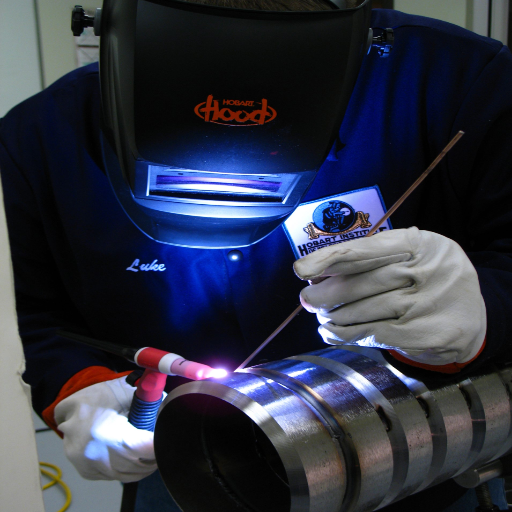
Gas Metal Arc Welding, mainly referred to as MIG welding, is one of the most versatile and widely used welding methods in industrial and home projects. It is generally considered to be very easy, fast, and capable of producing high-quality welds. Hence, it stays at the forefront of welding techniques for professionals and hobbyists alike. But what distinguishes GMAW, and why does it still rank as an essential skill in welding? This blog post delves into the fundamentals of GMAW, exploring the processes behind it and providing advantages and tips to help you master these skills. Whether a practicing welder looking to improve your skills or an amateur wishing to learn the fundamentals, this course will provide you with some valuable information that will help you improve your knowledge even further. Time to get into the basic principles of MIG welding and why it continues to fuel excitement and innovation in metalworking.
Introduction to Gas Metal Arc Welding

Gas Metal Arc Welding (GMAW), commonly referred to as MIG welding, utilizes a continuous consumable wire electrode and a shielding gas to join metals. The wire is fed through a welding gun and melts, fusing with and forming a metallurgical bond to the base metal. The shielding gas protects the weld area from atmospheric contamination, thereby rendering the weld free from impurities. A GMAW weld is best admired for its efficiency, ease of operation, and broad range of applications, thus prevailing among other choices in industry and at home.
Setting the Stage for Modern GMAW
Building upon its traditional foundations, the modern GMAW incorporates new developments to enhance accuracy, productivity, and versatility. A very often asked question about GMAW is, “What makes it stand out compared to other welding methods?” Now, the answer lies in its balance of efficiency and quality: GMAW promotes continuous working with very few interruptions, drastically cutting welding time compared to older or more manual methods. With modern power sources and automation sensors granting even greater ease and consistency to GMAW, welds are of high quality on all materials, from aluminum to stainless steel and even mild steel, across applications ranging from automotive manufacturing to okay DIY repairs.”
The Critical Role of GMAW in Modern Manufacturing
Gas Metal Arc Welding (GMAW) is a traditional welding process, and due to its efficiency, versatility, and adaptability, it has become an indispensable process in modern manufacturing. Its use is the most popular internationally, accounting for around 65% of all welding processes, because it produces high-quality welds at a fast pace, it saves on time and operational costs.
From a technological point of view, synergic and pulsed GMAW-type power supplies provide added significance to welding thin materials with high precision and low heat distortion. It is therefore evident that vehicle manufacturing heavily relies on the GMAW process to build lightweight yet strong vehicle frames, as this now complements design concepts for fuel efficiency and sustainability. Hence, it is envisaged that 80% of all automotive weld jobs will be GMAW weld jobs, due to its viable compatibility with materials such as aluminum and high-strength steels.
Automation is another disruptive factor that is changing the face of manufacturing using GMAW. Robotic GMAW systems are being used extensively in aerospace manufacturing, construction, and shipbuilding applications. These systems increase productivity and are displacement-type welders; that is, they can improve welding accuracy by almost 25%, reducing defect rates and production waste. Along with AI and real-time monitoring systems, manufacturers can maximize the welding process to achieve uniform results and efficient resource handling.
The diversity and ever-evolving technology make GMAW one of the most essential welding applications worldwide, enabling industries to cater to the growing demand for high-quality products while maintaining the modern metrics of efficiency and sustainability.
Article Scope & Value Proposition
This paper aims to provide a comprehensive review of Gas Metal Arc Welding (GMAW) and its applications in modern manufacturing industries. Using Google’s data on recent developments and trending searches, we respond to growing interest in green welding methods and techniques.
Why is GMAW crucial to the manufacturing future?
Owing to its efficiency, GMAW is considered an alternative technology for use. However, it differed from most other techniques in its precision and ability to be applied in many sectors, such as automotive, aerospace, or construction. Modern forms of GMAW, including those interfaced with AI and robotic systems currently being developed, align with the industry’s move towards automation and sustainability. Now, manufacturers can produce greater output with less waste in landfills and conserve resources. Trends will be discussed to provide industry professionals and stakeholders with valuable information on creating best practices for their operations.
Recent Innovations in GMAW Technology
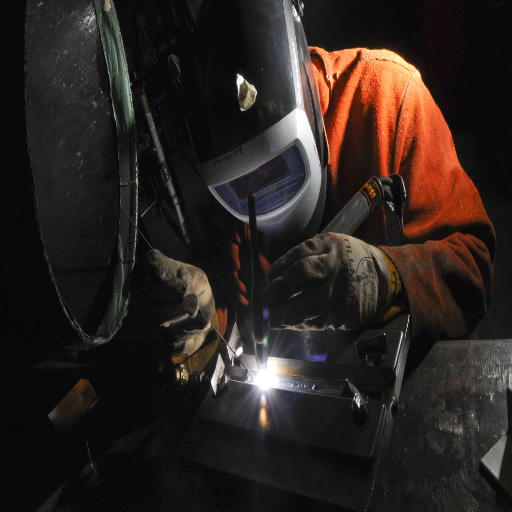
The focus on recent advancements in GMAW has shifted to efficient, accurate, and sustainable operation. Main innovations have emerged regarding the development of power sources with adaptive controls that subsequently adjust welding parameters, ensuring the highest weld quality at any given moment. The integration of robotic and automated systems has enabled high productivity and consistent welds, requiring minimal human intervention. Additionally, filler wires and shielding gases have reduced spatter while increasing joint strength, making the process environmentally friendly due to lower waste generation. All of the said innovations shall shape the future of GMAW, unparalleled as a faster and cheaper choice for present-day manufacturing needs.
Automation & Robotics in GMAW
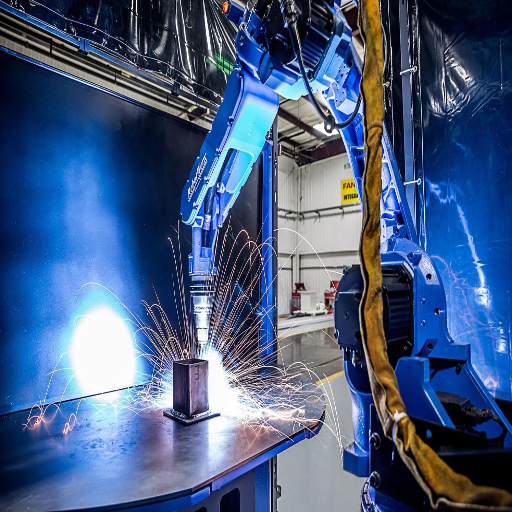
Automation and robotic integration for Gas Metal Arc Welding have revolutionized manufacturing, offering numerous advantages in terms of efficiency and precision. Automated GMAW welding, guided by computer programming and robotics systems, increases the repeatability of weld quality, thereby decreasing human error and providing consistent results for large-scale production. Latest data suggest that these, along with reducing production time by increasing welding speeds, can automatically set welding parameters for different materials or joint configurations. Workplace safety measures have been enhanced thanks to robotics, as operators can remotely control many robotic welding operations from a safe distance. These advanced systems can be used in conjunction with data analysis tools for predictive maintenance and the intelligent optimization of equipment, a winning combination for improving productivity while reducing operational costs.
Artificial Intelligence & Machine Learning Applications
Artificial intelligence and machine learning are increasingly pathbreaking frontiers for various industries. These technologies are used to help systems analyze large datasets, identify patterns, and make informed decisions with minimal human intervention. Some of the applications of AI and ML are as follows:
- Predictive Maintenance
AI/ML algorithms analyze performance data from machinery to predict failures before they occur, thereby preventing downtime and reducing maintenance costs.
- Quality Control and Defect Detection
Using computer vision and pattern recognition, AI-based systems check quality and detect defects in manufacturing like no others can.
- Personalized Customer Experiences
ML models utilize customer data to generate personalized product recommendations, targeted advertisements, and enhanced customer experience interactions.
- Supply Chain Optimization
Demand forecasting, stock tracking, and logistics are all handled with AI, which enhances supply chain management and reduces its costs.
- Autonomous Vehicles and Navigation Systems
Sensor-equipped cameras and self-driving cars are all AI-based applications that optimize navigation to ensure safer travel and an efficient journey.
Advanced Process Variants in GMAW
GMAW has undergone several stages of evolution, and various process variants have been developed to meet modern industrial requirements. The advanced variants inculcate the latest technologies to produce optimal productivity, weld quality, and efficiency. Some common variants include pulsed GMAW, where the current flows in pulses to reduce heat input and distortion, and spray transfer, which is primarily used for high deposition rate welding of heavier materials.
Recent developments have included the installation of AI and machine learning for optimizing welding parameters through real-time adjustments. With their help, applications range from joining aerospace components with high accuracy to heavy fabrication for construction. The analysis of enormous data points causes a marriage between machine intelligence and human judgment to ensure that GMAW remains relevant and innovative in an increasingly automated world.
Industrial Applications of GMAW
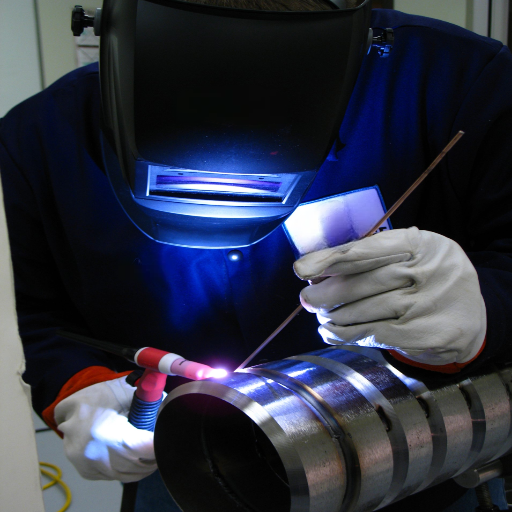
GMA welding finds application in a wide variety of industries due to its capabilities and efficiency. Major applications include:
- Automobile Industry: Welding of vehicle frame and exhaust systems to achieve joints that are strong and consistent.
- Aerospace Sector: Used in the precision joining of lightweight materials of aluminum and titanium used in aircraft manufacturing.
- Construction: Big, huge, and heavy projects for the fabrication of structural steel work of buildings, bridges, etc.
- Manufacturing: Necessary for making durable welds in machinery, equipment, and industrial tools.
- Shipbuilding: Designing large metal structures like hulls and decks, with excellent serviceability.
This versatility makes GMAW very popular in industrial production environments where a variety of materials and thicknesses are encountered.
Automotive Industry Applications
Edomo: Gas Metal Arc Welding (GMAW) plays a crucial role in the automotive sector, where precision, strength, and efficiency are of paramount importance. The automotive industry relies on GMAW for nearly everything. Some pertinent applications in automotive are listed below:
- Chassis Fabrication: It is the joining of parts that make up the vehicle chassis, so they are structurally sound and capable of handling high stress.
- Exhaust Systems Assembly: It involves welding stainless steel components to provide corrosion resistance and life expectancy.
- Body Panels and Frame Welding: Welding of thin sheet metals for vehicle body panels and frames.
- Engine Component Manufacturing: Welding of critical engine components, including mounts and brackets, with both precision and articulation.
- Suspension and Steering Systems: GMA welding is utilized in manufacturing joints for suspension arms and steering components, which must remain durable despite wear and tear over time.
Between efficiency and reliability, GMAW enables the production of high-quality automotive components while minimizing production time and cost.
Aerospace & Defense GMAW Applications
Gas Metal Arc Welding is used in aerospace and defense in the fabrication of aircraft components, repairing military equipment, and speed and precision welding of structural parts.
| Application | Key Feature | Material | Usage | Benefit |
|---|---|---|---|---|
| Aircraft Fabrication | Precision | Aluminum | Fuselage, wings | High Quality |
| Military Repairs | Durability | Steel | Equipment | Longevity |
| Structural Welding | Speed | Alloys | Components | Efficiency |
Emerging Trends in Construction & Infrastructure
The construction and infrastructure sector is evolving and upgrading itself with various innovative techniques and technologies to keep pace with modern requirements. Processes and trends include sustainability practices in construction site activities, such as the use of eco-friendly materials or energy-efficient designs, to reduce the environmental impact of the activities. Prefabrication and modular construction methods are revolutionizing the traditional way projects are implemented, building faster, more cost-effectively, and more safely.
Digital transformation follows as another major player, with BIM, drones, and 3D printing changing the way projects are planned and executed. Smart infrastructure, including monitoring systems enabled via IoT, is developed to monitor and operate efficiently. The lasting consequences of climate change, combined with a sharp rise in urbanization, require resilient infrastructure.
Following Google search trends related to smart cities, “green building materials,” and even “AI in construction” have skyrocketed in recent years. Globally, emerging construction techniques favor sustainable, technological, and efficient approaches. Uniting these trends means pushing construction into the future as one that is resilient, sustainable, and technologically advanced.
Professional Best Practices in GMAW
Several key practices must be observed to ensure quality and safety in Gas Metal Arc Welding (GMAW). Some of the most important ones are enumerated below:
- Equipment Maintenance: Ensure regular inspection of welding equipment, including cables, torches, and gas supply systems, to maintain good working condition and ensure safety. One must immediately repair or replace any faulty items.
- Correct Use of Shielding Gas: Select the correct shielding gas mixture for the specific material being welded, as this significantly affects weld quality. For example, argon-carbon dioxide mixtures are a usual mixture for welding steel.
- Consistent Technique: Maintain the proper gun angle, travel speed, and standoff distance to minimize defects caused by unstable arcs.
- Material Preparation: Clean and thoroughly prepare the metal surfaces, removing rust, oils, and contaminants that could serve as potential weld weakening agents.
PPE: Always don your PPE attire, including welding helmets, gloves, and flame-resistant garments, to guard yourself against UV radiation, heat, and sparks.
Practicing these best procedures will result in welders producing stronger, cleaner welds while staying safe, efficient, and effective.
Parameter Optimization Strategies
Optimizing the welding parameters to maintain high-quality welds and enhance welding efficiency is of prime importance.
Here are some essential strategies, details, and data that will assist welders in fine-tuning their welding parameters:
- Voltage Setting
Description: The right voltage setting creates a stable arc and provides enough heat input so that welding defects such as excessive spattering, undercutting, agglomeration of splashes, and tigging will be prevented.
Data: MIG welding voltage ranges generally from 16 to 30 volts, depending on material thickness and wire feed speed.
- Wire Feed Rate Setting
Description: The increase in wire feed speed increases the rate of deposition of the filler metals in the weld, thereby affecting the weld penetration and weld bead formation.
Data: Typically used for steel, the wire-feed rate ranges from 200 to 600 inches/minute, depending on material thickness and joint design.
- Traveling Speed Setting
Description: A steady travel speed ensures that the weld bead formation is carried out properly, leading to fewer defects towards porosity or incipient fusion.
Data: A travel speed somewhere between 5-20 inches per minute is usually required, depending on the welding process and bead characteristics desired.
- Parameters Setting for Shielding Gas Type and its Flow Rate
Description: The selected shielding gas and flow rate prevent contamination of the molten metal by the atmosphere and aid in stabilizing the arc.
Data: For MIG welding mild steel, a shielding gas mixture of 75% Argon and 25% CO2, flowing at a rate of 20-30 CFH, is customarily used.
- Electrode Selection
Description: Electrode type and size should be chosen in such a way so as to be compatible with the material and welding process.
Data: Stick welding mild steel typically utilizes electrodes such as E6010 and E7018, varying in diameter from 3/32 inch to 1/4 inch, based on the project’s requirements.
With these strategies put into practice and parameters fine-tuned, quality, efficiency, and overall project success will surely improve.
Quality Control & Defect Prevention Techniques
Ensuring quality control and preventing defects during welding is crucial for producing durable, reliable joints. A good way to do this is to perform thorough inspections at every stage of welding, starting with pre-weld preparation, then checking in-process, and finally, conducting final inspections. Non-destructive tests, such as ultrasonic or radiographic methods, will assist in detecting internal defects such as cracks or voids without disrupting the weld. Moreover, proper heat control and adherence to recommended welding parameters will lessen the chances of warping, porosity, and other such inconveniences. Calibrating welding machinery regularly and monitoring consumables (such as electrode storage conditions) will lead to increased consistency and quality. Defects are minimized while improving the overall reliability of the project by employing these measures, in tandem with industry standards such as AWS D1.1.
Reference Sources
- Weld Quality Improvement and Porosity Reduction Mechanism of Zinc Coated Steel Using Tandem Gas Metal Arc Welding (GMAW)
- Authors: D. Kam et al.
- Publication Date: March 5, 2021
- Summary: This study investigates the use of tandem GMAW to improve weld quality and reduce porosity in zinc-coated steel. The findings indicate that tandem GMAW can significantly enhance the mechanical properties of the welds while minimizing defects such as porosity.
- Methodology: The authors conducted experiments comparing traditional GMAW with tandem GMAW, analyzing the microstructure and mechanical properties of the welds. They utilized various testing methods, including tensile tests and microstructural analysis, to evaluate the effectiveness of the tandem process(Kam et al., 2021, p. 117127).
- Distortion Simulation of Gas Metal Arc Welding (GMAW) Processes for Automotive Body Assembly
- Authors: Wayne Cai et al.
- Publication Date: November 15, 2022
- Summary: This paper presents a simulation study on the distortion caused by GMAW processes during the assembly of automotive bodies. The research highlights the importance of understanding distortion to improve assembly accuracy and reduce rework.
- Methodology: The authors developed a finite element model to simulate the thermal and mechanical behavior of the welded joints. They validated the model with experimental data and analyzed the effects of various welding parameters on distortion(Cai et al., 2022, pp. 109–139).
- Top Welding Positioner Manufacturers and Supplier in China
Frequently Asked Questions (FAQs)
What is Gas Metal Arc Welding (GMAW)?
Gas Metal Arc Welding (GMAW), commonly referred to as MIG welding, is a welding process that utilizes an electric arc formed between a continuously fed electrode wire and the workpiece. This process uses a shielding gas to protect the weld zone from contamination, ensuring strong and clean welds.
What are the advantages of GMAW over other welding processes?
The advantages of GMAW include faster welding speeds, ease of use, and versatility in welding a wide range of metals. It allows for different modes of metal transfer, such as short-circuiting and spray arc, which help achieve high-quality welds in various positions, including horizontal welding positions.
How does the arc length affect the welding process?
Arc length is crucial in the GMAW process as it influences the heat input, penetration, and overall weld quality. A short arc can lead to better control and less spatter, while a longer arc might increase the heat in the arc, affecting the weld metal properties.
What is the role of shielding gas in GMAW?
The shielding gas used in GMAW serves to protect the weld from atmospheric contamination. An appropriate combination of shielding gas, such as argon or CO2, is supplied to ensure a stable arc and high-quality welds, as it shields the arc and the weld from oxidation.
Can GMAW be used for welding aluminum?
Yes, GMAW can be effectively used for welding aluminum. The process typically employs a specific type of shielding gas and welding wire designed for aluminum, ensuring good penetration and a clean weld by leveraging the characteristics of the active metal gas.
What are the primary methods of metal transfer in GMAW?
There are four primary methods of metal transfer in GMAW: short-circuiting, globular, spray, and pulsed transfer. Each mode is suitable for different welding applications and positions, determining the quality of the weld and the heat input into the workpiece.
What equipment is needed for GMAW?
A typical GMAW setup requires a welding machine that provides the necessary welding power, an electrode wire feeder to supply the welding wire continuously, and a source of shielding gas to protect the weld area. The proper selection of equipment is essential for achieving optimal results.
What is the electric arc, and how is it established in GMAW?
The electric arc in GMAW is established when the electrode wire makes contact with the workpiece, causing a short circuit that generates heat. This heat melts the electrode wire and the base material, allowing them to fuse and form a weld bead.
How does the GMAW welding process compare to other welding methods?
GMAW offers several benefits compared to other welding methods, such as shielded metal arc welding and gas tungsten arc welding (GTAW). GMAW is generally faster and more efficient, making it ideal for production environments, while GTAW is often preferred for precision work on thin materials.