Welding is a mixture of an art and a science, where precision and skill are the most important factors for making strong, neat and long lasting welds. One factor that is often ignored but considered to be the main one for the success of welding, is shielding gas. The choice of the right shielding gas, e.g. argon, carbon dioxide, or their mixtures, will have a great effect on the quality, strength, and appearance of your work, whether you are using TIG or MIG welding. This guide goes into the details of welding gases and reveals their purposes, differences, and best uses. By the end of this article, you will know how to enhance your welding techniques by making the right gas choice, which will prepare you for success in your next project.
Introduction to Welding Gases
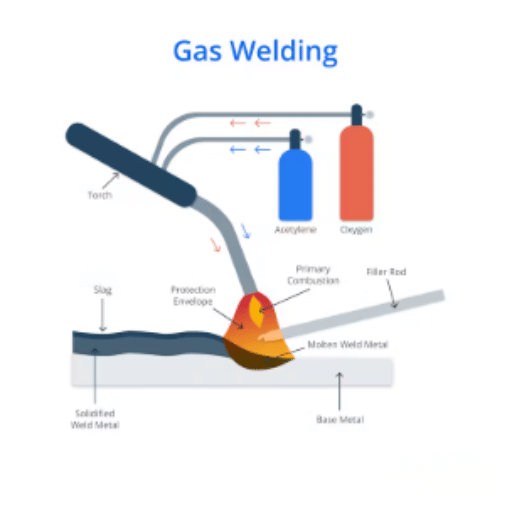
Welding gases are gases or gas mixtures specially prepared for welding applications that serve to shield the weld area from contamination by the atmosphere, stabilize the arc, and affect the quality of the weld in general. The gases most frequently used are argon, carbon dioxide, and helium, and each of them is specifically used for particular welding techniques and materials. To illustrate, argon is the gas of choice for precision tasks like TIG welding, whereas carbon dioxide, thanks to its low cost and capability of giving a deeper penetration, is widely used in MIG welding. The proper gas selection leads to weld strength, fewer imperfections, and better overall quality.
Understanding Shielding Gas in Welding
One of the major functions of shielding gas in welding is to provide a protective environment for the molten weld pool, hence preventing it from getting contaminated by the atmosphere, which might include oxygen and nitrogen, and, thereby, causing the weld to be less durable. Shielding gas selection is influenced by the welding technique employed, type of material and quality of weld desired.
To give an example, argon is perfect for neat and accurate TIG welding, whereas carbon dioxide is economical and extensively applied in MIG welding due to its ability to provide deeper penetration. The correct choice of shielding gas not only contributes to weld stability but also reduces defects and gives the best possible results.
Importance of Proper Shielding in TIG and MIG Welding
In TIG and MIG welding, proper shielding is indispensable since it protects the weld pool from contamination by the atmosphere thus preventing oxidation and defects in the weld bead. Moreover, the appropriate shielding gas for the material and welding process results in the welders getting better arc stability, improving weld quality, and reducing porosity. The shielding used in this manner finally increases the strength, looks, and lifespan of the weld joint.
Overview of Welding Applications
Welding is a process that is extensively employed in different industries owing to its capability and effectiveness in uniting materials. Major applications are seen in construction, where it is a must for erecting structure frameworks; automotive manufacturing for joining parts of vehicles; and aerospace for making up light yet strong parts. Furthermore, welding is behind the scenes in shipbuilding, pipelines, and maintenance work, providing strong and trustworthy connections in crucial infrastructure and machinery. Its versatility turns welding into a necessity not only in heavy-duty industrial projects but also in delicate precision-based tasks.
Types of Shielding Gases for TIG Welding
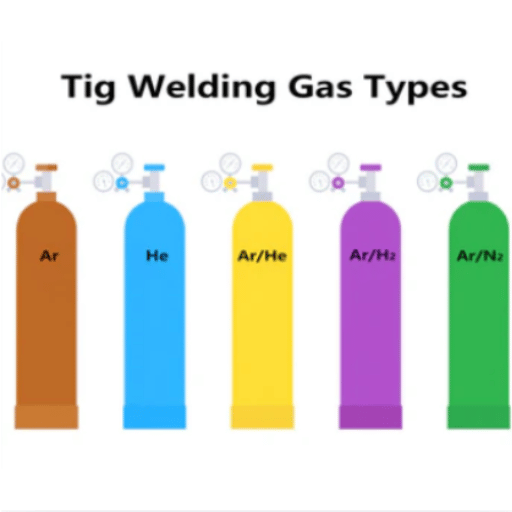
TIG welding requires specific shielding gases to achieve optimal results. Here are the primary options:
1. Argon
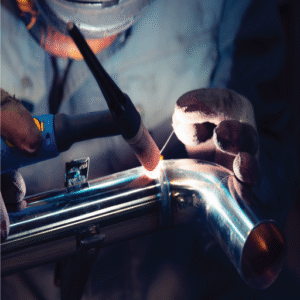
The use of argon in TIG welding has made this gas the most popular shielding gas for its outstanding arc stability and ability to provide clean and high-quality welds. It is suitable for all kinds of materials, such as stainless steel, aluminum, and titanium.
2. Helium
Helium has always been a gas that is used in combination with argon, the reason being that it can raise the heat output and thus making it possible to weld even the thickest materials. It can penetrate deeper and the welding speed can be faster; however, the price is usually higher.
3. Argon-Helium Mix
The combination of argon and helium is the best choice for those who need both gas properties, such as the top-notch stability of the arc and the phenomenal heat transfer. This gas mix is mainly suitable for some advanced applications like aluminum welding or non-ferrous metals.
4. Hydrogen-Enhanced Argon (for Stainless Steel)
Welding stainless steel with argon-helium mixture is the common practice nowadays. The addition of hydrogen in a small percentage to argon can be a good penetrator and surface finish enhancer, still, it requires careful control in order not to produce defects.
In all these cases, the respective gases or gas mixtures are chosen according to the kind of material, its thickness, and the required welding result.
Pure Argon: Advantages and Applications
Because of its inertness, pure argon is completely appreciated in welding, helping to protect the welded area from both oxidation and contamination. It generates stable arcs and clean welds, which is one reason why it is especially suitable for precision applications. Besides being used in TIG and MIG welding, pure argon is very effective with non-ferrous metals like aluminum, magnesium, and titanium, giving quality results. Its versatility, manageable nature, and capacity to create beautiful welds have made it a favorite among sectors like aerospace, automotive, and manufacturing.
Gas Mixtures: Enhancing Weld Quality
Gas combinations are essential for improving weld quality. They do this by merging the characteristics of different gases and tailoring them to particular applications. As an example, in MIG welding, a mixture of argon and carbon dioxide is used to enhance the arc stability and penetration, while helium-argon mixtures are preferred in TIG welding for imparting deeper welds and higher heat. These mixtures not only optimize the weld characteristics but also reduce spatter, improve bead appearance, and increase overall efficiency, thus becoming necessary in different industrial welding operations.
Hydrogen as a Shielding Gas
Use of hydrogen as a shielding gas works to improve the penetration of the weld and stability of the arc in some applications. Mixing it with inert gases such as argon, it is then used for stainless steel welding, where it helps to attain a cleaner weld by lessening oxidation. Hydrogen blends are also recommended for high-heat input welding since they allow to achieve faster and more efficient production. Nevertheless, because of its chemical activity, hydrogen has to be handled very carefully so that problems like hydrogen-induced cracking do not occur in sensitive materials.
Types of Shielding Gases for MIG Welding
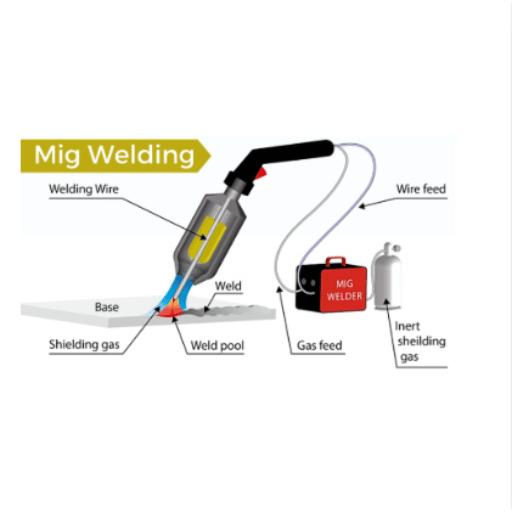
The shielding gas that you choose for MIG welding has a considerable impact on the whole process and the quality of the weld. The most common shielding gases along with their major applications are discussed below:
Gases for shielding each have their own pros and cons, which are determined by the material, its thickness, and the type of the application. Thus, the final selection is very important for obtaining the best possible results.
Common Gases Used for MIG Welding
MIG welding primarily incorporates argon, carbon dioxide, and helium as the most widely used gases, either being utilized separately or combined. Welding of non-ferrous metals is the application where argon is at its best due to the smooth and stable arc it creates. Carbon dioxide is the cheapest option for welding steel but at the same time it gives very deep penetration. Helium is most often used together with argon and it is mainly responsible for high heat input and increased welding speeds which are very advantageous in the case of thick materials. Choosing the proper gas or gas mixture is determined by the material type, thickness, and the wanted welding features.
Best Gas for MIG: Carbon Dioxide vs. Argon Mixtures
A MIG welding decision on gas composition, whether carbon dioxide or argon mixtures, would be based on what the welder is looking for. Among the choices, CO2 stands out as the cheapest option for steel welding, providing deep penetration and sturdy welds accompanied by more spatter.
On the other hand, argon blends, such as argon mixed with CO2 or helium, guarantee an arc that is smoother, more stable and less spattery, thus making them best for thin materials or non-ferrous metals. An 80/20 argon-CO2 mix is perfect for general use, where it gives a good blend of the resulting weld’s cleanliness and penetration as well as the cost.
Applications of Different MIG Shielding Gases
Based on the materials and welding requirements, different MIG shielding gases serve different purposes. Carbon dioxide, for example, is the most common gas used to weld mild steel for heavy-duty applications. It gives deep penetration at a very low cost. Argon is commonly used, often mixed with CO2 or helium, for non-ferrous metals such as aluminum or copper because it provides a very smooth arc and produces very little spatter. A mix of 80 percent argon and 20 percent CO2 gets placed among the most versatile ones as it can be used for general-purpose welding of various steel thicknesses and still yields clean, strong welds. Each gas or gas mixture plays its part in improving weld quality, thus ensuring that the weld will stand up to the demands of the particular application.
Choosing the Right Gas for Your Welding Tasks
When you are to select the proper shielding gas for your MIG welding operations consider the undermentioned factors:
- The Type of Material: For example, carbon dioxide and argon mixture is the most common selection for mild steel welding due to the performance-cost balance it provides. In the case of aluminum or stainless steel, the procedure may involve argon-based gases, usually mixed with either helium or oxygen, thus producing more superior results.
- The Thickness of the Material: Gases with superior heat output may be required for the thicker materials, for example, carbon dioxide-rich ones, to achieve the desired penetration.
- The Welding Application: A mixture of 75% argon and 25% carbon dioxide is one of the most used and versatile options in the welding industry and it is suitable for general welding. However, some applications like thin materials or spray transfer might call for specialized gas mixtures like argon-helium combinations along with the specific ones.
- Cost Considerations: The pure gases are generally priced higher than the mixtures. Pick the one that the performance of which your application needs but at the same time is not over your limit.
If you can match the requirements of the material type, thickness, and application to select the proper gas, you can enhance your welding quality and productivity noiselessly. Supplier’s opinion or material-specific guidelines should be sought whenever there is doubt.
Factors to Consider in Gas Selection
In order to choose the right gas for welding, examine the following chief factors:
- Material Type
Pick the gas that is suitable for the particular metal you are welding to ensure both compatibility and optimal performance. - Weld Appearance
Some gases, e.g. argon, give a cleaner finish which is suitable for precision applications. - Thickness of Material
Heavy materials could the use of heavier gases or gaseous mixtures such as argon-CO2 for deeper penetration. - Welding Process
The different processes like MIG or TIG might require specific gas types or mixtures. - Cost Efficiency
Choose the options such as gas blends that are both affordable and effective, thus balancing performance with budget constraints.
On the basis of these factors you will be able to take informed and thus correct decisions with regards to weld quality and project efficiency. Do not hesitate to consult with experts or manufacturers for specific guidance.
Impact of Gas Selection on Weld Quality and Appearance
Choosing the right gas is essential for weld quality and aesthetics. The right shielding gas or gas mixture reduces contamination which leads to cleaner and sharper welds. The right gas affects the stability of the arc, the depth of penetration, and the appearance of the bead. As an example, argon gives smoother arcs and clean finishes, while CO₂ can improve penetration but may also cause more spatters. A well-thought-out choice according to the material and welding method used gives rise to welds of even quality and being attractive to the eye.
Recommendations for Specific Materials and Joint Types
In the case of thinner materials, the heat input can be lowered by modifying the gas flow and arc energy, and thus warping and burn-through can be avoided. For intricate joints like T-joints or lap joints, the application of correct positioning and a steady shielding gas flow assures that the welds are of the same quality and are reliable.
Frequently Asked Questions (FAQs)
Reference Sources
- Baker’s Gas – How to Choose a Shielding Gas for TIG Welding: TIG welding is provided with proper shielding gas options overview.
- Van’s Electric – TIG Shielding Gas Type and Flow Rate Overview: Pure argon and other gases for the process of TIG welding are presented with their positive and negative features and fields of application.
- ESAB – TIG Welding Steel: Benefits, Applications, and Industry Use: Shielding gases are examined in their interaction with the industries that do accept TIG welding as a technique.
- Universal Technical Institute – What Is TIG Welding?: TIG welding is defined and its applications in such hard industries as aerospace, automotive, and shipbuilding are mentioned.
- Welding Revolution – Technical Specifications for TIG Welding: The guide is about right shielding gas flows, current settings, and electrode selection for welding by the TIG method.
Conclusion
Selecting the right shielding gas is fundamental to achieving superior welding results, whether you’re working with TIG or MIG processes. By understanding the unique properties of argon, carbon dioxide, helium, and their various mixtures, you can optimize weld quality, reduce defects, and enhance both the strength and appearance of your work. Remember that factors such as material type, thickness, joint configuration, and cost considerations all play crucial roles in gas selection. Armed with this comprehensive knowledge, you’re now equipped to make informed decisions that will elevate your welding projects to professional standards. Always consult manufacturer guidelines and industry experts when tackling specialized applications, and continue to refine your understanding of how shielding gases impact your welding outcomes for consistent, high-quality results.