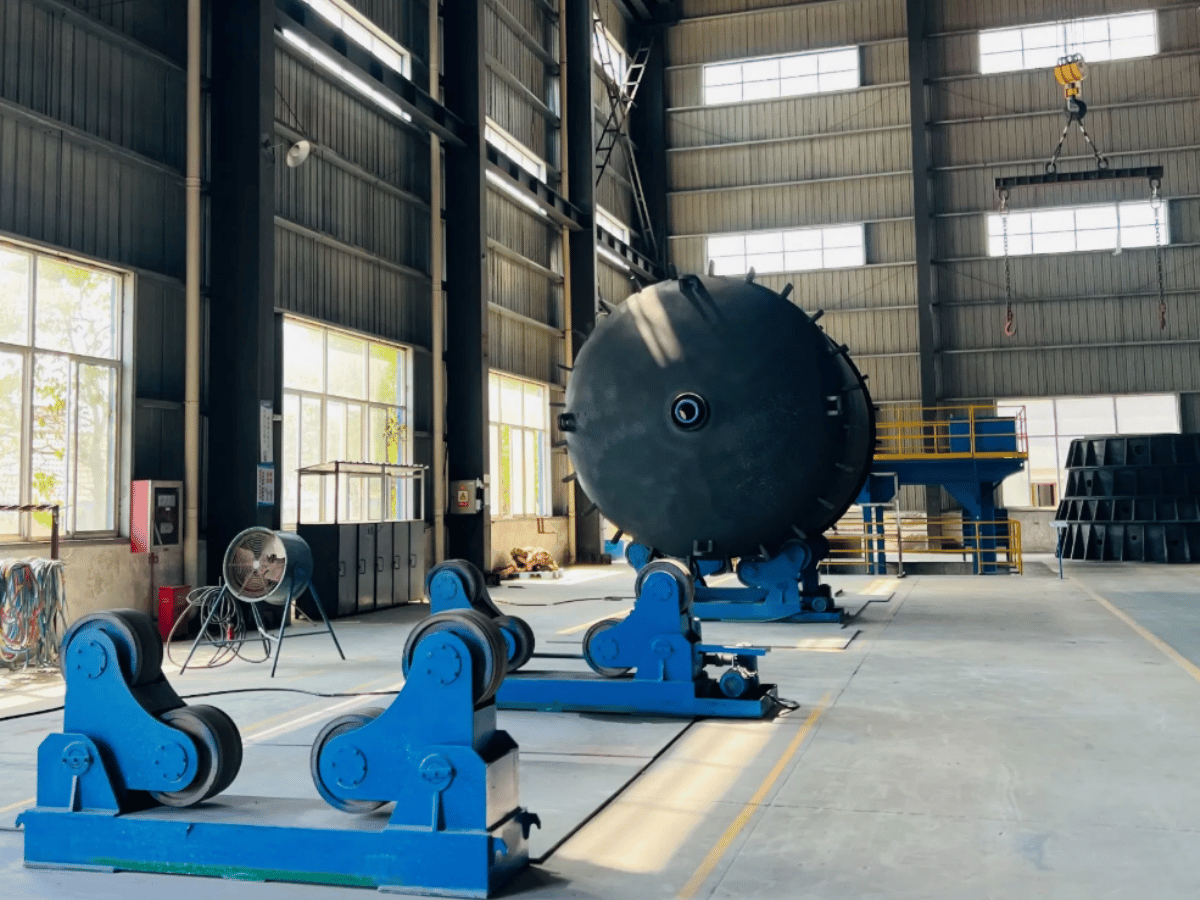
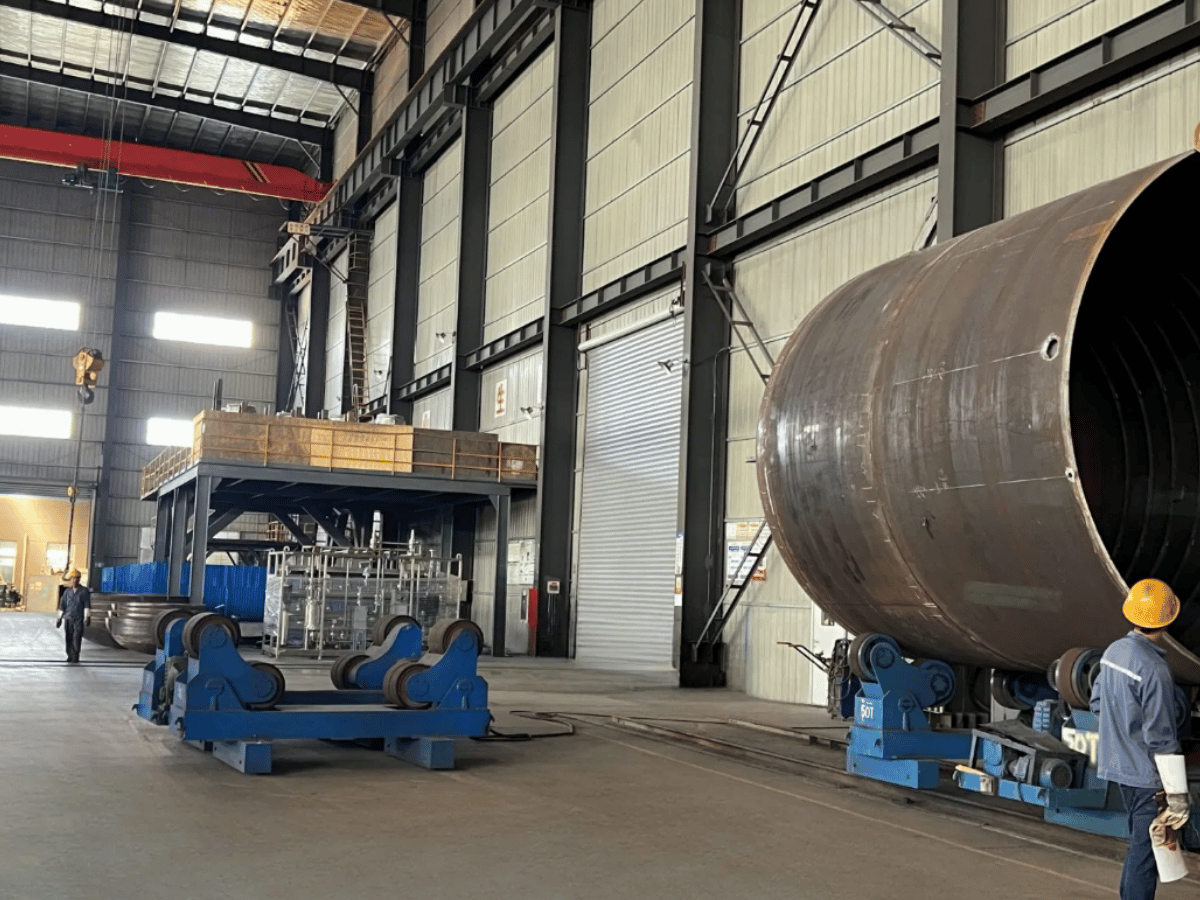
Welding is a craft on its own, and it requires a set of necessary skills, a studious approach, and, the appropriate tools to develop remarkable and neat work. It can be a little overwhelming for beginners in the field and those new to the craft to achieve the quality of work required. It is for precise, detailed components, such as rotating and round-shaped objects, that a welding turntable was invented for. Intended to increase accuracy and improve even the most complex welds, welding turntables are now readily accessible and highly beneficial to professionals in this field.
In the text that follows, we will discuss how you can enhance detailed projects with the aid of a welding turntable, which can provide significant assistance, and, of course, how you can achieve perfect outcomes with each. The guide we have below is for beginners and is also suitable for those with experience in the craft, providing advice on why welding turntables are a must-have for those attempting precision and careful work with the tool.
Understanding Welding Turntables
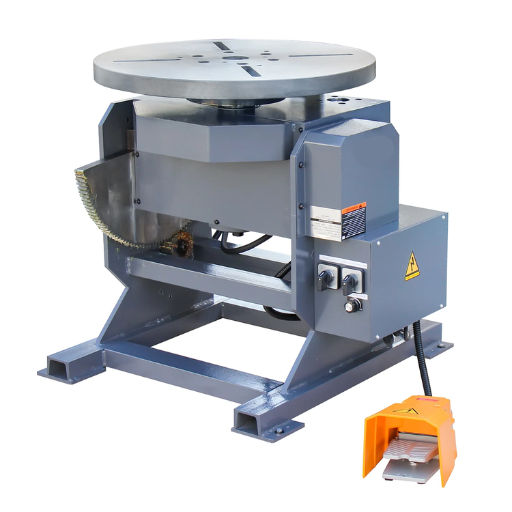
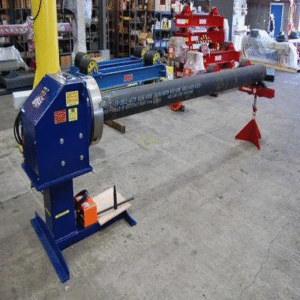
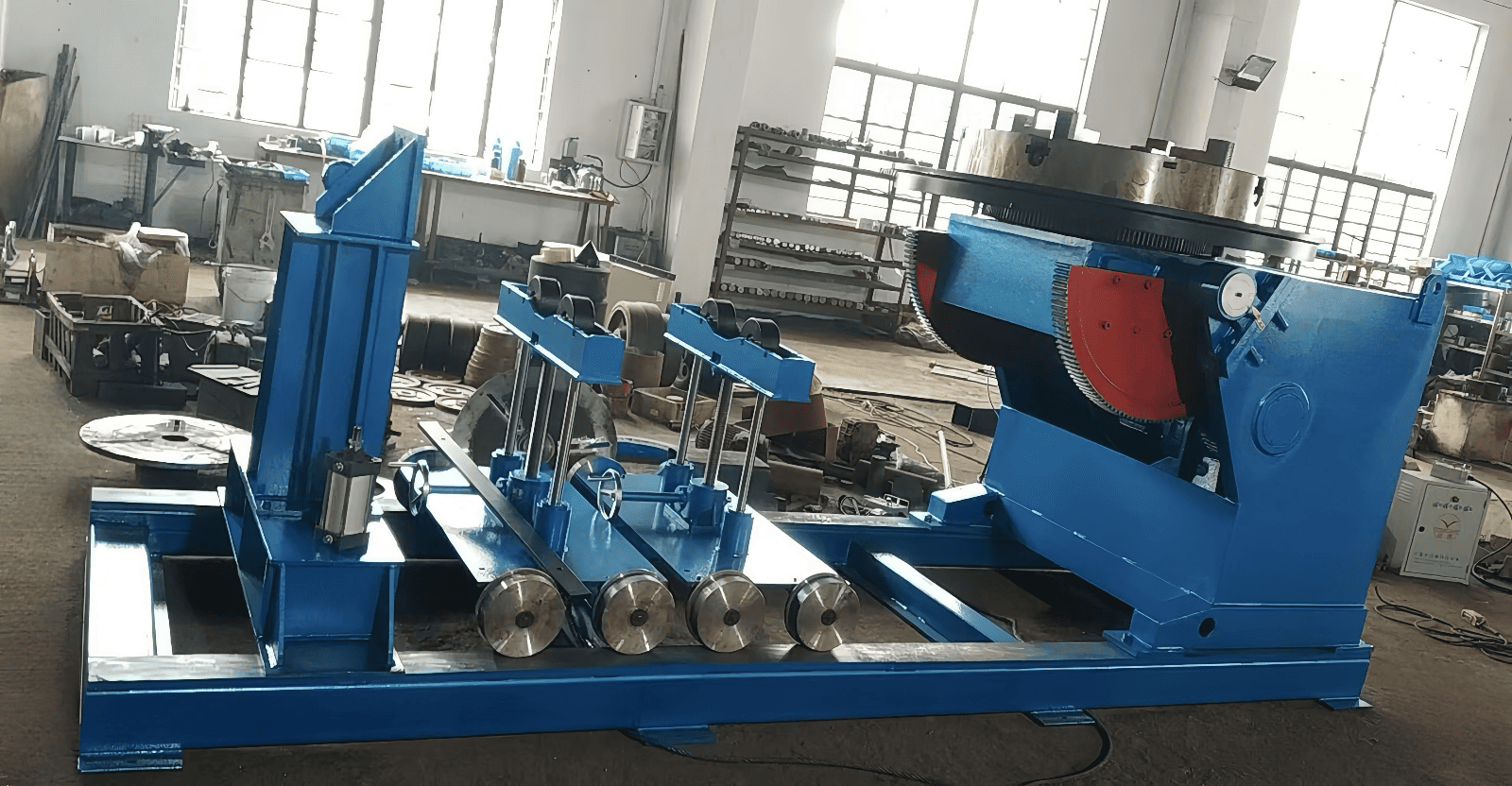
Rotators, also known as positioners or turntables, enable a workpiece or part of a system to be turned in a given configuration while maintaining a specific orientation. It is a device that provides a controlled movement at a slower speed that enables a welder to move at different angles and gets the benefit of welding to be done in different angles without any manual handling, thus reducing strain. A welder benefits from the enhanced Welding Turntables, as they are a cost-efficient and time-saving device to use. Industries, which can place it in the same spectrum as a welding Turntable range from automotive, construction, and manufacturing to DIY projects. They are adjustable and compatible with a variety of materials, ranging in shape and weight, allowing for the completion of numerous tasks.
What is a Welding Turntable?
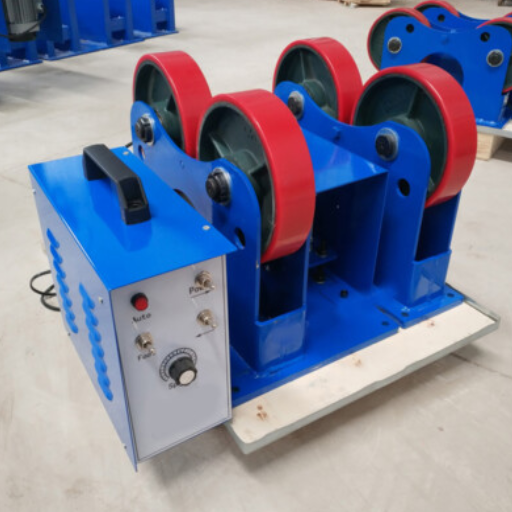
A welding turntable, also known as a welding positioner or rotator, is a mechanical device that rotates workpieces during welding operations, eliminating the need for manual repositioning of materials while ensuring the welder achieves consistent, high-quality welds. The headstock of the welding turntable typically features a rotor that can be rotated at different angles, providing supreme control over the welding process. The central part of the turntable, which is the rotary table allows for Supreme control of the welding process. In particular, this device enables the welding of the so-called circular components like pipes, flanges and cylinders. Welding turntables are available in manual and automatic models, the compact light models are available for small-scale work, and the professional grade models are suited for industrial applications for the integration of automation technology, many of the turntables are available with robotic welding, and other automation technologies, which help in doing work more faster with more precision in work which is very beneficial in the fabrication, automotive, and aerospace industries.
Key Features of Welding Turntables
- 360-Degree Rotation: Successfully operates to an incredibly higher degree of precision and has superior welding performance.
- Variable Rotation Speed Control: Provides precise control tailored to specialized welding needs.
- Handling Different Loads: Available in different ranges to support various sizes of work material for welding works.
- Tilt Capability: Allows the piece to be conveniently positioned at multiple angles, which is meaningful in terms of ergonomic comfort and welding quality.
- Capacity to Automate: This facilitates the installation of welding systems using automatic robotic welding space consumption.
Benefits of Using a Welding Positioner
Enhanced Weld Quality
Ensures consistent and high quality welds as machines and robots provide constant and precise positioning of the workpiece.
Enhanced Operator Safety
Minimizes the risks of injuries associated with cumbersome manual work by allowing machines and robots to handle the positioning and transportation of workpieces.
Increased Productivity
Machines make the welding process faster. This means operators can now handle multiple duties simultaneously and work in multiple positions. The downtime machines produce is also greatly reduced, resulting in finishing tasks faster than usual.
Versatility
Due to the workpieces, the machines can now accommodate different welding angles. Systems nowadays offer a package solution for various applications.
Improved Cost
One beneficial advantage of this technology is the reduced amount of product defects and reworking which means there is less of a greedy appetite the material and labour new-tech machine requires.
Types of Welding Turntables
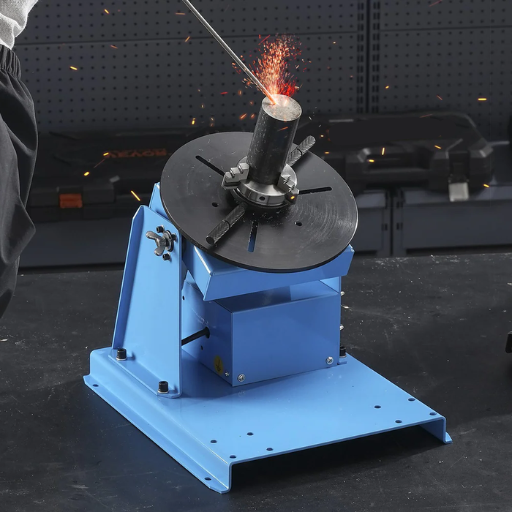
Welding turntables include manual, motorized, programmable, benchtop, pipe-specific, and heavy-duty turntables.
| Type | Control | Capacity | Applications | Flexibility |
|---|---|---|---|---|
| Manual | Hand-Crank | Low | Simple Tasks | Limited |
| Motorized | Automated | Medium | Complex Welding | Moderate |
| Programmable | Automated | High | Precision Jobs | High |
| Benchtop | Manual/Auto | Low | Small Workpieces | Compact |
| Pipe-Specific | Automated | Medium | Pipe Welding | Specialty |
| Heavy-Duty | Automated | Very High | Large Workpieces | Robust |
Manual vs. Motorized Welding Turntables
| Parameter | Manual Turntables | Motorized Turntables |
|---|---|---|
| Operation | Hand-crank controlled | Automated with motors |
| Precision | Limited fine adjustments | High precision positioning |
| Ease of Use | Requires physical effort | Simple to operate |
| Load Capacity | Typically lower | Higher load capability |
| Speed Control | Fixed or manual adjustment | Variable and adjustable |
| Versatility | Limited applications | Wide range of uses |
| Maintenance | Low maintenance required | Regular motor care needed |
| Cost | More affordable | Higher initial cost |
| Best For | Simple tasks, small jobs | Complex tasks, heavy jobs |
Programmable Welding Positioners
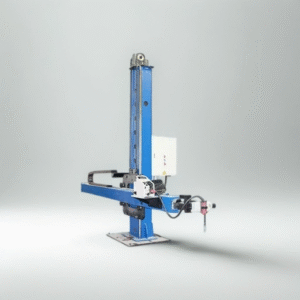
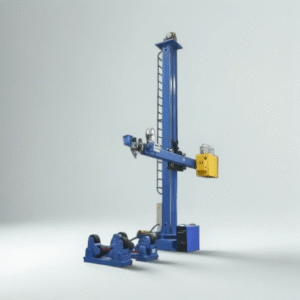
The automated tilter-rotators are advanced equipment designed to simplify the welding process by enabling repeatable and more precise movements, which is crucial in the robotic and mechanized welding of complex or high-volume jobs. These use advanced control systems that enable the rotation speed, angle, and sequences to be pre-programmed for optimal workpiece positioning, and they operate with far fewer restrictions when compared to manipulator equipment. Manipulators considerably decrease the need for manual labour; since manual adjustments are kept to a minimum, the automated tilter-rotators improve overall weld quality and worker productivity. Computerized systems are encouraged, especially their use in tasks where high accuracy is required, handling of parts, and welding processes that need to be automated.
Choosing the Right Type for Your Project
A welding project typically involves an evaluation of several significant features to the welding turntable required to finish the task. Before proceeding, consider the size, weight, and style of the material that will be involved in welding. The available table can be lightweight and used for small-scale work, or it can be heavy-duty, designed to handle multiple tons of material. If the job requires turning, consider the minimum and maximum range, as well as the welding equipment’s rotation speed. These factors will affect both the quality of the weld and the overall weight and position control.
In addition to technical specifications, consider the need for automated and programmable requirements for the rotation table. While fully automated models are mostly integrated with CNC systems and are ideal for precision and high-output work, manual or semi-automated options are well-suited for projects with lesser complexity and on a smaller scale. Remember to evaluate and consider the effectiveness the offered chucks, clamps, and highly configurable fixturing for the overall effectiveness.
Ultimately, it is essential to assess the welding environment, considering factors such as temperature and space availability, as well as the potential for exposure to pollutants. With such an overview, it becomes possible to identify the automation software feature necessary for the deployment of the task in the welding unit, ensuring guaranteed reliability in the long term.
Applications Across Industries
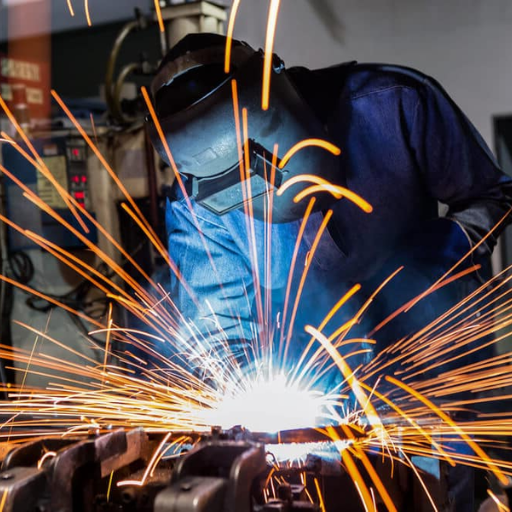
The welding turntable plays a vital role in many industries. It enables an increase in welding accuracy and the creation of precise, clean welds in several parts. In the automotive industry, it contributes to the creation of sturdy, high-quality welds that demand high standards. The same applies to sterner welds and welding turntables in the aerospace industry. Higher-quality, stricter, and more particular criteria engine components can be created with far greater precision. Their capacities are not limited to these parts only but are available for the welding of heavy machinery, turning and positioning devices, as well as welding and self-positioning equipment. The turntables can be used to weld, assist welding and conduct welding preparations of pipework, heavy machinery, storage tanks, and more. Every task that demands attention to detail and a specific value can benefit from the usage of the turntable.
Automotive Industry Uses
In the automotive industry, welding turntables are particularly useful in enhancing the efficiency and accuracy of production lines. A sector within the automotive industry that benefits most from these turntables is the production of fuel tanks, drive shafts, and exhaust systems for vehicles. The vehicle parts mentioned must be perfectly welded for the car to function correctly and safely. Welding turntables helps the parts rotate and allow penetration, which makes the parts evenly welded, and materials are evenly removed.
Most importantly, welding tasks with larger welding requirements and more complicated mechanization in welding tasks can be switched to the welding turntables with ease hence reducing the necessity for manual labour. The automotive production sector benefits from faster production lines because companies with significant production of mechanical automotive parts require speedy precision. Moreover, the wide range of analog car components, in the form of tubes or frames that require welding, and the ease of use of the welding turntables enhance the integration of the welding turntables with cutting-edge automated robot welding machines. All this increases the ease of operation, improves productivity, significantly lowers costs, and even enhances production.
Aerospace Welding Applications
There are absolutely crucial aspects of time and money: precision welding for the manufacture of certain airplane parts is required and should take several minutes, such as welding turbine blades, engine parts, and construction block parts, as well as any other type of automated work. Military, long-distance welding, or various tools for shaping parts and other complex welding systems, for example, work with frames guided by welding functionality blocks, drones and other automation systems do their own work. They have the so-called tilt and position work that allows them to perform microscope work with materials such as titanium and welding, including guided welding.
Metalworking and Manufacturing Solutions
In the metalworking of today and the manufacturing sector as a whole, the importance of welding turntables is irrefutable. With their ability to rotate and precisely position welding elements, these tools are an excellent choice for managing complex welding procedures. The usefulness of these tools is greatly enhanced with the standardization of the repetitive welding tasks, which ensures improvement in both the output and the reduction of downtime.
With recent endeavors in the welding turntable technology vertical, the wheels are turning on newer and more enhanced products. For instance, many turntables are now being engineered with Servo Motor Systems and Programmable Logic Controllers (PLCs) for precise angle adjustments and consistent rotational rates. Especially for automotive manufacturing, providing certain angles and unswerving rotational rates simultaneously is a huge bonus due to the fast-paced nature of the industry. The report about the global welding turntable market is priced to increase at a rate of growth of about 5-6% in 2023 and may hit 2030, thanks to the increased demand in the aerospace, defense, and energy sectors.
Newer turntables are engineered to handle much finer materials, such as stainless steel, titanium, and superalloys. For such types of materials, and the use in industries such as renewables and aircrafts, chemicals, and products growing, the demand for even greater lighter construction is skyrocketing, and so is the demand for an increased demand in certain capacities and collections, exceeding 50,000 pounds. Highly sophisticated welding turntables developed within this capacity as of now are meant for extensive industrial application.
Bringing automated and manual welding closer is yet another way the usefulness of welding turntables shows itself. With the use of automation, welding can now be performed more effectively and with better results, thereby reducing damage and accelerating the overall process. In the twenty-first century, their progression highlights the practical use and broad applicability for industrial fabrication they possess.
Choosing the Right Welding Turntable
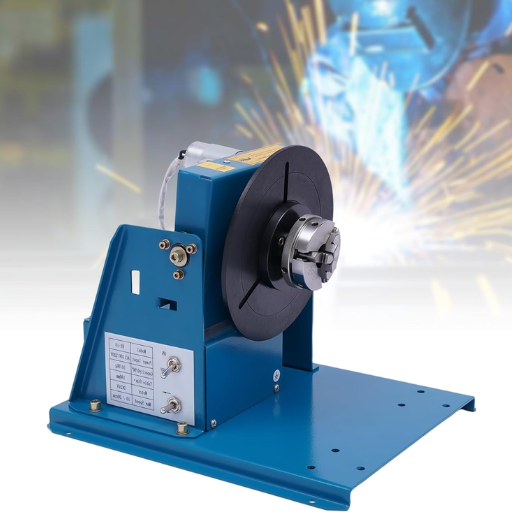
Find the appropriate welding turntable for your specific implementation of the application in considering several significant factors:
- Carrying capacity: Ensure that the turntable can sustain the heaviest load of your workpiece or any components that need to be welded. It is pertinent to your work plan that it can hold up a maximum weight that the workpiece and other tools and equipment comes with.
- Table dimensions and workpiece compatibility: Table movement and the motion of the workpieces is mandatory and sometimes crucial. To weld parts at a complex angle and tilt the table dimensions is within the scope. It is essential not to compromise the table moves, workpiece adjustments, and motions.
- Use and work control: There is a need to look for tilt-welding tables. These welding tables have seams or inclusions that require attention.
- Construction and materials used in ecosystems: In most conditions, these are end products, including welding tables.
- Processing and completion: Patterns of production exist and are ever-changing. In every kind of production where a series is finished, there are never far away features.
Look for manipulators with automated systems that use easy operation.
Factors to Consider: Project Needs and Budget
In need of project allotments, you need to restrict the type of applications and the amount of work pieces to be managed, such as the size, weight, materials, and welding turntables. The application of selected welding turntable is to be verified if it is in line with the welding capacities and to ensure that the welding performance and equipment lifespan are not compromised. Furthermore, the welding angles and positions of the work pieces to be worked with are to be inspected in order to decided if the application fulfills the intended welding process requirements.
Seeing things from a profit perspective: one should carefully measure the finances. Initially, it is recommended to utilize chemical and weed control methods, and then focus on minimizing and simplifying equipment maintenance. If the turntable is already a part of the automation system, the system integrations software of the welding turntable needs to be thought out very carefully in order to prevent the potential delays expansion of the budget. By the end of the process, all the software investments should be carefully thought out in order to make both technical and financial needs to be equally considered.
Weight Capacity and Compatibility with Equipment
Selecting a welding turntable requires prioritizing weight capacity and compatibility with other tools and equipment. The turntable must be able to support not only the weight of the part to be welded but also any additional welding fixtures or accessories that may need to be added. Using a turntable in this way means it is being employed beyond its capacity, which prevents the turntable from functioning, and thus prevents the business from operating. Using a turntable beyond its specified parameters puts the company not only at risk of financial loss but also at risk of injury, which is why it must be used properly.
Moreover, compatibility with existing equipment ensures the turntable can be used in multicriteria solutions. The turntable’s dimensions, rotational angles, and connection options must correspond with the welding gear, power supplies, and automation units to be used. For example, the decision to check if the turntable meets the requirements of the clamping systems, specific robotic arms, or tooling sets minimizes changes of costly adjustments later. Starting the process of choosing a welding turntable with these parameters in mind ensures a long-lasting production enhancement suite.
Adjustable Features and Precision Requirements
Welding turntable selection must consider the level of adjustment and precision demands. Custom setups enable workers to select the optimal welding process, speed, and tilt, ensuring a stable and dependable weld. Speed and tilt lets workers adjust the mounting table in the best way possible to provide access and quality, while tandem with complex welding systems to track and coordinate motion. The meticulous consideration of these factors ensures a more straightforward and rewarding work process, ultimately resulting in a higher-quality product.
Maintenance and Care for Welding Turntables
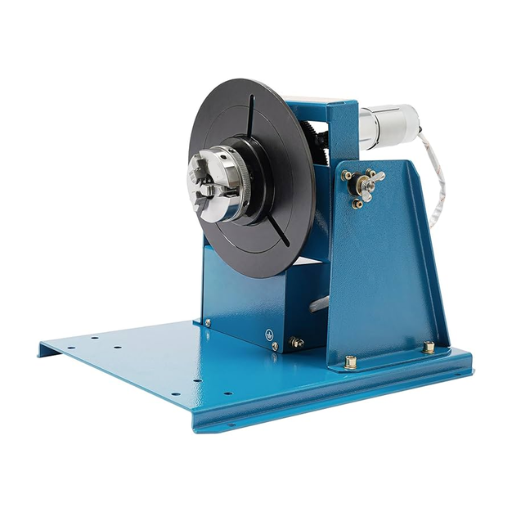
Understanding how critical proper and consistent maintenance is, the welding table’s well-being and efficient operation are what merit attention. Look out for signs of aging, such as loose bolts and worn bushings, and address these issues as a starting point. Employ the specified lubricant to minimize the friction on the rotating section. The turntable should also not have any kind of debris, whether it be metal, dust, grease or anything else that could cause a performance bottleneck. Hence, ensure that they are not there. One should verify the connections so that there is no type of rust. To avoid failure, one should always conduct the tests. All in all, one should have undertakings that should be kept before one to solve problems.
Cleaning and Lubrication Practices
Proper mechanical equipment maintenance with cleaning and lubrication is an integral part of ensuring the suitable operation and durability of the equipment. For cleaning, use only solutions that are safe for the materials of the components being cleaned, ensuring they are not damaged. For instance, in washing, solvents with corrosive properties should be avoided, as these could damage sensitive components such as bearings and seals. While compressed air may be an easier way to remove loose debris jammed in intricate parts, the pressure level needs to be soft to avoid destroying the jigmbits.
The type of lubricant and its viscosity must be used according to the manufacturer’s instructions. Over-lubrication can create a build-up or attract dirt and other impurities. In contrast, underlubrication can increase the likelihood of overheating and component wear. Make use of the lubricant’s precision applicators in order to ensure uniform coverage on the moving parts, and continuously monitor the lubricant’s condition and look out for any signs of contamination, as the enable the breakdown process to deteriorate. The application routine must follow operational procedures tailored to environmental conditions, with a good example being the application scheduled for high-temperature surroundings or extreme moisture to enhance performance.
Routine Inspections for Optimal Performance
A comprehensive check for a welding turntable will lead to effective performance. Commencing with a check on the rotational mechanism is the ideal place. The pivotal inspection should remain undeterred to ensure there is no unexpected noise or any form of irregularity. After providing the motor is optimal and noiseless, the electrical system should be cross-checked to avoid potential issues that may arise. The motor and drive components should also be assessed to prevent overheating and pollution. Maintaining proper lubrication and keeping the seals intact helps prevent costly repairs. I am almost finished; just like supporting the welding turntable, my final tasks include keeping notes and providing a heads-up for the next maintenance.
Extending the Longevity of Your Equipment
Ensure that you properly care for the welding turntables. You can start by taking a look at the moving parts like the gears or bearings. You need to check if they are beginning to show signs of wear or misalignment. After that, ensure you apply the correct lubrication to minimize the risk of premature wear and friction. Additionally, it’s essential to clean the turntable to remove debris, dust, or leftover welding materials. It is also necessary to clear the table so that welding material does not interfere with its performance. Assess the turntable’s electrical connections and controls to ensure everything is functioning correctly. Check for any loose or damaged wiring to ensure everything is in order. Lastly, please consider the turntable’s load and follow the set guidelines when loading it, so that you don’t distribute more weight on the turntable than it can bear at any given time. Developing good reloading habits will help you to prevent the turntable from breaking in the future.
Reference Sources
-
How Welding Turntables Improve Quality and Consistency – This article discusses how welding turntables enhance production, reduce rework, and improve ergonomics and safety.
-
The Ultimate Guide to Welding Turntables – A comprehensive guide on how welding turntables improve precision and weld quality.
-
Homemade Turntable Discussion – A community discussion showcasing DIY approaches to building and using welding turntables.