Pipe beveling forms an important part in the whole pipe manufacturing process and should definitely meet the stringent demands of industries such as oil, gas, construction, and manufacturing. This guide discusses the most important aspects of the pipe cutting and pipe beveling machines, the tools that are properly constructed and engineered to minimize workflow and deliver the utmost in performance. It also sheds more light on the very basic technicalities of certain distinct beveling modes, allowing the reader to choose the ideal setup and pipelines to match the best method.
This article provides seekers with a broad-based understanding of technical nuances, enabling them to accept a degree of give-and-take, a certain fostering of efficiency and excellence from within the company. If you are involved in making the weld better healthwise, in controlling waste with all possible foresight, or following the necessary considerations in terms of personnel safety, the absolute minimum that you are cut out for is: be equipped with information and convert well-informed decisions.
Key Takeaway
Proper pipe beveling is the foundation of structural integrity in high-pressure systems. Choosing the right machinery—whether manual, portable, or automatic—directly impacts weld quality, worker safety, and long-term project costs.
Introduction to Pipe Beveling Machines
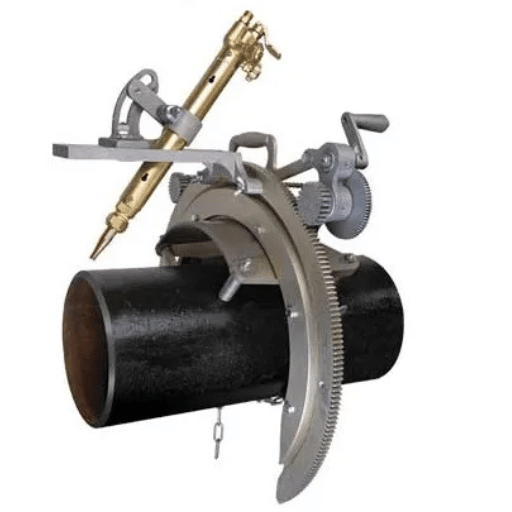
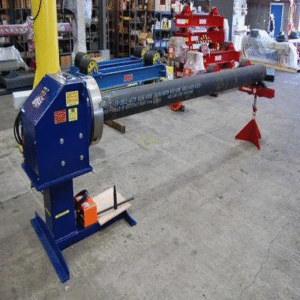
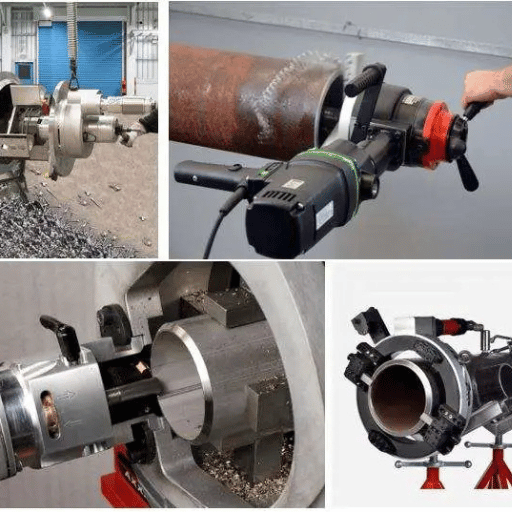
Pipe beveling machines are machines specially made for creating angled edges called bevels at the ends of pipes. These are important in welding—for they aid in joint alignment and increase the weld’s strength and quality. These machines provide a bevel with uniformity while cutting down on material wastage.
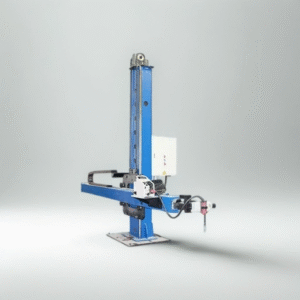
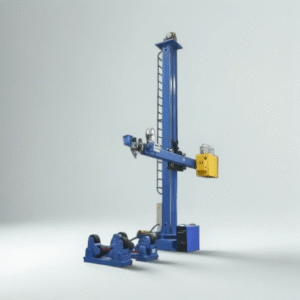
They are available in many types (portable, stationary, automatic models), each being used in a distinct industrial setup or technical sizes to a project. They have a definite presence when it comes to improving efficiency, safety, and dependability in the process of beveling.
Importance of Pipe Beveling in Various Industries
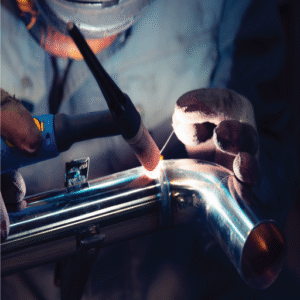
Pipe beveling is a very crucial operation within many industries due to its direct impact on integrity, functionality, and safety of the piping system. In industries such as oil and gas, power generation, and chemical processing, proper beveling ensures optimal weld penetration and reduces the risk of joint failure under either high pressure or high temperatures.
This process also generally forms a fine seal within the pipe, hence preventing leaks on the line while strengthening operational safety. Even in construction and manufacturing, pipe beveling accelerates assembly times along with job quality standards which are very particular in an effort to improve project schedules and lower costs. Its need is necessary wherever the achieved longevity and efficiency aspects of the connected pipe are under higher demand.
Overview of Pipe Cutting and Beveling Processes
Pipe cutting and beveling processes go together hand-in-hand to yield high-precision pipe fabrication. The pipe cutting process involves the division of pipes into specified lengths using methods such as mechanical sawing, abrasive cutting techniques, and cutting by powered advanced laser systems, and thus delivering clean and exact edges.
In contrast, the beveling process stands for designing an angle at the edge of the pipe to enhance joint integrity and ensure optimal welding performance. These operators, however, are able to use such techniques as lathe beveling, flame cutting beveling, and automated beveling machines to achieve consistent results best suited to their individual project requirements. These processes, being elements to superintend the functioning and reliability of the deal, are upheld by highly coded engineering standards.
What to Expect from This Guide
This manual has been designed to give a comprehensive understanding of the pipe-end preparation process with a special focus on cutting and beveling methods meeting industry standards. The main discussion will be focused on the tools, ways, and best practices, in order to achieve precision and durability for pipe connections.
Furthermore, the manual addresses common pains, safety tips, and innovations related to pipe fabrication, thereby equipping professionals with the knowledge to lift performance and achieve compliance when applied to technically demanding industrial applications.
Types of Pipe Beveling Machines
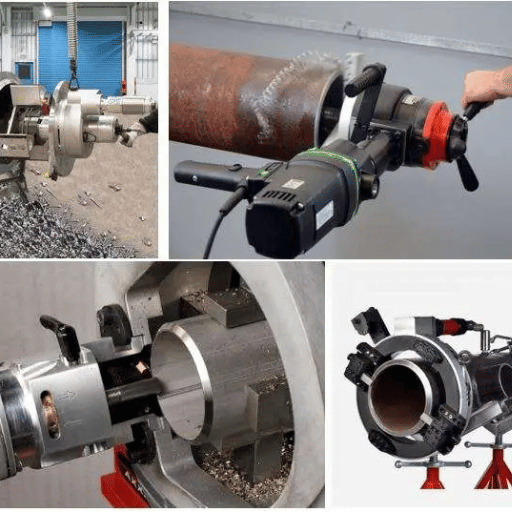
| Machine Type | Best Use Case | Key Benefit |
|---|---|---|
| Manual | Small projects / No power source | Cost-effective & Lightweight |
| Portable | On-site field work | Versatile & Mobile |
| Stationary | High-volume production facilities | Uniformity & High efficiency |
| Automatic | Precision-critical large scale | Minimal human error |
Mere selection of the right type of pipe bevelling machine matters that industries can achieve precise results, optimize productivity, and reduce operational costs.
Manual Pipe Beveling Machines
Manual pipe beveling machines are manually-operated machines where applications opt for flexibility or portability over automation. They are cost-effective and recommended for small-scale operations or in field applications where, at times, space constraints or power supply is insufficient.
Use of these machines require human energy and skill compared to mechanical counterparts, but these machine types are known to be a reliable way to get extremely consistent bevels in scenarios that demand adaptability and control. To gain maximum efficiency and get the most out of the machine, appropriate training and expertise are necessary.
Semi-Automatic Pipe Beveling Machines
Semi-automatic pipe beveling machines combine manual operation with the essence of full automation for increased efficiency and partial control by users. These machines will excel in medium-sized plants because they markedly curtail manual work while doubling processing speed.
They must store up automated mechanisms like feeds and rotating controls. In other words, a semi-automatic machine will have to provide the very same level of quality in the bevel, without losing adaptability. With more sophistication than totally manual models, there still must be trained handlers who can correctly set up, service, and run the machines, to yield optimal production as well as the expansion of a machine’s lifetime.
Automatic Pipe Beveling Machines
Fully automatic pipe beveling machines incorporate an advanced system of controls and programmable logic controllers (PLCs) that allows for a degree of automation that requires minimal human involvement for operation. They are intended for operations requiring a large number of components where quality is critical and time is golden.
Used for continual processing or routine cutting-out tasks, automatic pipe bevelling machines commit themselves to outputting the same level of bevel-cut quality in every pipe with impressively quick cycle times. These machines have multiple cutting heads, and other crucial features include automated material feeding systems and real-time monitoring that ensure maximum performance and reliability. However, care to integrate them smoothly into the workflow and keep them maintained will lead to a longer operational life and potentially little downtime per year.
Applications of Pipe Beveling Machines
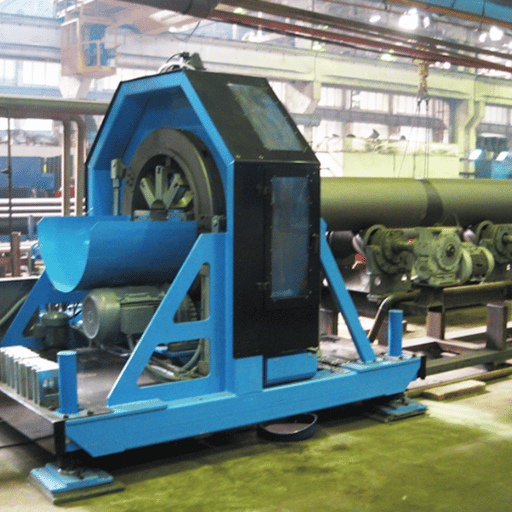
Pipe bevel machines are extremely versatile instruments in various industries as they are used to prepare pipes accordingly for welding and installation. Some of the main applications include:
- ✓
Oil and Gas Industry: Preparing safe and accurate welded line pipes for pipeline and refinery systems. - ✓
Construction and Infrastructure: Ensuring accurate jointing of pipes for plumbing, water distribution and structural work. - ✓
Energy Sector: Preparation of pipes used in power plants and renewable energy systems for steam, gas and fluid transfer. - ✓
Shipbuilding: Ensuring accurate bevel cuts for marine piping systems to meet industry standards. - ✓
Manufacturing: Precision in assembly and production using the machines to produce high-quality joints.
These representations accentuate the involvement of the pipe bevel machines in the value chain where importance is given to precision, productivity, and safety.
Beveling in Construction Projects
Beveling not only holds a key importance in the structural stability and assembly convenience during construction, but engages cutting of edges with precision around pipes or structures that allows a more clean weld site, mitigating the risk of weak welds, and strengthening the load distribution of structural components subject to bending.
Reducing the requirement for precise beveling in construction leads to the compromising of the safety and durability of the structure. Thus, in order to ensure safety and sustainability, beveling should be applied from the application of big beams, flow lines and pipelines of great life. The use of a more superior class for the construction of these machines also ensures compliance in meeting industry standards, allows for less errors caused by manual work, and thus increases the benefit the project on the whole.
Applications in Oil and Gas Industry
Beveling is an indispensable part of the oil and gas sector for playing a major aspect on precision and safety in the industry. In the fabrication of pipelines and pressure vessels, the practice is utterly used to enable proper alignment and secure welding. First-class bevels are necessary for any high-pressure environment, keeping chances of a crack or failure at bay in the critical infrastructure.
Advanced practices on beveling face to time efficiency in project execution, leading to faster assembly and maintenance of equipment. Beveling has been incumbent here to support the industry’s demand for virtues of robust and reliable solutions on both onshore and offshore operations, with observance of the highest standards of excellent performance.
Manufacturing and Fabrication Uses
Beveling essentially functions as an agent that aids the extremely reliable welding of precisely prepared joint details, which is key for structural soundness and sustainability in marine applications. Bevelling contributes in various disciplines like aerospace, ocean and oil. Beveling helps the making of a uniform weld with a stress-resisting characteristic, capable of withstanding great hydrostatic and hostile conditions exerted on it.
More so, in numerous high-throughput productive environments, beveling significantly enhances the overall efficacy of judiciously completing a structure, minimizes flaws, and saves invaluable time and dollars on subsequent corrections.
Choosing the Right Pipe Beveling Machine
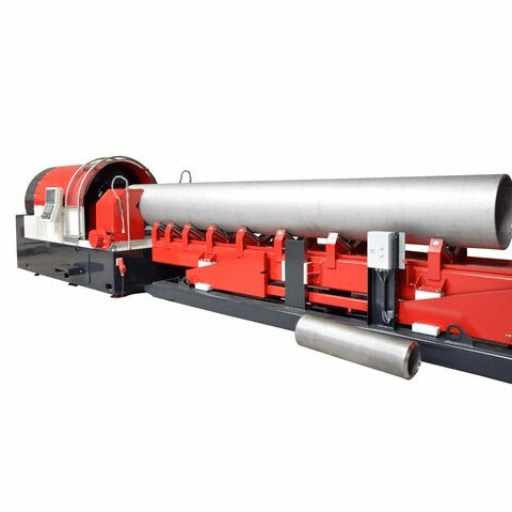
The choice of pipe beveling machine is based on key factors such as pipe material, diameter, and beveling requirements. In this regard, one should look at the materials used to make the pipes, selecting steel, stainless steel, or other different alloys, depending on what will assure longevity and precision in operation.
Then, the user ought to check the size of the pipes in regard to the machine size itself. Lastly, the machine under consideration needs to be able to perform the required bevel in whichever type of bevel we want; this could be a standard bevel, J-bevel, or compound angle. Lastly, only security, ease of operation, and professional engineering support should be the priority among others in deciding which machine to choose for a project to be executed more efficiently with minimum downtime.
💡
Pro Tip
Always match the cutting tool material (HSS, Carbide, etc.) to the specific pipe alloy to prevent premature tool wear and ensure a smooth finish.
Factors to Consider: Material and Project Scope
The first point to consider while analyzing materials and project scope is what types of material are being worked upon. Carbon steel, stainless steel, or alloys require different cutting speeds, blades, and beveling techniques to ensure a clean cut and maintain material integrity. Project definition links into the kind of operational capabilities required.
Sizes, thickness ranges, and volume of work define the kind of operation. For big machines that work on repetitive and high-long-term projects, choose machines for continuous operation and high rate cuts with throughput. Smaller machinery focuses on precision work, and so need less flexible machinery. Matching the right machine with the materials and the requirements in each project adds efficacies that tie into long-term successes.
Budget Considerations for Beveling Machines
Striking a balance between up-front costs and long-term operational cost savings is something that is essential in the treatment of tight budgets. High-quality beveling machines may entail considerable initial investment fees but they usually provide a level of sturdiness, low maintenance, and constant-performance rate with time, resulting in a lower total cost of ownership at the end of the day.
Conversely, those less expensive alternatives would be more advantageous for small-scale or short-term applications but could lead to additional operational costs and downtimes caused by natural wear and tear. It is best advised to scrutinize the scope of the project, frequency of use, and financial resources available so as to select a machine that will cater to jobs with relevant performance demands yet in an economically viable manner.
Evaluating Machine Features and Capabilities
In evaluating different machine features and capabilities, the user must always give priority to attributes that are directly in accordance with the operational requirements. This includes factors like load capacity, power output, and precision, which, in turn, ensure the machine is capable of effectively doing what tasks are required of it.
Machines considered also need to be evaluated in terms of the extent to which they are supported by advanced technologies like automation, system diagnostics, or connectivity with the internet of things (IoT) to ensure highest efficiency, reduced downtimes, and the possibility of real-time feedback. Concerning the quality level and toughness delivered by materials used; both are so noteworthy for ensuring durability. And according to some code specifications, all machines should be compliant with industrial regulations and safety obligations to fulfill legal and operation requirements respectively. An in-depth understanding and appreciation of these factors can assist decision makers in securing that they have selected plants, machinery, or equipment suitable for their intended use and also that such equipment can provide the performance and value expected.
Operating a Pipe Beveling Machine
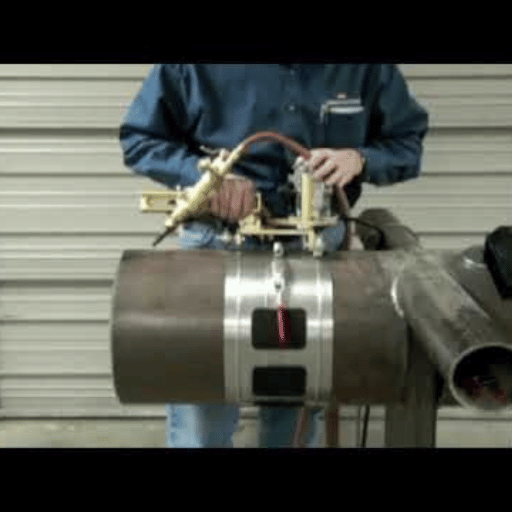
For the effective use of the pipe bevel machine, the machine must first be positioned securely with a proper support to the pipe. Verify the tool line-up in such a way that the right angle of attack is attained in terms of the project. Speed settings of the machine must be appropriately measured against the material type and material thickness for use—like uneven cutting or tool wear.
It is always a good idea to move the machine along the surface of the pipe uniformly, keeping a steady pressure to make a fine and neat bevel. You should follow safety recommendations for the equipment dictated by the manufacturer and wear the proper personal protective equipment (PPE) for work safety. Remember to maintain and inspect the machine regularly so that you can keep the machine running at the best levels and extend its lifespan.
Step-by-Step Guide to Using a Pipe Beveling Machine
- 1
Preparation
Clean the workspace and check the machine for damage. Verify the cutting tool matches the pipe material and thickness. Don your PPE (glasses, gloves, hearing protection). - 2
Securing the Pipe
Lock the pipe in a clamp or vise to prevent movement. Double-check alignment to ensure the bevel angle will be even around the circumference. - 3
Machine Setup
Fix the bevel angle and set the blades/inserts. Ensure all tooling is sharp and securely installed according to manufacturer directions. - 4
Operation
Run the machine at full speed, applying consistent and even force. Avoid obstructing the machine to prevent uneven cuts and tool wear. - 5
Final Inspection
Inspect the finished edge, deburr if necessary, and test fit the pipe for correctness and clarity. - 6
Maintenance and Cleaning
Clean away debris, dust, and sludge. Inspect tools for replacement and store the machine in a dry, safe environment.
Safety Precautions When Operating
- ✓
Wear Proper Protective Equipment: Security goggles, gloves, and hearing protection have always got to be used. - ✓
Inspect Equipment Before Use: Check for slack or blemishes; never run a damaged machine. - ✓
Secure the Workpiece: Fasten the pipe securely to prevent movement and errors. - ✓
Operate in a Controlled Environment: Work in a well-lit area away from flammable substances and distractions. - ✓
Follow Manufacturer Guidelines: Adhere to speed settings and tool compatibility for safety. - ✓
Avoid Loose Clothing: Secure long hair and avoid loose jewelry or accessories. - ✓
Emergency Procedures: Know the location of emergency shut-off valves and fire extinguishers.
Maintenance Tips for Longevity
⚠️ Important Maintenance Note
Neglecting lubrication and blade sharpness is the #1 cause of machine failure. Follow a strict schedule to ensure peak performance.
In order to keep your beveler working at the best level and of course last longer, you need to stick to a strict maintenance plan. Begin by routine inspection of key components—mainly, cutting blades and guide rails—for wear and tear, and replace where necessary to prevent an inefficient machine.
Have all moving parts serviced in accordance with the manufacturer’s specifications for lubrication to guard against friction-related damage and to keep the apparatus running without any glitches. Clean the machine after every use, so that all collected debris, dust, and other residues do not interfere with movements—close physical contact can greatly hamper accuracy and increase premature wear. Check wiring and connections regularly for possible damage or loose connections, which would cause the machine to stop functioning. It must be stored in a controlled environment, which is dry and at constant temperature to prevent the equipment from being exposed to harsh atmospheric conditions. ALWAYS following these steps can assure the durability and continued performance of the machines over time.
Reference Sources
- QG Weld: A B2B buyer’s guide for premium quality beveling machines.
- GBC SpA: Comprehensive guide on welding preparation and machine selection.
- Valve Grinding Machine: Resource for pipeline applications and welding surfaces.
Frequently Asked Questions (FAQs)
What is a pipe beveling machine?
This is a mechanical apparatus for making beveled ends on pipes, generally for welding or joining purposes.
Why is pipe beveling significant?
This exercise will direct the pieces nicely and any potential welds coming out of them would be healthy and accordingly viable.
In what industries are pipe beveling machines used?
Construction, energy, manufacturing, and pipeline maintenance are some of the major sectors where these machines are used.
What kinds of pipe beveling machines are there?
Machines include manual, automatic, portable, and CNC-controlled beveling machines.
How does a pipe beveling machine function?
The machine either employs cutting tools or abrasive wheels for the removal of material from the pipe edge at a specific angle.