When it comes to MIG welding, the proper selection of approaches and materials greatly affects the formation of strong and clean welds. Flux core wire is one such method, with plenty of uses, which makes welding easy with brilliant results. What exactly makes flux core wire different, and how can you develop skills that will make your welding project stand out? This guide thoroughly explains the background of MIG welding with flux core wire and provides insight to both beginners and experts. From the advantages to the disadvantages of this welding, followed by some useful tips for improving your technique, this article serves as an introduction and manual for mastering flux core welding. Whether engaged in some heavy-duty job or smaller jobs, you’ll definitely receive the input to get started with confidence and continue to prevail.
Introduction to MIG Welding and Flux Core
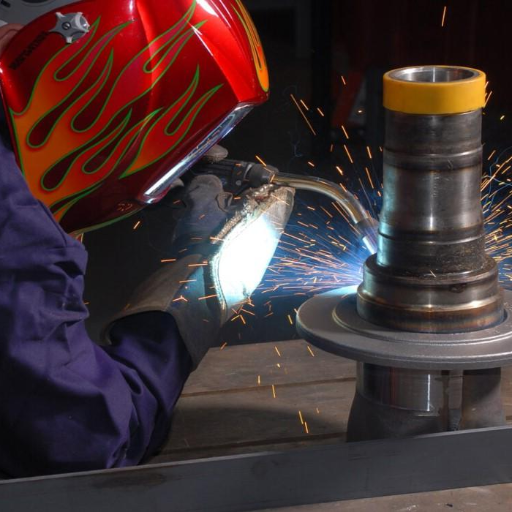
There are numerous processes involved in the welding process. The MIG welding process, combined with an agglomerate flux core wire, can be varied and very efficient. Unlike solid wire welding, flux core welding does not utilize external gas, as such gas is generated inside the welding wire during the welding action itself. The applications of this process are varied as it can weld thick materials and is suitable for outdoor welding because the flux acts against wind disturbances. This makes it ideal for professionals or enthusiasts involved in structural repair, automotive work, or similar endeavors.
What is MIG Welding?
MIG welding, or Metal Inert Gas welding, is a welding method whereby continuous solid wire electrodes are fed through the welding gun into the weld pool to join two base materials. The process takes its name from the use of an inert or semi-inert gas that serves as a shield protecting the weld from atmospheric contamination. Popularity-wise, MIG welding is favored due to its ease of operation, speed, and adaptability, making it suitable for both thin and thick materials. Its typical applications include industries such as automotive, construction, manufacturing, etc. Its relatively simple working principle makes it even more attractive to beginners looking for welding techniques that build strong welds cleanly, to the point where minimal cleaning is required after welding. This is why MIG welding has established a reputation as a must in modern fabrication.
Understanding Flux Core Welding
In the realm of welding processes, Flux Core Welding (FCAW) is a semi-automated process that welds metals using a flux-filled tubular wire. Compared to MIG welding, FCAW does not need a shielding gas in all cases because at heating, flux inside the wire itself makes up for the protective gas; hence, the welding process is apt for outdoor and other heavy-duty usage, doing very well in windy atmospheres and on thicker materials. It is highly favored in construction, shipbuilding, and repair works because of its higher deposition rates, weld strength, and ability to weld on dirty or rusty surfaces. However, it does tend to create more spatter than MIG welding and is therefore viewed as somewhat of a nuisance; yet, it continues to be widely used for projects that require such attributes.
MIG vs. Flux Core Welding: Key Differences
MIG welding utilizes a shielding gas, offers cleaner welds, and is best suited for thin materials. In contrast, flux core welding doesn’t require gas, works well outdoors, and excels with thick or dirty metals.
| Key Point | MIG Welding | Flux Core Welding |
|---|---|---|
| Shielding Gas | Required | Not Needed |
| Cleanliness | Cleaner Welds | More Spatter |
| Material Type | Thin Metals | Thick, Dirty |
| Outdoor Use | Limited | Excellent |
| Deposition Rate | Moderate | High |
| Cost | Higher | Lower |
| Ease of Use | Easier | Requires Skill |
| Equipment | More Complex | Simple |
Fundamentals of Flux-Cored Arc Welding (FCAW)
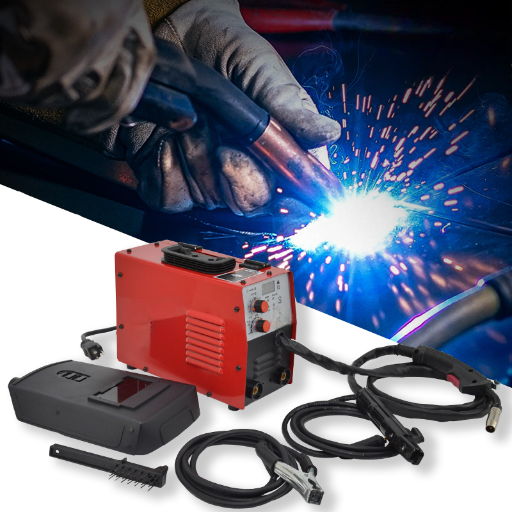
The Flux-Cored Arc Welding (FCAW) process is a versatile welding process that uses tubular wire filled with flux to create the arc and shield the weld pool. It eliminates the need for any external shielding gas and is, therefore, highly suitable for use outdoors in windy conditions. Due to the increased penetration and deposition rate of FCAW, it may weld thicker and dirtier materials. Visualization-wise, this causes the visible flame to disperse in all directions, and it requires more skill to handle. The equipment is more straightforward and more cost-effective; therefore, many industrial repair setups will find this the best choice.
Flux Core Arc Welding (FCAW) refers to a welding process that can be performed semi-automatically or fully automatically, utilizing a continuous consumable electrode with a flux core. Inside the electrode, the flux produces a shielding gas and slag, which shield the weld pool from atmospheric contamination. Being highly versatile and able to weld thick metals effectively, this process finds significant applications in construction, shipbuilding, and the repair of heavy equipment.
In contrast to the standard MIG welding process, external shielding gas is not necessary in self-shielded FCAW, making it apt for outdoor work or in environments with high wind conditions. Its deep penetration and high rates of deposition render it faster and better for welding dirty, rusty, or painted materials. Nevertheless, it needs a higher level of skill due to greater spatter potential and technique-oriented operation. Still, in industrial settings, it is regarded as a cost- and time-saving measure.
Types of Flux Core Wire
There are two main types of flux core wire: self-shielded flux core wire and gas-shielded flux core wire.
| Type | Shielding | Use Case | Skill Req. | Advantages | Limitations |
|---|---|---|---|---|---|
| Self-Shielded | No gas | Outdoor, windy | High | Portable | More spatter |
| Gas-Shielded | Requires gas | Indoor, clean env | Moderate | Cleaner welds | Less portable |
Choosing the Right Flux Core Wire for Your Project
Several factors may be potentially significant when choosing your flux core wire covering, including project requirements, working environment, and skill level. Self-shielded flux core wire is best suited for outdoor projects or when wind is blowing, as it eliminates the need for an outside shielding gas, providing great portability and powerful work even in unfavorable weather conditions. Suppose you have the luxury of sitting in a controlled, indoor environment. In that case, you may want to consider using gas-shielded flux-core wire, as it produces welds with less spatter, resulting in cleaner and more aesthetically pleasing welds.
Another factor to consider is the type of metal being welded and the material’s thickness. Some flux core wires are better indicated for thicker materials, whereas others are good for lighter gauge metals. It is essential to consider whether the flux core is compatible with your welding machine, as some machines do not support both self-shielded and gas-shielded wires. Considering these factors will enable you to assess and select the best flux-core welding options that suit your project specifications, ensuring optimal welding results.
Setting Up Your MIG Welder for Flux Core
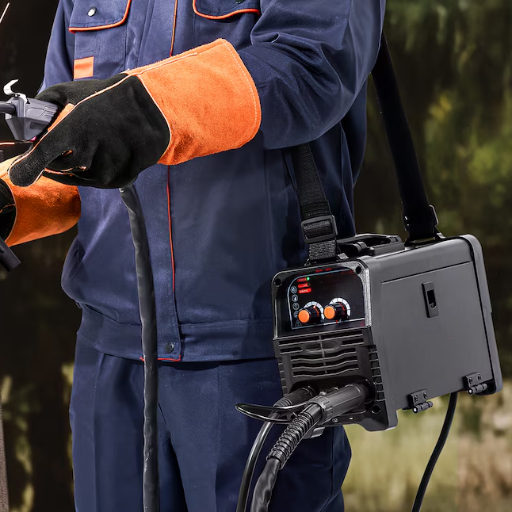
When setting up a MIG welder for flux core welding, the first thing is to check whether your welding machine is suitable for flux core wires. Otherwise, wrong settings on your machine may contaminate your flux core wire. Then put in your flux core wire of correct diameter and change the polarity of your machine to DCEN, as this is the most common setup for flux core welding. Now, set the wire feed speed and voltage according to the parameters suggested by your wire manufacturer, which will primarily depend on the thickness of the material to be welded. Check that the wire feed rolls are appropriate for the type of wire you have entered – in this case, knurled rolls for flux core wire. Next, inspect the ground connections, and finally, prepare your work area for safe and efficient welding.
Essential Equipment and Tools
- Welding Machine – A flux core operational welding machine with settings for polarity, wire feed speed, and voltage.
- Flux Core Wire – The appropriate wire for the type and size of the material to be welded.
- Welding Helmet – For eye and face protection, preferably an auto-darkening one.
- Protective Clothing – Includes gloves, jacket, and steel-toe boots for safety.
- Wire Brush and Chipping Hammer – For removing slag from welds.
- Clamps – To hold the workpiece in place for stability during welding.
- Ground Clamp – For establishing the suitable electrical work circuit.
- Safety Glasses – Neighboring eyes from debris and sparks when not welding.
Such tools and equipment are very essential for the welders who want to work fast, safely, y precise.
Adjusting Your Welder Settings
Adjusting the welder settings properly will enable the creation of clean, strong welds, even though potential problems may arise during the welding procedure. There are a few things to check:
- Material Type and Thickness – First, determine the type of metal you are welding and its thickness to determine your amperage and voltage settings. Higher amperage is generally needed when thicker materials are involved.
- Welding Process – Digitally intermingle the settings of your machine according to the welding process being used, starting from MIG, TIG, to stick welding. Wire feed speed adjustment usually need to be done for MIG welders.
- Polarity – Always set your polarity correctly depending on the electrode or filler being used. For example, MIG welding with solid wire uses DCEP (DC electrode positive) polarity.
- Gas Flow Rate – Set the shielding gas flow to the recommended rate. Excessive flow may cause porosity in the weld, while insufficient flow may lead to turbulence.
- Practice Runs – Take test welds on scrap or excess material after setting up, just to get a feel for it.
You will realize the best weld by giving attention to these factors and making all necessary adjustments. Always follow the instruction given in your welder’s manual for your particular equipment.
Wire Feed Speed and Voltage Settings
Wire feed speed and voltage are two very critical factors in achieving the desired welding results. Wire feed speed determines the quantity of welding wire fed into a weld joint per minute, thereby influencing the weld size and heat input for a particular project. A higher wire feed speed results in a higher deposition rate; therefore, the voltage must be adjusted to the appropriate value to maintain a stable arc. Voltage, on the other hand, adjusts the distance of the arc and thereby affects both penetration and bead profile.
It would be beneficial if you can check the wire feed speed and voltage settings from the manual of your equipment or a welding chart relating specifically to the material and wire being used. Thicker materials typically require a higher wire feed speed and voltage for welding than thinner materials, which necessitate a lower setting to prevent burn-through. Testing the settings on a weld ensures these settings will make a clean, strong weld suited to the particular project. Proper consideration of these parameters will result in efficiency and a high-quality finish in the end.
Basic Techniques for Flux Core Welding
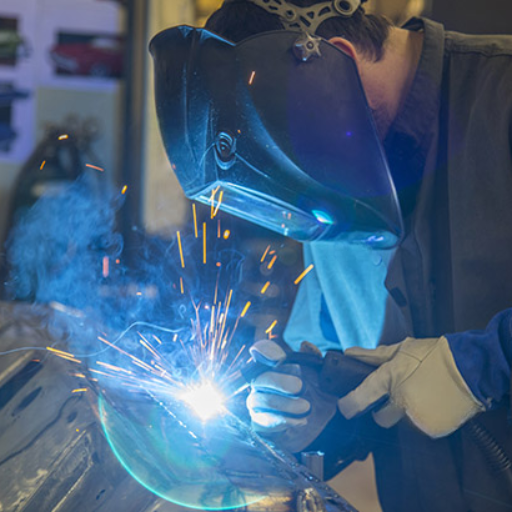
It’s advisable to maintain a steady travel angle, typically around 10 to 15 degrees, to achieve optimal results in flux core welding. The drag technique or backhand technique allows deeper penetration in thick materials, while the push technique decreases spatter and is preferred for thin materials. Maintaining a constant speed is critical, as slow speed could lead to undercutting while an increase in speed could cause excessive buildup. Clean the weld area of contaminants and adjust the machine settings continuously to account for variations in thickness and wire type. Practice makes perfect, so go ahead and make test welds while adjusting your technique to achieve solid and clean welds.
Proper Welding Positioning
Maintaining a proper welding position yields strong and durable welds. The position must facilitate steady and controlled movement of the welding torch or electrode. The welder needs to be comfortable with sound footing, steady arms, and little to no vibrations. Position your body and hands in a way that allows you to have a clear view of the weld area while protecting yourself from sparks or fumes. There are four welding positions: flat, horizontal, vertical, and overhead, each of which requires inclination adjustments to welding technique and equipment settings. Out of these four, the one that affords the maximum stability and control for the weld should be selected.
Techniques for Maintaining a Steady Arc
- Maintain consistent travel speed: The hand or torch would move in an arc bead with irregularities that could affect the weld aesthetics and strength.
- Use Both Hands for Control: A double-hand grip should be used whenever possible, holding the torch or electrode, to offer greater precision and minimize vibration.
- Maintain proper electrode angle: Adequate electrode position, typically around 10-15 degrees, ensures arc consistency and minimizes spatter.
- Use the Correct Amperage: The welding machine should be adjusted to provide the proper amperage for the material and electrode being used, allowing it to maintain a steady and controlled arc.
- Use a Posture: Achieve a comfortable and secure position for your body that allows you to operate with minimal fatigue during the welding operation.
Understanding Shielding and Its Importance
Shielding has always been crucial in flux core welding to protect the molten weld pool from atmospheric contamination. In the welding process, the presence of oxygen, nitrogen, and other gases will contaminate the weld by causing porosity, brittle structures, or unnecessary oxidation. From the flux core welding perspective, the flux inside the electrode contributes to solving this problem. The flux produces a protective gas shield during its melting phase which effectively isolates the welding area from any contaminants.
For optimal results, it is essential to determine whether your flux core wire is self-shielded or requires an external shielding gas. Self-shielded flux core wires generate their own shielding gas from the flux, thereby allowing them to be used in outdoor applications or drafty conditions. Gas-shielded flux core wires, on the other hand, utilize an external source of gas, such as CO2 or a CO2/argon mixture, and are thus preferred for cleaner welds and significantly reduced spatter during welding in controlled indoor environments. Selecting the correct shielding method and wire type according to project requirements ensures welds that are strong, durable, and of high quality.
Applications and Benefits of Flux Core Welding
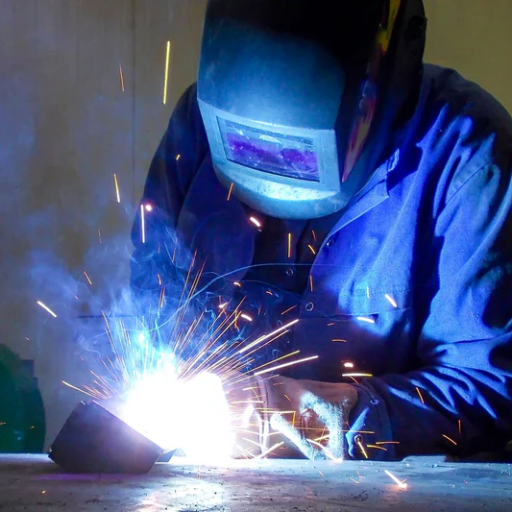
Versatility and efficiency render flux core welding a widespread choice among industries. It finds more use in heavy fabrication, shipbuilding, and construction works when high-deposition rates and deep penetration are all required. It excellently performs outdoors at drafty environments with the self-shielded wire without any shielding gas being necessary from outside. Another upside of flux core welding is for working with thick materials while producing welds that are strong and dependable with minimal surface preparation needed. Speed and versatility make flux core welding a strong choice when both productivity and quality are required from a project.
Where to Use Flux Core Welding
Flux core welding is best suited for construction, shipbuilding, and heavy equipment repair. Being an outdoor welding process, it fares well against wind-induced turbulence detrimental to alternative welding methods where shielding gas might get blown away. Thus, this process is best suited for welding thick materials, such as those used in structural work, bridges, and pipelines. It also offers high deposition rates and efficiency, providing a good trade-off between speed and strong, durable welds required in several jobs.
Advantages Over Traditional MIG Welding
- Superior performance in outdoor and windy conditions due to the self-shielding nature of the flux-core.
- Higher deposition rates translate into faster welding, thus increased productivity.
- Better penetration is one of its features as it works thicker materials; therefore, it is ideal for heavy structural work.
- A reduced need for external shielding gas results in lower equipment and material costs.
- Better reliability on dirty or less-prepared surfaces as flux core welding does not mind impurities as much as regular MIG welding does.
Cost-Effectiveness and Versatility of Flux Core
Flux-core welding strikes an outstanding balance between cost efficiency and versatility, enabling businesses to rely on it for a wide range of applications. Due to its ability to perform welding either without or with minimal use of external shielding gas, it can significantly decrease welding materials as well as operational costs. This makes it an excellent choice for both small-scale operations and larger ones that wish to stay within their budget.
Secondly, the real-life scenarios of flux-core welding are comprehensive. Whether working on thick plates for building ships or on slightly imperfect surfaces for repair jobs, this welding method consistently delivers. It is equally helpful for field jobs wherein lack of shielding gas becomes a big plus, as the opposing factors such as wind, would have complicated things for most other welding techniques. That balance of being cost-effective and practical is why flux-core welding remains a vital tool in the manufacturing and construction industries today.
Reference Sources
-
Flux-Cored Welding: The Basics for Mild Steel – A detailed article from Miller Welds covering the basics of flux-cored welding.
-
Flux Core Welding 101: A Beginner’s Guide – A beginner-friendly guide explaining materials, techniques, and common mistakes in flux core welding.
-
How Do You Make a Good MIG Weld? 5 Tips for Beginner Welders – Expert tips from TWS to improve MIG welding techniques.
- Top Welding Positioner Manufacturers and Supplier in China
- Guide for Types of Welding