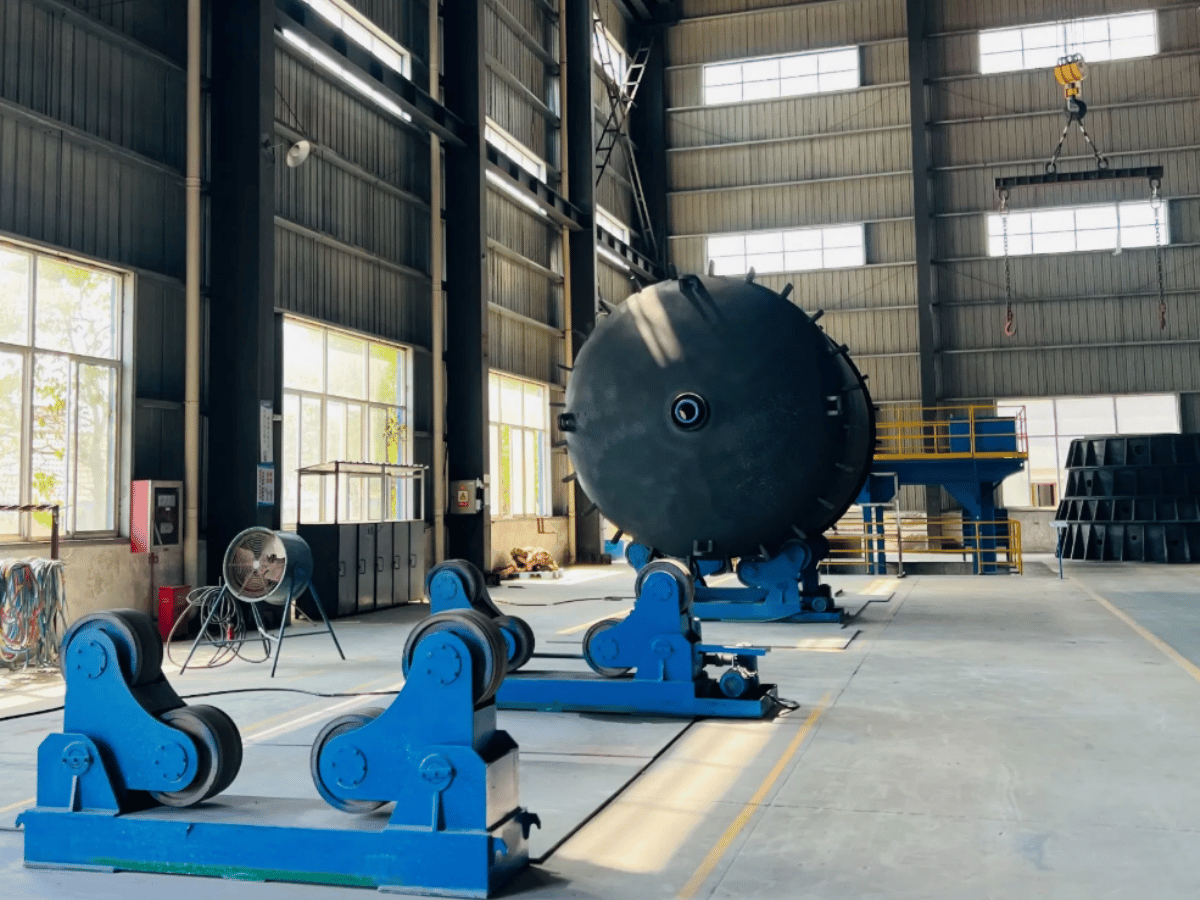
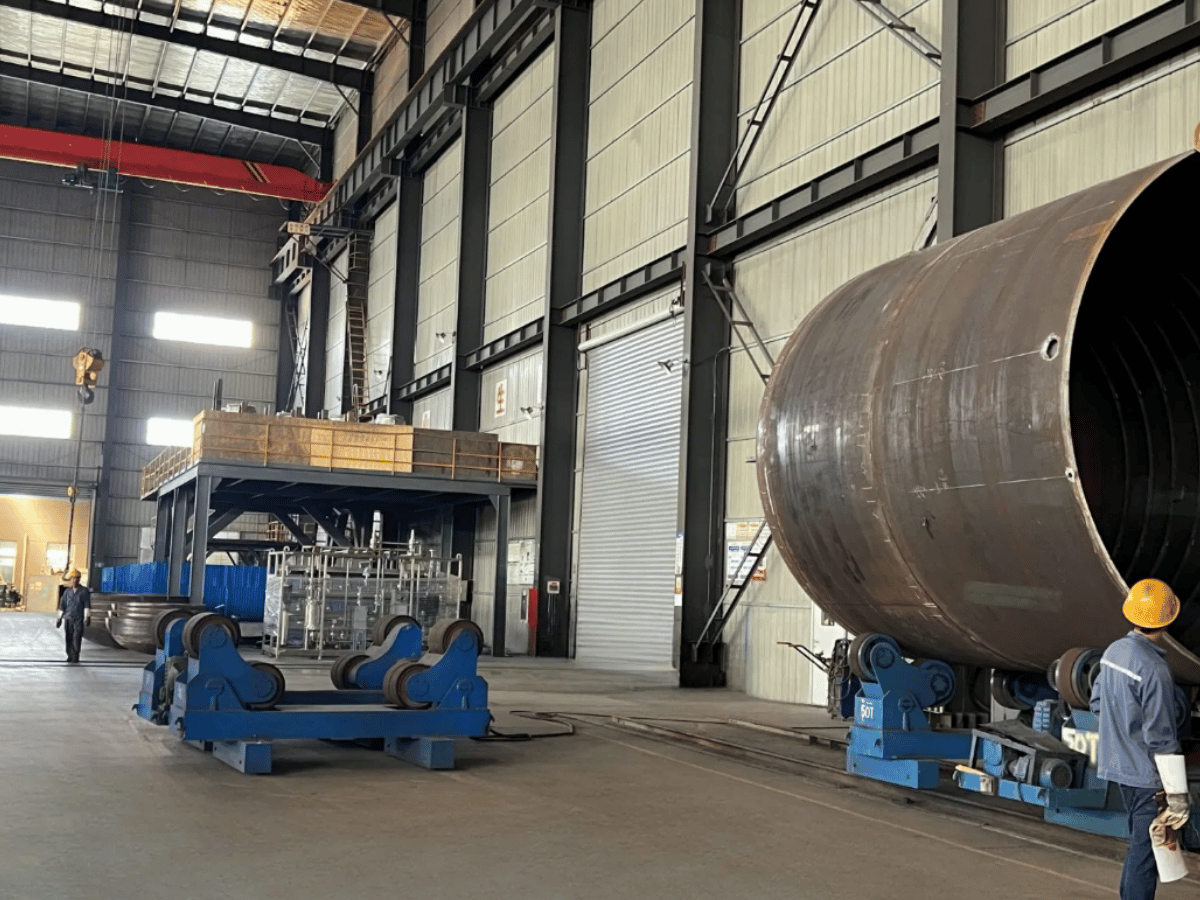
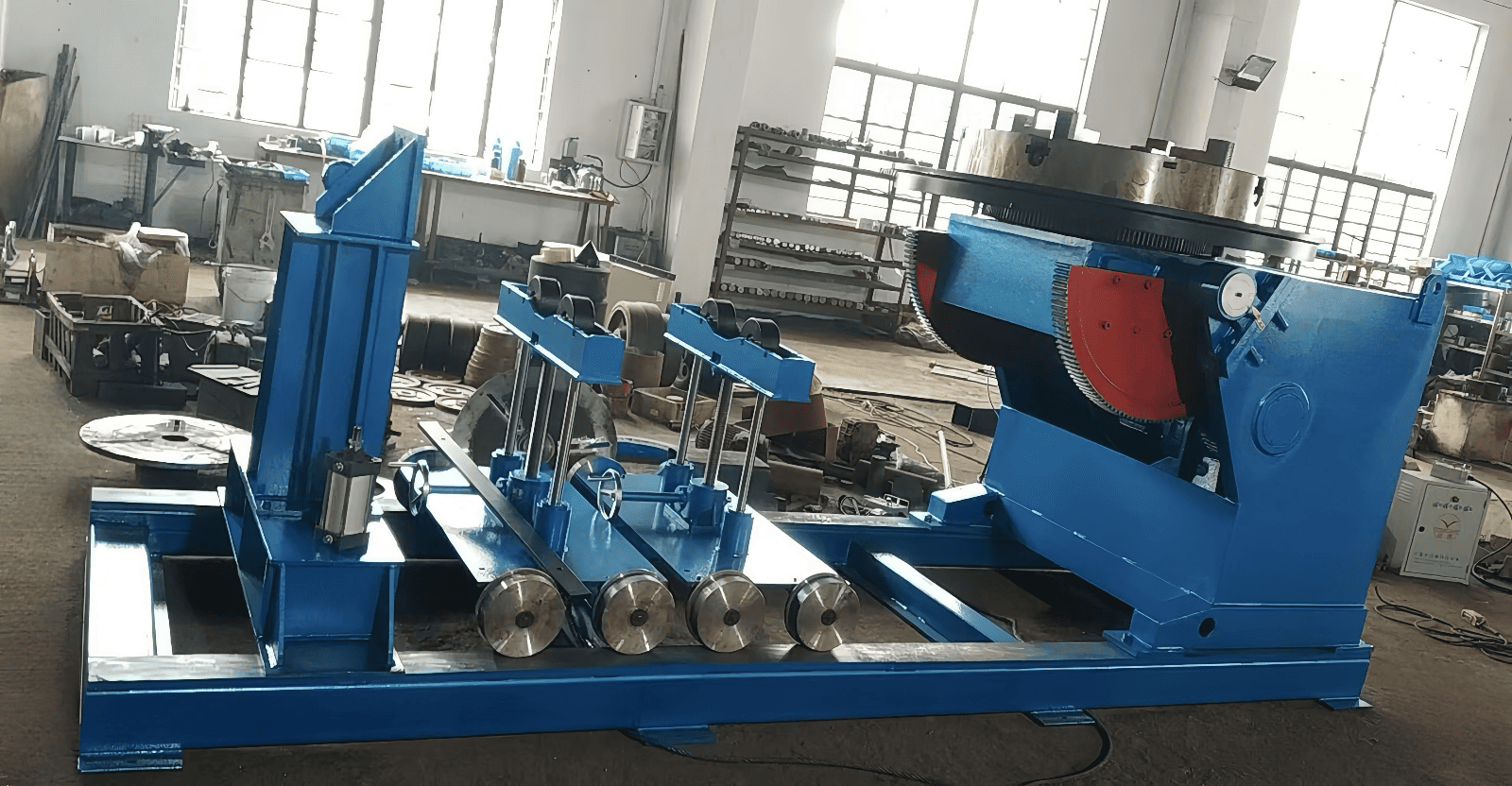
Pipe welding is one of the most complex and demanding processes in the entire industry, requiring, above all, precision, consistency, and efficiency. After perfect welds are completed in varying diameter pipes and different materials, the tools and techniques used in the welding process may matter. At this point, the pipe positioner emerges as an instrumental piece of equipment in revolutionizing the way welders work. Pipe positioners are designed to align and rotate pipes with maximum precision; therefore, positioning systems lead to more productive shops with reduced manual handling and setup times. In this article, we focus on the role of pipe positioners in enhancing welding operations, detailing their features, benefits, and impact on weld quality. Whether you are a professional or an enthusiast, this guide sheds light on the importance of these tools and the way they are spearheading the future of pipe welding.
Understanding Pipe Positioners
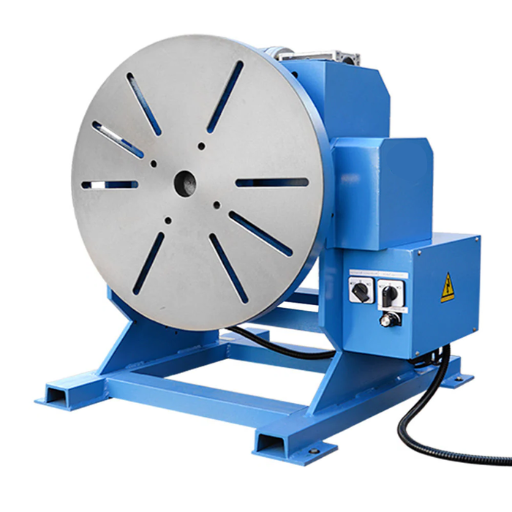
Pipe positioners are considered mechanical devices that can clamp and rotate pipes, enabling the completion of accurate welding and fabrication tasks. Its primary function is to ensure the pipes are always in exact alignment and positioned to minimize any errors arising from manual handling, thereby enhancing the quality of the weld. By setting the controlled rotation of pipe positioners and giving access to all welding angles, end-users lose less fatigue and get improved work efficiency. These tools thus find a wide usage along the oil and gas construction and manufacturing industries where precision and productivity matter most.
What is a Pipe Positioner?
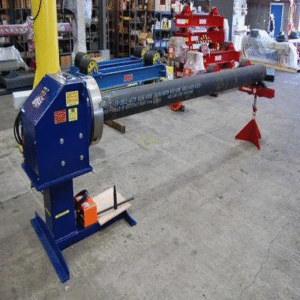
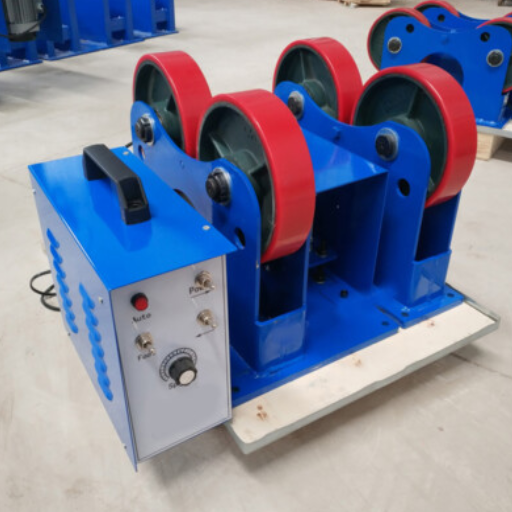
Pipe positioners are specialized machines designed to hold and rotate a pipe during welding and fabrication. Utilizing an advanced mechanism, which may include a rotating chuck, tilting table, or hydraulic system, the pipe positioners enable the precise manipulation of the workpiece. For quality welds, the positioner establishes an alignment, allowing welding at difficult angles and supporting the pipe, so that humans do not need to hold it. Most modern pipe positioners come with features such as variable speed, inconsistently powered rotation, and programmable controls to further enhance efficiency and accuracy. Being rich in production, safety, and quality standards, these industries use such tools for the intricate fabrication of heavy-duty parts, thereby increasing productivity and reducing manual exertion.
The Role of Weld Positioners in Industry
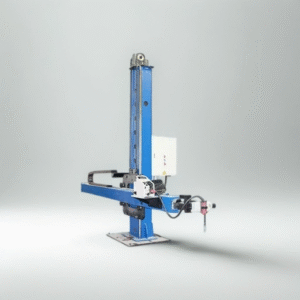
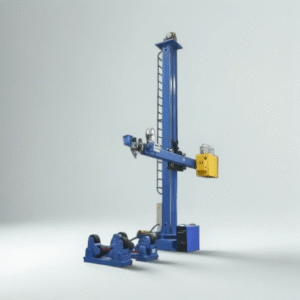
Weld positioners are indispensable in various industries because they enable fabrication processes with high levels of serviceability, speed, and safety. By holding and rotating workpieces at optimal angles, these devices minimize downtime while providing welders with safe working positions that reduce the risk of injury and fatigue. Such technology becomes especially critical in high-volume operations such as automotive production, shipbuilding, and heavy equipment assembly, where consistency and speed are paramount. The implementation of higher levels of automation in weld positioners has enabled the industry to minimize human error while meeting strict regulatory requirements. These benefits attest to the vital role that positioners play in simplifying fiber optic welding operations and achieving superior weld quality.
Key Features of Pipe Welding Positioners
- Set-up Precision: Pipe welding positioners have the unique capability of providing fine rotational control to compensate for any misalignment that may occur during welding. This control enhances the quality of the welds, and without it, defects may set in.
- Greater Load Capacity: These positioners are designed to support pipes of varying sizes and weights, allowing them to be applied across multiple industries.
- Speed Control: Variable speed capacity optimizes the welding process for the material and pipe thickness.
- Tilt and Positionability: Pipes can be tilted and repositioned to conform to complex welding angles and to provide access to difficult welding zones.
- Safety Features: Highest safety standards are considered, with emergency stop systems and overload protection ensuring safety of operation without compromising on working aspects.
Types of Pipe Positioners
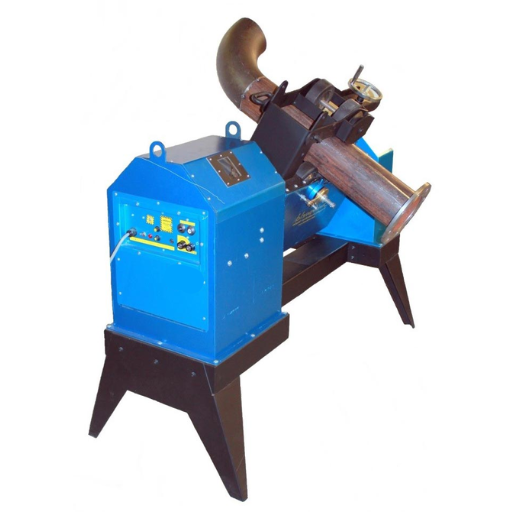
There are several types of pipe positioners, including manual, hydraulic, motorized, welding positioners, and automatic positioners.
Manual vs. Automatic Pipe Positioners
Manual pipe positioners are cost-effective and ideal for simple tasks, while automatic pipe positioners offer precision, efficiency, and suitability for complex operations.
Pipe Turning Equipment: An Overview
Pipe turning equipment is fundamental to fabrication and welding processes as it aids in the procedural manipulations of pipes in every operation with efficiency and precision. These machines work to optimize the workflow by automatically rotating or positioning the pipe, thereby requiring less manual intervention and achieving higher productivity. Variable speed controls, heavy-duty loading capabilities, and easy interfacing with automation systems for complex tasks are typical features. By reducing the level of errors and increasing the productivity of workers, pipe turning equips industrial processes with which to yield excellent results.
Comparing Capacity: LB Pipe Positioners
When comparing the capacity of LB pipe positioners, it stands to reason that several key parameters must be studied for their suitability in an industrial setup. Load capacity, rotational torque, and pipe diameter range are the main parameters of comparison. LB pipe positioners are designed for various weight loads, and their classification is generally based on their load-bearing capacity, which can range from several hundred pounds to almost several tons, depending on the model.
Rotational torque is another critical parameter as it controls the equipment’s ability to rotate pipes accurately, even under full load. Along with that, pipe diameter range supported would indicate to the user how flexible the positioner can be in labeling small to large-scale projects. Although newer varieties usually include adaptive controls and offer customization options to meet alternate requirements of specialized industries, such as oil and gas or construction. By assessing these occasions against actual project needs, operators can ensure the most suitable performance and efficiency.
Benefits of Using Pipe Welding Positioners
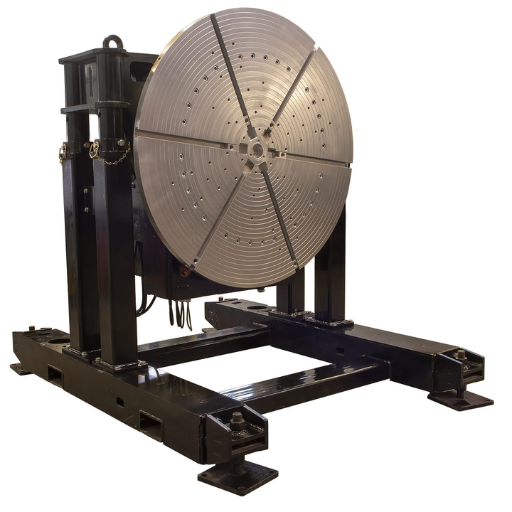
- Welding Precision is Enhanced:
The pipe welding positioner enables precise adjustment of the workpiece angle and rotation, ensuring consistent quality welds in critical applications. - Safety of the Operator is Increased:
Holding and rotating the pipe minimizes manual handling operations and, consequently, may reduce accidents and operator fatigue during welding operations. - More Production:
Workers are able to spend more time on welding and less time manipulating the workpiece, which means work gets done faster and downtime is minimized. - Application Versatility:
Being adjustable, these pipe welding positioners are capable of handling various pip sizes and project requirements, making them adaptable to different industries such as in Construction, manufacturing, and shipbuilding. - Reduction in Cost:
Errors, hence wastage of material and time in welding, are controlled by the use of positioners, which enhance other production efficiencies and consequently reduce costs in manufacturing operations.
Enhancing Efficiency and Precision
Pipe welding positioners enhance production efficiency and accuracy by securely positioning and rotating pipes for repetitive welds, requiring minimal operator monitoring. This precise movement eliminates welding errors caused by human error, enhances welding accuracy, and ensures consistent weld quality across joints. Positioners also serve to speed up the workflow, as the welding work will be simplified and more work can thus be accomplished within the less time. The welders are therefore provided with greater time to enhance productivity, reduce material waste, and incur lower labor costs and rework, an advantage for industries where welding needs to be of high quality and reliability.
Cost Savings and Optimized Workflows
Pipe welding positioners ensure cost savings and ease workflows, especially in precision- and efficiency-demanding industries. Positioners enable operators to manipulate and weld pipes ergonomically and consistently, thereby reducing errors and defects in welding operations. Reduced rework, therefore, means less waste of materials and fewer labor costs. Finally, there range greater efficiencies in the workflow that enable faster work completion without compromising quality, thereby ensuring greater throughput.
By giving processors on the set of positioners the ability to program various automated functions to achieve the desired results and implementing real-time control and monitoring throughout the 5- to 10-minute operation, pipe welding positioners will increase productivity even further. This feature will not only enhance operational efficiency but also reduce downtime by identifying and resolving mechanical issues before they occur. This significantly enhances the long-term savings from investing in pipe welding positioners for industries such as oil and gas, manufacturing, and construction, while also improving the quality of output; consequently, this increases the applicability and value of pipe welding positioners in any production setup.
Improving Weld Quality and Consistency
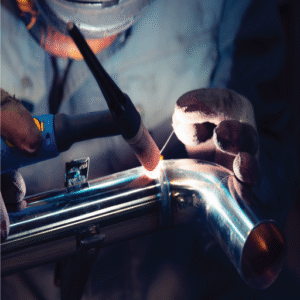
Pipe welding positioners work on the promotion of improved weld quality and consistency, especially when applied to industrial setup. Positioners hold the workpiece in the best possible location, thereby minimizing ergonomic restrictions and human errors, which are primarily attributed to weld defects. Therefore, the accurate control of rotation and angling in welds enables uniform beads, which in turn increase joint strength and reduce the incidence of porosity or misalignment.
Technically, modern welding positioners have an edge over their predecessors in that they are programmable to automate welding processes and control rotary speed to maintain heat input and penetration during all weld passes. Such precise control and repeatability are crucial in a mass production environment such as pipeline fabrication or pressure vessel construction. It is therefore such high precision that interferes with the welding process and brings out very high product quality standards, thus reducing reworking time and waste of materials. When industries utilize pipe welding positioners in their operational systems, they can expect to achieve improved weld performance, enhanced operational efficiency, and more favorable overall project outcomes.
Best Practices for Selecting Pipe Positioners
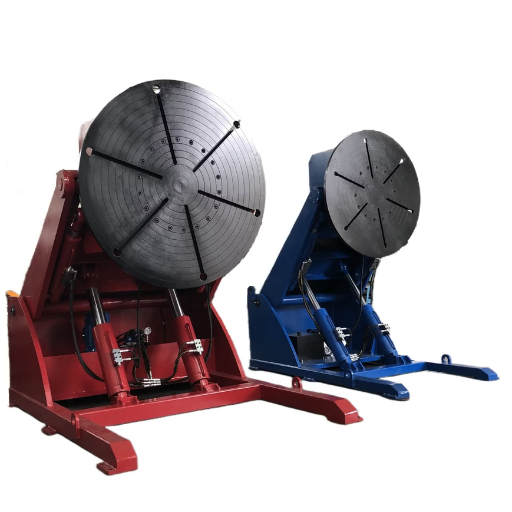
1. Evaluate Load Capacity
Ensure that the positioner has sufficient bearing capacity to support the weight of the pipes and tooling. Overloading it can be unsafe and can even adversely affect its performance.
2. Assess Rotation Speed and Precision
Positioners should be selected with variable speeds and accurate control to satisfy welding needs, and the demands of material handling scenarios.
3. Check for Compatibility with Workpiece Dimensions
The sizing, range, and adjustability of positioners must be checked for compatibility with whatever diameter and length of the workpieces are involved.
4. Focus on Safety Features
Integrated safety features like limit switches, emergency stops, and anti-slip mechanisms would ensure that a person working with a positioner would not get injured.
5. Consider Automation and Control Options
The automated control system of an advanced model can significantly boost productivity when integrated with robotic or mechanized welding systems.
6. Examine Durability and Build Quality
Forging robust qualities into design shall ensure this positioner withstands constant application in rough conditions and is suitable for heavy-duty applications.
7. Research Maintenance Requirements
Ensure simplified maintenance, with replacement parts readily available, so that your improvised system will have minimal downtime and be reliable in the long run.
Evaluating Equipment Features
Equipment specifications hold critical importance during the equipment selection process of pipe positioners, and these steps are followed to assure the finest performance and efficiency. In the initial stage, I usually check the workable weight and rotational precision to confirm whether they suits the given workload. Then, there is an analysis of the levels of automation and programmability, mainly with regards to the efficiency of the processes in consideration or existing process systems. Ergonomics features, such as height-adjustability or ease of control, are under evaluation, so usability for the device operator is ensured. Safety features appear last in the list, accompanied by an avalanche review to ensure build quality guarantees and compliance with reliability, safety, and industrial standards.
Choosing the Right Capacity for Your Needs
Capacity selection is crucial for pipe positioners, where one must continually assess the maximum load requirements, including the pipe weight along with any attachments such as fixtures or welding equipment. For safety purposes and extended equipment life, select a positioner whose load capacity not only fits the heaviest expected load but surpasses it. Consider a rotation torque with tilting ability, allowing the positioner to lift with stress-free movement under actual working conditions. A fitted capacity can provide maximum utility to the positioner with maximum efficiency and a minimal likelihood of being overcharged or failing.
Expert Recommendations for Pipe Positioner Use
To get the most out of these things, good industry standards must be followed, and these standards must be on equipment specifications. Most importantly, operators must keep the positioner in good working conditions, considering wear and tear, particularly in the critical parts of the swivels and clamps, as well as the rotational arms. Regular maintenance and lubrication of moving parts, while being vigilant for signs of misalignment, will help extend the device’s operational lifespan.
Properly securing the pipe when employing a pipe positioner is also a priority. It should be checked to see if the position of the pipe refers to its center of gravity; if it does not, instability in movement may be the outcome. Improperly placed weights may also elevate the risk of equipment strain or failure. Another consideration would be to monitor the speed of rotation and tilting very closely such that abrupt movement would never occur in a manner affecting accuracy or safety.
The working environment has to be free from any obstacles. Sufficient clearance must be maintained around the positioner to allow for smooth operation and to facilitate operator movement. Also, personnel should be trained in the use of the specific model of the positioner and of course, should have a clear understanding of its operating limits. Perhaps going a step further and using modern technology, such as remote-controlled positioners, contributes significantly to improved operator safety, as it minimizes the operator’s proximity to live machinery.
Integrate a data monitoring system to observe performance peculiarities, such as load cycles, usage patterns, and stress levels, that inform predictive maintenance schedules for efficient and reliable operations over time. And thus, Pipe positioners combined with a regular upkeep and maintenance approach should promise consistent service delivery and high-quality performance from pipe positioners.
Latest Innovations in Pipe Positioning Technology
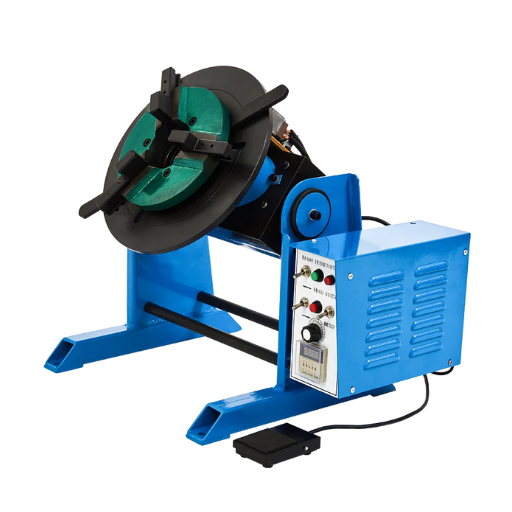
The advancements in pipe positioning technologies have consistently focused on precision, efficiency, and automation. The use of robotic systems is among the newer technologies that enable a fully automatic positioning process, thereby minimizing the need for manual adjustments to improve accuracy. The latest generation of pipe positioners is equipped with advanced control interfaces that feature programmable settings, allowing operators to configure positioning parameters and repeat the procedure as desired easily. Another breakthrough is the technology of real-time sensors, which ensures continuous feedback about the alignment and positioning to guarantee best performance during welding or assembly. These developments therefore entail higher productivity and less downtime of services, along with improved consistency in complex industrial applications.
Trends in Pipe Welding Equipment
These latest innovations in pipe welding equipment are influenced by aspects of automation and artificial intelligence (AI). Automated welding systems currently embed AI-driven algorithms that can modify parameters in real-time, basing these adjustments on material properties and slight environmental variations. Historically, this trend has increased precision and decreased operator dependence, yielding consistent weld quality across various jobs. The emerging hybrid so-called smart welds will gain market traction with its ability to offer high-speed welding with minimal heat distortion. Furthermore, the portable and lightweight trend adds value, as it meets the need for on-site remote welding without compromising functionality or durability. These new trends point toward brilliant, efficient, and granular pipe welding solutions.
Future Developments in Weld Positioners
Weld positioners in the near future are expected to offer greater levels of automation, precision, and adaptability to various welding environments. Developed strategies are now geared toward integrating advanced robotics and programmable controls, enabling coordinated movements that result in higher welding accuracies and repeatability. Being able to configure positioners using a modular design is also increasingly being considered by the manufacturers to facilitate scalable configurations for different workpiece sizes and shapes. In addition, smart sensors, combined with real-time monitoring systems, are being introduced to further enhance welding activities and ensure the fulfillment of quality standards. Thus, these advancements aim to increase productivity, reduce operator fatigue, and meet the growing demand for fast and reliable welding at both industrial and field levels.
How Technology is Shaping Pipe Welding
The integration of advanced technology into the domain of pipe welding has supplied notable improvements in precision, efficiency, and adaptability. The automated welding systems employ machine learning algorithms to consider various weld parameters and make minute adjustments for improved performance, thereby minimizing the need for human intervention. AI facilitates the real-time detection of defects and analyzes them using images from high-resolution cameras and thermal sensors, ensuring that any inconsistencies do not compromise weld integrity. Moreover, advanced CAD software enables operators to simulate welding processes in a virtual environment, facilitating proper planning and thus reducing waste. These innovations equip the welding industry with a strong arsenal to tackle contemporary issues of complex geometries, high-strength alloys, and ever-increasing demands for fast-track, high-quality outputs.
Reference Sources
- Welding Positioners: Improve Your Pipe Welding Production – Discusses how positioners reduce manual repositioning, minimize distortion, and improve precision.
- Welding Positioner: Maximizing Precision and Safety – Explores precision control and safety benefits of welding positioners, especially for pipe welding.
- Best in Class Welding Positioners – Highlights high-quality welding positioners designed for precise workpiece rotation.
- Hand Tools for Pipe Welding, Measuring, & More – Provides a variety of tools for pipe welding, including clamps and measuring tools.
- Guide for Welding Turntable