Welding is a vital skill taught in various industries, including construction, manufacturing, aerospace, and automotive. The complexity of welding doesn’t reside solely in how it is done but also in how welding positions are understood. 1G, 2G, 3 G, 4G, 5G, 6G-wild technical terms that essentially are the basis for a welder’s skill and versatility. Each position carries with it different challenges and uses, according to which the strength, quality, and consistency of the weld are affected. We will thoroughly explore these crucial welding positions and explain them in a way that is both accessible to the layman and the professional, so that one may grasp the essence of welding positions and their applications in real life. Whether you aim to sharpen your skills or simply enrich your welding knowledge, this article will provide you with all the insights that will pave the way for your success.
Introduction to Welding Positions
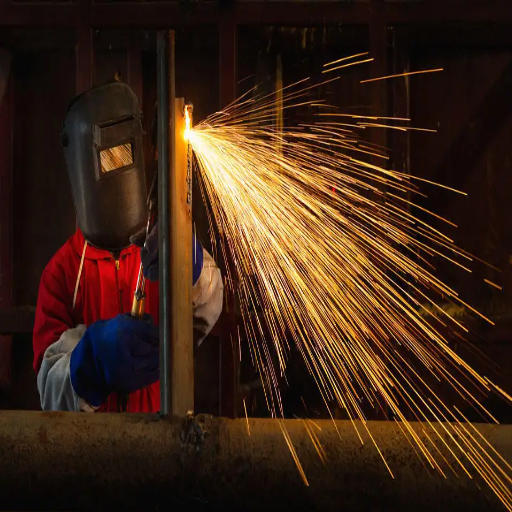
The term welding positions describes the particular orientations in which welding is undertaken. These are important because the weld quality, efficiency, and overall success are affected by it. There are four primary welding positions: flat, horizontal, vertical, and overhead. Every position and method used poses ever so slight difficulties, dependent on the technique used, to achieve proper fusion and structural integrity. Welding in these positions is considered the paramount step in allowing an individual to interface with various project requirements that a welder might encounter and achieve consistent, high-quality results in the diverse application field.
Overview of Welding
Due to welding, many industries have flourished, including construction, automotive, aerospace, and energy production. Approximately 50% of industrially manufactured products rely on welding during their production, thereby adding to their sellable value. Welding imparts strength and durability to structures, enabling the fabrication of intricate designs and components. With technological advancements, studying welding has become increasingly exciting, with robotic and laser welding further pushing the discipline to meet the growing demand for accuracy, efficiency, and sustainability. These increased innovations have thus further promoted welding as one of the most critical skills and processes shaping modern infrastructure and technology.
Importance of Welding Positions
The welding positions primarily concern the era of their quality, strength, and durability. The position of a welder performing welding is hence one of the chief factors determining the successful quality of a job in the construction, aerospace, automotive, or shipbuilding industry. Four basic welding positions are recognized by the American Welding Society (AWS) standards definition: flat (downhand), horizontal, vertical, and overhead. Each position requires its own expertise and presents special challenges in setting up a safe weld.
According to studies, less-than-ideal working conditions, such as overhead and vertical positions, tend to decrease productivity by as much as 30 percent compared to flat welds. The reason for this is the difficulty in controlling the weld pools against gravity, thereby increasing the likelihood of defects such as slag inclusion or lack of fusion in the weld. This further emphasizes the importance of training welders and ensuring that the weld is executed correctly, regardless of the position.
Technological evolution in robotic and automated welding systems is addressing these barriers to accomplish welds of high precision and consistency in difficult or awkward positions. For example, robotic welding systems have been shown in some cases to increase productivity by approximately 40 percent in industries where precise welding in multiple positions is required, such as automotive manufacturing.
Moreover, vocational certifications stress the skill of welding in positions as part of their standard. Research shows welders certified in more than one position can earn between 15-20 percent more than welders limited only to basic positions, thus establishing the value of being versatile in the trade. Knowledge and understanding of welding positions are essential not only for improving weld quality but also for ensuring safety and efficiency, and ultimately, for the successful completion of a project.
Applications in Various Industries
Welding is a fundamental process across various industries, highlighting its versatility and importance in modern infrastructure and manufacturing. The following are some key sectors in which welding plays a vital role.
- Construction Industry
Welding is crucial for the construction of buildings, bridges, and other types of infrastructure. Steel frameworks, pipelines, and reinforcement bars are frequently welded using one technique or another. Among other uses, welding in some form is so crucial to construction that around 50 percent of all steel produced worldwide is destined for use in buildings and infrastructure.
- Automobile Industry
Welding is at the heart of vehicle construction, starting with the welding of car chassis and extending to the welding of exhaust systems. Robotic welding may attain high levels of precision and efficiency in mass production. Recent data show that over 70% of the components in an average car consist of welded parts.
- Aerospace Industry
The aerospace industry requires special welding considerations to join the lightweight air- and heat-resistant materials. Designing precision weldments is essential for aircraft assembly, and the welding process primarily utilizes titanium, Aluminum, and composites. Ability welding is used to ensure structural strength while minimizing weight in aerospace components.
- Energy Industry
Welding serves the energy industry from oil and gas pipelines to renewable energy activities such as wind turbine fabrication. Submerged arc welding is primarily used to create joints for high-pressure pipelines; welding is also crucial in maintaining plants and solar installations.
- Shipbuilding and Marine Industry
Welding serves the marine industry in all instances because of durability and performance considerations. Marine welding must fulfill challenging standards to withstand corrosive conditions. The industry is worth billions of dollars every year, with ship repairs and maintenance being ever in demand.
These industries testify to the incredibly vast scope and significance welding holds as an art and as a science, promoting technological and economic progress.
Advanced Welding Positions
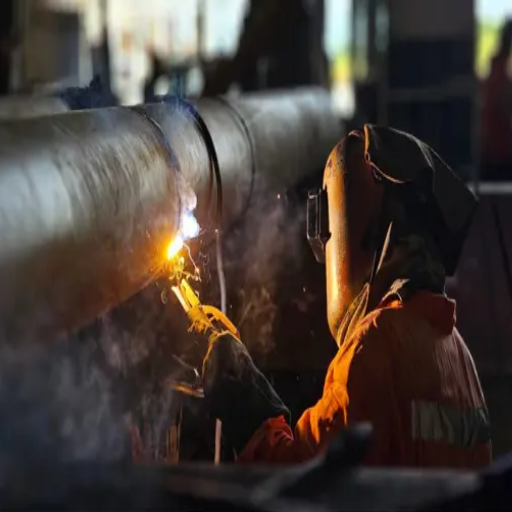
An advanced welding position means techniques and orientations that require greater precision, skill, and expertise due to their complexity. They are:
- Flat Position (1G/1F) – This weld is carried out on the upper side of a horizontal surface. This can be considered the easiest position and is suitable for beginners.
- Horizontal Position (2G/2F) – In this position, the weld is made along a horizontal axis, and the welder must move the electrode with utmost control to ensure uniform welds.
- Vertical Position (3G/3F) – Welding is performed on a vertical axis that moves downwards or upwards, requiring more control over materials to prevent problems such as dripping.
- Overhead Position (4G/4F) – Being the most challenging of all weld positions, welding is done overhead, where one must control the molten metal for safety.
- Being proficient in these positions, a fitter-welder may aspire to projects of varied nature and scope.
Understanding the 4G Welding Position
The welding position 4G refers to welding groove welds in an overhead position. It is said to be the most challenging position for a welder to work in due to the difficulty in controlling the molten metal. Typically, this position is adopted during structural works, such as when laying overhead beams and pipelines.
The latest data from Google’s search engine reveals consistent challenges being raised by onion skinning in the “4G welding techniques” and “how to pass the 4G welding test” searches, like improper bead penetration and drips or defects. Welders set up advanced mechanisms to complete these tasks, which include angling the electrode and maintaining a short arc length to control the weld puddle. Also included in these precautions are necessary measures such as flame-resistant clothing and shields designed to protect against splashing molten metal. 4G welding position mastery is clear evidence of a welder’s skill and is a requirement for advanced certifications and jobs.
Exploring the 5G Welding Position
The 5G welding position is a type of fixed location where the pipe remains horizontal but cannot be rotated; therefore, the welder must work around a fixed pipe. The 5G welding position is challenging as it requires welding at various angles, including all-in overhead, vertical, and horizontal positions, in a single job. Recent studies indicate that welders rely on techniques such as “walking the cup,” helping them to have more stability and consistency while welding in this position. It is essential to be precise and control the weld so that it maintains integrity at varying angles. Good preparation should be considered, such as proper beveling and clamping, to prevent possible errors. Mastery of the 5G position is essential in industries such as oil and gas, where pipelines are often welded with such fixed-position welds to ensure durability and quality.
Insights into the 6G Welding Position
The 6G welding position is considered one of the most difficult and skill-requiring positions in welding. Unlike other positions that a simple adaptor could weld, the pipe in 6G is held fixed at a 45-degree angle, thereby forcing the welder to perform welds at upward, horizontal, and downward angles. This position, if mastered, really puts an operator ahead of the game-an ability to weld complex geometries under harsh conditions.
Current industry studies indicate that demand for 6G welding capabilities is increasing in sectors such as aerospace, oil and gas pipeline construction, and construction. According to Google Trends data, search terms related to 6G welding certification and training programs have experienced a steady increase over the last few years, indicating that this skill has gained market demand.
This position requires a high level of knowledge of welding equipment and filler materials, as well as the correct techniques for each specific metal. Heat control becomes important during welding, as well as maintaining hand stability. The most crucial aspect is preparing welds that are perfect and durable in the 6G position. Advanced certified professionals may even go under further training, including pursuing AWS endorsements to validate their skills and potentially enhance career opportunities.
Comparison of Welding Positions
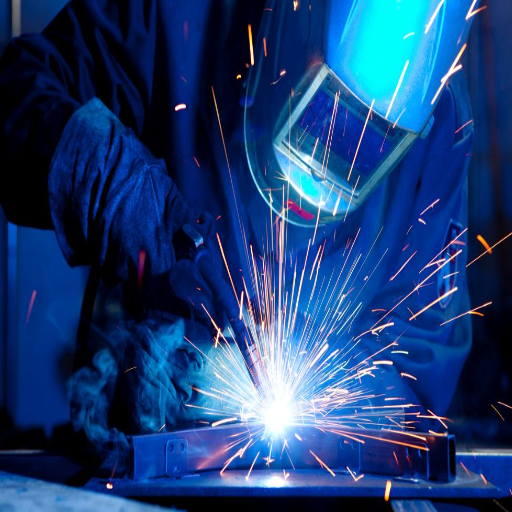
These are types of welding positions: flat, horizontal, vertical, overhead, and pipe ones (5G and 6G). Put very simply, here’s a comparison between these welding positions in a table:
| Position | Code | Description | Key Challenge | Common Use |
|---|---|---|---|---|
| Flat | 1G/1F | Weld on top | Easy to manage | General welding |
| Horizontal | 2G/2F | Side weld | Gravity effects | Butt welds |
| Vertical | 3G/3F | Up/down weld | Metal sagging | Structural |
| Overhead | 4G/4F | Below weld | Gravity pulling | Fixed setups |
| 5G | 5G | Pipe horizontal | Multi-position | Pipe welding |
| 6G | 6G | Pipe at 45° | Complex angles | Certification |
1G to 6G: Key Differences
Welding positions differ from one to another in terms of orientation, complexity, and application, ranging from flat and simple (1G) to angled and challenging (6G).
| Position | Code | Orientation | Complexity | Key Use | Challenge |
|---|---|---|---|---|---|
| Flat | 1G | Horizontal | Simple | General welds | Easy to manage |
| Horizontal | 2G | Vertical plane | Moderate | Butt joints | Gravity effects |
| Vertical | 3G | Vertical axis | Moderate | Structural | Metal sagging |
| Overhead | 4G | Below welder | Difficult | Fixed setups | Gravity pulling |
| Pipe Fixed | 5G | Horizontal pipe | Advanced | Pipe welding | Multi-position |
| Pipe Angled | 6G | 45° pipe angle | Most complex | Certification | All positions |
Common Welding Positions and Their Uses
Welding positions have been categorized concerning practical applications and technical problems in the industry. Some of the leading welding positions, alongside their common uses, are outlined below:
- 1G (Flat Position): Starting welders will almost certainly learn welding in the 1G position since it is the simplest position to work in; it is widely employed in manufacturing and construction wherein flat materials are welded with gravity assisting in keeping a steady weld pool.
- 2G (Horizontal Position): Structural welds using the 2G position are essentially laid on horizontal things such as pipes, I-beams, etc. This horizontal position requires an exact hand against gravity to ensure a clean weld.
- 3G (Vertical Position): Seen in shipbuilding, industrial construction, and all other trades where welders weld materials in a vertical position. Skill is required to control the flow of molten metal and avoid defects.
- This position involves welding, typically from an overhead position, on pipework, as well as automotive repair and maintenance. The 4G position, being considered one of the more challenging work positions, requires welders to work against gravity and ensure weld integrity is maintained.
- Also known as a fixed pipe position in the industry, the 5G position is typically installed horizontally and is most commonly used in oil and gas solutions. Welders need to go around the pipe in various positions, adapting their technique to weld all the way around the pipe circumference.
- Inclined pipe positioning is considered the most challenging aspect. Due to its versatility, the 6G position is utilized for the highest level of execution in various industries, including power plants, offshore drilling, and aerospace. The pipe is angled at 45 degrees, thus requiring the use of a combination of vertical and horizontal welds. A certification in 6G signifies a very high level of skill and adaptability in welding.
Since the welding positions are intended to answer specific concerns of the industries concerning the structure or quality of various projects, each pose presents its problems, depending on the complexity and variety of the welding that will be presented.
Welding Skills Required for Each Position
Different welding positions require unique skills and techniques to provide precision and quality to the weld. They also depend on complexity and environment. It requires basic manual skills, including steady hand control and maintaining even heat and speed during flat welding (1G). This is considered a straightforward position; therefore, new welders typically begin with it.
On the other hand, horizontal welding (2G) requires maintaining control over the weld pool while gravity works against it, causing the molten metal to sag. Welders must be able to maintain precise angles and travel speeds to achieve acceptable, uniform welds.
As 3G welders, gravity introduces another level of complexity, particularly in the stoppage of sags during upward and downward passes of a weld bead. Welders must work with their equipment expertly, using exact heat settings and a steady hand technique to counteract the effects of gravity.
Overhead welding (4G) is one of the most challenging welding positions, requiring exceptional skill in manipulating the molten weld pool as it moves against gravity. Welders must possess perfect precision, excellent hand-eye coordination, and accurate knowledge of shielding techniques to prevent defects such as slag inclusions.
The 5G and 6G positions entail pipe welding at fixed angles along cylindrical surfaces. In addition to being able to weld in various orientations, these positions require a thorough understanding of pipe alignment and rotation. The 6G position is considered one of the most difficult as welders must apply their technical knowledge and solve problems in a challenging environment.
A welder’s grasp of safety procedures, materials, and machinery across all positions is very much crucial to achieving good and quality welds. Practice, training, discipline, and retraining on the positions are essential to attain exceptional quality welds and conform to innovations in the welding industry.
Techniques for Successful Welding
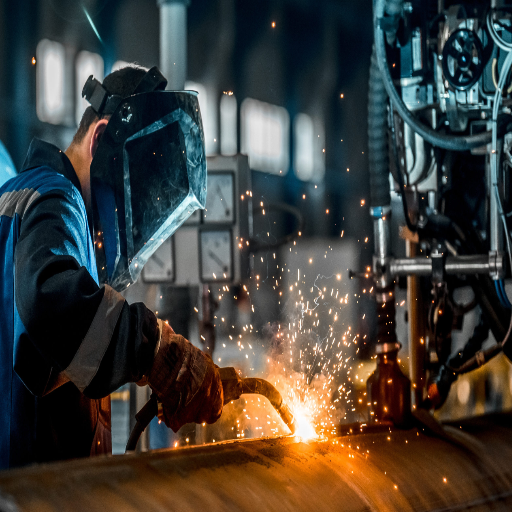
- Preparation: The surfaces ought to be cleaned well, removed from rust, dirt, or oil. Pollution creates weak bonds and hence welds of bad quality.
- Proper Equipment Usage: Equip yourself for the material type and the welding method. Be aware of the equipment user-wise to have control and be precise.
- Consistent Technique: Weld while walking with a steady line, correct angle, and flat speed, so that the welds will be uniform.
- Safety First: Use protective gear first, including gloves, a helmet, and goggles, and ensure you operate under a well-ventilated setup.
- Practice and Patience: Doing it repeatedly will improve it; it will also give you confidence. Always stay focused on the simpler things before moving on to the more complex ones.
Tips for Flat Welding and Overhead Welding
- Recognize the Welding Position: Flat welding is undertaken on the horizontal position, allowing gravity to do its work on the weld pool. In overhead welding, special care must be taken by the welder, as gravity can hinder the process, resulting in drips or uneven welds.
- Adjust Your Heat Settings: Using less amperage is best for overhead welding, as it prevents the weld pool from being too fluid and dripping down. For flat welding, more amperage can usually be utilized in the interest of speed and penetration.
- Give Thought to the Nature of Your Welding Rod or Wire: A standard rod or wire will do for flat-welding purposes. For overhead welding, one must choose a rod or wire best suited for controlling molten metal in more challenging positions, such as those rated for all-position welding.
- Maintain Proper Angle and Distance: For flat welding, angle the electrode slightly, around 5 to 15 degrees, to ensure even penetration. For overhead welding, maintain a short arc and hold the electrode perpendicular to the joint to minimize spatter and dripping.
- Wear Proper Protective Equipment. Flat and overhead welding require complete protective equipment; however, overhead welding necessitates special attention to protective helmets and flame-resistant clothing to prevent injury from falling sparks or molten material.
Best Practices for Pipe Welding
- Ensure Proper Joint Preparation
Start with the pipe edges having been cleaned and beveled to achieve good and consistent welds, removing rust, grease, dirt, and all contaminants that can hinder good weld penetration.
- Select the Right Welding Process
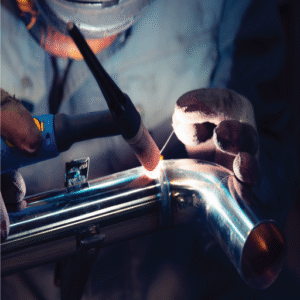
Choose the welding process for the job: TIG welding may be suitable for precision, while Stick welding (SMAW) is better suited for outdoor work conditions.
- Maintain Proper Heat Input
Control the heat input carefully to avoid warping or cracking. A lot of heat will distort the material, whereas less heat will generate poor fusion.
- Use Correct Welding Position and Technique
Use methods appropriate for horizontal, vertical, or inclined pipe positions, maintaining a constant travel speed to achieve a uniform weld.
- Inspect and Test Welds
Conduct thorough inspections and utilize NDT techniques, such as X-ray, ultrasonic testing, and dye penetrant testing, to verify weld strength and provide safety assurances in accordance with industry standards.
Achieving Precision in Vertical and Horizontal Welding
Vertical and Horizontal Welding: Key Technologies and Best Practices for High-Quality Welds
- The nomenclature of joint preparation
All joints should be clean, free from contamination, and properly aligned. Proper bevel and joint fitings allow better weld penetration and uniformity.
- Heat-Input Control
During welding operations, the heat input must be optimized and maintained to prevent situations such as warping and burning through the material. Amperage, voltage, and travel speed for specific welding positions should be taken into consideration.
- Stringer Beads
In vertical welding, stringer beads should be used with consistent upward or downward movement to give better control and reduce the chances of weld sagging or other defects.
- Electrode Angle Stability
Throughout work on both vertical and horizontal joints, maintain a consistent electrode angle relative to the workpiece surface. A travel angle of approximately 10 to 15 degrees generally works well for the weld pool to be smooth and even.
- Monitor Environmental Conditions
Whatever can affect shielding gas coverage—wind or drafts —leads to porous or weak welds. Employ welding curtains or shields to prevent that, if need be.
Following these rules can significantly improve the accuracy, strength, and durability of both vertical and horizontal welds.
Reference Sources
- “An Effect of Electrical Current Strength and DCEN Polarity on SMAW Welding Results in Butt Joint Position 1G”
- Authors: Rika Veronika et al.
- Published: July 24, 2023
- Key Findings: This study examines the effect of varying electrical current strengths (60 A, 90 A, and 120 A) on the quality of welds in the 1G position using Shielded Metal Arc Welding (SMAW). The results indicated that:
- At 60 A, penetration was insufficient, leading to defects.
- At 90 A, there was improved penetration, but it was still incomplete.
- At 120 A, while penetration improved, defects were still present.
- Methodology: An experimental approach was employed, with qualitative assessments of weld quality based on visual inspections and defect analysis (Veronika, Bohari, & Putra, 2023; Veronika, Bohari, Yhuto, et al., 2023).
- “Analysis of Current on Mechanical Properties and Microstructure of A53 Gr B Material with Gas Tungsten Arc Welding Process”
- Authors: T. Tarmizi et al.
- Published: May 3, 2021
- Key Findings: This research focused on the effects of welding current on the mechanical properties of A53 Gr B steel welded using GTAW (Gas Tungsten Arc Welding) in the 5G position. The study found that:
- A current of 90 A yielded the best tensile strength (480 MPa) and hardness (190 HV).
- Lower currents resulted in incomplete penetration defects.
- Methodology: The study employed a systematic approach, varying the current and measuring the resulting mechanical properties and microstructure through tensile and hardness tests(Tarmizi et al., 2021, pp. 20–28).
- “Analysis of Welding Position and Current on Mechanical Properties of A36 Steel using Shield Metal Arc Welding”
- Authors: F. Vietanti et al.
- Published: November 1, 2021
- Key Findings: This study investigated the impact of various welding positions (1G, 2G, and 3G) and current levels on the mechanical properties of A36 steel. The results indicated:
- The 1G position provided the highest tensile strength and hardness.
- Variations in current significantly influenced the mechanical properties.
- Methodology: The research employed experimental methods, conducting tensile tests and hardness measurements to evaluate the effects of welding parameters (Vietanti et al., 2021).
- Top Welding Positioner Manufacturers and Supplier in China
Frequently Asked Questions (FAQs)
What is a 1g welding position?
The 1g welding position refers to a flat position where the weld is performed on the top side of the joint, making it easier to manipulate the welding equipment. This position is often used for welding plates and is considered one of the most basic and accessible welding positions, ideal for beginners.
How does the 2g welding position differ from the 1g position?
The 2g welding position involves welding in a horizontal position, where the weld joint is positioned horizontally, and the welder must maintain control of the weld pool while working on the side of the joint. This position presents unique challenges compared to the flat 1g position, as gravity affects the weld pool more significantly.
What is a 3g welding position and its applications?
The 3g welding position is a vertical position where the weld joint is oriented vertically. This position is frequently used in various applications, especially in structural welding and pipe welding, where vertical joints are common. Mastering the 3g position is essential for welders due to its complexity.
What are the challenges of the 4g welding position?
The 4 G welding position involves welding in an overhead position, which can be quite challenging due to gravity affecting the molten weld pool. Welders must develop specific skills to control the weld and prevent defects, making the 4g position one of the more advanced welding positions.
What is the significance of the 5g welding position?
The 5 G welding position is used primarily for pipe welding, where the pipe is fixed in a horizontal orientation. This position requires the welder to manage the weld pool effectively while working around the pipe’s curvature, making it essential for welders to have adequate skills to produce a quality weld.
How does the 6g welding position differ from the 5g?
The 6g welding position is a more advanced position that involves welding a pipe at a 45-degree angle. This position is challenging as it combines aspects of both the 5 G and 6 G positions, requiring welders to adapt their techniques to complete the weld effectively. It is often used in critical piping applications.
What are the different types of welding positions and their importance?
Understanding welding positions is crucial for any welder, as each position—1 G, 2 G, 3G, 4 G, 5 G, and 6 G—presents unique challenges and applications. Different types of welding positions are standardized to ensure safety and quality in welding applications, and mastering these positions is essential for career advancement in the welding field.
What skills are required for overhead welding in the 4g position?
Overhead welding in the 4g position requires a specific set of skills, including the ability to control the weld pool and maintain a steady hand to prevent slag inclusions and other defects. Welders must also be familiar with appropriate techniques for managing the heat and ensuring a strong weld joint.