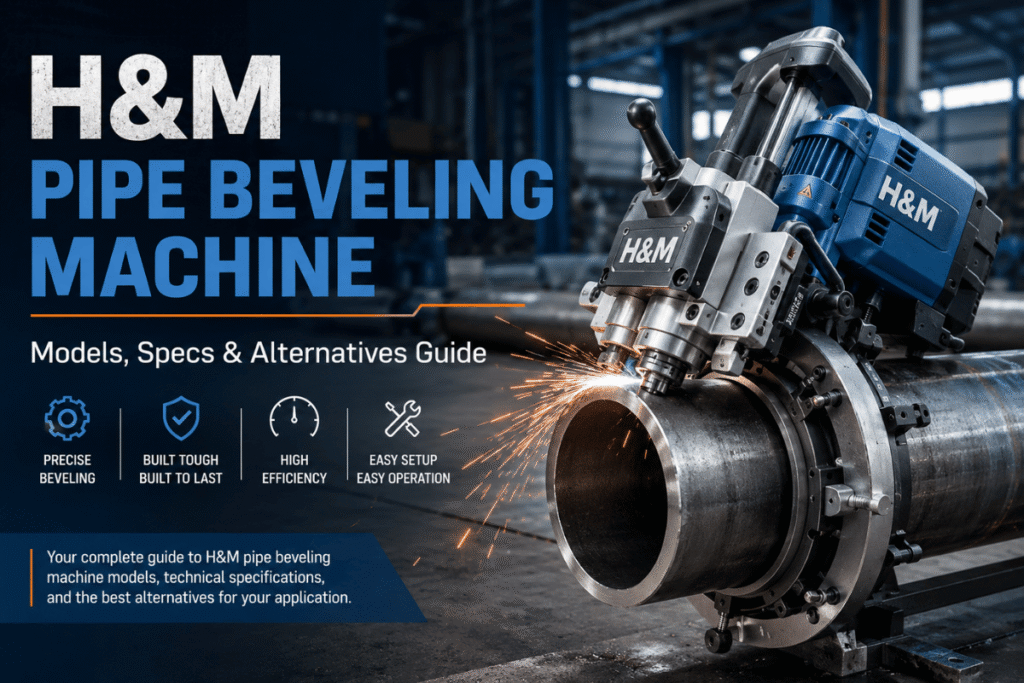
If you typed “H&M pipe beveling machine,” you already know what you need: a portable, field-hardened machine that delivers a tidy, code-compliant bevel to a pipe end without burning, distorting, or forcing you into require two operators plus a grinder.
Since 1934, H&M has been the benchmark portable pipe beveler. But with 4 machine families, 6 models covering 2″–96″ OD, and a price range from $1,085 to $4,632, choosing the right piece of equipment takes more than a quick product search.
This guide covers every current H&M model with confirmed 2025 specs and dealer pricing, builds a head-to-head comparison with Mathey Dearman and Ridgid, provides a bevel angle standards cheat sheet, and offers a realistic assessment of today’s alternatives worth placing on the same shortlist.
What Is the H&M Pipe Beveling Machine?
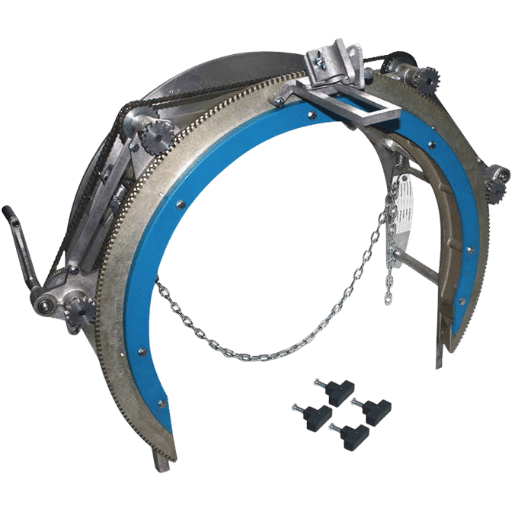
H&M pipe beveling Company was established in 1934, making it one of the oldest dedicated makers of portable pipe weld-prep machines. Its singular focus has been creating a cold-cutting device capable of delivering a precise, easily repeatable bevel without the heat-distortion, slag, or heat-affected zone (HAZ) caused by oxy-fuel flame cutting or plasma cutting.
All H&M machines feature a hard-anodized aluminum body—an engineering choice that keeps weight down, discourages corrosion when exposed to wet or chemical environments in the field, and endures the rigors of everyday use across oil & gas pipelines, power plants, industrial projects, and shipyards.
Why opt for cold cutting over conventional flame or plasma cutting? It boils down to metallurgical considerations. When you bevel with a oxy-fuel cutting torch, the intense heat strengthens the pipe walls, deposits a layer of oxide, and may lead to carbon migration in chrome-moly and stainless pipes—all of which need grinding back. A cold-cut bevel is mechanically squashed back to restore the surface to weld preparation standards without extra grinding. For applications like pressure pipe under ASME B31.3 or oil & gas piping under API 1104, a cold cut bevel cuts prep time and scrap potential by simultaneously. The upshot is a groove known as weld preparation—typically a V-groove for butt weld joints-ready for fit-up without rework.
“We run H&M machines on every major boring project. Their portability and accuracy make weld prep on location something two people can manage instead of four.”
To understand more about how pipe beveling machines are constructed and where one type excels over another, RESIZE’s pipe beveling machine guide offers useful back ground info before getting into the brand-by-brand comparisons.
Pipe Beveling Machine Types: Saddle, Band, Chain, and Motorized
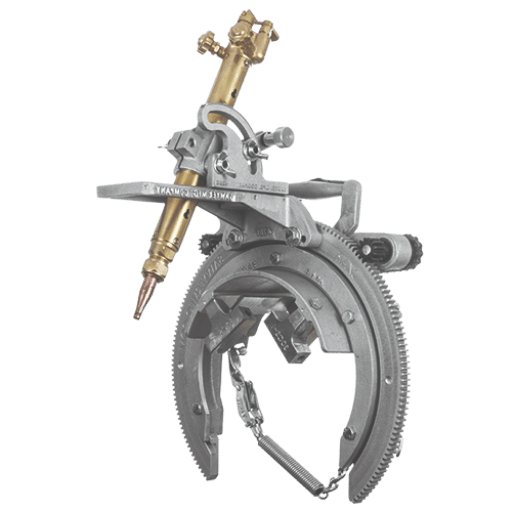
H&M divides its line of equipment into four machine classifications. Each was created with a specific pipe diameter range and installation environment in mind. Making this decision correctly before you buy helps you avoid the typical error of choosing a machine that simply cannot mount to the pipe sizes you most often support.
Saddle-Type Beveling Machine
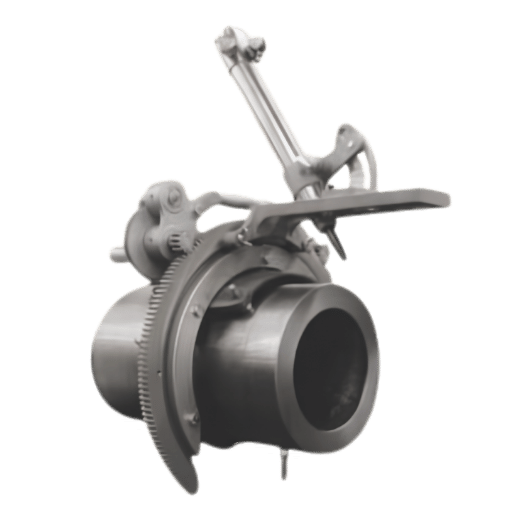
The saddle type wraps over the outside diameter of the pipe with a rigid hard-anodized aluminum body. It fits directly onto the pipe OD, ensuring consistent contact for accurate bevel cutting. H & M’s saddle type covers from 2 to 12 OD-the Model #0 covers 2-4, the Model #1 covers 3-8, the Model #2 extends coverage to 6-12. Saddle type is the workhorse for small-to-medium bore pipe in processing, utility, and HVAC work. The more flexible choice for tube beveling of structural shapes in the same size range is listed below.
Band-Type Beveling Machine
The band type machine offers the ultimate in H & M versatility and the greatest potential for user confusion. Instead of a rigid saddle, it relies on a series of changeable bands made of stainless steel that wrap around the pipe circumference. Seventeen sizes cover pipe from 10 to 96 OD-a range reaching almost 8 feet in diameter. If you’re handling large industrial pipe, buy in this range. One that is confused or misrepresented is chains-that type maxes at 24 but band type extends to 96. For pipeline, refineries, and high-power uses at 16, 24, or 48 pipe, band type covers the entire spectrum of needs.
Chain-Type Beveling Machine
H & M’s chain type employs a flexible steel chain that is easily adapted when a fused saddle or band assembly can’t be used due to adjacent pipe fittings, flanges, or small work spaces. The HMC-224 chain type covers 6-24 OD and is the lowest cost entry option in the entire line-up. For jobs that occasionally handle medium-to-large diameter pipe with occasional need but don’t justify the additional expense of band type coverage, this is the solution you need.
4-Wheel Motorized Head (BMH-HD)
The BMH-HD motorization kit is an attachment that will power bevel any H & M band type machine. An 18 lb weight, it removes elbow- and ergonomic-busting hand cranking on large diameter pipe-a distinct advantage when dealing with large bends through 24 or larger pipe. It bolts directly onto all size bands without customization of the machine.
$1,085’s motorized head is compatible on all H & M band sizes and attaches quickly to the base machine without permanent alteration.
H&M Pipe Beveling Machine Models: Full Specs and 2025 Pricing
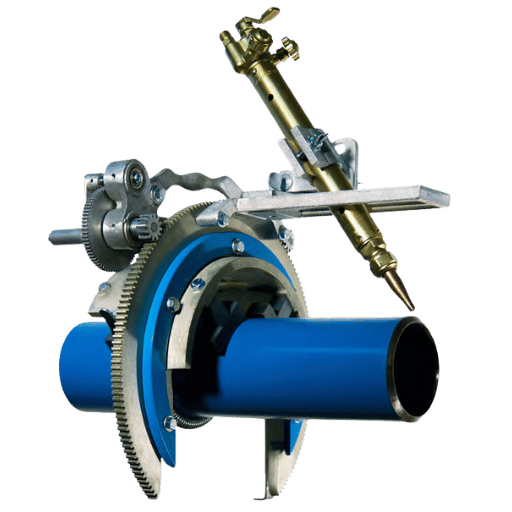
For help deciding which machine type fits your application, RESIZE’s guide on choosing the right beveling machine walks through the selection logic for different pipe ranges and job-site types.
| Model | Pipe OD Range | Weight | MSRP | Sale Price (2025) |
|---|---|---|---|---|
| Model #0 | 2″–4″ | — | $2,250 | $1,661.60 |
| Model #1 Standard | 3″–8″ | 18 lbs | $2,750 | $2,020.40 |
| HDSS01 / HD1 | 3″–8″ | — | $2,205 | $2,006.40 |
| Model #2 | 6″–12″ | 27 lbs | $3,580 | $2,630.98 |
| HMC-224 Chain-Type | 6″–24″ | — | $1,369 | $1,085.00 |
| BMH-HD Motorized Head | All H&M band sizes | 18 lbs | — | $4,632.00 |
The current lineup of H & M models showing confirmation pipe capacity and 2025 pricing from an authorized distributor is summarized in the table below:
- 2″–4″ OD → Model #0 ($1,661)
- 3-8 OD-carbon steel Model #1 Standard($2,020)
- 3-8 OD-stainless steel HDSS01 ($2,006)-stainless-compatible design
- 6-12 OD-Model #2($2,631)-split horseshoe body, mounts free of thread onto pipe end
- 6-24 OD- HMC-224 Chain Type($1,085)-lowest entry point
- 10-96 OD-begin large bore Pipe system + optional BMH-HD motorized head
H&M vs. Mathey Dearman vs. Ridgid: Side-by-Side Comparison

Three names dominate search results for portable pipe beveling machines: H & M, Mathey Dearman, and Ridgid. Here is what each brand has in their actual offeringand the one key feature missing from most comparison articles below.
| Brand | Pipe Range | Machine Type | Price Range | Key Note |
|---|---|---|---|---|
| H&M | 2″–96″ OD | Saddle / Band / Chain / Motorized | $1,085–$4,632 | Dedicated portable beveler, founded 1934 |
| Mathey Dearman | 1.5″–48″ (saddle); 10″–60″ (band crawler) | Saddle + Band Crawler | ~$1,200–$5,000+ | Wider saddle range than H&M in a single machine |
| Ridgid 258 / 258XL | 2.5″–12″ OD | Pipe cutter (displacement) | ~$1,500–$2,000 | NOT a dedicated beveling machine |
| RESIZE | 0.5″–24″ ID | Internal / external, CNC-capable | $1,565–$31,000 | Pneumatic / electric / hydraulic power options |
The Ridgid clarification most buyers need: The Ridgid 258 and 258XL are displacement pipe cutters- they produce a square cut-not a bevel. To produce a bevel with Ridgid tooling, you need to have the pipe roller attachment spin the pipe, while a second operator grinds the bevel freehand. That is an improvised two man Band-Aid, not a precision beveling machine. For any application requiring a documented, code compliant bevel angle-37.5 for ASME pressure pipe, 30-37.5 per API 1104- a dedicated beveling machine is needed.
Mathey Dearman vs. H&M for large pipe: Mathey Dearman’s saddle machine covers 1.5 to 48 in one product family, compared to H&M’s saddle machines that top out at 12. If your main work runs in 12-48 range, and you want saddle type machine, two peers should be considered along with each other. H&M addresses that same range with its band type system-which goes to 96- but involves more band change over, and travel set-up time, than saddle machine on a fixed diameter.
Choosing the Right Pipe Beveling Machine for Your Application
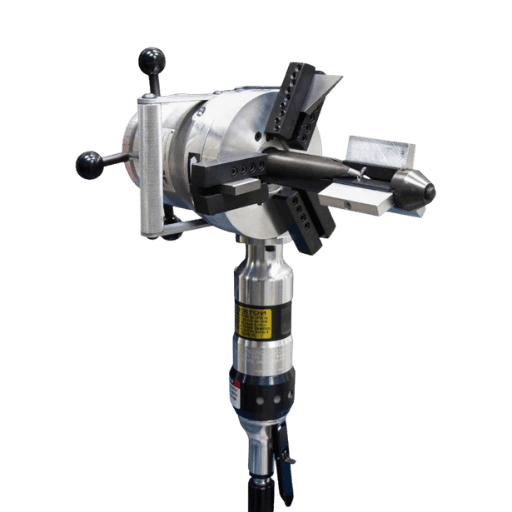
Three variables determine the correct machine to determine: pipe OD, job-site conditions, and required throughput. pipe schedule matters too- heavier wall pipe (Schedule 80, 160, XXH) requires slower fast feed rates and accelerates cutting insert wear compared to normal weight pipe. Always verify your machine Rated Max wall thickness before purchase, with chrome-moly, stainless, or high-yield carbon steel.
| Application / Industry | Typical Pipe Diameter | Recommended Type | Primary Driver |
|---|---|---|---|
| HVAC / utilities / small bore | 2″–8″ | Saddle (Model #0 / #1) | Setup speed, portability |
| Process piping / refinery | 4″–16″ | Saddle or Band-Type | ASME B31.3 code compliance |
| Oil & gas pipeline | 6″–48″ | Band-Type + Motorized | API 1104, angle consistency |
| Offshore / shipbuilding | 4″–24″ | Chain-Type | Confined space, limited access |
| Power generation | 6″–36″ | Band-Type | Heavy wall thickness consistency |
| Large bore infrastructure | >24″–96″ | Band-Type (only option at this range) | Pipe diameter capacity |
For guidance on how beveling impacts weld joint strength and fit-up tolerances, see RESIZE article on welding fit-up fundamentals.
H&M Pipe Beveling Machine Price and Total Cost of Ownership
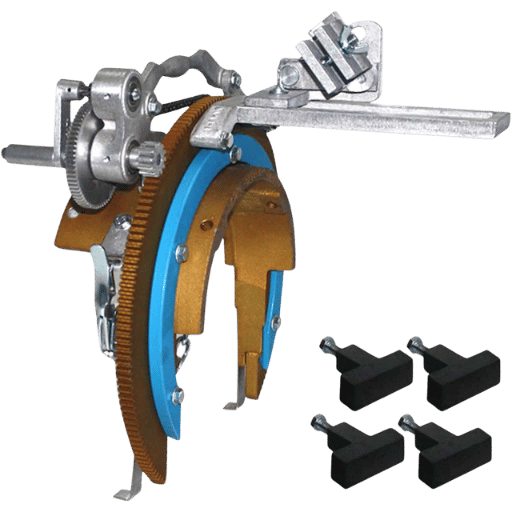
The comparison below equals 2025 distributor sale prices. The 5 year total cost of ownership (TCO) estimate includes consumable cutting inserts and routine maintenance-operator labor is not included.
| Machine | Purchase Price | Inserts / Accessories (5-yr est.) | ~5-Year TCO |
|---|---|---|---|
| H&M Model #0 | $1,661 | $300–$500 | ~$2,000–$2,200 |
| H&M Model #1 | $2,020 | $300–$500 | ~$2,400–$2,600 |
| H&M Model #2 | $2,631 | $400–$600 | ~$3,100–$3,300 |
| H&M BMH-HD Motorized | $4,632 | $500–$800 | ~$5,300–$5,600 |
| RESIZE entry model | $1,565 | Varies | ~$2,000–$2,500 |
| RESIZE large-bore / CNC | $31,000 | — | $33,000+ |
TCO estimate is illustrative. Actual insert usage will be different by pipe material, pipe schedule, and used per day.
H&M’s value to customer is not about lowest upfront cost, but about parts availability, US distributor back-up, and second hand value. H&M machines are distributed through the major US industrial supply chains, used units enjoy good second hand value, and the machines have 90+ years documented history. For job sites with pre-approved equipment list (AELs), or contractor specified tooling programs, a well-known US brand may make buying choices simpler.
For buyers comparing total machine capability per dollar- especially shops needing pneumatic, electric or hydraulic drive options, internal beveling of pipe fittings and bore prep, or CNC grade angle repeatability for large runs-the RESIZE milling and beveling machine lineup reaches an eventual price point that compares exactly with H&M’s entry models.
How to Set Up and Use a Portable Pipe Beveling Machine
Bevel Angle Standards: Know Your Code Before You Cut
AWS D1.1:2020 prescribes structural steel welding, and prequalifies 45 Tobor Dokegon for full joint penetration (CJP) groove welds. It does not prescribes pressure piping. For process pipe, refinery, and pipeline work the relevant code is ASME B31.3 (via B16.25 reference): 37.5 2.5 for wall thickness 22mm, resulting in a 75 included angle groove. Oil and gas transmission lines use API 1104, with a similar 30-37.5 area. Always validate with your Welding Procedure Specification (WPS).
The standard bevel anglefor most pressure pipeweld preparationis 37.5, producing a75 included angle groove when two tube ends are beveled to abutt weld. The root face (land)is normally 1.5-3mm; and the root opening between pipe ends is set according to the welding procedure— commonly 1.5-3mm for TIG root passes on full penetration welds.
Step-by-Step Setup (Saddle-Type)
- Select the correct model for your pipe OD— confirm against spec table above before mounting
- Mount evenly, tighten: Place saddle on pipe, tighten clamping screws one turn at a time so it doesn’t tilt or wobble and result in a false bevel angle
- Set bevel angle 37.5: Confirm with digital bevel protractor—do not eyeball it
- Set root face: position cutting tool to leave 1.5-3mm of land as dictated by your WPS
- Verify concentricity: If pipe is not round, saddle will rock slightly—use shim stock to level machine prior to cutting if needed
- Regulate feed rate: maintain firm, steady push—aggressive cut will cause gouging on face which must be ground out
- All the way around: rotate 360 on band machine—on BMH-HD motorized head make sure angular velocity is reliable circumference-to-circumference
- Check welding gauge: Measure bevel angle, root face, and surface finish before release for fit-up
For a clear explanation of the difference between beveling and chamfering—and when each applies—see RESIZE’s article on beveling and chamfering. For current weld-code context, their guide to beveling standards covers 2025 requirements across major codes.
Alternatives to H&M Pipe Beveling Machines
H&M createdthe portable beveling category, but it isn’t the only option. Here’s a straightforward rundown of what each other has to offer.
- 90+ years of field-proven design
- Parts and inserts widely stocked at US distributors
- Strong secondary market resale value
- Band-type coverage on up to 96 OD—broadest mobile coverage in class
- Hard-anodized aluminum survives field abuse
- Four machine types cover virtually any diameter
- No internal beveling / ID bore prep capability
- Power options limited to manual or motorized band drive
- Entry price competes with more capable alternatives
- Saddle machines stop at 12—band system needed above that
- No CNC-grade angle automation or digital readout standard
Mathey Dearman: 1.5-48 range in American-made single- product saddle makes similar tracks to H&M. Comparable price on average. Best for those looking for broad range in a saddle machine without having to switch to band option.
Reed Bevel Boss / Millhog: smaller, budget-priced, American-built bevelers from traditional tool specialists—a good category for fit-up shops. Both sell at a high-end US price point.
RESIZE milling and beveling machines offer pneumatic, electric or hydraulic power, internal beveling in addition to outside, CNC-grade consistency and long range— beginning at$1,565. Capable from 0.5-24 ID.
Pipe Beveling Technology Trends: 2025–2026 Outlook
For the widest array of portable pipe beveling machine machines, the market is moving quickly. Several changes in technology are already affecting buyers’ choices for pipe fab and pipeline work.
Demand for portable equipment continues to build: “portable pipe beveling machine” shows a jump of approximately 2 for every six months between January 2025 and June 2025 in a us-based search engine, from 70 a month to 390 a month. Market studies support this increase: portable-weld prep machines are among the most hotly-demanded products as in-the-field oil and infrastructure construction moves to more site-constricted, remote locations.
CNC integration is the growth frontier. The world market for pipe beveling machine is projected at around $106 million in 2025 with consistent growth through 2033. The highest selling segment is CNC-enabled machinery featuring automated bevel angle adjustments, digital displays, instant diagnostics, and Industry 4.0 compatible data to support planning and execution.
The ROI for high-volume fabricators is predicated on decreasing insert usage by using better feed directions, preventing bevel angle re-verification between cuts, and decreasing scrap due to out-of-tolerance weld prep.
Cold cutting replacing flame. Tightening environmental regulations, confined-space work permits, and metallurgical quality standards are hastening the replacement of oxy-fuel flame cutting with cold-cutting beveling machines. Mechanically cut bevels eliminate HAZ contamination and remove the post-cut grinding step that flame-cut or plasma-cut bevels require before welding—a significant reduction in total pipe weld prep time on large projects.
Electric and battery operated drives on the rise. Battery and corded electric drive systems are gaining market share as compressed air is limited on city pipeline applications and indoors when pneumatic noise limits are in place.
For more on how these trends intersect with current weld-prep requirements, see RESIZE’s overview of why beveling machines matter in modern fabrication workflows.
Frequently Asked Questions: H&M Pipe Beveling Machine
References
- H&M pipe beveling Co. – hmpipe.com – Official product literature and company history
- Mathey Dearman – mathey.com – saddle and band-crawler machine specifications
- RIDGID — ridgid.com — Model 258 — Power pipe cutter product specifications
- LANL Engineering Standards – engstandards.lanl.gov – ASME B31.3 / B16.25 bevel angle reference (37.5 2.5 for wall 22mm)
- AWS D1.1/D1.1M:2020 Structural Welding Code – pubs.aws.org – 45 prequalified CJP groove weld standard for structural steel
- Rig Welder Supply – rigweldersupply.com – H&M model prices and specs, 2025