In the world of industrial performance, speed and accuracy are mandatory requirements for it to be a successful endeavor in the world of fastest product development and innovation. Positioner control systems with the latest speed handling technology have become very crucial in many businesses that are aimed at achieving or even setting higher levels of efficiency and accuracy in their automation. And that will be outlined in this write-up: how do these devices function and why are they considered the types of systems that are essential for today’s automation processes. This paper answers key questions concerning advanced positioner technology and its operation, identifies the best factors that infuse technology with value in transportation, and presents to the reader a number of industrial applications. The intention of the author, therefore, with the following article, whether you are a strategist cutting costs or a technocrat searching for the most innovative technologies, is to make the analysis accessible to everyone so as to determine how important advanced positioner speed control is in the present global automated society.
Understanding Positioners in Welding Applications
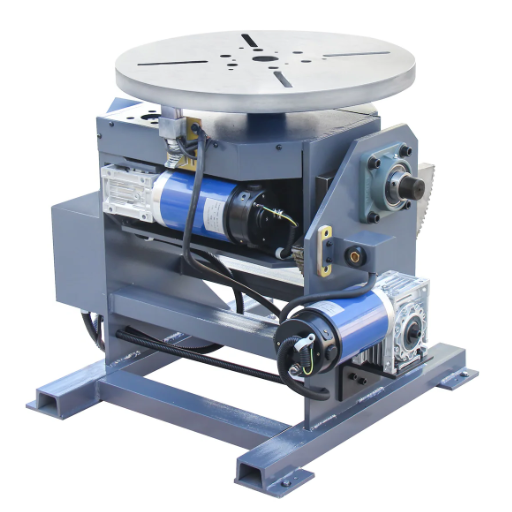
Enhancing Stability of Welding Structure Using Positioners
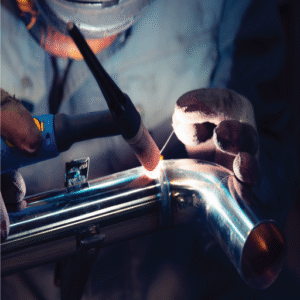
The utilisation of positioners in welding systems is undoubtedly very crucial. This is due to the need for a precision and efficient means for doing welds that is also safe. Positioners have been developed to enable welders to reach different angles by fixing and rotating the workpiece. With their help, the welded results can be of a single quality irrespective of the direction of the weld made and without any manual adjustment. With the use of such devices, it is acceptable to the quality of the weld joints that can be mitered and not repositioned. Moreover, newer positioners offer variable and delicate speed and movement functions to suit any type of work or material that is being worked on. Besides, the trend to equip robots with positioners is spreading and most production processes are being automated with robots and additional optimal factors for each application are adhered to.
Types of Welding Positioners
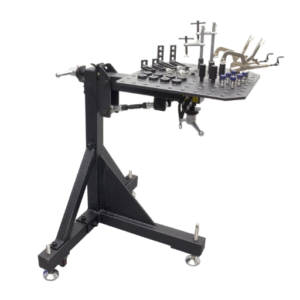
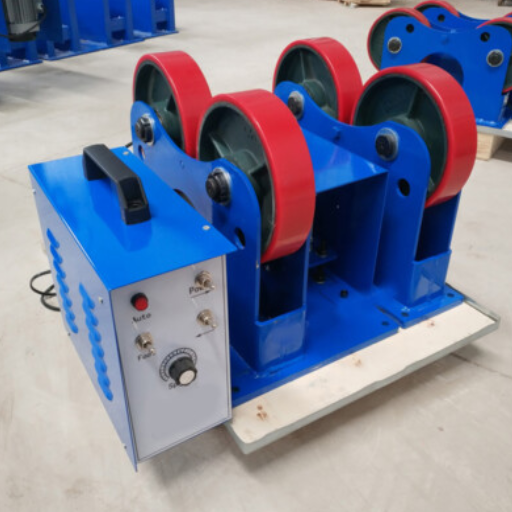
When I learned about welding positioners, I came to know that they come in various types that are used to serve different purposes in various industries. One of the more common types of such equipment is the manually operated positioner which allows the operator to adjust and hold the workpiece in place. Ones like that are best suitable for detailed or precision work especially the low-key assignments. Another highly preferred form of these machines is the fixed position type which holds the workpiece in place for processes that have to be repeated several times.
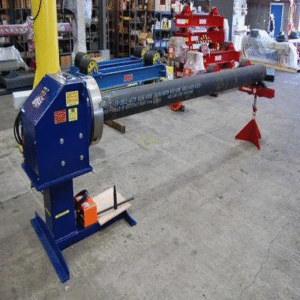
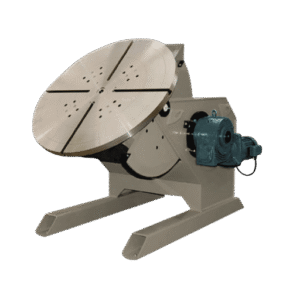
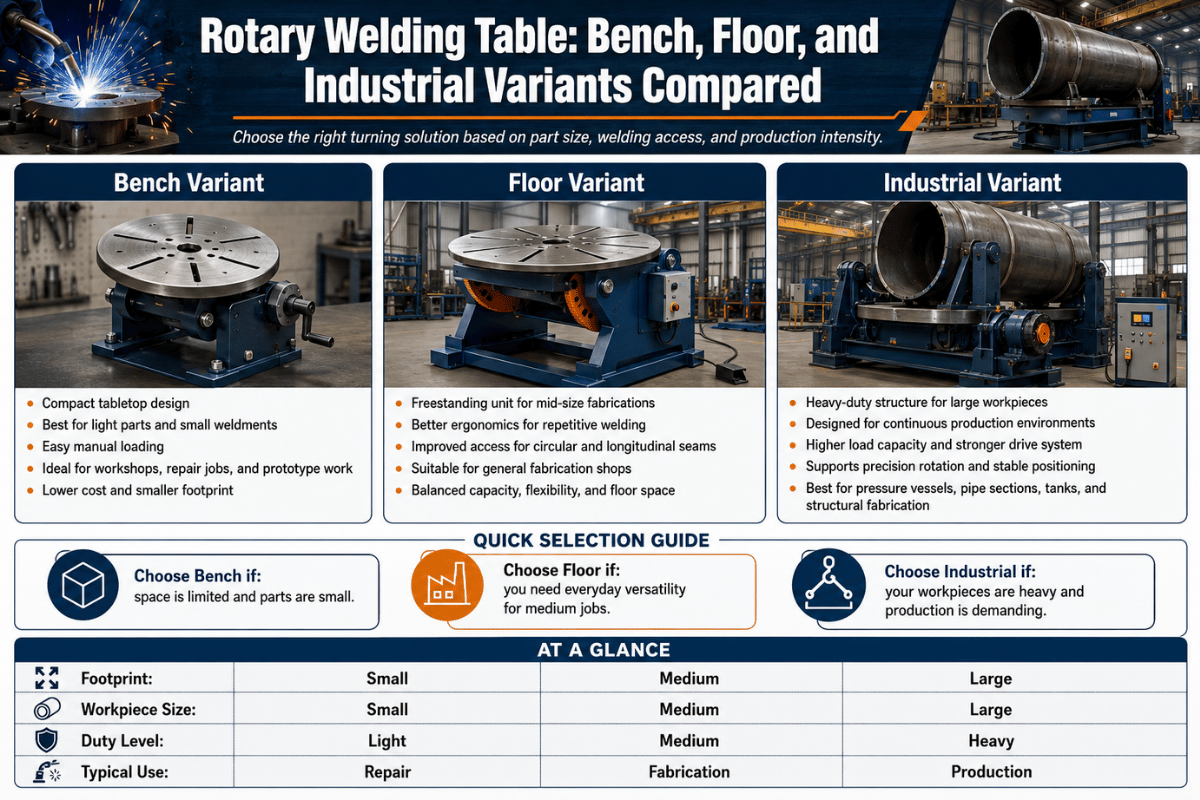
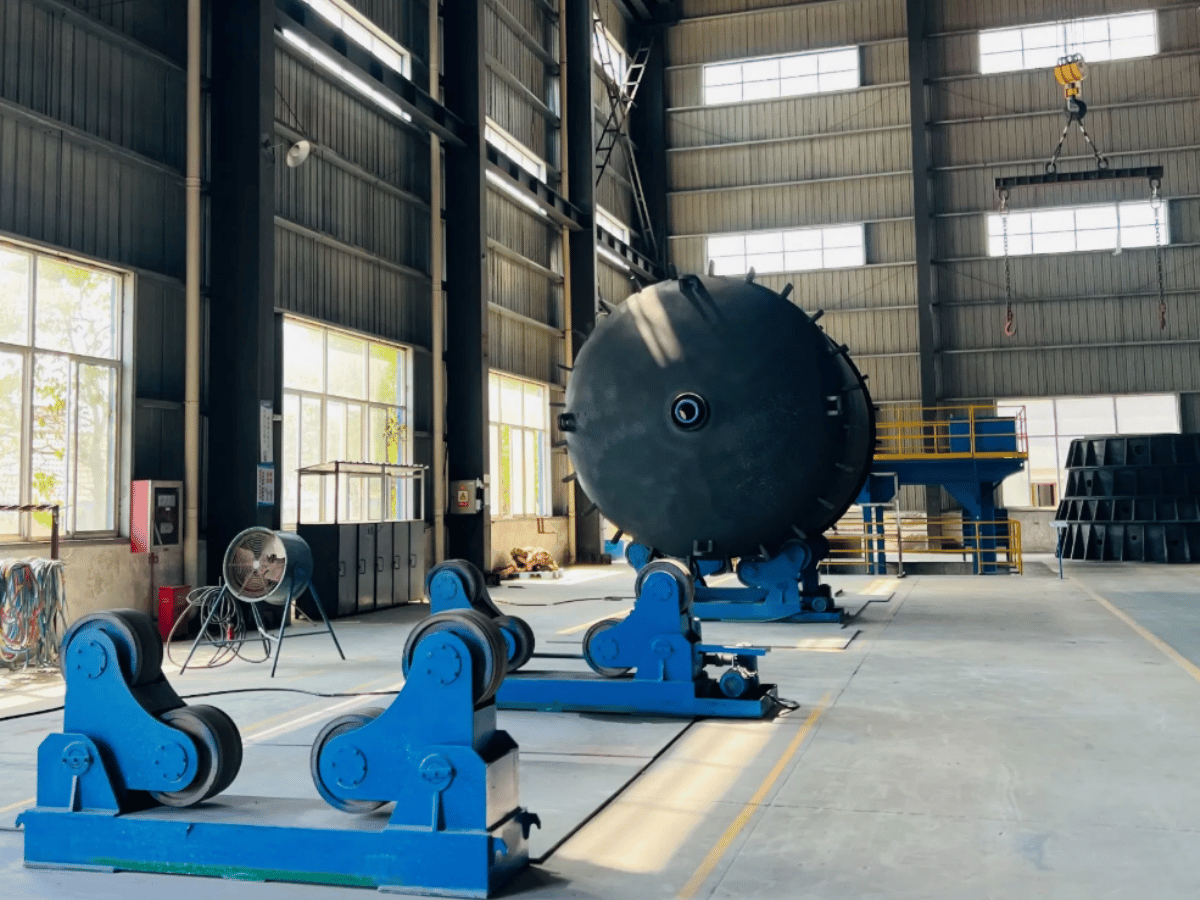
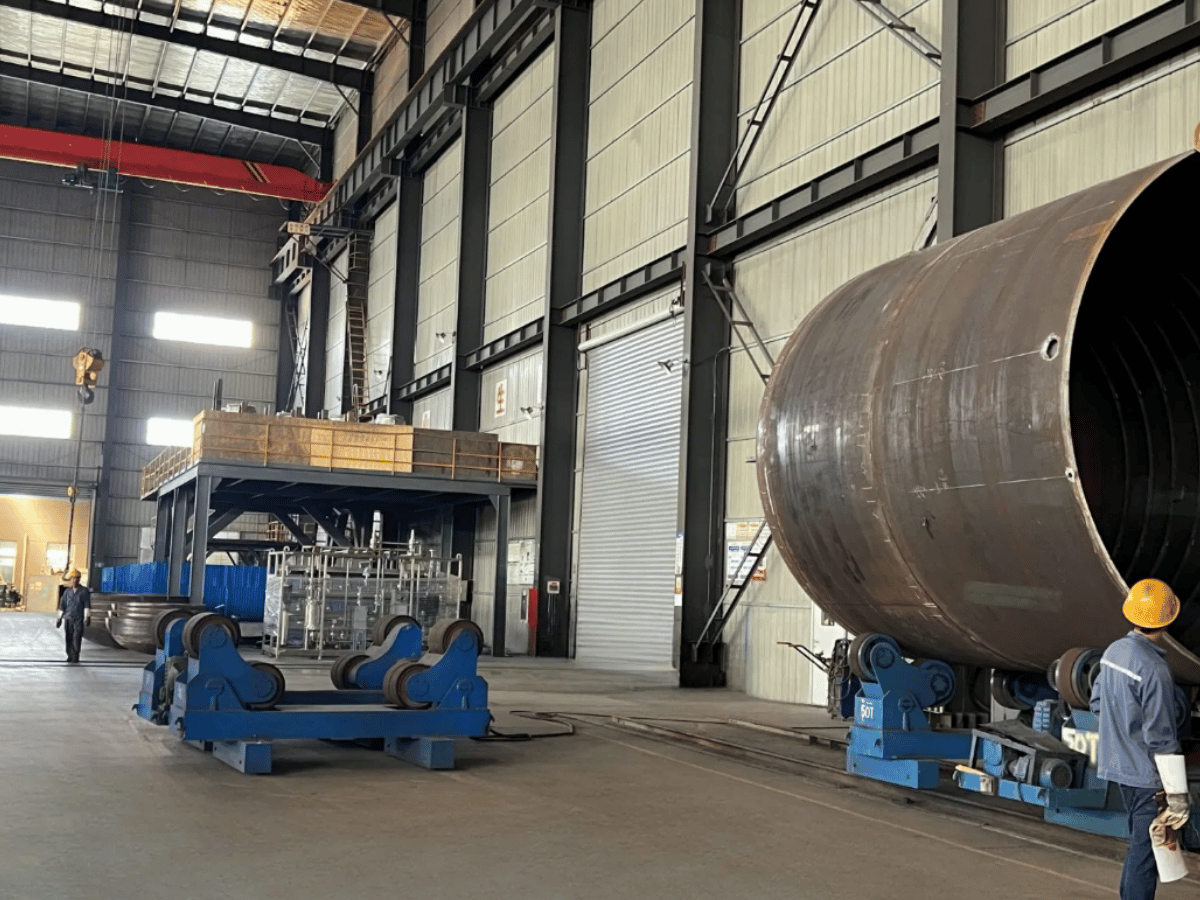
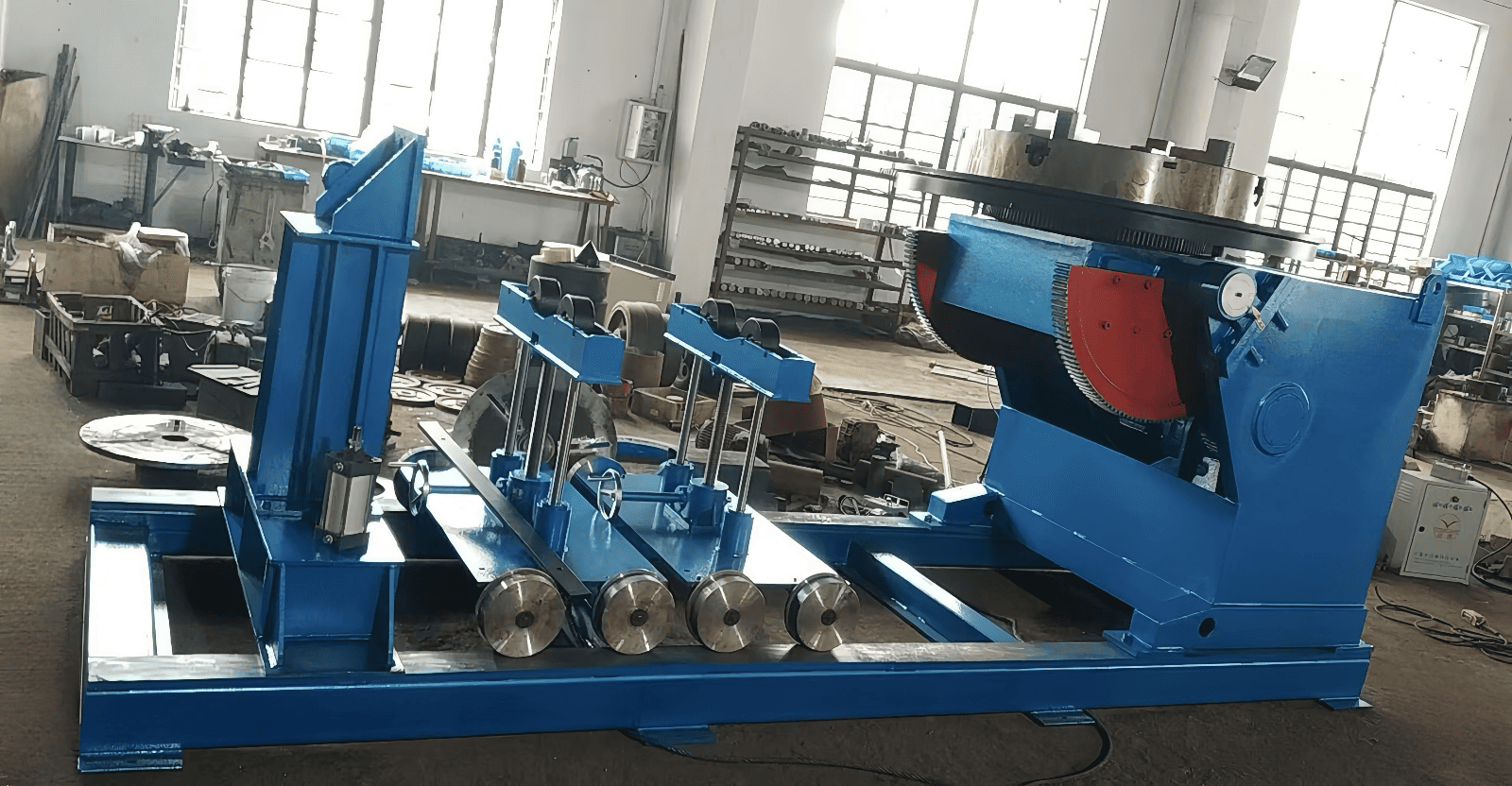
When dealing with larger or more intricate tasks, rotary welding table is the most appropriate choice. They work by spinning the parts at angles enabling convenient reach to positions that are otherwise hard to get with a lot of locomotion. On the same note, tilt and turntable positioner are a highly multipurpose due to the two axis of motion. That is, it is the combining of the turning action with the tilting action which gives an additional advantage in navigating for certain welds angles. Another important classification is that of headstock and tailstock positioners, which are essential in fitting and rotating objects that are large and have a lot of length such as those that are pipe or of certain structural elements. The structures are also beneficial when welding is directed at large sized items since the materials will be supported and held in place as welding progresses.
In that case numerous associations are utilizing the advance of digitalized welding having the ability of robotic welding positioners. These figures are encompassed in the automation of activities allowing for the hands-free mode of operation but with the very high levels of effectiveness and precision. That is, the robotic positioners are state of the art welding technologies which entail programming and sensor use to suit the task at hand, increasing productivity and reducing accidents by incorporating less human involvement in risky operations. Thus, each type of welding positioner comes with its unique features and depending on the exact needs of the project, the most suitable one can be used.
Positioners for High-Quality Welding: Why Use Them?
When welding works are aimed at meeting certain dimensional tolerances and surface finish, use of welding positioners becomes imperative due to the fact that such machines provide high accuracy. There is no doubt that one of the key advantages that they provide is the alignment of components in a factory which guarantees that the weld is without warps. The value of this is not lost upon the end user because such structures stand the test of time and they are more attractive than the ones that are over weld. Welding errors such as porosity or ex/under cuts are also minimized because the welding of fume extractors has become more efficient due to proper welding techniques of these products.
The use of welding positioners also helps in saving time during welding work. It is realised that very little, if any, time might be available for adjusting components manually when welding work is done. In such a case, however, masks are very useful, but costly. Rather, use welding positioners: they help in moving pieces exactly where welders need them and cuts downtime for measuring before welding resumes. Workers do not also have to worry about burns or inhaling fumes since the process improves its safety by exposing less people to hot temperatures and fumes during work completion.
By matching accuracy with usefulness, positioners make a great ally in any kind of mission requiring substantial amounts of credibility. The fact that cutting edge welding tools such as modern positioners are involved in projects from the aeronautical industry to construction work on huge car factories to date, leads to the highest of expectations for improvement in performance and workmanship delivery levels.
Automation in Welding: Enhancing Efficiency

The Impact of Automation on Welding Processes
Technological advancements in welding, especially that of automation, have drastically changed the entire welding industry by making work easier, precise, and producing less variation in finished products. By using intelligent systems and automated welding the whole assembly line can maintain the quality that is desired with little deviations from one fabrication procedure to another hence reducing chances of mistakes by the People. It helps enterprises to increase their outputs — provide more items or services within less time, with the rising requirements in the markets such as vehicles, structures, so called energy consumers. The addition of automation results in better organisation of production, lesser wastages, and fewer expenses as it effectively deprives the need for additional tasks. With the dawn of artificial intelligence and machine learning, it is not surprising to find out that even the most advanced welding robots such as initiate welding robot with great precision and in harsh environments can adapt by calibrating themselves as per the requirements. These offer adaptive operation whose establishment does not only enhance production at workplace but also enables regulating work guiding human beings away from such hazardous exposures.
Potential Benefits of the Use of Positioners in Welding Automation
In welding automation, any seasoned professional acknowledges that positioners serve a significant purpose. This is because apart from allowing the work pieces to be correctly oriented, which is important for accessibility of angles for welding and the quality of the weld ,this equipment ensures consistency during the fitting and welding phases of welded components. More advanced positioners may accommodate various shapes, dimensions, masses, which is quite suitable for the contemporary industrial standards. Even the integration of these technologies with cutting edge control in positioners such as these, rather than causing needless spikes in the overhead cost ensuring that is also promising to the employer.
Advancements made in the latet times include setups that allow two or more robots to work collaboratively and in a much more synchronized way than ever before and positioners are no longer limited to fixed point and singular functionalities. For example, a manufacturer introduces its welding cell to a cooperatively working multiple robot station connected with sensors-enabled cutting, punching, welding or machining applications controlled with the innovative programming software created specifically for the machines that contain these zones. By way of an example, today these mounts have a built in resistance spot in one of the stations of a multi robot cell, so that the robot and the other built in activator can work simultaneously yet never harm the weld through high reach working speeds. Adopting the winnings positioners is also favored by the improvement in the durability, profitability, safety and over all efficiency of the welding cells.
Prospects for Automatic Welding Automation in the Future
The forecast for the welding automation becomes the most promising, as new opportunities in development of science and technology, such as robotics, artificial intelligence and machine learning, are coming. R’bonica’ includes the interaction of robots with the operator in the manufacture of goods, thus providing them to be more efficient and safe. Industrie’s AI-engines have been known to provide information regarding the improvement in maintenance and projected outcomes from the dynamic status of a given work process. It is noted that machines which learn how to weld can now adopt new and imporved techniques to ensure accuracy and efficiency, in welding and other manufacturing processes.
Remaining future is that the age of the devices is another most significant. The majority of large engineering systems applied to construction and repair activities have very high enegy use levels, the future of programme complexity is therefore every little job will require welding design systems. The internet of things (IoT) is another new development that is changing manufacturing processes by providing centralized control of variables affection welding, facilitate transferring of quality data across departments and remote control of welding equipment. Improvement of the technology has led to innovative solutions such as welding DIAM, which helped develop effective methods of joining disparate materials without producing any extraneous joints. Such tendencies point to the possibility of intelligent welding automation in the near future, which will stimulate the development of numerous sectors of the national economy.
Customizing Welding Positioners for Specific Applications

Requirements for Custom Positioners: Reviewing the Basics
Designing positioning units according to individual characteristics of various technical systems is essential in different spheres. Creation of custom positioners can be a complicated process, because it depends on a number of factors that must be considered, for example, the SAW, the weight, the shape of the workpiece and it’s place in the welding cycle. Likewise, familiarity with the specific types of welding, be it MIG welding, TIG welding, or arc welding, is instrumental in the selection of the correct positioner for the task. Acceptable area of working, limits of speed and permissible weights have bearing on proper designing of these positioners allowing to do so the right way.
Other important requirements are such advanced aspects as programmable controls, tilt and rotation capabilities, integration with automated welding systems, etc. Another important factor affecting the design is how the workpiece is supported, fixed, and other similar handling requirements. These different components, when adjusted to the overall production requirements, ensure that the positioner is suitable for the expected manufacturing purposes and enhances efficiency, minimizing the tiredness of the operator.
Design Considerations for Multi-Axis Positioners
In the process of creation of the multi axis positioners, focus on precision and adaptability is critical for the implanting of the multiple needs related to manufacturing. In the attempt of finding an adequate variant engineers, for instance, have to take into account the load capability of the positioner and its appropriateness due to high level of inadequate of the analysis of relevant parameters such as of workpieces mass and size inaccuracy. The amps of the model of engine that will be used are also critical, the power and speed aspirate of the engine has to be capable enough to withstand the demands of the welding or the machining process.
Automation compatibility is a boom in 21st century, making it easier for robotics arms and control system software to work in tandem to improve the effectiveness of any task. This come with an even loudness in the importance of safety advanced features so that the best person safety needs are met is the need of features like collision detection and emergency stop mechanism to protect people and machines. Durability is also ensured as efforts are made to incorporate suitable materials and components capable of accommodating lengthy industrial work hours and highly abrasive atmospheres. When these are taken into account, multi-axis positioning systems will be able to operate at peak performance while remaining within the confines of the technology used in production.
The Purpose of Case Studies in Education
I’ve created the conclusion that when it comes to the designs of the multi-axis positioning devices, you must change them to suit the production settings in order to achieve the best results. For example, this has also been the case of an automation factory which needed a positioner able to manage a deformation of a component much bigger than its capabilities in the aerospace sector. In addition, with the close interaction with the customer, we were able to install specially modified cranes and turning devices enhancing the accuracy of these parts joinery and welding. This enabled one to merge and pull two parts apart in perfect alignment without losing any weld. The design also found a use in the welding activity since it could cause two welded tubes to come apart in the shear mode without the need of adding a single weld as it might increase the mass unnecessarily. Almost control panels having comprehensive newer technology were also inbuilt in this design hence preventing wastage of energy and time through unnecessary working activities.
Thanks to our expertise in the field, we managed to develop a technical solution that was highly efficient and affordable. The system in question was developed for an automative supplier who wanted the provision of a multi-axis positioner that would be useful in everyday maintenance of various vehicle assembly lines. To further define the client’s requirements, we created a design that was automatic in all respects, this design including the provision of frequent clearances of the workpiece arrangement beforehand. This choice of design also utilized operation parameters and building techniques that enabled user to have such objects for several reasons and for several lengths of production times. The result was very impressive as not only did the client have more run time but also because more accurate positioning of the presents was possible which was a key concern given the particular applicability of the equipment to the client’s operations. In these case studies you can see how one can turn individual production limitations into opportunities with the help of advanced technologies. However, it should also be emphasized that in every such effort there is the imperative for a seamless integration among all components; a need that describes the relevance of creating unique rotational tables in different fields of production.
Precision Control in Positioner Speed Systems
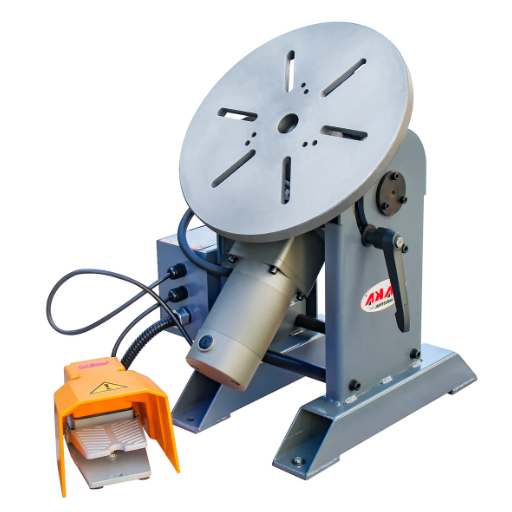
Most Important Characteristics of precise control within Systems
Precise speed control systems are specifically designed and built to ensure consistency and precision through motion control. More often than not these systems are constructed around sophisticated servo motors as well as closed loop control mechanisms which can also avail for real time alterations for system maximization. They are also capable of working at speeds that are not constant and this kind of working condition ensures a smooth stop-start operation and flexibility in the completion of manufacturing operations. The critical ones being fast mode changes and embedding behavior into their microcontroller system. Such system design features also considerably reduce the service and operational expenses such as ir-repair costs and maximizes the operations. One implication here is that the application of precision and its associated advantages in practice aimed at effecting efficiency and quality of the manufacturing process is beyond the obvious such as self-adaptation and plug-ins in the current applications.
Essential role played by positioning in welding
When welding processes are concerned amount of exactitude and reliability necessary, the importance of the proper location of the individual welding devices or the materials to be connected comes into focus. Whether high breadth, depth or physical and perceived alignment is being considered, perfect location or near perfection is key. A slight deviation from the desired placement in any of these activities can cause undesirable flaws such as weak points, extended surfaces or even, wrong stock. Modern welding techniques aim to prevent this by the use of sensors and servo control systems that can be finely adjusted while the welding part is still in motion. These techniques have the advantages of reducing the level of error associated with human beings and the related problems, whilst at the same time minimizing the resource commitment. Centralising precise location control is particularly critical in fields such as aviation, car manufacturing and building because the strength of the design depends on the perfection of welding. In addition to this, adherence to the positioned requirements allows the manufacturers to adhere to presenting any quality control measures and maintaining effective routing regarding production processes.
State-of-the-Art Technologies for Enhanced Speed Control
State-of-the-art technologies for speed control have currently changed the methods of manufacturing in all sectors. The work of speed control in such systems is done with accuracy by use of automation, intelligent software systems, and precision engineering. The speed control systems using the variable frequency drives (VFDs) technologies and the advanced motor control units have made it possible to adjust the desired speed, making it more suitable for the given task. Such an adjustment is aimed at ensuring maximum performance of the imposed task. As such productivity efficiency is realized and energy, as well as other resources, is saved in pursuit of other socio-economic developments. It also can be useful in the preventive maintenance and in monitoring since systems like Universal Serial Bus and others are used to report in case of any fault. It is clear that all these developments are meant to enhance the present manufacturing systems severely so that there is no wastage of time.
Optimizing Machinery for Enhanced Performance
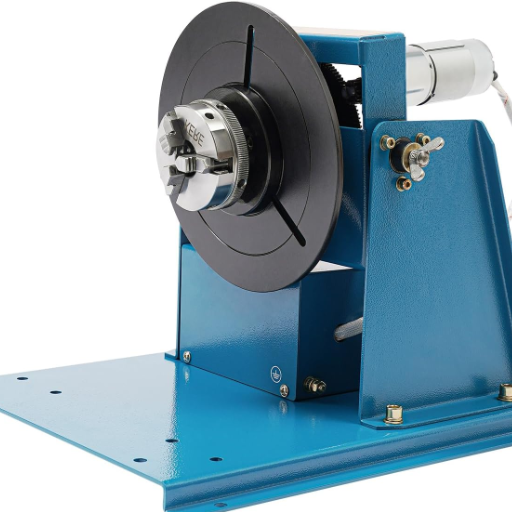
Evaluation of Machinery Components in Positioning Systems
The evaluation of the components used in positioning systems, which includes machinery, accuracy component and the component durability is of great importance. It is therefore crucial to take the necessary measures in choosing and caring for linear guides, ball screws, as well as stepper motors in order to ensure their accuracy as well as durability precautions. To put it another way, the working mechanism in high precision stages with the support of high precision stages without use of high quality linear guides becomes impossible due to increased inefficiencies and increased coefficient of friction. This tendency is also they apply to the ball screws produced in order to limit or minimize the backlash and ease of very precise and reproducible motion of an object. More than that, such motors with capability and cost situation are used very often in these systems, as they help find the optimal solutions. New production and material revolution achieve the wear resistance and performance of the elements even in very difficult working conditions. Due to proper choice and regular control of these components installation and configurations, superior levels of activities can be achieved in comparison with the opponents.
Maintenance tips for welding positioners
Timely checks and maintenance of the welding positioner enable it to function properly for a long time and ensures the safety of people in the workplace. Wash the machinery every so often as this is the most efficient way to prevent contamination and wear sometimes leading to repair. And as the saying goes, an ounce of prevention is worth a pound of cure, it is therefore important to keep all mechanical risks low. To make sure that movable components are moving without too much ease is by the proper application of lubricants, which should be from time to time.
Between the proper calibrations and correct alignments of the positioner’s controls, there is always another essential move that determines if the welding process will produce a dependable result. On top of that, it is a common practice to look into weight carrying limits particularly during normal operation so as not to breakdown the equipment. The next tasks for the staff include validating that all power withdrawal equipment meets the requirements and that cables are not damaged to prevent equipment failures. Finally, providing training to personnel on how to properly utilize the equipment as well as care and preservation procedures, secures the protection of the equipment and enhances the efficiency of the entire operation. With the use of these optimum methodologies, it becomes possible for industries to heighten the dependability and output capabilities of welding positioners.
Different Positioning Machinery Options
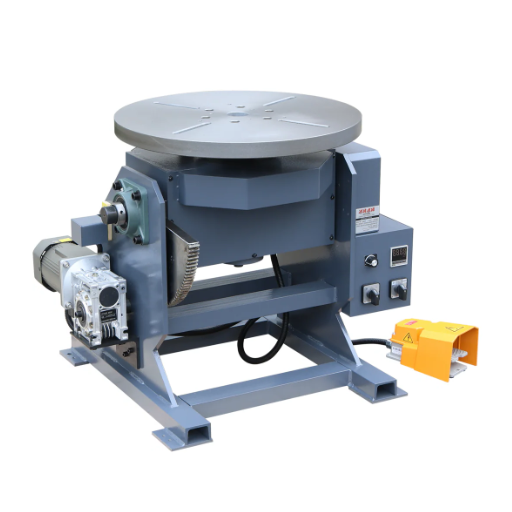
When one wants to compare various options in positioning machinery, there are several important parameters that have to be addressed in order to establish what to use in a particular company. Weld positioners, turn tables and manipulators each functions in different way and is best used for that type of work. Weld positioners are a very common fixture which is used to handle and turn workpieces during several welding processes which are most suitable where welding jobs are either hard or repetitive. Turn tables, however, are circular tables which are better suited to such operations as precise welding in a circular or assembly processes needing continuous rotation. Manipulators are quite beneficial and allow movement in several directions, these work the best in structures that are either of a large scale or with complex design that necessitates fine tuning.
There are many models have better efficiency in terms of movings. Also, within the construction, landscaping, farming, moving fields machines play a crucial role making everything simpler and faster. This can be achieved through the integration of the automation of equipment which includes the role of the microcontrollers and programming of synchronized motion in devices. Evaluating these factors will ensure that the best option chosen is in line with the envisaged goals of production, the requirements of quality to be achieved and constraints of the defined cost in enhancing the industrial processes.
Reference Sources
- Automatic Positioner and Control System for a Motorized Parabolic Solar Reflector
scholar.sun.ac.za
Discusses the development of an automatic positioner and control system for solar power applications.Speed Control of BLDC Motor with PI Controller and PWM Technique for Antenna’s Positioner
SPRINGER NATURE Link
Explores speed control techniques for BLDC motors in positioner systems using PI controllers and PWM.MOONS Fibre Positioner Control and Path Planning Software
digital library.org
Highlights custom control systems for fibre positioners, focusing on synchronization and collision protection.
Frequently Asked Questions (FAQs)
How do the speed control systems of positioner improve the quality of welding?
Speed control of the positioner, in fact, provides not only a particular variant of the motion management but such that would help optimize the welding process to reduce the speed of edge welding. In this rotation and the tilt are controlled by the servo motors which in turn are controlled by the feedback loop sensors which are responsible for calibration in response to altering excessive saturation. Both allow for repeatable indexing and decreased machining of each piece thus increasing overall part and turntable fixture social economy. This in turn reduces finish leg rework and non productive time in fully automated cells where welding and fabrication are carried out. Positioners must be versatile enough to support the design of the welding fixture and a robot for it to perform successfully.
In terms of positioner speed control systems, how would you classify controllers and PLCs within the system?
The control modes earlier mentioned are implemented by the controllers and PLCs which are the heart of motion control and enable the complex motions with several of axes between the positioner and robot. A control panel or integrated controller will provide the operator with the possibility for configuration of the speed profile, acceleration, and torque limitations to suit the welding processes and the tools necessary. This data from potentiometers, encoders sensors, etc. is used in a closed loop system, for driving feedback for real time error adjustment of the system. The use of PLC’s advantage is that it becomes easy to install such security interlocks, indexing routines, and autoloops into the assembly lines. Selecting the right controller as well usually means increasing the reliability of the system, saving floor space, and the total duration of processing equipment operation in some times, by simplifying the architecture of the automation equipment in general.
May the speed control for the positioner be acquired or added to an available robotic welding cell that already is set up?
Yes, it is possible. The positioners that are to be utilized are specifically created to operate within the existing welding fixturing and robotic systems entailing computer numerical control coordinated motion between the given machine element and the rotator or lift. The combining process often necessitates bringing together the communication protocols existing in the robot compared to the positioner control or PLC resulting in configuring axes mapping as well as synchronization. The robotic units – either of electromechanical or direct drive types – are steered in accordance with the torque and the physical dimensions of the units and also depends on the amount of the repeatable accuracy desired. Mechanic adjustments and modification of the systems structures can definitely make the risk of a robot flipping over and falling on the operator or welder a reality. The robots are also employed to any weld attachments after integrating them to the welding set- up hence improving the workflow and hence the throughput in sectors such as automotive, aerospace, oil and gas, and pressure vessel fabrication.
How does device speed control improve the solvency, labour and material inputs in the manufacturing industry?
One of the ways would be due to the fact that compliance with controlled speeds ensures the timings of the movements of the items displayed or welded to be implemented fast yet stable which in turn helps increase the output/thereby the machine productivity. Unlike the static feed blasting system, the position of the victim can be maintained in all phases of blast using torques, which also customizes the operation of the loaded and unloaded devices nonstop, leading to increased output instantly. There is no excessive acceleration or deceleration while breaking the machine’s speed. The approach to speed control which is so meticulous in the production of nuclear fuel, allows for the lowest possible time waste in fixing modifications of the parameters or reworking a product. Its implementation also ensures greater uniformity of the welds over the different welds in one batch. Speed control technology also makes use of cranes, or lift tables, with automatic conveying for parts and additional automation processes since all these measures eliminate many transferring and handling operations. It results in the establishment of a capable yet efficient production line that maximises the returns with minimal presence of the operating staff and the minimum floor space required.
Which is better, direct drive or geared positioners when it comes to controlling speed?
The priority of direct drives is that these devices provide smoother dynamics, ensured by a smaller angular play, and a quicker reaction, which is necessary if the task demands high-precision or low-noise servo drive operation feedback. In contrast, gear-based and electromechanical means may offer relatively more power for lifting of large vessels, pressure vessel components, large sizes of turntables and help in keeping the burner configuration spatially smaller and of lesser cost. They also guarantee that sin mechanical systems are less complex, are of lower maintenance requirement because there are no intermeshing gears. tarwhise, linearized systems can in case of production and welding equipment made in Quito, pose lower costs and present better attributes than direct drives in terms of capacity and dealing with heavier loads. For the latter purpose, the option of applicability is necessary to consider, that is, the set degrees of torque to be produced, the levels of speed with which service is to be done and the dynamics of wrestling with possible difficulties in the computer-facing robotic welding. Both versions of the structures may be equipped with controllers and PLC to control welding jigs and robot axes.