Tools and equipment are vital in the welding process, along with the welding skills. A three-jaw chuck for welding is one of the welding positioner tools that one must have. Designed to facilitate efficient, stable, and versatile welding operations, jaw chuck welding has various outputs. The article explains the principles, advantages, and possible areas of applications of jaw chucks in detail, giving a good understanding of how to simplify certain welding jobs in the industry. Whether you are looking to improve welding accuracy or enhance the productivity of your workshop, make sure to use this manual and its technical knowledge to make informed, educated decisions.
Key Takeaway
3-jaw welding chucks provide a self-centering, high-stability gripping solution that is essential for maintaining rotational alignment in automated and manual pipe welding.
Understanding 3 Jaw Welding Chucks

Three-jaw chucks are highly technical tools with powerful jaws that hold workpieces in place when welding. Three-jaw chucks move in symmetric order to grip and hold pieces evenly, ensuring that accuracy and alignment are maintained during welding processes. Regarding slippage, less friction occurs than with the welding of straight and square tube/pipe bodies; hence, welds have improved alignment systems. Generally, 3-jaw chucks are most suited for intensive use in applications requiring extreme precision, like pipe- or custom-shaped part assembly. These chucks establish a perfect grip and handling ideal for any automatic welding system.
What is a 3 Jaw Chuck?
A three-jaw chuck is a mechanical clamping device used in various machining and welding applications for securely holding cylindrical or round workpieces. It typically works with three jaws tied together, uniformly moving them and thereby centering the workpiece with great precision. Such a design allows for high load capacities, unmatched stability, and tremendous rotational alignment possibilities to handle precise tasks like lathework, milling, or automated welding.
[Image of a 3-jaw self-centering chuck mechanism]
How Self-Centering Mechanism Works
Three jaws in the chuck are guided by a scroll plate. The self-center mechanism activates through the eccentric mount of a spiral on the scroll plate. To tilt the plate, the key must be rotated to move the jaws. With such movement, all jaws move in sync, and the workpiece is centered automatically. Accurate alignment is very important for machining activities since it keeps runout to a minimum with consistent results even while using high-speed operations or intricate procedures.
Benefits of Using a 3 Jaw Chuck in Welding
- ✓
Precision Alignment: Keeps cylindrical workpieces centered to ensure uniform weld seams and prevent misalignment. - ✓
Efficiency: Significant reduction in setup time, boosting overall workshop throughput. - ✓
Secure Grip: Maintains a firm hold even under heat-induced expansion during the welding process. - ✓
Versatility: Capable of handling miscellaneous diameters for repetitive industrial tasks.
Applications of 3 Jaw Welding Chucks

Three-jaw welding chucks are often employed in industries where accuracy and secure handling of workpieces are important. They are highly sought after for the manufacturing and repair of pipelines, cylindrical tanks, and pressure vessels. These options are invaluable in automotive, aerospace, and industrial equipment production to hold tightly and weld round components as perfectly as possible. The adaptability for automated weld systems makes possible increased usefulness in high-speed production environments.
Common Industries Utilizing 3 Jaw Welding Chucks
Three-jaw welding chucks are critical in industries requiring accuracy and efficiency. These industries include aerospace, where they are used to produce high-strength, lightweight parts; automotive, where they are used to put together exhaust systems and drive shafts; and the oil and gas industries, where the chucks are used to fabricate and repair pipelines. They also find remarkable significance in industrial tool manufacturing for their contribution to ensuring perfect cylindrical alignment. Owing to their capability of gripping round workpieces accurately and in sync with automated welding technologies, they are indispensable in operations.
Specific Applications in Welding Positioners
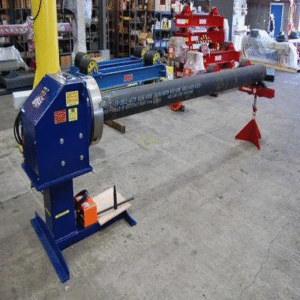
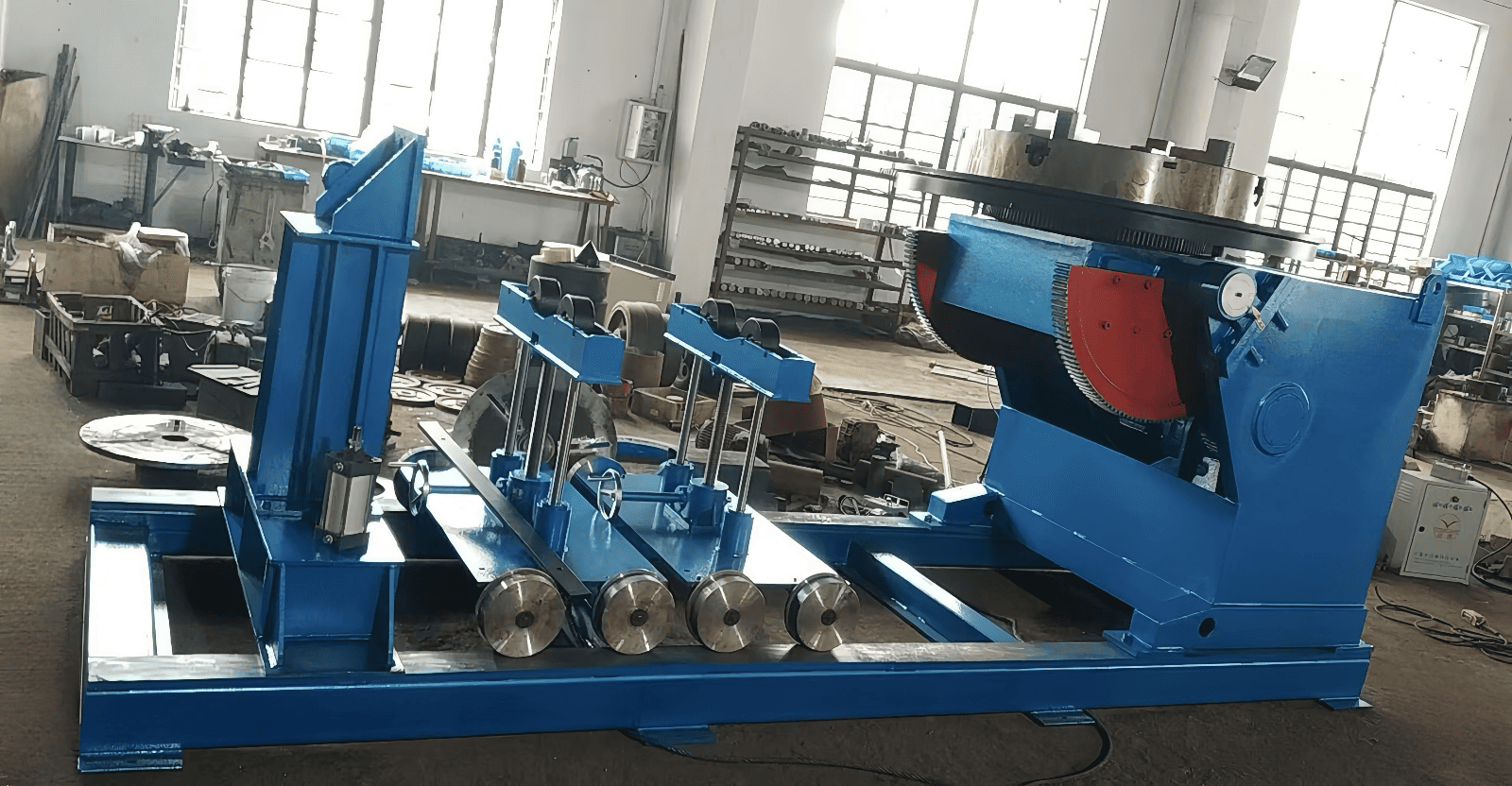
A welding positioner is essential for optimal welding; it allows excellent workpiece rotation, particularly in accuracy and results. Pipe welding is one common use, facilitating accurate and even weld seams through rotation, while welding structural members ensures placement for loaded geometries. They are also used in fully automated welding systems alongside robotic arms. Their utilization minimizes dependency on manual labor and cuts down substantially on welding failings, making them vital for high-quality, repeatable industries like aerospace and automotive tooling.
Case Studies: Successful Use Cases
- 1
Aerospace Industry
A major manufacturer used automated turntables for fuselage joining. This allowed for welding thin aluminum alloys to FAA standards while cutting production time by 25%. - 2
Automotive Production
Robotic trunnions enhanced chassis welding precision at an assembly plant. This integration reduced defect rates by 30% and significantly increased throughput. - 3
Heavy Machinery Fabrication
Large rotators were used for excavator booms and crane bases. These provided controlled rotation for complex, multibend welds, ensuring high durability.
Selecting the Right 3 Jaw Chuck

To select the right 3 jaw chuck, specific prototypes have to be picked and correlated with considerations for performance and compatibility. In the first instance, size and weight capacity must match the dimensions and mass of the workpieces used in your operation. Material type and the grip mechanism have to be taken into consideration for adequate swaying directions that help in providing assurance and better positioning. Choosing brands known and respected for quality and durability is the best tip, as it implies reliability over the long haul in a demanding manufacturing environment.
Factors to Consider: Material Compatibility
Material compatibility is paramount when picking equipment for welding operations. The chuck and other parts should preferably comply with the hardness, yield load, and thermal conductivity of the workpiece material. This gives maximum performance, minimizing the risk of damage or deformation during the welding process. Moreover, know whether the equipment can deal with special alloys or coatings, which may require special handling to keep the integrity of the finished product.
Budget Considerations for Different Models
Evaluating investment decisions requests consideration of operational convenience; numerous high-tech models offer increased accuracy, automation, and special material use. These add ingenuity so expected time can be liberated, reducing not only training but also overall lifecycle costs. Conversely, lower-cost models might be excellent for simple applications, but they may not have the flexibility or tolerance needed for tough duty or high volume, potentially leading to more repairs and compromised productivity. Proper examination of operational requirements and material specifications ensures the model matches your budget and performance needs.
Choosing Between 3 Jaw and Other Types of Chucks
The choice between a 3-jaw chuck and a 4-jaw independent chuck is mostly based on machining requirements. Self-centering 3-jaw chucks excel when quick repeatability is required for clamping round or hexagonal materials. Unlike self-centering chucks, 4-jaw independent chucks can be adjusted to secure irregularly shaped pieces or hard-to-center material, offering higher versatility. The choice will be dictated by workpiece dimensions, tolerances, and the frequency of part changes in your work regimen.
Maintenance and Troubleshooting

💡
Maintenance Checklist
- Cleaning: Remove debris, dust, and metal shavings with a soft brush.
- Lubrication: Use manufacturer-recommended grease on moving parts.
- Inspection: Check jaws, threads, and lock mechanisms for wear.
Common Troubleshooting Steps
Jaw Misalignment: Disassemble and clean the chuck if jaws fail to grip evenly. Re-assemble carefully in proper alignment. Slipping Workpieces: Check that the jaws and their tightening appear to be in good shape. Replace worn parts or tighten appropriately. Sticking Mechanisms: Inspect inner workings for dirt or inadequate lubrication; clean and oil as needed. Always refer to your manufacturer’s manual for model-specific instructions to avert downtime and extend machine life.
Best Practices for Maintaining Your 3 Jaw Chuck
After every use, clean off debris and swarf to prevent polluting the interior. Put a good amount of grease on the scroll plate and jaw guides, complying with manufacturer guidelines. Monitor scroll plates and jaws for wear; remove components from operation if degradation is noticed before precision is compromised. The chuck must be meticulously aligned upon every setting on the spindle to prevent runout. Always follow recommended torque for tightening jaws, as overtightening causes undue wear and under-torquing can cause dangerous workpiece falls. Finally, store your chuck in a clean, dry space to prevent corrosion.
Common Issues and How to Fix Them
Misalignment of Jaws generally arises from uneven wear or improper assembly; fix this by disassembling, cleaning, and checking for wear. Reduced clamping force is often caused by lack of lubrication or debris; clean regularly and apply approved lubricant. Sticking or jamming occurs when debris accumulates in the internal mechanisms; dismantle the chuck and use compressed air to clean it out. Excessive runout is the most serious issue regarding precision; begin by examining the mounting interface on the spindle. If runout persists, jaws or the chuck body may be deformed and should be replaced immediately.
Extending the Lifespan of Your Welding Equipment
Proper care and maintenance are essential for welding equipment to last longer. Sticking strictly to maintenance schedules recommended by the manufacturer usually consists of regular cleaning of the welding torch to avoid spatter buildup. Also, inspect cables, connections, and hoses often for wear, replacing them wherever necessary to avoid failure. Make sure there is proper ventilation to prevent overheating. This, coupled with the use of high-quality consumables and calibrating settings according to material specifications, relieves equipment strain and ensures optimal safety and performance in any welding development.
Reference Sources
- Resize Weld: Importance of assembling self-centering three-jaw chucks in welding.
- Senlis Weld: Review of welding chucks as a necessity for rotational welding.
- Canadian Hobby Metal Workers: Discussion on precision performance and runout issues.
Frequently Asked Questions (FAQs)
What is a 3-Jaw Welding Chuck?
A 3-jaw welding chuck is a mechanical device used to securely clamp and center cylindrical workpieces during welding operations.
What are the key benefits?
It promotes precision, stability, and ease of use for tasks involving symmetrical workpieces, significantly reducing manual setup time.
Which industries use them?
Automotive, aerospace, oil and gas fabrication, and general metal manufacturing industries make heavy use of these chucks.
What materials are they made from?
They are typically made of hardened steel to withstand high temperatures and the mechanical forces involved in industrial welding.