The aerospace industry requires exact welding work because it depends on precise welding work to produce dependable results. Aerospace welding requires welds to achieve their most exceptional standards because they need to provide aircraft and spacecraft with safe and operational performance. Achieving such exacting standards requires not only skill but also the right tools, and one of the most invaluable tools in an aerospace welder’s arsenal is the weld positioner. The guide demonstrates how weld positioners function as essential components of aerospace welding operations which increase operational performance through precise measurement and efficiency improvements while showing which features need assessment during equipment selection for particular welding applications. The welding guide helps both experienced and entry-level welders to learn necessary skills for achieving aerospace welding standards.
Key Takeaway
Precision weld positioners are the backbone of modern aerospace manufacturing, enabling the extreme accuracy required for flight-critical components while optimizing production speed and welder safety.
Understanding Weld Positioners in Aerospace Welding
Definition and Purpose of Weld Positioners
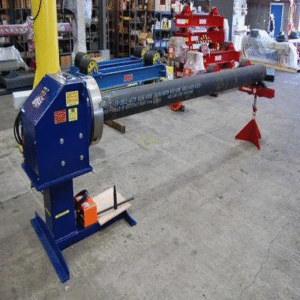
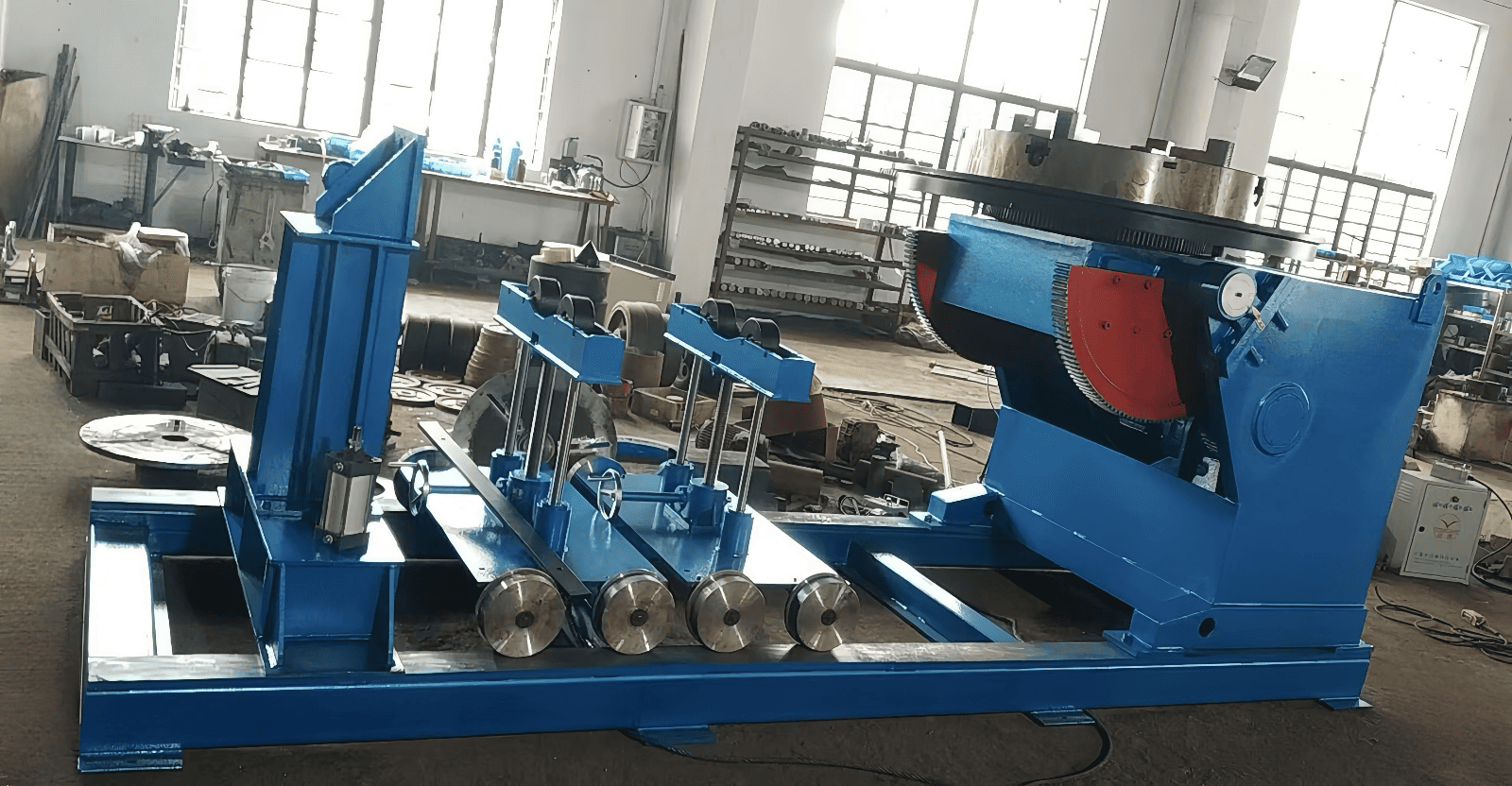
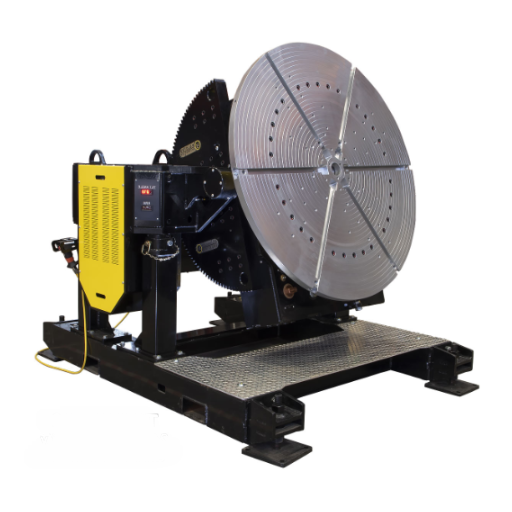
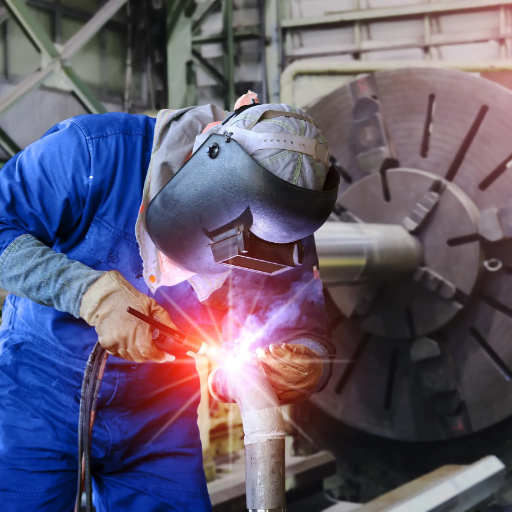
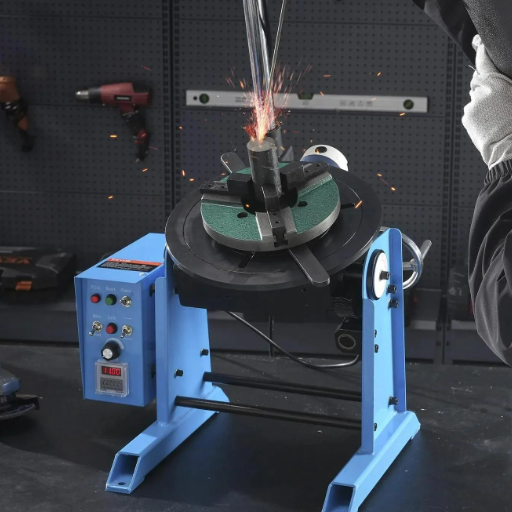
Weld positioners are specialized tools used in aerospace welding to hold and rotate workpieces, ensuring optimal positioning for precise welding operations. The main function of these devices allows welders to achieve precise welding results on all types of complex and irregularly shaped components. Weld positioners enable operators to maintain their required body posture while the workpiece remains fixed in its desired position, which helps them to work more efficiently throughout the day.
Weld positioners serve more than their basic function because they provide essential support which helps maintain consistent weld quality needed for aerospace industry operations. Aerospace components require precise welding because of the strict safety standards and performance requirements established by the aerospace industry. Weld positioners allow welders to access hard-to-reach areas while they maintain consistent weld bead production which prevents defects caused by improper posture or incorrect positioning.
Weld positioners provide time and cost savings for aerospace manufacturing operations. The system helps to decrease welding operation times because it makes workpiece handling and stabilization more efficient while decreasing the possibility of operational mistakes that result in expensive rework. The precision and repeatability provided by weld positioners make them essential tools for manufacturing reliable aerospace components with high quality standards.
Importance of Weld Positioners for Aerospace Welders
Weld positioners serve as essential tools which help aerospace welders to achieve both better work efficiency and more precise welding results. Welders use these tools to create precise workpiece movements which let them reach difficult welding positions while achieving the best welding results. Weld positioners provide welders with secure yet flexible positioning solutions which help them create superior welds without experiencing physical difficulties.
Weld positioners provide aerospace manufacturers with their main benefit because these devices enhance production processes through consistent output and duplicated results. Aerospace components require precise specifications and adherence to strict quality standards to ensure safety and reliability. Weld positioners establish consistent welding outcomes because they decrease operational mistakes while providing welders with dependable foundation which supports their work on detailed welding tasks that involve irregularly shaped materials.
Weld positioners increase productivity because they cut down the duration needed for workers to manually set up and secure different components. The process boosts workflow productivity while creating less interruption from needed corrections to fix mistakes. Weld positioners serve as essential instruments which help manufacturers create dependable aerospace components that perform well while maintaining economical production methods.
Overview of Aerospace Welding Processes
Aerospace welding processes use specialized techniques to create permanent connections between metallic and non-metallic materials used in aircraft and spacecraft production and maintenance work. The processes produce aerospace components which maintain their operational performance through extreme environmental factors, including high temperature and pressure and vibrational forces. Welding processes create joints which maintain operational reliability while fulfilling industry safety and functionality standards through their continuous operation without defects.
💡
Industry Standard Methods
Aerospace welding typically uses three different methods: Tungsten Inert Gas (TIG), Metal Inert Gas (MIG), and Laser Welding.
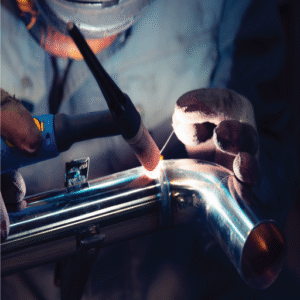
Aerospace welding typically uses three different methods, which are Tungsten Inert Gas (TIG) welding, Metal Inert Gas (MIG) welding, and laser welding. The critical components of a project require TIG welding because it delivers precise results while handling thin materials. The speed and efficiency of MIG welding make it suitable for thicker materials and larger assemblies which require quick production. The adoption of laser welding technology has increased because it produces precise joints which maintain their form during the welding process. Engineers use advanced inspection technologies, which include X-ray and ultrasonic testing methods, to check the security of all welds created using these techniques.
Automated and robotic welding systems form the backbone of aerospace manufacturing processes which demand both precision and consistent output for their high-volume production work. Automation technology decreases the chances of human mistakes while creating predictable outcomes and shorter manufacturing cycles for products. The strict application of quality control procedures guarantees that welded parts will fulfill all necessary certification standards. The aerospace industry uses modern technological solutions together with detailed manual work processes to create aerospace systems which operate safely and efficiently while reaching optimal performance levels.
Types of Welding Positioners
Rotary Welding Positioners
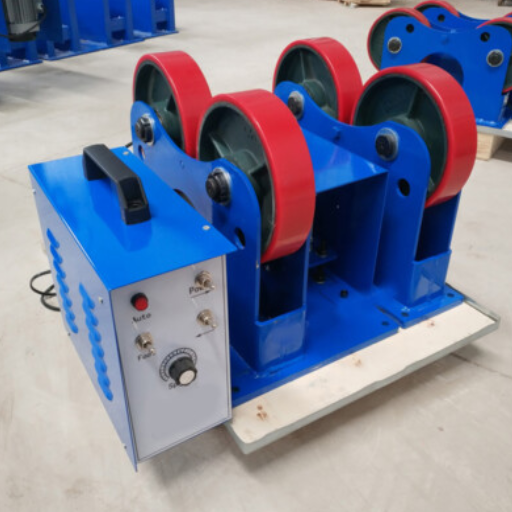
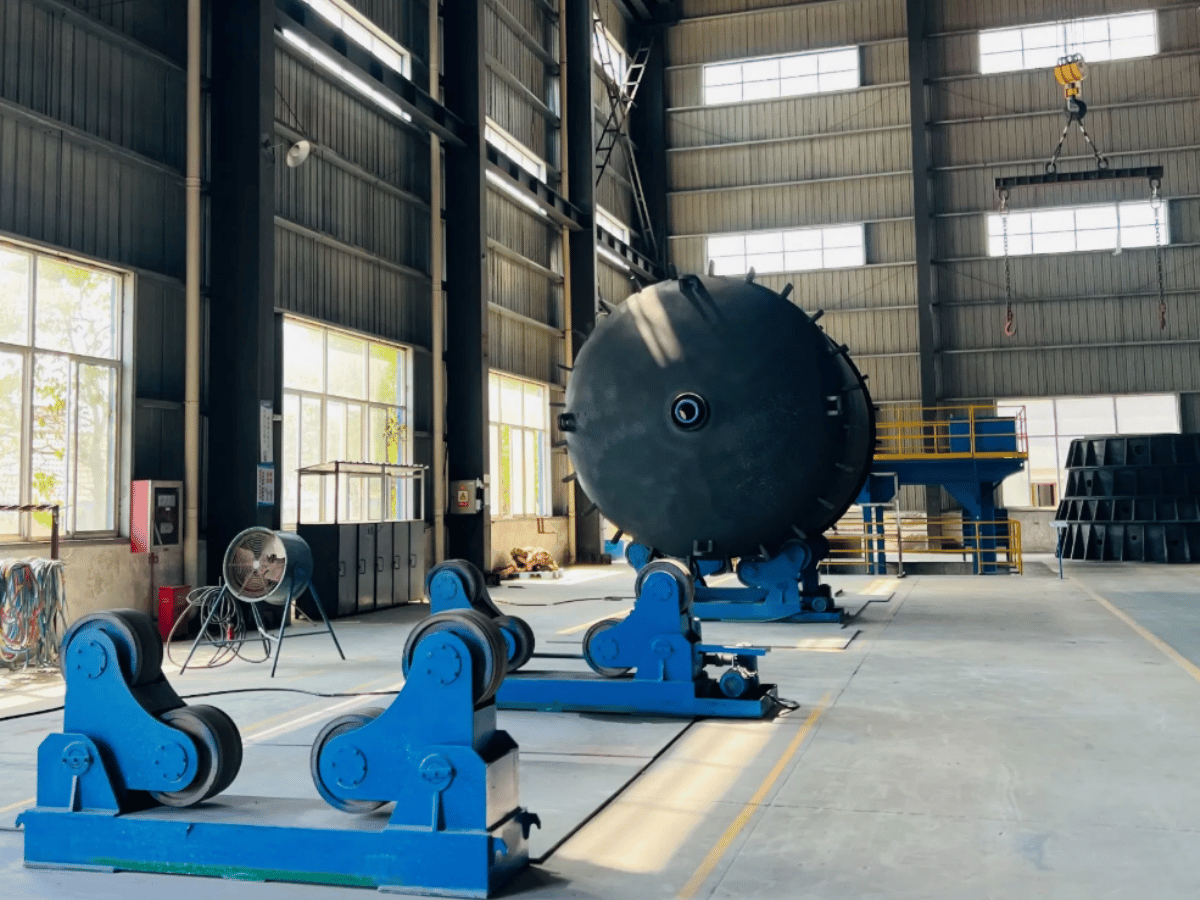
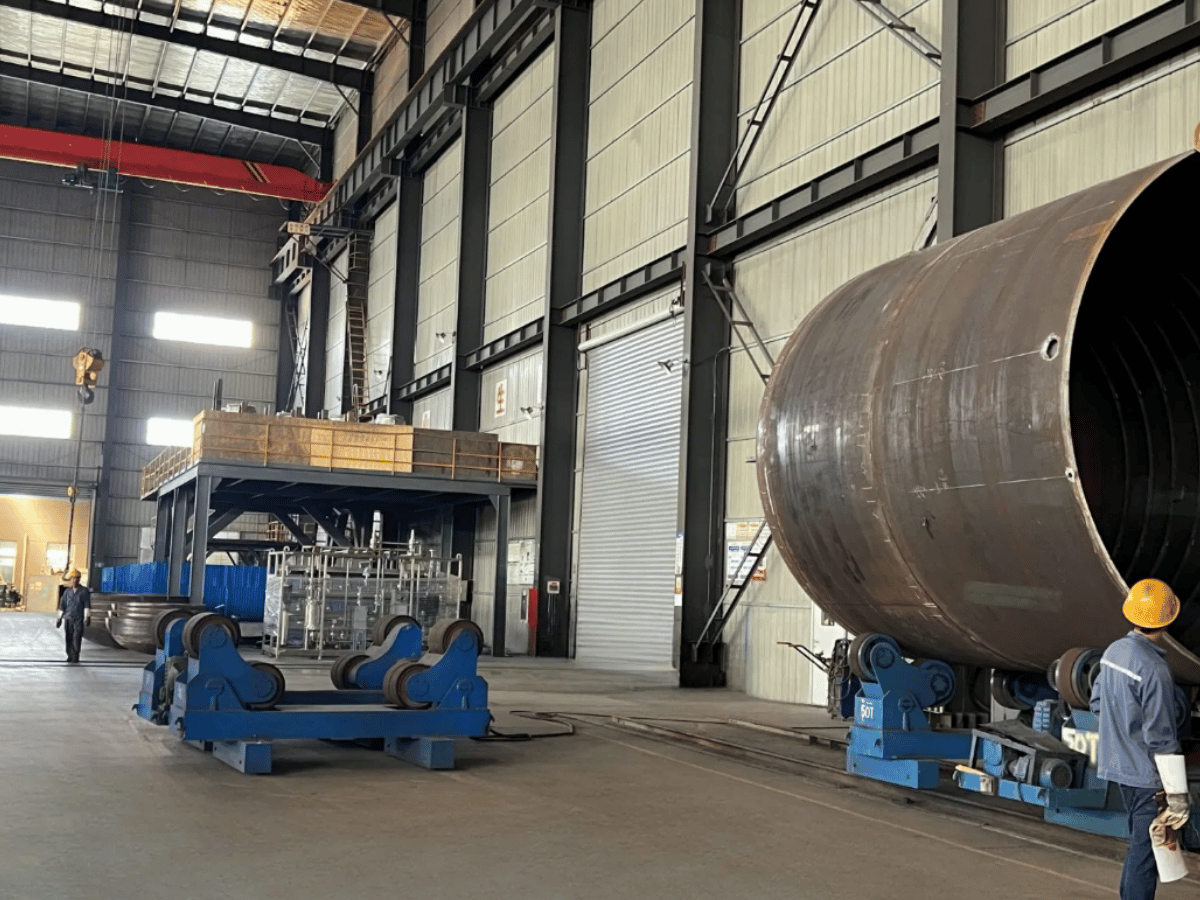
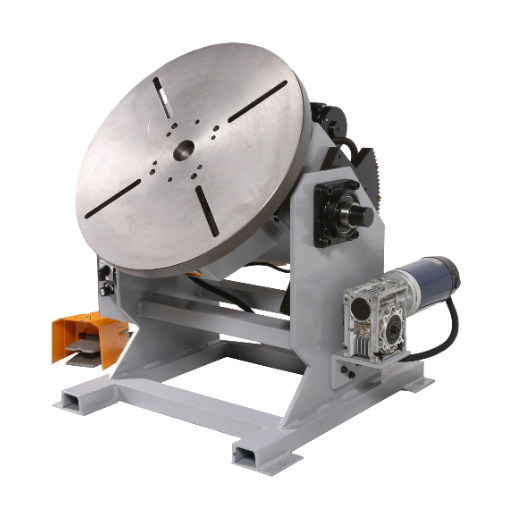
Rotary welding positioners function as special equipment which enhances both the operational efficiency and welding precision of various welding processes. The equipment provides secure workpiece storage which enables welders to create welds across multiple work angles while accessing difficult-to-reach welding points. The rotary positioners provide precise workpiece positioning capabilities which help welders to work more efficiently while reducing their fatigue during work on circular and tubular parts.
The primary function of rotary welding positioners enables operators to control workpiece rotation through smooth movement at predetermined rotational speeds. This capability guarantees consistent welding execution which minimizes the possibility of creating defects like uneven welds or missed spots. The positioner allows welders to modify its tilt and rotation functions which helps them achieve ergonomic working conditions that protect their long-term performance ability while reducing workplace accident risks.
Rotary welding positioners find widespread application in multiple industries such as aerospace and automotive and construction. The welding equipment enables complex welding tasks because it can adapt to various workpiece dimensions and configurations. The devices enable companies to attain high production targets because they decrease manual tasks while boosting accuracy which helps to minimize expenses resulting from product defects and rework needs.
Multi-Axis Welding Positioners
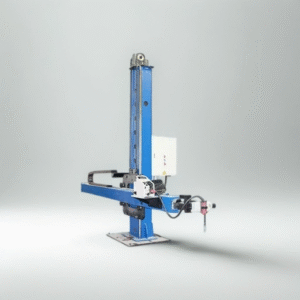
Multi-axis welding positioners function as advanced tools which enable operators to complete complex welding operations through their ability to move workpieces between different axes. The devices enhance welding accuracy because they permit welders to adjust components into their most effective welding positions which leads to fewer mistakes during the welding process. The equipment supports detailed design work because it enables precise welding operations which many industries require to achieve their demanding quality standards.
The main advantage of multi-axis welding positioners is that they help to boost operational efficiency. The production process becomes faster because these tools automate the required adjustments while they decrease the need for manual labor. The system maintains stability during welding which produces consistent results that meet all required quality benchmarks. The system enables operators to lift heavy materials which decreases physical demands on employees and increases workplace security.
The system decreases expenses which businesses incur because of product defects and necessary rework. The multi-axis welding positioners provide high precision which results in fewer errors and decreased material waste together with reduced production expenses. The system enhances its operational capabilities because it can perform different welding methods which include MIG, TIG and robotic welding. Most manufacturing processes depend on these positioners because they deliver operational efficiency together with precise results and economical solutions.
Type of Rotary Welding Positioner Differences
| Positioner Type | Control Method | Best Use Case |
|---|---|---|
| Manual | Human intervention | Small, low-complexity tasks |
| Semi-Automatic | Mixed manual & programmed | Mid-sized precise operations |
| Automatic | Fully programmable | High-volume, rapid production |
Various types of rotary welding positioners exist because manufacturers need different solutions to their production requirements. The primary types include manual, semi-automatic, and automatic positioners. Manual positioners require human intervention for adjustment during the welding process, making them suitable for smaller, less complex tasks. The system offers user-friendly operation at an affordable price but demands extended operating hours and greater precision from its users.
Semi-automatic positioners combine manual and automated functions, providing increased flexibility and efficiency. The positioners enable operators to select which movements to control manually while the system handles automatic functions, making them suitable for mid-sized operations that need accurate results without implementing complete automation. They provide users with basic functions at a price which remains affordable to most customers.
Automatic rotary positioners function as complete programmable systems which execute intricate operations without needing human assistance. The positioners provide excellent performance for high-volume production because they deliver precise results at rapid speeds. The system boosts operational efficiency while maintaining consistent output quality because it requires less human monitoring which makes it essential for production facilities that operate at large scale.
Key Requirements for Aerospace Welding Positioners
Specifications for Weld Quality
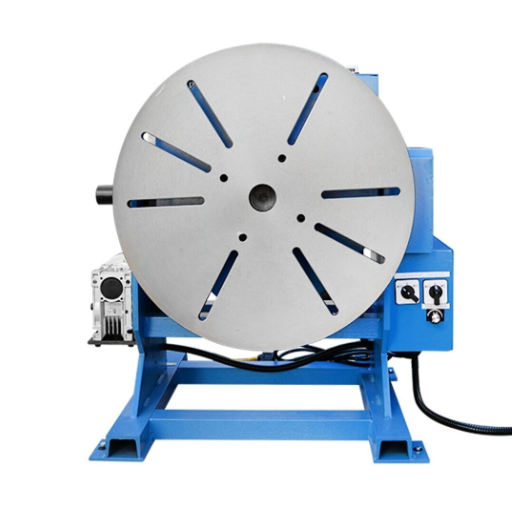
Aerospace welding positioners must ensure the highest standards in weld quality to meet stringent industry requirements. The welded joints need precise construction because they experience extreme forces and environmental conditions. The equipment should produce consistent welds without defects by maintaining proper alignment and rotation speeds and stable positioning throughout the welding process. This method produces consistent results which prevent both porosity defects and weak points and other structural weaknesses that would jeopardize the safety of the building.
The second requirement needs equipment to handle different materials and joint types with flexibility. Aerospace components frequently utilize lightweight alloys such as aluminum and titanium which require precise heat control to avoid warping or heat-affected zones. Welding positioners need to deliver accurate movement control which allows operators to apply heat evenly across materials to achieve proper fusion while maintaining material characteristics.
The process requires organizations to establish systems that deliver consistent results. Aerospace manufacturing often involves producing components in large volumes where each piece must meet identical standards. Positioners equipped with automated settings and programmable systems help achieve identical welds across multiple units while reducing human error. The system provides dependable results which enable organizations to fulfill certification requirements while improving manufacturing efficiency.
Factors Affecting the Selection of the Right Welding Positioner
The selection process for an appropriate welding positioner requires evaluation of multiple factors which determine both functional performance and operational efficiency and safety standards. The positioner’s weight capacity stands as the most essential factor which needs assessment. The equipment must be capable of supporting the weight of the workpiece without compromising stability or performance. The precise size and weight of materials needs to be measured because positioner overloads result in equipment breakdowns and dangerous situations.
The required welding movement type serves as another major factor which needs assessment. Welding positioners provide three movement options which include rotational and tilting and multi-axis movement, while users need to select between these options based on their welding project requirements and their workpiece design. Complex welding tasks require a positioner that enables advanced movement control, while standard welding tasks require basic movement capabilities. The operation needs specific movement capabilities which positioners provide to achieve accurate and efficient results.
The positioner needs to operate with both your current welding equipment and the layout of your workshop space. The positioner should integrate seamlessly with other equipment, like power sources and controllers, to streamline operations. The positioner’s dimensions and base area need to match the available work area, which requires space for machine operation and equipment movement. The welding process evaluation requires thorough assessment of these elements because they impact both operational effectiveness and workplace safety and accessibility.
Compliance with Aerospace Standards
The aerospace field requires strict standards for welding positioner selection because these devices must fulfill precise requirements which guarantee their operational performance. Positioners used in the aerospace industry must be capable of maintaining accurate alignment and rotation throughout the welding process to meet the high-quality requirements of aerospace manufacturing. The structural integrity of aerospace components depends on the welder’s ability to achieve proper alignment because it affects both welding strength and weld control which determines their structural performance.
Aerospace welding positioners also need to conform to specific material and design requirements established by regulatory bodies. The positioner components must have materials which can withstand environmental conditions that include heat and corrosion while they maintain their strength during extended periods of intense use. The design of the positioner should provide ergonomic operation and enable automatic welding systems to function properly while fulfilling all safety and accessibility requirements.
The welding positioner needs thorough inspection and testing procedures to confirm its compliance with aerospace standards. The equipment undergoes performance testing to verify its ability to execute complex welds which require high precision during actual working conditions. Organizations need to maintain proper documentation which proves their adherence to aerospace standards for industry regulations and legal obligations. Welding positioners meet these requirements because they create safe welding environments which improve aerospace manufacturing quality standards.
Improving Weld Quality with Positioners
Techniques for Enhancing Weld Quality
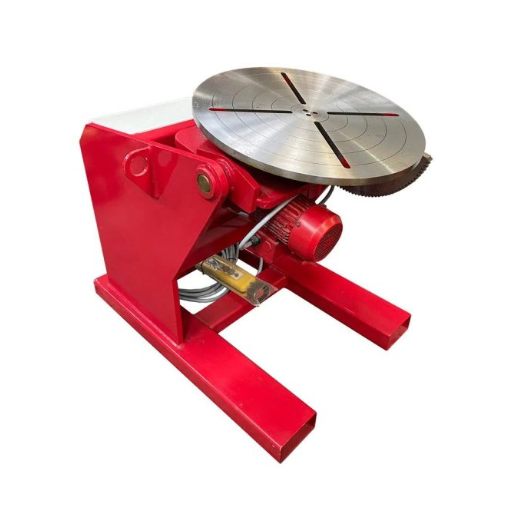
The welding process requires exact positioning to achieve better weld results in aerospace manufacturing. Welding positioners function as an effective method because they enable operators to turn and move components for establishing uniform and precise welding results. The system establishes stable support which protects complex geometries from manual handling resulting in complete elimination of irregularity risks that would compromise weld quality.
Another vital approach is the application of thorough pre-welding preparation. The process requires cleaning of all welding surfaces to eliminate contaminants which include grease and dirt and oxides that disrupt proper fusion. The system needs to make sure that components receive exact alignment which needs to stop any distortion or gaps which would create structural problems. The process of preparation needs to follow all steps which will create proper conditions for achieving a tidy and dependable weld.
The process requires constant observation and regulation of welding parameters which include heat input and travel speed and shielding gas flow. Proper parameter settings achieve process optimization because they create optimal conditions for fusion while they stop porosity and warping defects from occurring which results in better weld quality. The combination of regular training with strict quality control procedures enables welders to create work that meets aerospace requirements.
Role of Positioners in the Welding Process
Positioners serve as essential tools which enhance both welding process efficiency and welding process accuracy. The devices function to secure workpieces at their most suitable positions which enable welders to reach challenging welding positions while keeping their welding arc stable. The workpiece stabilization system of positioners enables welders to perform their work with reduced physical effort which results in better welding control. This combination leads to operational excellence which produces precise results with fewer mistakes.
Welding positioners offer dual advantages through their function which boosts operational efficiency and through their management capacity which maintains workplace safety. The tools enable welders to work while they remain in one position because they can adjust the workpiece through either rotation or tilting movements. The system provides time efficiency while it generates more consistent welding results who work on projects which need them to perform identical welding tasks and complex welding work.
Positioners function as safety tools which improve workplace security by their ability to create dangerous workspace environments. They remove the requirement for welders to use unsafe work methods when they perform their duties with large, heavy, or oddly shaped components. Positioners create a secure environment which decreases accident potential while they establish an ergonomic work method. Industrial sectors like aerospace, construction, and manufacturing use welding positioners as critical equipment to sustain their high-quality standards.
Common Challenges and Solutions in Aerospace Welding
Aerospace welding presents special obstacles because aircraft components need to meet strict requirements for their precision and strength and reliability standards. The primary obstacle comes from using specific materials which include titanium and aluminum and nickel alloys that require operators to control heat precisely so they can avoid material deformation and cracking and other faults. Advanced welding methods provide improved thermal handling and precise weld connections through TIG (Tungsten Inert Gas) welding implementation.
Maintaining weld quality becomes challenging because of the difficulties involved in executing intricate weld designs. Aerospace components possess exact geometric specifications combined with narrow dimensional limits which make it hard to access particular areas and achieve consistent weld connections. The use of automated welding systems and robotic welders improves accuracy because they deliver stable welding results throughout complicated designs while decreasing operational mistakes and output differences.
The process of meeting strict safety and quality standards creates multiple difficulties which need to be solved. Every weld of aerospace components needs to pass demanding inspection procedures because these components operate under very tough conditions. Non-destructive testing methods such as X-ray and ultrasonic inspection allow for complete examinations without damaging structural components which confirms that welds fulfill safety and performance standards. The aerospace industry achieves its highest quality standards through implementation of these solutions which help to solve welding problems.
Becoming an Aerospace Welder
Essential Skills and Qualifications
The aerospace welding profession requires people to develop excellent skills in welding techniques and material knowledge. The aerospace industry requires welders to master both TIG welding and MIG welding because these techniques represent essential welding methods. The production of precision aerospace components for specialized applications requires welders to understand advanced welding technologies that include laser and electron beam welding.
Aerospace welders need to understand metallurgy because they frequently work with aluminum alloys and stainless steel and titanium materials. The heat and stress testing process determines how materials respond which helps engineers maintain the structural integrity of components. Engineers need welding professionals who can accurately interpret blueprints and welding symbols and technical specifications to achieve both engineering objectives and safety requirements.
⚠️ Professional Requirement
Aerospace welding positions require candidates to complete certification programs. Industry credentials, like those from the American Welding Society (AWS), are mandatory for working on high-precision projects.
Training and Certification Programs
The field of aerospace welding requires practitioners to complete specialized training programs which teach welding techniques used in high-precision settings. The programs provide training on TIG (Tungsten Inert Gas) welding which aerospace engineers use because of its ability to deliver precise and strong welding results. The program enables participants to study material compatibility and metallurgical properties and the aerospace industry safety regulations which they need to follow.
Certification serves as an essential requirement for aerospace welders who need to prove their expertise and compliance with industry requirements. The American Welding Society (AWS) provides certifications such as Certified Welding Inspector (CWI) and Certified Welding Educator (CWE) which authenticate the professional abilities and expertise of candidates. To obtain these credentials candidates must successfully complete difficult written tests and hands-on evaluations which prove their ability to perform welding work required in aerospace manufacturing and repair.
Training programs provide candidates with hands-on training and assessment methods which enable them to acquire the skills needed for practical job performance. The practical training method enables aspiring welders to develop their skills in executing complex welding operations while being supervised until they become ready for solo employment. Aerospace welders deliver specialized field work which combines their formal education with certification and practical experience.
Career Pathways in Aerospace Welding
Aerospace welding offers multiple career paths that lead to professional success for individuals who hold the necessary skills and certifications required by the field. Entry-level positions typically involve roles such as welding technicians or apprentice welders who assist in the fabrication and repair of aircraft parts under experienced supervision. Through these positions, workers acquire basic skills and experience because they practice welding methods that aerospace companies use in their operations.
Welders can achieve certification as aerospace welders through educational programs and certification courses and practical work experience which enables them to specialize in aircraft assembly and component repair and precision spacecraft component welding. Certification programs that meet industry standards provide essential proof of expertise which enables organizations to prove their compliance with aviation safety regulations. Employees who move up in the company receive better salaries and access to positions that require specialized skills and advanced work situations.
People who wish to become leaders or technical experts should consider welding inspector and supervisor and quality assurance specialist positions as practical career options. The positions require professionals to manage weld quality while performing inspections and making sure that they follow established industry regulations. The career advancement needs professionals to acquire both technical skills and safety knowledge and aerospace engineering expertise which they use to solve problems. Aerospace welding provides workers with a long-term career path that depends on both ongoing education and the technological changes that drive the industry forward.
Frequently Asked Questions (FAQ)
Q: What are the core Aerospace Welding Positioner Requirements for precision welding?
A: The Aerospace Welding Positioner Requirements need to deliver accurate welding because they enable controlled rotations and tilts through rotary tables and headstock and tailstock positioners and headstock tailstock positioners which help position and move weldments. The welding system needs to perform precision fusion welding and gas metal arc welding operations with minimal manual intervention because it uses welding systems and robotic welding systems.
Q: How do positioners reduce the need for manual handling and improve welding productivity?
A: During welding workpieces positioners help workers create the proper welding angles because positioners hold parts in place while turning parts to the best welding positions. This system increases productivity and efficiency in welding operations because it reduces setup time while maintaining consistent welding production.
Q: Which welding processes are compatible with aerospace positioners?
A: The Aerospace Welding Positioner Requirements need to support multiple welding methods which include arc welding and gas metal arc welding (GMAW) and plasma arc welding and resistance welding and all other fusion welding methods. The positioners provide adjustable speed and torque capabilities which enable them to meet both common welding requirements and advanced pipe welding and multi-axis assembly welding techniques.
Q: What features should a guide to weld positioners emphasize for aerospace applications?
A: The practical guide for aerospace applications shows how to use weld positioners by providing detailed information about payload capacity and precision controls and rotary table accuracy and headstock and tailstock positioners and tailstock positioners and welding system compatibility and safety mechanisms which enable better welding operations through automated processes.
Q: How do positioners support both manual welding and robotic welding in the welding industry?
A: Positioners support welding career roles and welding jobs by enabling both manual welding and robotic welding: for manual welding they reduce ergonomic strain and need for manual adjustments, while for robotic welding they provide repeatable positioning and integration points so robotic arms or welders can perform complex welding applications with consistent quality across aerospace work and other sectors within the welding industry.
Q: What safety and quality considerations are part of aerospace welding positioner requirements?
A: Safety and quality requirements demand that workpieces must be securely clamped during welding operations while control systems need to operate without unexpected movements and fusion welding integrity depends on precise alignment and welding parameters require monitoring for specific standards. The combination of these components enables compliance with aerospace application standards while minimizing the necessity for manual work and rework processes.
Q: How do headstock and tailstock positioners enhance weld accuracy for cylindrical parts?
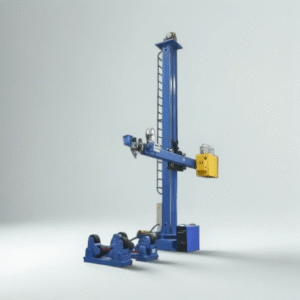
A: The welding operation requires equipment that includes headstock and tailstock positioners or headstock tailstock positioners to support and manipulate cylindrical and long workpieces during pipe welding; this equipment enables precise welding because it maintains welding angles and workpiece rotation throughout the process, which is essential for aerospace operations.
References
-
Using Non-Gravity Aligned Welding in Large Scale Additive Manufacturing
University of Texas
This paper explores the use of part positioners to enhance welding capabilities in large-scale additive manufacturing. -
American Welding Society (AWS) Publications Catalog
Academia.edu
A comprehensive catalog of AWS standards, including specifications for welding processes and applications. -
Process Specification for the Manual Arc Welding of Titanium Alloy Hardware
NASA
A NASA specification outlining the minimum requirements for manual arc welding of titanium alloy flight and non-flight hardware. - Top Welding Positioner Manufacturers and Supplier in China