Welding is the very foundation of contemporary engineering and manufacturing, as it allows the production of strong and reliable structures as well as precise parts for so many different industries. Among the different welding techniques, edge welding is the most efficient one for specific applications and, thus, deserves a special mention. The latter comes into the picture particularly in case of material forming and distortion-free components where the finish of the weld must be invisible. But what is exactly meant by edge welding? In the lines below, we will delineate the very basic of edge welds by explaining the techniques used by professionals, the different types of edge welds that are suitable for different projects, and the areas of application of the method where it is most effective. No matter if you are an experienced welder or a novice one, this article will widen your knowledge of this unique welding process and its importance in the field of fabrication.
Introduction to Edge Welding

Edge welding is a method of uniting two metal sheets along their margins to form one homogeneous structure. It is mainly applied to thin materials or where a clean, accurate finish is vital. In producing the edge weld, the melting of the materials’ edges is done through heat; sometimes, a filler material is used to guarantee a strong bond. Edge welding is the most common process in industries like sheet metal fabrication and manufacturing because it produces neat, high-quality joints with minimal waste, making it highly valued.
What is Edge Welding?
Edge welding is a specific welding process used to combine the edges of two materials, creating a seamless and strong bond. The process is especially advantageous for thin materials like sheet metals, which require great accuracy and a perfect surface. The technique involves melting away the borders of the materials, often with the help of a filler metal, to form a strong connection. According to the latest reports, the edge welding process has gained more and more acceptance mainly because of the high technology in laser and electron beam welding, which in turn gives greater precision and less time. It is a widespread practice in sectors like automobile, aircraft, and electronics where high-quality, no-defect joints are a must for both performance and safety.
Importance of Edge Joint in Manufacturing
The edge joint is a crucial joint in manufacturing because it can connect thin materials without causing much distortion and at the same time keeping the joint strong and durable. This technique is especially appreciated in the aerospace and automotive sectors, where the need for lightweight and strong structures is a must. New welding technologies like laser and electron beam methods have greatly improved the precision and quality of edge joints, thereby guaranteeing that no defects occur in the connections and the defects meet the performance and safety standards that are very stringent. In addition, the efficient use of materials and the reduction of waste associated with edge joints contribute to the cost-effectiveness and sustainability of manufacturing processes.
Overview of Weld Symbols and Their Significance
Weld symbols are of utmost importance in the world of engineering and construction drawings as they provide exact information. Such symbols, standardized through guidelines like those by the American Welding Society (AWS), ensure that welding specifications are understood unambiguously by welders and fabricators. The main parts of a weld symbol consist of the reference line, arrow, and tail, while additional information is given with the help of supplementary symbols, dimensions, and notes.
The different weld types (fillet, groove, butt, and plug, welds) are represented by specific shapes or markings on the reference line. The position of the symbol—above or below the reference line—indicates whether the weld is located on the arrow side or the opposite side of the joint. Furthermore, the application of modifiers, such as finish symbols or contours, indicates that the weld should be finished in a specific manner, such as grinding or machining, according to post-weld finishing requirements.
Key Insight: Mastering weld symbols is quite essential for accuracy, consistency, and compliance with the design specs. They facilitate communication among various teams, increase productivity by reducing mistakes, and ultimately play a significant role in the safety and integrity of the structure being built. Thus, for those in the field of welding and manufacturing, learning the symbols is a way of assuring the quality and reliability of the product delivered.
Types of Edge Welds
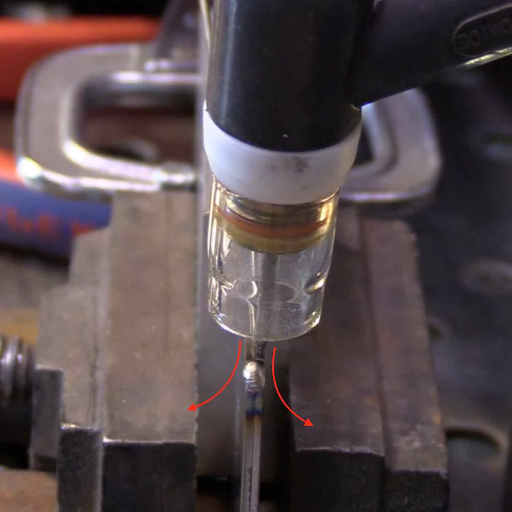
Edge welds typically include square, bevel, V, U, and J types.
Common Weld Types in Edge Welding
Butt Weld
It is a basic and frequently employed welding procedure for joining two flat surfaces on the same plane.
Tee Weld
When two metal surfaces are attached at a right angle, a T-shaped joint is formed by this weld.
Corner Weld
Joining two metals at 90 degrees is the purpose of this weld and it is mainly used in box or frame making.
Lap Weld
Two pieces of metal that overlap are welded together to give additional strength, and this technique is mainly used in sheet metal work.
Edge Flange Weld
This is made where a metal sheet with a flange is welded at the edge of another sheet, which mainly gives strength or sealing.
Comparison of Edge Joint vs. Other Joint Welds
Edge joints differ from other joint welds primarily in their application, strength, and design complexity.
Thin Metal Edge Welding Techniques
Welding thin metal edges is a job that requires precision, specialized techniques, and the prevention of warping or burn-through. Key methods are:
TIG Welding (Tungsten Inert Gas Welding)
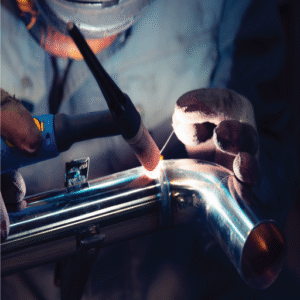
TIG welding is an excellent choice for thin metal because of its precise heat control. The operator can use a lower heat input to avoid damaging the material, while the inert gas prevents oxidation, allowing for a clean weld.
Spot Welding
Spot welding is a method that is often used for joining thin sheets of metal. The process involves applying pressure and electric current to a small area, resulting in a bond being formed without melting the surrounding metal; thus, the risk of distortion is minimized.
Pulse Welding
Pulse welding switches between high and low amplitudes of current, which promotes better heat management. This method is particularly suitable for thin materials since it minimizes heat concentration, thus reducing the risk of burning through.
Backing Techniques
Using backing made of copper or aluminum can be beneficial in the reduction of heat, it gives support to the thin material during the welding process and thus preventing warping.
Important Note: When welding thin metal edges, preparation plays an important role. Cleaning the surface thoroughly and ensuring proper alignment are the two main steps needed for high-quality results.
Edge Joint Welding Techniques

Edge joint welding techniques involve welding at the edges of two materials that are either adjacent or overlapping. To obtain a successful edge joint weld, it is recommended to apply proper clamping for alignment, to control the heat accurately to avoid warping, and to choose the right filler metal to make the joint stronger. Cleanliness of the edges and removal of any dirt and/or oxidisation are necessary before welding in order to get the best possible results.
MIG Welding for Edge Joints
MIG welding is most efficient for edge joints where precision and user-friendliness are significant factors. For clean and strong edge welds, it is recommended to have a stable welding machine setup, with the correct voltage and wire speed determined by the material’s thickness. A constant travel speed should be maintained to ensure the weld penetrates properly without burning through. The weld area is typically protected from contamination and smooth results are assured by shielding gas, which is usually a mix of argon and carbon dioxide. The edges should be thoroughly cleaned before the welding process as it is a significant step in getting a good weld. Ensure all safety protocols are followed during welding to avoid the hazards posed by fumes and sparks.
Advantages of MIG in Edge Welding
- ✓
Ease of Use: MIG welding is a very easy-to-handle process and thus allows for a smoother operation which is perfect for both newbies and professional welders. - ✓
High Welding Speed: The continuous feeding of the wire guarantees rapid welding hence saving time on these edge welding tasks. - ✓
Clean and Precise Welds: Gas shielding not only protects the area from contamination but also makes the welds cleaner and more attractive. - ✓
Versatility: With MIG welding one can hardly come up with a metal that is not suitable for application, as the process can be applied to plethoras of metals, namely, steel, aluminum, and stainless steel. - ✓
Efficiency in Thin Materials: It is thinner materials that MIG welding can deal with best and it reduces the chance of burn-through while at the same time giving strong welds.
Best Practices for Edge Joint Welding
The secret to great welds lies in preparation:
Clean Edges of the Base Metal
Cleaning the edges of the base metal to be welded is a prerequisite for quality welds. Conduct the cleaning with wire brushes or grinders if required to achieve the right edge preparation.
Good Fit-Up of Joint
The edges of the metal pieces should be perfectly aligned to ensure a constant groove between them. Non-uniform fit-up may either render the weld futile or create a weak bond.
Pick the Right Settings
MIG welding requires the voltage, current, and wire feed speed to be altered depending on the thickness and kind of material. The correct settings will create the best penetration and the strongest welds.
Perform Tack Welds
Tack welding at various points along the joint of the base metal ensures the pieces are in the correct position during welding and it also limits the heat distortion.
Use Controlled Welding Methods
A steady hand and even bead placement will contribute to the proper heat distribution. For edge joints, weld at a slightly slower pace so that the complete penetration is achieved without burning.
Keep an Eye on Heat Input
Overheating can result in bending or burning through even for the thinnest materials. The speed of travel should be adjusted, and the proper distance from the base material must be maintained to prevent overheating.
Weld Inspection
The weld should be visually inspected for cracks, porosity, or irregular weld beads once completed. Address the issues before they get bigger, so the strength of the structure is not compromised.
Conclusion: Using these methods welders will produce strong and good-looking edge joint welds that are not only up to the mark in their performance but also their aesthetics.
Design Considerations in Edge Welds
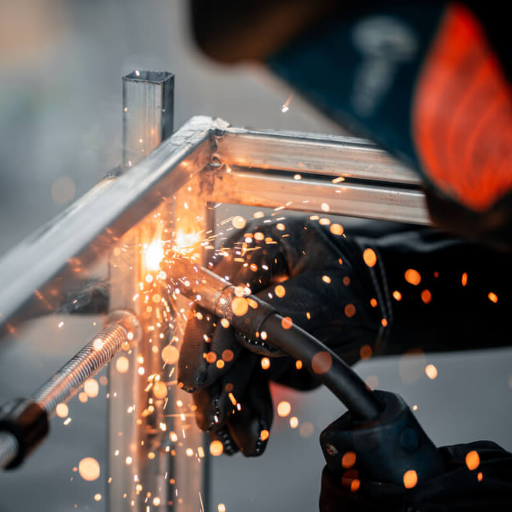
In the process of edge weld design, it is necessary to take into account material thickness, joint alignment, and the conditions of the load to be applied. Warping might be a problem for thin materials and therefore special techniques are needed to prevent that. Thicker materials, on the other hand, require higher heat inputs for proper fusion. Besides that, the joint should be in such a configuration that during welding effective access is possible and always uniformity is assured. In addition, load-bearing applications require thorough stress analysis to eliminate potential failures and the use of suitable weld sizes and patterns helps to maintain structural integrity. When these factors are considered, it can be concluded that edge welds are functional and faith worthy.
Using SolidWorks for Designing Weld Joints
SolidWorks simplifies the design of welding joints with its comprehensive welding tools. The Weldment feature allows the user to create and adjust structural members while the exact welds are done simultaneously. The program not only offers pre-set weld bead options but also makes it easy for users to see and document the sizes, lengths, and positions of the welds being done right in the design. Moreover, using SolidWorks’ simulation capabilities, it is possible to conduct tension/pressure analysis on weld joints, which will assist in verifying that the design complies with strength and load requirements. By means of these tools, designers will be able to create fast, trustworthy, and accurate welded structures.
Factors Influencing Weld Joint Integrity
Material Properties
The material selection for the welding significantly affects the joint’s strength and life. Along with the material’s tensile strength, thermal conductivity, and hardness, other factors too must be taken into account during the selection process.
Welding Technique
The selected welding process, whether MIG, TIG, or arc welding, is a primary factor in the weld joint’s quality and uniformity.
Heat Input
It’s necessary to manage the heat properly, as too much or too little heat might cause defects in the weld, such as warping, cracks, or poor penetration.
Joint Design
The shape and size of the weld joint together with its preparation, all affect the stress and load over time that the joint can handle.
Skill of the Welder
The welder’s proficiency and experience are crucial for achieving the weld exactly right and minimizing defects, as even the slightest mistakes can affect the weld’s strength.
Common Mistakes to Avoid in Edge Welding
I steer clear of some typical errors that might jeopardize weld quality in edge welding. A critical mistake is inadequately cleaning the metal surface because impurities such as rust, oil, or dirt can weaken the weld. Another thing I do is adjust the settings to the right level for the material and prevent excessive heat that could lead to warping or undercutting. Ignoring proper joint preparation, like alignment and fit-up, may result in poor fusion and weaker joints. Last but not least, I do not hurry through the process, nor do I use inconsistent techniques, because they can lead to uneven or incomplete welds. I, therefore, make it a point to be accurate and patient to get the best results.
Applications of Edge Weld in Industry
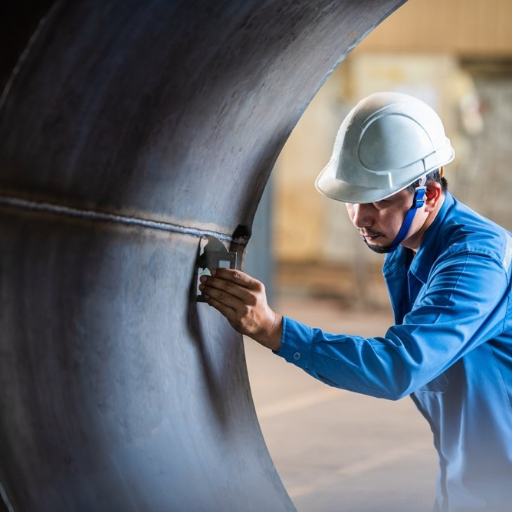
Edge welding is a process used in many industries because it can produce strong and accurate joints with minimal material waste. It is commonly done in the making of pipes, tanks, and metal sheets where the quality of seams is essential. The automotive and aerospace industries also use edge welding to join light materials without affecting the material’s strength. In addition, it is also used in the manufacture of electronic products for the accurate welding of small and fragile parts.
Edge Welding in Automotive Manufacturing
Edge welding is a significant factor in car production, as it provides strong and accurate joining of vehicle parts. It is mainly employed in the joining of light materials like aluminum and advanced alloys, which are very important for the automotive industry to weight and fuel efficiency. This technique is also used for making parts such as body panels, exhausts, and frames, which are essential for the safety and performance of the car. Being precise and allowing little waste of materials, edge welding is still a dominant method in the production of modern vehicles.
Use of Edge Welds in Aerospace Engineering
Edge welding is a critical technique in aerospace engineering, where precision and endurance are the main requirements. This method is widely used in the fusion of high-performance materials like titanium, nickel-based alloys, and composites, which are extensively employed in building aircraft parts and structures. The aerospace sector’s dependence on edge welding is seen from the manufacturing of sections of fuselage, assemblies of wings, and parts of engines, making them capable of enduring the most challenging conditions like high speeds, pressure and temperature changes. Additionally, the precision of edge welding reduces the risk of material distortion, which is crucial for preserving aerodynamics and structural integrity. Edge welding has been an essential process in supporting the innovation in aerospace by its ability to produce the lightweight, strong and efficient designs.
Edge Joint Applications in Construction
Edge joints have become a common practice in construction, used for connecting metal plates or sheets, resulting in sturdy and long-lasting connections. This type of joint is typically used in the building of frameworks, bridges, and structural parts where stability and load-bearing capacity are of utmost importance. The edge welding brings about the material’s structural integrity and thus lowers the chance of failure when the material is put under stress. Moreover, Edge welding’s precision and reliability have made it a fundamental aspect of modern construction methods characterized by the dual requirements of efficiency and strength.
Reference Sources
Feasibility of Fillet Edge Weld Using Laser Wobble (ScienceDirect)
This paper explores the feasibility of using laser wobble techniques for fillet edge welds, particularly in joining thin and thick aluminum materials.
A Novel Simulation Methodology for Evaluation of Edge Weld Design Optimization (ResearchGate)
Proposes a simulation methodology using SolidWorks 2023 to optimize edge weld designs and evaluate weldment analysis tools.
Edge Weld Penetration Assessment via Electric Current (Iowa State University)
Demonstrates the use of the Potential Drop Method for assessing edge weld penetration, particularly in GTAW (Gas Tungsten Arc Welding).
Top Welding Positioner Manufacturers and Supplier in China
Comprehensive guide to leading welding equipment manufacturers and suppliers.
Guide for Types of Welding
Complete reference guide covering various welding techniques and applications.
Frequently Asked Questions (FAQs)
What exactly is edge joint welding and how does one perform it?
Edge joint welding is a method used to weld two metal pieces together at their edges precisely. This joining process is most commonly used in industries that need strong connections. The weld is especially helpful for thin metal parts and different kinds of welding methods like MIG, TIG, and spot welding, among others, can be used to carry it out. The proper preparation of the joint and the control of the weld pool are the two significant factors that contribute to the successful weld result.
Could you list the different kinds of welding joints available?
There are various welding joint types, including corner joints, lap joints, and flanged butt joints. Each one is designed for a specific purpose and is selected based on the configuration of the joints and the desired mechanical properties. To give an example, edge welds are widely used to connect the edges of metal plates, while groove welds are done for deeper penetration and strength.
In what way does the design of joints influence the weld quality?
Joint design has a major impact on the weld quality. The well-designed joint allows for the adequate penetration of the weld and reduces the gap between the two pieces of metal. For instance, using a V-groove or J-groove design will provide better access to the weld area, thus allowing a full penetration weld, which together with being the strongest and most durable of all, adds to the connection’s overall strength and longevity.
What is the minimum size of the weld that would still allow edge welding to be effective?
Minimum weld size depends on the materials and the application but is a very important factor in guaranteeing the production of a quality edge weld. When working with thin metal, the proper width of the weld is crucial as it directly impacts the strength of the joint. If the minimum weld size is not met, problems like lack-of-fusion or weakened mechanical properties may result.
What problems are usually associated with edge welds?
Edge welds have problems like imperfect bonding, slag formation, and lack of penetration. If not monitored, these problems can negatively affect the weld’s strength, leading to joint failure of the welded parts. Hiring a regular inspection and maintaining adherence to welding standards are among the ways to help reduce these problems and obtain welds that are both reliable and strong.
What is the significance of the electrode in edge welds?
The electrode’s importance in welding is enormous; it supplies the filler material to create a strong joint. In edge welding, picking the right electrode type is very important as it determines the quality of the weld, and if the mechanical properties required for the application will be met. The right electrode not only guarantees proper fusion with the base metal but also increases the strength of the welding joint.
Ready to Master Edge Welding?
Edge welding is a versatile and essential technique in modern manufacturing. By understanding the proper techniques, best practices, and applications, you can achieve strong, reliable welds that meet the highest industry standards.