When it is about precision cutting in the industry and in the making of the products, selecting the right technique can significantly affect the quality, efficiency, and price of your projects. Among the two most widely used technologies for cutting—laser cutting and plasma cutting—there are certain benefits and drawbacks which together create a very difficult choice. Thus, the aim of this article is to lead you through the main points which differentiate these two cutting methods and help you to realize the one that best meets your requirements.
No matter if you want to make very detailed patterns, work with thickest materials, or save the least on production, the knowledge of main differences between laser and plasma cutting will give you that power to take the right decision.
Introduction to Cutting Methods
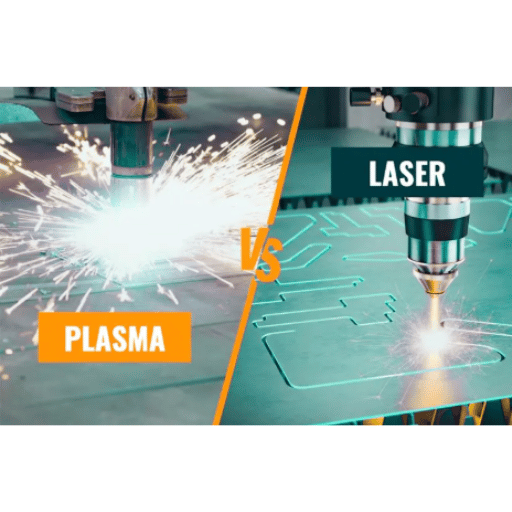
Laser cutting and plasma cutting are among the most commonly applied techniques for precise and efficient material separation. The cutting process of laser employs a concentrated light beam that either vaporizes or melts the material, thus making it fit for rendering very elaborate and detailed patterns on metal, plastic, and fabric of the thickness ranging from thin to moderately thick.
In contrast, plasma cutting functions with an extremely hot ion gas to cut through electrically conductive materials (especially steel), aluminum, and copper. Therefore, it suits thick and robust material applications. The two techniques provide different advantages according to the type of material, its thickness, and the speed of production wanted, hence allowing the creation of specific solutions in various industries.
🎯 Quick Comparison Overview
| Aspect | Laser Cutting | Plasma Cutting |
| Best For | Thin materials, intricate designs | Thick metals, speed |
| Precision Level | Extremely high | Moderate to high |
| Cost Range | Higher initial investment | Lower initial investment |
Overview of Laser Cutting
Laser cutting is an accurate manufacturing method that employs a high-energy and focused laser beam to cut, engrave, or sculpt materials. This particular technique not only realizes intricate patterns but also provides smooth surfaces, thus making it perfect for those applications requiring precision, like automotive, aerospace, and decorative industries, among others.
Besides, it is quite a versatile process that can be applied to various materials such as metals, plastics, wood, and textiles, and is also suitable for both prototyping and production in large quantities. Some of the principal benefits of laser cutting are the generation of negligible waste, uniform quality, and the capability to deal with complicated designs in a time-efficient manner.
High Precision
Perfect for intricate designs and tight tolerances
Versatile Materials
Works on metals, plastics, wood, and textiles
Clean Edges
Smooth finish with minimal post-processing
Overview of Plasma Cutting
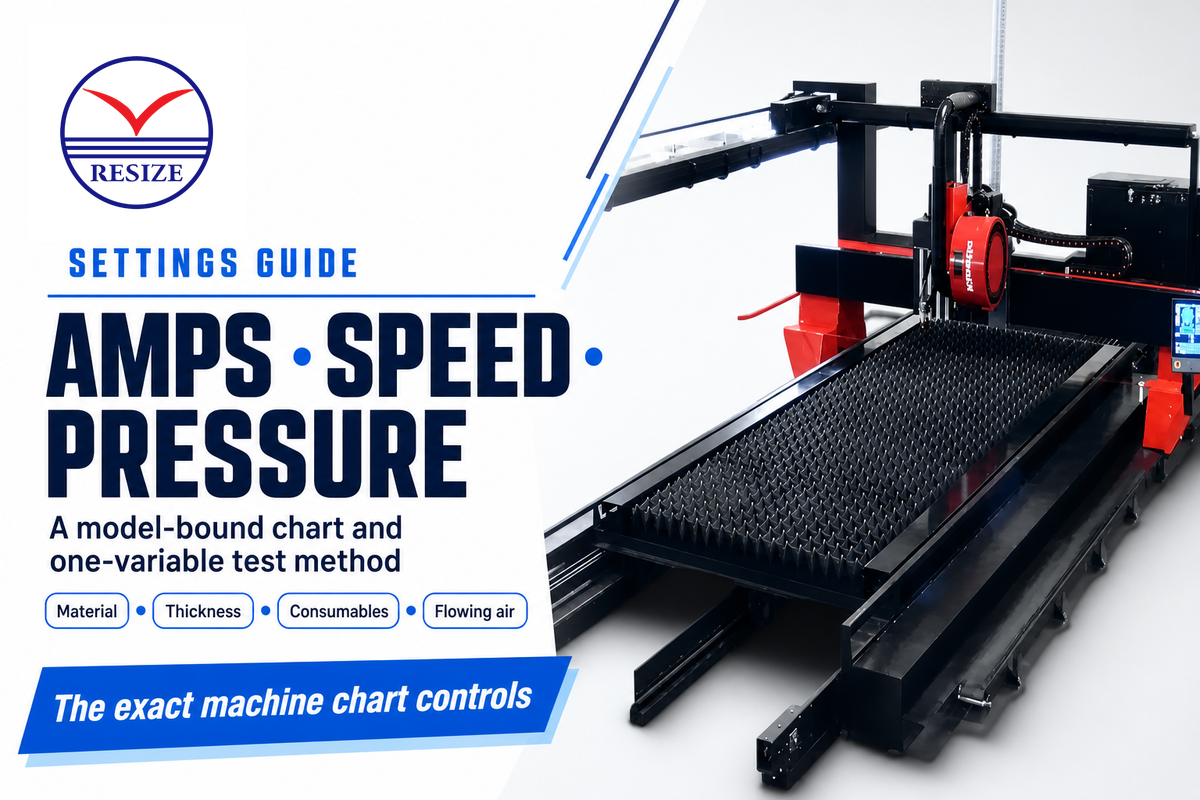
Plasma cutting is an industrial practice that employs a fast flow of ionized gas (plasma) to slice through electrically conductive materials, namely steel, aluminum, and copper. This technique is recognized for its fast cutting and accurate results, making it suitable for both thick and thin materials, along with achieving excellent edge finishes.
The main benefits of this method are, to mention the least, rapid cutting rates, thickness pierce ability, and efficiency in operation. Therefore, plasma cutting has become common in manufacturing, fabrication, and automotive industries due to its capability to create clean and exact cuts with little material deformation.
Fast Cutting Speed
Rapid processing of thick materials
Cost-Effective
Lower operational and equipment costs
Thick Materials
Excels at cutting heavy-duty metals
Key Differences Between Laser and Plasma Cutting
Laser cutting uses a concentrated laser beam to melt or vaporize the material, giving exceptional accuracy and the possibility to cut thin materials in very elaborate shapes. It is perfect for sectors that need detailed work and very little kerf width, e.g., electronics or jewelry making.
In contrast, plasma cutting employs a gas that can conduct electricity to form a plasma arc, which is great at cutting thick, electrically conductive metals like steel and aluminum quickly. Although laser cutting is typically more costly and slower with thicker materials, plasma cutting is economical for heavy-duty works but, at the same time, less appropriate for intricate tasks.
Technical Specifications Comparison
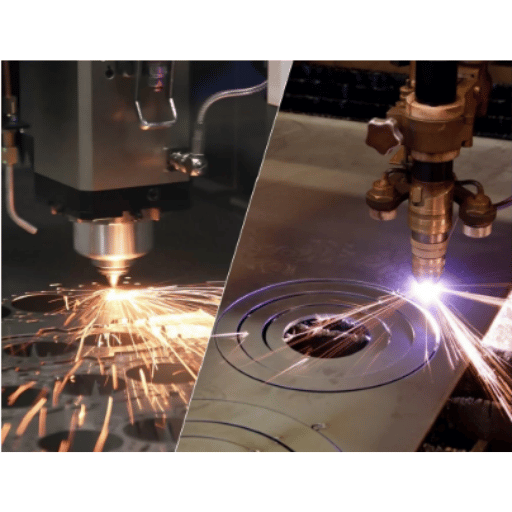
How Laser Cutting Works
🔬 The Laser Cutting Process
Laser cutting is an accurate and effective method that utilizes a focused laser beam to melt, burn, or vaporize the material along the predetermined path. The beam, which is usually controlled by a computer system, makes it possible for complex designs and detailed cuts to be made with very little material waste. This technique can be applied to a wide range of materials, such as metals, plastics, and wood, and provides smooth edges and excellent precision, thus needing little or no secondary finishing.
How Plasma Cutting Works
⚡ The Plasma Cutting Process
Plasma cutting is an operation that makes the most of a fast jet of ionized gas, or plasma, to cut through electrically conductive materials. The gas is heated to very high temperatures thus producing plasma which is then focused through a tiny nozzle at the cutting zone. This method of cutting is very effective because it instantly melts and drops the material letting cuts be made on metals such as steel, aluminum, and copper quickly and accurately. The popularity of plasma cutting is based on its being fast, precise, and handling thick materials.
Comparison of Cutting Technologies
In the comparison of various cutting technologies, plasma cutting is the winner regarding speed, precision, and the ability to work with electrically conductive, thick metals like steel and aluminum. While laser cutting gives extremely high precision and spotless edges, it is less suitable for thick materials and is usually slower.
Waterjet cutting is very different from these as it is not only versatile but also the slowest and most expensive method while being able to cut a wide variety of materials including non-metals. The final decision on technology will be based on the material, precision requirements, and project budget.
📊 Technology Selection Guide
- Choose Laser Cutting if: You need extreme precision, work with thin to medium materials, require intricate designs, or process non-metal materials
- Choose Plasma Cutting if: You work with thick conductive metals, prioritize speed over extreme precision, need cost-effective solutions, or handle large-scale industrial projects
- Choose Waterjet Cutting if: You need to cut heat-sensitive materials, work with non-conductive materials, require no heat-affected zones, or need maximum versatility
Cost Analysis
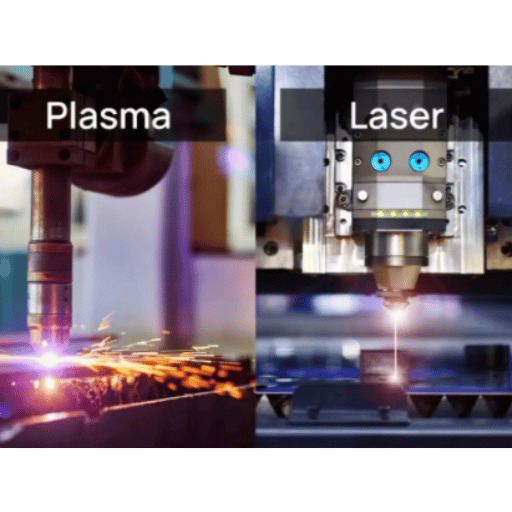
Comparative analysis of plasma cutting and laser cutting gives rise to several cost-related issues, such as equipment, operational costs, and maintenance.
1. Equipment Costs
The initial investment for plasma cutting machines is usually lower than that of laser cutting machines, so they are seen as a cost-effective choice for companies with limited budgets. Nonetheless, the incredible precision and versatility of laser cutting machines might be a reason to consider the higher initial investment in the case of application of such machines.
2. Operational Costs
Plasma cutting is universally accepted as the less expensive process among others, in that it consumes less power and materials. Laser cutting brings the opposite situation, where sometimes it can indeed be less power-consuming during the processing of thin materials, yet at the same time its operational expenses are escalating for thicker materials or specialized tasks.
3. Maintenance Costs
Plasma cutting systems regularly need the replacement of consumables such as nozzles and electrodes, so they contribute to ongoing costs. Laser cutting systems, while in some cases low-maintenance, involve higher costs when repairs or specialized upkeep are needed.
In conclusion, the selection will rely on the specific task requirements, namely the type of material, cutting precision, and volume, since these factors have a significant impact on cost-effectiveness in both short and long run.
Upfront Equipment Costs
In terms of initial equipment costs, plasma cutting systems are most often the least expensive ones to buy and get up and running. They are perfect for people who have a small initial investment but still need good cutting power. Laser cutting systems, in contrast, require a much larger initial outlay because of the sophisticated technology and precision offered. Although this investment is quite considerable, it may be warranted for operations where fine detailing and top accuracy are the main concerns.
Operational Expenses
When it comes to operational expenses comparison, plasma cutting systems usually have less expensive running costs. These machines work with compressed air or a mixture of gases, which are usually cheaper to run and maintain. On the other hand, laser cutting systems, although they are more energy-efficient sometimes, can still have higher operational costs due to the need for special gases, frequent maintenance, and replacement of parts such as laser tubes or optics. Think about the particular needs and size of your operation to find the cheapest solution.
Maintenance Requirements
When assessing the maintenance needs, plasma cutting systems usually need less frequent servicing because of their simpler construction and smaller number of specialized components. However, laser cutting systems require regular maintenance which includes optics cleaning, laser source replacement, and gas consumables performance optimization. Taking into account the availability of skilled technicians and replacement parts costs can aid in selecting the system that will best fit your operational requirements while reducing downtime and maintenance expenses.
Material Suitability

In terms of material suitability, plasma and laser cutting have different advantages that depend on the type of material used. Plasma cutting is the best option for thicker metals such as steel and aluminum, giving excellent accuracy at higher speeds. However, laser cutting is the best option for thin materials, providing unmatched precision and smooth edges, thus it is perfect for intricate cuts on stainless steel, carbon steel, and non-metals like acrylic or wood.
At last, the decision rests on the material thickness, type, and the extent of precision required for the task.
Materials Best Suited for Laser Cutting
✨ Ideal Materials for Laser Cutting
Laser cutting can be used primarily on materials that need precision and perfect edges. In this category fall thin slices of stainless and carbon steel along with acrylic, plywood, MDF, and fabrics which are nonmetals. In fact, the process is excellent for complicated designs and situations needing precision.
- Thin stainless steel and carbon steel
- Acrylic and plastics
- Plywood and MDF
- Fabrics and textiles
- Non-metal materials requiring precision
Materials Best Suited for Plasma Cutting
⚡ Ideal Materials for Plasma Cutting
Plasma cutting works wonders when it comes to conductive metals – steel, stainless steel, and aluminum, especially the thick ones. It’s a perfect match for the cases where cut speed on strong materials is a prime requirement and it has been widely adopted by the manufacturing, building, and car production sectors.
- Thick steel and stainless steel
- Aluminum (all thicknesses)
- Copper and brass
- Other electrically conductive metals
- Heavy-duty structural materials
Comparing Material Compatibility
In evaluating the compatibility of materials, laser cutting is remarkable when it comes to non-metal materials like plastic, wood, and textiles, providing accuracy and smooth edges. In contrast, plasma cutting is the best choice for metals that conduct electricity like steel and aluminum, especially for thick materials that are going to cut quickly and efficiently. Although both techniques are suitable for the purpose, the decision is mainly influenced by the kind of material and the particulars of the project.
Industry Applications

Both laser and plasma cutting technologies serve different industrial sectors based on their unique capabilities and requirements. Understanding where each method excels can help businesses optimize their manufacturing processes.
Laser Cutting Applications
Laser cutting is a technique that is very often used in industries demanding high precision and detailing in the smallest of details. Main applications are in the production of parts for the aerospace, automotive, and electronics sectors. It also finds its use in custom fabrication, signage production, and medical device manufacturing where detailed cuts and smooth edges are of utmost importance.
- Aerospace: Precision components and lightweight structures
- Automotive: Interior components and detailed parts
- Electronics: Circuit boards and micro-components
- Signage: Custom lettering and decorative elements
- Medical Devices: Surgical instruments and implants
- Jewelry: Intricate designs and engravings
Plasma Cutting Applications
Plasma cutting is primarily used for heavy-duty work in construction, shipbuilding, and industrial manufacturing. It is the best way to cut thicker materials such as steel and aluminum which makes it good for making large-scale structural components, machine parts, and heavy equipment repair.
- Construction: Steel beams and structural supports
- Shipbuilding: Hull plates and heavy metal sections
- Manufacturing: Large-scale metal fabrication
- Automotive Repair: Body panels and frame modifications
- Heavy Equipment: Repair and maintenance work
- Metal Fabrication: Industrial components and machinery parts
Combining Techniques
Certain sectors make use of laser and plasma cutting together as a way of fulfilling different production requirements. For instance, a producer might opt for laser cutting technique to produce accurate parts and the plasma cutting to obtain strong structures thus gaining both efficiency and flexibility.
🏭 Manufacturing Sector
The selection of the cutting method in the manufacturing industry mainly relies on the particular needs of the project. Laser cutting is preferred due to its accuracy, and it is usually applied to delicate designs and thin materials, whereas plasma cutting is chosen for its quickness in working with heavy, thick materials. When manufacturers use these methods together, they get versatility and can produce a wider range of products, thus improving their processes regarding both precision and durability.
🚗 Automotive Industry
The automotive sector leverages both laser and plasma cutting methods based on the precise specifications of the parts being made. Among the various advantages of laser cutting, its high precision is a major factor that makes it the best choice for delicate parts and lighter materials that are used in small components and interiors of cars. On the other hand, plasma cutting is more applicable to the thick, heavy-duty materials used in the making of chassis and other structural parts, where quickness and strength are the main attributes.
🏗️ Construction Applications
In the building sector, laser and plasma cutting methods are both in use to comply with different project needs. Laser cutting is very good at carrying out detailed tasks like making decorative elements, precision brackets, and custom fixtures. Plasma cutting, in contrast, is chosen because of its capacity to work with thick and heavy-duty materials such as steel beams and structural supports. These two techniques together provide precision, fast processing, and versatility, which are the major characteristics of contemporary construction projects.
Reference Sources
- Tymetal – Comparing Laser Cutting vs Plasma Cutting: It clarifies the differences in accuracy, compatibility with materials, and application areas for both cutting technologies.
- Industrial Metal Supply – Comparing Laser & Plasma Metal Cutting Services: Mentions the factors that make laser cutting the best option for intricate cuts in industries such as electronics, medical, aerospace, and automotive.
- Xometry – Laser Cutting vs. Plasma Cutting: Compares in detail cutting speed, materials used, and cost for laser and plasma cutting methods.
- LS Manufacturing – Is Plasma Cutting Cheaper than Laser Cutting?: Looks at the economic factors affecting laser and plasma cutting’s cost in various scenarios.
- Hypertherm – Plasma Cutting vs Laser Cutting: A Guide: Shares the knowledge that plasma is more effective with less precision, and laser is more suitable for precision work.
Frequently Asked Questions (FAQs)
🎯 Making the Right Choice
Selecting between laser cutting and plasma cutting ultimately depends on your specific project requirements, budget constraints, and long-term production goals. Laser cutting offers unmatched precision and versatility for thin to medium materials and complex designs, while plasma cutting provides cost-effective, high-speed solutions for thick conductive metals and heavy-duty applications. By carefully evaluating your material types, thickness requirements, precision needs, and operational costs, you can choose the cutting method that maximizes efficiency and quality for your manufacturing operations.