Choosing the right method for precision cutting in manufacturing and fabrication is the most important step to take for getting the best results. Laser cutting, plasma cutting, and waterjet cutting are three of the most popular techniques but each has its own characteristics depending on the material, budget, and desired result. Nevertheless, there are many factors to consider such as accuracy, cost efficiency, and material compatibility to decide which cutting method is the best fit for your project.
This article not only reveals but also explains the key differences between the cutting technologies, thus comparing their strengths and limitations so that you can take an informed decision. If you are a veteran or a newbie, this guide will put the necessary insights at your disposal to select the right tool for the task.
Introduction to Cutting Technologies
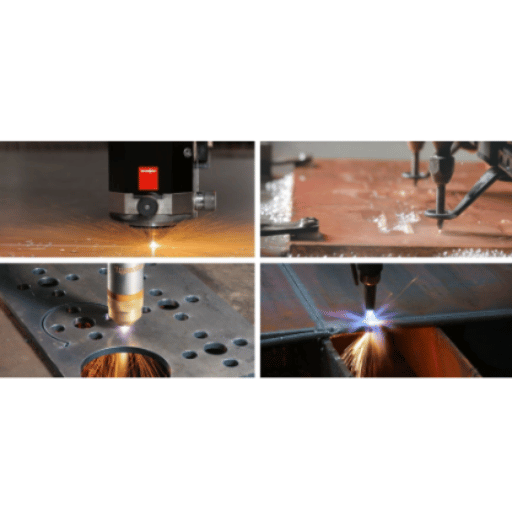
The cutting method choice will be largely influenced by the factors such as precision, cost, material compatibility, and efficiency. Amongst them, laser cutting stands as a preferred way to get cuts that are extremely detailed and accurate on thinner materials like metal, plastic, and wood etc. Precision is achieved through this method; however, it may not be suitable for thicker or very reflective surfaces.
On the contrary, plasma cutting is the method that shines brightest in this area as it deftly and quickly cuts through thicker metals, but it may not have the laser method’s finesse. Waterjet cutting, however, is still the most versatile method as it can cut a variety of materials such as metal, glass, and stone to name but a few, without affecting heat alteration thermally which would hence change the properties of the material. Each method has its own specific application, the choice of which primarily lies in the characteristics of the project material, the available budget, and the requirement for precision.
⚡ Key Factors to Consider
- Precision Requirements: How detailed does your cut need to be?
- Material Type: What material are you working with?
- Material Thickness: How thick is your material?
- Budget Constraints: What is your investment capacity?
- Production Speed: How quickly do you need results?
Overview of Laser Cutting
Laser cutting is a method that has great precision and efficiency and it is used to cut or engrave different kinds of materials such as metals, plastics, wood, and fabrics. The working principle of the process is that a high-powered laser beam is concentrated to the point of melting or vaporizing the material and the result is a cut that is smooth and very detailed.
This method is very beneficial for projects that require complicated shapes, are to be done with the least possible waste of material, and are to be done with very tight tolerances. However, it is still generally regarded as a technology with high initial investment costs, the laser cutting speeds combined with its precision makes it a perfect fit for the manufacturing, aerospace, and creative design industries among others.
Understanding Plasma Cutting
Plasma cutting is a technique that employs a rapid ionized gas (plasma) jet to sever the electrically conductive metals like steel, aluminum, and copper. The plasma beam generates an intense heat that melts the metal and simultaneously blows the molten metal away, thus making accurate and spotless cuts.
This process is capable of handling various thicknesses and is extensively applied in sectors such as automotive repair, construction, and metal manufacturing because of its high productivity, versatility, and material-agnostic nature.
Introduction to Waterjet Cutting
Waterjet cutting is a very precise and versatile way of cutting which is performed by a very powerful jet of water, mostly with some abrasives mixed, to cut through a variety of materials such as metal, glass, stone, and composites. The method does not produce any heat, thus it is perfectly suitable for those materials that are easily distorted by heat.
It is mostly used in industries such as aerospace, manufacturing, and architecture because of its advantages like low waste, high accuracy, and the ability to work with very complicated designs and fragile materials in an efficient way.
Comparing Laser Cutting vs Plasma Cutting
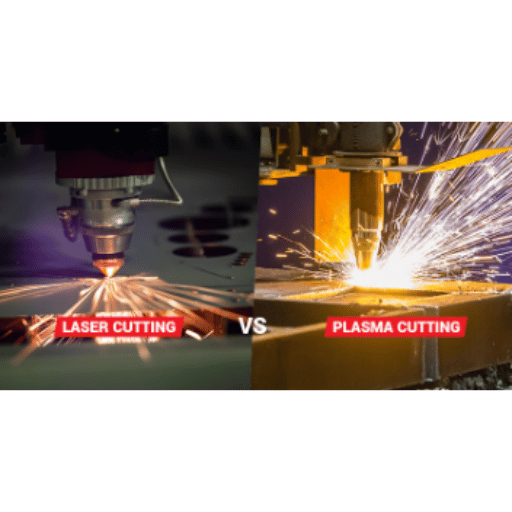
The main differences in laser cutting and plasma cutting are mainly in accuracy, materials that can be used, and price. Laser cutting offers high accuracy and is the best choice for intricate designs and thin materials, i.e., metals, acrylics, and plastics. However, plasma cutting is the most economical among all and is suitable for cutting thick and electrically conductive materials like steel and aluminum.
Even though laser cutting provides very clean edges with hardly any post-processing, plasma cutting is quicker in the case of large jobs. The choice of the process to use depends on the project conditions, including the complexity of the design, the material type, and the budget.
Key Differences Between Plasma and Laser Cutting
Advantages of Laser Cutting
✓ High Precision
Laser cutting offers vast precision that suits very complicated and detailed designs and patterns very well.
✓ Versatile Material Use
Metal, plastic, wood, glass, and many other materials can be processed.
✓ Minimal Material Wastage
Laser cutting guarantees accurately cutting, hence no waste and more efficient use of materials.
✓ Clean Edges
The cutting process is so smooth and the quality of the edges is so high that no further processing might be needed.
✓ Automation Compatibility
It can be very easily combined with computer-controlled systems for high-efficiency and consistent production.
Advantages of Plasma Cutting
✓ Speed and Efficiency
Among all cutting methods, plasma cutting is the quickest method and considerably faster for thick metal sections.
✓ Versatility
Plasma cutting is capable of processing several kinds of conductive metals, including, amongst others, steel, aluminum, and copper.
✓ Precision
It offers clean and precise cut lines that can sometimes be only minorly polished or processed.
✓ Cost-Effectiveness
It has very low running costs as a result of high-speed cutting and less material being wasted.
✓ Portability
Most portable plasma cutter machines are compact and can be carried to different sites giving them a great deal of flexibility concerning on-site projects.
Cutting Precision and Quality
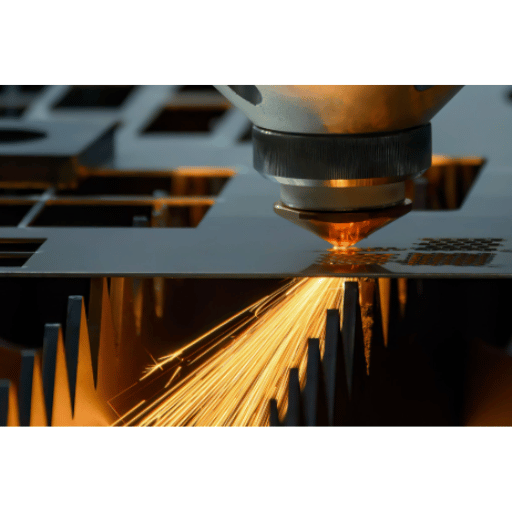
Laser cutting, when it comes to cutting precision, is the best option for complex patterns and delicate materials, leaving very smooth edges and high standards of detail. The concentrated laser ray reaches the lowest kerf width and practically no finishing is required afterwards.
Conversely, plasma cutting is a thousand times faster and more productive than laser cutting when it comes to working with thick steel or aluminum. Although it is not as detailed as laser cutting, it guarantees cuts that are suitable for industrial use and projects where accuracy is not so important.
In the end, personal preference regarding the method to be used must depend on material thickness, detail level and project objectives.
Precision in Laser Cutting
Laser cutting is characterized by very high precision and, therefore, it is cutting-edge technique for doing delicate and intricate jobs. The focused laser beam that is very powerful and very fine at the same time guarantees that the process will generate almost no material waste and have even clean edges, this even when working with very soft or thin materials. Since detail is of utmost importance in most of the cases, custom designs, electronics, and fine arts fabrication; it is laser cutting that is most frequently chosen for such applications.
Precision in Plasma Cutting
The precision and efficiency of plasma cutting are its most significant advantages, particularly in the case of thick materials. It produces sharp, accurate cuts with less slag and no distortion by the use of a high-temperature plasma arc. Therefore, the technology is widely used in industries, metal making, and work that demands uniformity and quickness along with precision.
Comparing Quality of Cuts
Each method has its own unique advantages, and the best method will depend on the specific material, design requirements, and finish desired.
Ideal Use Cases for Each Cutting Method
🔷 Laser Cutting
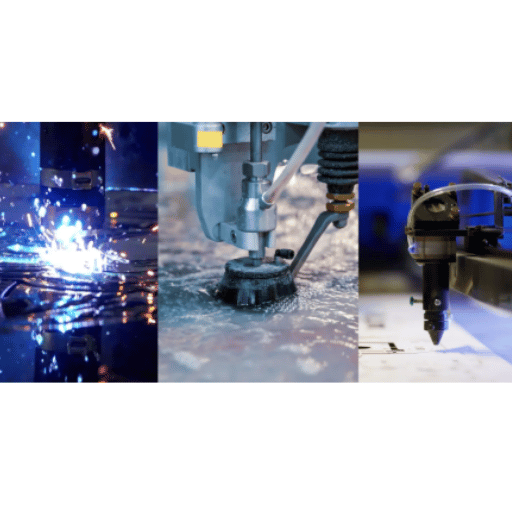
Laser cutting is a technique that can be used for different projects but its main application is in designs that call for very high precision and very detailed intricacy. It not only cuts thicker materials but also does so with great precision and only very little edge finishing taking place. This technique is predominant in industries such as electronics, jewelry, and signage where the priority is very fine detail.
⚡ Plasma Cutting
Plasma cutting is a method that is specifically made for heavy industrial work that involves the use of thick materials such as steel, aluminum and various other metals. It shines in the field of manufacturing, industrial construction and maintenance activities done fast, where the combination of durability and the ability to cut through thick materials are the main reasons for choosing this method. This technique is used when the requirement of precision is lower than that of efficiency and practicality.
Best Applications for Laser Cutting
Laser cutting is an extremely precise technique with wide application in the creation of complex designs as well as smooth edges. Besides, it is extensively applied in the aerospace, automotive, electronics, and jewelry industries for such diverse operations as cutting thin metals, making detailed engravings, and producing tailor-made parts. Moreover, it proves to be the best method for presenting signage, artistic objects, and samples where beauty and accuracy matter the most.
When to Use Plasma Cutting
Plasma cutting is the best choice for thicker conductive materials like steel, stainless steel, and aluminum, and it can easily go through these materials with fast cutting and efficiency. Heavy-duty industries such as construction, shipbuilding, and metal fabrication use it to all their advantage. Besides, plasma cutting is not just about speed but also volume and thickness, so its ability to handle high-volume production and cut through thicker materials with ease makes it very practical for large and tough projects.
Optimal Scenarios for Waterjet Cutting
Waterjet cutting is a top choice for applications that need high quality and adaptability, especially in the manufacture of heat-sensitive materials. In contrast to plasma cutting, it does not create any areas affected by heat and thus keeps the material integrity intact, making it possible for beautiful designs. It is perfect for slicing non-conductive materials, for instance, ceramics, glass, composites, and even soft materials like foam or rubber. Waterjet cutting is a technique that is widely adopted in sectors like aerospace, automotive, and artistic design where precision and material conservation are the most important factors.
Reference Sources
- Hypertherm – Plasma Cutting vs. Fiber Laser Cutting: Talks about plasma cutting benefits for thicker metal pieces and also mentions its speed against laser cutting.
- Tymetal – Comparing Laser Cutting vs Plasma Cutting: Points out the disparity in accuracy, material compatibility, and use between laser and plasma cutting.
- Prototek – How to Choose Between Laser Cutting and Plasma Cutting: Lists the materials that can be cut by each method, their speed, and energy consumption.
Frequently Asked Questions (FAQs)
📋 Final Recommendations
When choosing between laser cutting, plasma cutting, and waterjet cutting, consider your specific project requirements carefully. Laser cutting excels in precision and versatility, plasma cutting dominates in speed and cost-effectiveness for thick metals, and waterjet cutting offers unmatched material compatibility without heat damage. Evaluate your material type, thickness, budget, and precision needs to make the optimal choice for your manufacturing or fabrication project.