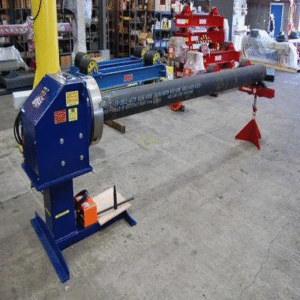
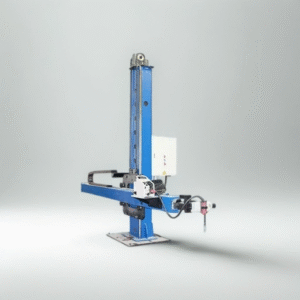
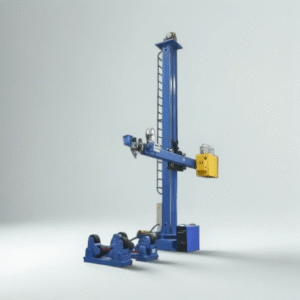
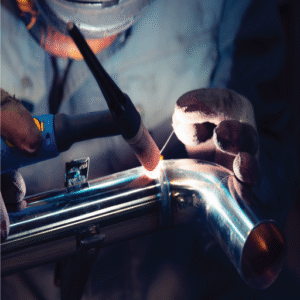
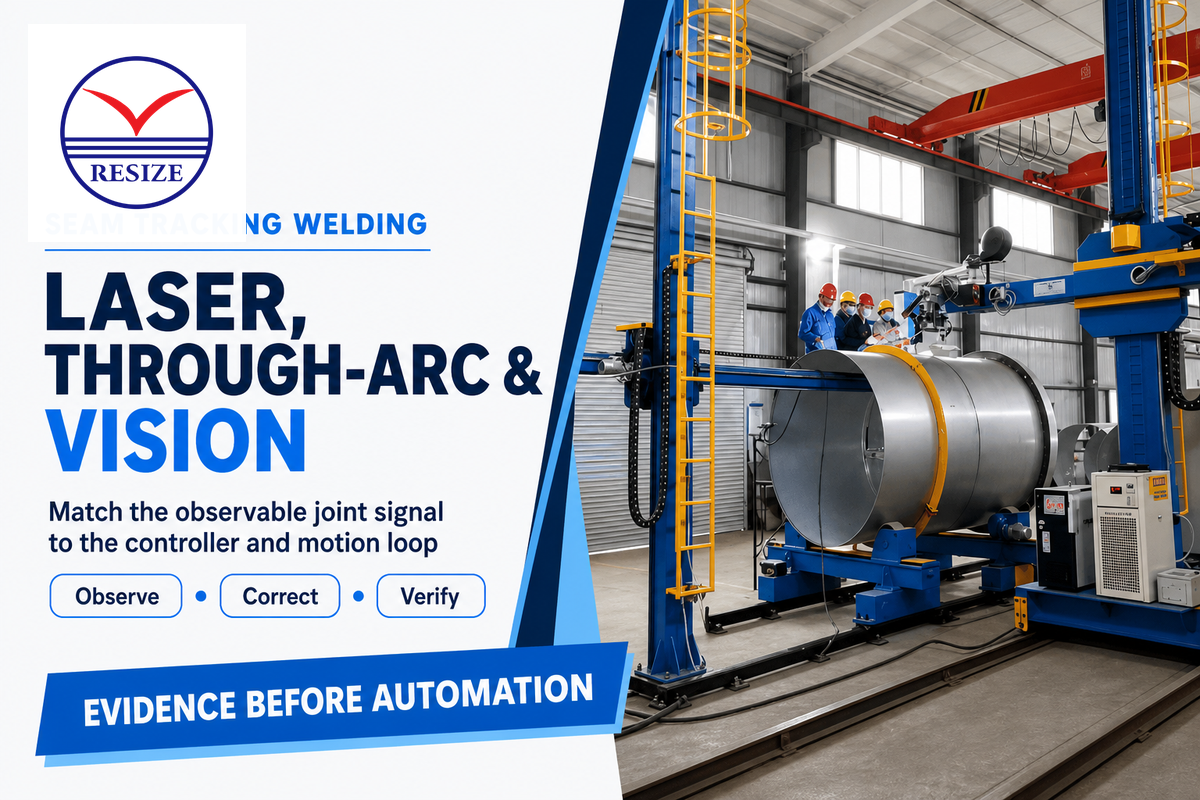
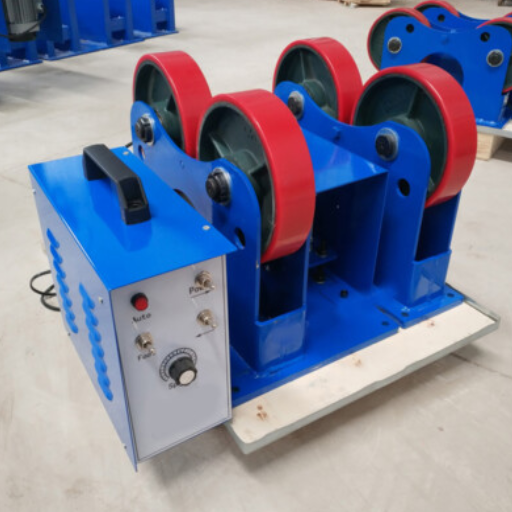
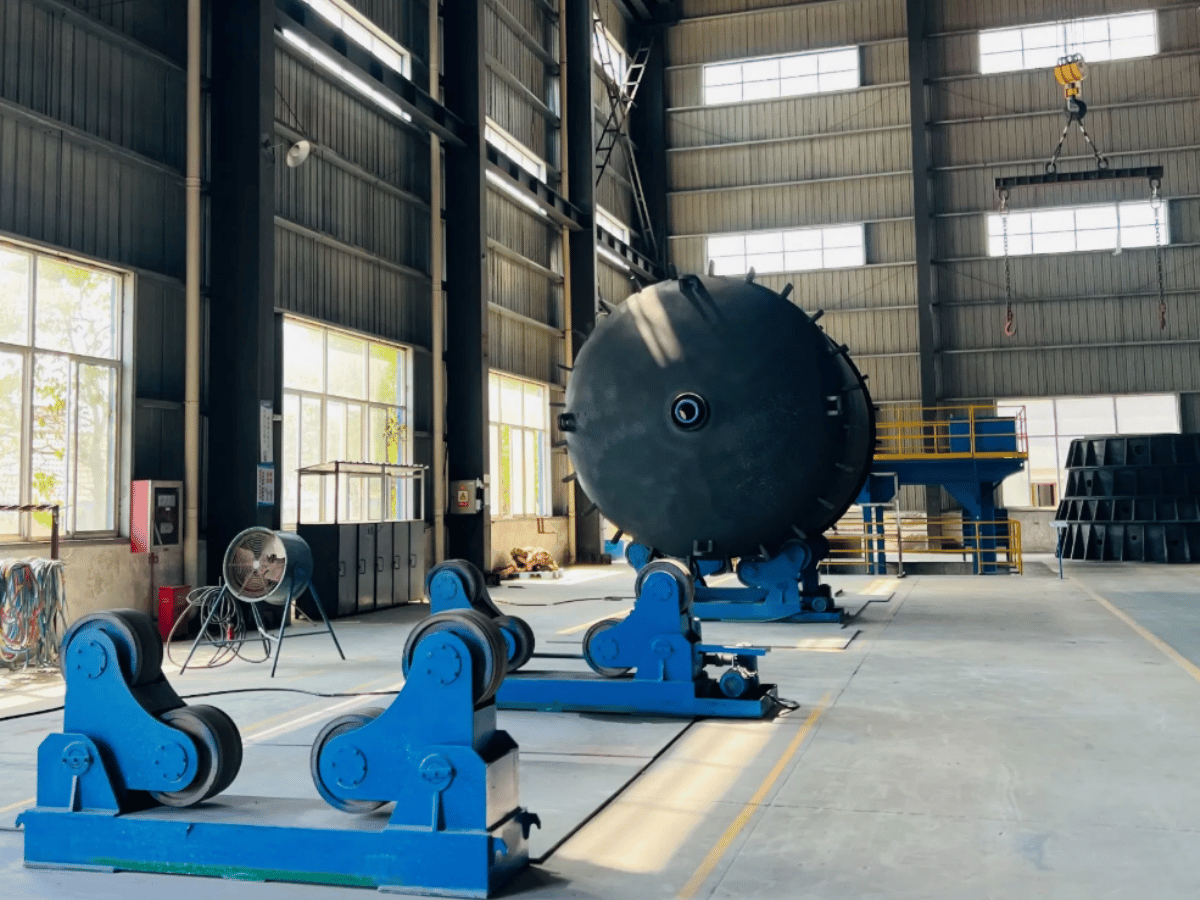
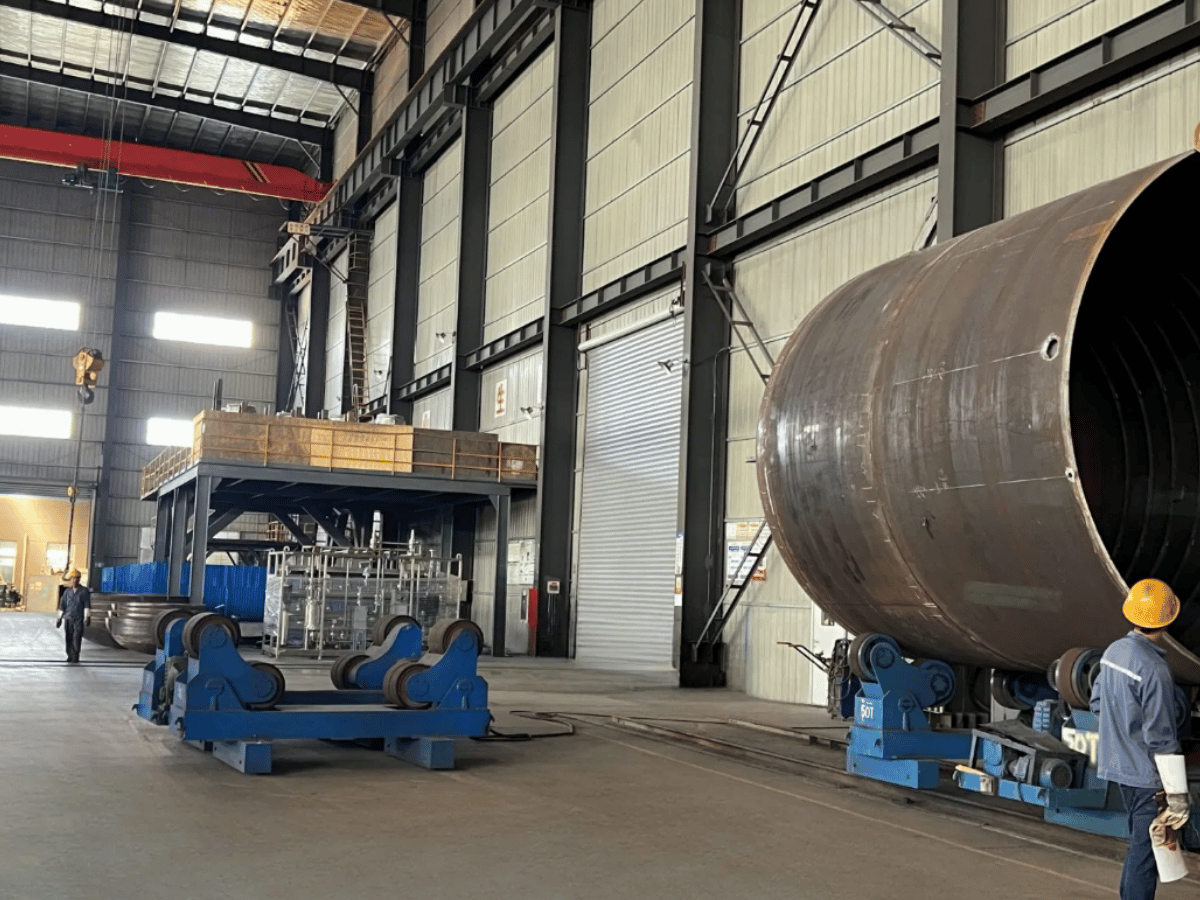
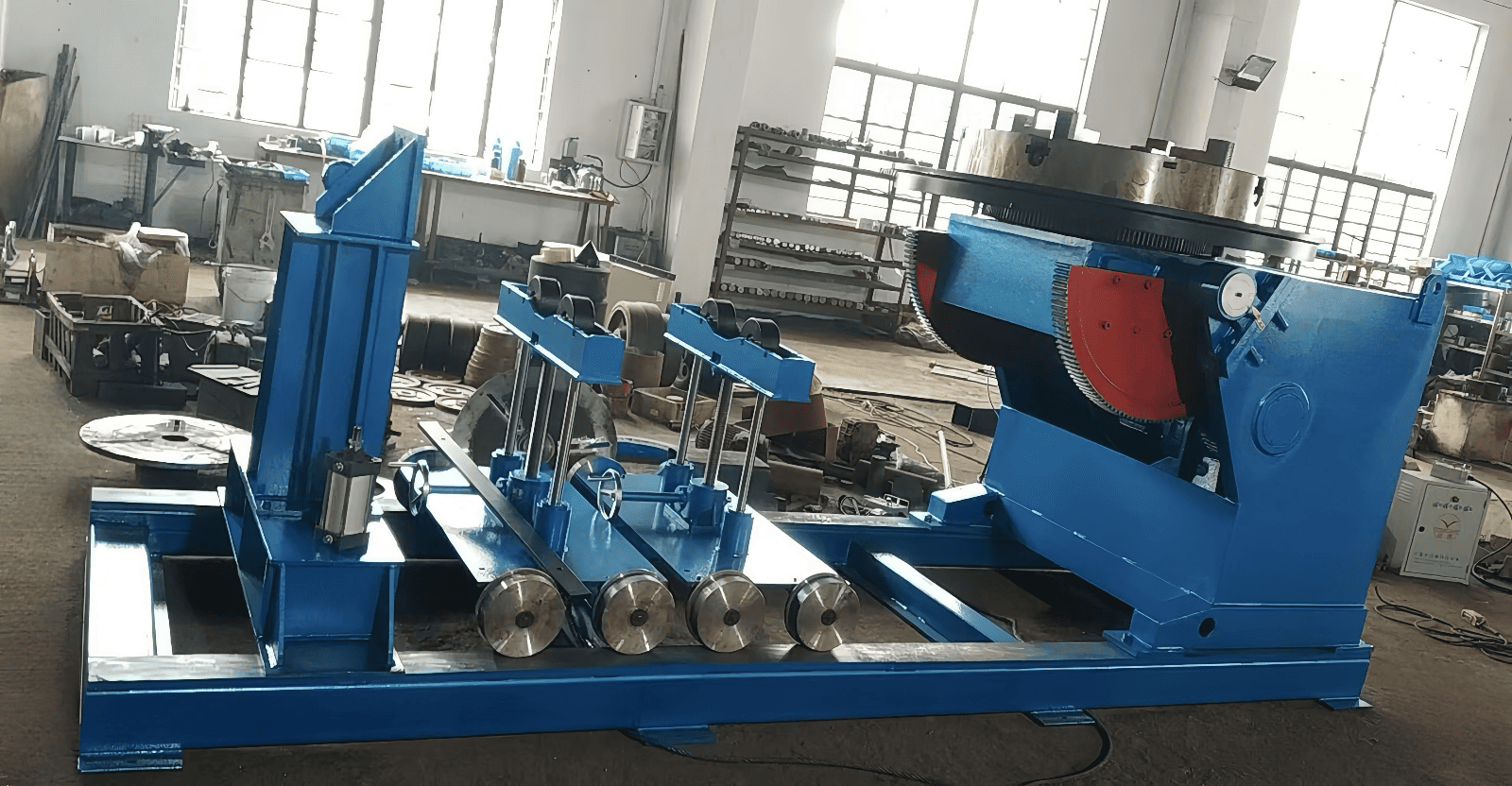
The chuck of the welding positioner plays a crucial role in achieving precision and efficiency during welding operations, while this triple jaw chuck makes headway as a basic piece of equipment for weld positioning. For pipes, spooling, flanges, and delicate work with metal, the 3-jaw welding positioner chuck will ensure stability, consistency, and better control. The present discussion would help you identify the advantages, features, and application methods themselves of the 3-jaw welding positioner chuck, preparing you to understand if it can act as a link to enhance your welding operation or even raise your productivity to newer highs. By offering readers an expansive overview of the design and the way it functions, we hope to equip them with necessary information which will help them make informed decisions related to choosing the right welding project equipment.
Key Takeaway
The 3-jaw welding positioner chuck is an essential tool for achieving concentricity and stability in cylindrical welding, significantly reducing setup time through its self-centering mechanics.
Understanding Welding Positioner Chucks
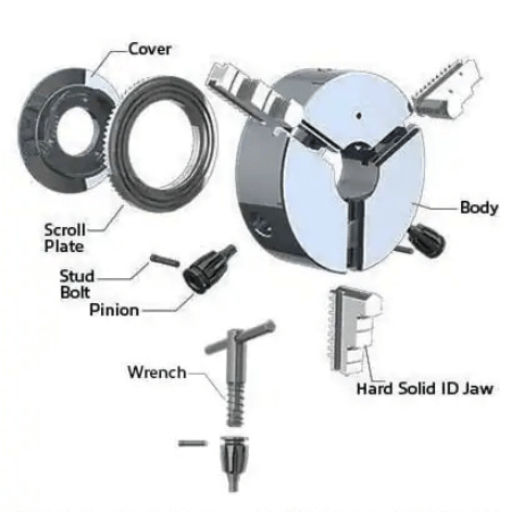
A very specialized device is welding positioner chucks. They are customized for holding contoured items or only items with symmetrical cross-sections and are also used when precise alignment is required for welding. The 3-jaw welding positioner chuck is specially made to have an extra-strong grip that firmly holds a round or symmetrical workpiece on proper alignment. The controlled rotation of chucks brings with it a high amount of flexibility for welders in their work due to working on different sides or corners of the object plus controlled angle projections, thereby causing layers upon layers of metal to be correctly deposited and joined. Their adaptability to many materials and sizes makes them highly efficient in almost every professional and hobby welding situation when one wants to be reproducible.
What is a Welding Positioner Chuck?
The welding positioner chuck is especially designed to hold securely a workpiece for welding operations. It guarantees precise positioning and stability, which maintain uniformity of weld quality while reducing the risk of operator fatigue. The chuck is usually provided with movable jaws to conform to varied sizes and shapes of the workpiece, thereby making it useful for a host of welding applications. The chuck inculcates more control over work, whilst promoting better flexibility in various procedures and fabrication processes, which boosts efficiency and accuracy in the industrial fields.
How Do 3-Jaw Self-Centering Chucks Work?
The three-jaw self-centering chuck operates on a mechanism where all three jaws move simultaneously and equidistantly towards or away from the center axis when the chuck key is turned. This synchronized motion is achieved by a scroll plate containing spiral grooves that operate the jaws’ teeth. When the key is manipulated, the scroll plate will rotate to expand or contract the position of the jaws. This structure automatically centers round work pieces, ensuring consistent orientation during it’s machining or welding process. It is perfect for industrial applications needing precisely repeated clamping.
💡
Pro Tip
Always ensure the scroll plate is free of metal shavings to maintain the accuracy of the self-centering mechanism over time.
Benefits of Using Self-Centering Welding Chucks
Self-centering welding chucks offer the highest precision where work pieces themselves are automatically aligned with the rotational axis, reducing setup time while maintaining high accuracy. This perfect alignment eliminates the need for continuous manual adjustment, increasing its utilization efficiency. Being so sturdily structured into such industrial-grade equipment, the self-centering chucks ensure convenient, tight clamping, putting an end to vibrations during machining or welding that cause severe quality finishes and material wastage at the same time. These workholding tools are universal enough to process a spread of dimensions, from small to very large, accommodating diverse industrial applications efficiently. Together they become a significant boost to the productivity of repetitive manual clamping and serve as a fatigue decaying tool for the machine operator, a key to achieve impressive as well as reliable results for a consistent and accurate task.
Types of Welding Positioners

- 1
Tilt Table Positioner
Work part rotation and tilting by the tilt table will be controlled to high accuracy. This is desirable in cases of multiangle welding needs. - 2
Rotary Welding Positioner
These positioners are for the workpiece rotation in the horizontal plane. This uniformity ensures uniform welding around circular paths and gives a guarantee on tasks like pipe welding. - 3
Headstock and Tailstock Positioner
They are suitable for long, heavy welding parts, which have support at both ends. Trapped to allow controllable rotations and stability to or during welding. - 4
Elevating Welding Positioners
They help in also providing height levels, which mainly benefits welders who work on less frequent tasks demanding compromise between ergonomic requirements and access. - 5
Fixture or Custom Positioner
Custom and fixture part positioners for every allotted application are suited to control the position where they hold each irregular shape or special type of work piece in a secured manner, improving ease of process and accuracy.
Overview of Different Welding Positioner Types
There are a number of types when it comes to welding positioners, which are beneficial to specialized tasks performed by welding. Rotary Welding Positioners allow advantageous angular rotation so that cylindrical workpieces may be more comfortably tackled. Tilt and Turn Positioners blend rotation with tilting to allow their users more functionality for welding at odd angles and increase access to inconvenient-to-reach areas. Headstock and Tailstock Positioners provide excellent support for workpieces which are heavy and/or extremely long, hence enabling greater stability. Elevating Welding Positioners include adjustable vertical movement to ensure less fatigue for the operator by improving alignment in work positions and thus making work on larger parts more achievable. On the other hand, Fixture or Customaries made welding positioners are tailor-made to sort out the peculiar needs of non-standard workpieces and so include the self-stabilizing mode and aptitude for accurate control. Each one of these types offers a certain set of solutions to particular problems with high possibilities for precision and productivity in the welding process.
Comparative Analysis: 3-Jaw vs. Other Types
The 3-jaw chuck positioner is favored for its simplicity and efficiency when dealing with symmetrical and cylindrical workpieces as pipes, bars, and round stocks. Its self-centering mechanism guarantees that the workpiece will always be placed precisely, making it best for repetitive actions and operations at high speeds. However, in comparison with the rest of the positioners, the 3-jaw positioner is inferior in terms of agility in working with irregular or asymmetrical workpieces where Fixture or Custom Positioners will serve well. Elevating Welding Positioners or Tilting Positioners are also considerations for superior flexibility and ergonomic enhancements, particularly for larger, heavier workpieces or for multiangiil welding. While the 3-jaw chuck is a good and cost-effective instrument for some selected applications, it can fall short of its capabilities when wired flexibility and nimbbleness are called for.
⚠️ Important Note
While 3-jaw chucks excel at symmetry, attempting to clamp irregular shapes can damage the scroll plate or lead to unsafe workpiece slippage.
Choosing the Right Type for Your Needs
When the perfect welding positioner is chosen around your task, three primary parameters must be taken into consideration: size and weight of the workpiece, complexity of welds required, and production volume. In the case of small, uniform parts with simple welds, a simple 3-jaw chuck may be all that is needed. However, for bigger, unconventional workpieces, or repetitive multi-position adjustments on the operating table, raising or tilting positioners can significantly improve accuracy and swiftness. Always remember to examine your-specific workflow requirements to ensure the equipment will align with your productivity goals and be ergonomic.
Benefits of 3-Jaw Welding Positioners

- ✓
Enhanced Stability: With 3-jaw welding positioners’ in-built self-centering attributes, the workpiece is held securely, which ensures few movements during welding actions. - ✓
Improved Accuracy: To have a workpiece positioned accurately through precise manipulation, which have the benefit of ensuring that the weld produced is of consistent, top-quality welds. - ✓
Versatility: Depending on the workspace, 3-jaw chuck has the potential to enclose the workpiece with a tube-like or round shape, making it multi-purpose and wide-eyed for automotive, aerospace, or manufacturing applications. - ✓
Time Efficiency: Due to its instant setup and inherently self-centering properties, this infinitely reduces any time consumed in preparing the arena and hence-cycle time to boost overall productivity. - ✓
Ease of Use: Their intuitive design simplifies operation, making them accessible for both experienced welders and those new to welding tasks.
Precision and Accuracy in Welding
Welding precision and accuracy have a direct impact on the structural properties, performance, and life span of the ultimate product. Precision means the ability to reproduce exactly the given design and dimension during welding and thus to secure uniform quality in all joints. Accuracy follows through with achieving the specified alignment, position, and dimensions within permissible tolerances. Precision and accuracy have been dramatically improved through such advanced technologies as automated welding systems, CNC controls, and real-time monitoring, eliminating human errors in executions. Proficiency in these matters is indispensable for the satisfaction of strict industry norms and achieving high-quality work results related to aerospace to heavy machinery applications.
Efficiency Improvements in Welding Operations
In order to make welding operations efficient, various interventions can be attempted: advanced automation, optimized workflows, and thorough training of operators. Technologies such as fully robotized welding systems and the automation of electrodes use programmable logic controllers (PLCs) to exceedingly lower cycle times and raise productivity through uniformity and precision. Besides all such hurdles, lean manufacturing principles can be used to eliminate non-value-adding processes that can waste time and spoil the environment. Operator education should cover training on advanced automation equipment, reading data from real-time health monitoring systems, and identifying an area in which systemic enhancements need to be included. Expressed together, such strategies substantially enhance performance and maintain the highest quality standards.
Cost-Effectiveness of Using Welding Positioners
The use of welding positioners improves cost-effectiveness significantly, due to optimizing productivity, reducing labor costs, and lessening material waste. These machines allow for precise manipulation of workpieces, making welders complete tasks faster and to high quality. Positioners inevitably result in better access to weld joints and reduce n productive labor hours that would have gone into repositioning. To top this, better ergonomics and constant welding angles make path for fewer defects. This directly equates to further decreases in rework or scrap costs. Over a period, they ensure increased throughputs and reduced operational costs for manufacturers’ investments.
Applications of Welding Positioner Chucks

Welding chucks with positioner are widely used in distinctive industrial applications to achieve operational precision and productivity. The main applications are:
- •
Pipe and Tubing Welding: Ensures the weld consistency through ratcheting the tubes and pipes when welded. - •
Automotive Manufacturing: Helps in precise positioning for the welding of exhaust pipes and frame parts during component assembly. - •
Aerospace Components: Reliable mounting for extremely sophisticated aerospace parts requiring very high-quality welds. - •
Construction Equipment: Once the chucks are precisely adjusted, one may carry out welding of larger structural members such as beams and frames and other products that aid in manufacturing efficiency. - •
Oil and Gas Industry: Provides proper mounting and rotation during welding in the fabrication and manufacture of pipelines and pressure vessels.
Remarkably, these few broad applications go a long way toward underlining the fact that welding positioner chucks stand as workhorses in industries stressing tight margins of exactitude and performance.
Industries Utilizing Welding Positioners
| Industry Sector | Primary Usage |
|---|---|
| Automotive Manufacture | Enhanced safety and efficiency for welding components like exhaust systems and frames. |
| Aerospace | Precise positioning of complex assemblies and high-strength critical applications. |
| Construction | Fabricating heavy structural elements like girders, beams, and large frames. |
| Oil and Gas | Accurate welding of pipelines, pressure vessels, and storage tanks. |
| Shipbuilding | Fast assembly of large hull sections and critical maritime components. |
Welding positioners serve in industries to ensure high productivity, development and compliance with strict product standards, and improvement of manufactural facilities.
Specific Use Cases for 3-Jaw Welding Positioners
3-jaw welding positioners assist in situations requiring precision, stability, and a significant level of efficiency. They are widely used in creating cylindrical components for instances such as pipes, drums, and flanges, which demand highly accurate rotation and alignment. Another area where these positioners are involved is in the manufacturing of symmetrical workpieces, which guarantees a constant welded surface on pressure vessels or in the aerospace sector. They are also a quite frequent sight in an automated welding system where multiple instances of welding are to be perpetuated for efficient productivity and elimination of human error. By and large, the 3-jaw welding positioner enables great job security while offering excellent programming and good configuration for its workpiece.
Integration in Welding Automation
The inclusion of 3-jaw welding positioners into welding automation systems results in a multitude of advantages concerning operation effectiveness. Need it be introduced that these positioners are key components in automated configurations and assure the task alignment and workpiece rotation with tremendous accuracy for consistent welding capabilities? Their integration with automated machines, whether robotic arms or advanced PLCs, provides extremely efficient running times, where minimum downtime provides faultless production capacities. Moreover, the ability to standardize repetitive welding tasks ensures accuracy in processes and also benefits in cutting down production costs, therefore rendering welding positioners as key resources for all types of modern automated manufacturing setups.
Reference Sources
- Recenter Weld: The use of three-jaw universal self-centering chucks for the welding positioners are discussed at hand, which in turn already ensure better accuracy and speed.
- Motion Index Drives: Discusses burners along with different sequences regarding their applications and the configuration for complete rotation of bulky, cumbersome stock during welding.
- Senlis Weld: Justifies the need for welding chucks on welding rotary operations without mentioning their incorporation in welding positioners, turntables, and other equipment.
Frequently Asked Questions (FAQs)
What is the welding positioner chuck?
The welding positioner chucks are set in place to clutch and rotate the workpiece during welding to ensure precision and stability.
What are the advantages of using welding positioner chucks?
The use of such chuck allows accurate welding, less operator fatigue, and increased efficiency as the workpiece gets rotated as desired.
What types of welding positioner chucks are offered?
Typical chuck designs include 3-jaw chucks, 4-jaw chucks, and self-centering chucks, with each type catering to a specific kind of application.
Which welding positioner chuck should I buy?
The right selection will depend on the size and shape of the workpiece, the welding process being used, and the required level of accuracy.
Which sectors employ welding positioner chucks?
The use of welding chucks in the automotive, aerospace, construction, and manufacturing industries is indeed beneficial to these industries.