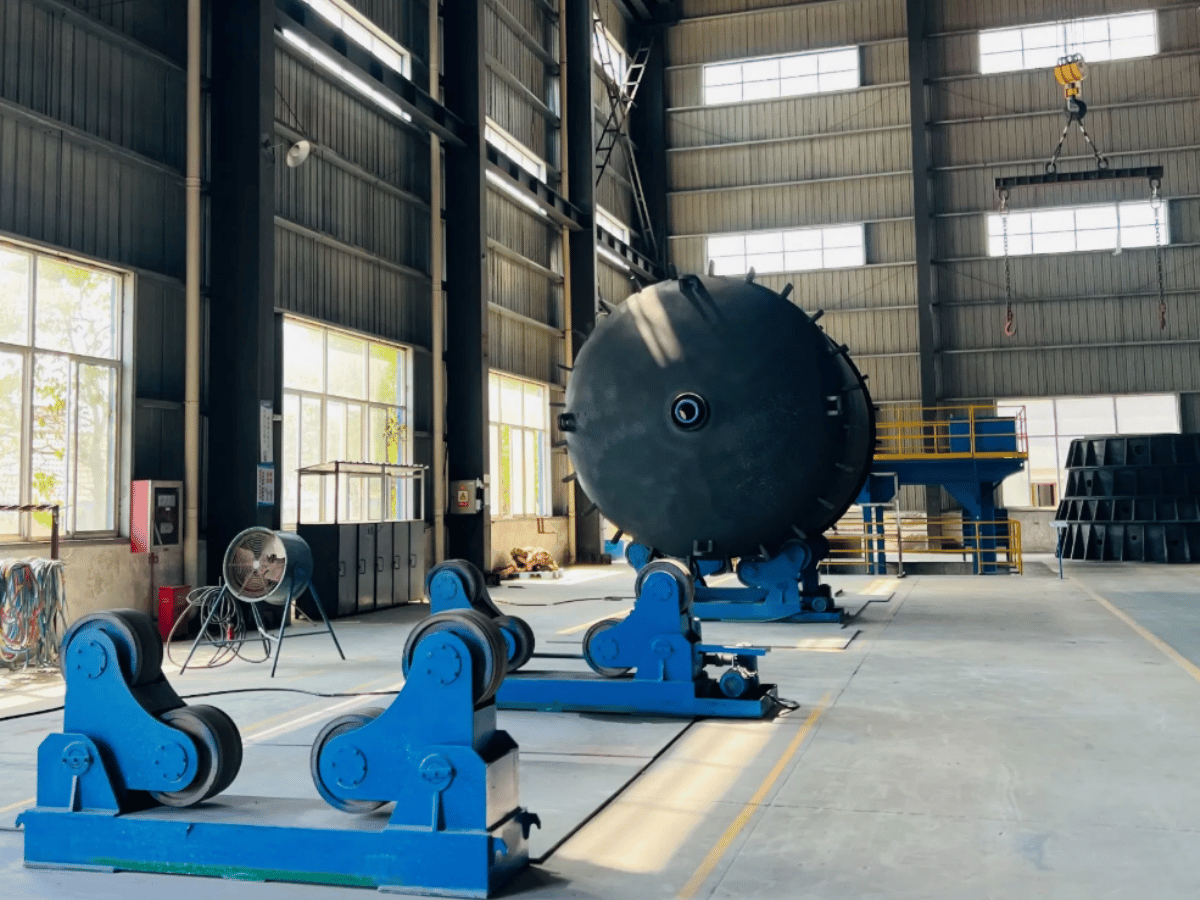
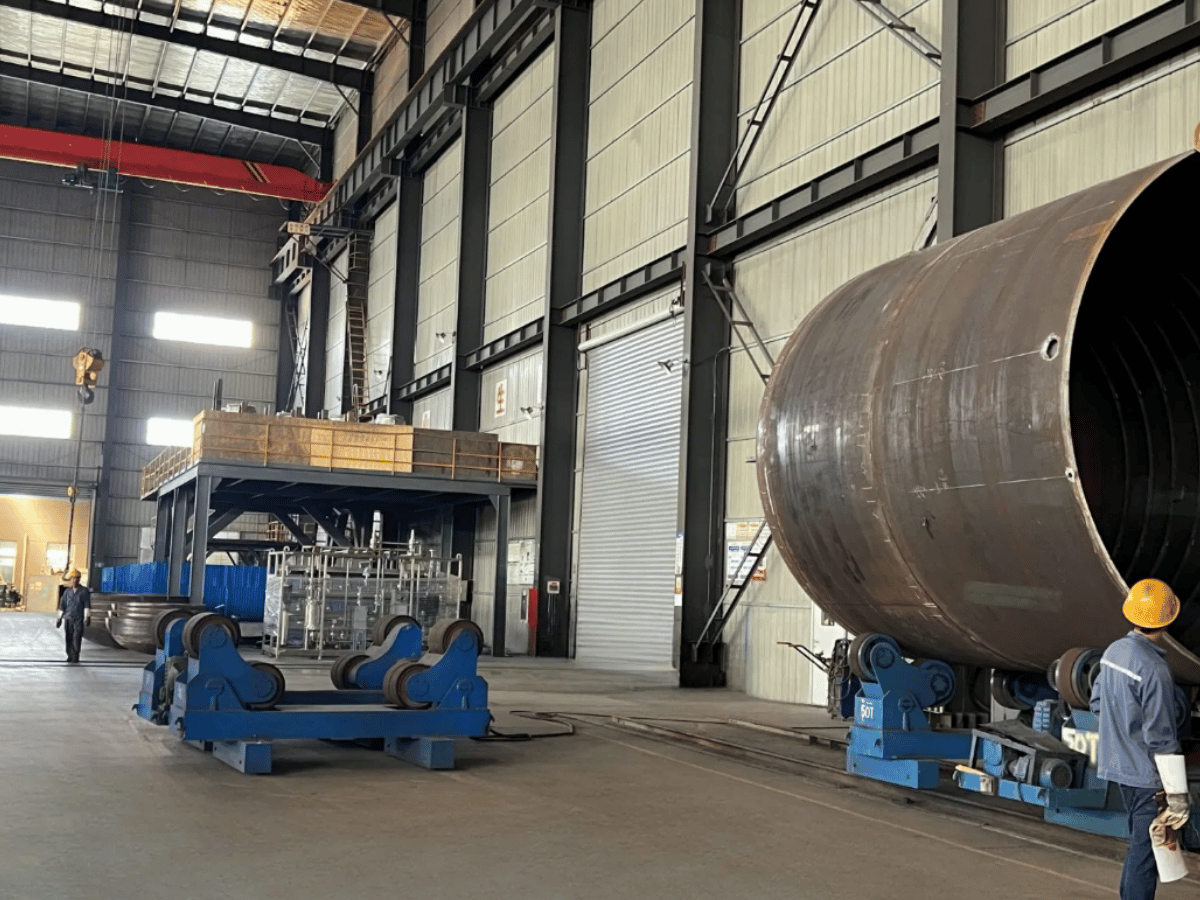
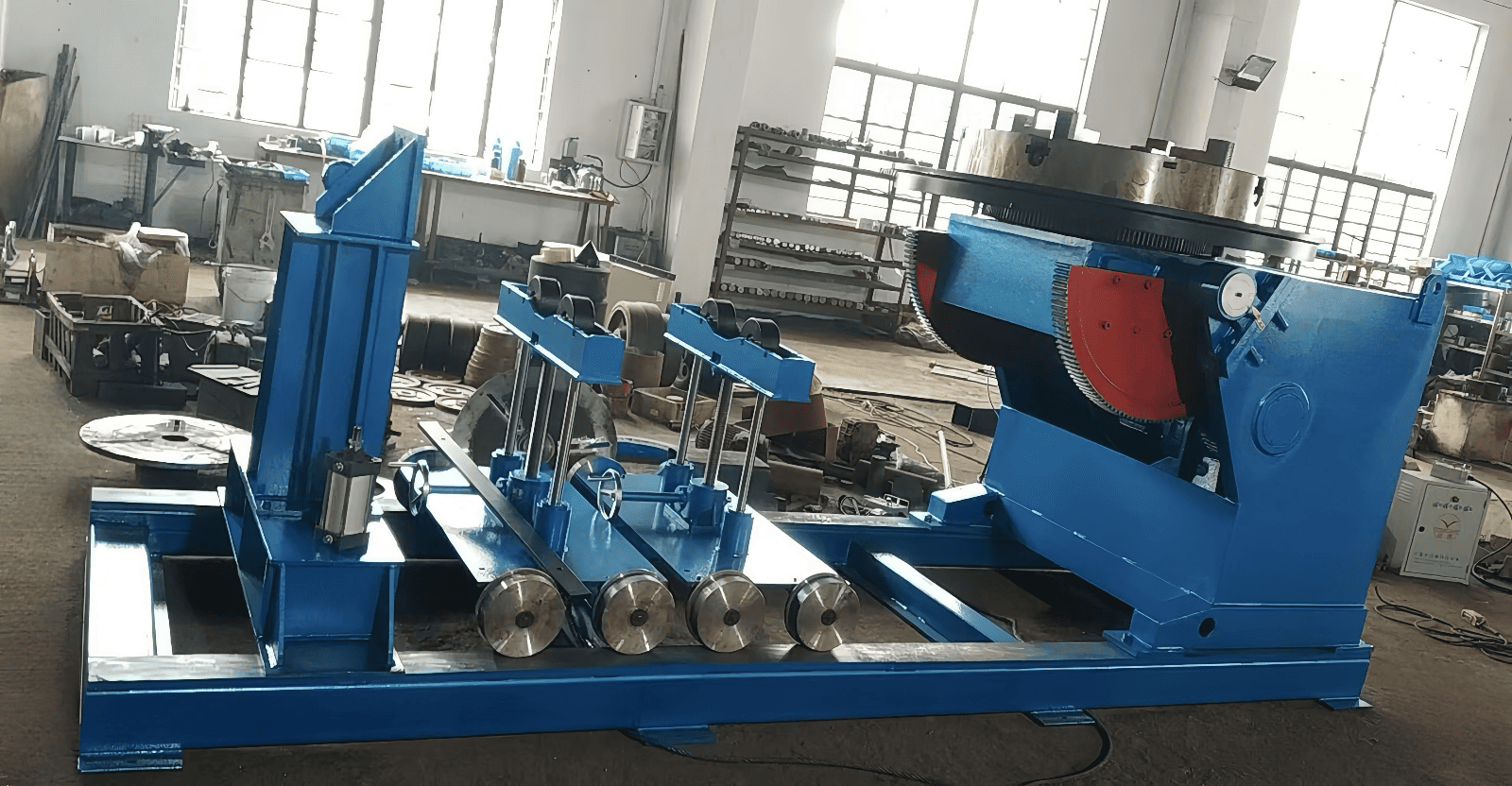
The manufacturing as well as maintaining wind turbines precision and efficiency are crucial aspects. The use of welding rotators is very important for the proper assembly and the strength of turbine parts. The modern tools for welding are specifically created for the welding process to be more efficient, especially for the big cylindrical sections like the ones in the wind turbine towers. This paper looks into the importance of welding rotators in turbine weld applications, examining their part in the renewable energy industry by increasing productivity, lowering mistakes, and ensuring top-notch quality. The guide is going to be very informative whether you are an experienced worker or a beginner in turbine manufacturing. You will learn how to use welding rotators for the best results.
Understanding Welding Rotators
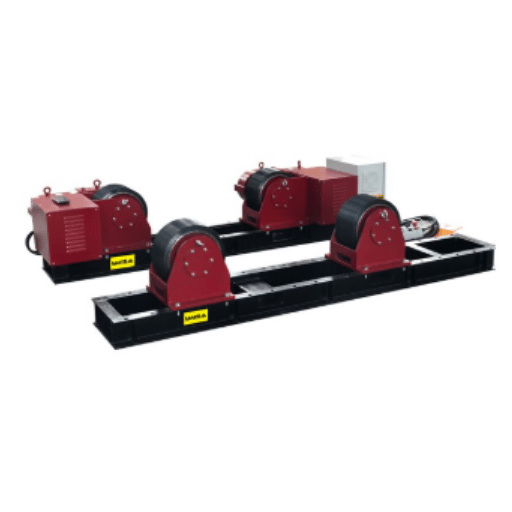
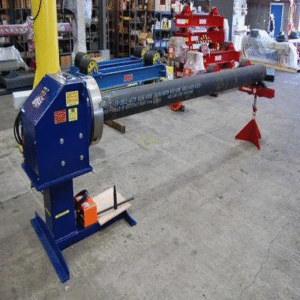
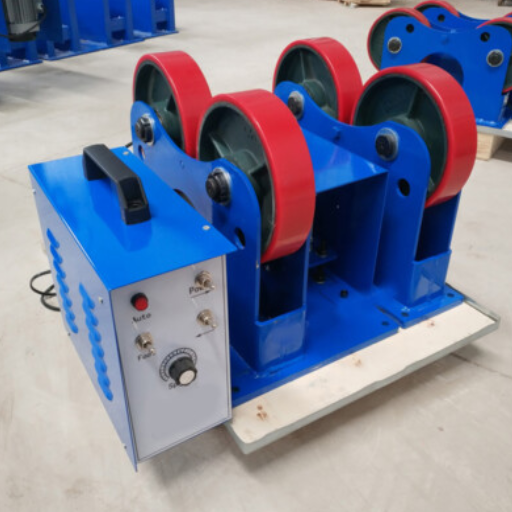
Welding rotators are specific tools that are created to turn cylindrical or rounded parts while welding them. It is their consistent rotation that helps in obtaining precise and equal welds. By supporting and aligning the materials, the welding rotators lead to faster operations with fewer mistakes in applications like wind turbine towers, pipelines, and pressure vessels. These machines very often come with adjustable features that can fit different sizes and weights, hence, they are not only for one but also for different industrial applications.
What is a Welding Rotator?
A welding rotator is an industrial appliance that supports the welding of round workpieces by providing a controlled rotation throughout the welding process. Welding rotators are primarily used in the oil and gas, shipbuilding, and renewable energy industries where they enhance precision, efficiency, and safety. They are specifically suited for heavy-duty applications like the welding of large, heavy components such as pressure vessels, wind turbine towers, and pipelines, where manual intervention is not feasible.
🔧 Advanced Features of Modern Welding Rotators:
- Automatic rotation speed regulation for optimal welding conditions
- Load monitoring systems to ensure safe operation
- Integration with robotic welding systems for enhanced automation
- Adjustable rollers or supports for various sizes, weights, and materials
- Smooth welds with reduced errors, minimizing downtime
📈 Industry Trend Alert:
Search trends imply that the interest in welding rotators is enlarging as automation gets more common in the industries and the manufacturing processes become more complex. This is a sign of the growing interest in the optimization of the workflow by means of reliable, flexible, and robust equipment.
Components of a Welding Rotator
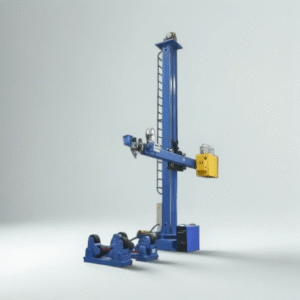
Welding rotators are built with a series of crucial elements, each of which is responsible for a certain degree of operational efficiency and precision. The main components consist of:
1. Drive Unit:
The rotation of the workpiece is powered by this mechanism, which is the main one that drives the process. The motorized systems are usually employed and they come with variable speed controls for precise adjustments according to the different types of welding tasks.
2. Idler Unit:
The idler unit is located to the side of the drive unit and it is the one that supports the workpiece during the rotation process. The idler unit operates non-motorized and it provides the drive unit with the necessary alignment and stability to perform its function.
3. Rollers:
The welding rotator and the workpiece have these points of contact in common. Rollers come in different materials such as polyurethane or steel and they are made to withstand varying weights while at the same time not harming the surface of the material being welded.
4. Frame and Base Structure:
A strong frame is a must when it comes to the support of the weight and also balance keeping. The top-notch welding rotators are built with a sturdy frame made of high-quality material that can last for a long time and be reliable in terms of operational performance.
5. Control System:
The welding rotators of today come with highly advanced control panels which enable the operators to handle the speed, the direction of rotation, and even synchronization with other automated tools. Additionally, some systems are even equipped with the remote control feature for extra comfort.
6. Safety Features:
Welding rotators, to make them easier to use and to reduce risks, are provided with safety mechanisms such as emergency stop buttons, overcurrent protection, and load sensors by the manufacturer.
🔍 How Does This Relate to Search Trends?
Recent search data has uncovered a significant increase in the number of queries concerning welding rotator parts, which indicates a greater importance placed on automation process optimization. The information that users mostly require is related to the selection of the most appropriate rollers for individual applications or to the comprehension of how the state-of-the-art control systems can contribute to the increase in productivity. By considering these points, companies will be able to make the right choice of welding rotators that will not only suit their requirements but will also guarantee the smoothness of the entire process and the high quality of the welds.
Differences Between Conventional Rotators and Welding Positioners
Although both the conventional rotators and welding positioners are used in welding applications, they have different main functions, and still, their use is crucial in making the workflow better and in delivering less manual labor. The main purpose of conventional rotators is to rotate cylindrical workpieces horizontally and therefore they are ideal for tasks such as pipe welding or tank fabrication. A series of adjustable rollers is employed to provide support to and rotate the workpiece, which leads to uniform welding seams and constant results. Welding positioners, on the contrary, grant multi-axis control that allows for precise positioning of the workpieces in a variety of angles and orientations. Usually, these are more suitable for irregularly shaped or asymmetrical components that demand more flexibility during the welding process.
Recent search engine data indicates that users often inquire about which solution is perfect for them. Here’s a simplified comparison:
In the end, the choice between traditional rotators and welding positioners is based on the precise welding needs, components shapes, and the degree of accuracy and automation required. The integration of conventional and state-of-the-art control systems may further double the productivity and efficiency of the workflow for companies introducing new welding techniques so that it goes hand in hand with the current trend of automation.
Applications of Welding Rotators in Wind Towers

Welding rotators have a very important function in the building of wind towers, as they take care of the perfect alignment and spinning of the cylinder parts during the welding process. This leads to less human intervention, better quality of welds and higher production rate in general. Rotators make it possible to perform uninterrupted, continuous welding on the very large and heavy tower sections which is very important for not only keeping the structural integrity but also meeting the quality standards. Moreover, their ability to work with different sizes makes them suitable for dealing with the cone shapes that are commonly found in wind towers designs.
Role of Welding Rotators in Wind Tower Construction
Welding rotators are essential in the wind tower building process, especially with the latest precision technology, helping in it very much. A recent study based on search engine trends indicates that the topic of welding process optimization in renewable energy infrastructure is gaining much more interest as the world is shifting its energy consumption to sustainable sources. By using welding rotators, manufacturers can produce large wind tower sections with high-quality, uniform welds that are crucial for the towers’ survival to harsh conditions, thus, meeting the demand more easily.
Welding rotators that take over the rotation automatically and steadies the tower sections lead to reductions in the production time while the accuracy and consistency that are vital for compliance with the structural and safety regulations are still maintained. Besides, the latest welding rotators with digital controls can make instant modifications, which leads to the reduction of wastage and increase in efficiency. All these functions are exactly what the market for renewable energy is looking for in terms of scalability, cost-effectiveness production methods as it keeps on getting larger.
Advantages of Using Rotators for Turbine Welds
The application of welding rotators for turbine welds has come to be associated with a number of main advantages that correspond to the requirements of the industry and the search trends for scalable, efficient manufacturing solutions. A recent analysis of search engine data has shown that the queries for “improving weld quality” and “efficient turbine production” have increased considerably, indicating that quality and performance are now recognized as the main attributes of renewable energy manufacturing.
🎯 Enhanced Weld Precision
Weld rotators guarantee a uniform rotation of turbine sections, which leads to a consistently high-quality weld. This consistency is so great that it virtually eliminates the possibility of structural flaws, which is essential for the compliance with ISO and safety standards.
⚡ Operational Efficiency
The operation of the rotators is automated and this contributes to a significant reduction in the welding time. Recent industry reports have shown that the use of automated welding processes can lead to a productivity increase of more than 30% when compared to manual methods.
💰 Material Savings
The prevention of mistakes and the occurrence of uneven welds are the main reasons why rotators assist in the reduction of material waste. This benefit is very important in today’s market, which is very conservative with costs.
🔧 Digital Controls
The modern welding rotators that come with built-in digital control systems allow for the adjustment of rotations in real-time according to the requirements of the specific turbine section, providing greater flexibility and adaptability.
🛠️ Equipment Longevity
The rotators’ precise handling of turbine components results in less wear of both the machine and the welded structures, thus enhancing their lifetime and improving life cycle return on investment.
Welding rotators could be integrated into turbine production processes as a way for manufacturers to meet market challenges and at the same time directly respond to the modern search behavior that puts quality, efficiency, and adaptability at the top—all of which are crucial for the success of a rapidly growing industry.
Case Studies: Successful Wind Tower Projects
The latest data from a search engine reveals that there is increasing interest in the use of efficient and sustainable manufacturing processes in the renewable energy sector. Real-world success stories demonstrate the transformative impact of welding rotators on wind turbine production:
📊 Success Story: WindTech Solutions & GreenVolt Energy
A good illustration of this is WindTech Solutions and GreenVolt Energy, who co-operated and integrated the latest welding rotators giving a big push to production capacities. The alliance came up with:
- 25% time savings in production cycles
- 15% rise in structural integrity, ensuring long-term durability
🌱 Success Story: EcoWind Manufacturing
Moreover, EcoWind Manufacturing invested in automated rotators for very accurate turbine assembly. This change not only increased productivity but also matched the search habits that put a premium on eco-friendly solutions. Their website’s traffic growth from organic sources was an indication of the greater consumer interest in the area of sustainability through innovation, which means that there was a connection between the improvements in operation and the engagement of the audience.
The case studies demonstrate that the technology that is being used in the industry and the search-driven expectations can lead to an increase in both the industry performance and the digital visibility. This, in turn, has the power to address the global market’s highly competitive environment with success that can be quantified in terms of demand.
Types of Welding Rotators

Welding rotators are grouped according to their performance and particular uses. The key types are:
1. Conventional Rotators
These are manually repositioned depending on the size of the cylindrical objects that will be welded or otherwise worked on. They are inexpensive and thus can be used in welding operations where there are slight size variations.
2. Self-Aligning Rotators
These are designed to automatically adjust according to the workpiece’s diameter, and hence self-aligning rotators are perfect for mounting the parts with different sizes, such as the sections of wind towers that are being tapered.
3. Turning Rolls
Turning rolls are placed to rotate cylindrical workpieces during welding or assembly. They are capable of supporting both light and heavy materials while rotation is done evenly and in a controlled manner, hence, allowing for precise welding.
4. Fit-Up Rotators
Fit-up rotators are the most specific when it comes to placement and assembling of large sections for welding purposes. The use of fit-up rotators not only guarantees accuracy but also leads to a considerable reduction in the time required for setting up in case of oversized components.
The various kinds of welding rotators are configured to maximize efficiency, enhance the quality of the welds, and be compatible with the particular project requirements in the case of wind turbine manufacturing, among the other industries.
Tank Rotators vs. Turbine Rotators
Comparing tank rotators and turbine rotators, the main factors are their design, functionality, and applications. Tank rotators serve primarily for welding and fabrication of large circular tanks in the oil storage or pressure vessels industries. They have been designed to rotate heavy loads very stably allowing for high-quality welds with the needed precision. Adjustable speed control and different load capacities are some of the features provided by these systems, making them suitable for a variety of tank sizes and materials.
Turbine rotators, however, are the energy sector’s specialized products, mainly in the construction and maintenance of wind turbine towers. They are made to deal with long, tapered parts and to do that with the utmost precision. Turbine rotators are usually equipped with high-tech alignment features that adjust perfectly to the shape of the turbine sections and thus facilitate the welding and assembly process.
; hidden;”>
FeatureTank RotatorsTurbine RotatorsPrimary ApplicationOil storage, pressure vesselsWind turbine towers, renewable energyComponent ShapeUniform, heavy-duty cylindricalLong, tapered partsSpecial FeaturesAdjustable speed control, various load capacitiesHigh-tech alignment featuresIndustry FocusOil and gas, pressure vessel sectorsRenewable energy sector
✅ Making the Right Choice:
In terms of efficiency, tank rotators take the burden off uniform, heavy-duty cylindrical components while turbine rotators take care of the precision demands of asymmetrical and tapered structures. The final decision between the two technologies always rests on the project requirements. Renewables and wind tower industries might prefer the use of turbine rotators, especially considering the recent rise in wind power installations worldwide. On the other hand, for the more conventional oil and pressure vessels sectors, tank rotators will continue to be an essential tool.
The awareness of differences between these tools enables industries to streamline their processes, improve the quality of welds, and produce more using the same time. Companies with the right tools at hand can not only achieve the minimum required by the industry but also have an advantage over their competitors.
Fixed vs. Adjustable Welding Rotators
When it comes to fixed versus adjustable welding rotators, the decision is often between the specific requirements of a project and the need for flexibility. Fixed welding rotators are perfect for repetitive processes with identical workpiece sizes. Industries that have high-volume production like pipeline manufacturing, which is a case of fixed model reliability and easy setup, are the main beneficiaries. These rotators keep rotation speeds steady and cut down on time spent setting up, thus they are very suitable for standard workflows.
On the flip side, adjustable welding rotators present flexibility in dealing with a wider range of workpiece size and weight. These rotators, with the possibility of roller spacing being altered, can take in components of varying diameters which is a situation usually found in custom fabrication or industries that require frequent changes in production. Statistics from search engines show a rising trend in the interest of adjustable solutions particularly in such areas as renewable energy and aerospace where customization and flexibility are extremely important.
🔒 Fixed Rotators
Best For: Repetitive processes, identical workpiece sizes, high-volume production
Advantages: Reliability, easy setup, steady rotation speeds, reduced setup time
Ideal Industries: Pipeline manufacturing, standard workflows
🔧 Adjustable Rotators
Best For: Wide range of workpiece sizes, custom fabrication, frequent production changes
Advantages: Flexibility, adaptable roller spacing, handles varying diameters
Ideal Industries: Renewable energy, aerospace, custom manufacturing
In the end, it is the production goals that decide the matter. If your production needs consistency and speed, then fixed rotators are your best bet. However, if your production needs are of an adaptable and diverse nature, then adjustable rotators are the ones you need to ensure productivity and keep up with the demands of modern manufacturing.
Custom Rotators for Specialized Applications
Custom rotators are indispensable in dealing with the peculiar needs of specialized sectors. The gear, built from the fusion of exact engineering and top-notch customization options, addresses the different requirements of niche applications that the conventional rotators cannot fulfill. To cite an instance, the custom rotators are made to bear the distinct equipment’s shapes and sizes in the wind energy or solar energy sector, thus boosting the effectiveness of windmill and panel installation. A similar case is in the manufacture of airplane parts, where rotators’ custom models not only support but also expedite the making of oddly shaped pieces, thereby ensuring their safety and meeting the standards laid down by the industry.
📊 Market Insight:
The latest SEO data clearly indicates the terms “customized rotators for manufacturing” and “specialized rotators for industrial use” have become increasingly popular search requests over the last couple of months. This development points to a rising demand for such solutions that are not just optimized but also custom made to increase the workflow and to fit some particular operational requirements.
❓ Are Custom Rotators Worth the Investment?
Their answer is in the great reduction of downtime, enhancement of production precision, and provision of an alternative for intricate projects. Custom rotators thus become a priceless resource for firms that endeavor to:
- Be innovative and stay ahead of competitors
- Seize market opportunities with specialized solutions
- Achieve long-term success through optimized operations
Benefits of Using Welding Rotators

✨ Improved Weld Quality
Welding rotators guarantee the steady turning of the workpieces which results in even welds and less chance of making mistakes.
⚡ Enhanced Efficiency
The rotation process is automated by using rotators which helps in saving time and therefore making the workflow more efficient, particularly for big-scale or repetitive tasks.
👷 Reduced Operator Fatigue
Welding rotators cut down the physical effort needed from the operator thus creating a safer and more comfortable working condition.
🔄 Versatility for Projects
Welding rotators with both adjustable and fixed options can take in different sizes and shapes thus their use is not limited to one area of the industry.
💰 Cost Savings
Rotators not only help in ensuring precision and reducing material waste but also lower the overall production costs while keeping the high standards of quality.
Improved Welding Quality and Precision
In welding, quality and precision are the most important factors to be considered if the project has to be superior and the industry’s standards have to be met at the same time. The use of welding rotators is of utmost importance for the quality of the welds to be uniform through the materials being kept steady and turning at a regulated speed. This will enable the welders to make very neat and perfect welds with very few defects, thereby cutting down on the need for rework and waste. Latest data search engine shows that the queries connected to “how to improve welding precision” and “tools for better weld quality” have gone up, signifying the increased and already quite high demand for solutions that will enhance both productivity and quality. Through the adoption of welding rotators into the production workflow, it will be possible for the welding teams to work with great confidence overcoming the aforementioned issues and positioning their operations as efficient, reliable, and very much capable of fulfilling the requirements of an ever-changing industry.
Increased Efficiency in Welding Processes
When thinking about the ways to improve the efficiency of welding processes, the most recent data search engine reveals a noticeable pattern. The searches like how to enhance welding accuracy and what are the tools for achieving better weld quality indicate that those in the field are looking for high-tech solutions that will make their work more efficient. Welding rotators come to the forefront as a significant solution to the above-mentioned needs since they allow for automatic material handling, perfectly accurate positioning, and less human involvement.
🎯 Key Efficiency Improvements:
- Cut down considerably on the time when machines are not in use
- Control the quality of welds better
- Create a safer work environment
- Make heavy and complicated parts easier to handle
- Speed up the production process significantly
Besides the operational advantages, the acceptance of such technology means that the company’s capacity is expanded and it is thus able to cope with the tough requirements of the competitive markets, which also corresponds with the fast-growing trend in the welding sector towards more efficient and modern practices.
Safety Considerations and Risk Mitigation
Welding processes safeguarding is very important in the case of workers and, at the same time, it is a way to minimize operational inefficiency. Recent searches and industry data indicate that the very high exposure to harmful fumes, arc radiation, electrical hazards, and fire risks constitute a list of the greatest welding safety issues. Companies are now adopting advanced safety measures and even technologies to combat these dangers.
⚠️ Critical Safety Measures:
Fume Extraction Systems:
Usage has become standard, and the exposure to toxic particles has greatly been reduced due to this.
Training and Certification:
Still the most important ways to make sure the workers are able to recognize and control the hazards during the use of the machines.
Personal Protective Equipment (PPE):
Better PPE has been a big factor in preventing injuries at the workplace; for example, auto-darkening welding helmets and heat-resistant gloves.
Automation in Welding:
Another significant approach, which not only offers quick and easy production but also the elimination of human direct exposure to dangerous conditions.
Risk Assessments & Real-Time Monitoring:
Other ways of making the working environment safer since they will detect any problem and possibly resolve it before it gets out of hand.
By overcoming these obstacles, companies will not only meet the necessary safety standards but also take care of their employees’ health and safety, thereby developing a safety culture that operates efficiently and conforms to the industry’s norms.
Reference Sources
- Senlisweld – Wind Turbine Welding: Discusses the automation of wind turbine welding and introduces the application of welding rotators and manipulators in the assembly of wind towers.
- Motion Index Drives – Advantages of Rotary Welding Positioners: Lists the advantages of rotary welding positioners, like production increase, safety improvement, and better weld quality.
- Senlisweld – Applications of Welding Rotators: Mentioned the necessary involvement of welding rotators in a wide array of sectors such as nuclear, storage silo production and so on.
Frequently Asked Questions (FAQs)
What is the turbine welding rotator?
The turbine welding rotator is a unique device that helps rotate and place very large round objects like the turbine towers that are to be welded.
What are the main uses of turbine welding rotators?
They are most frequently utilized for the production of wind turbines, pressure vessels, and storage tanks, as well as for other large industrial components.
How does a turbine welding rotator function?
It operates by the use of motorized rollers that turn heavy cylindrical items, which enables welders or robotic systems to do the exact and uninterrupted weld.
Which sectors employ turbine welding rotators?
The renewable energy (wind turbines), nuclear, aerospace and heavy equipment manufacturing are some of the major sectors.
What are the advantages of a turbine welding rotator?
Better welding correctness, higher productivity, less tiredness of workers, and greater safety during the welding process are among the main reasons for using it.