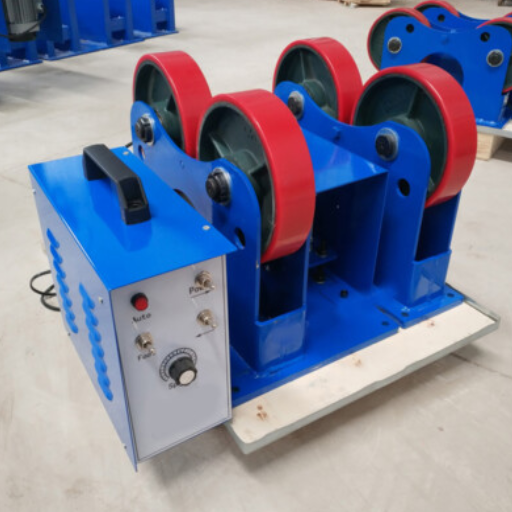
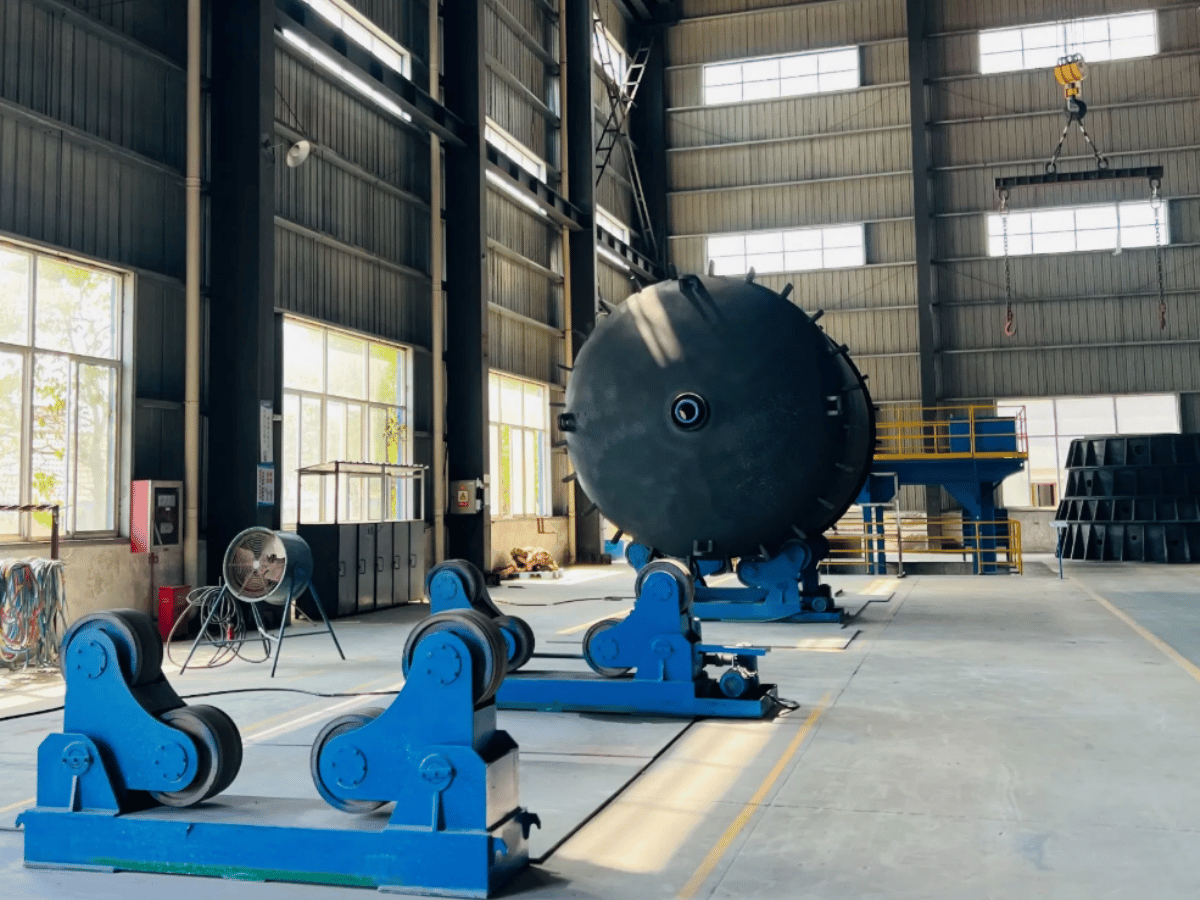
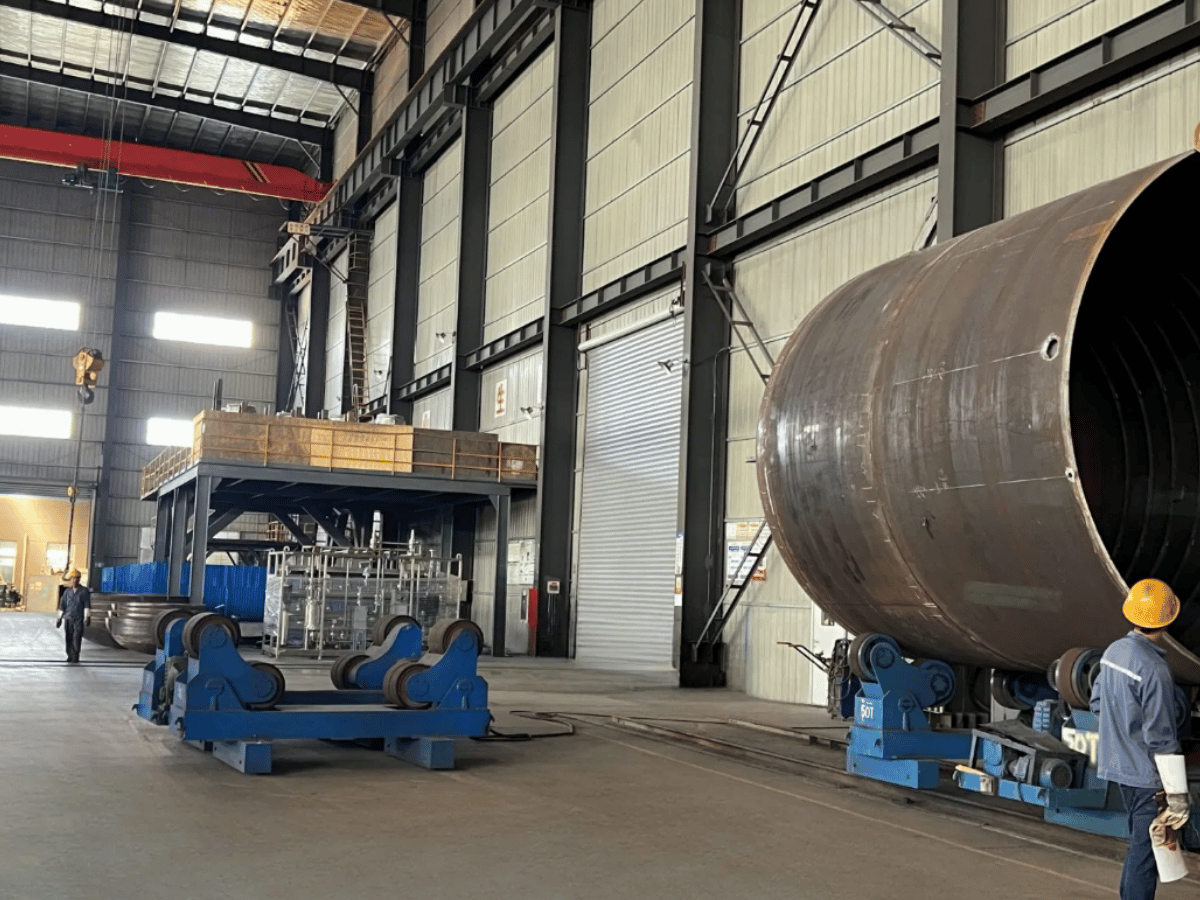
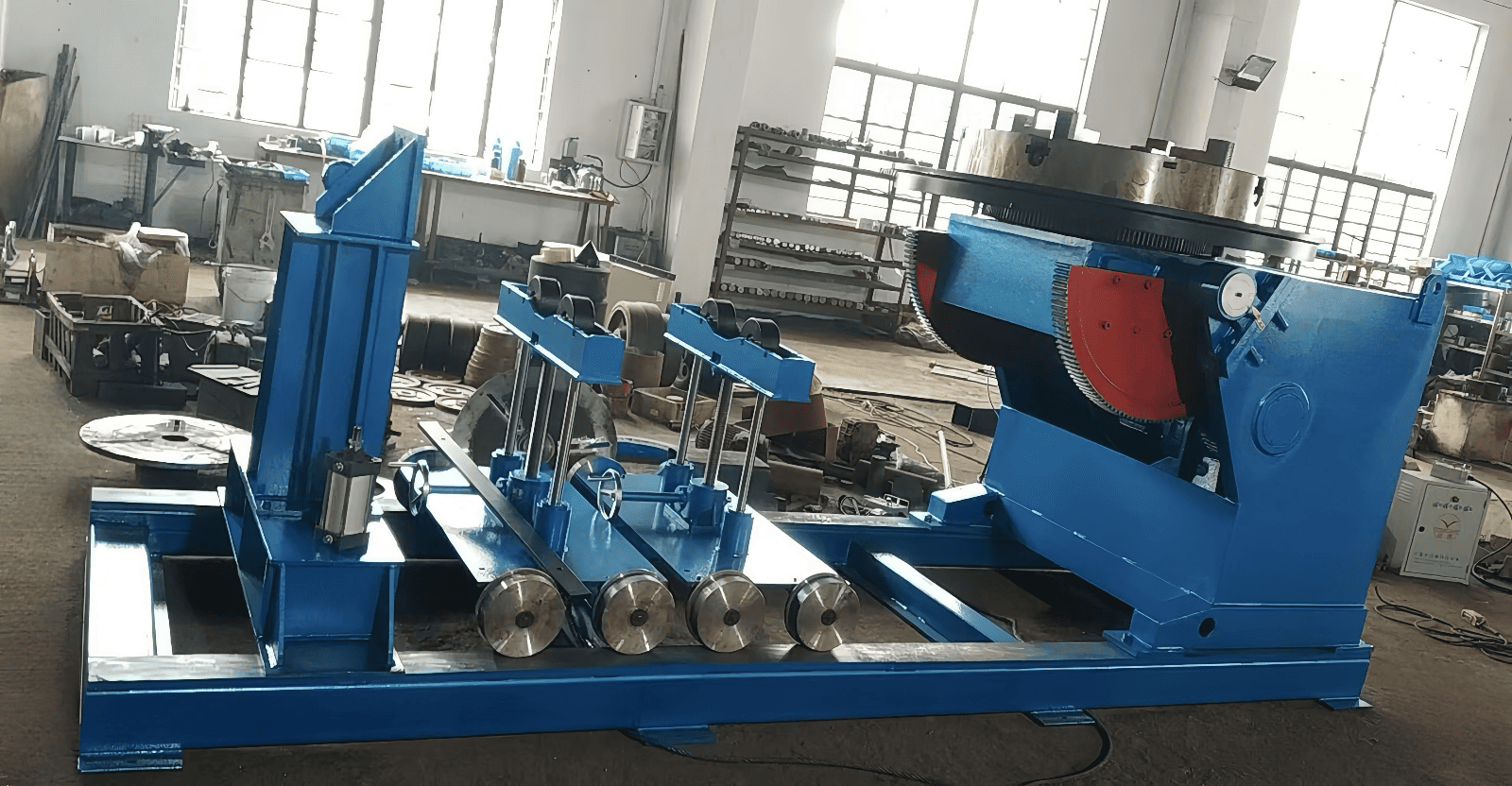
From industrial welding to manufacturing, which require high level precision and efficiency, weld positioners offer invaluable tools to pipe welding for consistent welding software giving exclusive control in the operation. An understanding of the selection of the best weld positioner is vital for the seasoned and novice steelworkers. Here, we’ll walk you through the basics of such machinery; the various perks of weld positioners, how it fits into the automated welding systems, and also critical things to consider while selecting the right for your work. The moment you’re through reading this, you will be capable of fine-tuning your welding process and ultimately lift up your welding skill to perfection.
Key Takeaway
Weld positioners are mechanical contraptions that transform complex welding tasks into manageable, high-precision operations by automating the orientation and movement of the workpiece.
Introduction to Weld Positioners

What is a Weld Positioner?
A welding positions holder is less of a “tool” than a mechanical contraption, used essentially to support, swivel, and place the workpiece so that it can be plasma welded in an efficient way or set up for an amazing welding cycle by angular orientation. By allowing the workpiece to gently revolve or tilt into its primary instrument facilitating such mechanical compatibility, low handling, lessened fatigue, and precision are thus assured.
These machines often work wonders where more complicated or hard-to-manage workpieces come into play, making their welding work magically easier by letting them have a supported tilt for the weld without forcing the operator to tackle both. This is particularly dangerous and also insurmountable for the machines operating near the edge.
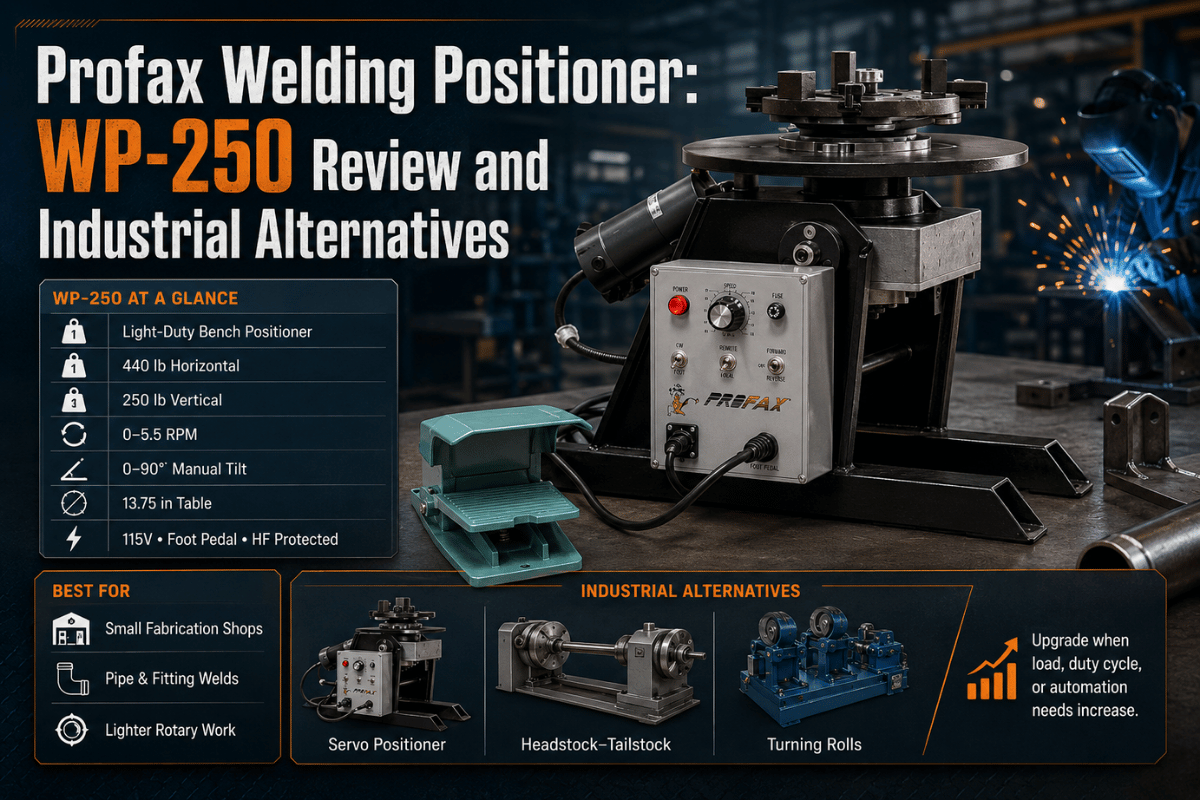
The main contents of a welding positioner include a revolving table or platform, clamps to hold the work piece, and controls to adjust speed and angles. Size and configuration for the positioner can vary in compliance with its welding necessities, including revolve or turntable, headstocks with tailstocks, or a three-axis system. Weld positioners are immensely significant tools for the manufacturing, automotive, commercial construction, and aerospace industries by virtue of their flexibility and ability to produce consistent outcomes.
Importance of Pipe Welding
Welding the pipe is quite essential in a variety of sectors like construction, oil and gas industries, and power generation. It is concerned with ensuring that the piping system would funnel or transport important things like water, natural gases, and oils. Without industrial-grade pipe welding, there is nothing reliable about the steam, which would contribute to leaks, failures, and inefficiencies, thereby increasing safety hazards and operational costs.
Some of the major benefits of pipe welding are the making of high-pressure joints that are strong and enduring against varying environmental conditions, particularly in industries where safety and performance are of paramount concern. Such stringent adherence to proper welding systems virtually guarantees that structural weaknesses will not appear, keeping the performance and life of such welded pipes at maximum levels while fulfilling all industry requirements.
Pipe welding is an indispensable operation for reducing maintenance and prolonging the life span of pipe systems. High-quality welds can stop corrosion, leaks, and wear development, which at times can dramatically cut expenses and downtimes for companies. Welded pipes are essential to the safe and efficient movement of materials through space, thereby ensuring the uninterrupted running of industrial processes and infrastructure worldwide.
Overview of Automation in Welding
Automation in welding has significantly advanced in that it has upgraded the industry through high levels of efficiency, precision, and safety. The target of every automated welding system is to make a more consistent and faster weld and to reduce potential errors in welding. This system will capitalize and rely heavily on advanced technology, such as robots and sensors, which make it usable for more demanding projects requiring a level of precision and a repeated guarantee of reliability, such as in the spheres of automobile, aerospace, or construction.
Furthermore, automation encourages an increase of productivity in welding processes. A robot can labor tirelessly without the need for rests between shifts; hence, automation quickens the rate of project completion while lessening workforce demands. Robots are also designed to manufacture high volumes; hence, even if production deadlines are tight, the companies can meet such deadlines and ensure the project’s quality would not be compromised. Also, automation reduces hazardous exposures for its workers considerably, thus increasing industrial safety.
⚠️ Important Note
While initial costs for automation machinery are high, long-term savings due to less material wastage and reduced operational costs justify the investment.
Types of Welding Positioners
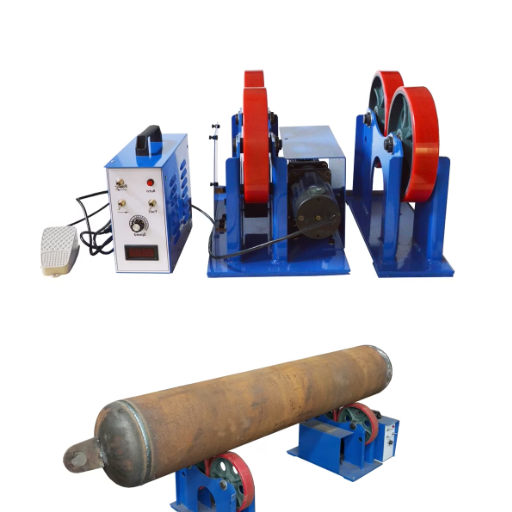
Rotary Welding Positioners
Rotary welding positioners are delicate tools designed to improve the operational efficiency of the welding process. The action or movement of the welding positioners means that the workpiece is rotated and consequently positioned at a favorable angle. Essentially, the welder has better reach and control over his work because of the unique action offered by this equipment. Mostly, it is used whenever the job is cylindrical or round, such as pipes or tanks, where maintenance of even weld quality proves extremely critical.
One of the most direct advantages of using rotary welding positioners is the fact they take manual handling and labor fatigue out from the entire affair. This means more consistent and uniform welding even in repetitive and intricate jobs. This will boost productivity, positively affect the final quality considerably, and keep the possibilities of welding loss and mistakes to a bare minimum.
Rotary welding positioners contribute to increased workplace safety as well. Instead of putting physical stress on operators or engineers, who would otherwise need to manually move heavy and awkward parts, the risk of physical strain or accidents is significantly reduced. These positioners can also be integrated into other automated welding systems to further facilitate the welding process, and hence are increasingly becoming valuable assets in various industries, including construction, aerospace, and manufacturing.
Multi-Axis Welding Positioners
Multi-axis welding positioners are specially engineered devices to support, manipulate, or hold materials when welding. These positioners provide yaw, angular, or pitch movement for welders to work on different planes of the workpiece easily. In intricate welding operations, through precise and smooth movement, they increase the precision of welds and reduce discontinuous welds.
Ultimately, the benefits of multi-axis positioners can improve efficiency of operation in a substantial manner. Manually positioning a part, and then lugging it back into position, is a time-consuming process. This is not so much of a problem on a small scale, but when the turns are less than a meter across, it is particularly true when working with big and complex objects. The use of such devices for ergonomic work positioning reduces the risk of operator fatigue and enhances worker protection.
Industries like construction, aerospace, automotive, and manufacturing greatly benefit from the use of multi-axis welding positioners. Of particular value are systems functioning within projects for which high precision and consistency are of paramount importance; such systems contribute to the tight integration of these devices with fully or semi-automatic working processes, as well as meeting the obligations placed upon these applications by the contemporary industrial marketplace.
Manual vs. Automatic Pipe Positioners
| Feature | Manual Positioners | Automatic Positioners |
|---|---|---|
| Control | Operator-led adjustments | Programmable motorized control |
| Best For | Small-scale/Low volume | Heavy-duty/High volume |
| Cost | Cost-effective entry point | Higher initial investment |
When choosing between the two pipe positioners—manual and automatic, it is important to know their clear differences to decide what is right for a particular welding operation. Manual pipe positioners necessitate the work of the operator as they adjust and position the pipe. This option is typically cost-effective, meaning it is well-suited for small-scale projects or operations with low production requirements. Unfortunately, a manual pipe positioner can involve a higher level of time and effort, especially if the welds are complex and repetitive and need exact alignment.
In other words, there are programmable motorized pipe positioners which work automatically. The product automates the entire positioning procedure, providing repeatable, accurate alignment and minimal operator input. Automatic welding positioners are perfect for heavy-duty use across high-volume welding activities or settings that require consistent precision and repeatability. At high volumes of operations, automatic positioners are utilized to alleviate welding fatigue and consequently largely increase the welding capacity of the equipment and add product value.
The positioner suitable for you depends upon your specific operation requirements, budget, and the project scope. In most instances, manual positioners will be more flexible and cheaper when handling smaller jobs. However, when it comes to those industries where results are demanded consistently and stresses lie on quality production, automatic positioners emerge as more advantageous as they offer the highest level of efficiency and can process high-output requirements. The process of great deliberation, in terms of workload frequency, project complexity, and long-term cost, will establish the best choice for your purposes.
Choosing the Right Welding Positioner

Key Factors to Consider
💡
Selection Criteria
- ✓
Load Capacity: Support the full weight including fixtures. - ✓
Range of Motion: Essential agility for rotation and tilt. - ✓
Workpiece Compatibility: Geometry and dimension matching.
Load Capacity: When selecting a welding positioner for your operations, make sure it can handle the weight of your workpieces. If the load-bearing capacity is found to be too low compared to the workout weight, there may be potential issues due to an overload or to the safety of the operator. Take into account extra weights, like fixtures, so that you do not overload the machine.
Range of Motion: The welding positioner is expected to provide the agility necessary for welding your parts. The ability to rotate and tilt at the same time will answer the call for precision positioning. When identifying perspectives that should be augmented and transformed for maximum performance, the paginated output will be more efficient and hence more accurate.
Workpiece Compatibility: Ensure that your workpiece dimensions and geometry are allowed for in your positioner’s technical specifications and design. Your positioner should hold the workpiece securely and allow for smooth adjustment. Devices should preferably be selected based on the size and characteristics of the metals they are designed to handle. This way, operational problems during welding can be avoided.
Therefore, with careful attention to these major factors, you will identify and secure a best-fitting welding positioner to enhance the performance, safety, and overall job suitability for your welding operations.
Understanding Load Capacity
The heavy-duty capacity is simply defined as the maximum weight a welding manipulation positioner can safely and stably support. Assuming full consideration of the magnitude of load the positioner can withstand is of ultimate significance to forestall equipment deterioration and overall enhancement of workplace safety. Always examine the load capacities as specified by the manufacturer and match them with the corresponding requirements of your welding operations.
When calculating its lifting capacity, the calculation should account for the weight of the workpiece, as well as any accessories or fixtures used while welding. Overloading the parent machine may lead to mechanical failure, undesirable workpiece fixing, or a performance deficit. In complete avoidance of the above-mentioned undesirable references, consider whether there are any dynamic stresses or angular forces that can upset the working order while the unit is in operation.
An appropriate load capacity will ensure that workpiece handling done by the positioner demonstrates an efficient and secure touch. It is prudent to have a nominal safety margin for your requirements, which in the future will supplement another margin on weight with flexibility. This would help maintain a certain level of productivity while also extending the useful life of equipment and reducing the likelihood of accidents in the course of performing welds.
Benefits of Using Welding Rotators

Enhanced Efficiency in Pipe Welding
Welding rotators in pipe welding increase efficiency by allowing sustained rotation of welding pipes. The rotation is steady and allows the welders to maintain a good and even pace, which is a precursor for uniformly high-quality welding in the periphery of the pipe. Welding rotators significantly cut down on the need for any manual fixing or readjustment activities, which take up a great deal of time and energy, and result in higher productivity.
Furthermore, welding rotators increase the accuracy and reliability of a weld. Operating with the pipe held and rotated at controlled speed means that the welder can concentrate primarily on technique and precision, thereby minimizing possibilities for errors which could lead to incomplete welds. Durable welds that are consistent in working performance and safety across industry segments such as construction, hydrocarbon industry, and manufacturing are desperately needed to meet survival standards.
The welding rotator machine also eliminates the work of rotating and welding heavy metal pipes manually. The operator can complete the work with minimum effort and risk. The welding rotator machine makes welding easier and safe, therefore rendering a healthy working environment wherever in proximity.
Improved Quality of Welds
Welding rotators machines help to enhance the quality of welds by not only allowing them to be uniform but also, importantly, precise. By rotating the workpiece at timely and all-around cool speeds, these machines reduce the likelihood of a wrong joint that would be defective due to uneven weld or incomplete penetration.
The rotation performed, since it is controlled, assures a restful pool of weld, leading to a better and flawless weld. It is of utmost importance dealing with heavy or large cylinders in which manual handling might disturb the consistency of the weld. They also assure accuracy in the alignment of parts as well as speed and the final stunning view of the end product. This makes the final product suitable for the most critical end-use applications.
Welding rotators contribute to achieving long-lasting and dependable results by ensuring weld quality, consequently minimizing the need for rework or repairs. The savings in time and resources contribute in turn to an increase in the general structural integrity of weld-joined materials. Precision, effectiveness, and safety are just some of the many attributes of the gap aspect of welding rotator machines, which make them ardent tools toward optimized welding results in industrial settings.
Cost-Effectiveness of Welding Rotators
Welding rotators are central to ensuring cost-effectiveness in the industrial welding process. They have the ability to automate the rotation and positioning of heavy or cumbersome workpieces significantly reducing the manual human intervention requirements. The automation saves not only on tiresome manual input from human operators, but also decreases production time, keeping the overall operational efficiency to a maximum, further cutting down on work costs in the end.
Another good financial feature regarding a welding rotator’s cost-efficient advantage involves the possibility to raise the quality of welding. One thing that welding rotators make truly possible is a high repeatability of rotation, lending for meticulous and stable welding conditions, thus greatly reducing defects and reworks in wasted material and labor. When high-quality welding is effected through welding rotators, the longevity of any fabricated structure extends; consequently, these structures are expected to place less strain on labor and finances in maintenance and repairs compared to other kinds of welding technology.
Also, in optimizing material usage and cutting down on waste, welding rotators contribute. Thus, welding rotators facilitate consistent and precise disposition of welding materials, preventing unequal or excess application. After operations over time, the savings made in this cost on material could provide a substantial financial profit for industrial operations. This combination of robustness and reliability truly makes welding rotators a very sound investment for manufacturers trying to curb expenditure yet still maintain superior production quality.
Welding Processes and Techniques

Overview of Various Welding Processes
Welding processes encompass a range of techniques; each required for different materials and applications. The most common of these include Shielded Metal Arc Welding (SMAW), Gas Tungsten Arc Welding (GTAW), Gas Metal Arc Welding (GMAW), and Flux-Cored Arc Welding (FCAW). These methods differ in their process of delivering heat, the type of filler material used, and the most effective environment for them.
Shielded Metal Arc Welding (SMAW) or “stick welding” is one of the most basic and versatile methods for welding. SMAW’s only requirement involves the operation of an electrode coated with flux. The SMAW method can also be used for welding ferrous metals, stainless-steel, and non-ferrous metals. For construction and repair, SMAW is often preferred due to its accommodation of variable weather conditions.
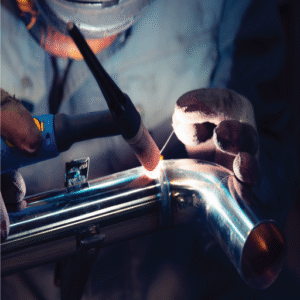
Gas Tungsten Arc Welding (GTAW), or TIG welding, is a popular procedure for precision welding, suitable for high quality and detailed work. The welding method uses a non-consumable tungsten electrode and an inert shielding gas, usually argon. TIG welding is the preferred method for materials like aluminum, stainless steel, and other non-ferrous metals demanding precision and a clean appearance. In this regard, each welding procedure has its advantages that are suitable for specific applications according to the requirements of the project and the attributes of the material characteristics.
TIG Welding and Its Applications
The exactness in TIG welding, combined with the terrifically attractive property developed in clean-looking welds, gives this method high adulation in the welding arena. It seeks good use in welding thin and non-ferrous materials like aluminum, magnesium, and copper alloys. The presence of a tungsten electrode and inert gas allows for the entrenchment of high-quality products requiring precision.
TIG welding is again vastly applied in industries such as the aerospace and automotive industries where the need for precision and strong welding is significant. Its realities lie in the welding of thin sheets of metal used in the construction of vehicles, aircraft engines, or structural components. Plus, being a popular medium toward making products like kitchen appliances or medicine gear, it is known for its capacity to yield the highest strength and welding quality.
Sculptures, railings, and intricate designs are very fitting for this method. It has the ability to generate fine and clean work without fouling and hence is very good for TIG welding. Yet, the beauty of TIG welding is mainly tested at its ability to meet strict production controls and produce engineered joints that are supposed to be both stronger and more beautiful.
Integration of Welding Systems with Positioners
For achieving high efficiency and accuracy, the integration of welding systems with positioners is considered essential. With the help of positioners, a workpiece may be rotated or adjusted for welding at the most favorable angles, allowing the welding personnel to reach joints in awkward-to-reach places, yet achieving uniform and consistent quality of a weld. Because they provide an element of stability and a firm grip of the workpiece, positioners provide another link in attaining improved precision, particularly with complex and detailed designs.
To use these in combination with welding systems means a solid saving of time for setting up, and much energy can be saved compared to adjusting components manually. Such integration comes with another pleasant plus in ensuring that the operator does not reach fatigue because heavy or cumbersome components receive handling in a comfortable manner, all with minimized physical exertion. Furthermore, with the availability of advanced welding methodologies synchronized with automated positioning capabilities, one could set up a continuity and repeatability in output for any big job or projects with very high level of minute detail.
The practice reduces risks to safety by minimizing the amount of heavy materials that need to be handled and ensuring ergonomic working conditions. In the end, the integration between welding systems and positioners leads to more reliable welds, shorter turnaround times, and optimized operation. This raises productivity while maintaining the quality and strength needed in a welding environment, whether in industrial applications or creative ones.
Frequently Asked Questions (FAQ)
Q: What is welding positioning and why does it matter, especially to position pipe welding?
A: Welding positioners are devices that rotate, tilt or index the pipe or weldment to the appropriate welding position. When it comes to the areas of pipe welding, positioners are used to eliminate the need for manual movement of the welder or the workpiece. This allows for quality welds that are consistently so, less downtime, and further enhancement to weld productivity across a range of welding applications from fabrication to oil and gas.
Q: Are you trying to explain to us how welding piping work is evaluated in different positions?
A: Welding positioners can be very different—turntable, rotary, welding rotator, multi-axis welding positioner—at the apt set for a welding job at hand; rotary and turntable positioners are chiefly for welding cylindrical pipe because they permit smooth rotation of the workpiece and proper control of the welding angles; multi-axis systems allow for very sophisticated welding applications and automated welding, hence more expensive but highly productive.
Q: Which factors are usually taken into account before a positioner is selected for pipe welding?
A: Electrodynamic suitability in relation to torque and turn speed, the center of gravity of the weldment, axes of the process, rotation speed, variable-speed controls, work surface size, clamping options, and choice of heavy-duty construction needs are important factors to be considered. All these factors play a crucial role in determining the degree of accurate welding and generally increasing welding productivity.
Q: Can a Welding Positioner Help Weld the Pipe With More Better Quality and Consistency?
A: Yes. Welding in a pipe positioner brings more consistency in rotation and positioning, thereby stabilizing the width, depth, and angle of the weld pool, and maintaining both the welding angle and speed. This, as a result, provides more consistent quality welds with fewer defects. Every specific application or frequency in either fabrication or welding for an automated welding system receives better weld quality because of the positioner.
Q: What can be used for pipe welding: manual welding positioners or automatic welding systems?
A: Which one to choose depends on what volume of orders you are processing. Manual welding positioners are highly responsive to small-time fabricators and TIG welding. Automated welding with welding positioners represents a paradigm shift as it provides easier and better weld quality due to automation. The job with fewer downtimes can be left to the welding operator while the most popular welding processes can be tackled at ease.
Q: What are the impacts of speed control and various speeds of welding on pipe welding?
A: Rotational speed and variable speed control options allow you to link the welds to your welding process while taking into account weld dynamics such as the growth and maintenance of the weld pool. Variable speed control is important in that it guarantees proper heat input for optimized penetration and allows welders to perfect critical welding techniques of the TIG and arc-welding processes.
Q: Why is it mandatory to consider center of gravity and clamping in choosing a positioner for pipe welding?
A: Adequately considering the center of gravity determines the stability of rotation and prevents imbalance that may affect weld quality or damage the positioner. With the pipe securely held by dependable clamps and fixtures, these items minimize vibration. This allows the positioner to rotate large or long workpieces safely.
Q: How do welding positioners contribute to better safety and productivity in welding?
A: Welding positioners allow welders to sustain ergonomic postures, decrease physical movement of heavy workpieces, and permit precise control of welding operations. This reduces fatigue and danger while optimizing welding effectiveness and productivity, thus making welding positioners indispensable equipment in many welding industries.
References
-
“Appropriate Parameter of a Pipe Welding Positioner for Butt Weld by MAG Process”
Published on IOPscience, this paper discusses parameters for pipe welding positioners and their applications.
Read more here - “Visualisation of Pipes Welding Process in Technical Subjects Teaching”
This academic paper highlights the importance of proper welding positioner selection in educational contexts.
Read more here -
“Prediction of Axis Shift Distortion During Circumferential Welding of Thin Pipes Using the Finite Element Method”
Published by the American Welding Society, this paper discusses rotary positioners and their role in pipe welding.
Read more here - Top Welding Positioner Manufacturers and Supplier in China


![Benchtop Welding Positioner Guide: Specs, Types & How to Choose [2026]](https://resizeweld.com/wp-content/uploads/2026/05/0-8.webp)