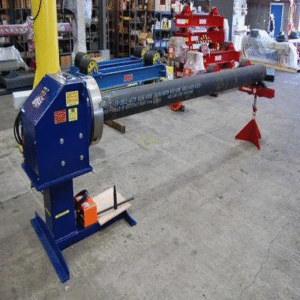
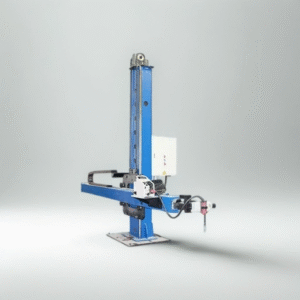
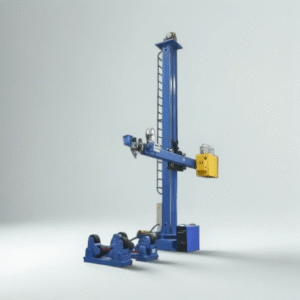
Pipe cutting and beveling are deemed compulsory for industries involving manufacturing and construction, against the backdrop of the phase of inherent precision and convenience. A beveling machine selected for these jobs, in itself, is indicative of your ideal decision in determining the quality of the final result, the workflow of operations, and the overall project costs.
This guide, therefore, curtails certain focal points that are imperative for choosing the best beveling machine by which one could identify the most suitable machinery according to his needs. One’s conscious judgment is dependent on the knowledge of types of machines—going to their force and the rest—abundant material content. This decision ensures precision, enhanced productivity, and increased performance with confidence.
Key Takeaway
Selecting the correct beveling machine is a strategic decision that bridges the gap between raw material and structural integrity. By understanding material thickness, project scale, and the advantages of automation over manual grinding, industries can significantly reduce weld defects and operational overhead.
Introduction to Beveling Machines
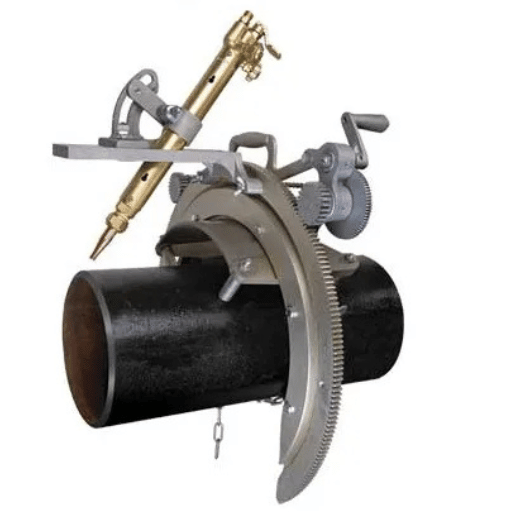
Beveling machines serve as specialized equipment which functions to create beveled edges on materials that include metal and plastic and glass. These machines achieve their purpose by cutting and shaping edges to specific angles which then enable the materials to undergo welding and painting and assembly operations. The equipment provides essential support which increases joint strength while delivering proper fit and improving product quality throughout the manufacturing process.
Handheld beveling machines, bench-mounted beveling machines, and portable beveling machines represent three main types of beveling equipment which provide distinct benefits according to project requirements and material needs. The proper selection of a beveling machine requires understanding both the intended application and the material specifications.
The Importance of Beveling in Various Industries
Beveling serves a fundamental function throughout many industries because it enables material preparation for subsequent processing and strengthening of structural components and creation of exact material joints. The welding industry uses beveling to prepare edges which results in welded joints that show both strength and consistent appearance, while it decreases the likelihood of joint failure.
The construction industry uses beveling as a fundamental technique to create precise angles which establish structural stability for buildings and frameworks. Beveling plays a vital role in pipeline and aerospace operations because it ensures proper sealing and connection between components, which helps to decrease safety risks.
Higher operational efficiency, decreased material waste, and longer-lasting product lifespan.
Overview of Beveling Machines
Beveling machines function as specialized tools which create exact angled edges on materials including metal and plastic and wood. The machines enable industrial operations to achieve uniform and precise edge preparation which meets requirements for welding and assembly and structural work. Advanced modern beveling machines use rotary cutters and milling heads to create uniform bevels while operating at high speeds and maintaining efficient performance.
The equipment provides two design options which include portable handheld devices for fieldwork and permanent industrial equipment designed for major production tasks. The structural integrity and product lifespan of completed items rely on beveling machines which deliver dependable performance and accurate results and flexible use.
Why Choose a Pipe Beveling Machine?
Pipe beveling machines create exact bevels which comply with the strict requirements of industry standards. The machines produce precise edges which assist in creating welded joints that achieve higher quality standards while decreasing the likelihood of defects which include cracking and porosity. The machines operate at higher efficiency because they automate the beveling process which decreases the need for manual work and the time required for execution. The machines function as essential equipment in the oil and gas and construction and manufacturing sectors because they can process different pipe sizes and materials.
Primary Functions of Beveling Machines
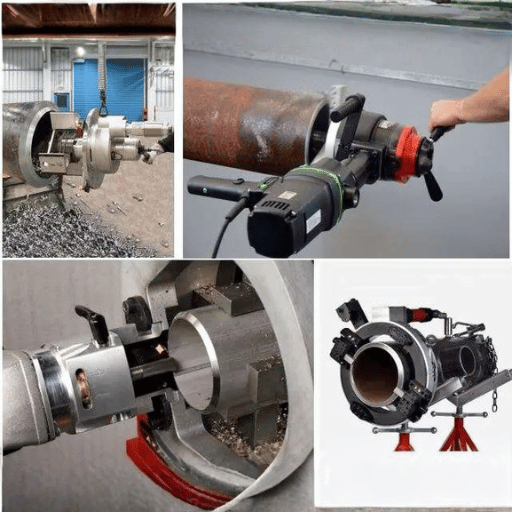
Beveling machines exist to produce exact angled edges through beveled cuts which they create on metal plastic and wood materials. The welding process becomes more effective because the process produces cleaner joints which lead to stronger joint connections. Beveling machines serve as essential tools which enhance product safety while product performance through their function of removing all rough edges and any existing flaws. The assembly process requires beveling to create proper fitment which results in smooth construction while reducing material decay.
Edge Preparation for Welding
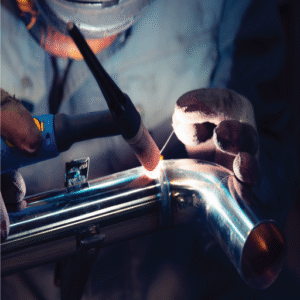
Weld quality and strength and durability of the weld depend on proper edge preparation work which must be done before welding begins. The process needs operators to create bevels and lands and grooves which have exact angles that permit maximum welding material penetration while decreasing structural failure points. Welders obtain clean joint interfaces through their process of eliminating all contaminants and defects and surface irregularities from material edges which helps to decrease porosity and other defects.
The selection of an edge preparation technique needs to consider material thickness and joint design and welding method because users can choose between manual grinding and modern automated beveling equipment. The quality of edge preparation work determines how well welded structures will perform and maintain their integrity and last through time.
Creating Chamfers and Bevels
Through welding processes, chamfers and bevels serve as necessary elements that enable welders to achieve accurate joint alignment and base material penetration. The process of creating chamfers requires operators to remove material from edges through machining or grinding until they produce a flat surface that meets a specified angle.
The selection of chamfering or beveling parameters depends on factors such as material type, thickness, and the required joint geometry. The implementation of accurate chamfers and bevels establishes optimal weld fusion which decreases defect occurrence in high-stress applications, thus improving the structural integrity and reliability of welded joints.
Enhancing Weld Quality
To enhance weld quality, it is essential to adhere to rigorous preparation practices, employ proper welding techniques, and utilize the correct consumables for the specific application. The process of material preparation involves cleaning and performing edge preparation through methods like chamfering and beveling to achieve optimum fusion by removing all impurities. The combination of precise heat input control with suitable welding parameters and complete post-weld inspection procedures reduces defect risks while improving overall weld structural integrity which ensures critical applications will remain dependable.
Real-World Applications of Pipe Beveling Machines

Pipe beveling machines find extensive usage in multiple industries to enhance the quality of joints and streamline assembly operations. The main uses of this technology include the following fields:
- 1
Oil and Gas Industry
These machines prepare pipelines which transport essential resources such as crude oil and natural gas through onshore and offshore installation. - 2
Construction and Infrastructure
Beveling machines prepare structural pipes and conduits which help to create bridges and buildings and utility systems while maintaining proper alignment and increasing strength. - 3
Power Generation
Facilities that generate power use this equipment to prepare high-pressure piping systems for boilers, turbines, and reactors. - 4
Shipbuilding
Essential for creating ship pipelines that satisfy marine environmental standards and safety regulations. - 5
Chemical and Petrochemical Industries
Supports high-grade, corrosion-resistant pipes for safe material transport within processing plants.
Beveling in Construction for Structural Steel
Beveling in construction for structural steel provides an essential function that guarantees correct structure alignment through effective weld joint creation, which supports load-bearing elements. The process of beveling steel parts produces exact angle edges, which enable welders to achieve consistent weld depth while decreasing the possibility of material failure. The technique serves as a vital requirement for achieving necessary safety and performance standards, which all architectural projects must meet because they require base structural strength.
Applications in Manufacturing for Part Finishing
Beveling functions as an essential element of manufacturing because it prepares parts for assembly while achieving better product finishing results. The method produces smooth edge results which decrease stress concentrations and enhance part compatibility for future welding and coating and joining processes. Beveling reduces surface defects which improves both the appearance and performance of components used in essential aerospace and automotive and heavy equipment operations. The process establishes essential requirements for high-precision manufacturing operations because it produces consistent results through its durability.
Metalworking and Pipe Preparation Techniques
The metalworking process and pipe preparation method require three main operations which include cutting and shaping along with finishing work to achieve exact measurement results and optimal surface finish. The methods include beveling and grinding and threading and plasma cutting and laser cutting which technicians select according to the properties of materials and the requirements of operations and the planned use of the equipment.
The assembly process requires proper preparation which leads to exact component assembly while the assembled components achieve better mechanical performance in industries that depend on precise measurements and strong structural integrity. The advanced tools together with best practice implementation enable these techniques to operate efficiently while sustaining reliable performance throughout challenging manufacturing and construction work environments.
Beveling Machines vs. Alternative Tools
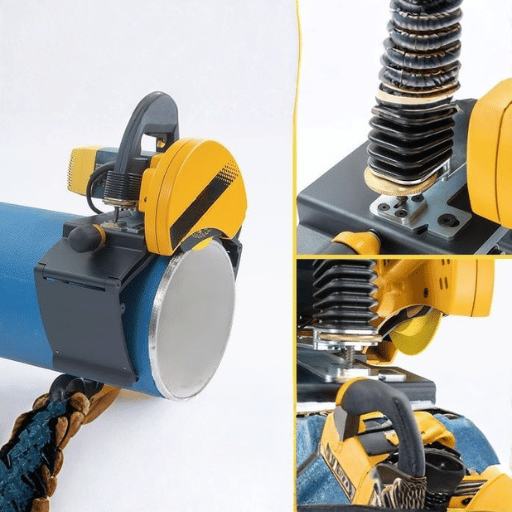
Beveling machines demonstrate better accuracy and operational efficiency when compared to traditional equipment which includes grinders and manual cutting techniques. The machines are built to deliver precise and consistent bevels which require minimal work and result in fewer production errors. Beveling machines simplify operations by providing safer work environments which protect employees from dangers associated with debris and manual equipment use that come with grinder operation.
The time-saving capabilities of beveling machines enable projects to reach completion at a faster pace while maintaining their expected standards of quality. The most dependable solution for tasks that need precise edge preparation and high repetition accuracy is beveling machines which provide complete reliability.
Manual Grinding vs. Beveling Machines
Industrial edge preparation uses manual grinding and beveling machines for different purposes but beveling machines provide better performance and accuracy and safer operation. Beveling machines produce consistent results because they maintain the same level of accuracy throughout all workpieces while manual grinding depends on the operator’s abilities which creates variable outcomes. The operation of beveling machines creates faster production times while they decrease safety hazards by reducing the time operators spend working with debris and performing manual tasks.
Plasma Cutting Compared to Beveling
Plasma cutting and beveling serve distinct yet complementary roles in material processing. Plasma cutting excels in quickly and efficiently slicing through a variety of metals with precision, accommodating complex shapes and thicker materials. The process creates edges that require secondary treatment because it generates heat-affected zones and surface defects which need to be removed for precise finishing work.
Beveling, on the other hand, is specifically designed to produce smooth, angled edges with high accuracy, essential for weld preparation or aesthetic consistency. The combination of plasma cutting’s speed and versatility with beveling’s ability to maintain edge finish standards makes both processes essential for achieving perfect results based on specific end-use requirements.
Advantages of Beveling Machines over Other Methods
Beveling machines produce better precision and consistency results than manual operations and all other mechanical methods. The machines create consistent high-quality beveled edges which protect weld strength and structural integrity from defects. The machines improve operational efficiency through their ability to cut processing time and decrease material waste, which serves as a vital benefit for industrial facilities that need to process large quantities of materials. The machines function as essential equipment for industries that need dependable and repeatable edge preparation because they can process different materials like steel and aluminum and their associated alloys.
Choosing the Right Beveling Machine
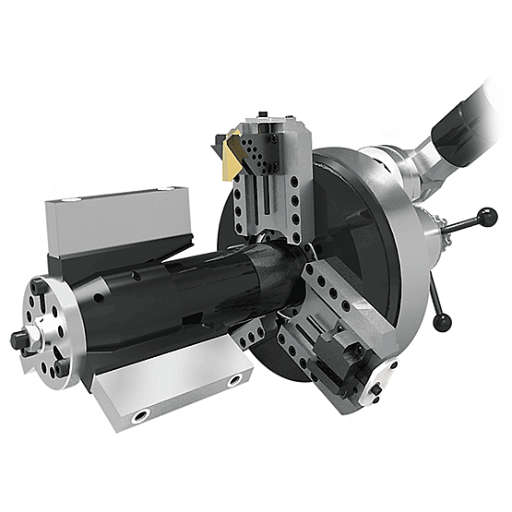
Your selection of a beveling machine needs to match your application needs. The material type, thickness, edge angle and required finish define the main elements which need assessment. Heavy-duty steel requires a beveling machine which delivers exceptional power through its durable design whereas lighter materials need a compact beveling machine with precise cutting abilities.
Evaluate whether portability is crucial; portable beveling machines allow for on-site use, whereas stationary models provide greater stability for repetitive tasks. The assessment needs to determine whether the machine matches your project needs through its ability to operate both manually and automatically. Choose machines which offer dependable safety systems together with established track records of success in identical work environments to achieve operational efficiency and long-lasting equipment performance.
| Factor | Light-Duty Machine | Heavy-Duty Machine |
|---|---|---|
| Material Type | Aluminum, Plastic | Steel, Titanium, Alloys |
| Typical Finish | Precise, Lightweight | Clean, Industrial Edge |
Factors to Consider: Material Type and Thickness
The appropriate beveling machine selection requires assessment of both material type and material thickness. For softer materials like aluminum or plastic, lighter-duty machines with adjustable speed settings are typically sufficient. Heavy-duty models with high torque and carbide or diamond cutting tools become necessary for steel or titanium materials which require precision cutting and extended tool life.
The machine’s capacity to handle material thickness depends on the requirements of thin materials which need precise adjustments to avoid warping and the need for stronger power systems and durable cutter heads to produce clean edge results with thicker materials. The alignment of machine specifications with material characteristics leads to maximum operational efficiency and performance optimization.
Project Scale and Requirements
The process of selecting the correct machinery for a project needs complete evaluation of all project dimensions and all specific operational needs. For small-scale projects, compact models with moderate power and lower throughput capacities may suffice, ensuring cost-effectiveness without over-engineering the solution. Heavy-duty machinery with high operational speed and advanced automation features and enhanced durability becomes essential for industrial applications that operate at large scales.
The chosen equipment needs to match required tolerances and material handling capabilities and production timelines to maintain efficiency and reach expected results. The process of validating these decisions through industry specialist consultation will help achieve optimal project resource allocation based on project requirements.
Ease of Setup and Operation
The process of running advanced machinery needs work to develop efficient systems that will decrease downtime while increasing operational efficiency. The industry recommends equipment selection that combines user-friendly interfaces with detailed operating manuals and extensive training materials to achieve successful equipment implementation.
The system should allow users to establish automation settings through straightforward methods while providing them with detailed control options to create their desired operational conditions. Organizations achieve faster installation times and reduced work disruptions through their focus on creating easy-to-use systems and providing technical assistance that anyone can access.
Reference Sources
- LinkedIn Article: Guideline on metal preparation for automotive and heavy machinery.
- Nodha: Overview of beveling machines specifically for welding applications.
- Hongli Tools: Details on plate beveling machines for industrial flat surfaces.
Frequently Asked Questions (FAQs)
What actually is the beveling of a machine?
The beveling machine is a device that makes beveled edges on metal plates and pipes, usually for welding and assembly work.
Why is beveling so significantly important?
Beveling helps ensure proper alignment, deep penetration during welding, and a stronger and longer lasting joint.
What materials require beveling through these machines?
Typically, steel, stainless steels, aluminum and other metals are beveled in industrial machining.
Which industries will utilize beveling machines?
It is common for these industries: automotive, big machinery, construction and maintenance of pipelines.
What’s the mechanism of the beveling machines?
The beveling machine removes material from the corner of a plate or pipe using a cutting tool or an abrasive wheel under an established angle.